25 Backyard Ideas with Pavers and Turf
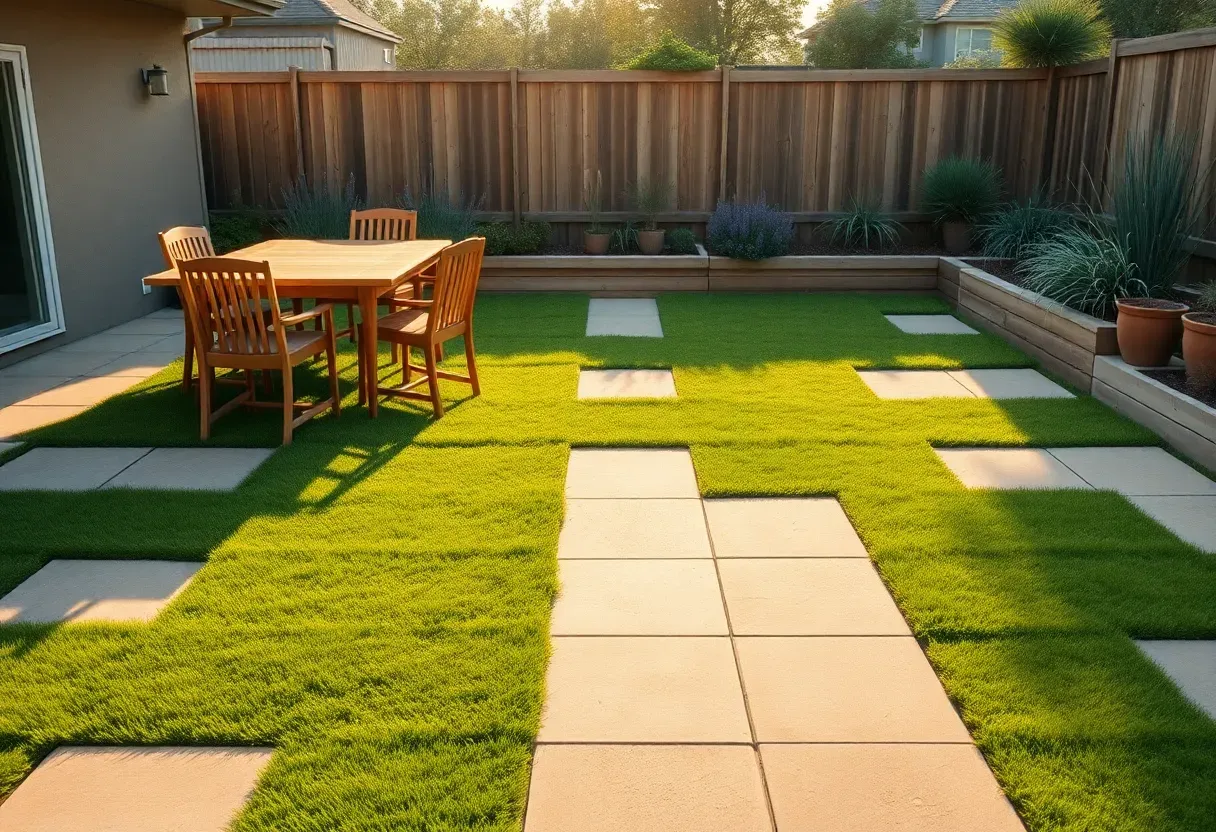
My neighbor spent $14,000 on a solid concrete patio two summers ago. It looked fine for about six months. Then the heat started radiating off it every afternoon, his kids refused to play outside barefoot, and the yard felt more like a parking lot than a place to relax. He ended up ripping out a third of it to put in turf strips — which cost another $3,000. The whole thing could have been avoided with a mixed paver-and-turf layout from the start. Combining hard surfaces with living or artificial grass gives you drainage, visual texture, cooler ground temperatures, and softer areas for bare feet and pets.
Below are 25 paver-and-turf combinations organized from simple patio patterns through walkways, fire pit zones, and full yard redesigns.
Table of Contents
- Checkerboard Paver and Turf Grid
- Ribbon Turf Between Flagstone Slabs
- Circular Paver Patio with Turf Border
- Stepping Stone Path Through Lawn
- Herringbone Paver Patio with Turf Joints
- Fire Pit Ring with Turf Surround
- Linear Paver Strips with Turf Channels
- Turf Driveway with Paver Tracks
- Paver Dining Area with Turf Lounge Zone
- Geometric Paver Mosaic in Turf
- Terraced Paver Steps with Turf Treads
- Pool Surround with Paver Deck and Turf Panels
- Bocce Court with Paver Border
- Dog Run with Artificial Turf and Paver Edge
- Curved Paver Walkway with Turf Margins
- Outdoor Kitchen on Pavers with Turf Transition
- Paver and Turf Zen Garden Layout
- Kids Play Area with Turf Pad and Paver Perimeter
- Mixed-Material Patio with Turf Inlays
- Turf Amphitheater with Paver Seating Rows
- Paver Pergola Base with Turf Courtyard
- Sloped Yard Terraces with Paver Walls and Turf Flats
- Corner Fireplace Nook with Paver Floor and Turf Buffer
- Front Yard Paver Path with Turf Parkway
- Full Yard Grid System with Modular Pavers
1. Checkerboard Paver and Turf Grid
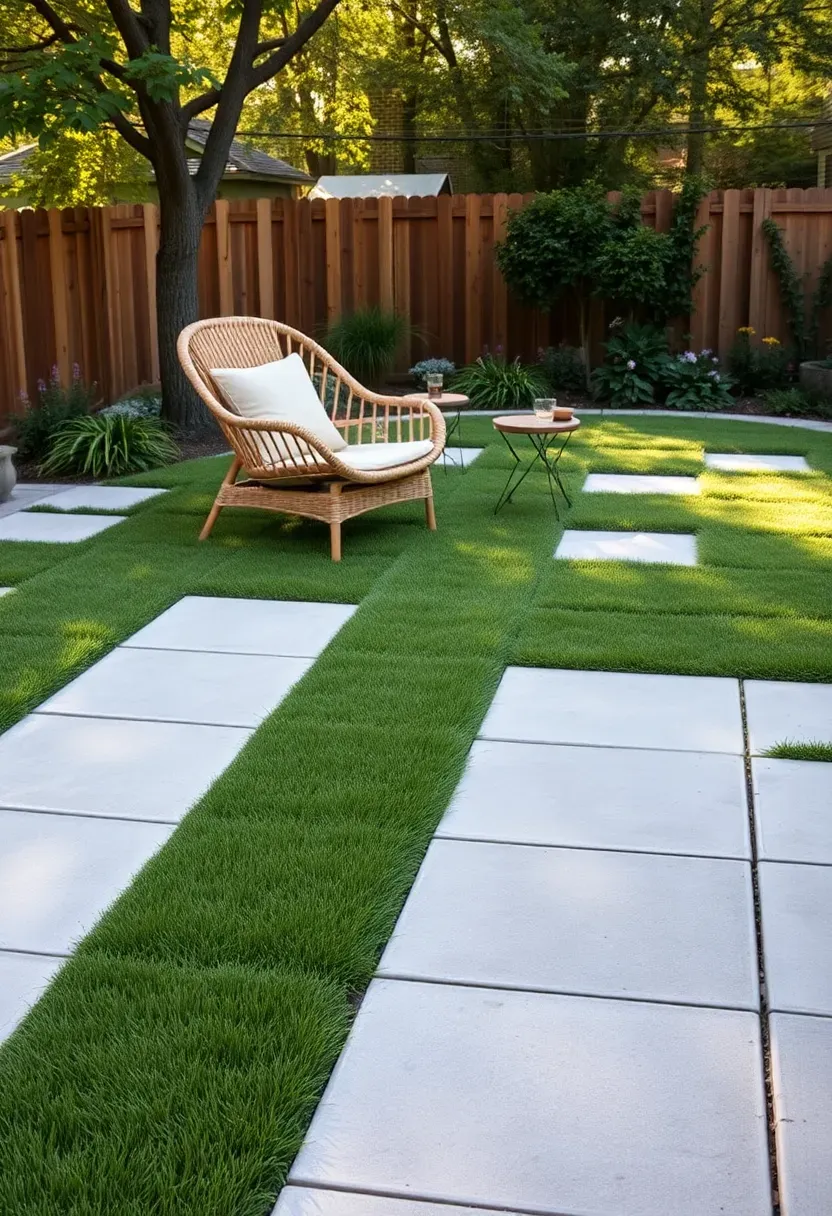
The checkerboard is the most straightforward paver-and-turf pattern because every piece is the same size. Use 24x24-inch concrete pavers spaced 24 inches apart and fill the gaps with sod or synthetic turf. The grid reads as intentional from any angle, and the even spacing makes layout dead simple — just measure once and repeat. Drainage is excellent because water moves through the turf squares instead of pooling on solid hardscape. The pattern works for patios up to about 400 square feet before it starts feeling monotonous, so scale accordingly.
Tips
- Set pavers on a 2-inch sand bed over 4 inches of compacted gravel for stability
- Use synthetic turf in shaded areas where real grass struggles to grow
- Leave a half-inch gap between paver edges and turf for mower clearance
We picked a few things that go well with this idea: Goovilla Interlocking Patio Deck Tiles (9-Pack) (★4.1), jxgzyy Natural Marble Interlocking Patio Tiles (4-Pack) (★4.8) and TierraVerde Rubber Stepping Stones (4-Pack) (★4.4). As an Amazon Associate we earn from qualifying purchases.
2. Ribbon Turf Between Flagstone Slabs
The issue
Large flagstone slabs look great but the joints between them collect dirt, weeds, and standing water when filled with sand or polymeric grout.
The fix
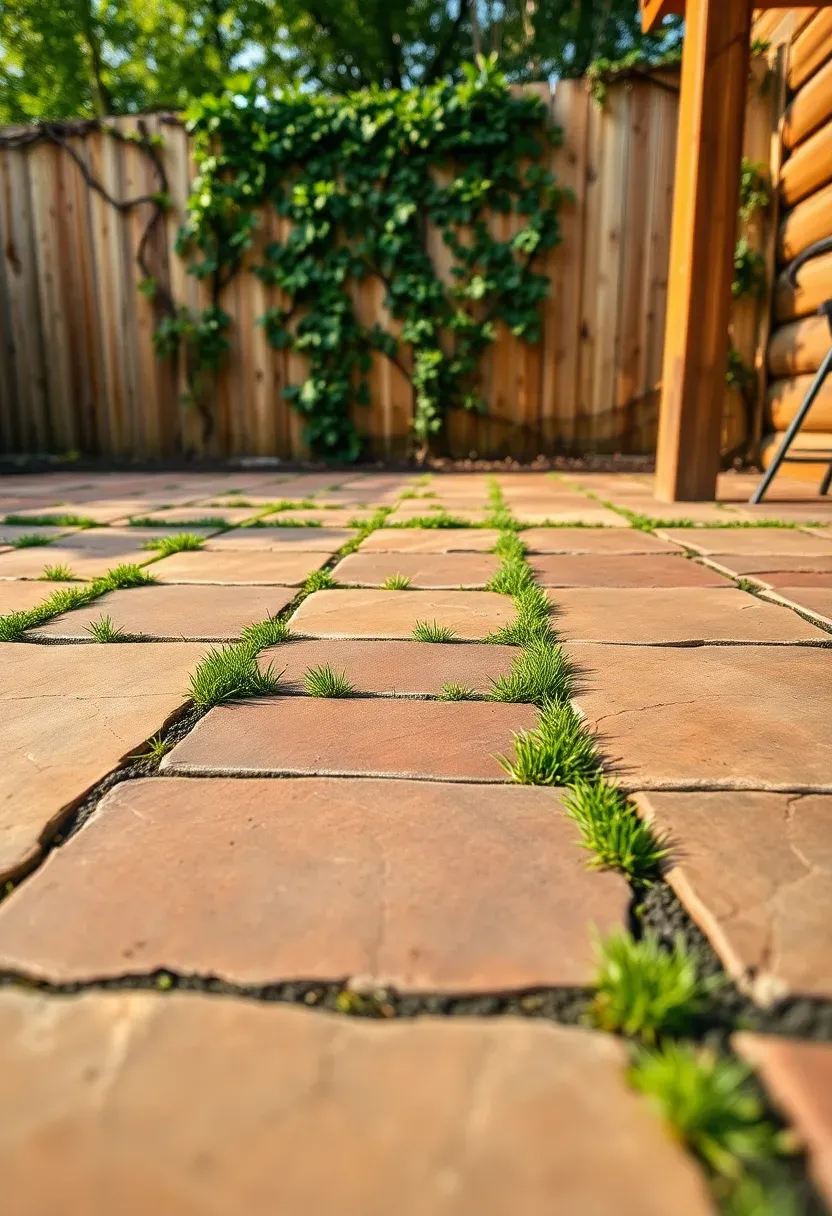
Plant turf directly in the joints. Cut sod strips to 2-3 inches wide and press them into a thin layer of topsoil between stones. The grass grows in tight, creating green veins across the patio that soften the stone's hard edges. Flagstone's irregular shapes pair well with this treatment because the varying joint widths look organic rather than forced. Maintenance means trimming the grass flush with the stone surface every two weeks during growing season. Skip polymeric sand entirely — the turf handles weed suppression and drainage on its own.
Pros and cons
- Looks natural and ages well as the grass fills in over a full season
- Requires regular edging and watering during establishment
- Works poorly in high-traffic zones where foot traffic wears grass thin
We picked a few things that go well with this idea: Artificial Grass Mat with Drainage Holes (★4.1), Realistic Artificial Grass Rug (3x5 ft) (★4.3) and Heyroll Artificial Turf Carpet (7x15 ft) (★4.5). As an Amazon Associate we earn from qualifying purchases.
3. Circular Paver Patio with Turf Border
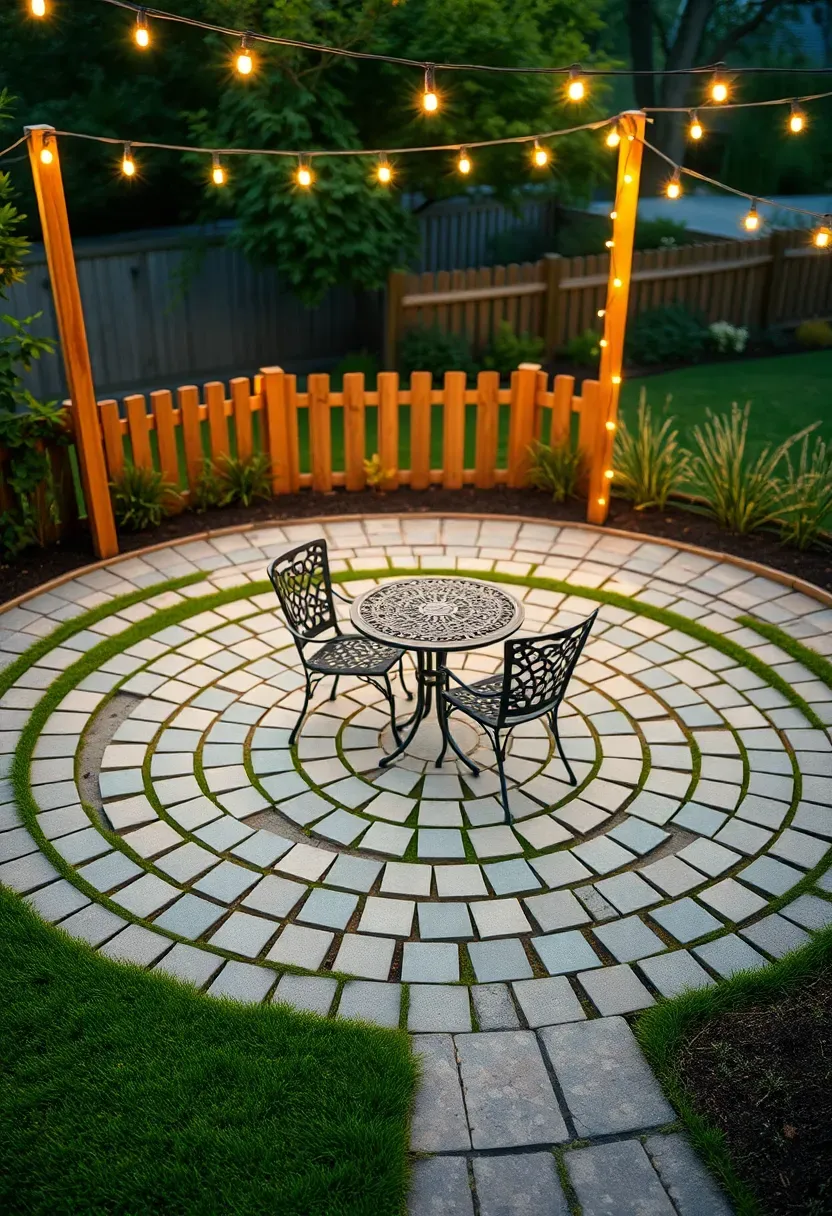
A circular patio breaks up the rectangular feel most backyards default to. Lay pavers in concentric rings starting from a center point, using a string and stake as your compass. The outer ring sits directly against turf, which creates a clean boundary without needing an additional edge restraint if you set the outermost pavers slightly below grade. Circles work especially well for dining areas because seating naturally wraps around the shape. A 12-foot diameter circle provides enough room for a 48-inch round table and six chairs with space to pull seats back comfortably.
Tips
- Use a paver circle kit from manufacturers like Belgard or Pavestone — they include pre-cut wedge pieces
- Compact the gravel base in 2-inch lifts rather than all at once for a level finished surface
- Edge the turf border with a steel landscape edge to keep grass from creeping onto the pavers
We picked a few things that go well with this idea: Galvanized Steel Landscape Edging (6-Pack, 20ft) (★4.5), Worth Garden Steel Lawn Edging (10-Pack, 33ft) (★4.6) and Corrugated Metal Garden Edging (6" x 40ft) (★4.4). As an Amazon Associate we earn from qualifying purchases.
4. Stepping Stone Path Through Lawn
How to install stepping stones in turf
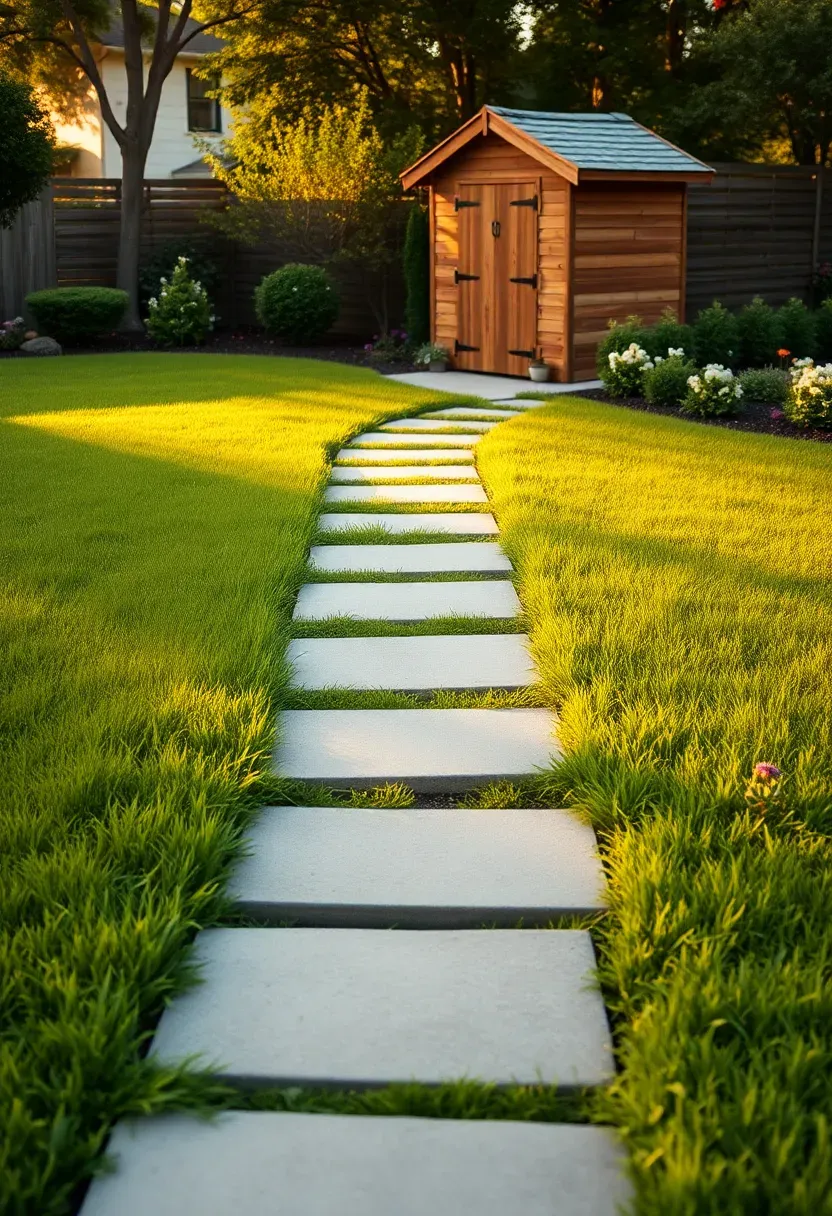
This is one of the cheapest paver-and-turf projects. Buy 12-18 rectangular or round pavers and set them into existing lawn.
Step 1: Lay out the path
Walk your natural route from point A to point B and drop a paver where each foot lands. Spacing should match a comfortable stride — roughly 22-26 inches center to center.
Step 2: Cut and dig
Flip each paver over, cut around it with an edging spade, and dig out enough soil so the paver sits about a half-inch above the surrounding turf. Add an inch of sand to the hole for leveling.
Step 3: Set and fill
Place each paver, tap it level with a rubber mallet, and press soil back against the edges. Water the surrounding grass to help it recover from the cuts.
Watch out
Pavers set too low collect water on top. Set too high and you will catch them with a mower blade. Check height after the first rain and adjust any that settled.
Recommended
Items for this idea
5. Herringbone Paver Patio with Turf Joints
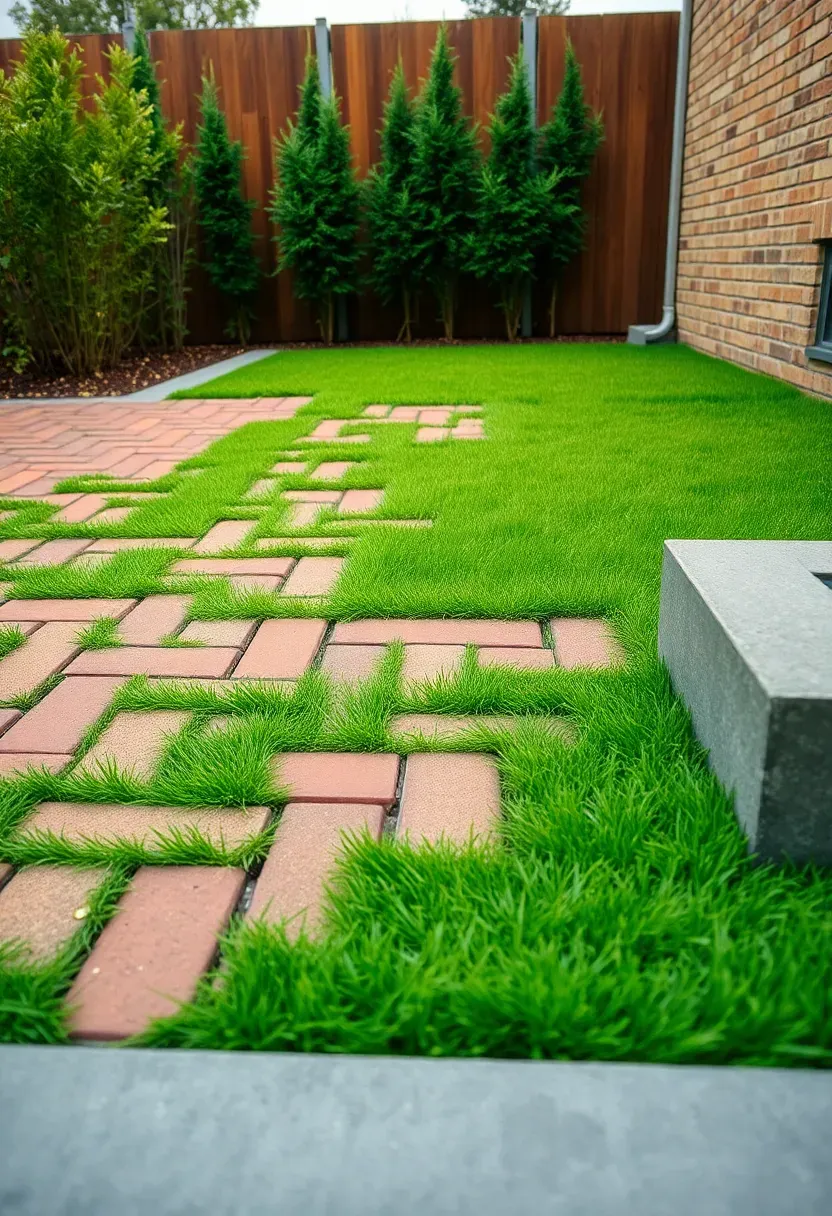
Herringbone is one of the strongest paver patterns for load-bearing surfaces because the interlocking angle distributes weight across multiple units. Adding turf joints — rather than sand — to a herringbone layout gives you the structural benefits plus improved drainage and a softer visual quality. Use standard 4x8-inch clay or concrete pavers and space them a consistent 1.5 inches apart. Fill joints with a strip of artificial turf cut to width. The result reads as a traditional brick patio from a distance but has a distinctly modern feel up close where the green lines become visible.
Tips
- Cut synthetic turf strips with a utility knife against a straightedge for clean edges
- Adhesive-back turf tape holds strips in place without shifting underfoot
- This pattern requires more cuts at the perimeter — rent a wet saw rather than scoring and snapping
6. Fire Pit Ring with Turf Surround
The issue
Fire pits need a non-flammable surface immediately around them, but extending that hardscape more than a few feet makes the area feel cold and industrial.
The fix
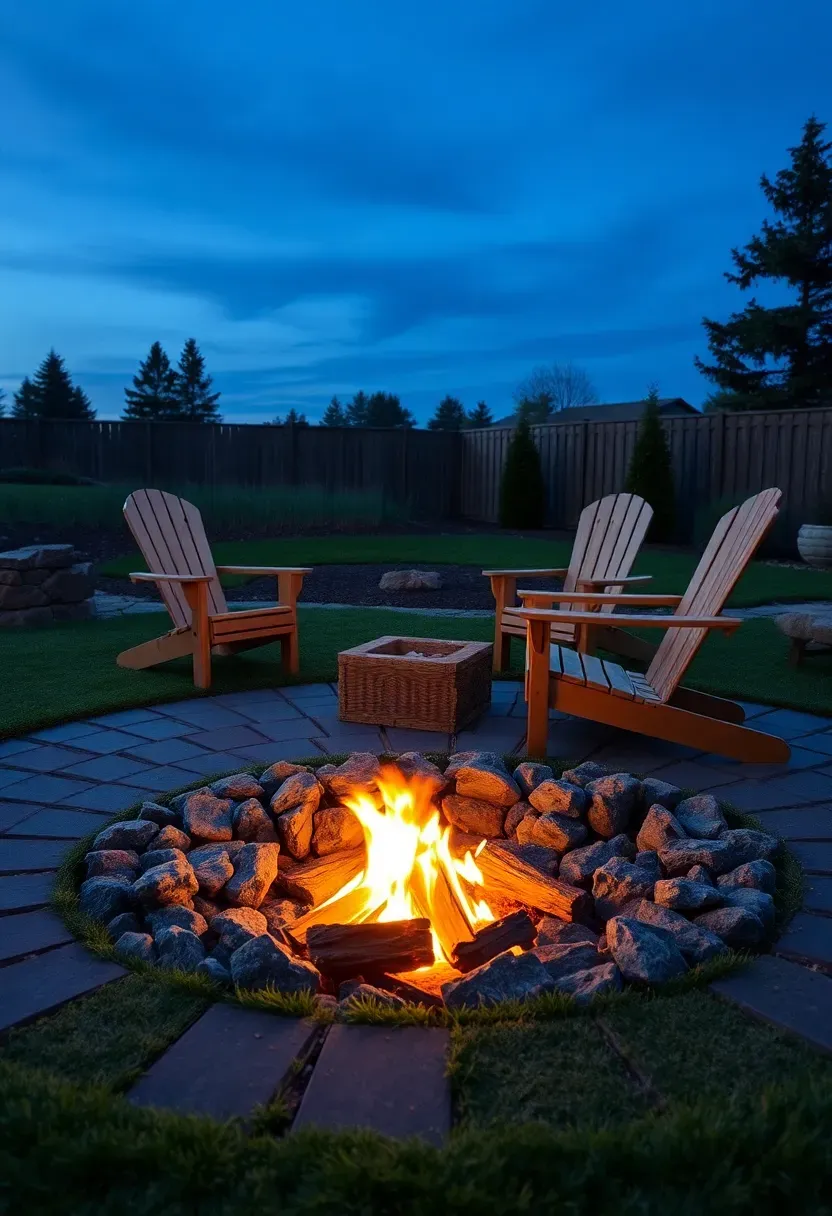
Build a 3-foot-wide paver ring around the fire pit bowl and transition to turf beyond that radius. The paver ring catches sparks and provides a stable surface for fire tools. The turf surround keeps the seating zone comfortable for bare feet and gives chairs a forgiving surface to sit on rather than rocking on uneven stone. Use fire-rated pavers or natural stone within the inner ring — standard concrete pavers can spall at high temperatures. Keep the turf edge at least 36 inches from the fire pit lip to prevent heat damage to synthetic grass.
Pros and cons
- Safe spark zone with comfortable seating area beyond the ring
- Synthetic turf can melt if embers land on it — keep a spray bottle handy
- Real grass in the surround may brown from radiant heat during long burns
Recommended
Items for this idea
7. Linear Paver Strips with Turf Channels
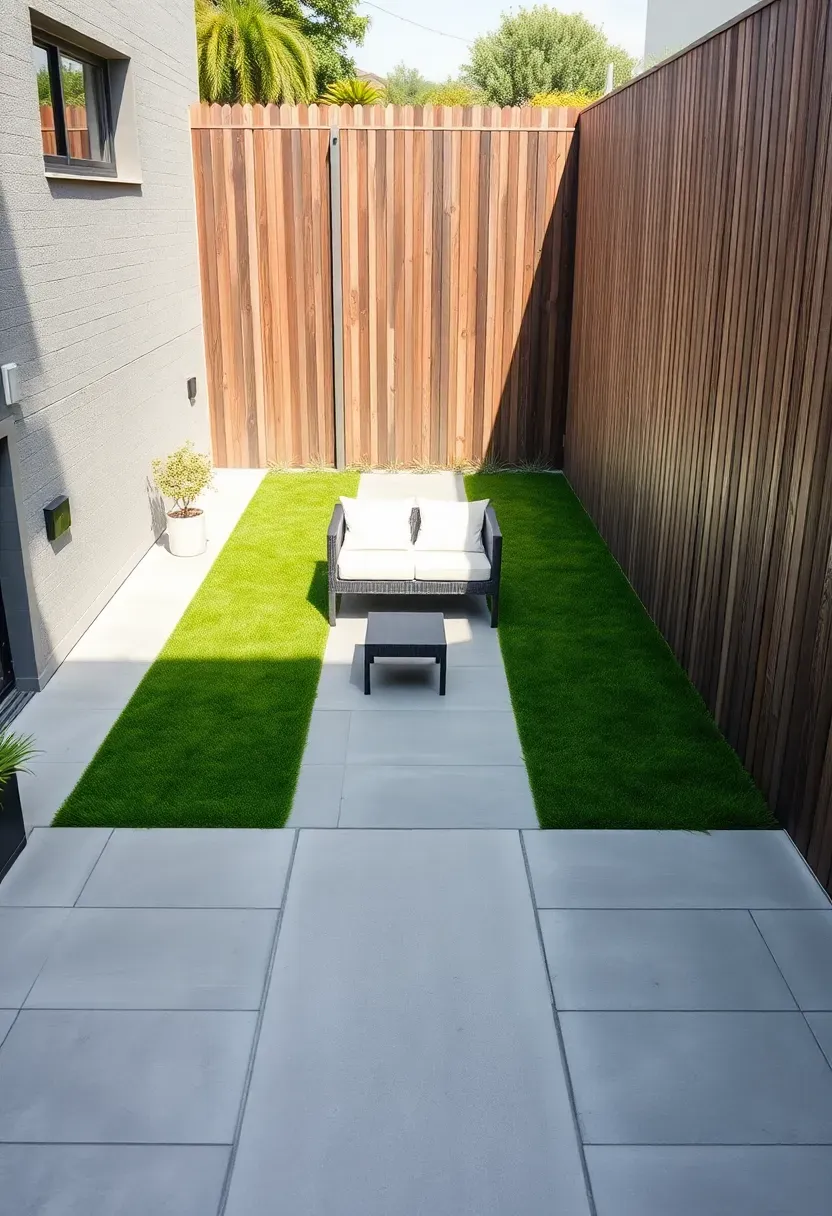
Long parallel bands of pavers separated by turf channels suit narrow backyards where width is limited but length is generous. The lines pull your eye toward the back of the yard and make the space feel deeper than it is. Use paver strips at least 3 feet wide for functional walking and furniture zones, with turf channels of 12-18 inches between them. This layout naturally creates separate zones — one strip for dining, another for lounging, with the turf channels acting as visual dividers. The linear pattern also simplifies construction because you build each strip independently.
Tips
- Run the strips parallel to the longest dimension of the yard for maximum visual effect
- Use a different paver color or texture for each strip to define zones without extra furniture
- Install drip irrigation under the turf channels if using real grass between hardscape bands
8. Turf Driveway with Paver Tracks
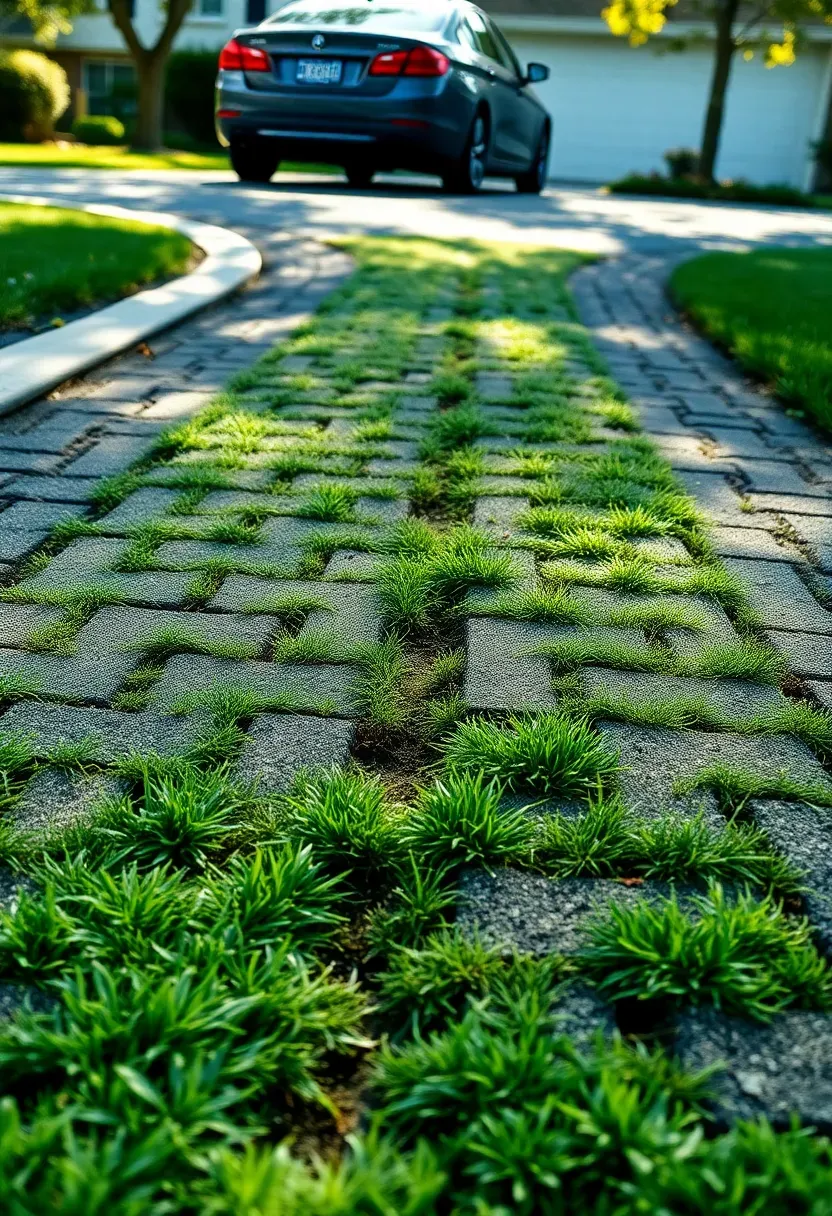
Why consider turf in a driveway
Solid driveways generate runoff that contributes to storm drain flooding. Many municipalities now encourage or require permeable surfaces for new construction, and a turf driveway satisfies those codes.
How it works
Lay two paver strips 30 inches wide — matching standard tire track spacing — with turf filling the center and sides. The pavers carry the vehicle weight while the turf handles drainage. For real grass, use a reinforcement grid underneath to prevent tire ruts. For artificial turf, choose a product rated for vehicular traffic with a heavier backing. The finished driveway lets rainwater percolate into the ground rather than running into the street.
Choose if
- You park lighter vehicles (sedans, SUVs) — not ideal for heavy trucks
- Your neighborhood allows alternative driveway surfaces
- You want to reduce impervious surface coverage on your lot
Recommended
Items for this idea
9. Paver Dining Area with Turf Lounge Zone
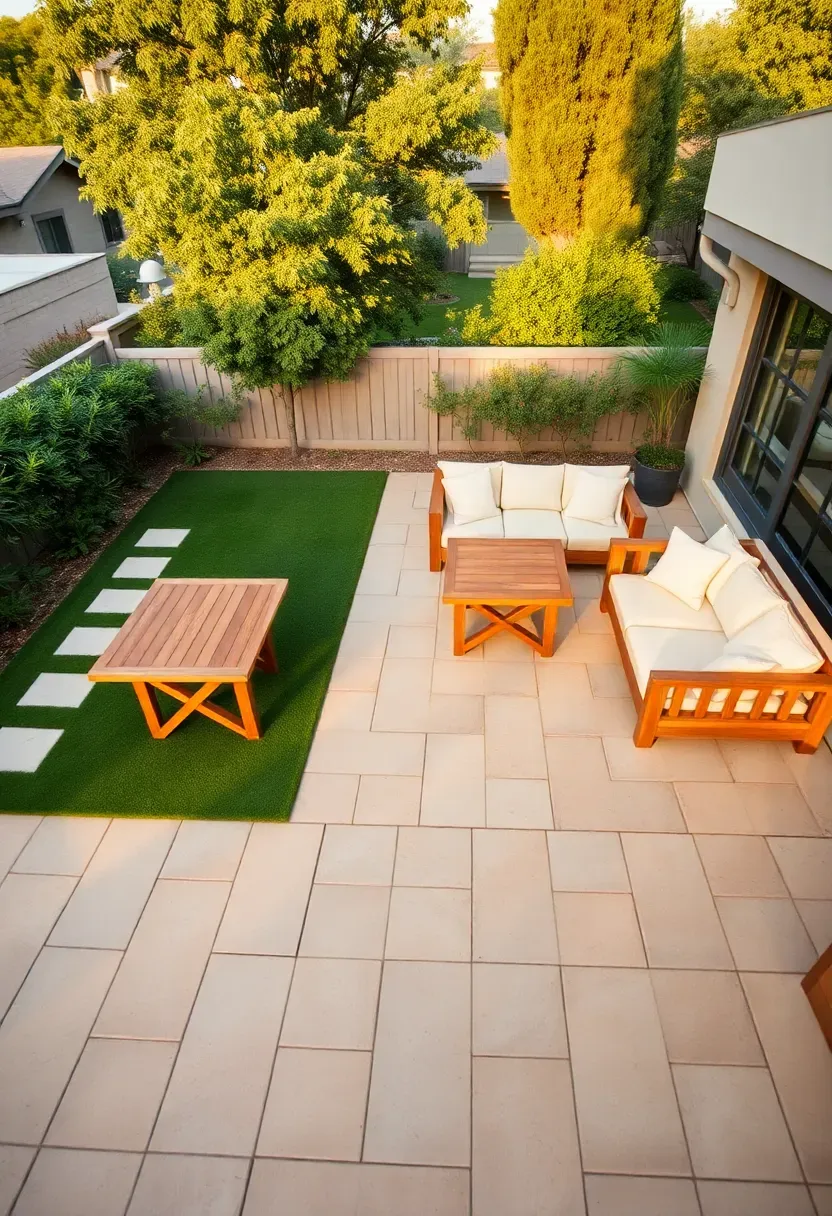
Table legs and chair feet need a flat, stable surface. Grass does not provide that — chairs sink, tables wobble, and mowing around furniture is annoying. The solution: pave the dining zone and turf the lounge zone. A 12x12-foot paver pad handles a standard outdoor dining set comfortably. Beyond that pad, synthetic or natural turf creates a relaxed area for low seating, floor cushions, or blanket-style lounging. The contrast between the two surfaces signals the shift from "eat here" to "relax here" without needing a wall, planter, or level change to define the boundary.
Tips
- Position the paver dining area closer to the house for shorter food-carrying distance
- Use a flush edge between pavers and turf — no raised lip to trip on
- Low-profile outdoor rugs on the turf side add color without blocking drainage
10. Geometric Paver Mosaic in Turf
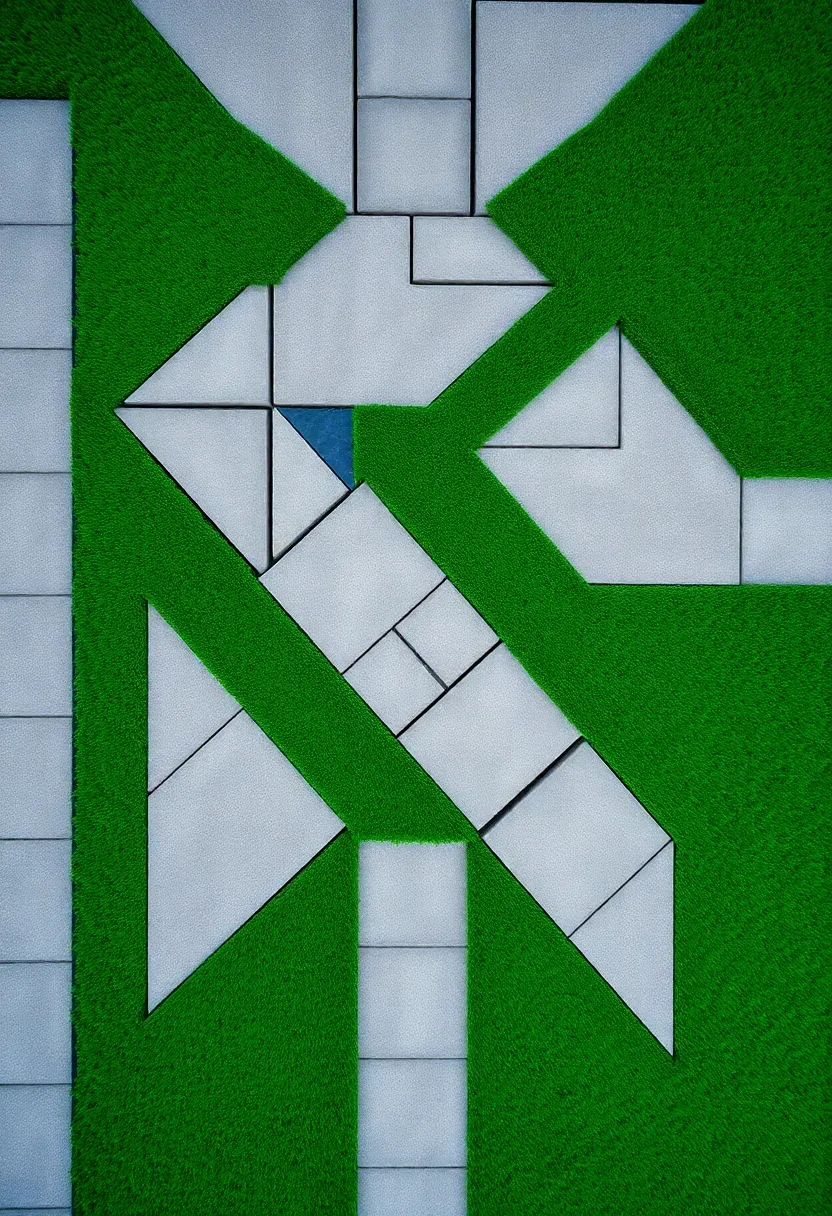
This approach treats pavers as design elements scattered within a turf field rather than as a continuous surface. Arrange groups of pavers in geometric clusters — hexagons, triangles, or diamond formations — separated by turf. Each cluster can serve a purpose: a hexagonal grouping holds a planter, a diamond shape marks a seating spot, a line of triangles creates a visual path. The turf ties everything together as a unified ground plane. The effect is closer to landscape art than traditional patio design, and it uses far fewer pavers than a full hardscape installation.
Tips
- Sketch the pattern on graph paper first — irregular geometries look sloppy without planning
- Keep at least 8 inches of turf between paver clusters so grass can establish properly
- Use contrasting paver colors within each shape to emphasize the geometric forms
Recommended
Items for this idea
11. Terraced Paver Steps with Turf Treads
How to handle slopes with pavers and turf
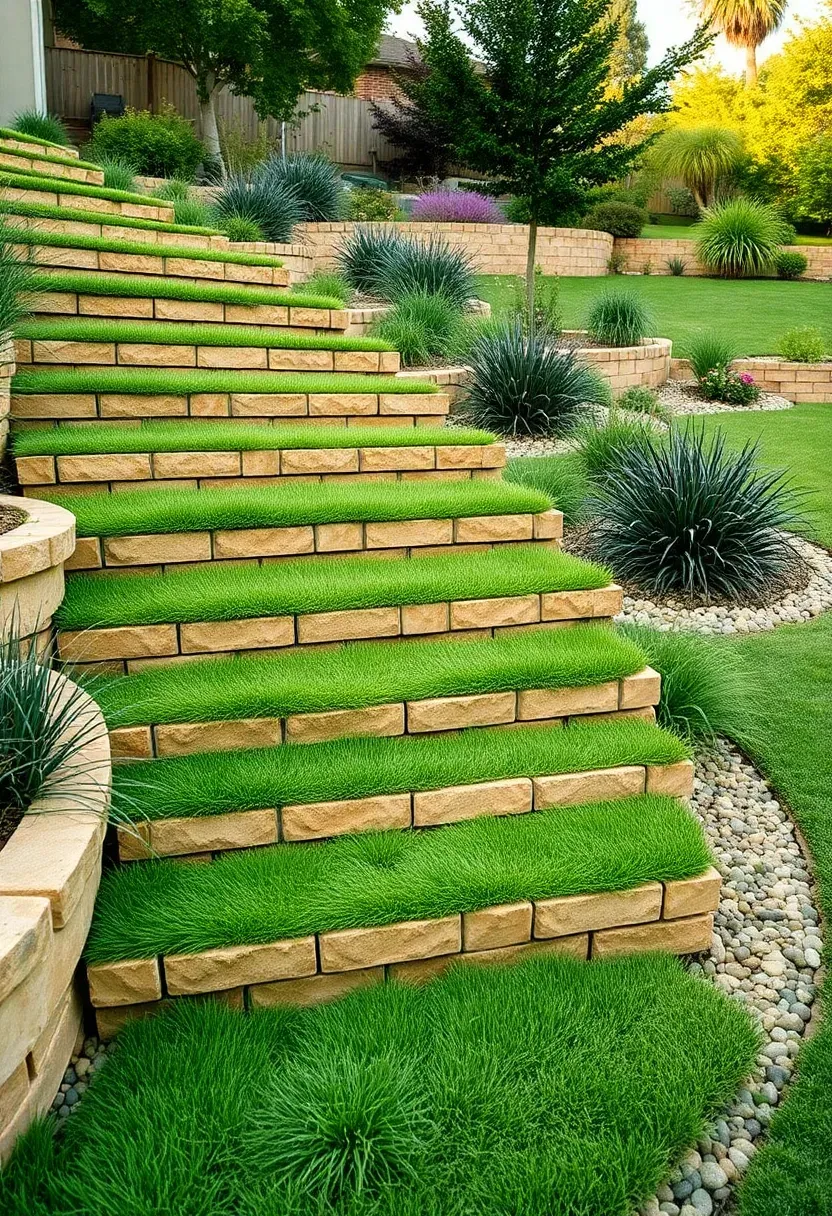
Sloped yards need terracing to create usable flat areas. Pavers make durable step risers while turf covers the flat treads.
Step 1: Calculate rise and run
Measure total slope height and divide by 6-inch risers to determine the number of steps. Each tread should be at least 36 inches deep for comfortable walking.
Step 2: Build retaining risers
Stack two courses of 3-inch-tall pavers or use 6-inch retaining wall blocks for each riser. Set them on a compacted gravel footing.
Step 3: Fill and plant treads
Backfill each terrace with topsoil, compact lightly, and lay sod or seed. The turf treads create soft landings between hard risers and absorb rainfall that would otherwise sheet down the slope.
Watch out
Water needs somewhere to go at the bottom. Install a French drain along the lowest terrace to prevent pooling where the slope meets flat ground.
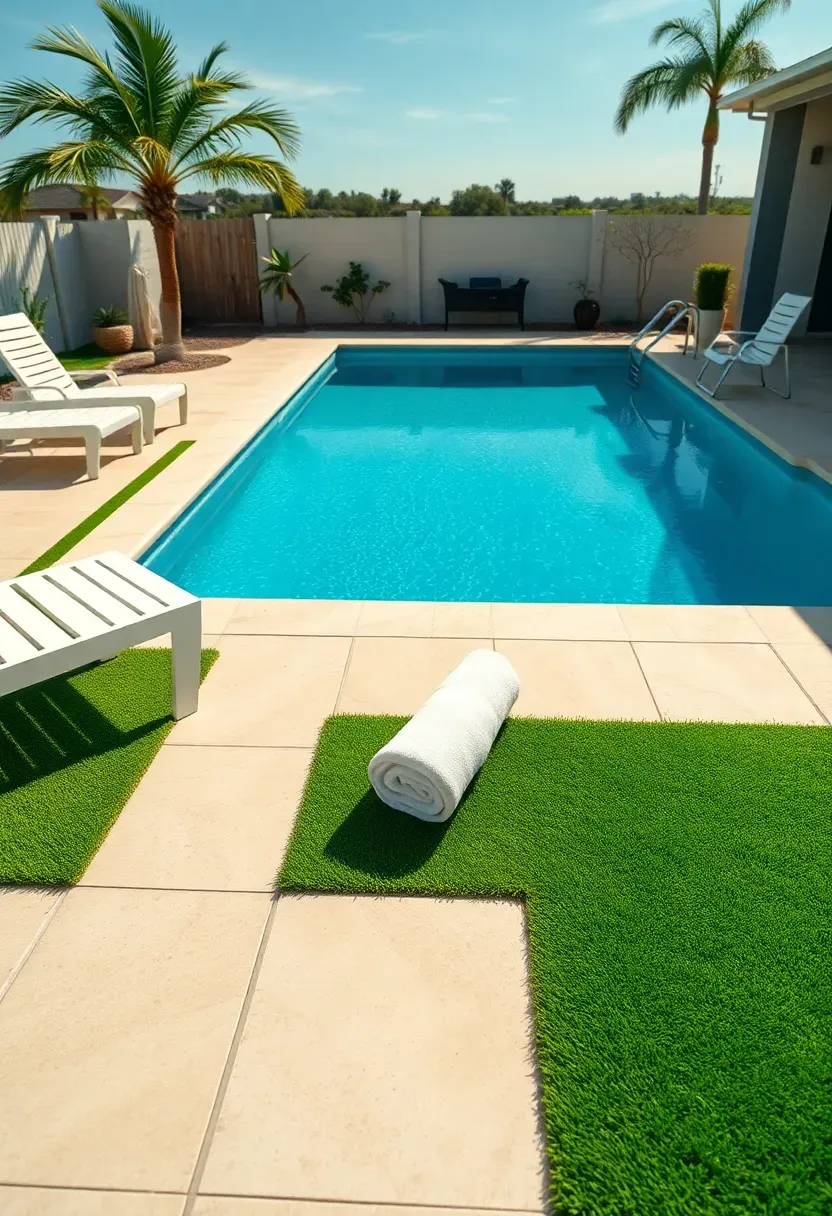
12. Pool Surround with Paver Deck and Turf Panels
Pool decks get scorching hot in summer sun. Inserting turf panels between paver sections gives swimmers a cooler surface to walk on between the pool edge and lounging areas. Lay pavers in the immediate 3-foot zone around the pool coping for safety — this area gets the most water and needs a slip-resistant, non-organic surface. Beyond that wet zone, alternate paver sections with artificial turf panels. Synthetic turf stays 20-30 degrees cooler than concrete pavers in direct sun and feels better underfoot when you step off a hot deck. Choose pool-rated artificial turf with antimicrobial infill to handle chlorinated splash water.
Tips
- Slope all paver sections away from the pool at 1/4 inch per foot
- Use light-colored pavers to reduce heat absorption around the pool edge
- Avoid real grass near pools — clippings clog skimmers and filters constantly
Recommended
Items for this idea
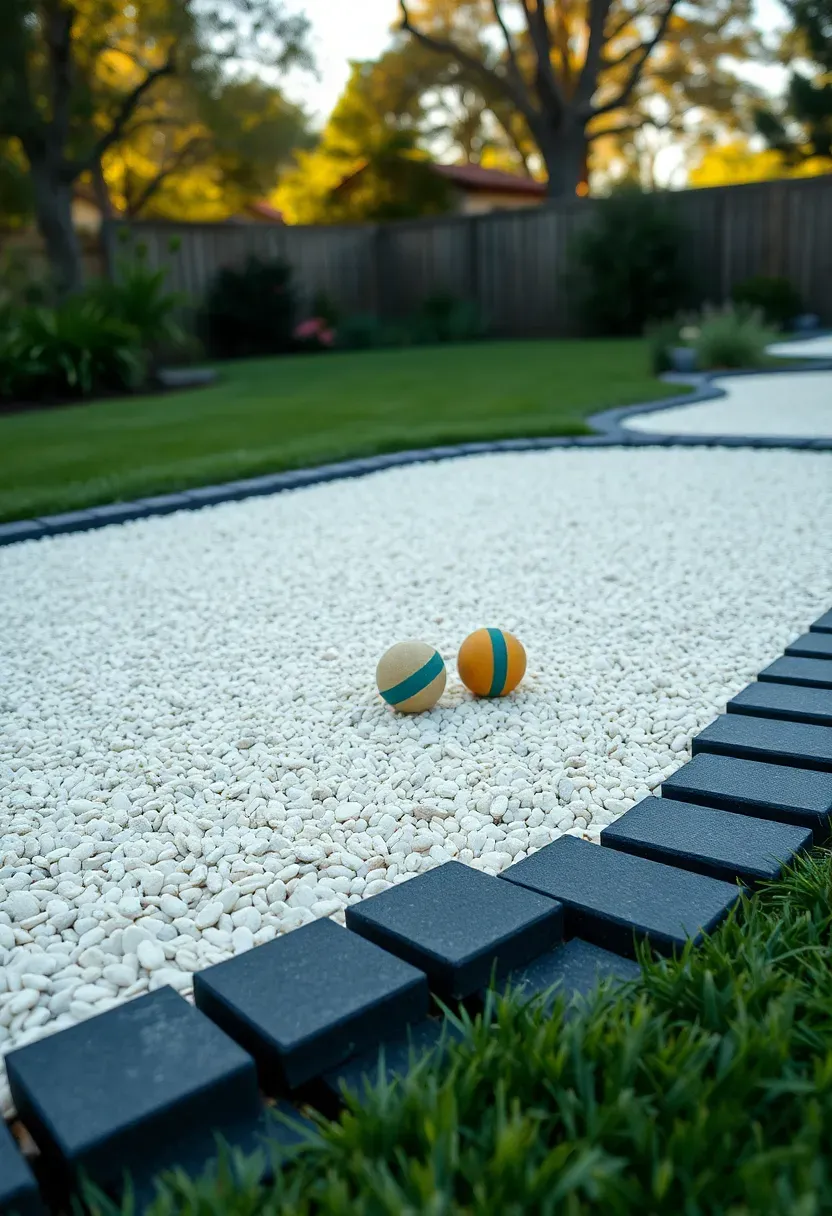
13. Bocce Court with Paver Border
A bocce court is 60 feet long and 12 feet wide at regulation size, but backyard courts work fine at 40x10. The playing surface uses packed crushed oyster shell, decomposed granite, or fine gravel — not turf. But the border defines the court and keeps the fill material contained. Install a single or double row of pavers as the perimeter curb, set flush with the surrounding turf. The paver border creates a visual frame that makes the court look intentional rather than like a random gravel patch in the lawn. Use bullnose or tumbled pavers for the border edge so balls that hit the side roll back without chipping.
Tips
- Crown the court surface slightly in the center (1 inch over the 12-foot width) for drainage
- Set border pavers in concrete rather than sand — bocce balls hit them hard enough to shift sand-set units
- Add a drinking rail or shelf behind one end using pavers capped with a wood plank
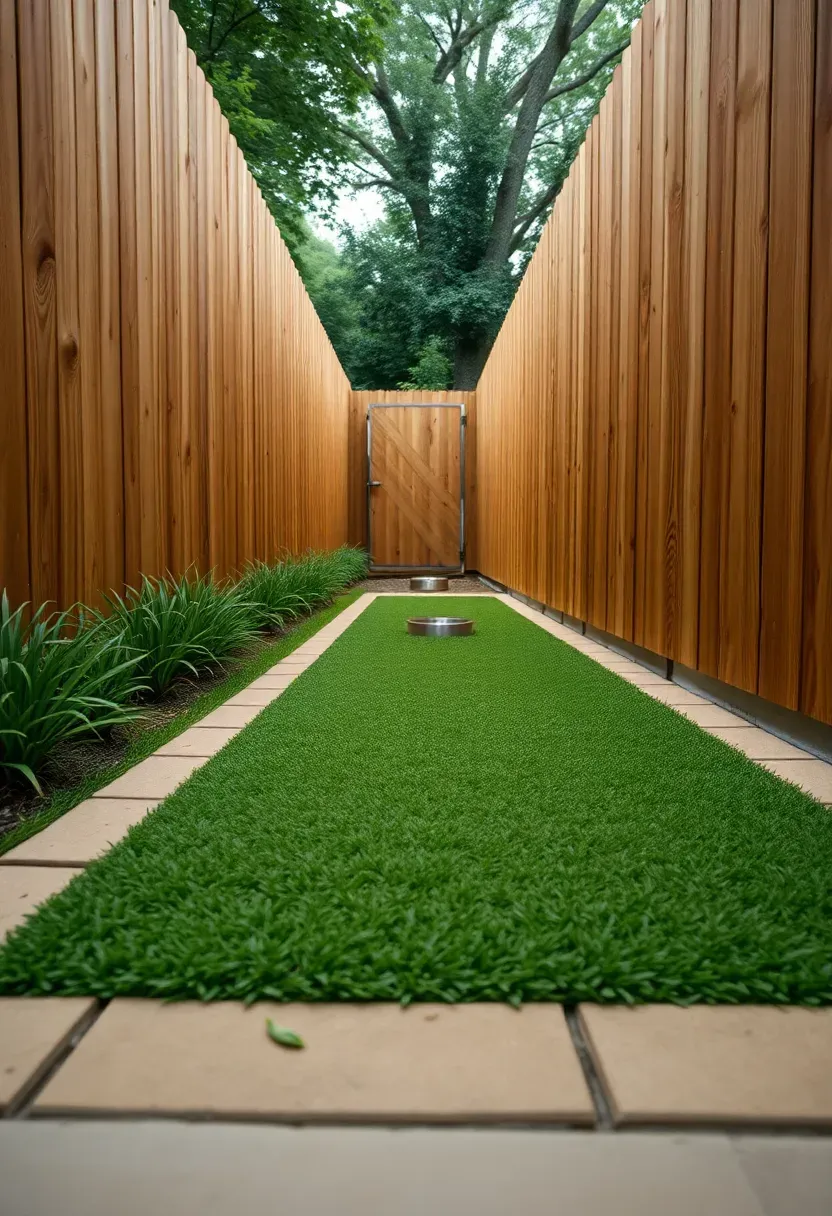
14. Dog Run with Artificial Turf and Paver Edge
The issue
Dogs destroy real grass in confined areas. Within weeks of regular use, a dog run becomes a mud pit that tracks into the house.
The fix
Line the run with artificial turf rated for pet use — these products have perforated backing and antimicrobial infill that drains urine and resists odor. Border the turf with a soldier course of pavers set in concrete to keep the turf edges from lifting and give dogs a clean surface at the entry point. The paver edge also creates a clear visual boundary between the dog zone and the rest of the yard. Size the run at minimum 4 feet wide by 20 feet long for medium to large breeds.
Pros and cons
- No mud, no dead grass, no bare dirt patches year-round
- Requires hosing down every few days and infill replacement annually
- Initial cost is higher than sod but lower than constantly re-sodding
Recommended
Items for this idea
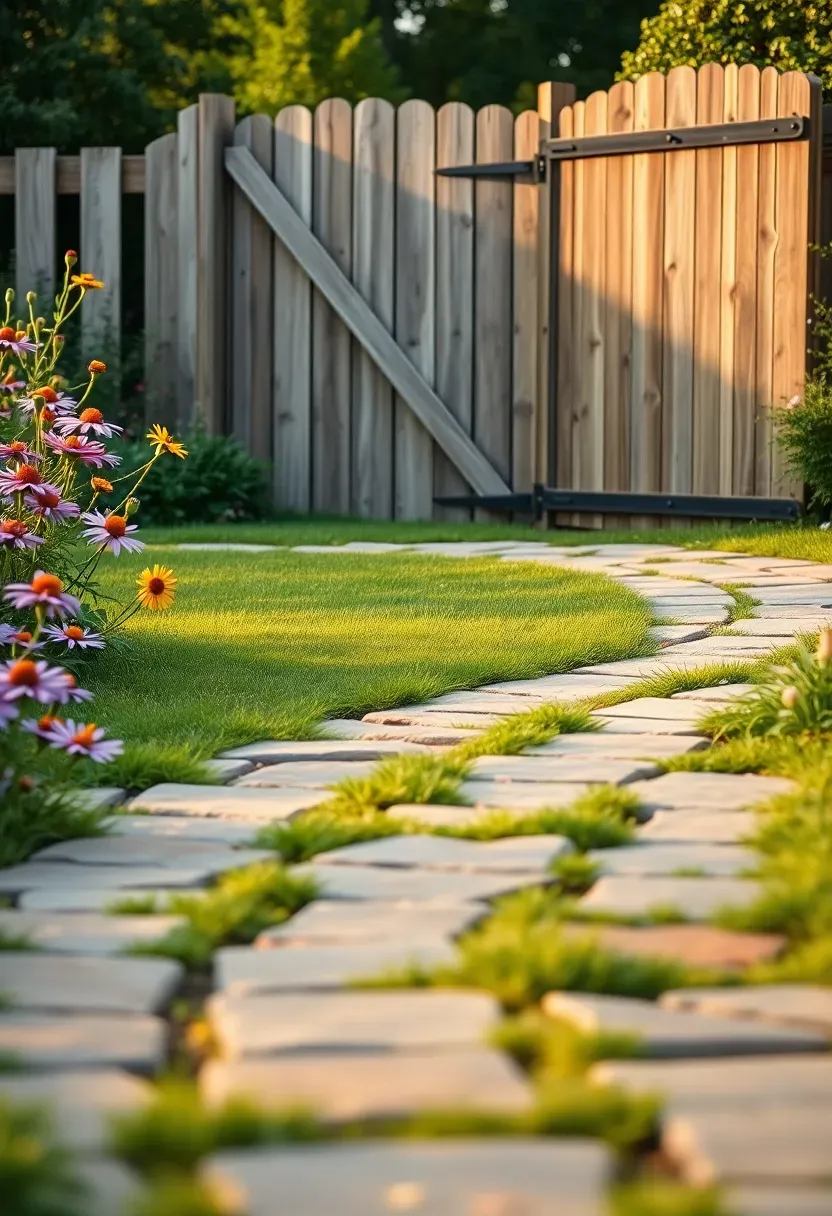
15. Curved Paver Walkway with Turf Margins
Straight paths feel formal. Curved paths feel relaxed. A gentle S-curve through turf connects two areas of the yard while adding visual interest to an otherwise flat lawn. Use irregularly shaped pavers — flagstone, broken concrete, or tumbled cobble — for curves since rectangular pavers require awkward cuts on bends. Set the walkway 36-42 inches wide for comfortable single-file walking. Let the turf grow right up to the paver edges without a hard border — the organic transition between stone and grass reinforces the casual feel of the curve.
Tips
- Lay out the curve with a garden hose first and adjust until the shape feels right before digging
- Stagger the paver widths slightly on curves so the inner edge does not have tight pinch points
- Plant low creeping thyme or dwarf mondo grass along the margins for a softer edge than turf alone
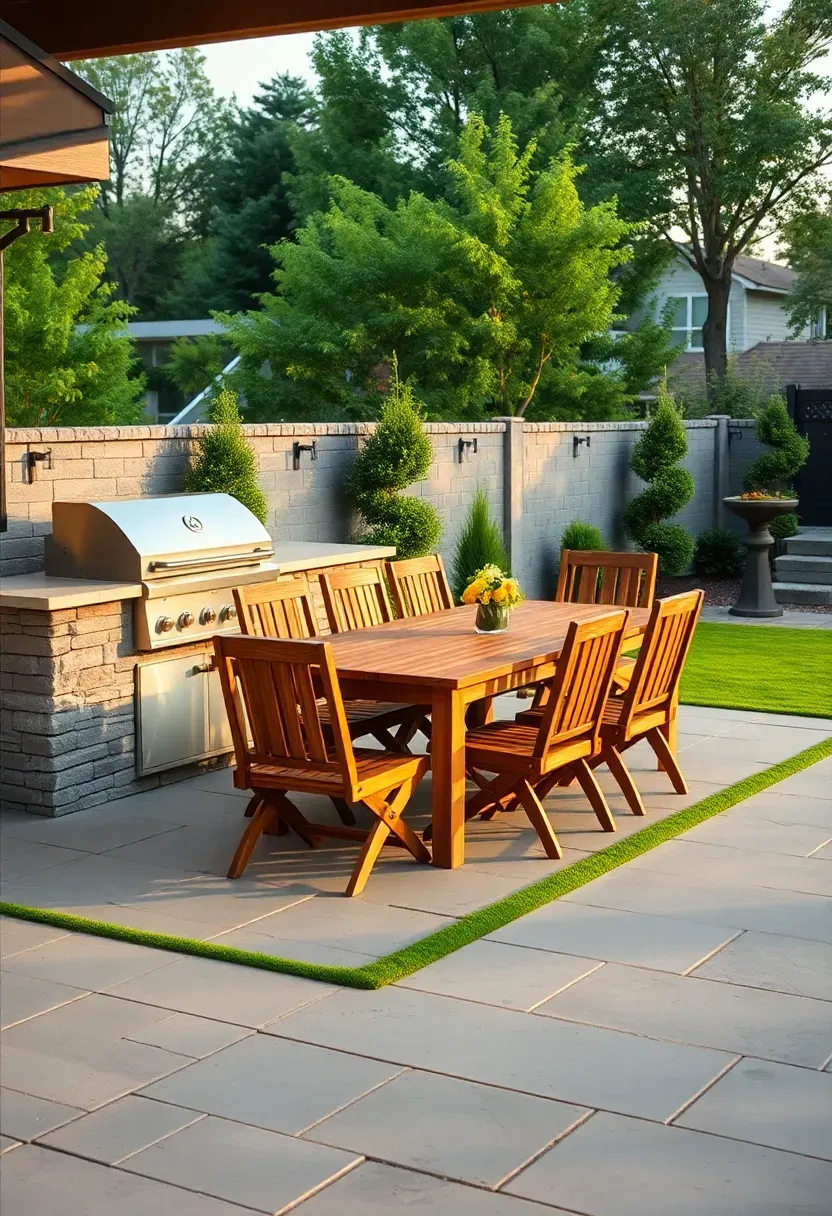
16. Outdoor Kitchen on Pavers with Turf Transition
Outdoor kitchens need a solid, level, non-flammable base. Pavers handle that. But extending pavers across the entire backyard just because the kitchen needs them wastes money and creates unnecessary heat buildup. Instead, pave a 10x14-foot pad for the kitchen — grill station, counter, and prep area — then transition directly to turf for the adjacent dining or seating area. The paver zone handles grease drips, dropped utensils, and heavy foot traffic. The turf zone beyond stays cool and comfortable for guests who are not standing at the grill.
Tips
- Slope the paver pad slightly away from the kitchen structure to drain rainwater and spills
- Use porcelain pavers near the grill — they resist grease staining better than concrete
- Install a single-row paver transition strip between the kitchen pad and turf as a visual divider
Recommended
Items for this idea
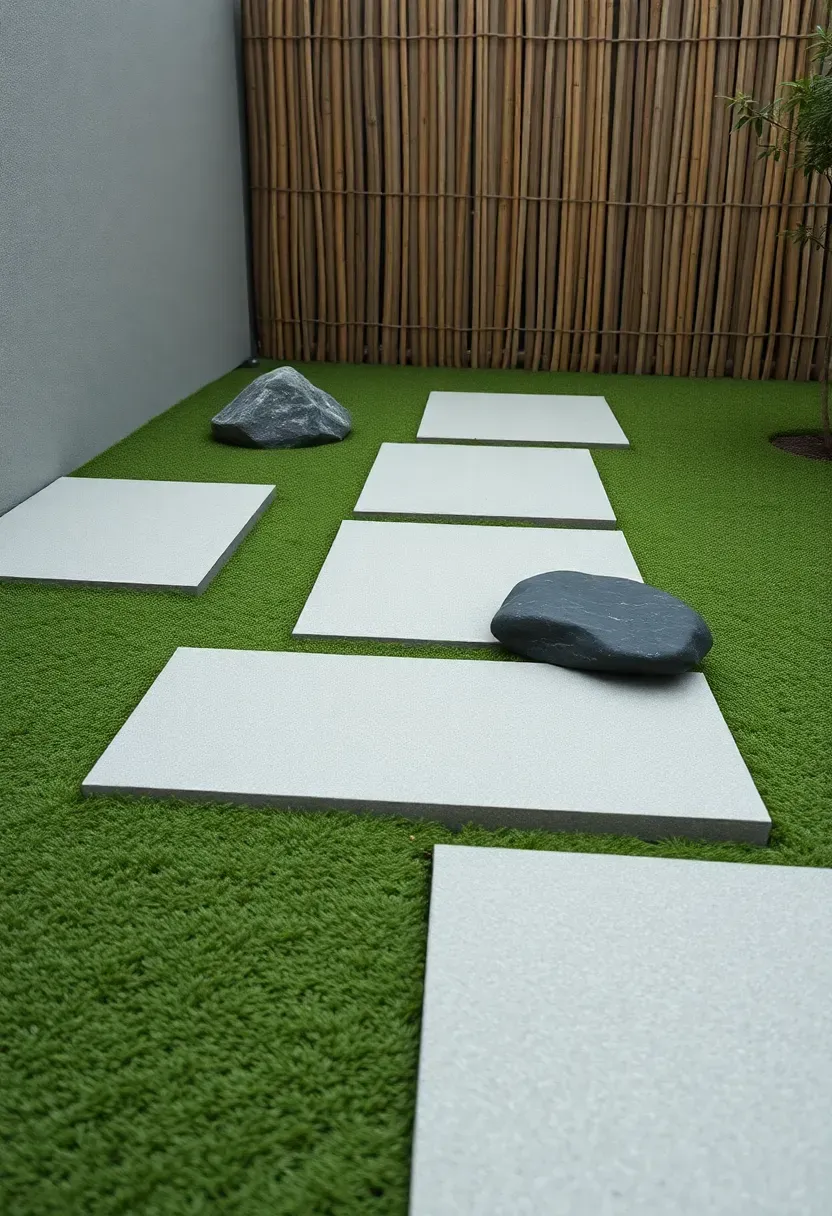
17. Paver and Turf Zen Garden Layout
Zen gardens rely on negative space. The turf acts as the "empty" field while pavers serve as deliberate focal points — each stone placed with intention rather than pattern. Arrange 5-7 large-format pavers (24x36 inches or bigger) asymmetrically across a turf plane. Leave generous space between them — 3 feet minimum. Add a single large boulder, a shallow stone basin, or a Japanese maple as a vertical accent. The restraint is the point. Where other paver-and-turf designs use as much hardscape as possible, this one uses as little as necessary.
Tips
- Odd numbers of pavers look more natural than even groupings in asymmetric layouts
- Choose pavers with a honed or natural cleft finish — polished surfaces look out of place in zen designs
- Replace standard turf with dwarf mondo grass or Korean velvet grass for an authentic Japanese garden feel
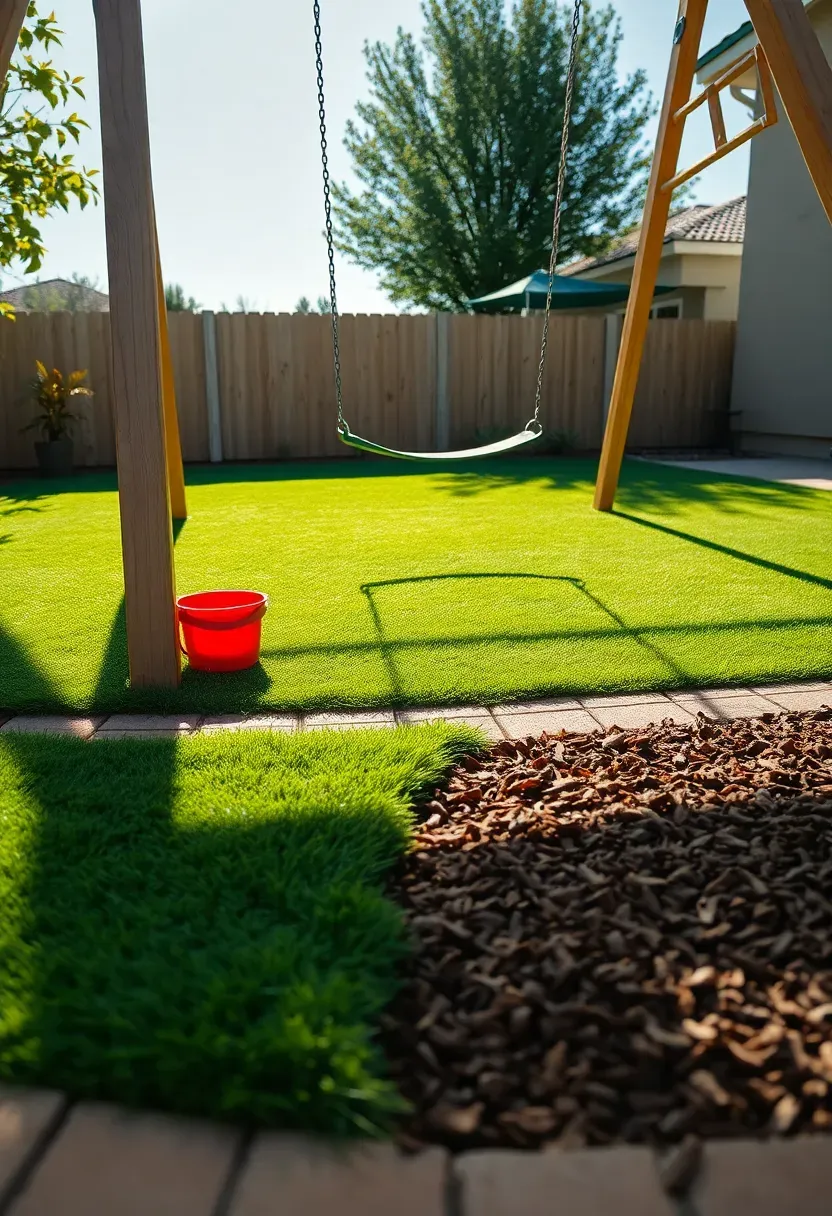
18. Kids Play Area with Turf Pad and Paver Perimeter
How to build a safe play surface with turf and pavers
Kids need soft landings. A paver border with an interior turf pad gives you a contained, cushioned play zone.
Step 1: Define the area
Mark a rectangle at least 6 feet wider and longer than the play equipment footprint. This accounts for swing arcs and slide run-outs.
Step 2: Install the paver border
Lay a 24-inch-wide soldier course of pavers around the perimeter, set flush with the turf surface. This border keeps the play surface fill contained and gives adults a clean walking path around the equipment.
Step 3: Install cushioned turf
Use playground-rated artificial turf with a shock-absorbing pad underneath. These systems provide fall attenuation for equipment up to 8 feet high. Staple the turf edges under the inner row of pavers.
Watch out
Standard landscape turf without a shock pad does not meet ASTM fall safety standards. Specify playground-grade products with a certified critical fall height rating.
Recommended
Items for this idea
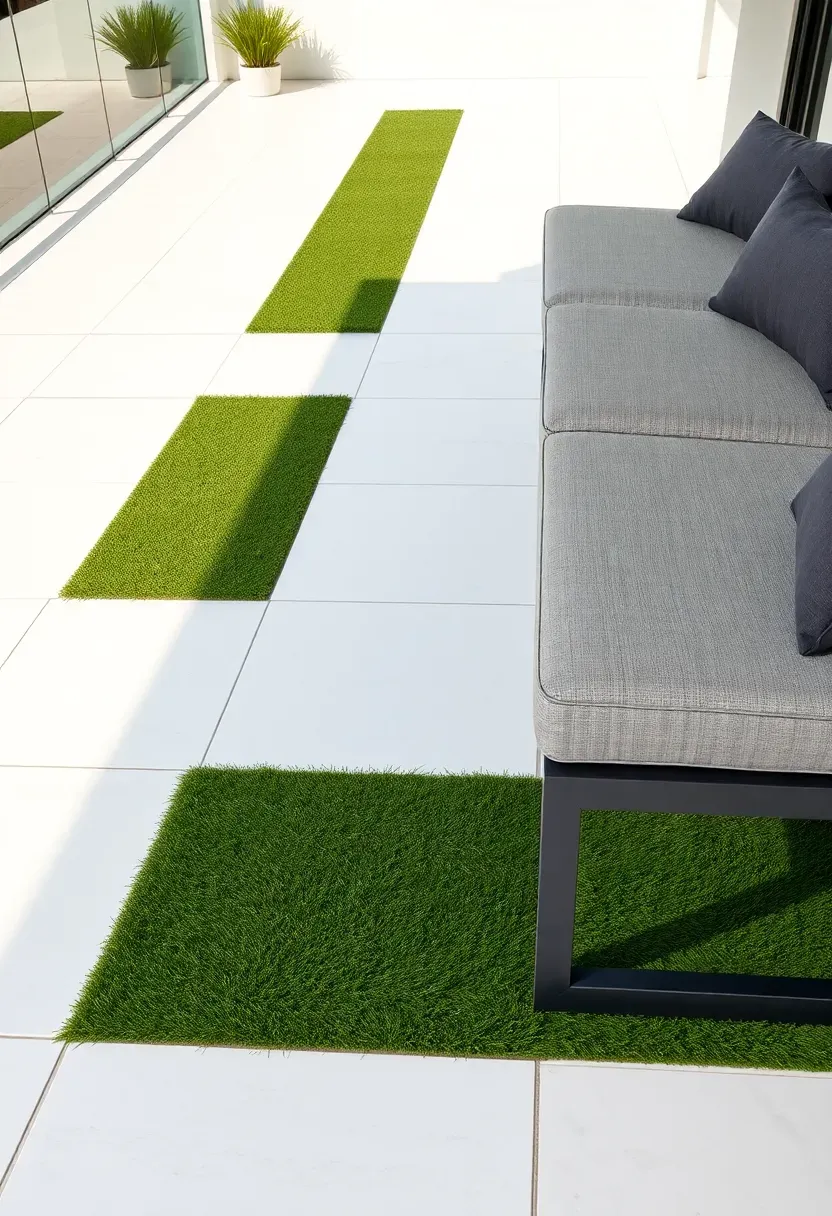
19. Mixed-Material Patio with Turf Inlays
This design places turf inside the patio rather than around it. Cut rectangular openings in a standard paver layout and fill them with turf panels. The inlays can be uniform — same size, evenly spaced — or varied for a more dynamic look. Position turf inlays strategically: under a coffee table where no one walks, along the edges where feet rest while seated, or in a central strip that functions as a visual runner. The key dimension is keeping turf panels at least 12 inches wide so they read as intentional design elements rather than mistakes where pavers are missing.
Tips
- Frame each turf inlay with a thin steel or aluminum edging strip for a clean reveal line
- Synthetic turf works better for inlays — real grass struggles in small panels surrounded by hardscape heat
- Match the turf pile height to the paver thickness so surfaces sit flush
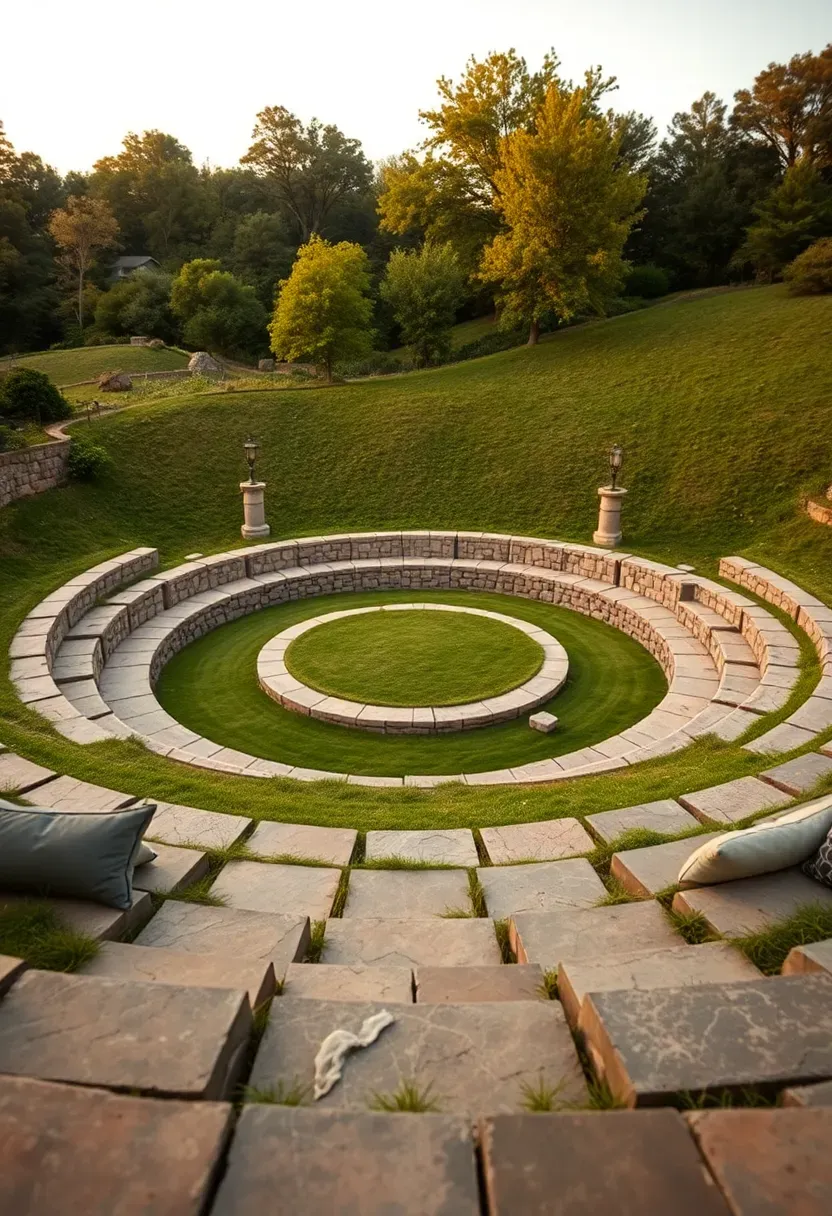
20. Turf Amphitheater with Paver Seating Rows
If your yard has a natural slope, build into it instead of fighting it. Cut curved terraces into the hillside and cap each row with a double-width course of flat pavers — these become bench seats. The flat area at the bottom of the slope stays as turf and functions as a stage, play area, or gathering space. Three or four rows accommodate 15-20 people for outdoor movie nights, small gatherings, or just watching kids play on the lower level. Add cushions to the paver seats for comfort since stone gets hard after thirty minutes.
Tips
- Angle the seating rows in a slight arc rather than straight lines for better sightlines to the center
- Set paver seats at 16-18 inches high per row — standard bench height
- Install a retaining wall behind the top row to prevent soil from washing onto the upper seats
Recommended
Items for this idea
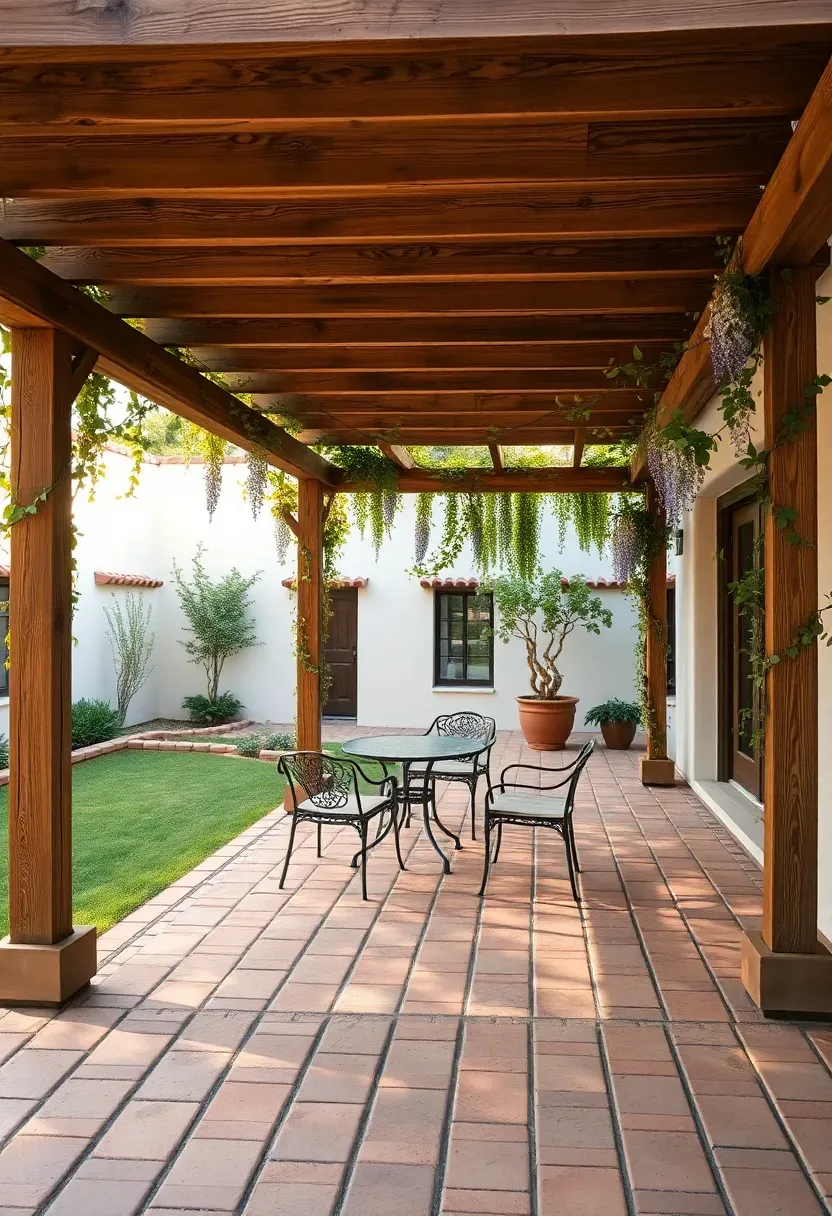
21. Paver Pergola Base with Turf Courtyard
A pergola needs a solid foundation — both for the post footings and for the furniture beneath it. Pave the area under the pergola roof and let turf cover the surrounding courtyard. This creates a covered "room" that feels distinct from the open yard around it. The turf courtyard provides a soft contrast to the structured pergola zone and gives kids or pets a place to play within sight of the shaded seating area. Use pavers that complement the pergola material: warm-toned travertine under a wood pergola, gray concrete under aluminum.
Tips
- Extend the paver base 18 inches beyond the pergola roof line on all sides to catch drip edge runoff
- Anchor pergola posts through the pavers into concrete footings below — not just into the paver base
- Leave a 2-inch turf gap between the outermost pavers and any garden beds to simplify mowing
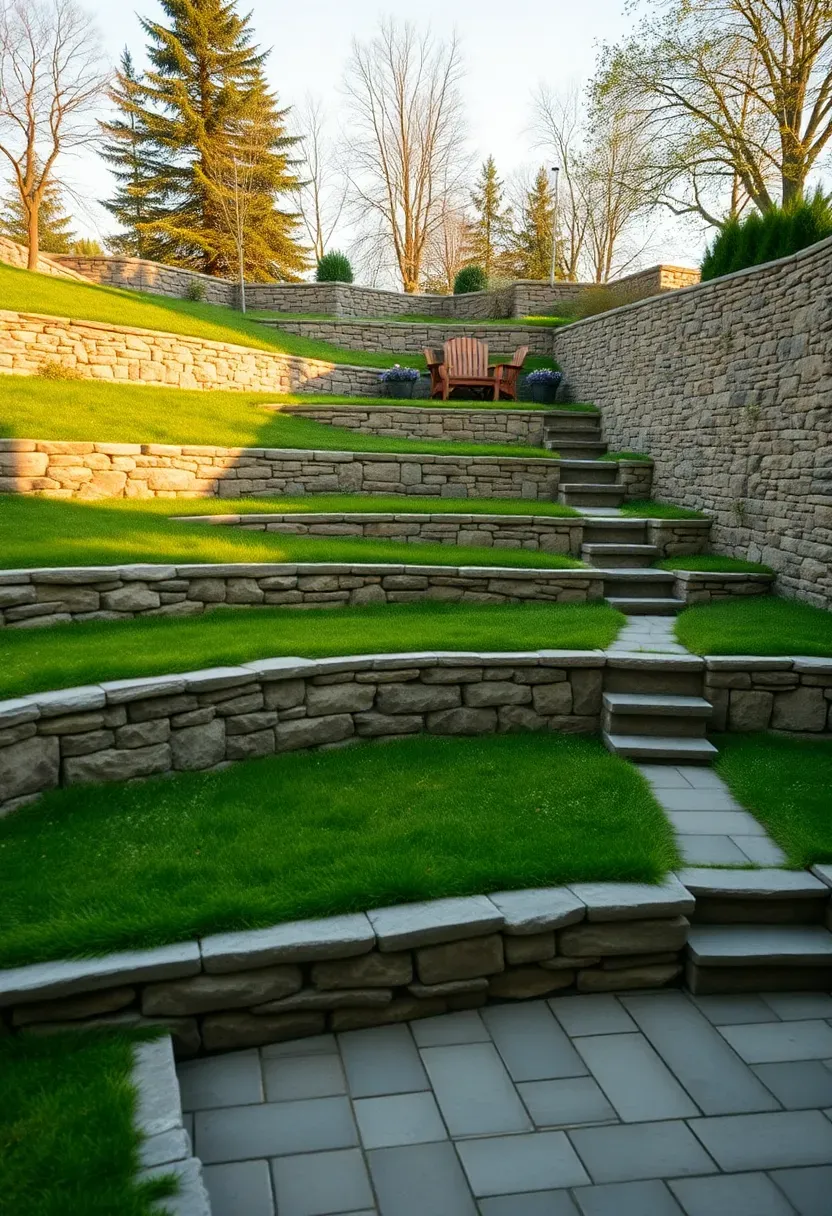
22. Sloped Yard Terraces with Paver Walls and Turf Flats
Paver retaining walls vs. poured concrete
Paver-style retaining wall blocks (like Allan Block or Versa-Lok) are easier to install than poured concrete, require no forms, and allow for curves. For slopes under 4 feet of total rise, most homeowners can handle the installation without an engineer's stamp.
How the layout works
Each terrace gets a flat turf surface for usable yard space. The retaining walls between levels use interlocking paver blocks that stack and set back slightly with each course, creating a stable battered wall. Connect the terraces with paver steps or a sloped paver walkway.
Choose if
- Your yard slopes more than 12 inches across its width or length
- You want flat lawn areas for activities rather than an unusable hillside
- You prefer a DIY-friendly wall system over hiring a concrete contractor
Recommended
Items for this idea
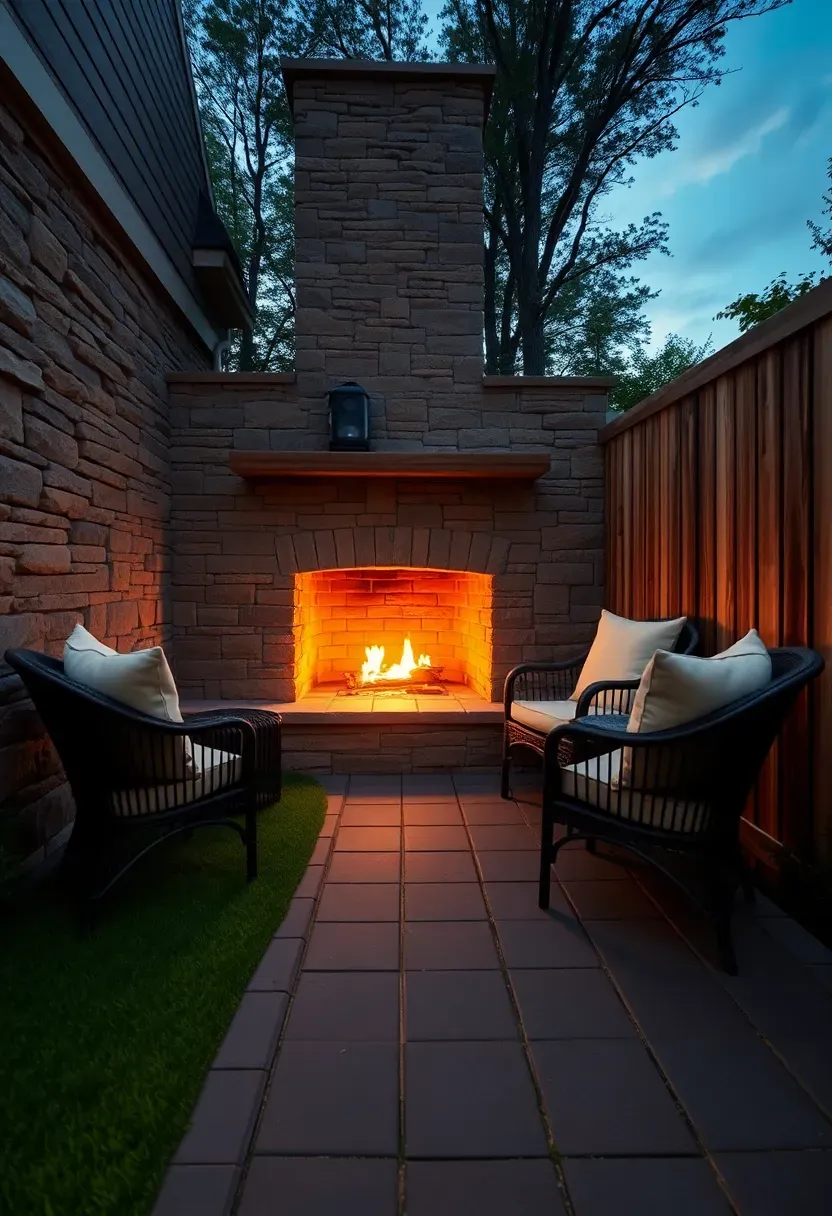
23. Corner Fireplace Nook with Paver Floor and Turf Buffer
Corner fireplaces use two existing fence lines or walls as the back and side of the seating area, so you only build the fireplace and floor. Pave the 8x8-foot nook with fire-rated pavers and create a 3-foot turf buffer between the paver edge and the rest of the yard. The turf buffer does two things: it absorbs heat so the transition from fireplace zone to lawn is not jarring underfoot, and it creates a visual frame that separates the nook from the broader yard. The corner placement also shields the fire from cross-breezes that scatter sparks.
Tips
- Use a manufactured corner fireplace kit rather than custom masonry — kits run $1,200-$2,500 and assemble in a weekend
- Angle seating 45 degrees to face the fire rather than lining chairs against the fence walls
- Install a gas line for convenience, or stick with wood-burning for lower upfront cost
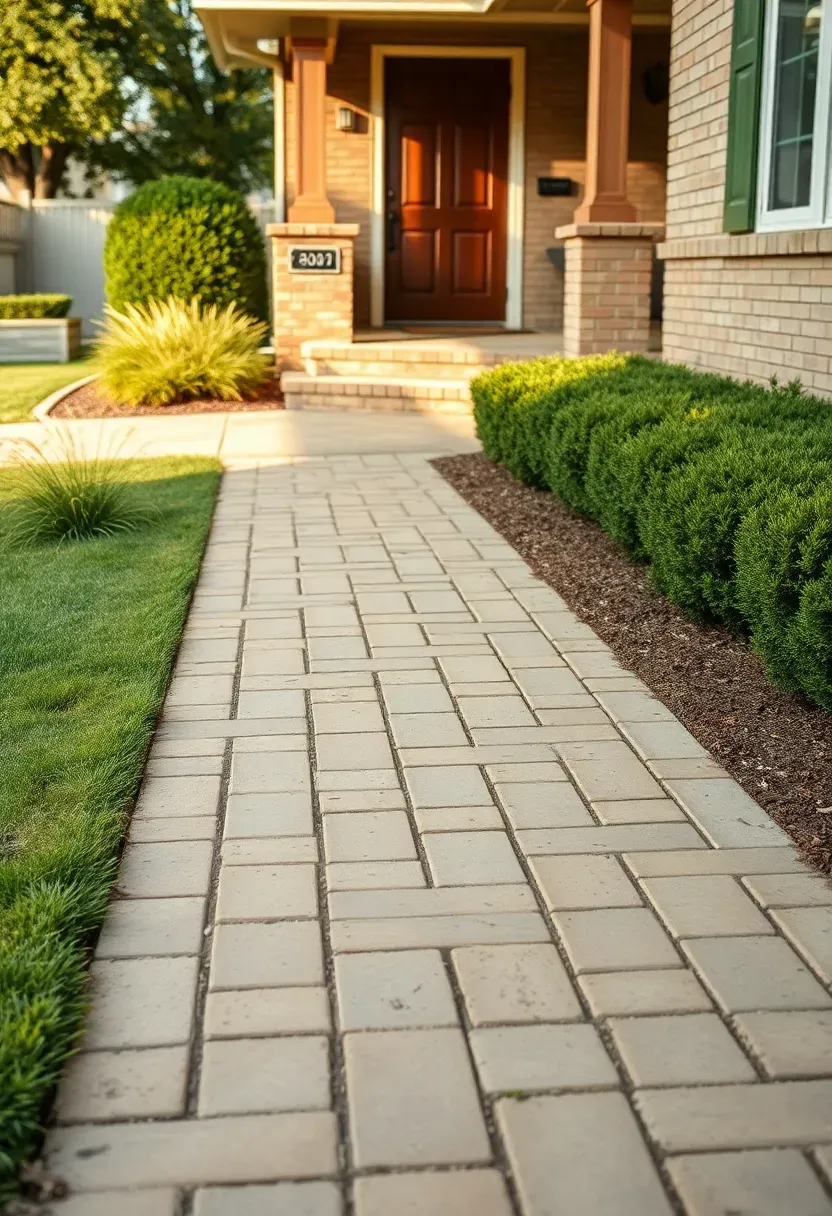
24. Front Yard Paver Path with Turf Parkway
Front yards have different requirements than backyards — curb appeal matters, HOA rules apply, and the path from sidewalk to front door gets daily use. A 4-foot-wide paver walkway with turf parkway strips on each side creates a welcoming entrance that looks maintained year-round. Choose pavers that complement your home's exterior color and material. The turf parkway strips between the walkway and property line (or driveway) stay narrow — 3-5 feet — so they are easy to mow and water without much effort.
Tips
- Flare the walkway wider at the front door (to 5-6 feet) to create a landing that feels generous
- Use solar path lights along one side of the paver walkway for nighttime visibility
- Edge the turf parkway with steel edging to keep grass from creeping onto the walkway
Recommended
Items for this idea
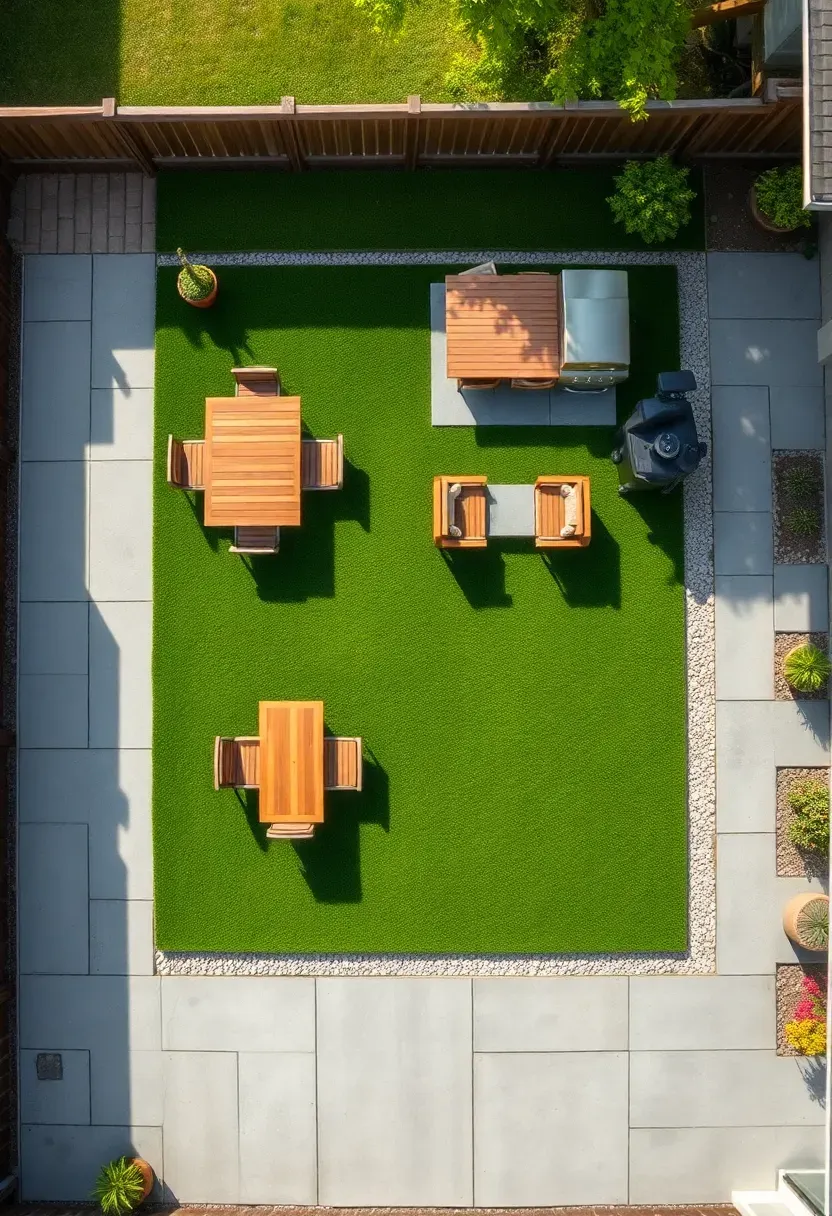
25. Full Yard Grid System with Modular Pavers
This is the most ambitious layout on the list: a grid that covers the entire yard with alternating paver pads and turf squares, each module sized to serve a specific function. A 6x6-foot paver pad becomes the grill station. Another hosts a four-person table. A 6x6-foot turf square provides a soft play spot. The grid continues across the yard, mixing and matching surfaces based on need. The modular approach means you can build it in phases — start with two or three paver pads and add more each season as the budget allows.
Tips
- Use a consistent grid module size (6x6 or 8x8 feet) across the entire yard for visual coherence
- Separate each module with a 4-inch gap filled with pea gravel for drainage between zones
- Map out the whole grid on paper before breaking ground — relocating paver pads later is labor-intensive
Quick FAQ
How much does a paver-and-turf backyard cost per square foot? Expect $8-$15 per square foot for the paver portions (including base preparation) and $2-$5 for natural turf or $6-$12 for synthetic turf. A typical 500-square-foot mixed project runs $3,500-$7,000 for materials with DIY labor. Professional installation doubles those numbers.
Can I use real grass between pavers or do I need artificial turf? Real grass works in full-sun areas with at least 6 hours of direct light and joints wider than 2 inches. In shade, heavy traffic zones, or narrow joints, artificial turf performs better and needs less maintenance. Many homeowners use both — real turf for large open sections, synthetic for tight joints and shaded spots.
Do pavers with turf joints drain better than solid paver patios? Yes. Water flows through the turf or its backing into the gravel base below rather than sheeting across a solid surface. A paver-and-turf layout can handle rainfall rates up to 4 inches per hour without ponding, compared to about 0.5 inches per hour for a solid mortared patio.
Will tree roots lift my pavers over time? They can. Keep paver installations at least 8 feet from large trees. If roots are already present, install a root barrier sheet at 18 inches deep along the paver edge. Trees with aggressive surface roots — silver maples, willows, certain poplars — are the worst offenders.
How long does artificial turf last between pavers? Quality synthetic turf lasts 15-20 years with normal residential use. UV stabilizers prevent fading, and the backing material resists decomposition. Budget products may fade or flatten within 8-10 years. Replace infill material every 3-5 years to maintain drainage and cushion.
A paver-and-turf yard gives you the best of both surfaces without committing fully to either one. Start with the project that solves your biggest problem — maybe that is a muddy dog run or a dining area where chairs wobble on grass — and expand from there. Most of these ideas work independently or combine with each other, so you can build a backyard that grows in stages as your time and budget allow. The hardest part is the base preparation. Get the gravel layer right, compact it properly, and the pavers and turf on top will last for years without shifting or settling.
Pinterest cover for 25 Backyard Ideas with Pavers and Turf
About the author
OBCD
CGI visualization and interior design content. We create detailed 3D renders and curate practical design ideas for every room in your home.