27 Backyard Hot Tub Ideas
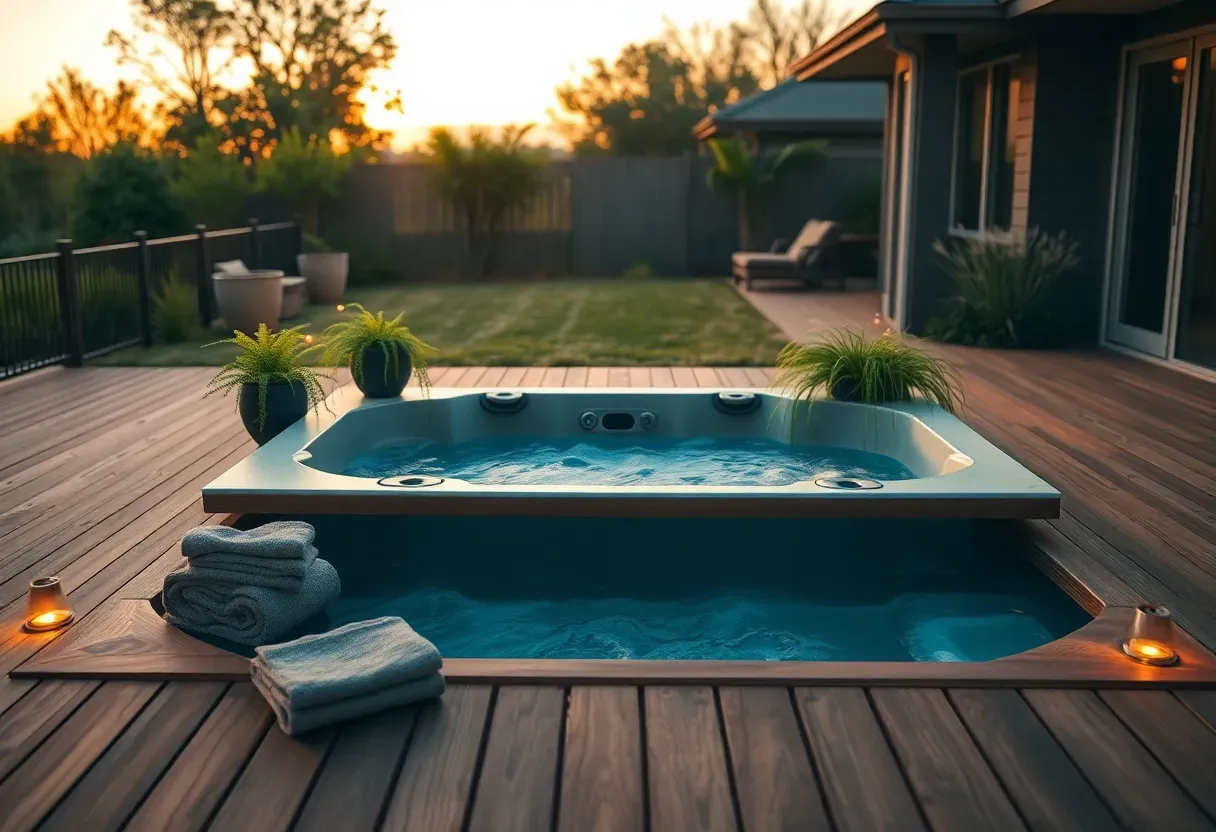
A hot tub changes how you use your backyard. Suddenly that dead corner behind the garage becomes the place everyone gravitates toward on Friday nights. But dropping a tub onto a bare concrete pad next to the AC unit is not the move. Placement matters — proximity to the house, wind exposure, drainage, and the view from inside the tub all affect whether you actually use it or let it become an expensive planter. I have spent the last two years documenting setups that work, from $3,000 inflatable builds to $40,000 custom installs. These 27 ideas cover the full range.
Below you will find hot tub concepts organized by style — from built-in deck designs and natural stone surrounds to budget-friendly setups and small-yard solutions.
Table of Contents
- Sunken Deck Hot Tub
- Natural Boulder Surround
- Pergola-Covered Spa
- Japanese Soaking Tub Outdoors
- Hillside Built-In Hot Tub
- Concrete Plunge Pool Combo
- Raised Composite Deck Spa
- Cedar Gazebo Hot Tub
- Poolside Hot Tub Spillover
- Modern Fire and Water Combo
- Rustic Cabin Hot Tub
- Tropical Garden Spa
- Courtyard Soak Corner
- Stock Tank Hot Tub
- Rooftop Hot Tub Deck
- Swim Spa in the Yard
- Hot Tub Under a Pavilion
- Minimalist Concrete Spa
- Tiered Patio with Hot Tub
- Garden Path to a Hidden Spa
- Hot Tub with Outdoor Kitchen
- Desert Landscape Spa
- Woodland Retreat Hot Tub
- Corner Lot Fence and Spa
- Inflatable Hot Tub Makeover
- Year-Round Cold Climate Setup
- Smart Hot Tub with LED Lighting
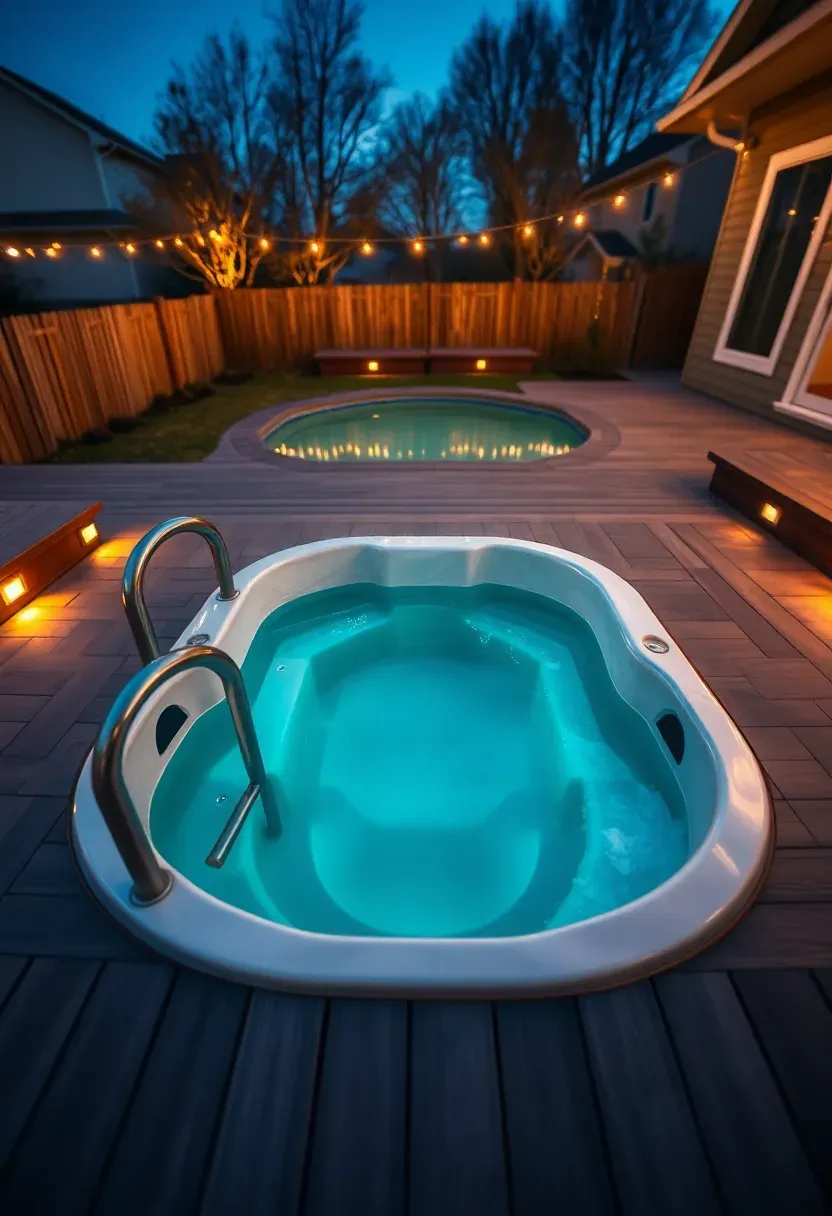
1. Sunken Deck Hot Tub
Dropping the tub below deck level creates a clean look and makes getting in easier — no climbing over a high rim. The deck surface extends right up to the tub edge, which gives you a natural spot to sit with your feet in the water. You need a solid subframe, typically 2x10 joists at 12-inch centers for a tub weighing 4,000+ pounds when full. Plan a removable panel on one side for pump access. Composite decking handles splash zones better than pressure-treated pine, which tends to splinter after two seasons of chlorine exposure.
Key Considerations
- Structural engineer review costs $300-600 but prevents expensive mistakes
- Allow 3 feet of clearance below deck for plumbing and electrical runs
- Install a floor drain under the tub to catch condensation and small leaks
We picked a few things that go well with this idea: Inflatable Hot Tub with LED Lights (2-Person) (★4.3), Edostory Inflatable Oval Spa (2-Person) (★3.5) and Coleman Miami Inflatable Hot Tub (4-Person) (★4.0). As an Amazon Associate we earn from qualifying purchases.
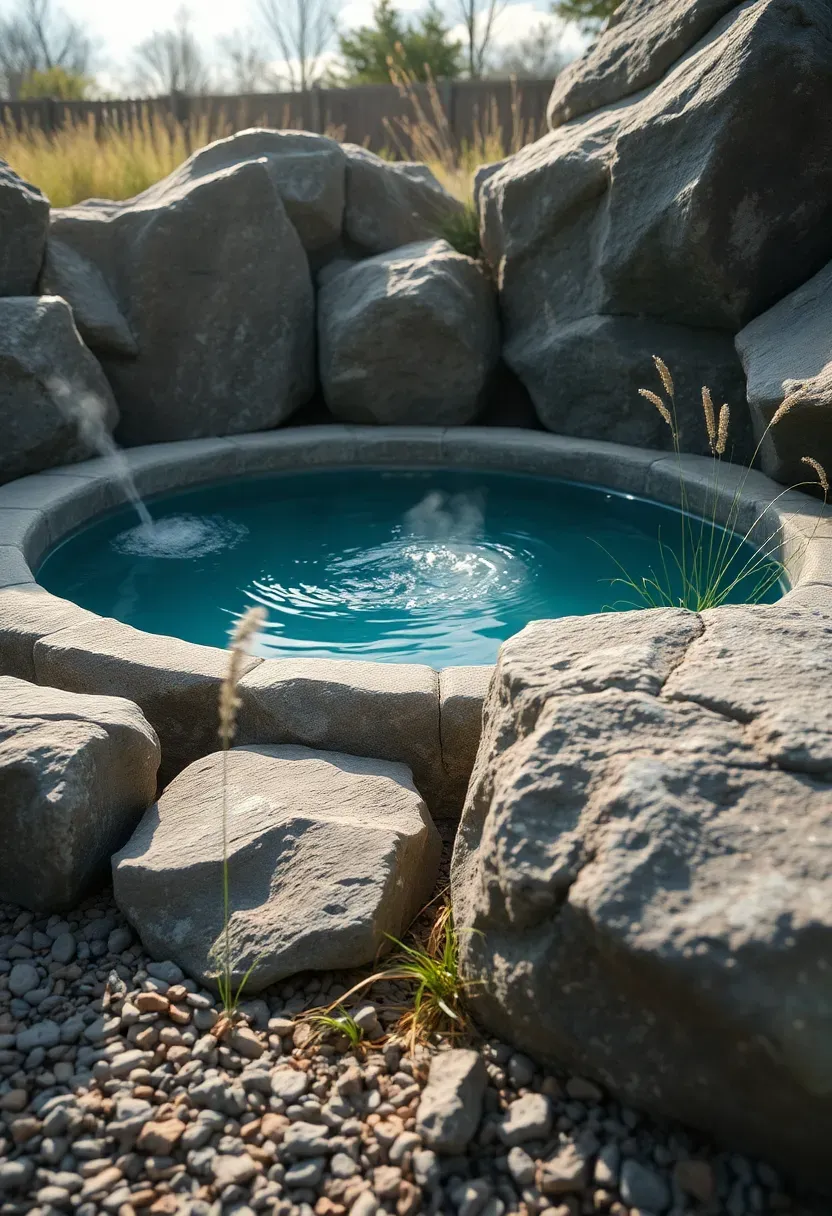
2. Natural Boulder Surround
Stacking fieldstone or river boulders around a hot tub makes a fiberglass shell look like it belongs in the landscape rather than sitting on top of it. The trick is partially burying the tub so the waterline sits at boulder height. Use boulders weighing 200-800 pounds each — anything smaller looks like decorative gravel from ten feet away. A local stone yard will deliver and place them with a small excavator for roughly $1,500-3,000 depending on your region.
Why It Works
- Hides the plastic tub shell completely
- Creates natural seating ledges at different heights
- Ages well as moss and lichen colonize the stone surface
Watch Out For
- Leaves and debris collect in crevices — a leaf blower becomes your weekly routine
- Boulders retain heat in summer, making the surround uncomfortably hot barefoot
We picked a few things that go well with this idea: Adjustable U-Arms Hot Tub Cover Lifter (★4.5), Byers Choice Pivot Mount Spa Cover Lifter (★4.5) and Heavy Duty Undermount Spa Cover Lifter (★4.3). As an Amazon Associate we earn from qualifying purchases.
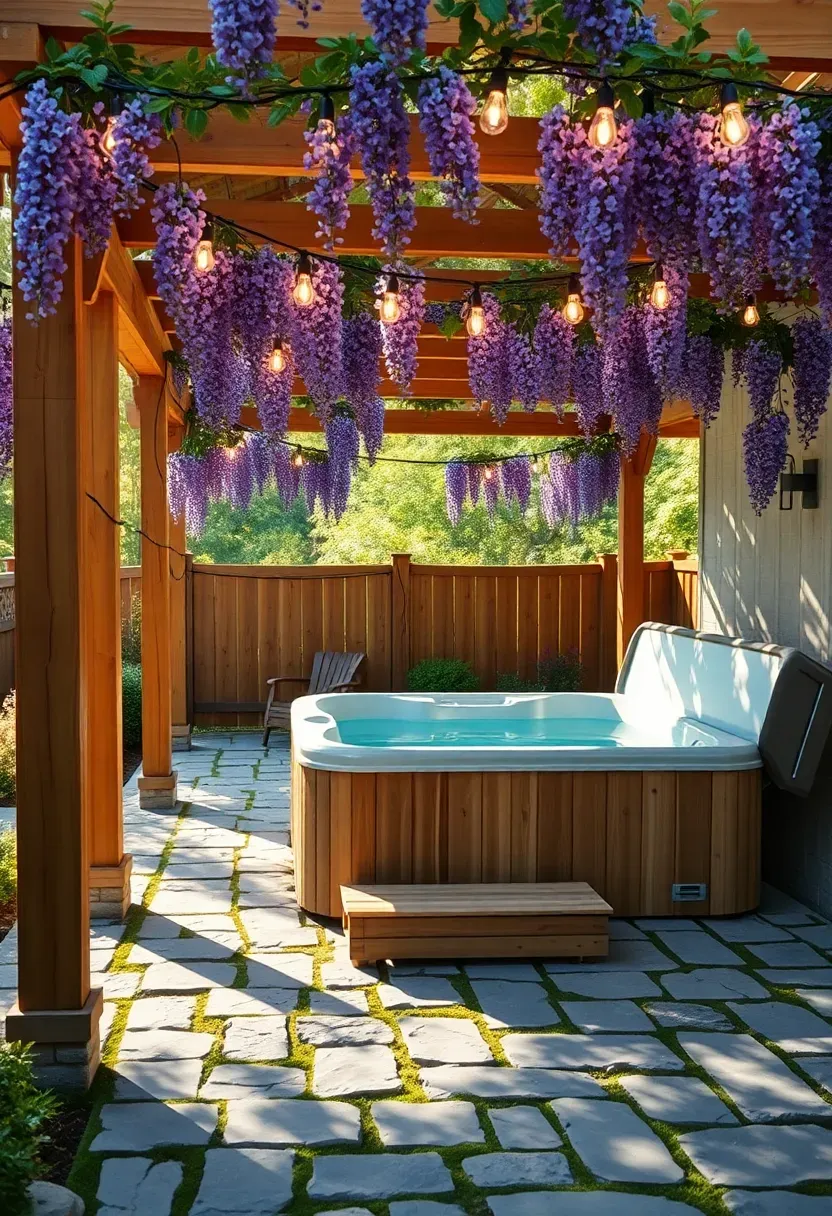
3. Pergola-Covered Spa
A pergola over your hot tub serves double duty. It filters direct sun so you can soak at noon without frying, and it gives you a frame to hang string lights, outdoor curtains, or shade cloth. Open-rafter designs allow enough airflow that steam does not collect and drip back on you.
How to Build It
Step 1: Set four 6x6 posts in concrete footings at least 36 inches deep, spaced to extend 2 feet past the tub on each side.
Step 2: Mount double 2x8 beams across the tops, then run 2x6 rafters at 16-inch spacing.
Step 3: Train wisteria or jasmine up the posts for natural shade that fills in over two growing seasons.
Watch Out
- Cedar or redwood resists moisture rot; avoid untreated Douglas fir near steam
- Check local code — many jurisdictions require a permit for structures over 120 square feet
We picked a few things that go well with this idea: 6-Inch LED Inground Spa Light (120V) (★4.2), LOFTEK Submersible LED Pool Lights (4-Pack) (★3.6) and Rechargeable Submersible Pool Lights (2-Pack) (★4.2). As an Amazon Associate we earn from qualifying purchases.
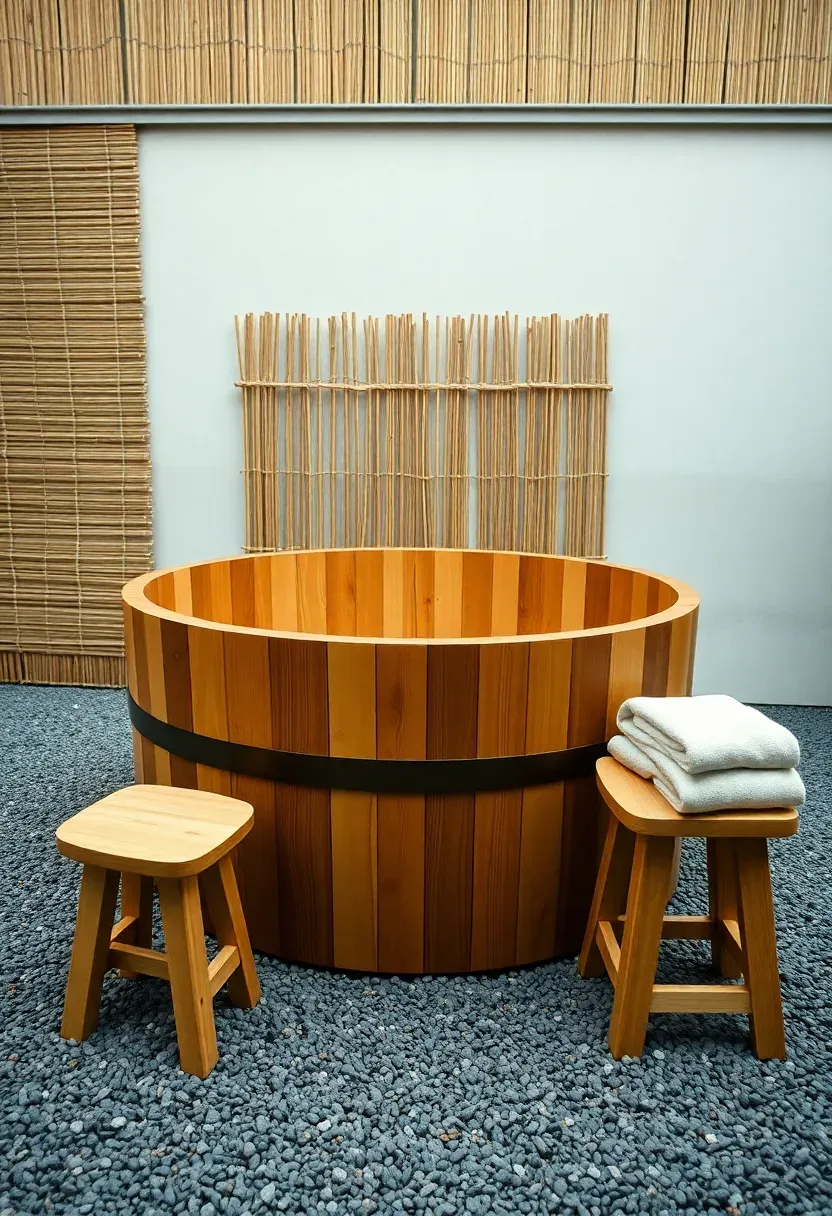
4. Japanese Soaking Tub Outdoors
The Concept
Traditional ofuro tubs are deeper and narrower than Western hot tubs — typically 4 feet deep and 4 feet in diameter. You sit upright with water at shoulder level. The experience is different: less lounging, more meditative soaking.
Modern Outdoor Version
Hinoki (Japanese cypress) tubs run $5,000-15,000 and need careful maintenance — monthly oiling and no chemical sanitizers. A more practical route: acrylic deep-soak tubs styled to look like wood, paired with a gravel pad, bamboo screen, and a few carefully placed stepping stones. The visual effect is nearly identical at one-third the upkeep. Total installed cost for the acrylic version sits around $4,000-7,000.
Pros and Cons
- Compact footprint fits yards under 200 square feet
- Heating costs run lower due to smaller water volume
- Not designed for groups larger than two people comfortably
Recommended
Items for this idea
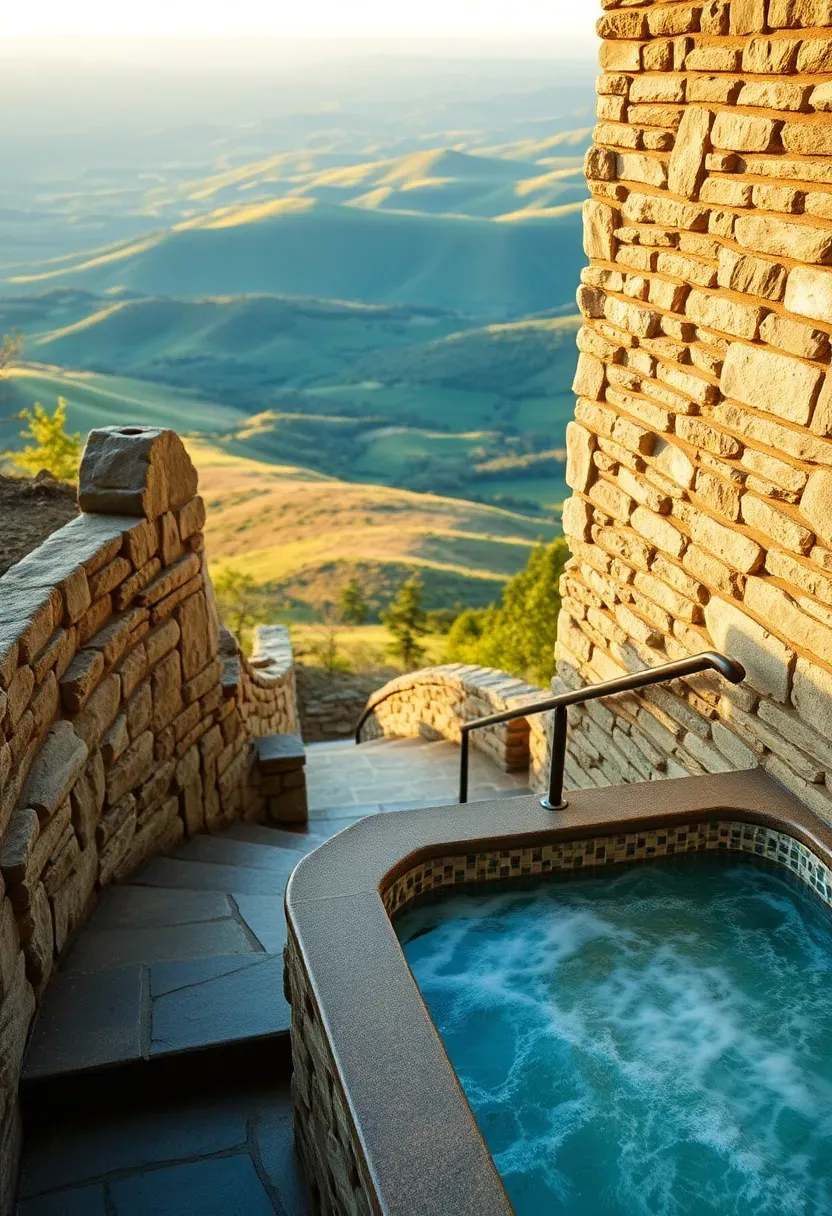
5. Hillside Built-In Hot Tub
If your yard slopes, use it. Cutting into a hillside lets you nestle the tub at a lower elevation with a retaining wall on the uphill side and an open view downhill. The natural grade handles drainage, and the retaining wall doubles as a wind break. This setup works particularly well on properties with a view — you sit at a lower vantage point while the sightline clears fences and neighboring rooflines. Excavation for a hillside install adds $2,000-5,000 to the project, but you save on privacy screening because the grade itself hides the tub from street level.
Tips
- French drain behind the retaining wall prevents hydrostatic pressure buildup
- Use compacted gravel as a base pad rather than poured concrete on slopes
- Consult a geotechnical report if the slope exceeds 30 percent grade
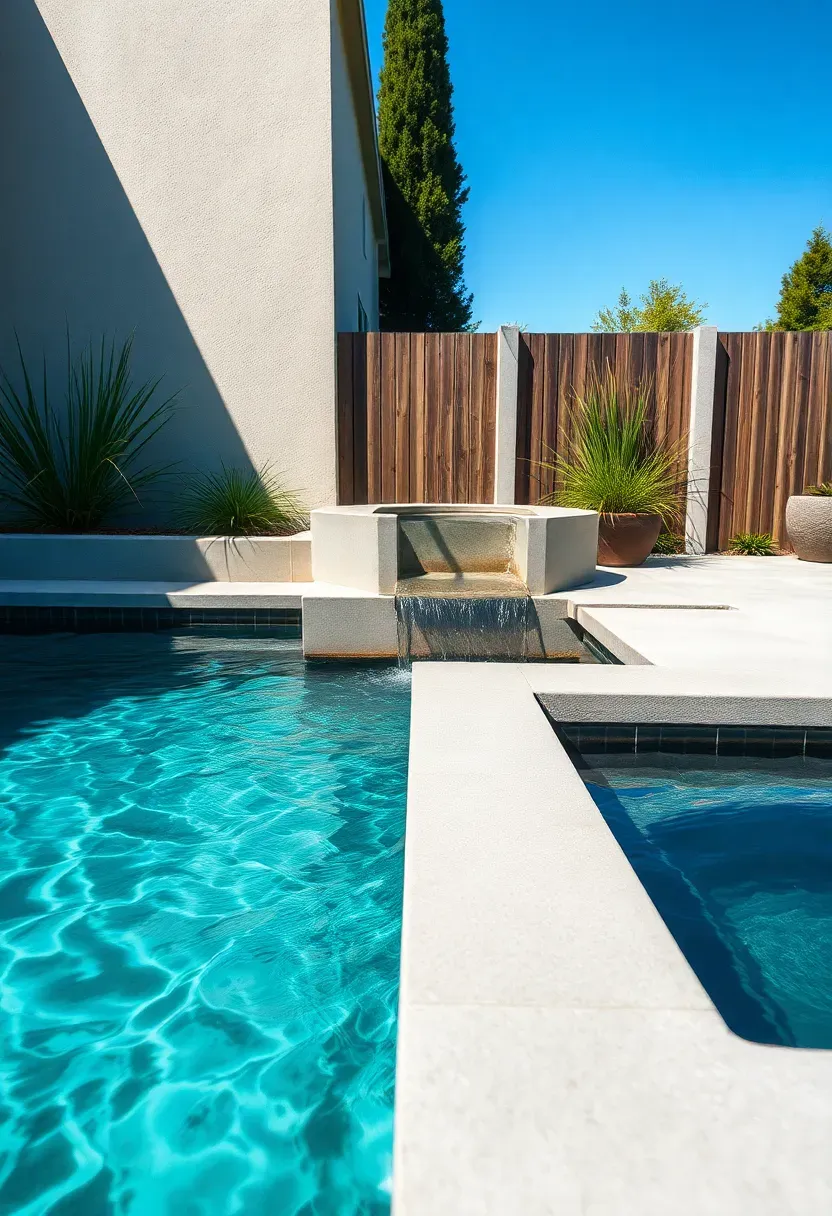
6. Concrete Plunge Pool Combo
The Problem
You want both a pool and a hot tub, but the yard is only 800 square feet.
The Solution
A concrete plunge pool (10x6 feet) paired with an attached hot tub (6x6 feet) shares one equipment pad, one heater, and one filtration system. The hot tub section has its own temperature zone, typically maintained at 102-104°F while the plunge pool stays at 60-70°F. A small spillover ledge connects the two, creating a waterfall effect that also helps with circulation. Total build cost ranges from $35,000-55,000 — roughly 40 percent less than building both separately.
Choose This If
- Your lot cannot accommodate a full-size pool
- You want contrast therapy (hot soak, cold plunge) without two separate systems
- You prefer a permanent concrete finish over a portable acrylic tub
Recommended
Items for this idea
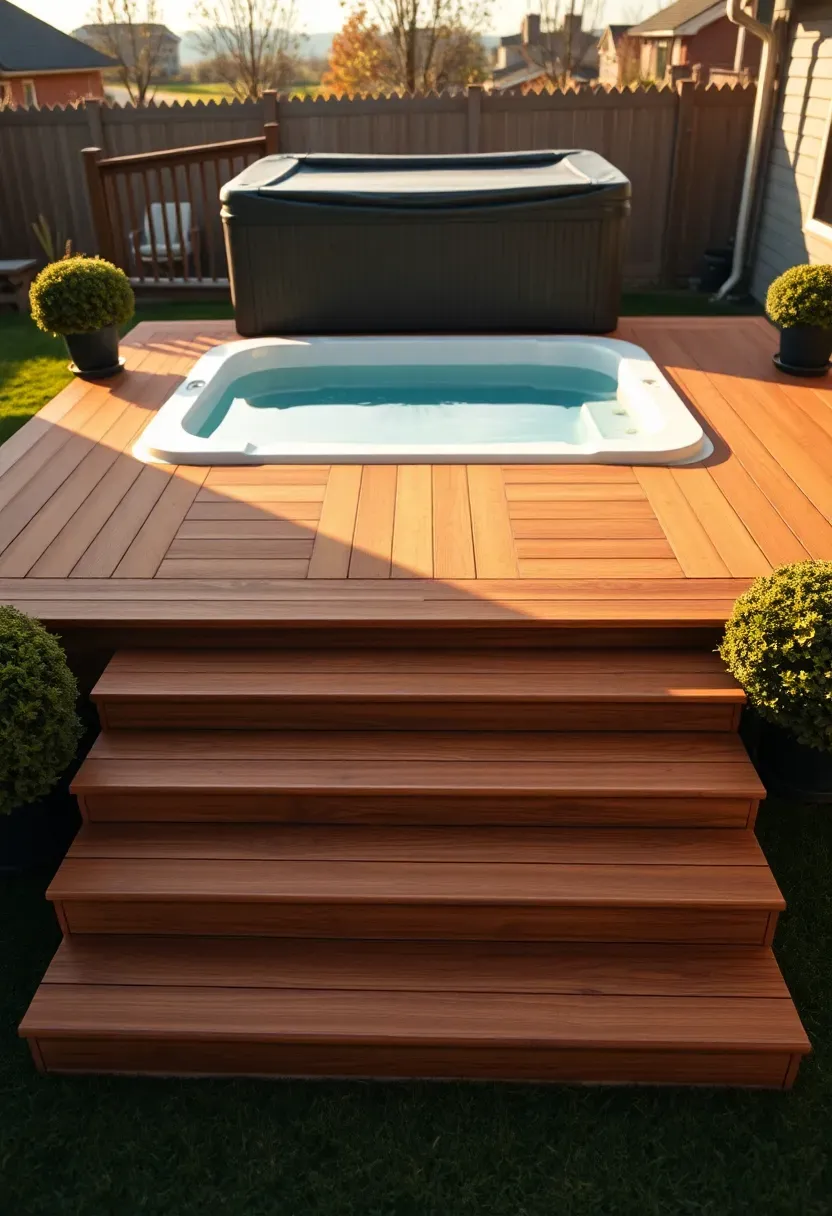
7. Raised Composite Deck Spa
Building a raised platform specifically for the hot tub creates a dedicated zone that feels separate from the rest of the yard. The platform typically sits 18-24 inches above grade, with wide steps on two or three sides. Composite decking (Trex, TimberTech, or similar) handles moisture without the annual staining that wood requires. The raised height also improves the view from inside the tub and puts the waterline at a comfortable bench-sitting height for people who want to dangle their feet without getting fully in.
Tips
- Color choice matters — dark composite absorbs heat and burns bare feet in summer
- Build the frame from pressure-treated lumber even if the surface is composite
- Run electrical conduit inside the frame before decking goes down
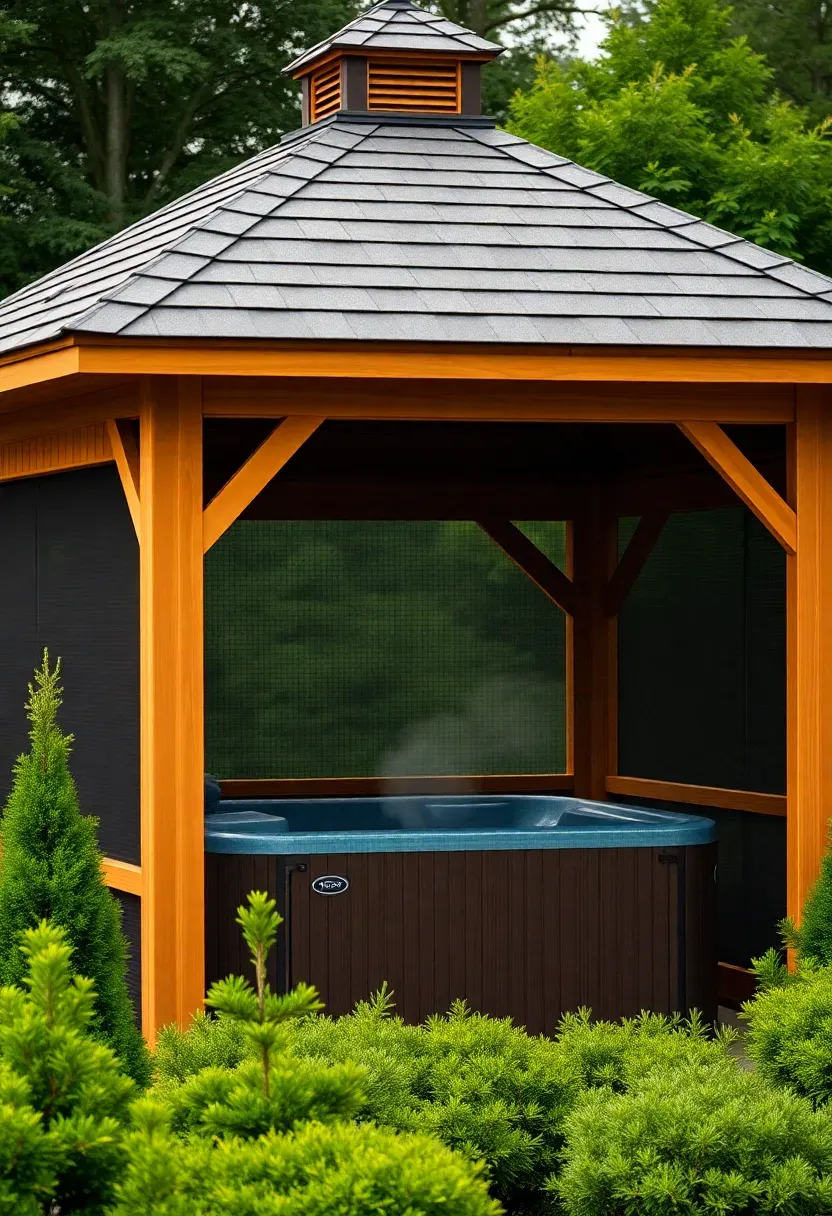
8. Cedar Gazebo Hot Tub
Option A: Pre-Built Gazebo Kit
Companies like Cedarshed and Westview sell hot-tub-specific gazebo kits ranging from $3,500-8,000. These arrive as pre-cut panels and go up in a weekend with two people and basic tools. Most include a vented cupola at the peak for steam release.
Option B: Custom Build
A contractor-built cedar gazebo with screened walls, a shingled roof, and built-in benches runs $12,000-20,000. The advantage is exact sizing — you match the gazebo footprint to your specific tub dimensions with room for towel hooks, a small shelf, and a changing area.
Recommendation
If you live where mosquitoes are aggressive from May through September, the screened gazebo pays for itself in usability. Without screens, evening soaks become feeding time.
Recommended
Items for this idea
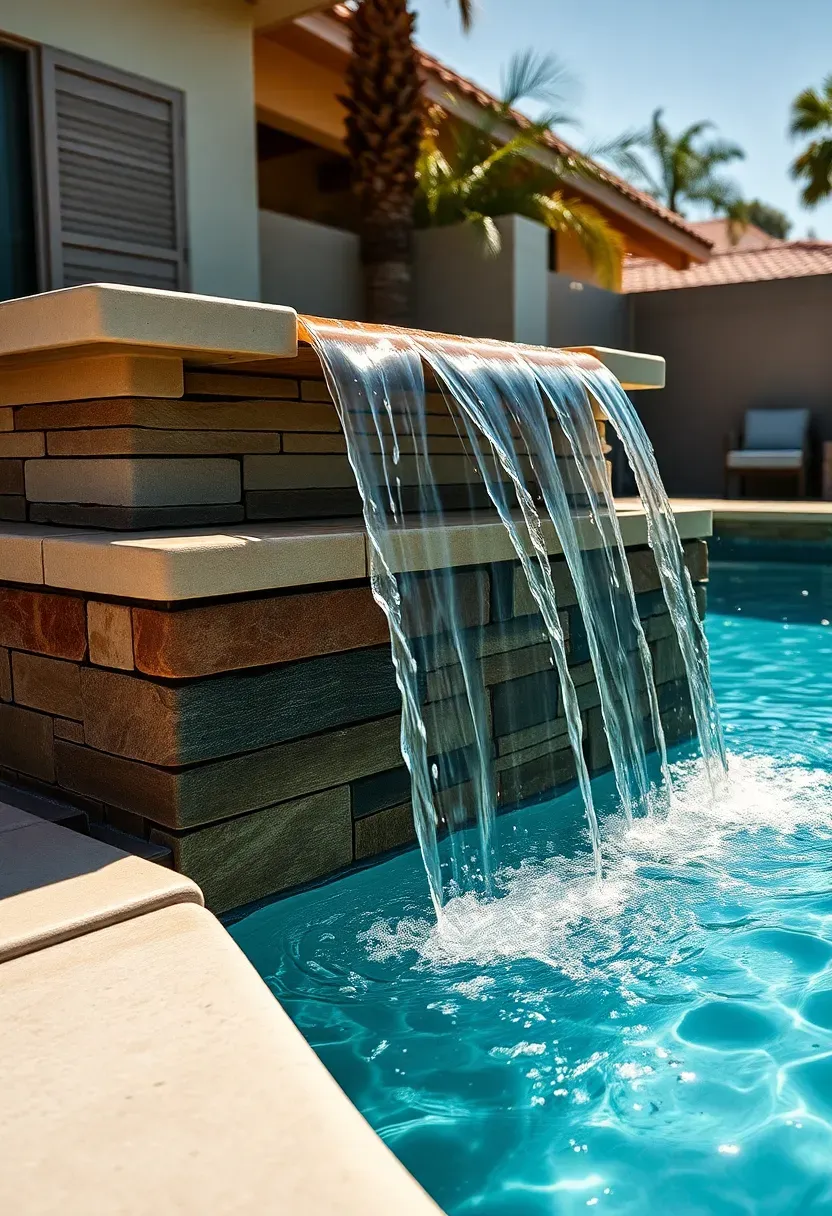
9. Poolside Hot Tub Spillover
Positioning the hot tub higher than the pool and letting water cascade over a shared edge ties both features together visually. The spillover also serves a practical purpose: it aerates the pool water and creates white noise that masks traffic or neighbor sounds. Most pool builders can add this during initial construction for $8,000-15,000 above the base pool cost. Retrofitting an existing pool is more involved — expect $15,000-25,000 due to plumbing modifications and structural work on the pool coping.
Tips
- The hot tub needs an independent heater to maintain its higher temperature
- Spillover rate affects chemical balance — test the pool water weekly rather than biweekly
- A 6-inch elevation difference creates a gentle sheet flow; 12 inches creates a more dramatic waterfall
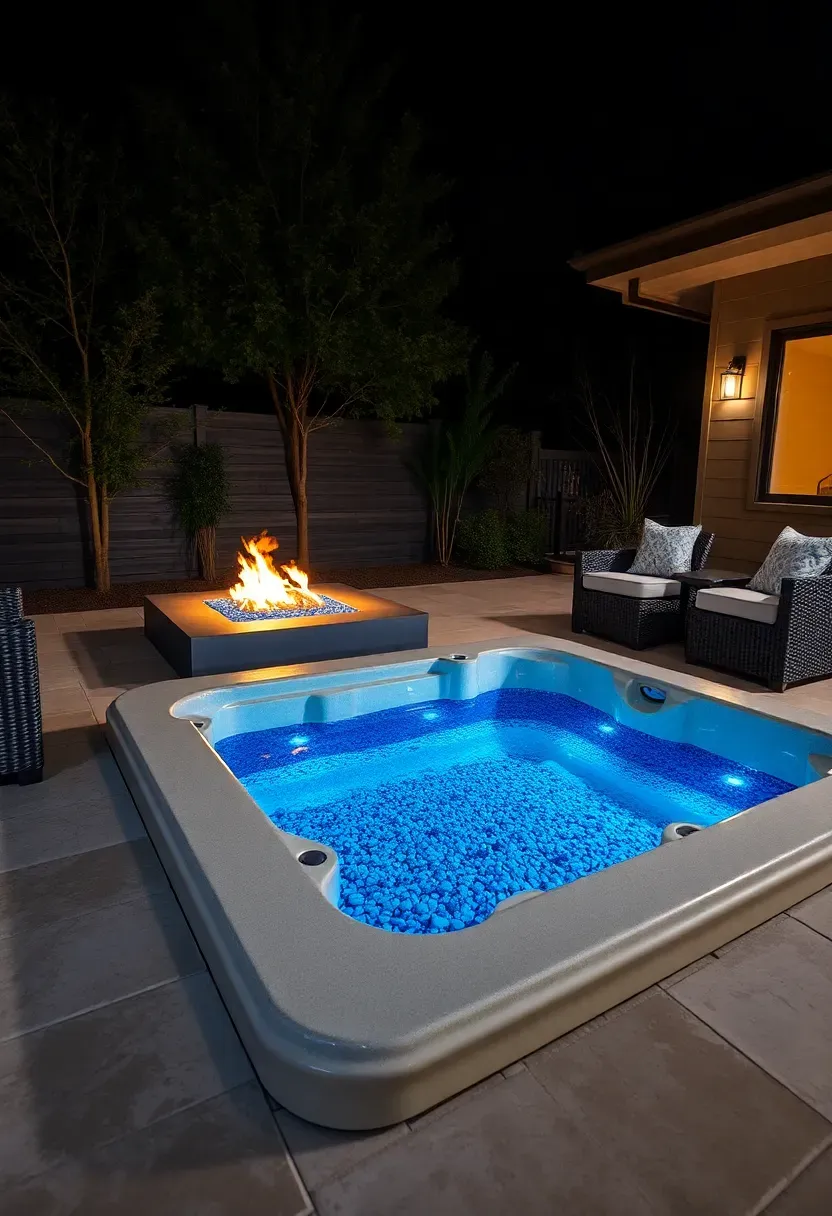
10. Modern Fire and Water Combo
Placing a linear fire feature next to the hot tub creates a contrast that draws people to the space after dark. The fire provides warmth for people sitting outside the tub and gives the whole area a focal point beyond just the water. Gas fire pits with a 48-inch linear burner run $1,200-3,000 installed and operate on the same gas line as the tub heater if you run natural gas. Keep the fire feature at least 4 feet from the tub edge — close enough to feel the warmth, far enough that sparks and embers do not reach bathers.
Tips
- Blue or clear fire glass reflects the water and creates a cohesive color palette at night
- Wind guards (tempered glass panels) prevent flame blowout and redirect heat toward seating
- Avoid wood-burning fire pits near hot tubs — ash in the water clogs filters fast
Recommended
Items for this idea
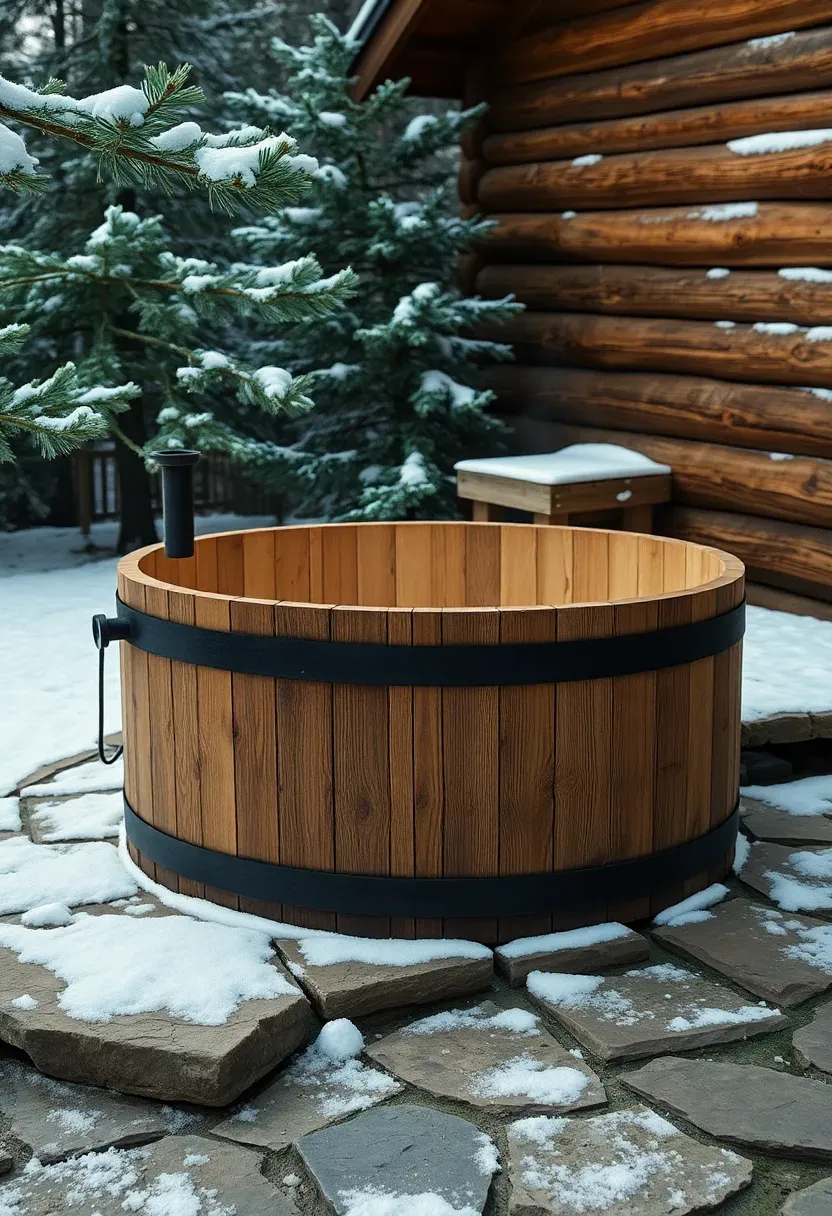
11. Rustic Cabin Hot Tub
Nothing matches a hot soak after a day of hiking or skiing better than a tub that looks like it belongs at a mountain lodge. Cedar barrel tubs nail this aesthetic — the wood exterior weathers to silver-gray over a few seasons and blends with log cabin siding. Place the tub on a flagstone or river rock pad rather than a concrete slab to keep the rustic feel. A wood-fired heater (Snorkel or Chofu style) eliminates the need for electrical hookup entirely and heats the water in 3-4 hours.
Key Considerations
- Wood-fired tubs require splitting and stacking firewood — budget 1 cord per winter season
- Cedar needs no sealant but shrinks when empty; keep the tub filled year-round
- Position downwind from the cabin so smoke drifts away from windows
12. Tropical Garden Spa
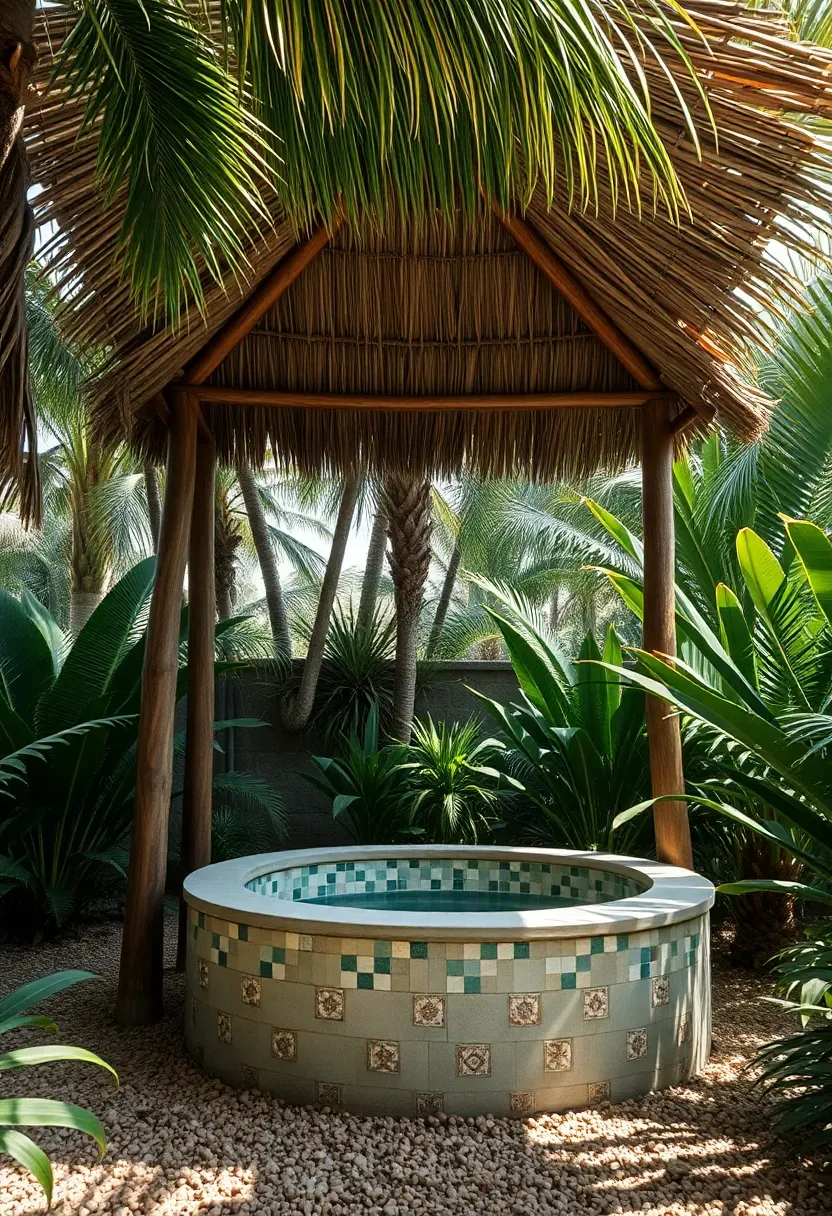
Dense tropical plantings around a hot tub create a private oasis without any fencing. Use a layered approach: tall palms (Windmill or Queen) at the back for height, mid-level banana plants or bird of paradise for screening, and low ferns or bromeliads at the tub edge. In zones 9-11, these plants thrive with minimal intervention. In cooler climates, substitute with hardy banana (Musa basjoo), large-leaf hostas, and Japanese fiber banana for a similar lush look.
How to Apply at Home
- Group plants in odd numbers (3, 5, 7) for natural-looking clusters
- Install drip irrigation on a timer — tropical plants near a hot tub dry out faster from reflected heat
- A thatched palapa or Bali-style umbrella completes the look for $800-2,500
Recommended
Items for this idea
13. Courtyard Soak Corner
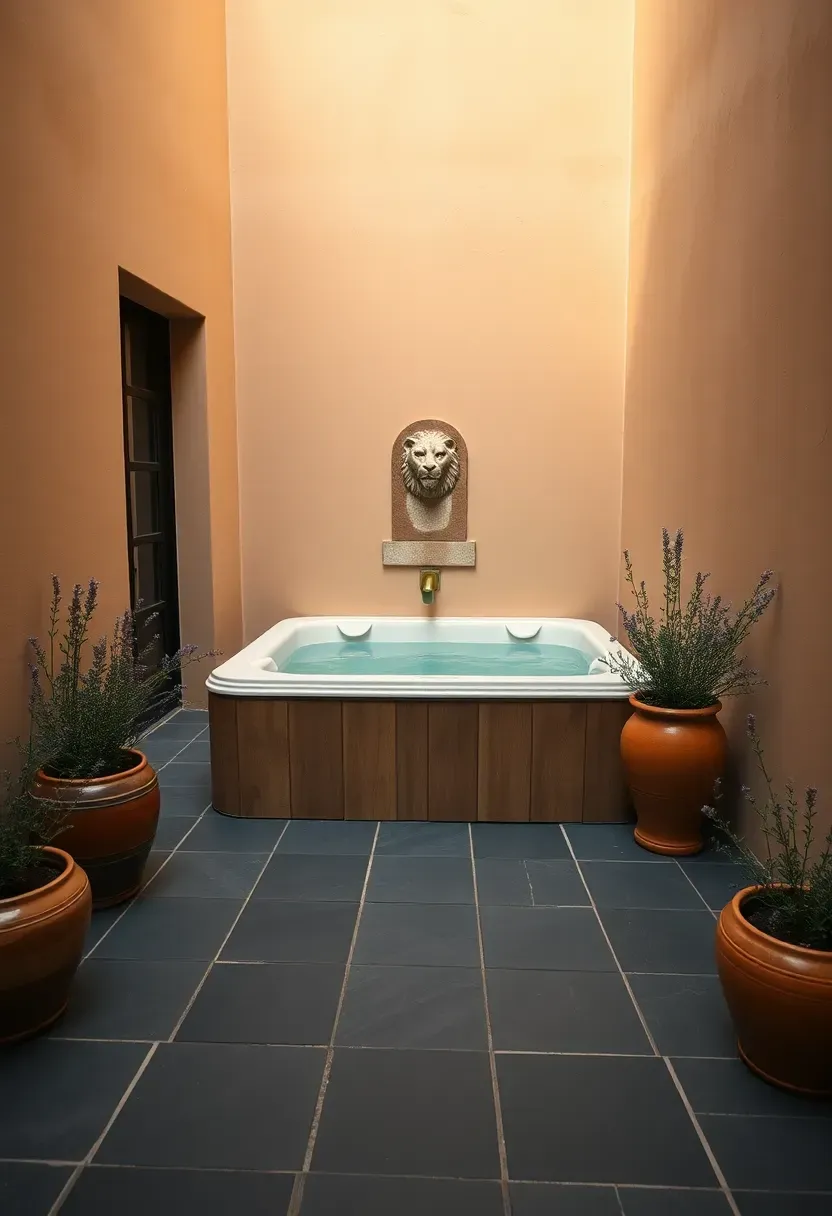
Courtyards are naturally enclosed, which makes them ideal hot tub locations. The existing walls handle privacy and wind protection, so you can focus the budget on surface finishes and atmosphere. Tile the floor in a slip-resistant porcelain that complements the wall color — terracotta tones for Mediterranean style, charcoal slate for modern. Add a wall-mounted water feature on the opposite side of the courtyard from the tub to create a layered sound environment. The result feels like a private hotel spa in surprisingly little square footage.
Tips
- Courtyards trap humidity — install a small exhaust fan on one wall or leave a gap at the top of one partition
- Wall-mounted sconces at 4-foot height provide ambiance without glaring into bathers' eyes
- Keep the tub at least 18 inches from any wall for maintenance access
14. Stock Tank Hot Tub
Why People Love It
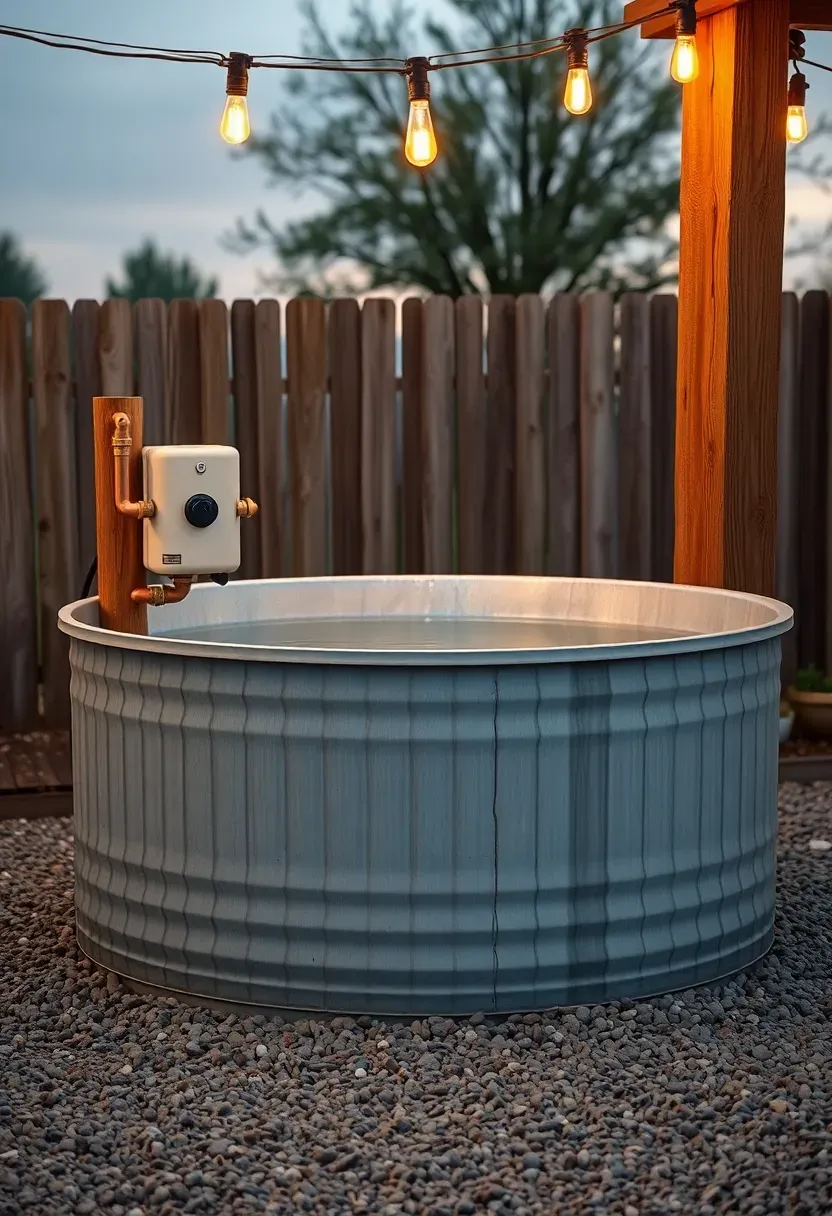
An 8-foot galvanized stock tank costs $400-700 at a farm supply store. Add a propane or wood-fired external heater ($500-1,500), a basic pump and filter ($200-400), and you have a functional hot tub for under $1,600 total. The aesthetic is intentionally rough — perfect for farmhouse, industrial, or rustic yards where a glossy acrylic shell would look wrong.
The Honest Tradeoffs
Stock tanks are not insulated. Heat loss is significant in cold weather, which means higher fuel costs and longer reheat times. The galvanized coating can react with certain sanitizers — bromine works better than chlorine here. Seating is flat-bottomed with no contoured jets, so comfort for long soaks depends on adding waterproof cushions or building a wooden bench insert.
Worth It If
- Your budget is under $2,000
- You prefer a DIY project over a turnkey install
- The rustic look fits your property's character
Recommended
Items for this idea
15. Rooftop Hot Tub Deck
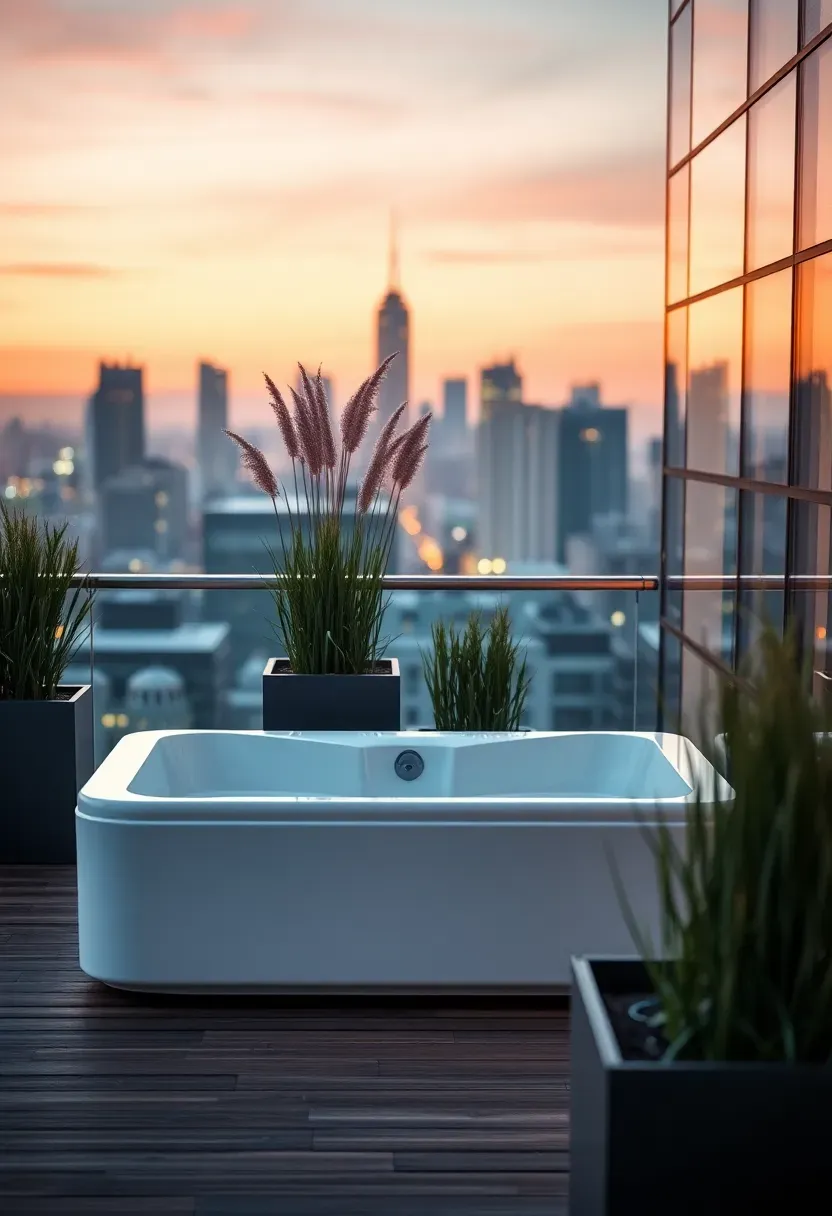
Rooftop installations require a structural assessment before anything else. A filled hot tub weighs 3,500-6,000 pounds concentrated in a 7x7-foot area — that is roughly 100 pounds per square foot, which exceeds the live load rating of most residential roofs. Reinforcing the structure underneath costs $3,000-8,000 depending on access and existing framing. Once cleared structurally, rooftop tubs offer unobstructed views and natural privacy from ground-level neighbors.
Tips
- Crane rental for lifting the tub runs $500-1,500 for a half-day
- Glass panel railings maintain the view while meeting code height requirements
- Weight includes water, the tub shell, and maximum occupants — calculate for full capacity
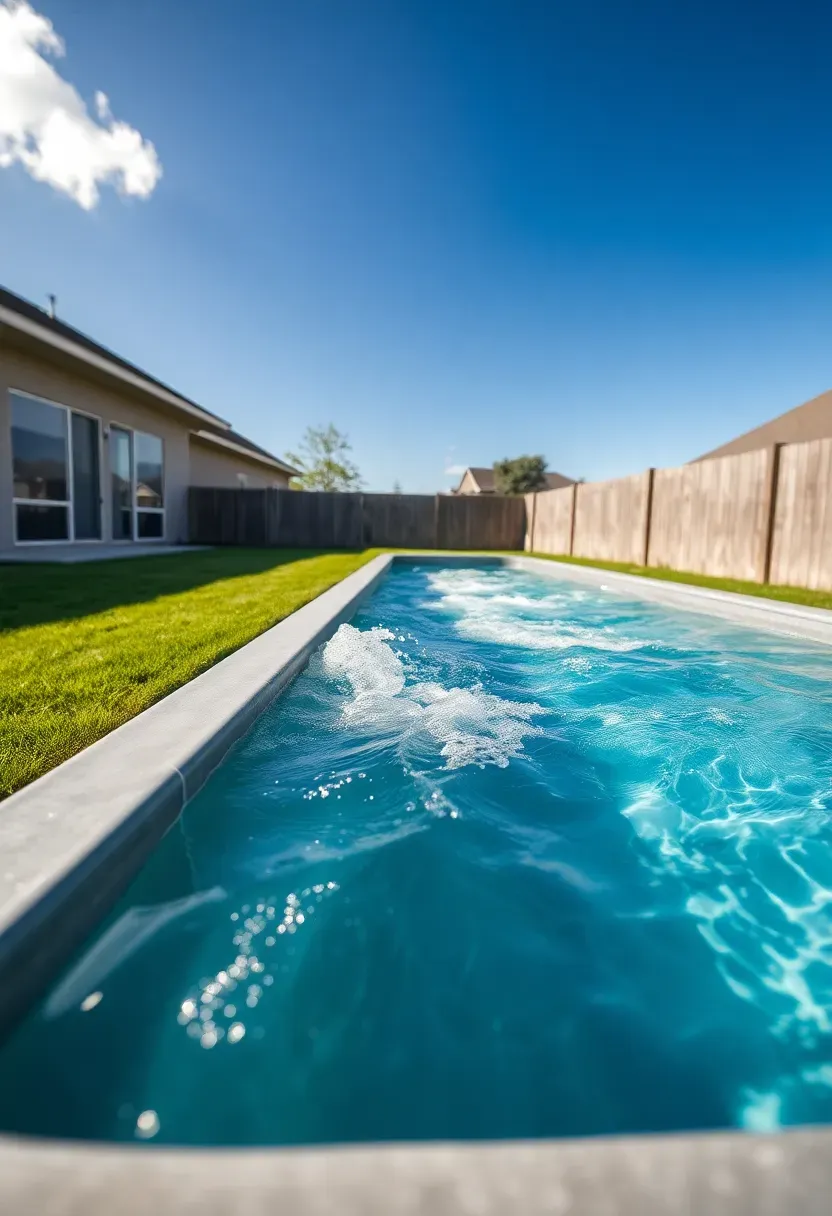
16. Swim Spa in the Yard
Swim Spa vs. Hot Tub
A swim spa combines a current-generating swimming area (12-15 feet long) with a separate hot tub section (5-6 feet). You get exercise and relaxation in one unit. Prices range from $15,000 for entry-level models to $45,000+ for dual-zone units with independent temperature controls.
Installation Notes
Swim spas are heavy — 2,000-3,000 pounds empty. Most require a reinforced concrete pad at least 6 inches thick. Electrical requirements jump to 60-amp service (versus 40 amps for a standard hot tub), so factor in panel upgrade costs if your home runs on an older 100-amp service. The upside: one equipment pad, one cover, one water chemistry routine for both swimming and soaking.
Choose This If
- You want exercise capability but lack space for a full pool
- Year-round swimming matters more than having a large tub for groups
Recommended
Items for this idea
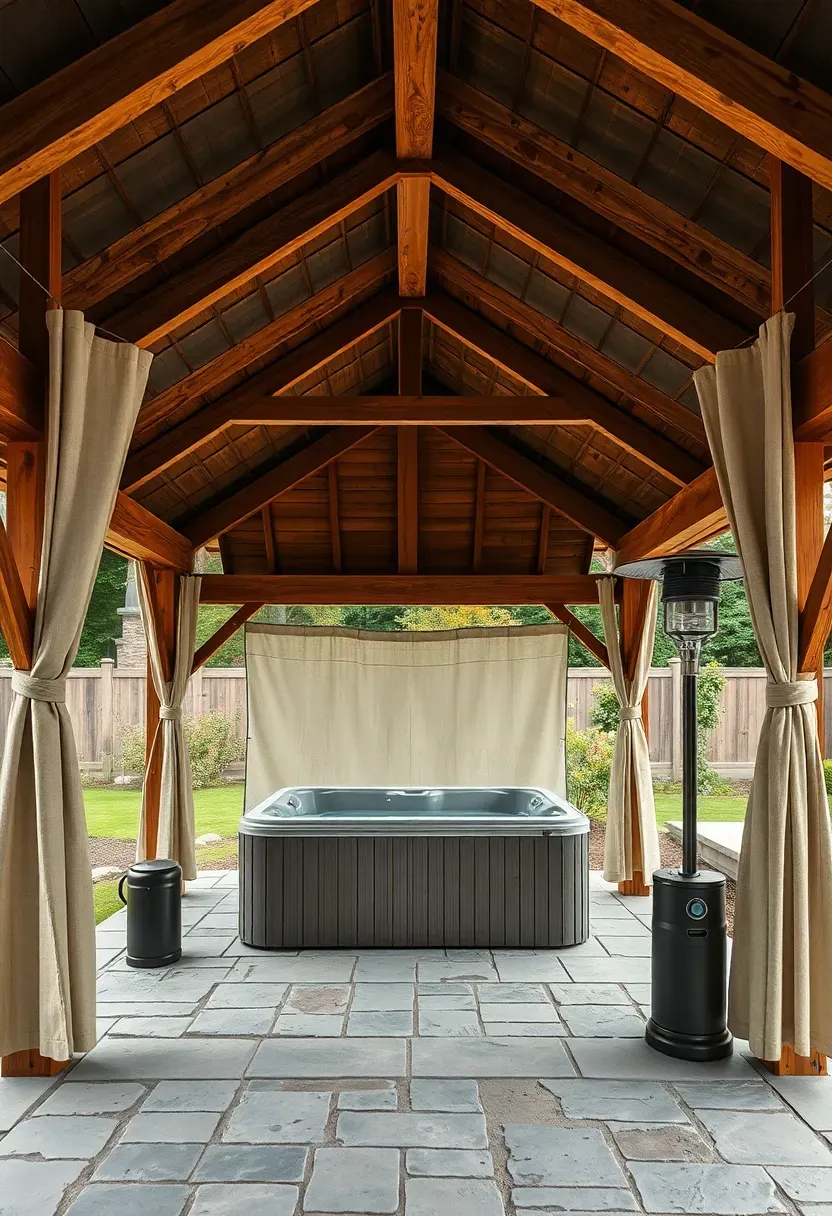
17. Hot Tub Under a Pavilion
A pavilion differs from a pergola in one important way: it has a solid roof. That means protection from rain, snow, and falling leaves. You can soak during a downpour without debris landing in the water. Pavilion kits with timber-frame construction and metal roofing start around $5,000 for a 10x10-foot model. Custom pavilions with cedar posts, a hip roof, and integrated electrical for fans and lighting run $10,000-25,000.
Tips
- Minimum ceiling height of 9 feet prevents claustrophobic steam buildup
- Slope the roof away from the tub to direct rainwater runoff to a garden bed
- Drop-down curtains or roll-up screens on two sides add weather protection without full enclosure
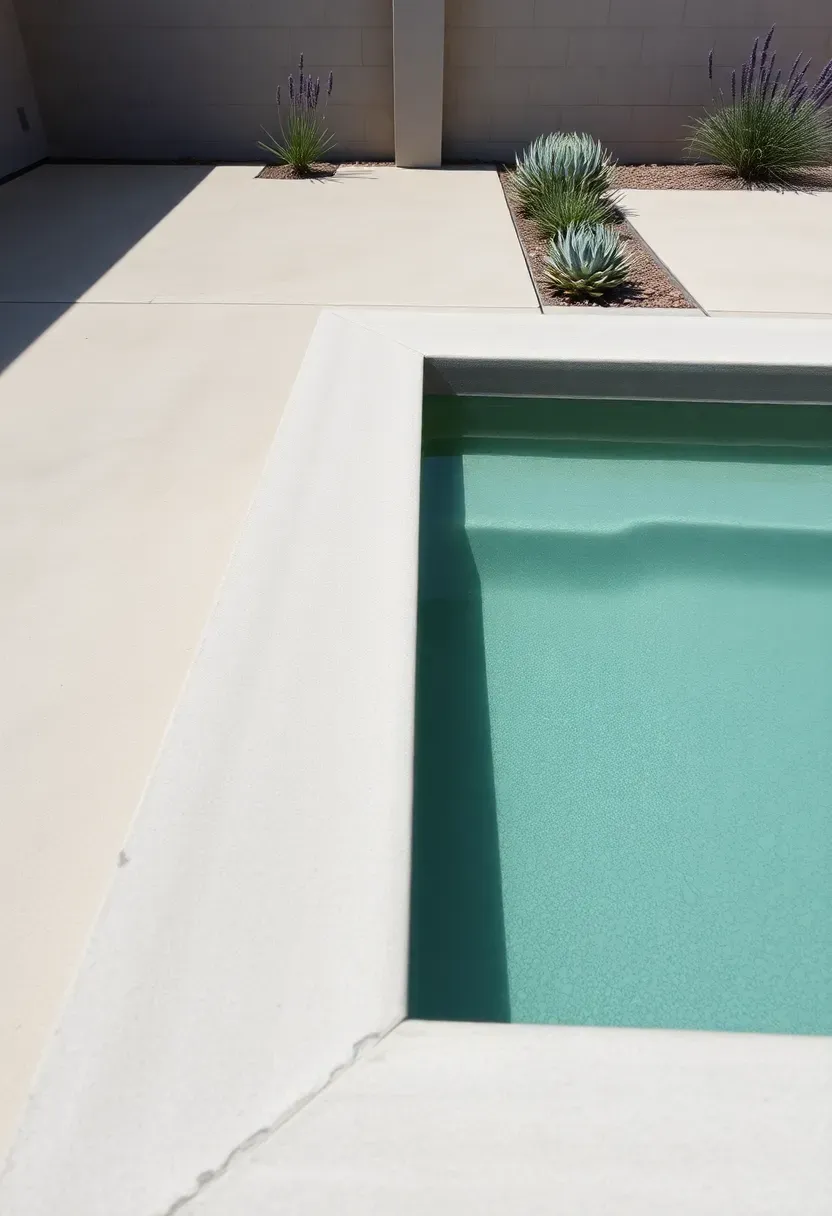
18. Minimalist Concrete Spa
Poured-in-place concrete hot tubs give you complete control over shape, depth, and bench placement. The finished look is seamless — the tub, coping, and surrounding patio become one continuous surface. A pool plastering crew applies the interior finish (white plaster, exposed aggregate, or glass bead) to make the concrete waterproof and comfortable against skin.
Step-by-Step Overview
Step 1: Excavate and form the tub shape with plywood and rebar, tying into the patio slab.
Step 2: Pour gunite or shotcrete in a single session — seams between pours create weak points.
Step 3: Cure for 28 days, then apply waterproof plaster and install jets, plumbing, and equipment.
Watch Out
- Concrete tubs cost $15,000-30,000 — significantly more than drop-in acrylic models
- Cracks from settling require professional repair; proper footings and soil compaction are non-negotiable
Recommended
Items for this idea
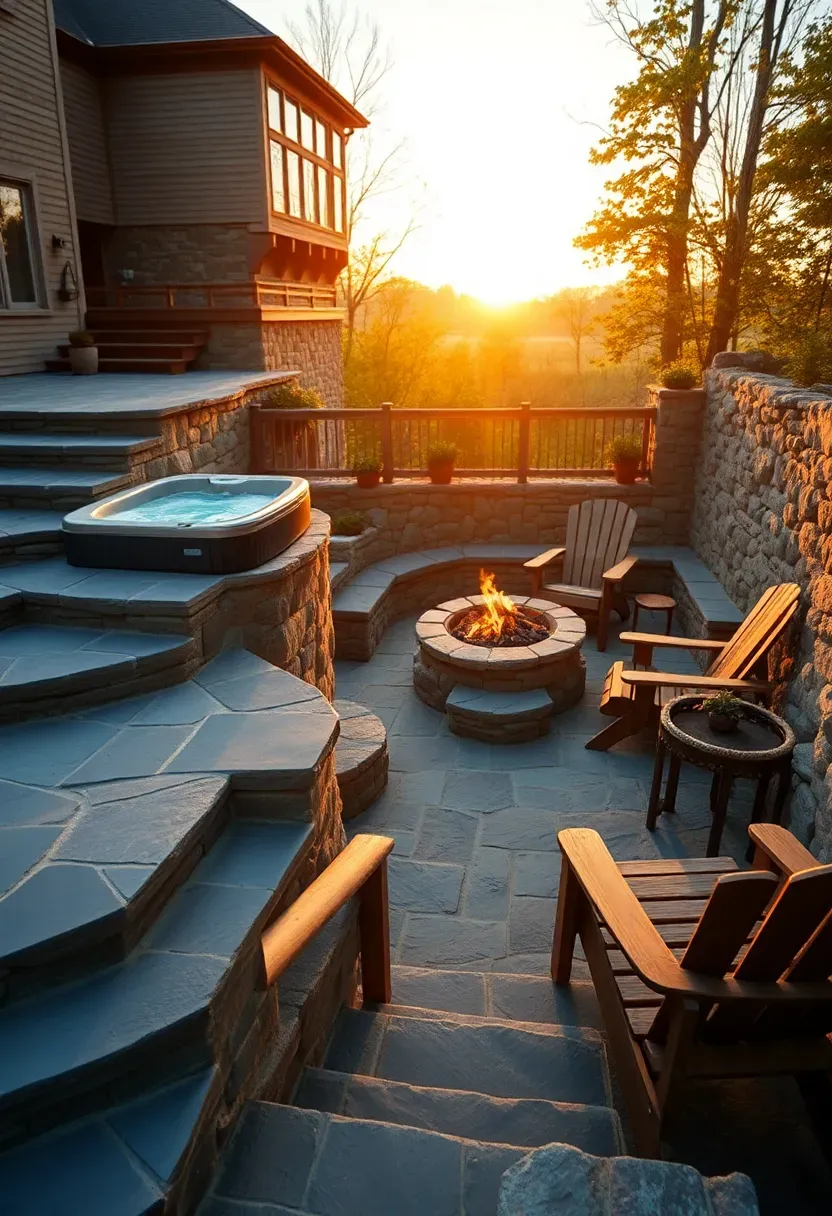
19. Tiered Patio with Hot Tub
Separating your outdoor space into levels gives each area a distinct purpose. The upper tier holds the hot tub and towel storage. The middle tier functions as a dining or lounge area. The lower tier hosts a fire pit or open lawn. Retaining walls between tiers double as built-in seating. Natural stone (bluestone, travertine, or limestone) works well for the steps and surfaces because it handles freeze-thaw cycles and stays cool enough for bare feet in moderate climates.
Tips
- Each tier needs independent drainage — water pooling on upper levels eventually damages lower walls
- LED strip lighting under each step riser provides safe nighttime navigation
- Budget $40-80 per square foot for natural stone patio with retaining walls
20. Garden Path to a Hidden Spa
The Concept
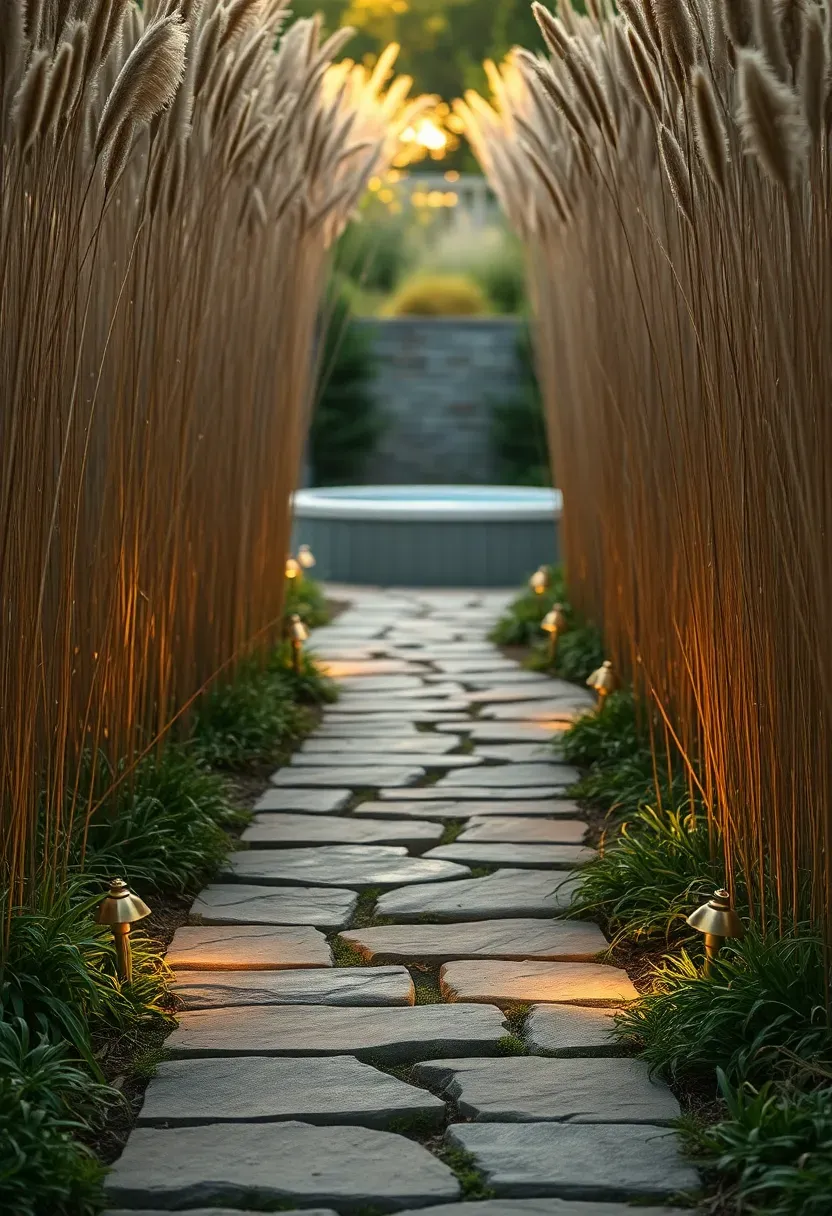
Instead of placing the hot tub on the main patio where everyone can see it, tuck it into a far corner of the yard behind a screen of plantings. A winding path through the garden creates anticipation and makes the tub feel like a destination rather than a backyard appliance.
Making It Work
The path surface needs to handle wet bare feet — avoid smooth flagstone, which becomes slippery. Textured bluestone, decomposed granite, or rubber pavers provide grip. Line the path with low-voltage landscape lights at 6-foot intervals so you can navigate safely after dark. The planting screen can be as simple as a row of Karl Foerster feather reed grass (6 feet tall, 2 feet wide, minimal spread) backed by a few evergreen shrubs for year-round density.
The Payoff
- The tub feels private even in a neighborhood with close lot lines
- Guests treat it as a special experience rather than just another patio feature
Recommended
Items for this idea
21. Hot Tub with Outdoor Kitchen
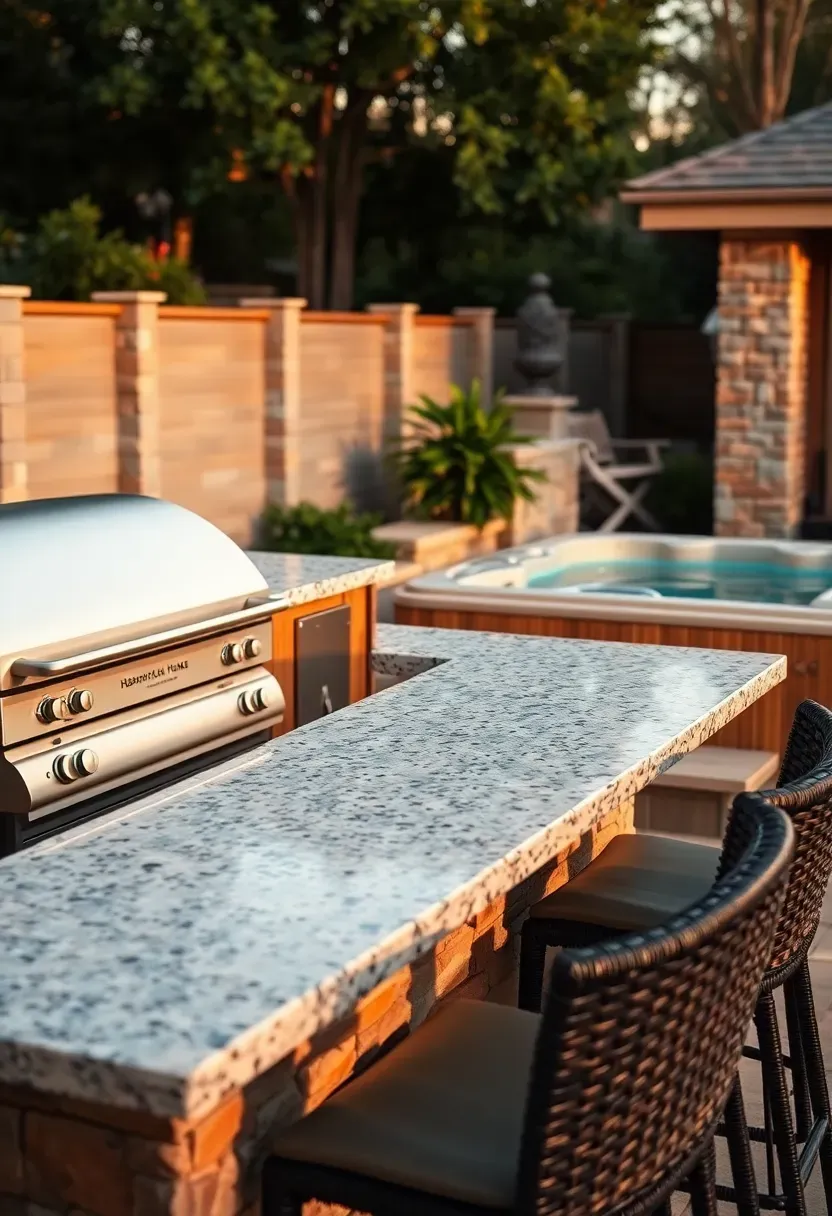
Placing the hot tub within sightline of the outdoor kitchen creates a natural entertainment flow. People cooking and people soaking can still carry on a conversation. The key is distance: 8-12 feet between the grill and the tub edge keeps grease splatter and smoke away from bathers while maintaining that connected feeling. A bar-height counter between the two zones gives the cook a place to pass drinks and snacks directly to the tub area.
Tips
- Run gas, water, and electrical lines in the same trench to save on excavation costs
- A shared pergola or pavilion covering both areas unifies the design
- Non-porous countertop materials (granite, quartzite) near the tub resist water damage from splash
22. Desert Landscape Spa
Origins
Desert spa design borrows from the Southwest tradition of integrating water features into arid landscapes as focal points — a practice dating back to Spanish colonial courtyards in New Mexico and Arizona.
Modern Approach
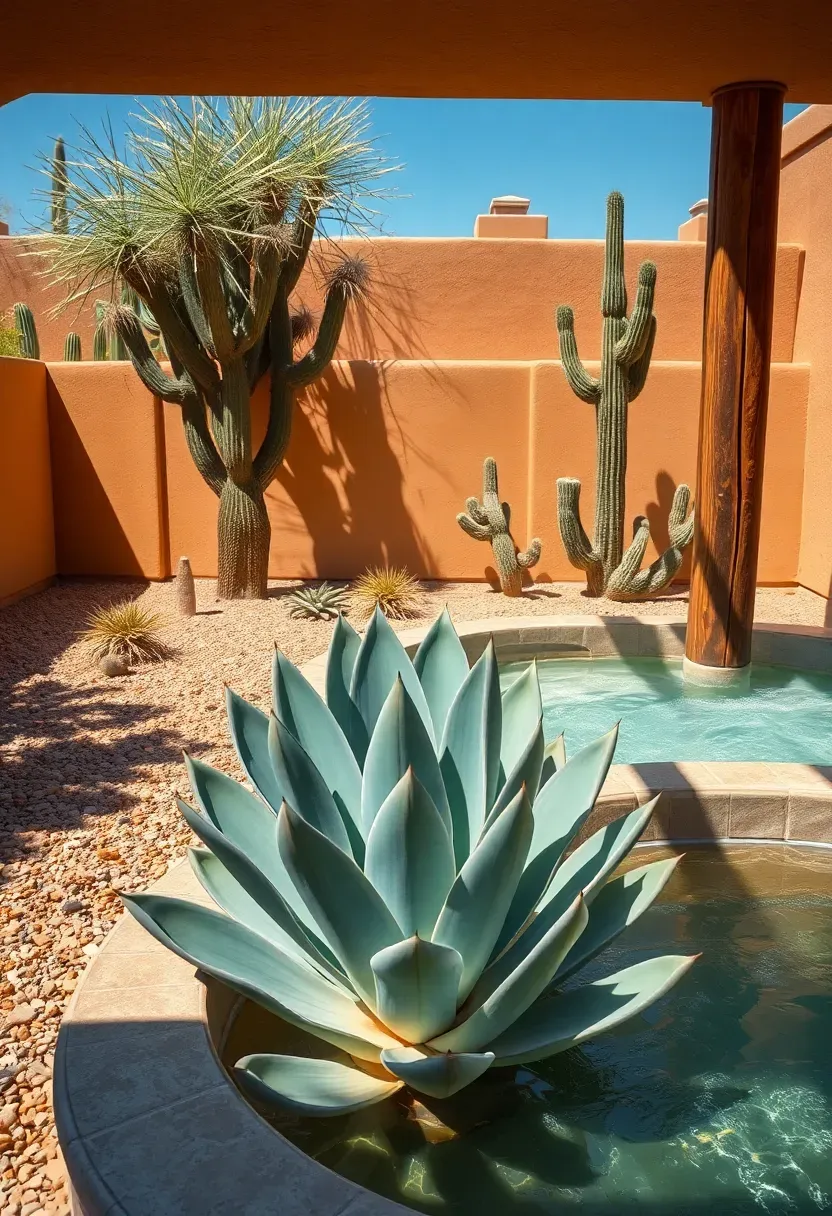
Surround the tub with decomposed granite (DG) instead of concrete or wood. DG drains instantly, stays cool in shade, and costs $1-3 per square foot installed. Plant agave, prickly pear, and red yucca at safe distances from the tub edge — their spines are no joke on bare skin. Warm-toned stucco half-walls (3-4 feet tall) provide wind protection while echoing the regional architecture. The overall water use stays minimal since the hot tub is the only irrigated feature.
Apply at Home
- Works in USDA zones 8-11 or any dry climate
- Use LED uplighting on sculptural cacti for dramatic nighttime shadows
- A shade sail in desert tan provides essential afternoon sun protection without blocking evening views
Recommended
Items for this idea
23. Woodland Retreat Hot Tub
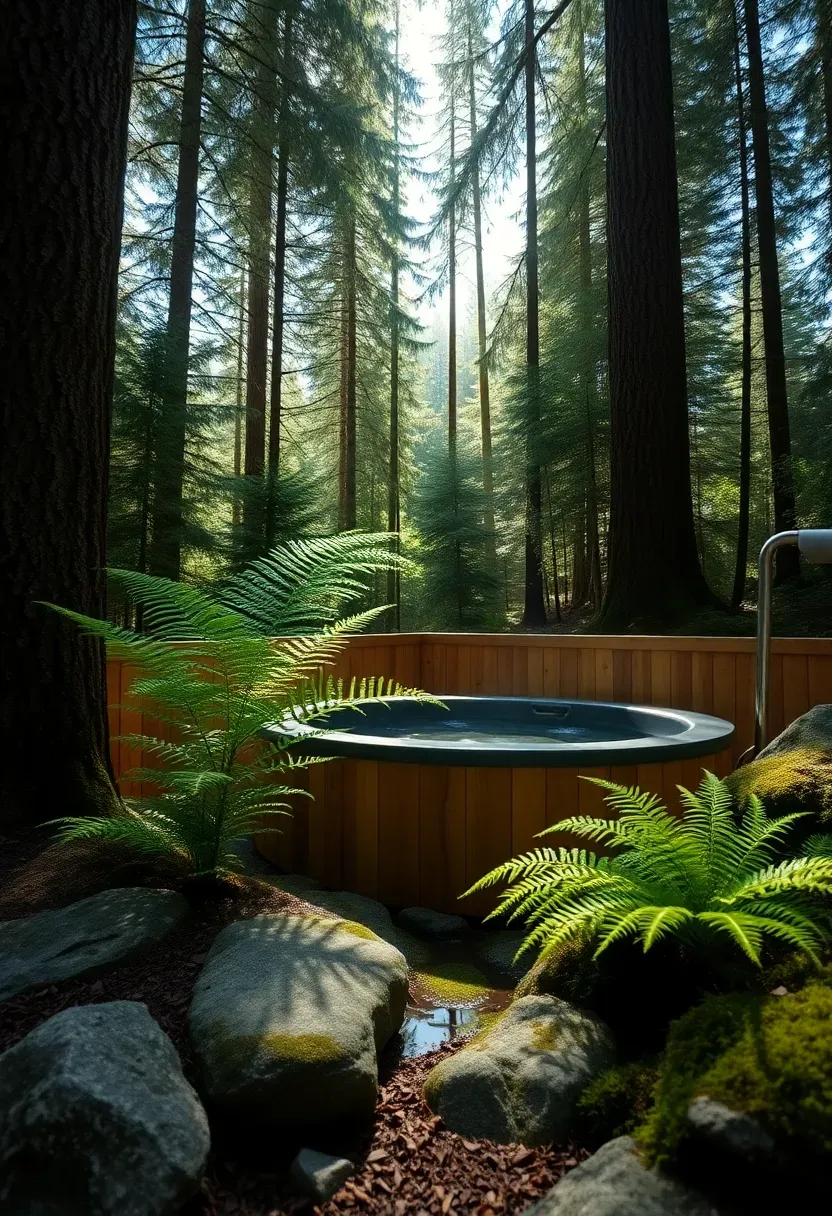
Wooded lots offer built-in ambiance that no amount of landscaping can replicate. Position the tub in a natural clearing where the canopy opens up slightly — enough sky to see stars, enough tree cover to feel enclosed. A simple gravel pad (4 inches of compacted 3/4-inch crushed stone) keeps the base level and drains well through root zones. Surround the tub with local materials: split-rail fencing, moss-covered stones, native ferns. Skip the LED light show in favor of a few low lanterns — the forest does the heavy lifting here.
Tips
- Falling leaves and pine needles are constant — invest in a quality hard cover and skim daily
- Tree roots can shift a tub pad over time; check level annually with a 4-foot spirit level
- Keep the tub 10 feet from any tree trunk to avoid root damage from excavation
24. Corner Lot Fence and Spa
The Problem
Corner lots have two exposed sides facing public streets. Standard 4-foot fences meet code but leave the hot tub visible to every passing car and pedestrian.
The Solution
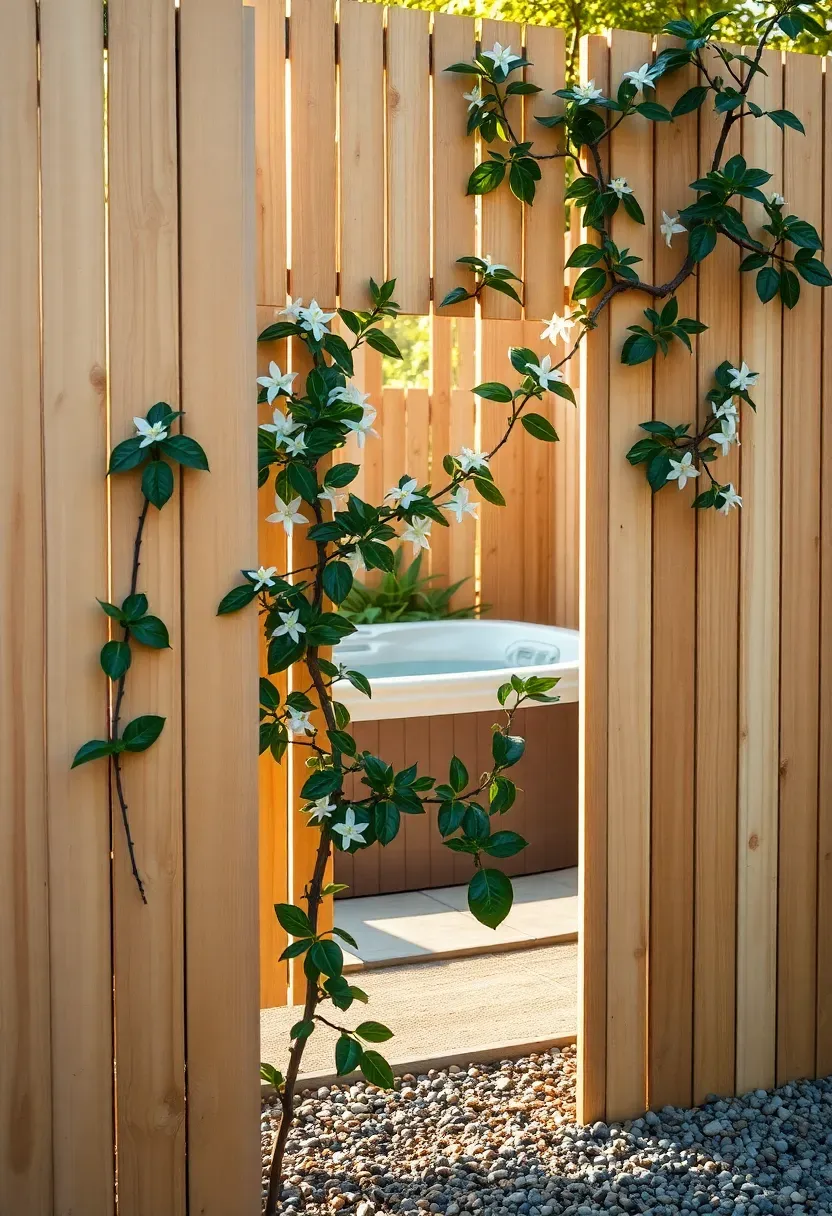
Build a 6-foot horizontal slat fence along both street-facing sides — check local ordinances first, as many jurisdictions limit fence height on corner lots to 4 feet within a sight triangle near intersections. Outside the sight triangle, 6 feet is typically allowed. Horizontal slats with 1-inch gaps provide airflow while blocking direct sightlines. Train star jasmine or climbing hydrangea on the fence to fill gaps over one to two growing seasons.
The Result
A private soaking area that meets code without requiring a variance. The planted fence becomes an attractive streetscape feature rather than a defensive barrier.
Recommended
Items for this idea
25. Inflatable Hot Tub Makeover
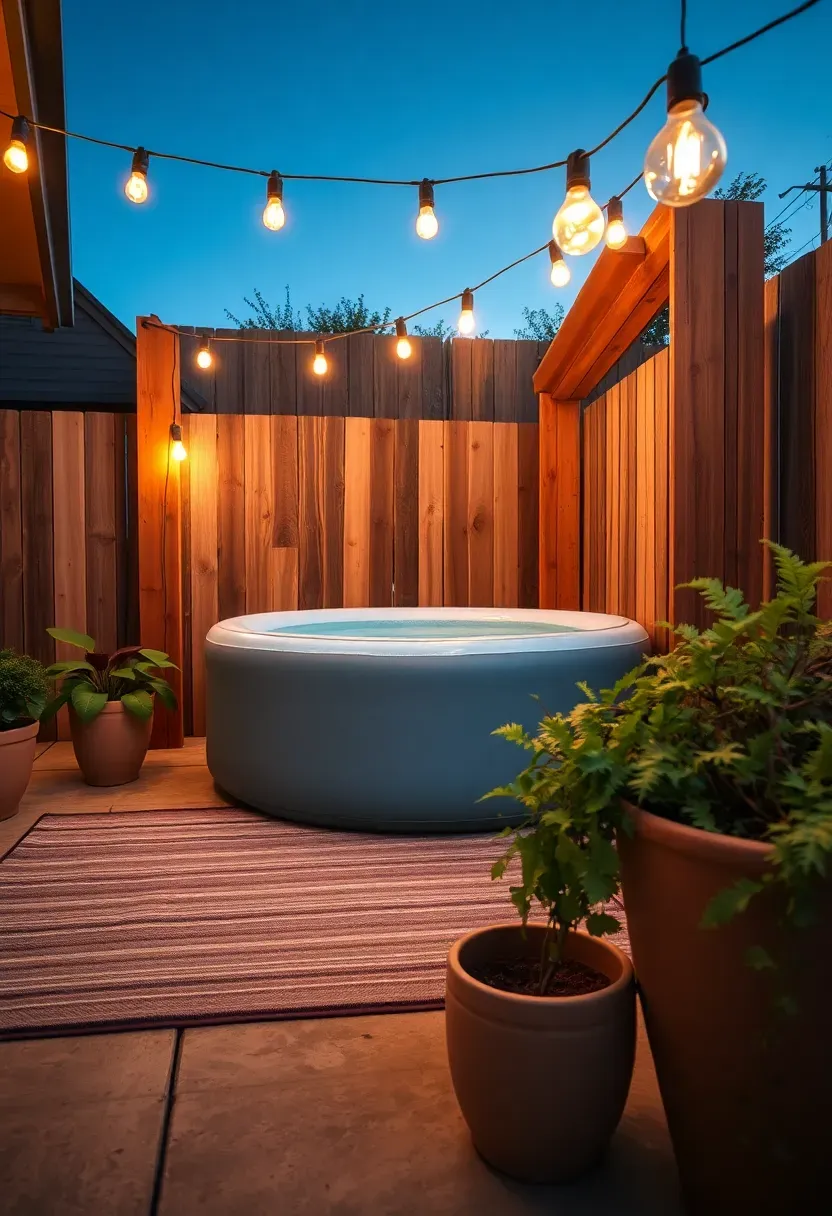
Inflatable tubs (Intex, Coleman, Lay-Z-Spa) cost $400-800 and work reasonably well, but they look like pool toys. A few upgrades change that. Build a simple three-sided surround from pallet wood or cedar fence boards — it hides the vinyl and adds storage shelves for towels and chemicals. Place the tub on interlocking foam floor tiles ($50 for enough to cover the base area) rather than directly on concrete, which accelerates floor wear. Add an outdoor rug, string lights, and a few large potted plants around the perimeter.
Tips
- Insulating blanket under the tub ($30-50) cuts heating costs by 30 percent
- Replace the included pump filter with a proper sand filter cartridge for cleaner water
- Inflatable tubs last 2-4 seasons before seam failures — budget for replacement
26. Year-Round Cold Climate Setup
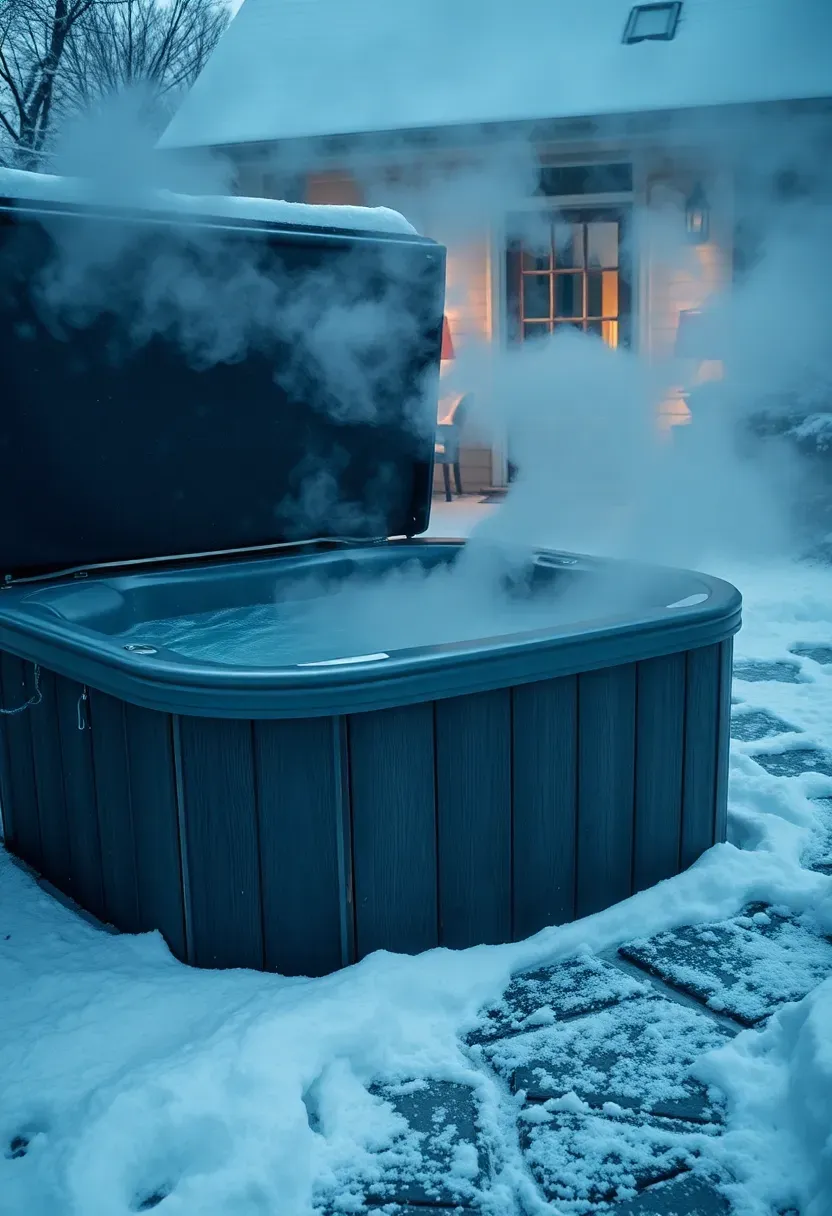
Using a hot tub in Minnesota winter is entirely different from soaking in San Diego. The tub needs full-foam insulation (not just a thermal blanket), a locking hard cover rated for snow load, and a heater that maintains temperature when ambient air drops to -20°F. Budget for electricity: winter heating costs run $60-120 per month in cold climates versus $20-40 in mild ones.
Step-by-Step Prep
Step 1: Insulate the cabinet with 2-inch closed-cell spray foam if the manufacturer did not include full-foam insulation.
Step 2: Install a thermal floating blanket under the hard cover to create a double insulation layer.
Step 3: Build a windbreak on the prevailing wind side — even a 4-foot fence panel reduces heat loss by 25-30 percent.
Watch Out
- Keep the path from your door to the tub clear and slip-resistant — rubber mats or heated walkway cables prevent ice falls
- Never drain the tub when temperatures are below freezing — pipes crack within hours
Recommended
Items for this idea
27. Smart Hot Tub with LED Lighting
What Smart Means Now
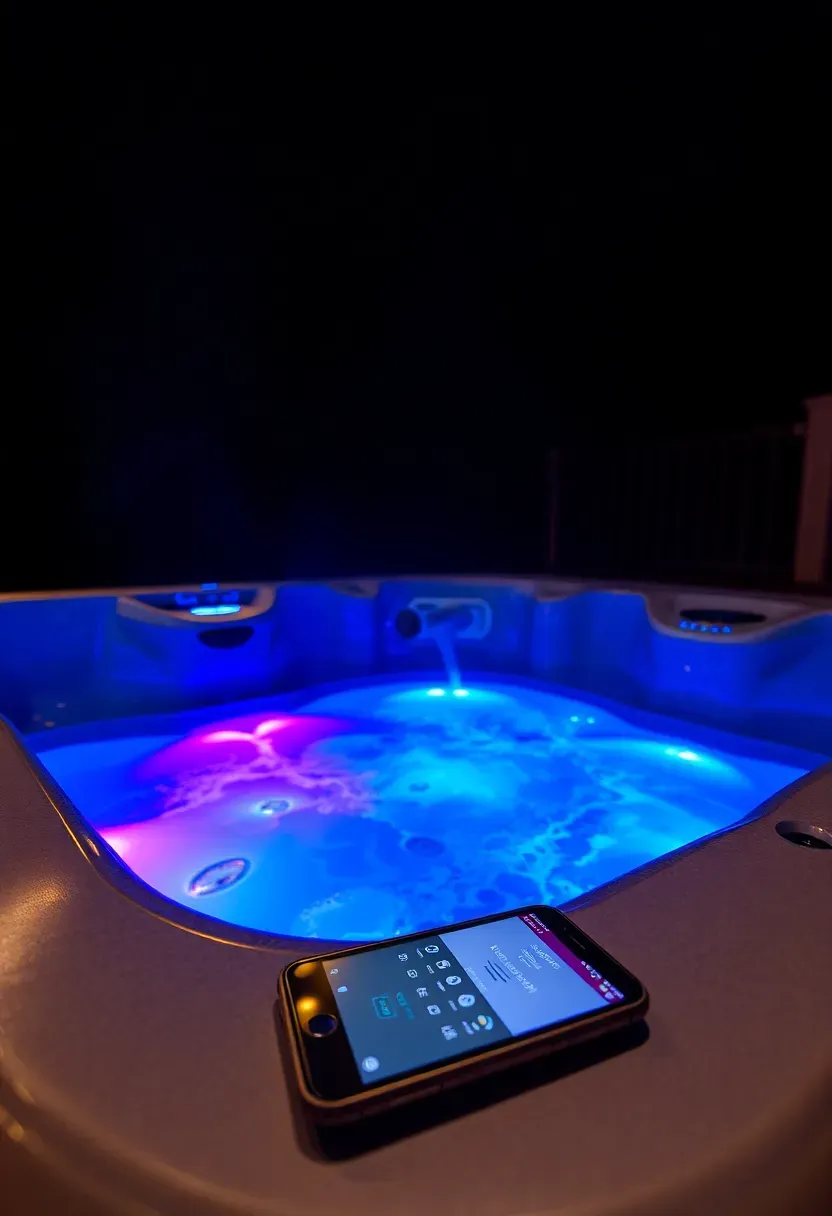
Current smart hot tubs connect to WiFi and let you adjust temperature, jet intensity, filtration schedules, and LED color from your phone. Brands like Jacuzzi (SmartTub), Hot Spring (IQ 2020), and Bullfrog (?"FROG @ease) offer integrated apps. Retrofit smart controllers (like SpaNet or Arctic Spas Connect) add connectivity to older tubs for $300-600.
The LED Factor
Perimeter LED strips around the tub rim and underwater color-changing lights are now standard on mid-range tubs ($5,000+). They cycle through colors or hold a single tone. Practical use: a dim amber setting provides enough light to see without destroying your night vision, which matters for stargazing soaks. Bright blue and purple look dramatic in photos but are harsh on the eyes during a relaxing session.
Worth the Upgrade If
- You frequently adjust settings before arriving home
- Energy monitoring helps you track and reduce operating costs
- You want notification alerts for filter changes, temperature drops, or cover removal
Quick FAQ
How much does it cost to install a hot tub in a backyard? Budget $3,000-8,000 for a basic above-ground setup including the tub, electrical work, and a concrete pad. In-ground or custom builds range from $15,000-50,000 depending on materials and site conditions. The tub itself is often only 40-60 percent of the total project cost — site prep, electrical, and landscaping add up quickly.
Do backyard hot tubs increase home value? Real estate data is mixed. In neighborhoods where outdoor living features are expected (Sun Belt, mountain communities), a well-maintained hot tub can add $5,000-15,000 to perceived value. In other markets, buyers may see it as a maintenance liability. Permanent built-in installations add more value than portable tubs.
What is the best surface to put a hot tub on? A 4-inch reinforced concrete pad is the standard recommendation. It distributes weight evenly, stays level over time, and resists moisture. Alternatives include compacted gravel pads (cheaper, adequate drainage) and reinforced deck platforms (requires engineering for load). Avoid placing tubs directly on grass, pavers without a base, or wooden decks not rated for the weight.
Can I run a hot tub on solar power? Partially. Solar thermal panels can preheat the water and reduce heating costs by 50-70 percent in sunny climates. Full solar-electric operation requires a substantial panel array (2-4 kW dedicated) and battery storage for nighttime heating. Most solar hot tub setups are hybrid — solar handles daytime heating, grid power covers overnight temperature maintenance.
How often should backyard hot tub water be changed? Every 3-4 months for regular use (3-4 sessions per week). Heavy use or large groups shorten that to every 6-8 weeks. Between changes, maintain sanitizer levels (bromine or chlorine), pH (7.2-7.8), and alkalinity (80-120 ppm). A weekly shock treatment keeps water clear and reduces the frequency of full drains.
Whether you are working with a tight corner lot or a sprawling hillside property, there is a hot tub configuration that fits your space and budget without looking like an afterthought. Start with the basics — a level pad, proper electrical service, and good drainage — then let the surrounding landscape and structures do the rest. Pick one idea from this list that matches your yard conditions, price it out with two or three local contractors, and compare bids. Most backyard hot tub projects from decision to first soak take 2-6 weeks, so if you start planning now, you will be soaking before the season ends.
Pinterest cover for 27 Backyard Hot Tub Ideas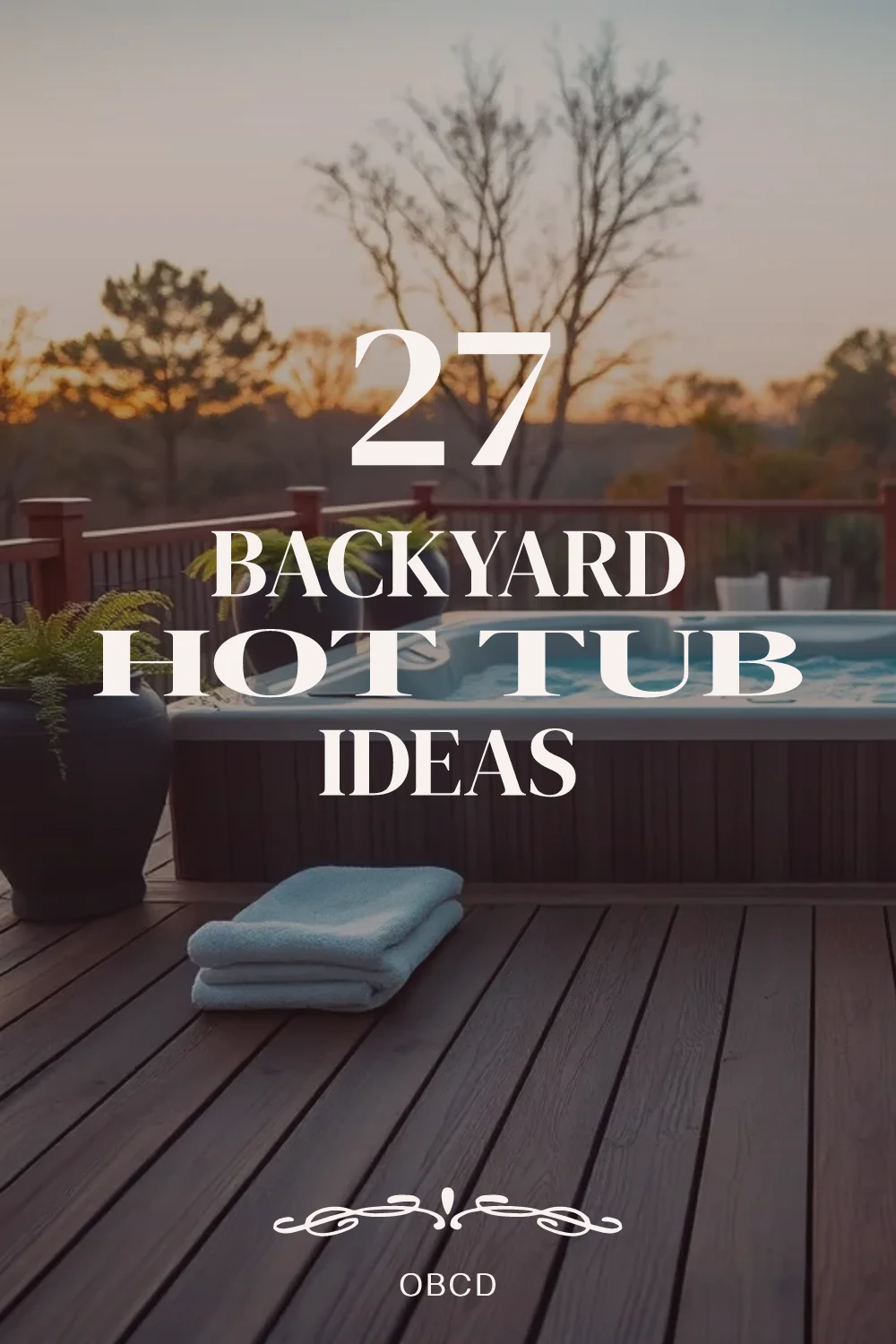
About the author
OBCD
CGI visualization and interior design content. We create detailed 3D renders and curate practical design ideas for every room in your home.