21 Backyard Pond Ideas That Look Good All Year
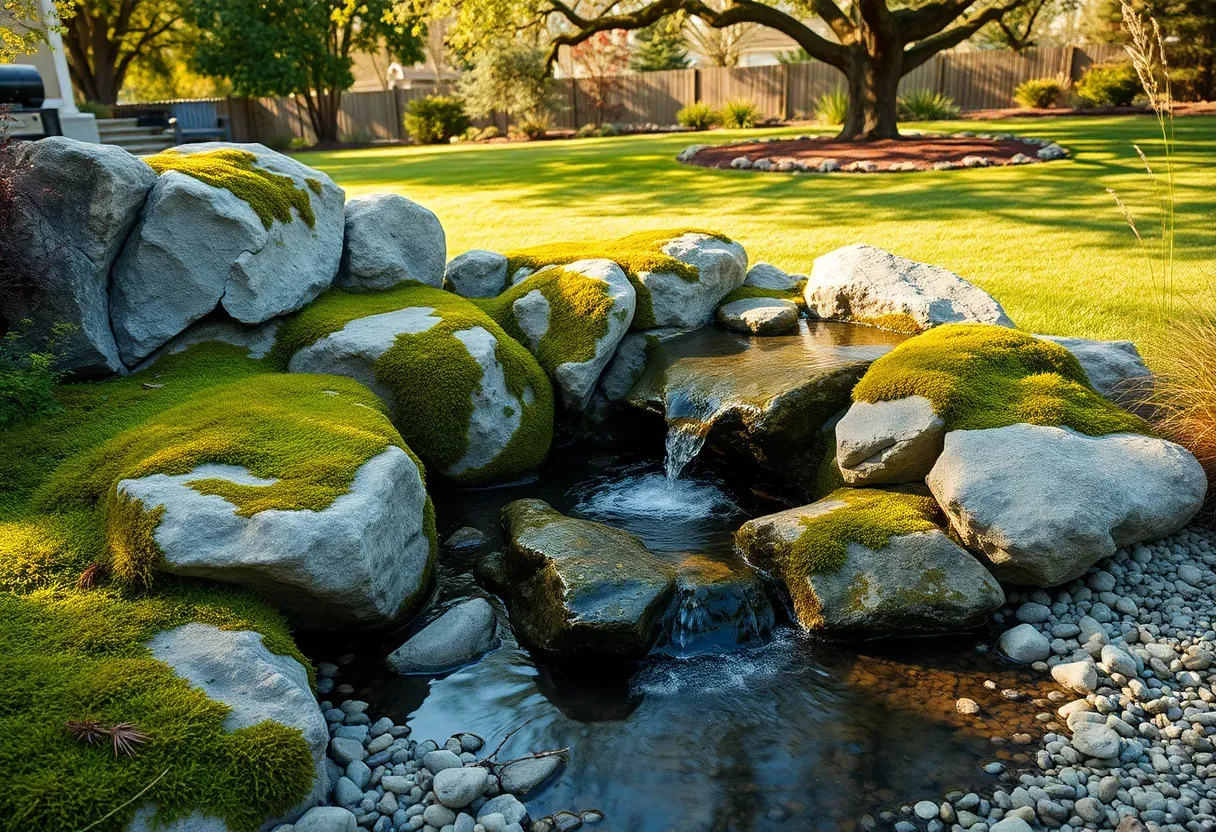
I spent two weekends last spring digging a pond in my side yard with nothing but a shovel and a rubber liner. The hole was ugly for about three days. Then the water settled, the first dragonfly showed up, and suddenly the whole yard felt different. A pond changes the atmosphere of an outdoor space in a way that planters and furniture cannot — it brings sound, movement, reflections, and wildlife into a spot that was just flat grass before. These 21 ideas cover everything from shallow wildlife basins you can finish in an afternoon to formal reflecting pools that need a contractor.
Below you will find options sorted roughly by complexity, starting with beginner-friendly builds and working toward larger installations.
Table of Contents
- Wildlife Bog Pond
- Preformed Liner Pond
- Raised Stone Pond
- Japanese Koi Pond
- Container Water Garden
- Natural Swimming Pond
- Formal Reflecting Pool
- Pondless Waterfall Basin
- Rain Garden Pond
- Tiered Stream Pond
- Courtyard Mirror Pond
- Duck Pond with Shallow Banks
- Barrel Pond Cluster
- Moss Rock Pond
- Pond with a Wooden Deck Edge
- Sunken Garden Pond
- Solar-Powered Fountain Pond
- Bridge-Over-Pond Feature
- Pond with Integrated Lighting
- Hillside Cascade Pond
- Minimalist Concrete Pond
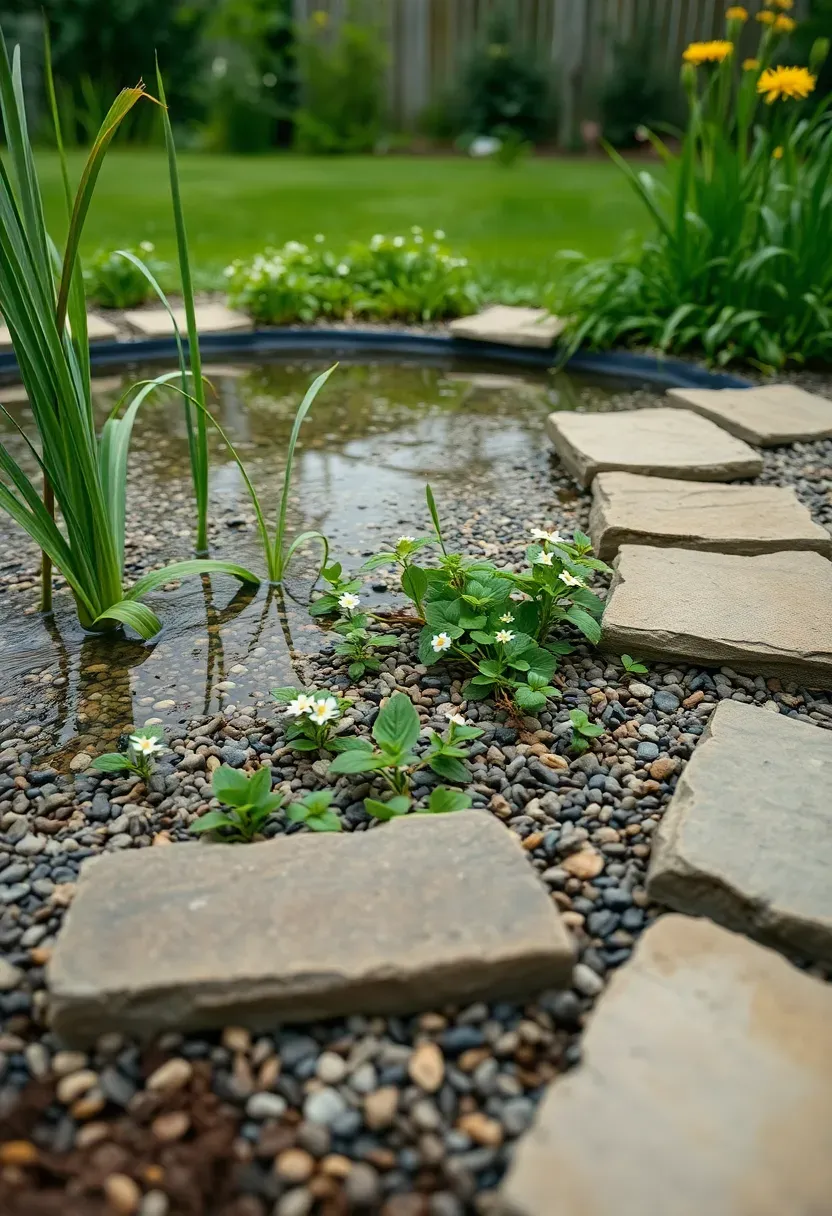
1. Wildlife Bog Pond
A bog pond sits just a few inches deep and relies on dense marginal planting to filter the water naturally. You dig a shallow depression, line it with EPDM rubber, backfill with gravel, and plant native sedges, marsh marigolds, and water mint directly into the substrate. No pump needed — the plants and gravel do the filtration. Within a few weeks, frogs, dragonflies, and birds start treating it like a rest stop. Because the water level is low, mosquito larvae get picked off by predators before they mature. This is the lowest-maintenance pond you can build, and it doubles as a genuine habitat feature.
Getting started
- Dig 4 to 8 inches deep with gently sloping sides so wildlife can crawl in and out
- Use 45-mil EPDM liner with a protective underlay of old carpet or geotextile
- Plant at least five native species to establish a self-sustaining filtration cycle
We picked a few things that go well with this idea: Firestone 45mil EPDM Pond Liner (15x20ft) (★4.6), Adroiteet HDPE Pond Liner (10x15ft) (★4.4) and VEVOR 45mil EPDM Pond Liner (8x10ft) (★4.1). As an Amazon Associate we earn from qualifying purchases.
2. Preformed Liner Pond
If digging a freeform hole sounds intimidating, a preformed rigid shell takes the guesswork out of shaping. These come in kidney, oval, and rectangular profiles ranging from 50 to 300 gallons. You excavate to match the mold, level the base with sand, drop the shell in, and backfill around the edges. Most people add a small submersible pump and a fountain nozzle to keep water moving. The downside is limited depth — most preformed ponds max out at 18 inches, which restricts fish options in cold climates. But for a first pond or a rental-friendly setup, they are hard to beat.
Choosing the right shell
- Measure the footprint and compare it to your available space before buying
- Pick a shell with at least one built-in plant shelf for marginal species
- Black or dark green shells look more natural than gray once filled
We picked a few things that go well with this idea: Biling 8W Solar Fountain Pump with Battery (★3.9), POPOSOAP 6.5W Solar Fountain Pump with Battery (★4.0) and POPOSOAP 8W Solar Fountain Pump with Filter Kit (★4.0). As an Amazon Associate we earn from qualifying purchases.
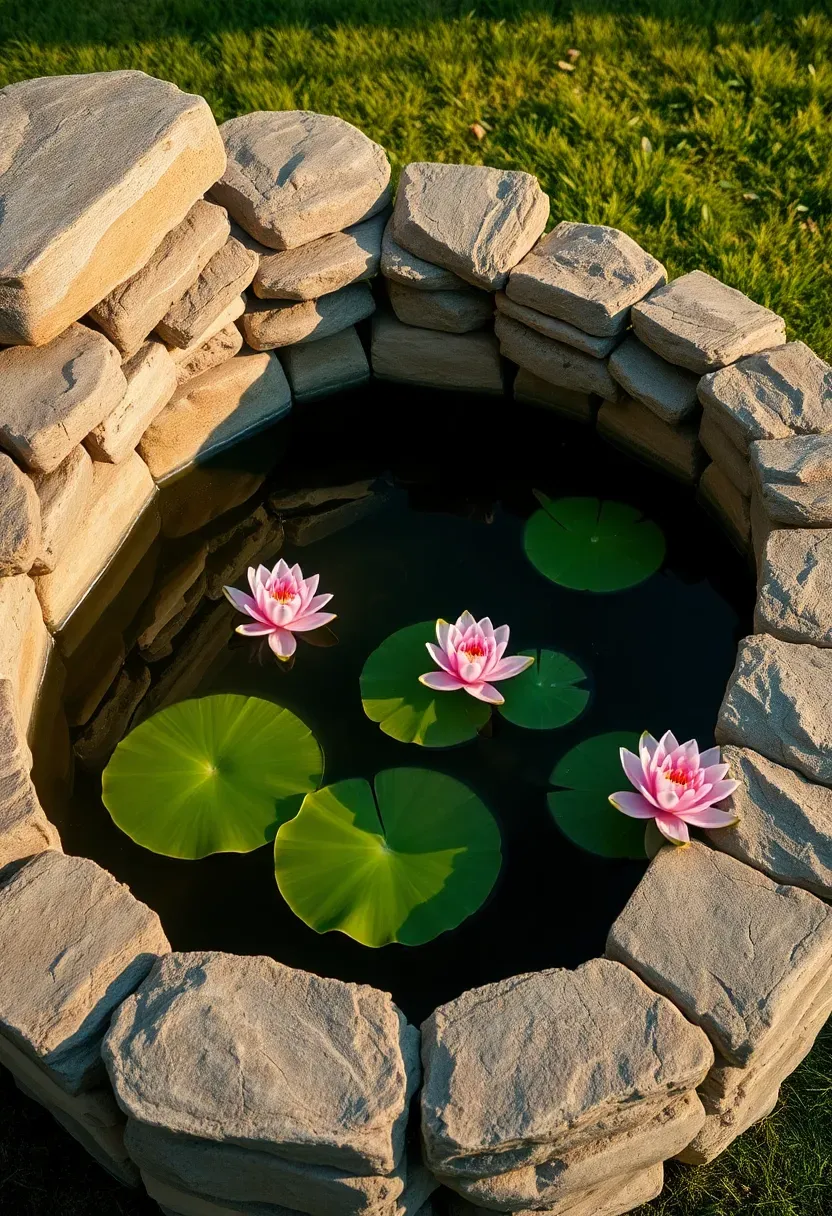
3. Raised Stone Pond
A raised pond built from stacked fieldstone or cut block eliminates digging entirely. You build a low wall — usually 18 to 24 inches high — and line the interior with rubber before filling. The height makes maintenance easier on your back, keeps small children and pets at a safer distance from the water, and adds vertical interest to a flat yard. Raised ponds also warm up faster in spring because the walls absorb sunlight, which extends the growing season for water lilies and lotus.
Design considerations
Why raised works well on clay soil. Heavy clay is brutal to dig through. A raised pond bypasses that problem completely — you build on top of grade instead of fighting the ground.
Watch the weight. A 200-gallon raised pond weighs over 1,600 pounds when full. Set it on a compacted gravel pad, not bare lawn, or the walls will shift over time.
Material options
- Natural fieldstone for a rustic, informal look
- Cut limestone or bluestone for clean geometric lines
- Concrete block with a stone veneer for lower cost with the same appearance
We picked a few things that go well with this idea: CREPOW Warm White Submersible Pond Lights (3-Pack) (★4.3), POPOSOAP 4-in-1 Warm White Pond Lights (★4.0) and TENSUL Warm White Submersible Pond Light (★4.5). As an Amazon Associate we earn from qualifying purchases.
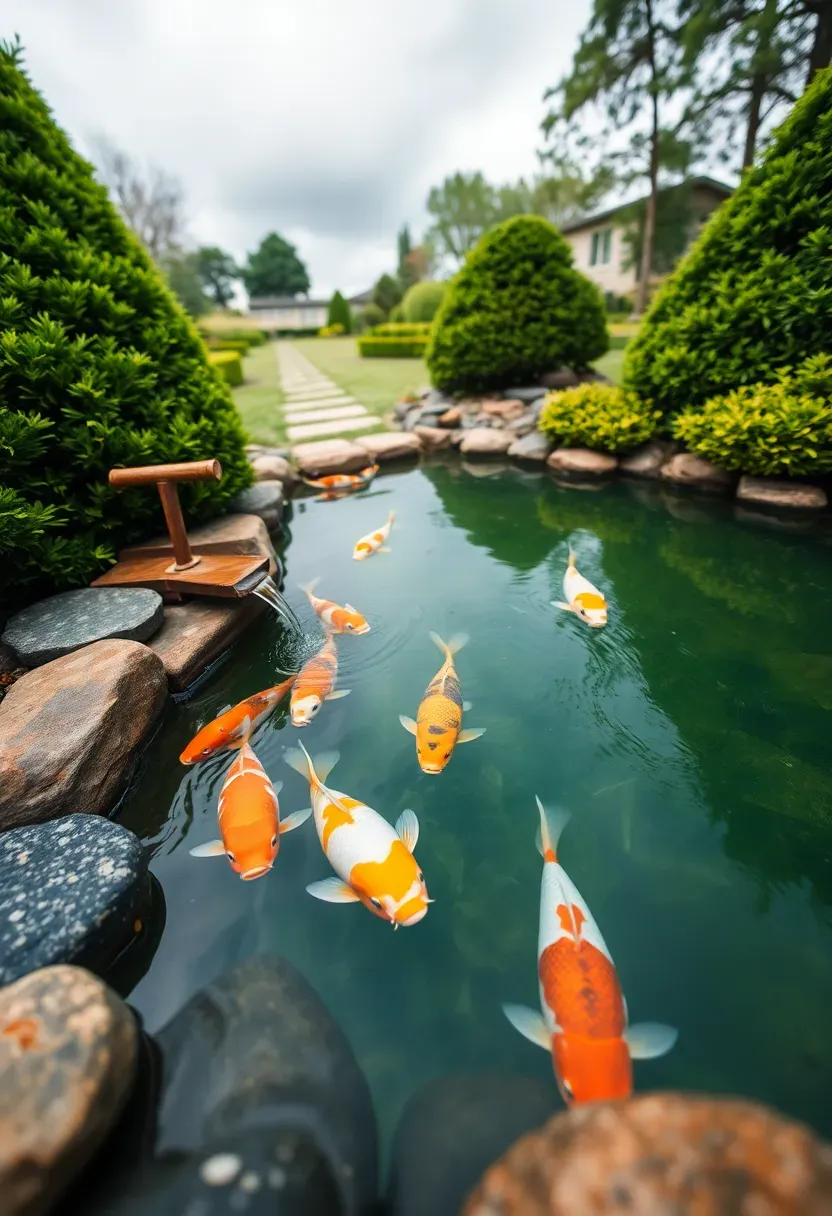
4. Japanese Koi Pond
Koi need depth, filtration, and room to move. A proper koi pond is at least 3 feet deep and holds a minimum of 1,000 gallons — anything smaller and waste levels spike too quickly. The filtration setup typically includes a bottom drain, a settlement chamber, and a biological filter packed with media where beneficial bacteria break down ammonia. It sounds involved because it is. But watching eight or ten koi cruise through clear water on a summer evening is one of those things that makes the effort feel proportional.
What separates koi ponds from garden ponds
Depth matters. Three feet minimum protects koi from herons and keeps water temperature stable in winter. In zones 5 and colder, go to four feet.
Filtration is not optional. Koi produce far more waste than goldfish. Budget for a dedicated multi-stage filter system, not a single canister.
Maintenance notes
- Test ammonia and nitrite weekly for the first three months
- Feed koi a high-quality pellet and stop feeding when water drops below 50°F
- Add netting in autumn to keep falling leaves out of the system
Recommended
Items for this idea
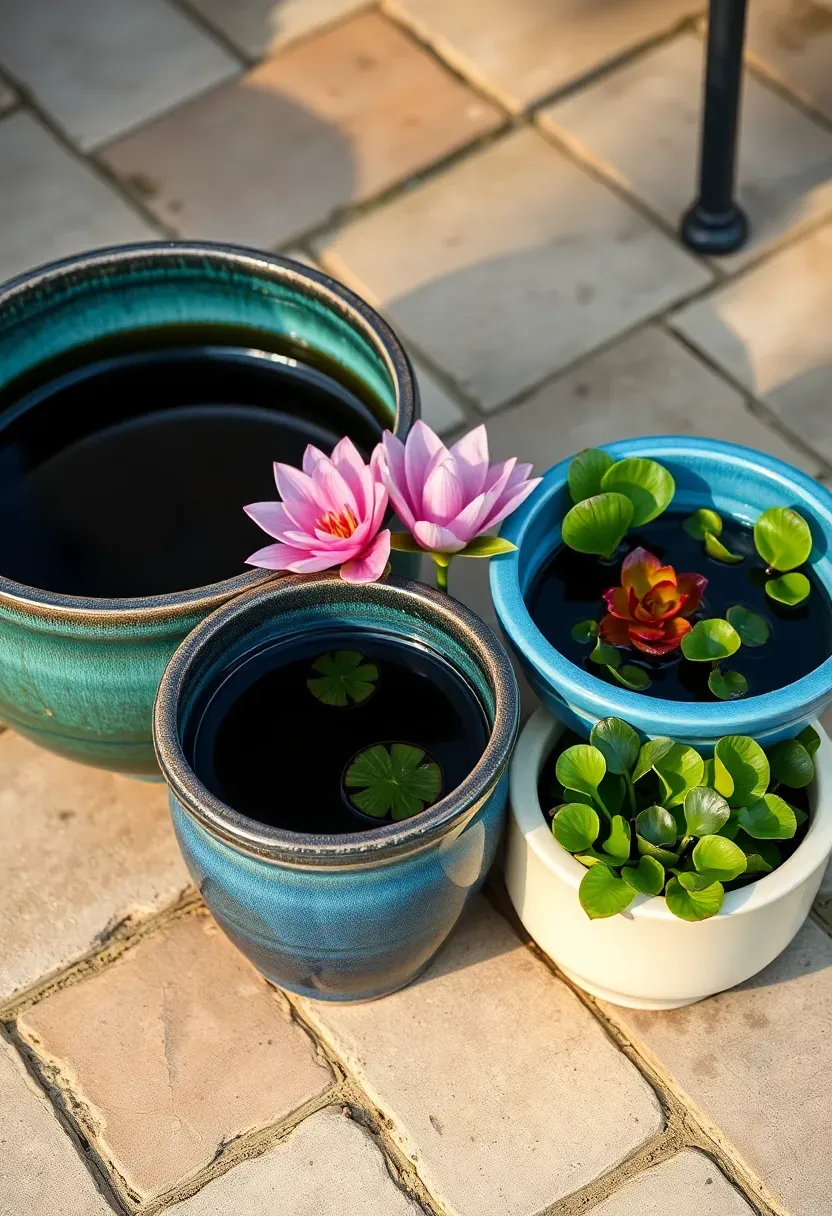
5. Container Water Garden
No yard? No problem. A half-whiskey barrel, a large glazed pot, or even a galvanized stock tank can hold a functioning water garden on a patio, deck, or balcony. Fill it, add a few aquatic plants — dwarf water lilies, water lettuce, papyrus — and optionally drop in a small solar bubbler. Container water gardens freeze solid in winter in cold climates, so you either bring them inside or treat them as seasonal. That actually works in their favor: you can rearrange, replant, or swap containers every spring without committing to a permanent installation.
Tips
- Use a container with no drainage hole, or seal existing holes with aquarium silicone
- Mosquito dunks (Bti tablets) prevent larvae without harming plants or pets
- Group three containers of different heights for a layered look
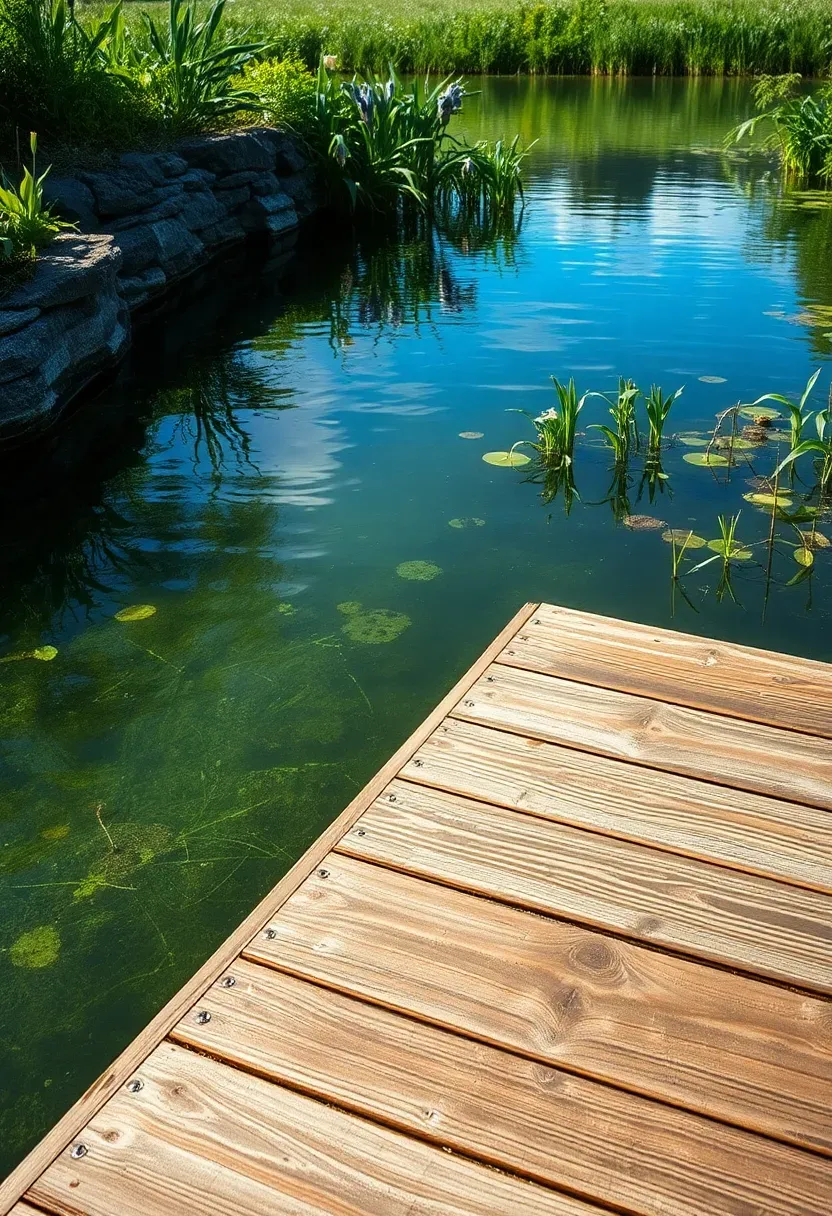
6. Natural Swimming Pond
The concept
A natural swimming pond splits into two zones: a deep swim area with clean, open water and a shallow regeneration zone packed with aquatic plants that filter the water biologically. No chlorine, no salt system — just plants, gravel, and beneficial microbes doing the work.
How it works
Water circulates from the swim zone through the planted zone via a low-wattage pump. The plants strip out nutrients that would otherwise feed algae. The regeneration zone needs to be at least as large as the swim area, which means you need a fairly big yard. Total footprint is typically 800 square feet or more.
Pros and cons
- Pro: Chemical-free water that feels soft on skin and supports biodiversity
- Pro: Lower ongoing costs once established — no chemical purchases
- Con: Higher upfront build cost than a conventional pool
- Con: Water may have a slight green tint in peak summer, which is normal but bothers some people
Recommended
Items for this idea
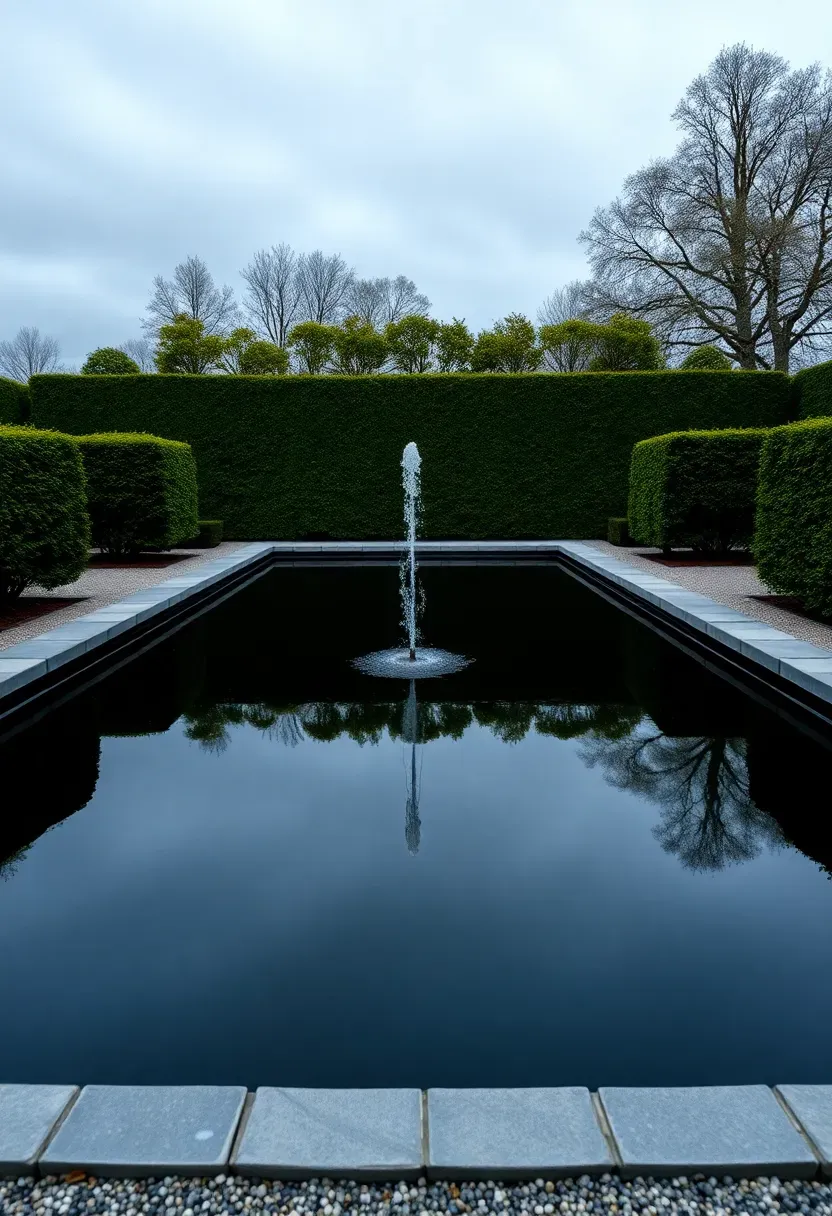
7. Formal Reflecting Pool
Reflecting pools work through restraint. The water is still or nearly still, the shape is geometric, and the surroundings are symmetrical. The pool becomes a mirror for the sky, nearby trees, or an architectural feature like a pergola. Depth is usually just 12 to 18 inches. The dark liner (black is standard) maximizes the reflection effect. You do need a small recirculating pump and a UV clarifier to prevent algae, since there are no plants competing for nutrients. Keep the edges sharp — cut stone, poured concrete, or metal coping — and resist the urge to add too many elements. The emptiness is the point.
Tips
- Black EPDM liner or dark plaster gives the best mirror effect
- Place the pool where it will reflect something worth looking at — a tree canopy, a facade, the sky
- Skim debris daily in autumn or install a surface skimmer on a timer
8. Pondless Waterfall Basin
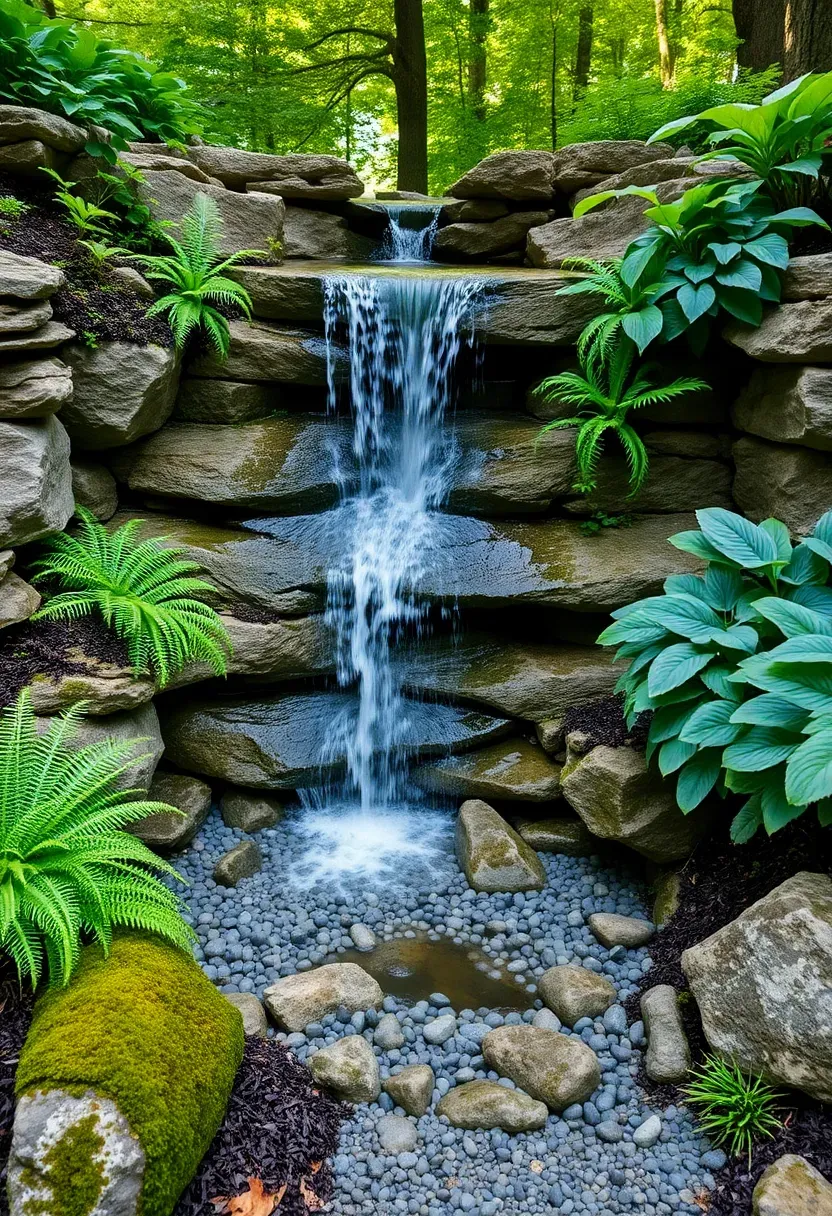
You get the sound and motion of a waterfall without maintaining a standing pond. Water cascades over rocks into a gravel-filled basin where a buried reservoir and pump recirculate it back to the top. Because there is no exposed standing water, the drowning risk for kids and pets is essentially zero. Evaporation losses are modest, and maintenance means topping off the reservoir every week or two and clearing leaves from the intake. This setup works well on slopes where gravity does half the work, but you can build one on flat ground by constructing a raised rock mound.
Steps to build
- Dig a basin 3 feet deep and line it with rubber; fill with large gravel over a pump vault
- Stack natural stone to create the waterfall face — aim for 2 to 4 feet of drop
- Run flexible tubing from the pump vault to the top of the rock stack
Recommended
Items for this idea
9. Rain Garden Pond
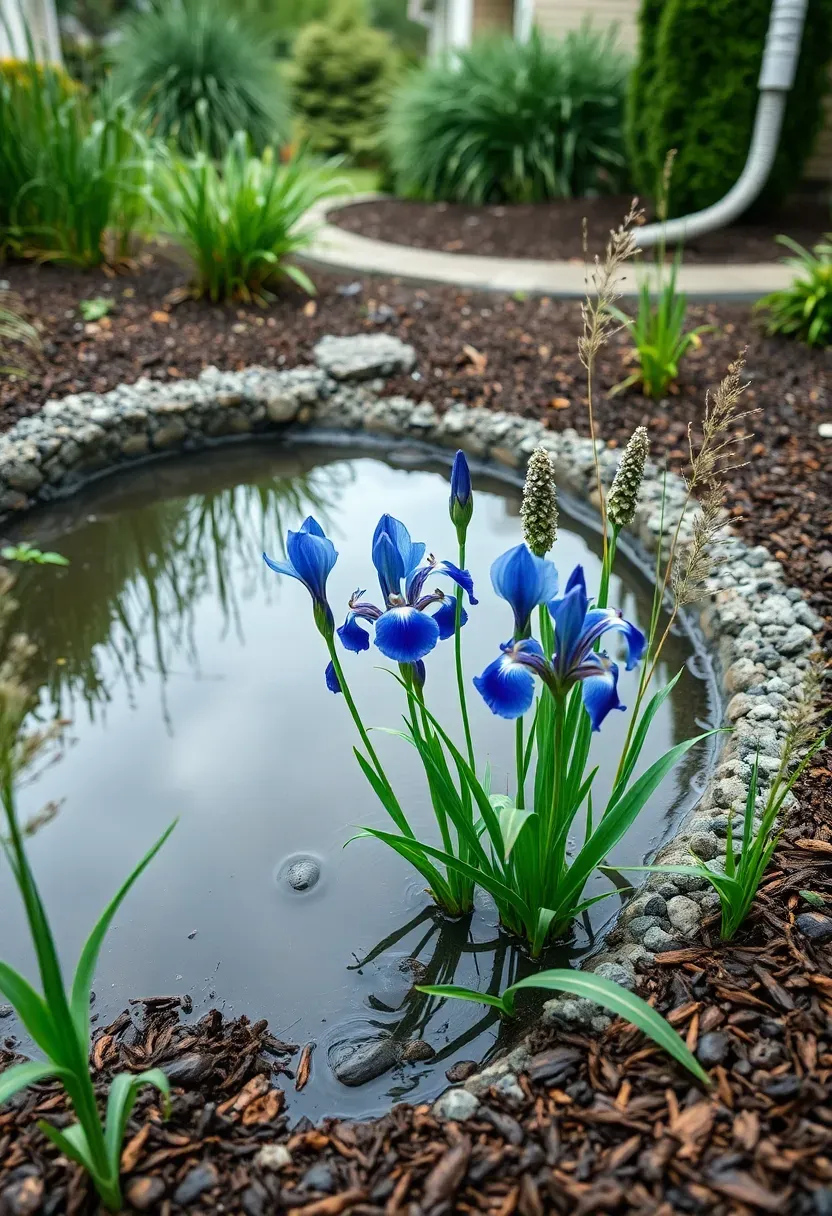
A rain garden pond sits in a natural low spot and collects stormwater runoff from your roof, driveway, or lawn. Unlike a decorative pond, it fills and empties with the weather. In dry spells, it may be damp soil with dense planting. After a storm, it holds several inches of water that slowly percolates into the ground over 24 to 48 hours. The environmental benefit is real — you keep polluted runoff out of storm drains and recharge groundwater. Plant it with native species like blue flag iris, joe-pye weed, and switchgrass that tolerate both wet feet and dry periods.
Planning notes
- Position the pond at least 10 feet from your foundation to avoid moisture issues
- Size the basin to handle runoff from your roof area — a general rule is 20% of the contributing drainage area
- Amend heavy clay soil with sand and compost so water infiltrates within 48 hours
10. Tiered Stream Pond
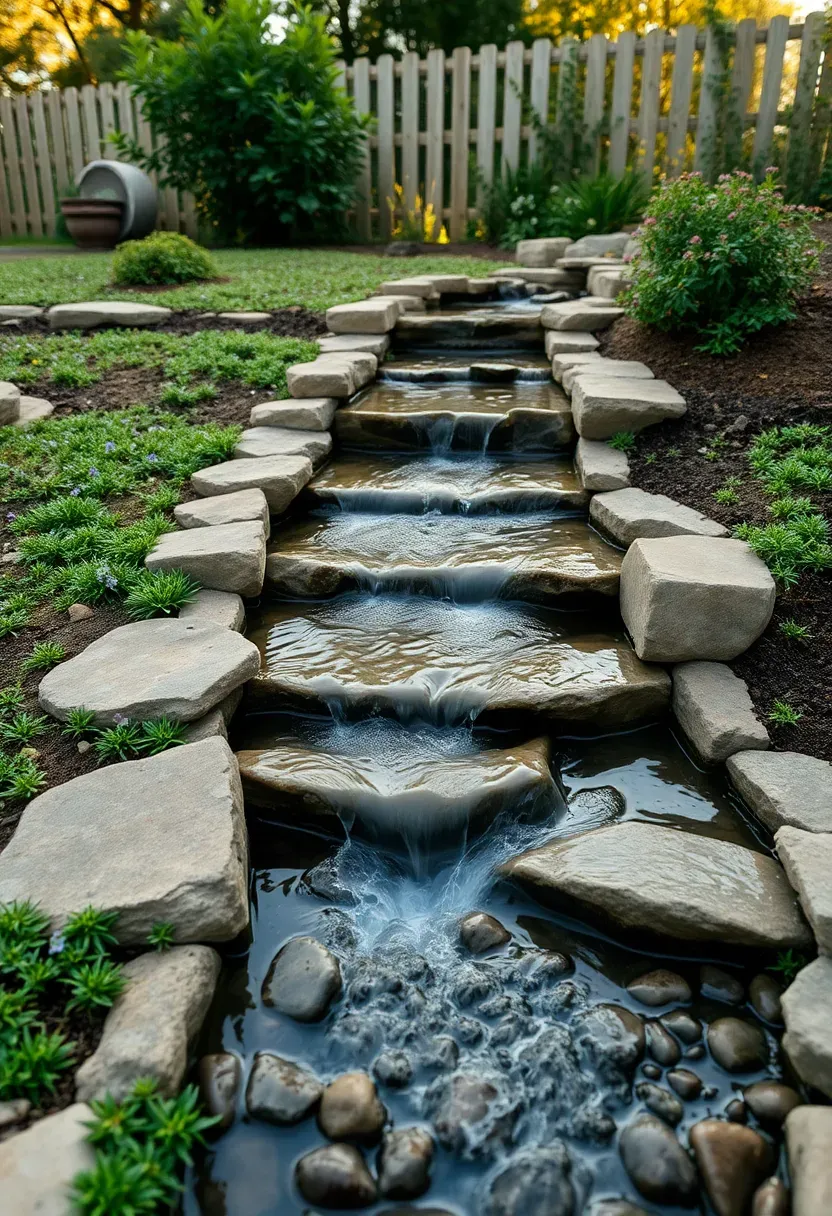
Instead of one pond, build two or three connected by a shallow stream that steps down the grade. Each tier can host different plants and depths — marginals in the upper pools, deeper water for fish in the lowest. The stream itself runs over flat stones and creates enough aeration that you may not need a separate air pump. The visual effect is more dynamic than a single basin, and the sound carries through the yard. You do need some natural slope, or you have to create it with excavated soil bermed behind the upper pool.
Tips
- Keep the stream 8 to 12 inches wide and 2 to 4 inches deep for the best sound
- Use flat flagstone or river rock for the streambed, set in mortar to prevent shifting
- Install a single pump in the lowest pond with tubing running up to the headwater pool
Recommended
Items for this idea
11. Courtyard Mirror Pond
Why it works in tight spaces
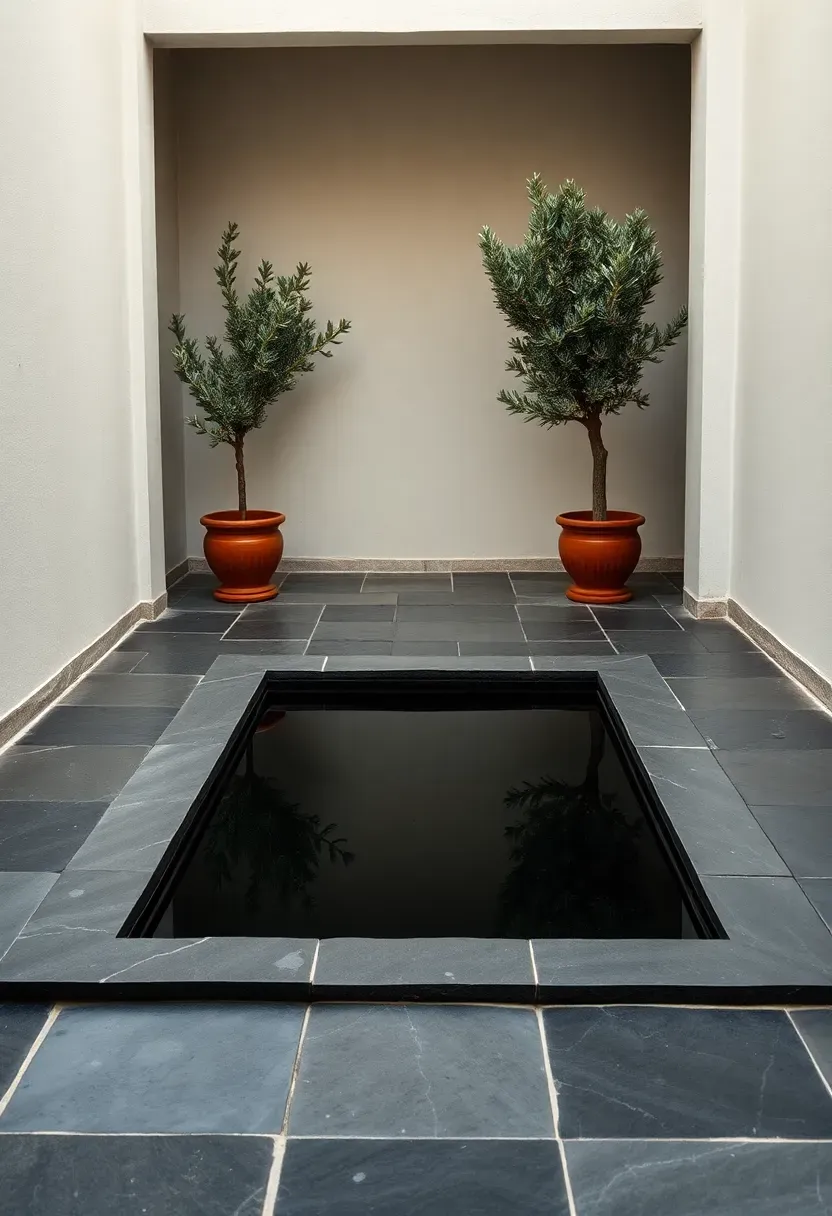
A courtyard pond does not need to be large. Even a 4-by-6-foot rectangle of still, dark water transforms a walled courtyard by adding reflected light and a sense of openness. The walls provide shelter from wind, which keeps the surface glassy.
Setting it up
Line a shallow excavation (6 to 10 inches) with black rubber, edge it with slate or smooth concrete pavers, and fill. A small recirculating pump keeps the water fresh without disturbing the surface too much. Add a single aquatic plant — one papyrus or a small lotus — as a focal point, but leave most of the surface open.
Choose this if
- You have a small walled or fenced patio that feels enclosed
- You want reflected light bouncing into adjacent rooms
- Low maintenance is a priority — no fish, minimal planting
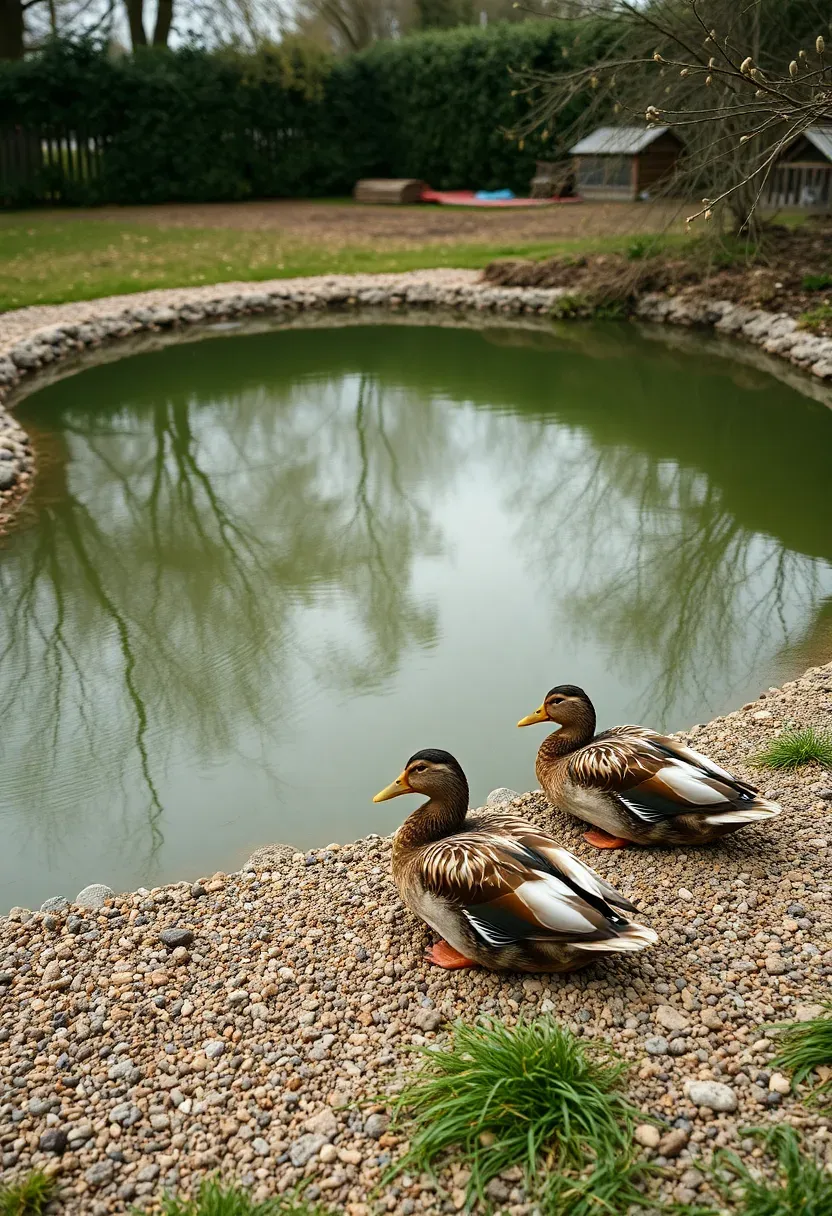
12. Duck Pond with Shallow Banks
Ducks need easy access to water, so the banks must slope gently — no steep drops. A duck pond is wider and shallower than a koi pond, typically 18 to 24 inches at the deepest. The water will be murkier than a decorative pond because ducks churn up sediment and add nutrients. That is fine. Use a robust aeration system and plan to drain and refill partially every few weeks during heavy use. Surround the pond with gravel rather than grass, because ducks will destroy any lawn within a 10-foot radius of the water's edge.
Practical details
- Size the pond at a minimum of 4 square feet of water surface per duck
- Install a bottom drain connected to a hose bib for easy partial water changes
- Plant willow or dogwood screening on the far side for shade and wind protection
Recommended
Items for this idea
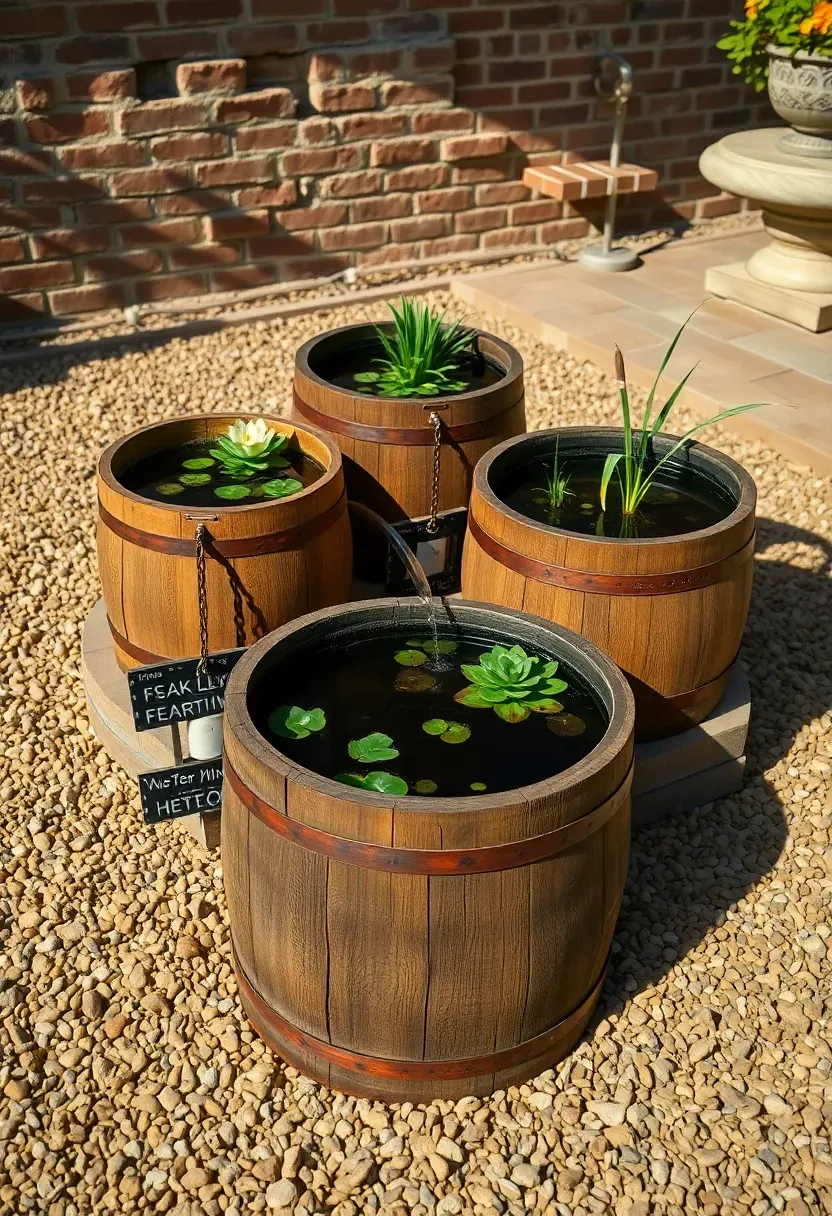
13. Barrel Pond Cluster
Half-whiskey barrels are cheap, available at most garden centers, and already the right shape. Line one with pond liner (the wood alone will leak, and the old whiskey residue can harm plants), fill it, and plant it. The trick that makes a barrel pond look intentional rather than random is clustering three of them at different heights — one on the ground, one on a low stack of pavers, one on a taller plinth. Connect them with a small pump so water trickles from the highest to the lowest. This gives you the stream effect without any digging.
Tips
- Food-grade barrel liners are safer than patching old wood with silicone
- Use mosquito dunks in each barrel during warm months
- Stain or seal the exterior of the barrels with a UV-resistant finish so they last more than two seasons
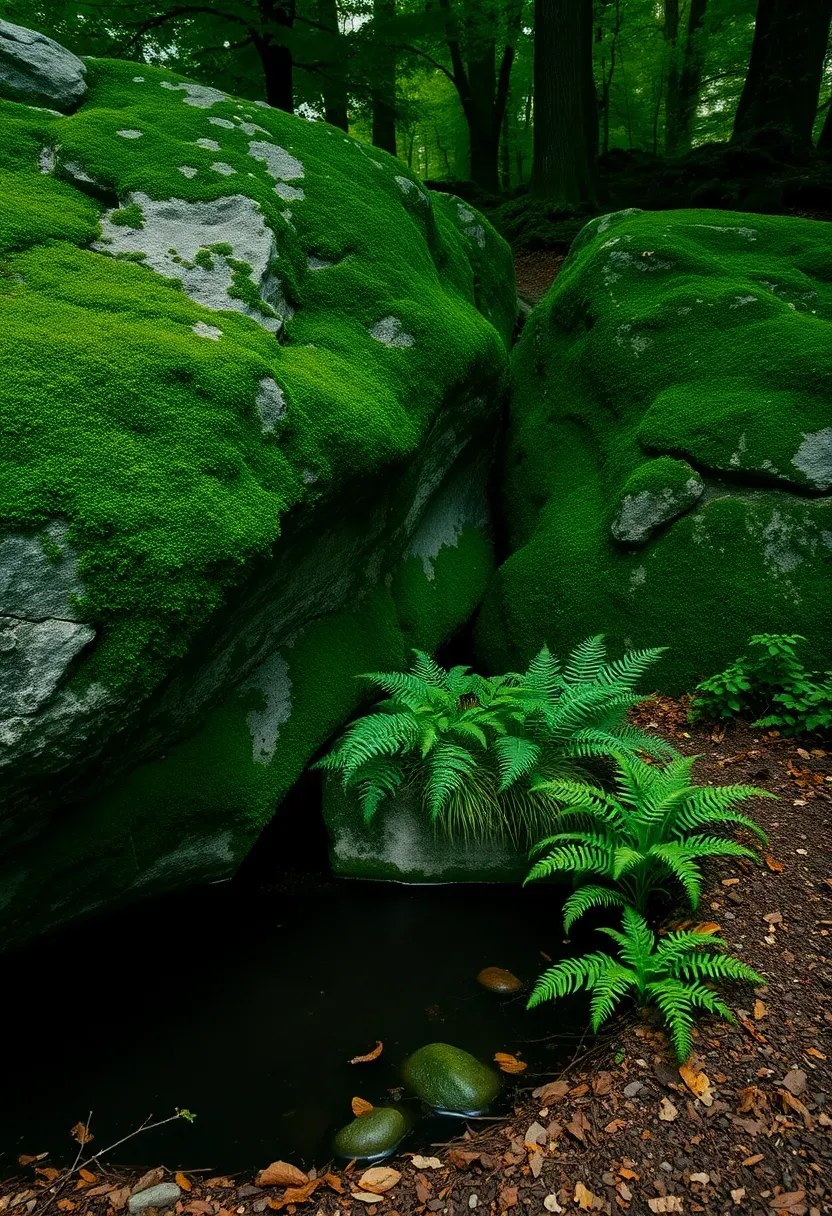
14. Moss Rock Pond
Moss rock ponds look like they have been sitting in a forest clearing for a hundred years. The secret is choosing porous stone — limestone, sandite, or lava rock — that holds moisture and encourages moss colonization. Position the rocks so they partially overhang the water, creating shadow and humid microclimates. Plant ferns, hellebores, and native wood sedges around the perimeter. This style works best in partial shade, which also slows algae growth in the pond itself. Expect the moss to establish fully within one to two growing seasons if you keep the rocks misted during dry spells.
How to encourage moss growth
- Blend a handful of moss from your yard with buttermilk in a blender and paint it on the rocks
- Mist rocks daily for the first month during dry weather
- Avoid placing moss-covered rocks in full sun — they dry out and die
Recommended
Items for this idea
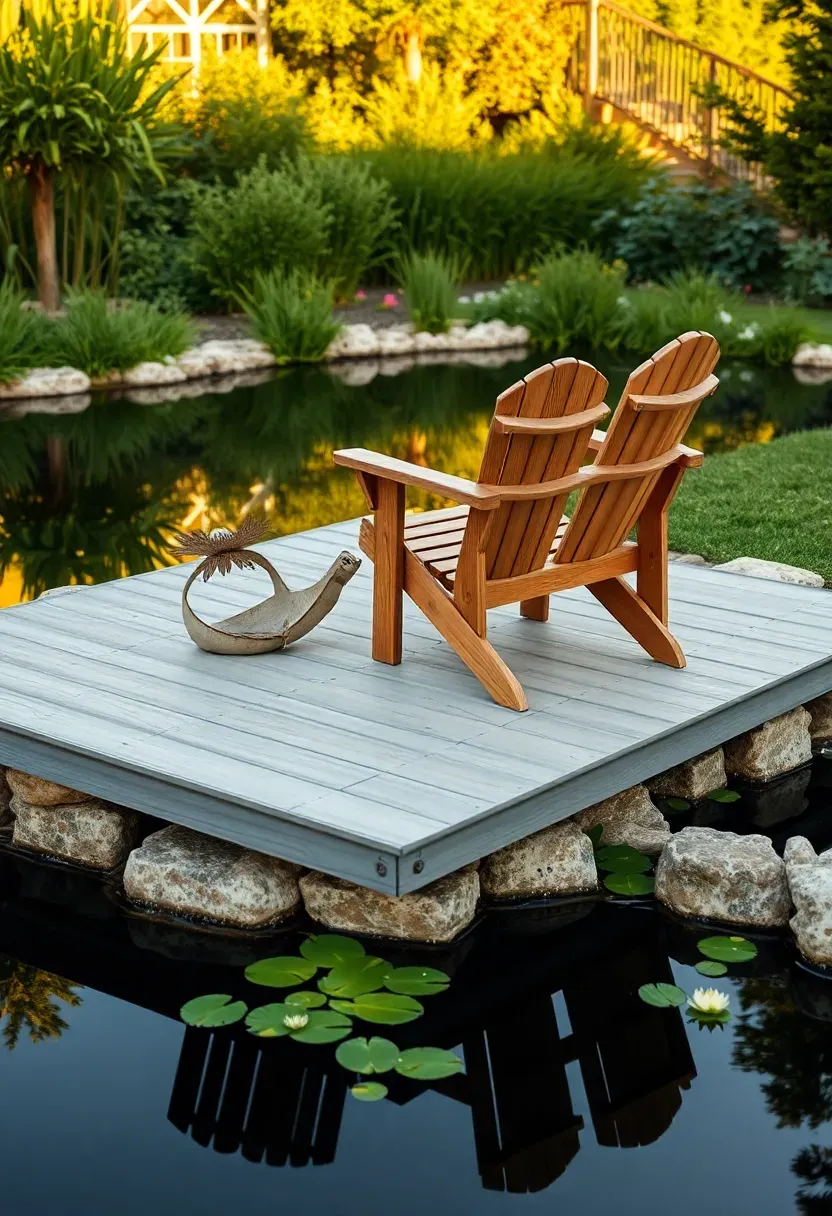
15. Pond with a Wooden Deck Edge
Building a low deck that extends a foot or two over the pond gives you a place to sit at water level without kneeling on rocks or wet grass. Use pressure-treated lumber or composite decking rated for ground contact. The overhang also hides the pond liner edge, which is the hardest part of any pond to make look natural. Cantilever the deck 12 to 18 inches past the pond rim and leave small gaps between boards so rainwater drains through rather than pooling.
Construction notes
Foundation matters. Set deck posts on concrete footings outside the pond footprint — never inside the liner.
Keep it low. The deck surface should sit 4 to 6 inches above the water line. Any higher and you lose the connection to the water.
Material options
- Ipe or cedar for natural wood that resists rot
- Composite decking for zero-maintenance longevity
- Avoid pine without treatment — it rots within three years in constant moisture
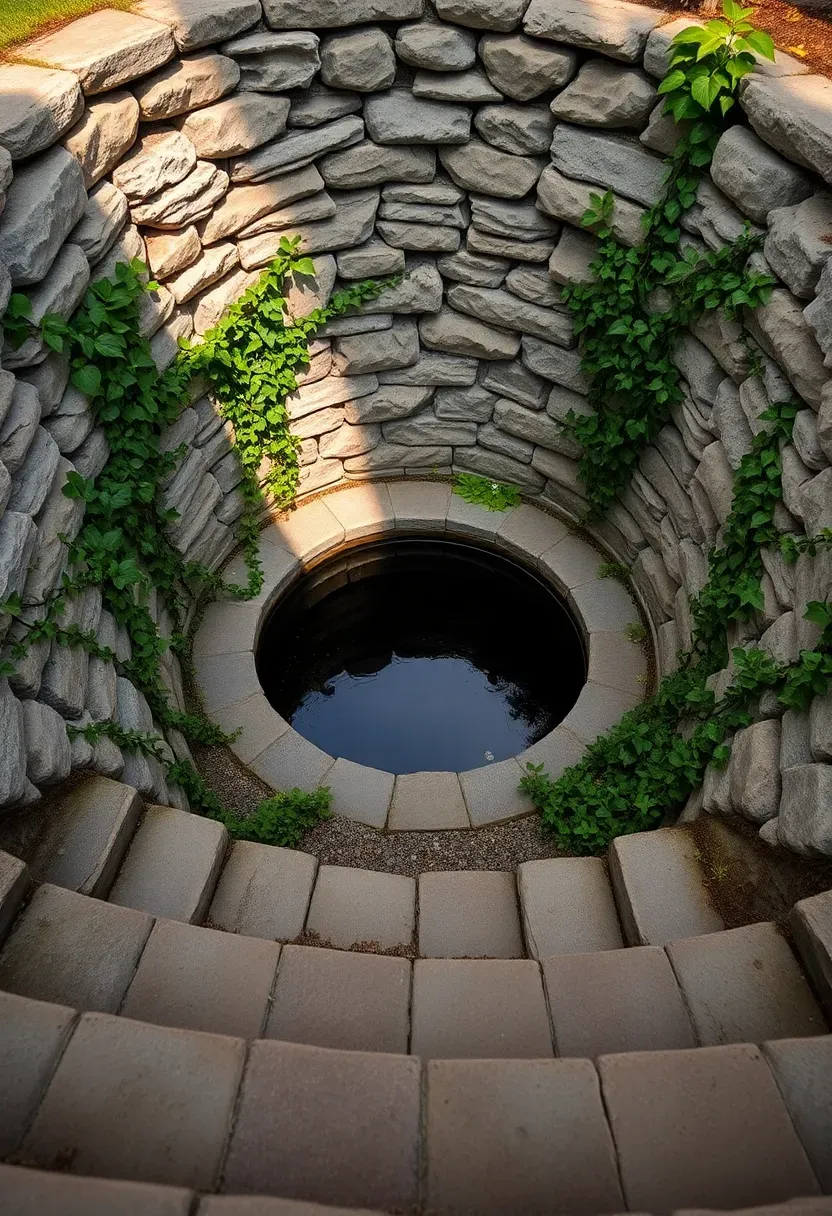
16. Sunken Garden Pond
Dig deeper than the surrounding grade and build low retaining walls to create a sunken basin with the pond at the bottom. You step down into the space via stone or brick steps. The sunken position shelters the pond from wind, reduces evaporation, and creates a microclimate that stays warmer in spring and cooler in summer. This is more of a landscape architecture project than a weekend build — you need proper drainage behind the retaining walls and a plan for where the excavated soil goes. But the result is a private, enclosed garden room centered on water.
Tips
- Install a French drain behind the retaining walls to prevent hydrostatic pressure buildup
- Use the excavated soil to build berms elsewhere in the yard
- Plant trailing species along the top of the walls so greenery spills down toward the water
Recommended
Items for this idea
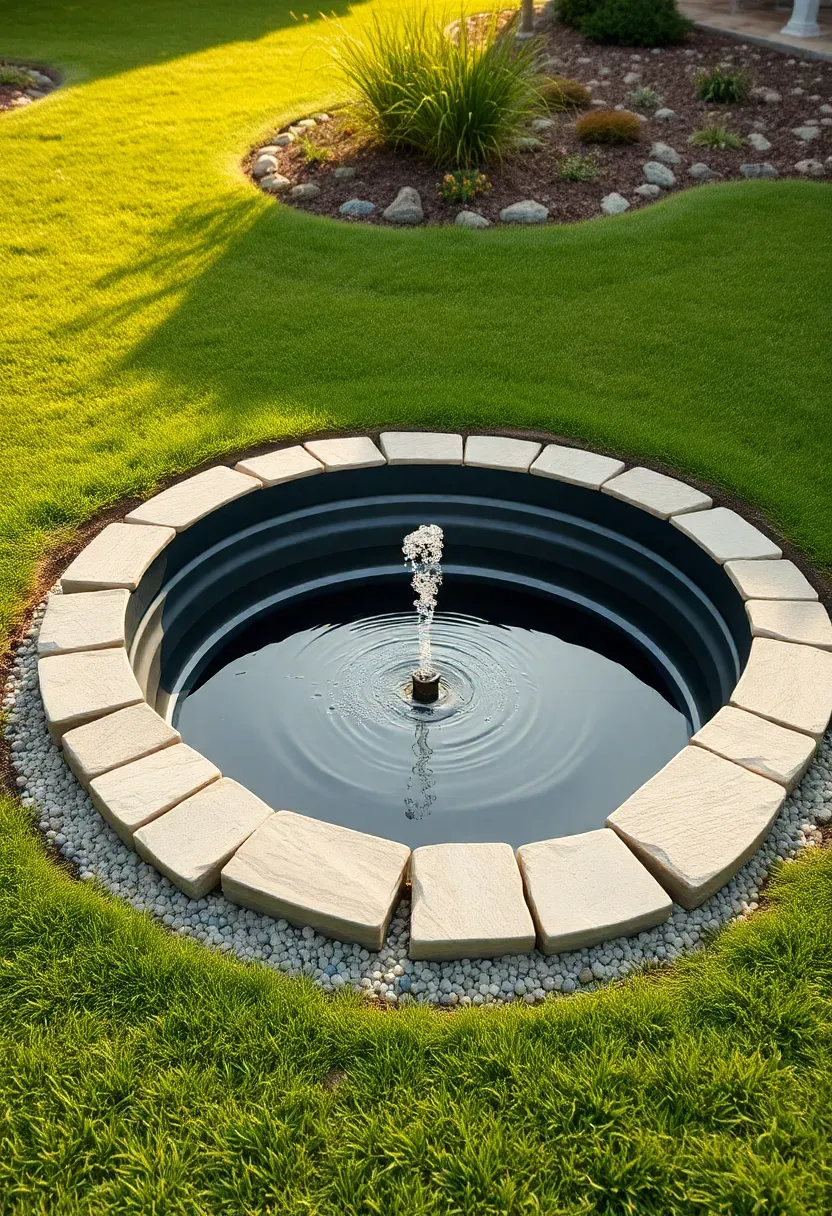
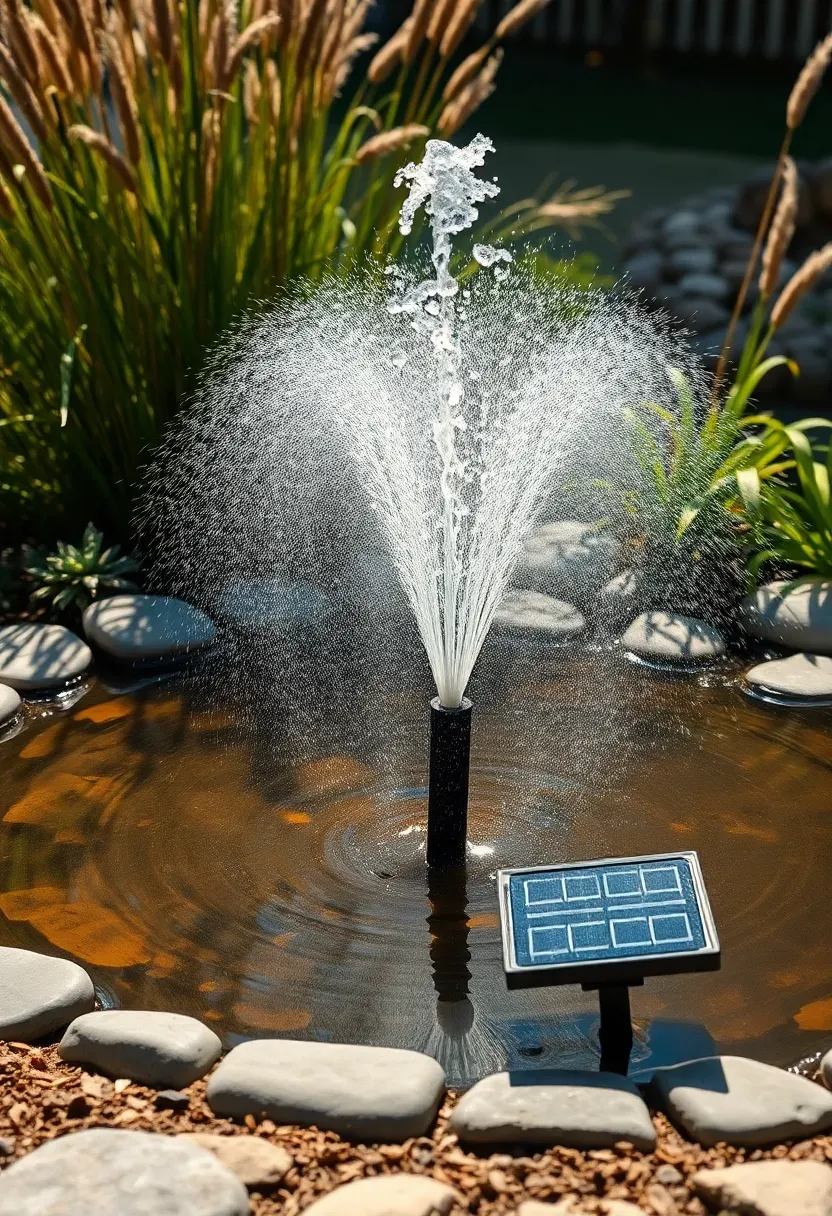
17. Solar-Powered Fountain Pond
The appeal
A solar fountain eliminates the need to run electrical cable to the pond. The panel sits at the water's edge or mounts on a stake nearby, and the pump runs whenever the sun hits it. No electricity cost, no electrician, no conduit trenching.
Limitations to know about
Solar pumps are weaker than wired ones — expect a spray height of 12 to 24 inches at peak sun. On cloudy days, flow drops significantly. Battery-backed solar pumps solve this but cost two to three times more. The pump also stops at night, so you lose aeration during overnight hours when oxygen levels naturally dip.
Best use cases
- Small ponds under 200 gallons where gentle aeration is sufficient
- Ponds with enough plant coverage that overnight oxygen depletion is not critical
- Rental properties where permanent electrical work is not allowed
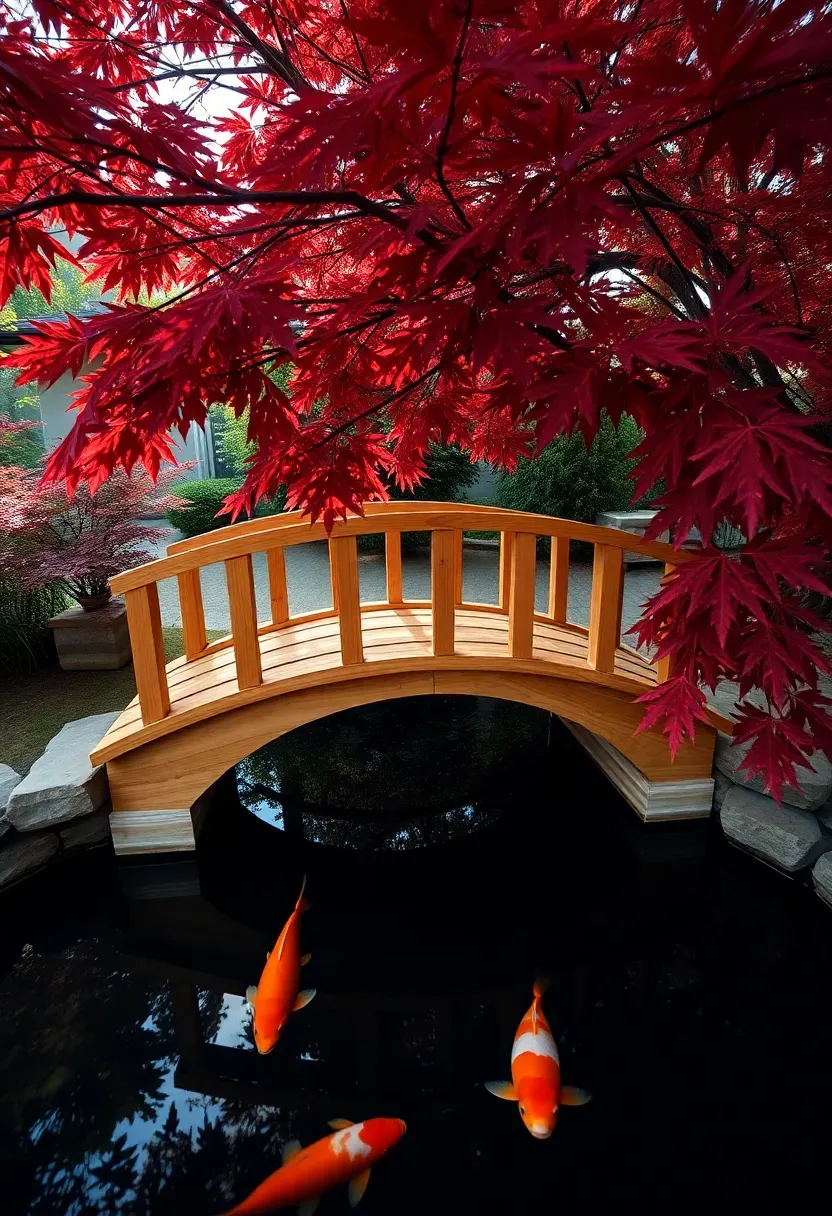
18. Bridge-Over-Pond Feature
A bridge turns a pond from something you look at into something you walk through. Even a 4-foot span across a narrow section changes the experience. The bridge does not need to be structural — a pair of thick planks resting on stone abutments works for a garden path. For something more finished, build an arched bridge from cedar with simple railing posts. Position it at the narrowest point of the pond so the span stays manageable and the bridge frame stays proportional to the water feature.
Design considerations
- Abutments should be set on compacted gravel, not directly on the liner
- Keep the bridge deck at least 8 inches above the highest expected water level
- A slight arch (4 to 6 inches of rise over a 6-foot span) improves both drainage and appearance
Recommended
Items for this idea
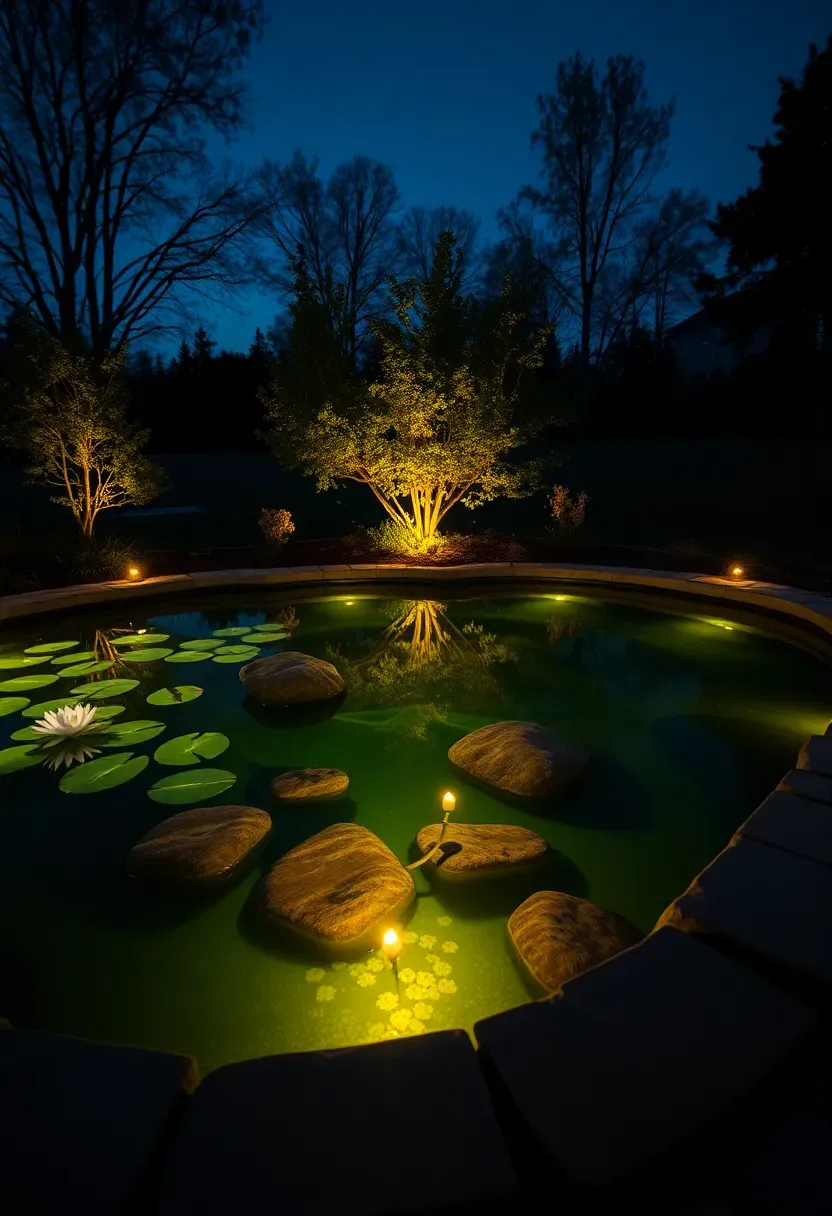
19. Pond with Integrated Lighting
Lighting a pond extends its visual presence into the evening hours. Underwater LED spotlights in warm white (2700K to 3000K) make the water glow from within and reveal fish, plants, and rock textures after dark. Pair submersible lights with a few path lights around the perimeter to define the pond's shape. Use a low-voltage transformer rated for outdoor wet locations and bury the cable in conduit. Avoid colored lights — they look artificial and get old fast. Warm white or neutral white keeps things looking natural.
Installation tips
- Place submersible fixtures on the pond shelf, angled inward toward the center
- Use a photocell or timer so lights come on automatically at dusk
- Run separate circuits for underwater and landscape lights so you can control them independently
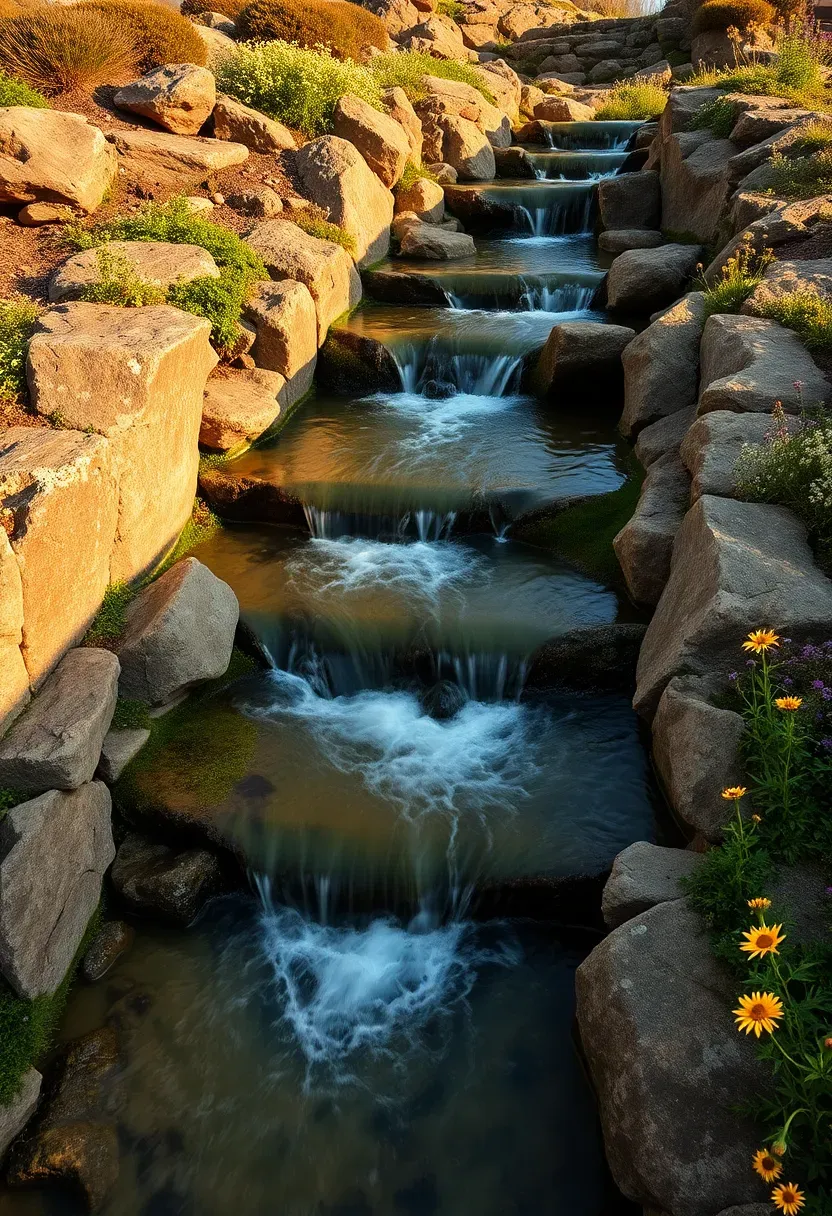
20. Hillside Cascade Pond
Making slope work for you
A sloped yard that is annoying to mow becomes an asset when you build a cascade pond. Water flows downhill through a series of small pools connected by short waterfalls. Gravity does most of the work — you only need a pump at the bottom to push water back to the top.
Building the cascade
Excavate a series of flat terraces into the slope, each one 6 to 12 inches lower than the one above. Line the entire run with a single piece of EPDM rubber (seams on slopes eventually leak). Stack rocks at each drop point to form natural-looking spillways. The lowest pool should be the largest and deepest, since it serves as the sump for the recirculating pump.
Watch out for
- Liner seams on slopes — use a single continuous piece whenever possible
- Erosion behind the rock work — pack filter fabric and gravel behind the stones
- Pump sizing — measure the total vertical lift from bottom pool to top and add 20% capacity
Recommended
Items for this idea
21. Minimalist Concrete Pond
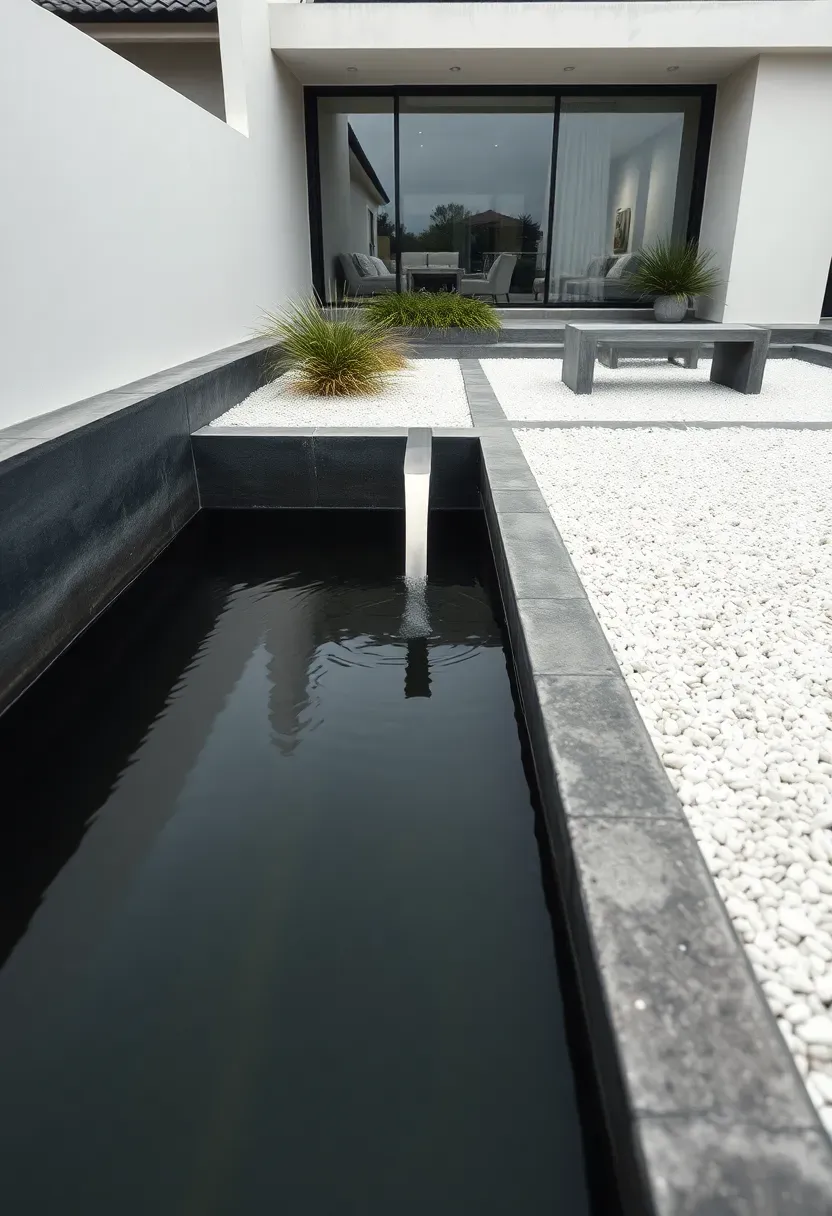
Poured concrete gives you total control over shape, depth, and finish. A rectangular concrete pond with smooth troweled walls, a single water spout, and no visible equipment reads as architectural rather than naturalistic. The concrete can be sealed with a pond-safe coating or finished with dark plaster to create a reflective surface. This style pairs well with modern houses, clean landscaping, and hardscape-heavy yards. The trade-off is cost and construction complexity — you need forms, rebar, proper curing time, and a waterproof membrane or admixture.
Key details
- Apply a pond-safe sealant like Pond Shield epoxy over cured concrete to prevent lime leaching
- Dark gray or charcoal plaster creates a sleek, modern look and hides minor discoloration
- Include a concealed overflow drain connected to your yard's drainage system
Quick FAQ
How deep should a backyard pond be? It depends on what lives in it. A plant-only pond works at 12 to 18 inches. Goldfish need at least 24 inches. Koi require 36 inches minimum, and 48 inches in climates with hard freezes so the bottom stays unfrozen.
Do backyard ponds attract mosquitoes? Only if the water is stagnant and has no predators. A small pump, a fountain, or a few mosquitofish eliminate the problem. Moving water prevents mosquitoes from laying eggs. Bti mosquito dunks are another safe, effective option.
Can I build a pond without a pump? Yes. Wildlife bog ponds and heavily planted ponds can sustain themselves without mechanical filtration. The key is dense marginal planting and a balanced ecosystem where plants consume the nutrients that would otherwise feed algae.
What is the cheapest type of backyard pond to build? A container water garden in a stock tank or whiskey barrel costs under $100 and takes an afternoon. An in-ground pond with a flexible EPDM liner starts around $200 to $400 for a 6-by-8-foot basin, not counting the pump.
Do I need a permit to build a pond in my backyard? In most US jurisdictions, ponds under 2 feet deep and under a certain square footage do not require a permit. But check your local building code — some areas have setback requirements, and any project involving electrical work for pumps may need an electrical permit.
A backyard pond does not need to be complicated or expensive to change how your outdoor space feels. Start with something small — a barrel, a preformed shell, a shallow bog — and see what happens. You will probably want to go bigger within a year. That is normal. The yard will tell you where the water wants to go.
Pinterest cover for 21 Backyard Pond Ideas That Look Good All Year
About the author
OBCD
CGI visualization and interior design content. We create detailed 3D renders and curate practical design ideas for every room in your home.