29 Backyard Koi Pond Ideas for Every Yard
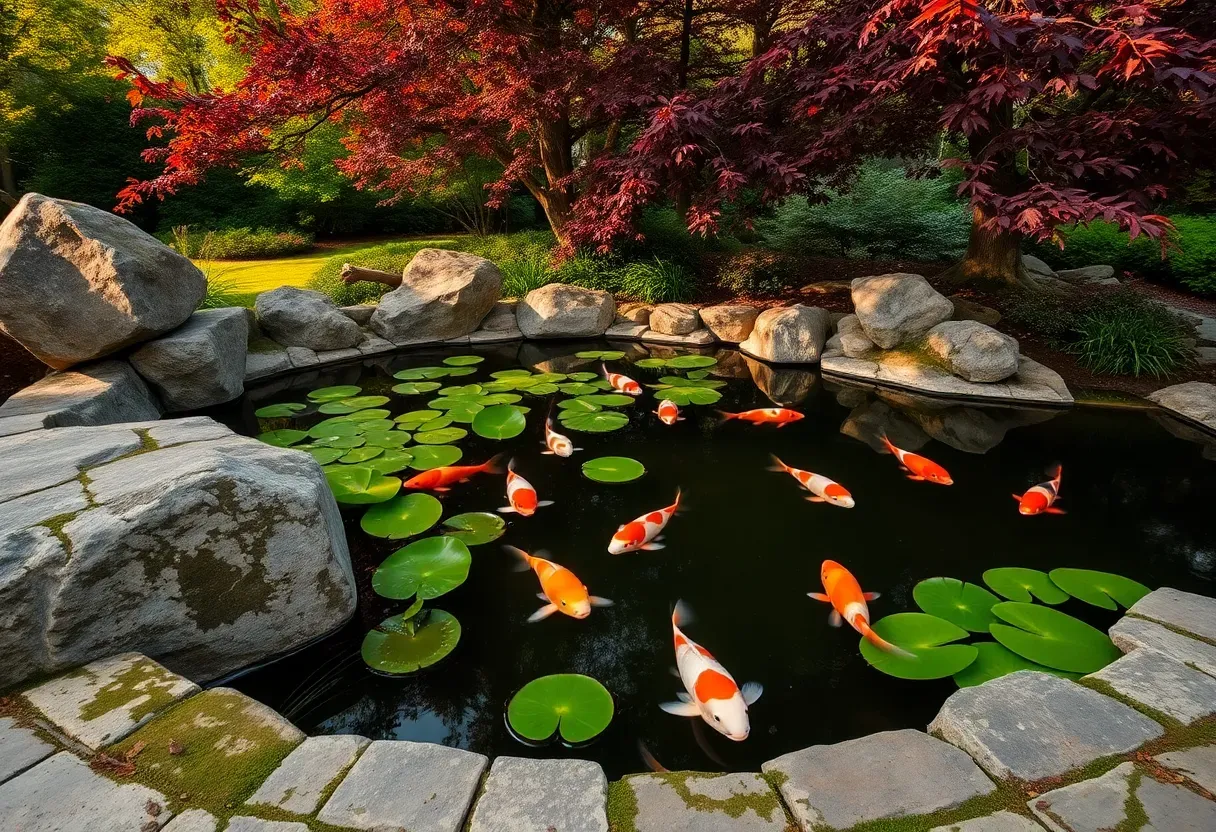
My neighbor built a koi pond five years ago using a stock tank and a $40 pump from the hardware store. The fish outgrew it within two seasons, and he ended up digging a proper 1,500-gallon pond that spring. That is basically how it goes with koi — you start small, get hooked, and then rearrange your whole yard around the fish. These 29 ideas cover the full range, from compact raised ponds that fit on a patio to sprawling naturalistic setups with streams and waterfalls. Each one includes practical notes on depth, filtration, and what actually keeps koi healthy long-term.
Here you will find builds grouped by style, from formal and geometric to wild and planted, with cost and difficulty notes throughout.
Table of Contents
- Sunken Natural Pond
- Raised Timber Pond
- Formal Rectangular Pool
- Stock Tank Starter Pond
- Japanese-Inspired Stream Pond
- Pond with Viewing Window
- Cascading Waterfall Pond
- Courtyard Corner Pond
- Bridge Crossing Pond
- Pond with Floating Deck
- Gravel-Edge Naturalistic Pond
- Formal Koi Pond with Fountain
- Shaded Woodland Pond
- Pond with Bog Filtration Zone
- Modern Concrete Pond
- Hillside Terraced Pond
- Pond with Night Lighting
- Multi-Level Connected Ponds
- Pond Under a Pergola
- Round Pond with Stone Coping
- Koi Pond with Seating Wall
- Shallow Feeding Shelf Pond
- Pond with Rock Grotto
- Minimalist Black-Liner Pond
- Tropical Koi Pond
- Pond with Stepping Stones
- Gravity-Fed Filter Pond
- Cottage Garden Koi Pond
- Indoor-Outdoor Koi Pond
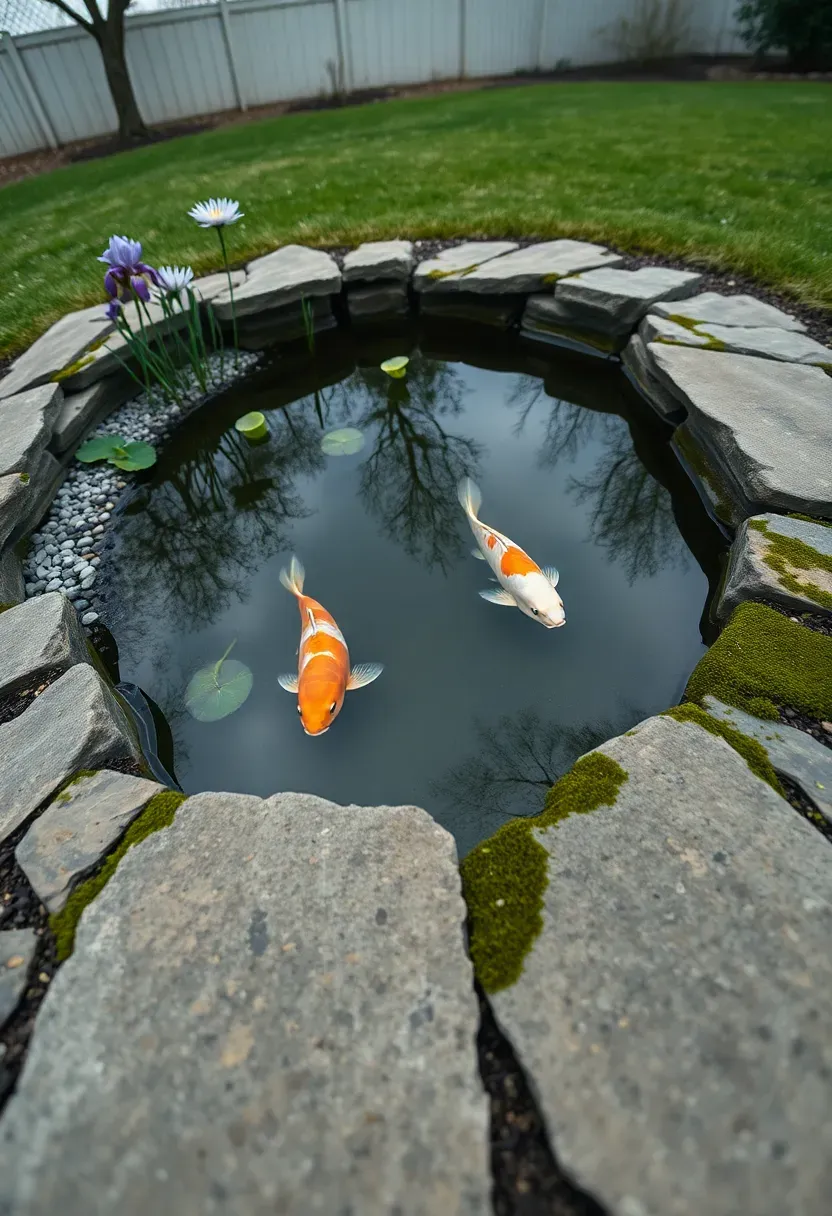
1. Sunken Natural Pond
A sunken pond dug directly into the ground gives koi the depth they need — at least 3 feet for overwintering in most climates. Line the excavation with 45-mil EPDM rubber over a geotextile cushion, then stack natural fieldstone around the perimeter to hide the liner edge. The stones also create crevices where beneficial bacteria colonize. Plant marginal shelves at 6 to 12 inches deep with hardy water iris and pickerelweed. This setup looks like it has always been part of the landscape, which is the whole point.
Key details
- Minimum depth of 36 inches protects koi from herons and temperature swings
- Budget roughly $1,200 to $2,500 for a 1,000-gallon DIY build
- Add a bottom drain during excavation — retrofitting one later is a miserable job
We picked a few things that go well with this idea: POPOSOAP 660GPH Pond Filter Pump Kit (★4.2), VIVOHOME Pressurized Bio Pond Filter (1580 GPH) (★4.2) and VIVOHOME 530GPH Submersible Pond Filter Pump (★4.3). As an Amazon Associate we earn from qualifying purchases.
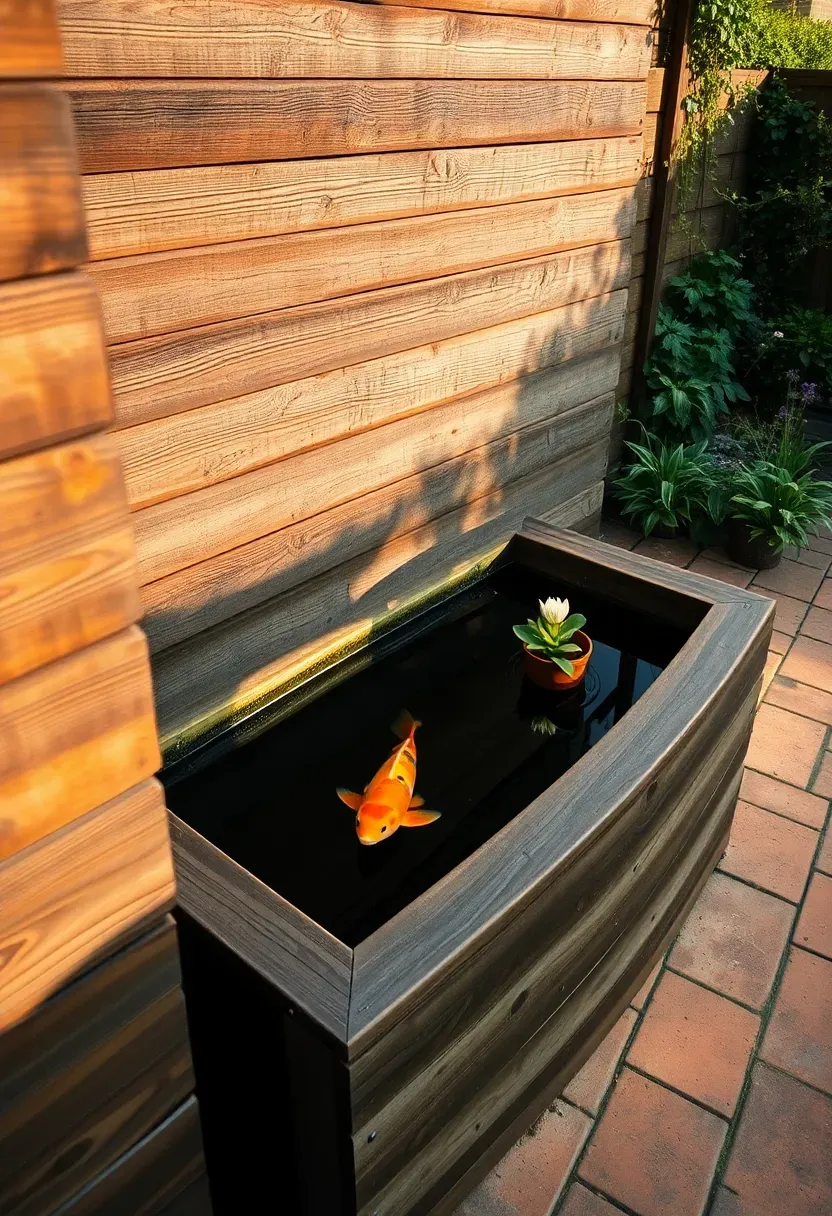
2. Raised Timber Pond
If digging is not an option — rocky soil, rental property, bad back — a raised pond built from railway sleepers or pressure-treated 6x6 timbers solves the problem. Stack them Lincoln-log style, bolt through at the corners, and line the interior with pond liner stapled beneath a cap board. You get a pond at waist height, which makes feeding and watching the fish far more comfortable than kneeling at ground level.
Why raised works for koi
Predator protection improves dramatically when the pond walls sit 24 inches or more above grade. Herons hesitate to hop into an elevated enclosure. You also gain easier access to pumps and plumbing — no crawling around in mud.
Trade-offs
- Water temperature fluctuates more than in-ground ponds because the walls are exposed to air
- Insulate with rigid foam behind the liner in cold climates
- Holds less volume per footprint compared to a dug pond
We picked a few things that go well with this idea: Jebao Submersible LED Pond Lights (Set of 3) (★4.2), T-SUN RGB Pond Lights with Remote (Set of 4) (★4.3) and RGB Pond Fountain Lights with Timer (4-Pack) (★4.2). As an Amazon Associate we earn from qualifying purchases.
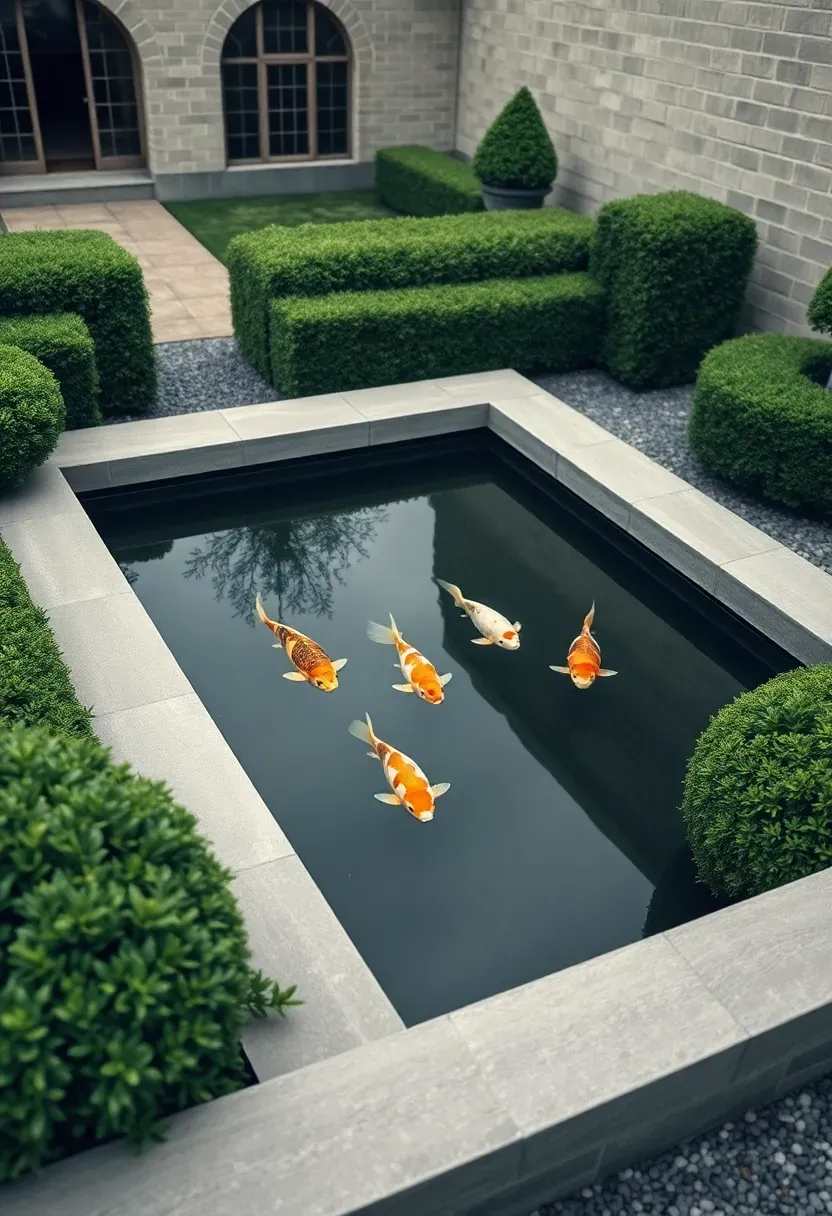
3. Formal Rectangular Pool
Straight edges and symmetrical proportions give this pond a structured, architectural quality. Pour a reinforced concrete shell or use cinder blocks with a waterproof render coat, then cap the rim with cut limestone or bluestone. Dark-colored liner or black plaster on the interior makes the koi colors pop against the water. Formal ponds pair well with clipped hedging, gravel paths, and a single specimen tree nearby. Keep planting minimal — this style depends on clean lines and uncluttered surfaces.
Sizing tips
- A 4-by-8-foot pond at 3 feet deep holds about 720 gallons — adequate for 4 to 6 koi
- Add a skimmer at one end and a return jet at the other to create gentle circulation
- Slightly slope the floor toward a bottom drain for easy debris removal
We picked a few things that go well with this idea: Lifeguard 45-Mil EPDM Pond Liner (10x15 ft) (★4.6), Garvee 45-Mil EPDM Pond Liner (20x20 ft) and Lifeguard 45-Mil EPDM Pond Liner (20x20 ft) (★4.6). As an Amazon Associate we earn from qualifying purchases.
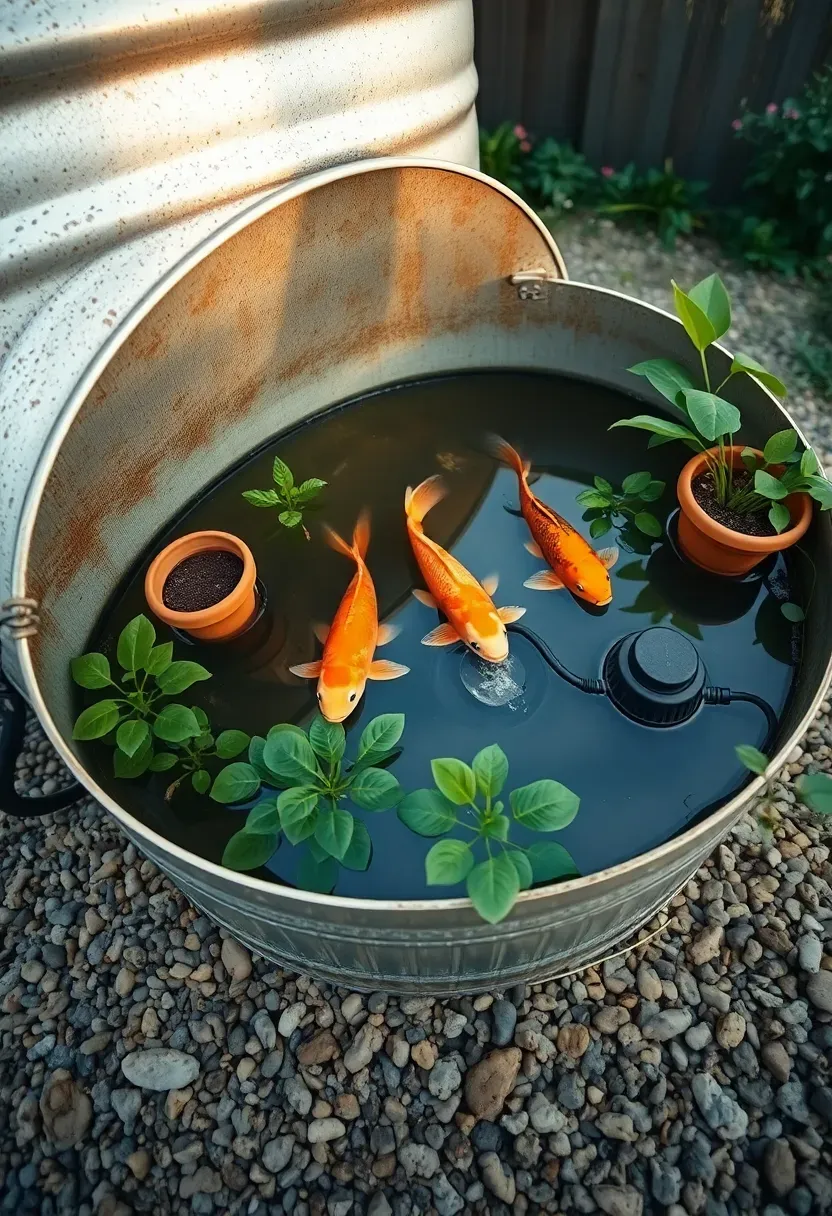
4. Stock Tank Starter Pond
The problem
You want koi but do not have the space, budget, or landlord approval for a permanent pond installation.
The solution
A 300-gallon galvanized stock tank from a farm supply store costs under $250 and holds two or three small koi comfortably for a season. Set it on a level gravel pad, add a small external canister filter, and drop in a few potted water plants for shade. When the fish outgrow the tank, you either upgrade or find them a new home — the tank itself becomes a planter or a different water feature.
Pros and cons
- Portable and reversible — no permanent changes to your yard
- Limited volume means frequent water testing and partial changes
- Not viable for overwintering koi in zones below 7 without a heater
Recommended
Items for this idea
5. Japanese-Inspired Stream Pond
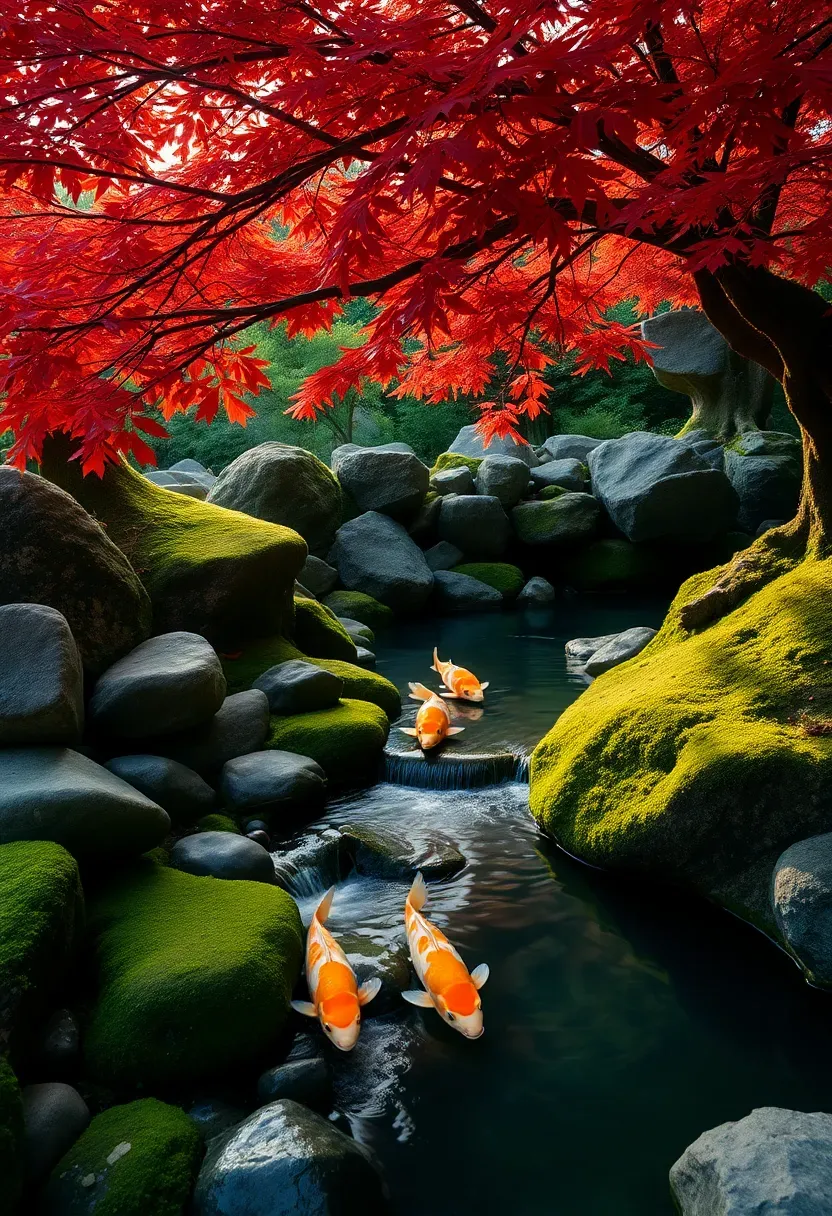
This design connects a main pond to a winding stream channel that recirculates water using a pump at the low end. The stream tumbles over rounded river rocks, aerating the water naturally as it flows back into the pond. Japanese black pine, moss, and carefully placed boulders complete the scene. The sound alone — that constant low gurgle — changes how the whole yard feels in the evening.
How to build the stream
- Dig a shallow channel 8 to 12 inches deep and 18 to 24 inches wide, sloping gently toward the pond
- Line with EPDM, overlapping the main pond liner by at least 12 inches
- Set flat rocks along the streambed and stack a few at drops to create small cascades
Watch out
- The stream adds evaporation surface — expect to top off water more often in summer
- Raccoons love wading in shallow streams, so consider motion-activated deterrents
6. Pond with Viewing Window
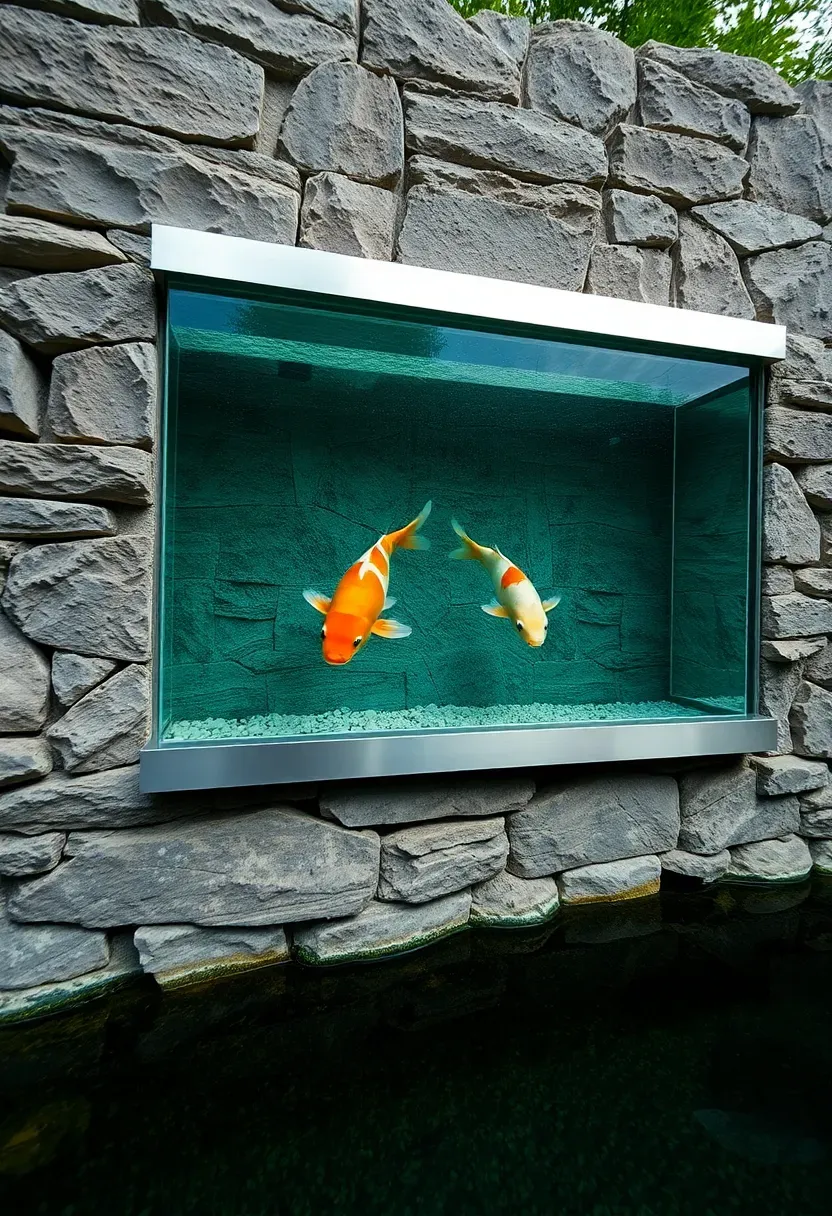
A thick acrylic panel set into a retaining wall or raised pond wall lets you watch koi from the side, like a built-in aquarium. The effect is genuinely striking — you see the fish gliding at full length rather than just their backs from above. Use 1-inch cast acrylic rated for the water pressure at your pond depth, and frame it with a stainless steel or aluminum channel sealed with aquarium-grade silicone.
What it costs
Acrylic panels run $150 to $400 depending on size. Professional installation with proper framing adds $500 to $1,000. The wow factor is high, but so is the leak risk if the seal fails, so this is not a first-pond project.
Maintenance
- Clean algae off the acrylic monthly with a soft pad — never use abrasive cleaners
- Check the silicone seal at the start of each season
Recommended
Items for this idea
7. Cascading Waterfall Pond
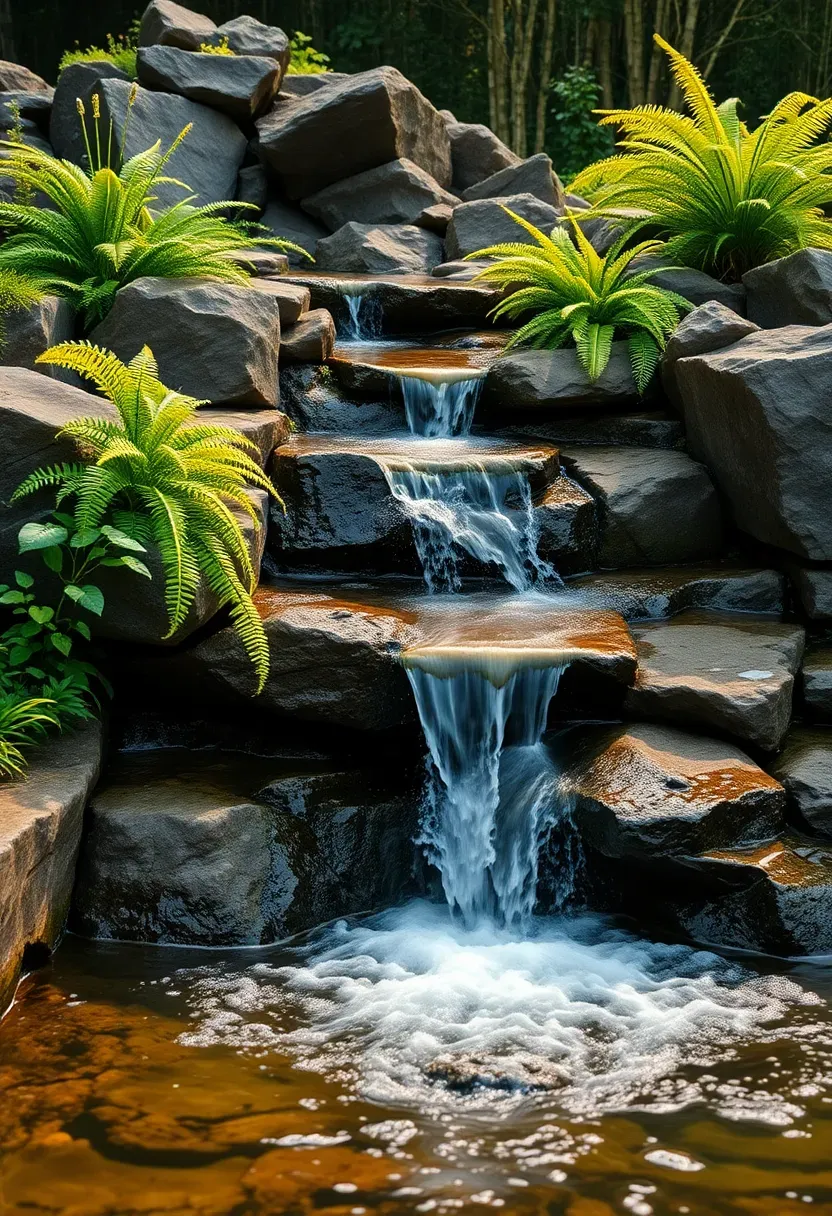
A waterfall does double duty: it aerates the water for the fish and provides background noise that masks traffic or neighbors. Stack natural flagstone or weathered granite on a compacted gravel base, building up three or four tiers. Run a 2-inch flexible PVC line from the pump in the pond up behind the rockwork to a spillway at the top. Seal between rocks with black waterfall foam to keep water flowing over the face rather than seeping behind the stones.
Tips
- A 3,000 GPH pump handles a 3-foot waterfall nicely for a mid-size pond
- Tuck ferns and creeping jenny into crevices between rocks for a natural look
- Position the waterfall on the side farthest from your seating area so spray does not reach you
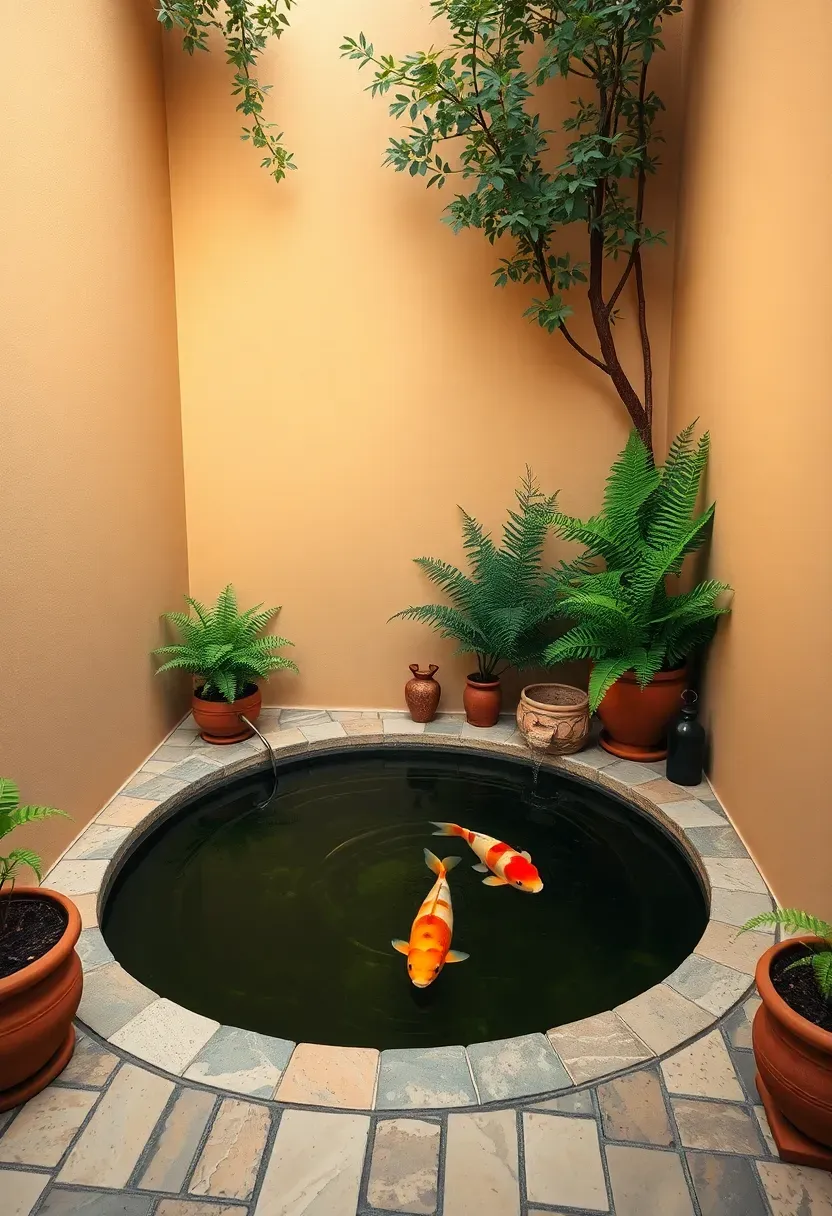
8. Courtyard Corner Pond
The problem
Your outdoor space is an L-shaped courtyard or a tight side yard with barely 50 square feet to spare.
The solution
Tuck a kidney-shaped or triangular pond into the corner where two walls meet. The walls themselves provide wind shelter and partial shade, which koi appreciate during peak summer. A small submersible pump with a bubbler nozzle handles aeration without taking up planting space. Use the vertical wall area for mounted planters or a trellis with jasmine — the greenery frames the pond and softens the hardscape.
Pros and cons
- Makes dead corner space functional and visually interesting
- Limited volume means you can keep 2 to 3 koi at most
- Fallen debris from wall-mounted plants may clog the filter
Recommended
Items for this idea
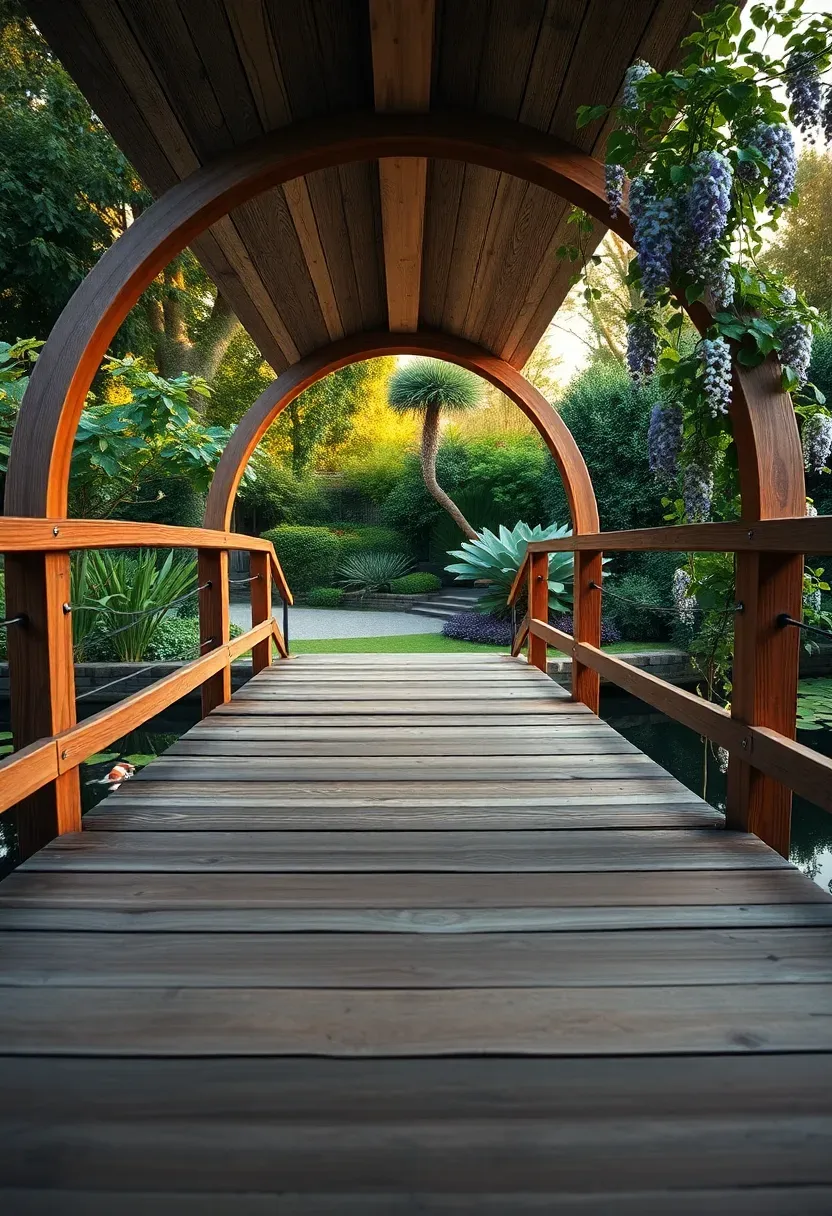
9. Bridge Crossing Pond
Building a footbridge over your koi pond turns feeding time into an event. The bridge does not need to be elaborate — a simple arched span made from cedar 2x6 boards on a curved stringer works perfectly. Anchor the ends on concrete footings set back from the pond edge so the bridge structure stays dry. From the bridge, you look straight down into the water, which is the best vantage point for appreciating koi patterns and colors.
Build notes
- Span should be no more than 8 feet for a simple DIY arch without engineered supports
- Railing height of 36 inches keeps the crossing safe for kids
- Avoid treated lumber directly over the water — copper leaching harms fish
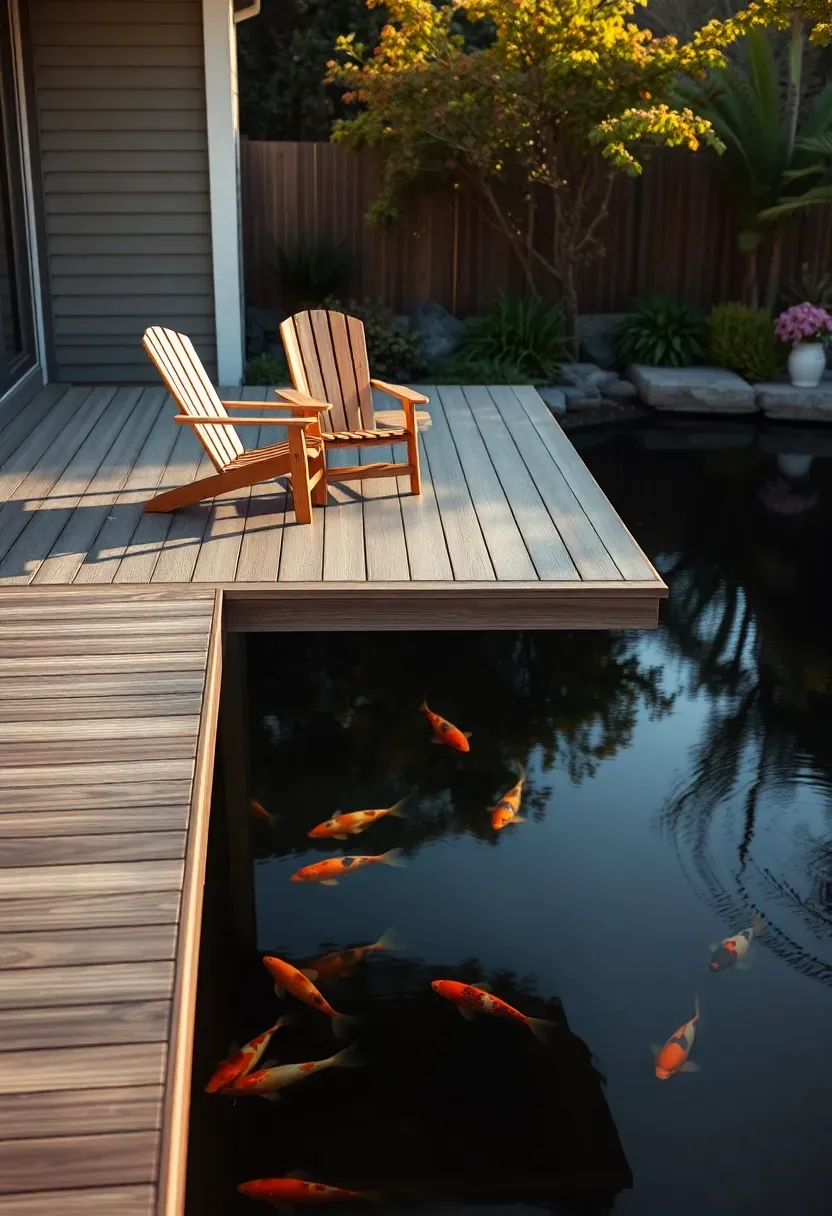
10. Pond with Floating Deck
A cantilevered deck that extends over the pond surface gives you a place to sit right above the water. The deck is not actually floating — it rests on posts sunk into the ground beside the pond, with the platform projecting 3 to 4 feet over the water. Use composite decking for zero maintenance and space the boards with small gaps so rainwater drains through rather than pooling.
How to plan it
- Set 6x6 posts in concrete footings at least 18 inches from the pond edge
- Attach a ledger beam and cantilever joists out over the water
- Keep the deck surface 8 to 12 inches above water level for comfortable fish viewing
- Add low-voltage rope lighting under the deck edge for evening ambiance
Watch out
- The overhang shades part of the pond, which reduces algae but also limits plant growth in that zone
- Make sure the cantilever does not exceed the structural rating of your joist lumber
Recommended
Items for this idea
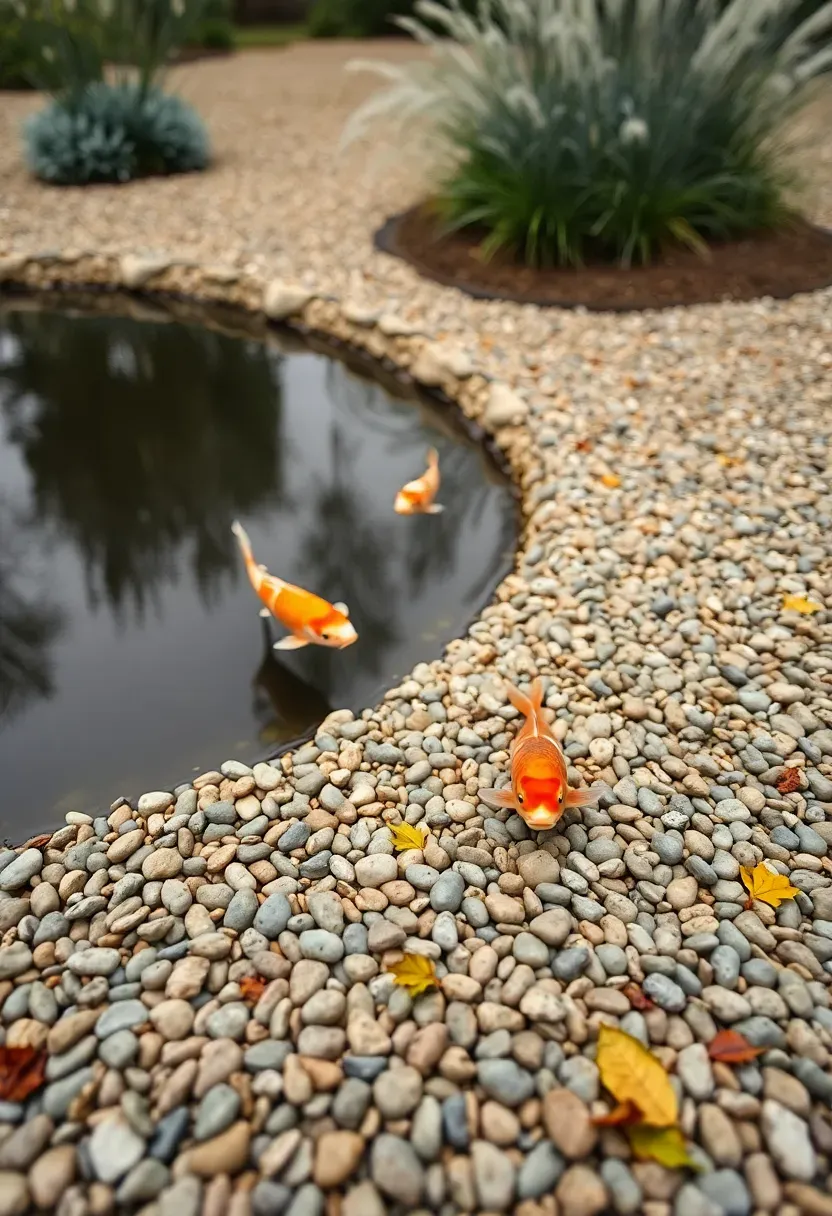
11. Gravel-Edge Naturalistic Pond
Instead of stacking rocks on the liner edge, grade the surrounding soil to slope gently into the pond and cover everything with washed river gravel. The transition from dry land to water becomes gradual and soft, like a natural lakeshore. This edge treatment hides the liner completely and gives marginal plants a perfect zone to colonize. The look is relaxed and low-effort — the opposite of a formal pool.
Tips
- Use 1-inch to 2-inch rounded gravel so koi do not injure themselves nosing along the bottom
- Extend the liner 12 inches beyond the waterline under the gravel to prevent wicking
- Plant creeping thyme or blue star creeper in the gravel transition zone for ground cover
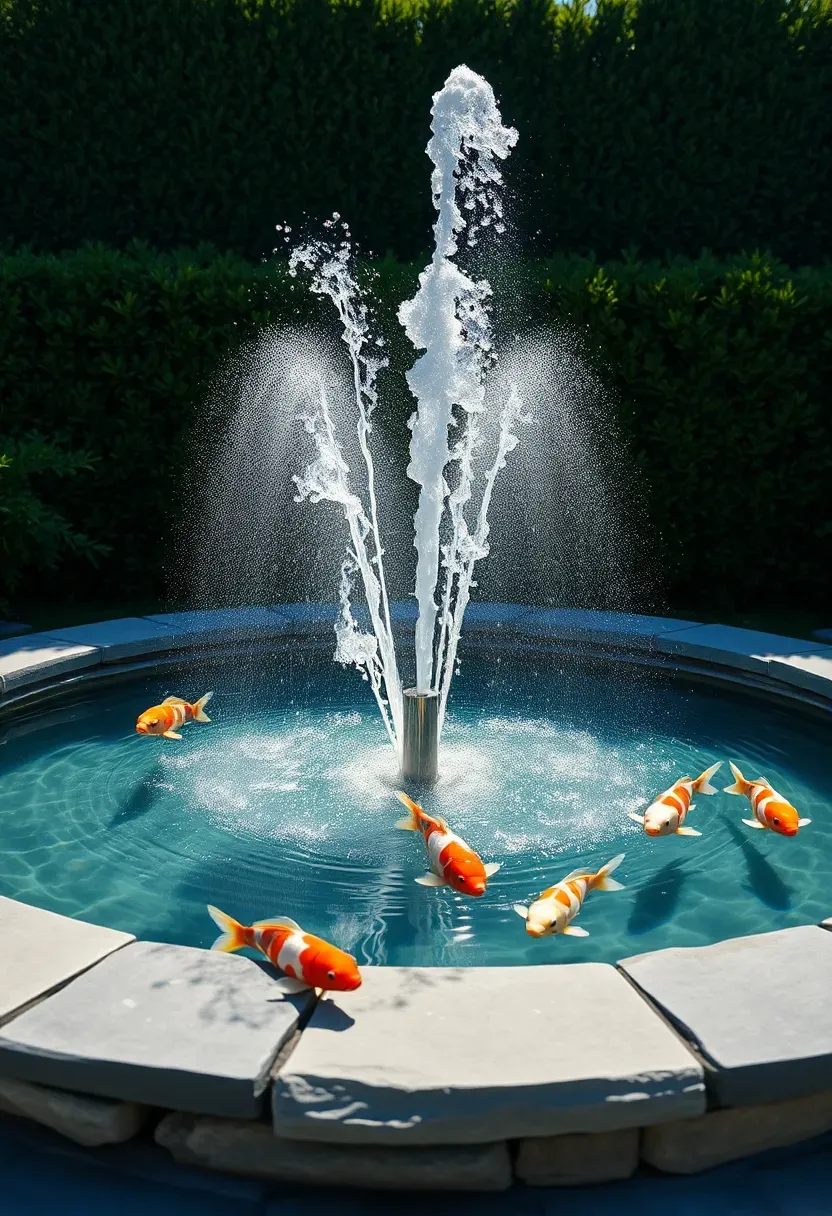
12. Formal Koi Pond with Fountain
A vertical fountain jet in the center of a geometric pond adds movement and aeration simultaneously. The spray catches light during the day and looks dramatic when lit from below at night. Use a dedicated fountain pump separate from your filtration pump so you can run them independently. Koi generally tolerate fountain turbulence well, though some breeders prefer calmer surface water during spawning season.
Choosing the right fountain
- A single geyser nozzle at 2 to 3 feet height works for ponds under 2,000 gallons
- Multi-tier nozzles suit larger installations but require higher-flow pumps
- Wind will carry spray — position the fountain to blow away from seating and electrical connections
Recommended
Items for this idea
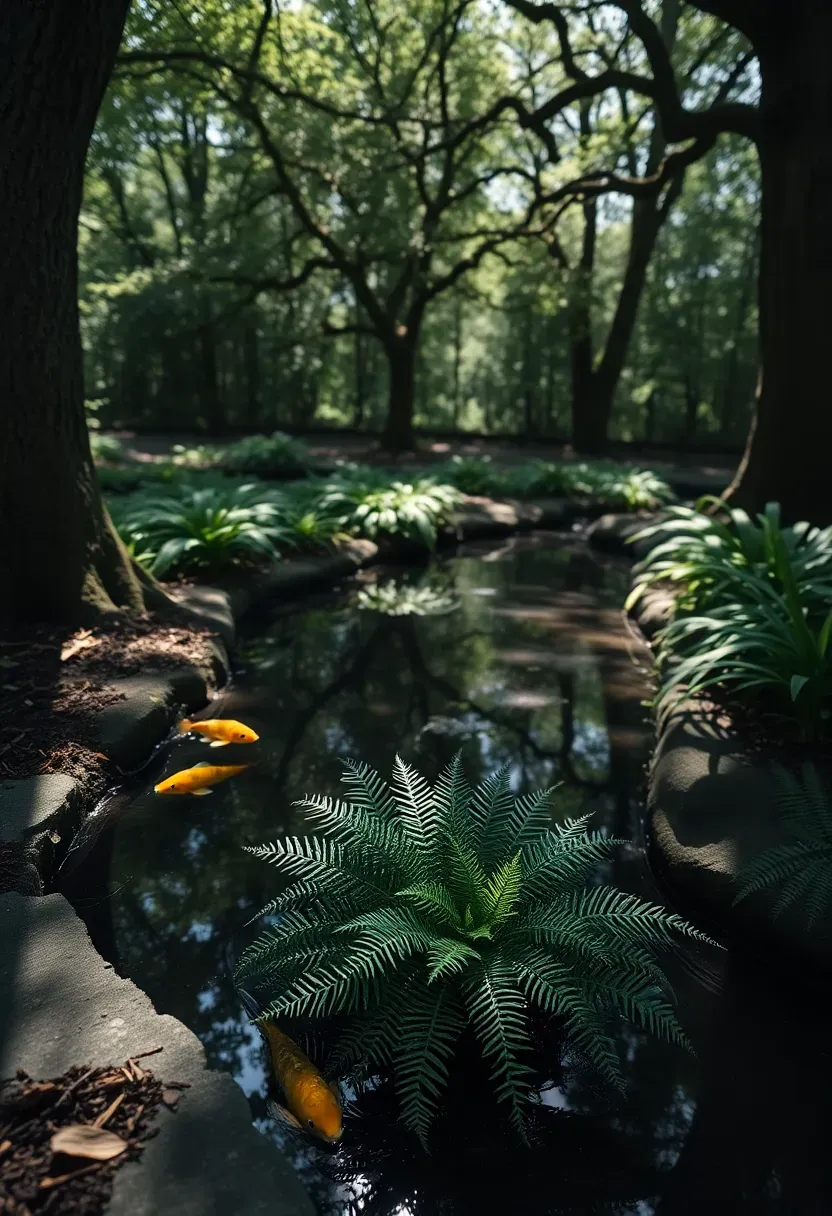
13. Shaded Woodland Pond
Where this fits
Yards with mature deciduous trees where full sun is impossible.
How to make it work
Koi do fine in partial shade — they actually stress less when water stays cooler. The real challenge is leaf litter. Install a pond net from September through November, and position a surface skimmer to catch anything that gets through. Choose shade-tolerant marginal plants like astilbe, ligularia, and native ferns for the banks. Skip water lilies, which need at least 6 hours of direct sun to bloom reliably.
Apply at home
Even if your yard is not fully wooded, you can create a woodland feel by planting three or four fast-growing understory trees — serviceberry, dogwood, or Japanese maple — around an existing pond. Within a few years, the canopy fills in and the whole area feels cooler and more secluded.
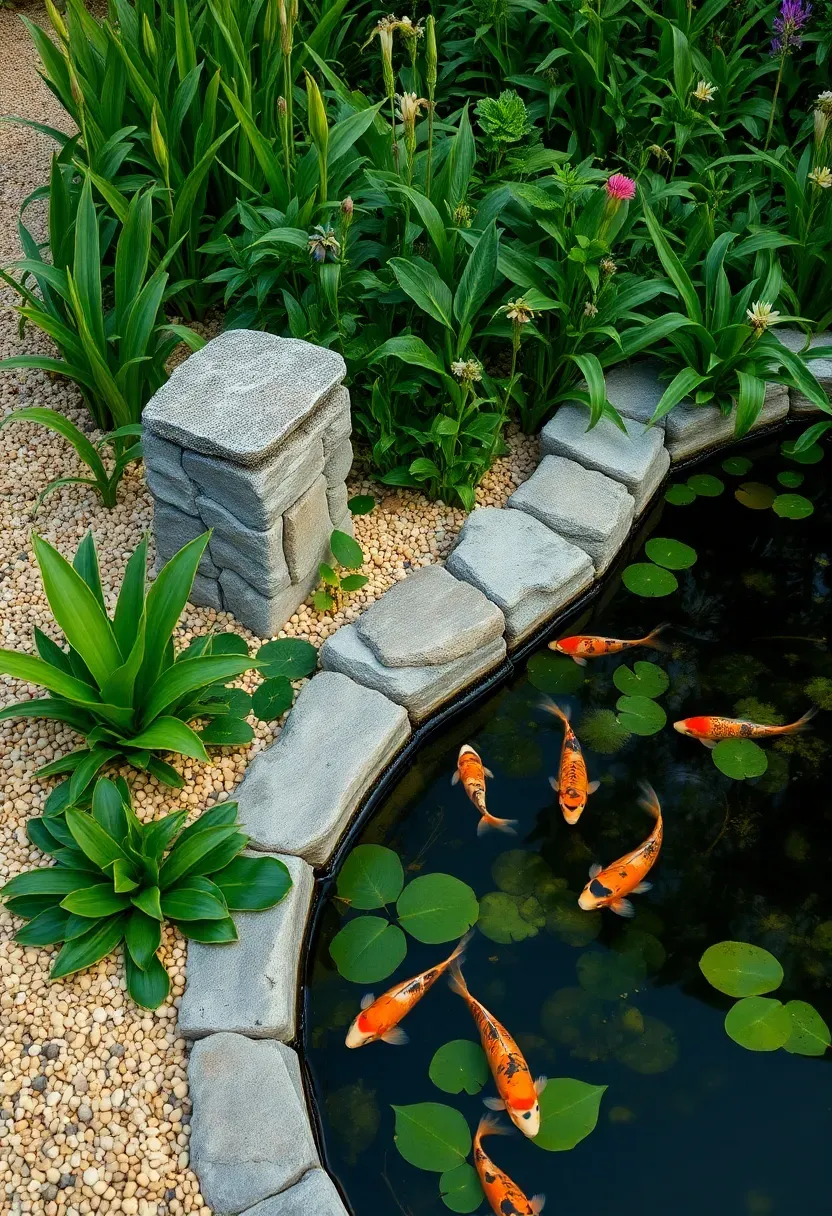
14. Pond with Bog Filtration Zone
A bog filter is a shallow gravel bed planted with heavy-feeding aquatic plants that strips nitrogen and phosphorus from the water before it returns to the main pond. Water pumps from the koi pond into the bog zone, percolates through 12 inches of pea gravel, and flows back by gravity. The plants — papyrus, canna, taro, iris — absorb the nutrients that would otherwise feed algae. It is the most effective natural filtration method for koi ponds, and it replaces expensive UV clarifiers and bead filters.
Sizing rule
- The bog zone should be 10 to 30 percent of the main pond surface area
- Larger ratios mean cleaner water and less supplemental filtration needed
- Separate the bog from the pond with a short retaining wall so gravel stays contained
Recommended
Items for this idea
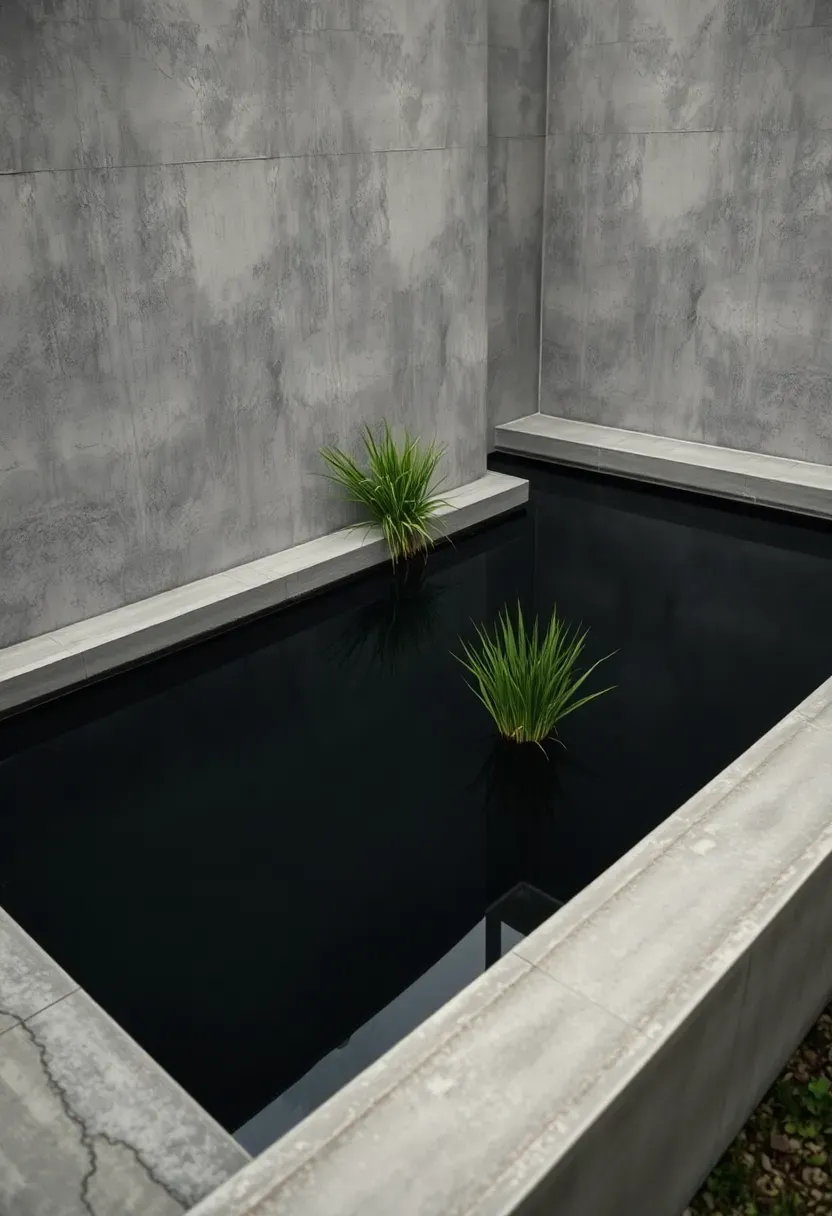
15. Modern Concrete Pond
Poured concrete gives you total control over shape, depth, and finish. Form the walls with plywood, lay rebar on 12-inch centers, pour 6-inch-thick walls, and coat the interior with a pond-safe sealant or black plaster. The result is a monolithic basin with crisp edges that suits contemporary architecture. Concrete ponds last decades with minimal maintenance, though they cost significantly more than liner-based builds.
Concrete vs. liner
| Factor | Concrete | Liner |
|---|---|---|
| Lifespan | 30+ years | 15-20 years |
| Cost per gallon | $2-4 | $0.50-1.50 |
| Repair | Patch and reseal | Patch kit or replace |
| Customization | Any shape | Flexible but wrinkles |
Tips
- Cure the concrete for 28 days and neutralize pH with vinegar washes before adding fish
- Thermal mass of concrete stabilizes water temperature, which koi prefer
16. Hillside Terraced Pond
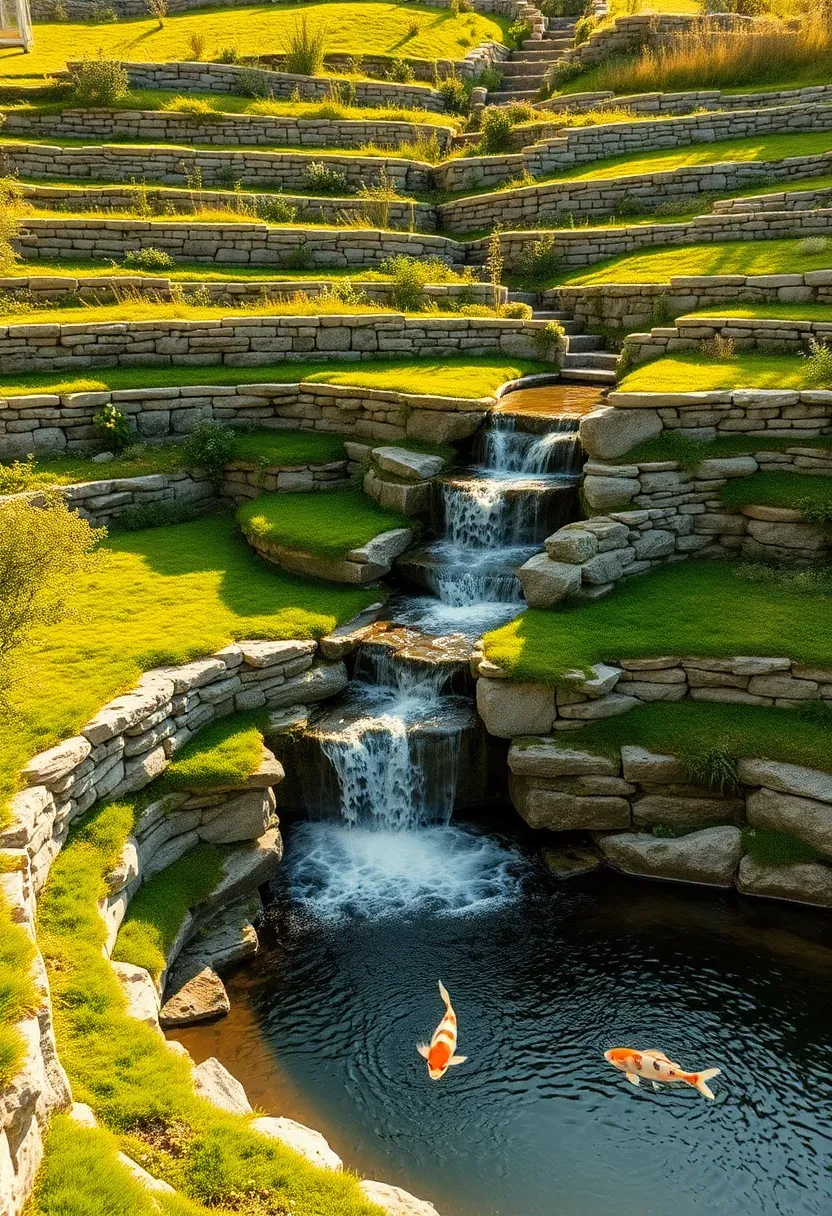
A sloped yard that seems like a liability becomes an asset when you carve ponds into the terraces. Water pumps to the highest pond and gravity-feeds down through two or more lower pools connected by short waterfalls or spillways. Each level can serve a different purpose — the top pool for young fish, the middle for plants and filtration, the bottom for mature koi. Retain the terraces with stacked natural stone or gabion baskets filled with river rock.
Steps to plan
- Survey the slope and mark level platforms at 18 to 24-inch vertical intervals
- Excavate each terrace wide enough for a minimum 500-gallon pond
- Line each level separately and overlap liners at the spillways
- Size your pump for the total head height plus friction loss in the plumbing
Watch out
- Hillside builds require solid compaction or retaining structures to prevent slumping
- A power outage stops the pump, so the lowest pond must hold all the recirculating water without overflowing
Recommended
Items for this idea
17. Pond with Night Lighting
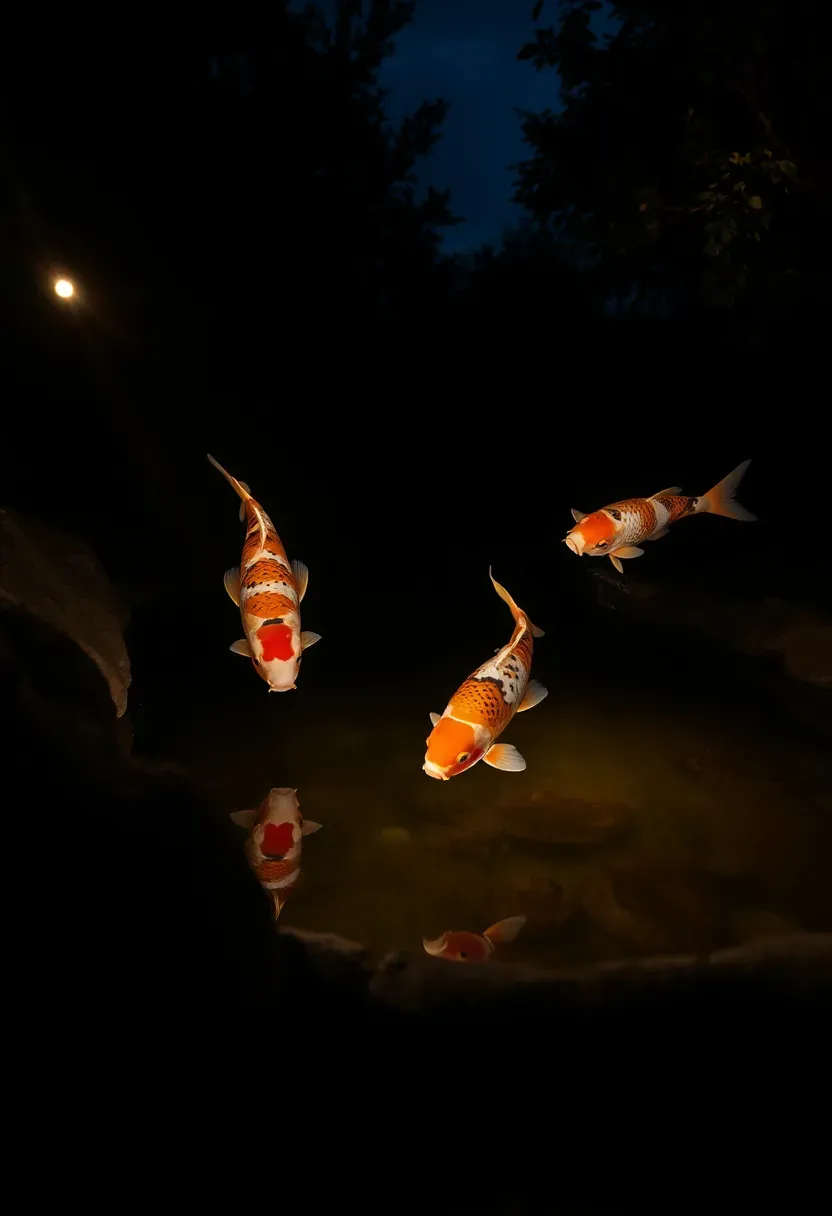
Koi are active well after dark, and underwater LED lights turn an evening garden into something worth sitting outside for. Submersible LED spotlights in warm white or color-changing modes mount to the pond floor or walls and draw 10 to 30 watts each. Position them to graze across the water column rather than pointing straight up — side-lighting shows off the fish scales and fin detail far better.
What to use
- Warm white (2700K-3000K) looks the most natural and does not disturb fish behavior
- RGB color-changing adds drama but can stress koi if left on cool-blue tones overnight
- Low-voltage (12V) systems are safest near water and easy to install without an electrician
Tips
- Add a timer so lights run only during hours you actually use the yard
- Pair underwater lights with path lights along the pond edge for a cohesive look
18. Multi-Level Connected Ponds
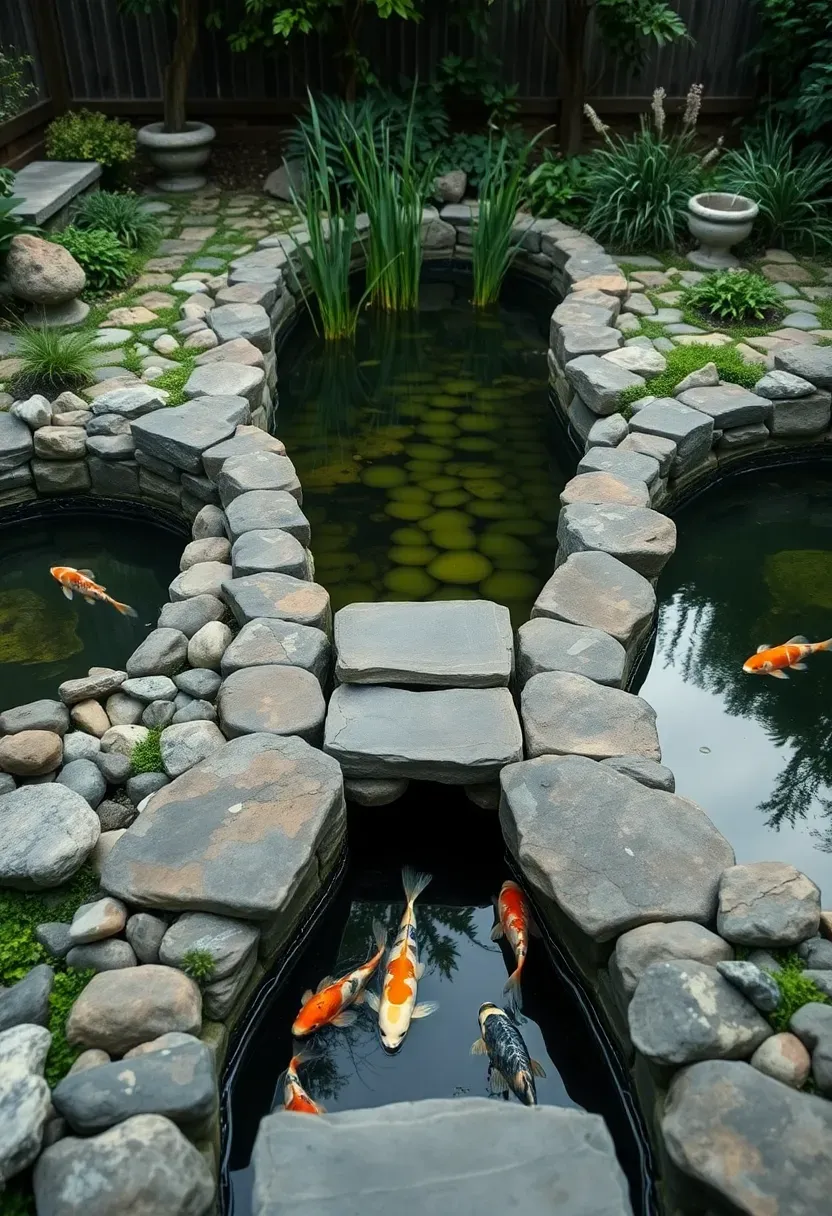
Two or more separate ponds linked by channels or buried pipes create visual variety and practical flexibility. Keep larger koi in the deeper main pond and use the secondary pond as a quarantine area for new fish, a breeding tank, or a dedicated plant zone. The connecting channel can be an open stream, a buried PVC pipe with valves, or a simple spillway.
Planning considerations
- Each pond needs its own drain and overflow — do not rely on the channel alone
- Valves in the connecting pipe let you isolate ponds for treatment or cleaning
- Total system volume determines your filter sizing, not individual pond volumes
Recommended
Items for this idea
19. Pond Under a Pergola
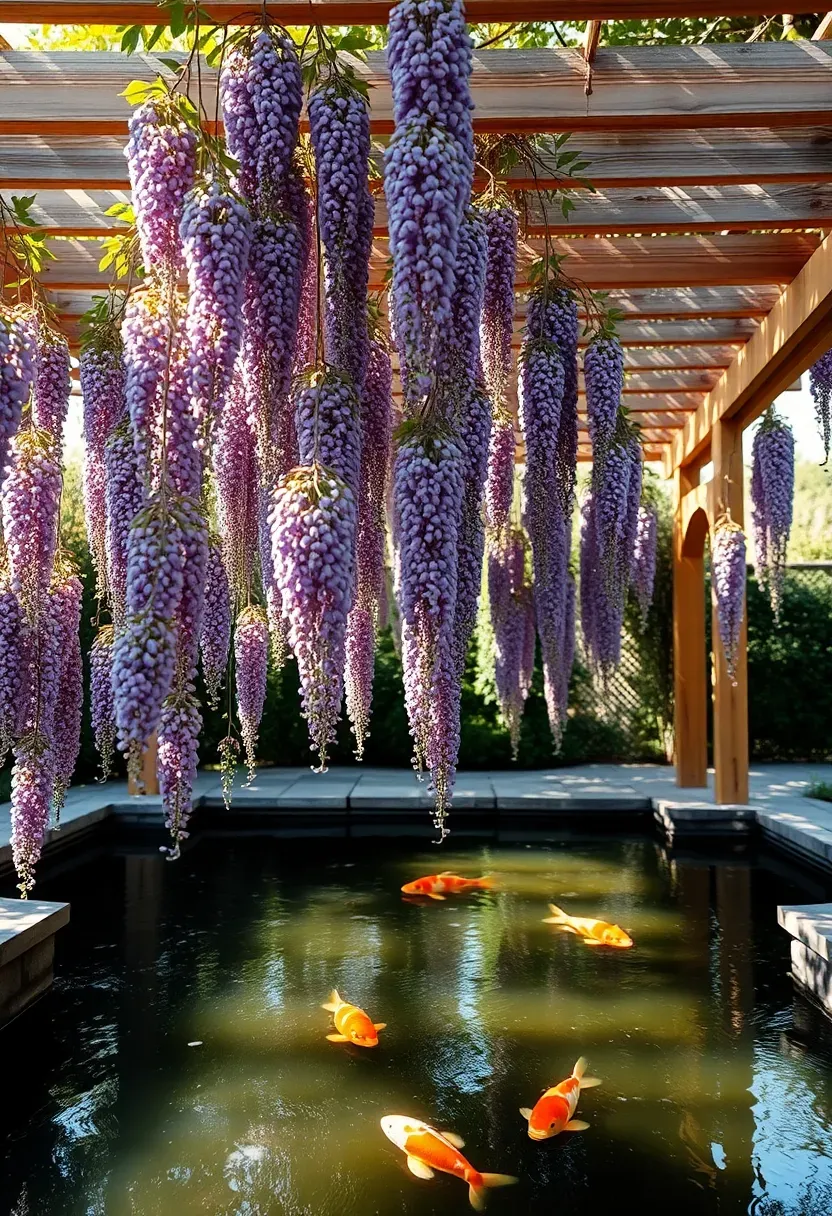
A pergola over your koi pond provides partial shade, reduces algae growth, and creates a defined outdoor room. The structure does not need to cover the entire pond — even shading 40 to 50 percent of the surface makes a noticeable difference in water temperature and clarity during July and August. Train wisteria, grape, or trumpet vine on the pergola for living shade that thickens each year.
Tips
- Set pergola posts at least 24 inches from the pond edge to avoid damaging the liner during installation
- Cedar or black locust posts resist rot without chemical treatment that could leach into the water
- Attach a shade cloth panel for the first two years while the vine establishes
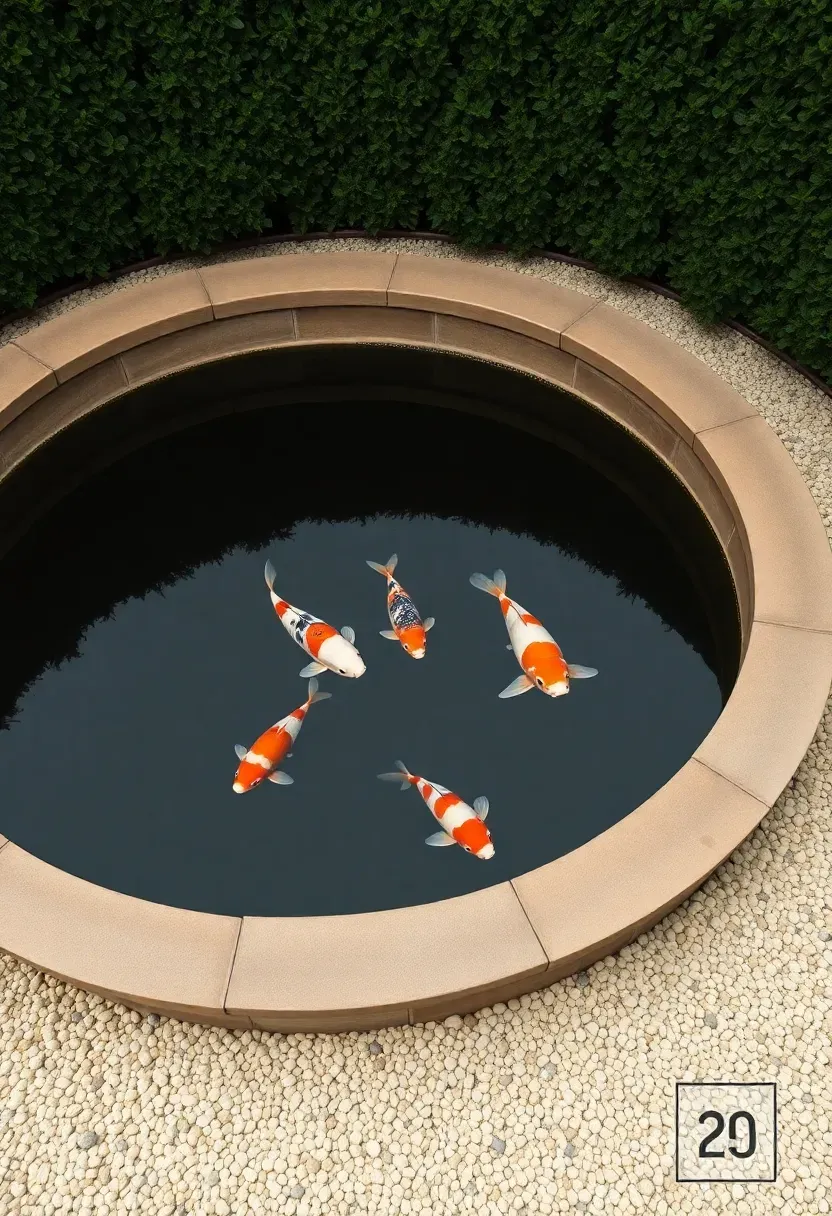
20. Round Pond with Stone Coping
A perfect circle is one of the hardest shapes to build but one of the most satisfying to look at. Mark the radius with a stake and string, excavate evenly, and lay a flexible liner. Cap the edge with cut stone — flagstone, travertine, or granite — trimmed to follow the curve. The round shape eliminates dead spots in water circulation because a single return jet creates a gentle whirlpool effect that sweeps debris toward the center drain.
Build notes
- Use a compass string 12 inches longer than your desired radius to account for the liner shelf
- Dry-lay the coping stones first and number them before setting in mortar
- A 10-foot diameter circle at 3 feet deep holds roughly 1,750 gallons
Recommended
Items for this idea
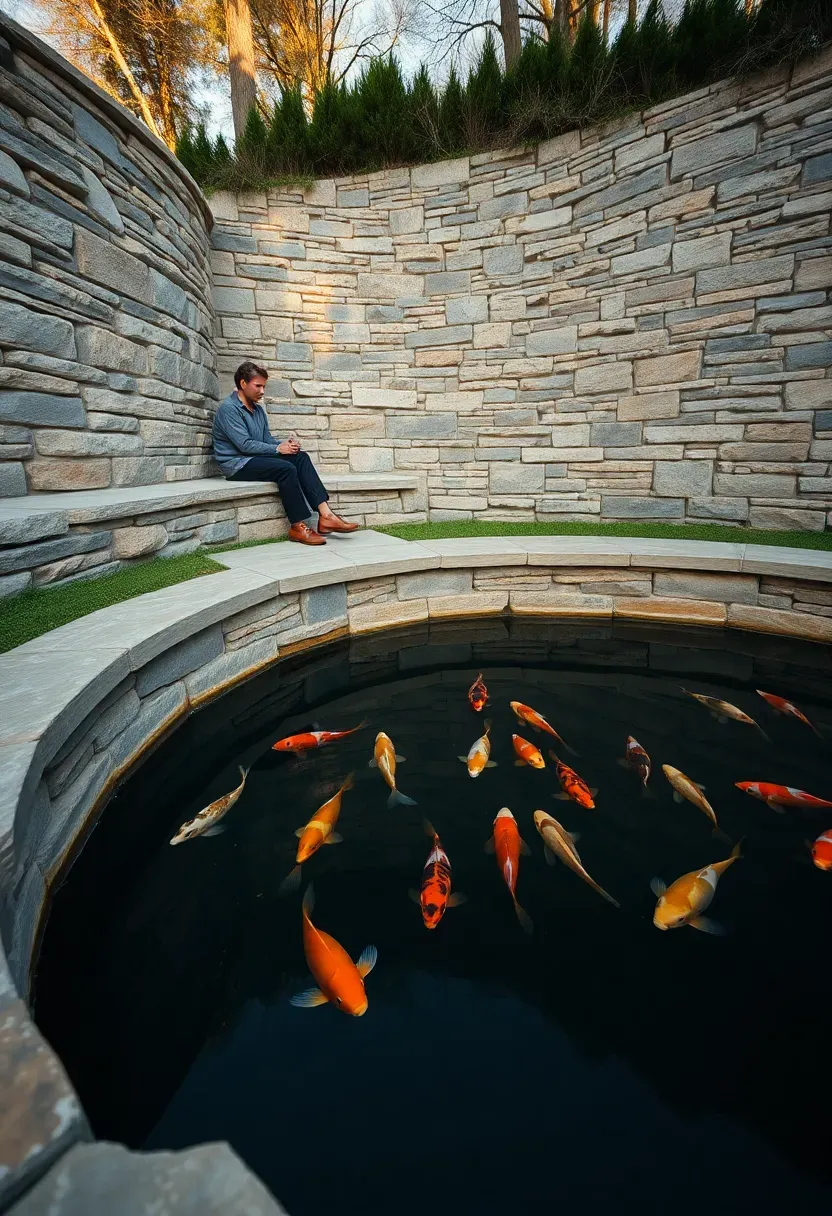
21. Koi Pond with Seating Wall
Why this matters
Most pond owners end up dragging patio chairs to the water's edge anyway. Building a low wall directly into the pond surround saves that hassle and looks intentional.
How to build it
Construct a freestanding wall 18 to 20 inches tall using stacked natural stone or concrete block with a stone veneer. Set it along the pond's longest edge, slightly cantilevered over the water so your feet can dangle or you can lean forward to feed the fish. Cap the wall with smooth-cut stone 16 to 18 inches deep for comfortable sitting.
Apply at home
Even an existing pond benefits from this addition. Build the wall on a compacted gravel footing just outside the liner edge. It doubles as a retaining wall that holds back the surrounding grade while giving you a permanent front-row seat.
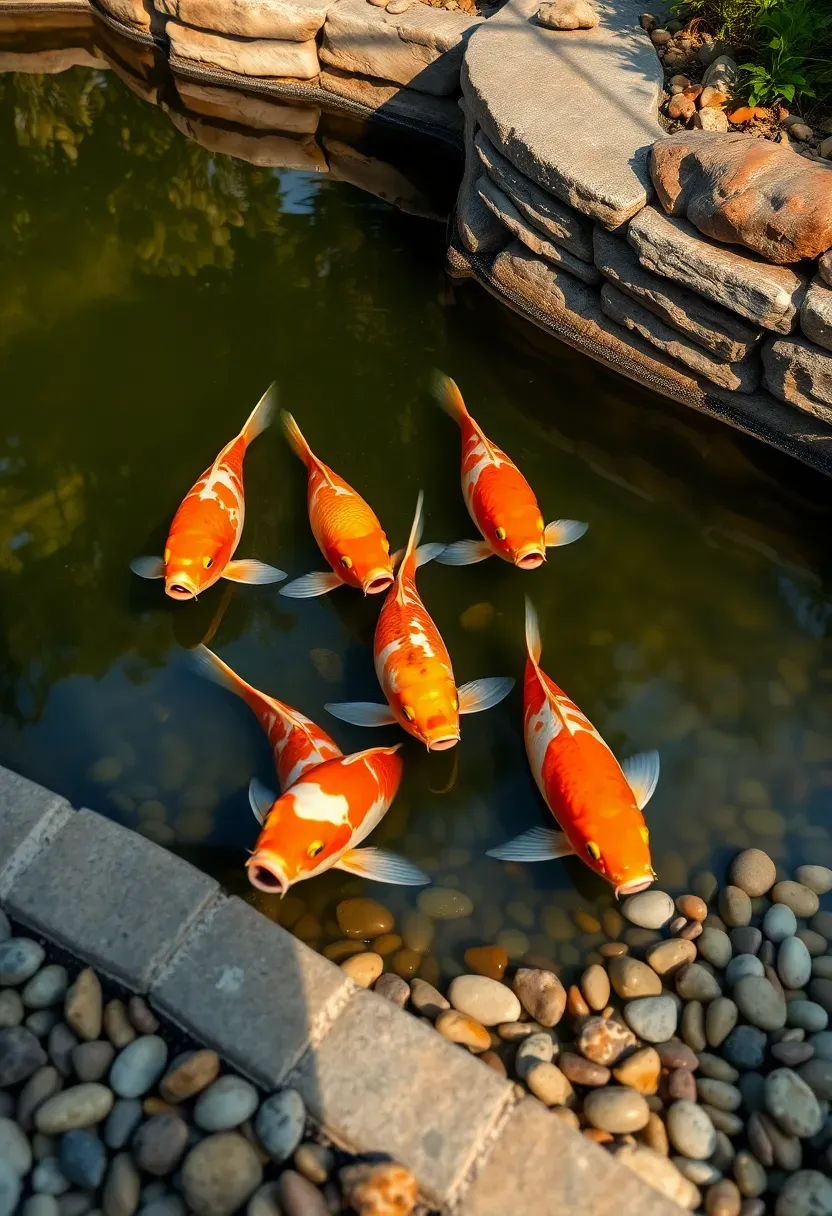
22. Shallow Feeding Shelf Pond
A feeding shelf is a flat ledge built 6 to 8 inches below the waterline along one side of the pond. Koi learn to congregate there at mealtimes, which makes feeding interactive and helps you inspect fish health up close. Build the shelf during excavation by leaving a 2-foot-wide terrace before the floor drops to full depth. Line it the same as the rest of the pond and cover with smooth river pebbles so the fish can nose around safely.
Tips
- Position the shelf on the side nearest your viewing area or seating wall
- Keep the shelf edge clearly defined with a stacked stone border so gravel does not slide into deep water
- Avoid feeding koi in the deep zone — food that sinks to the bottom decays and fouls the water
Recommended
Items for this idea
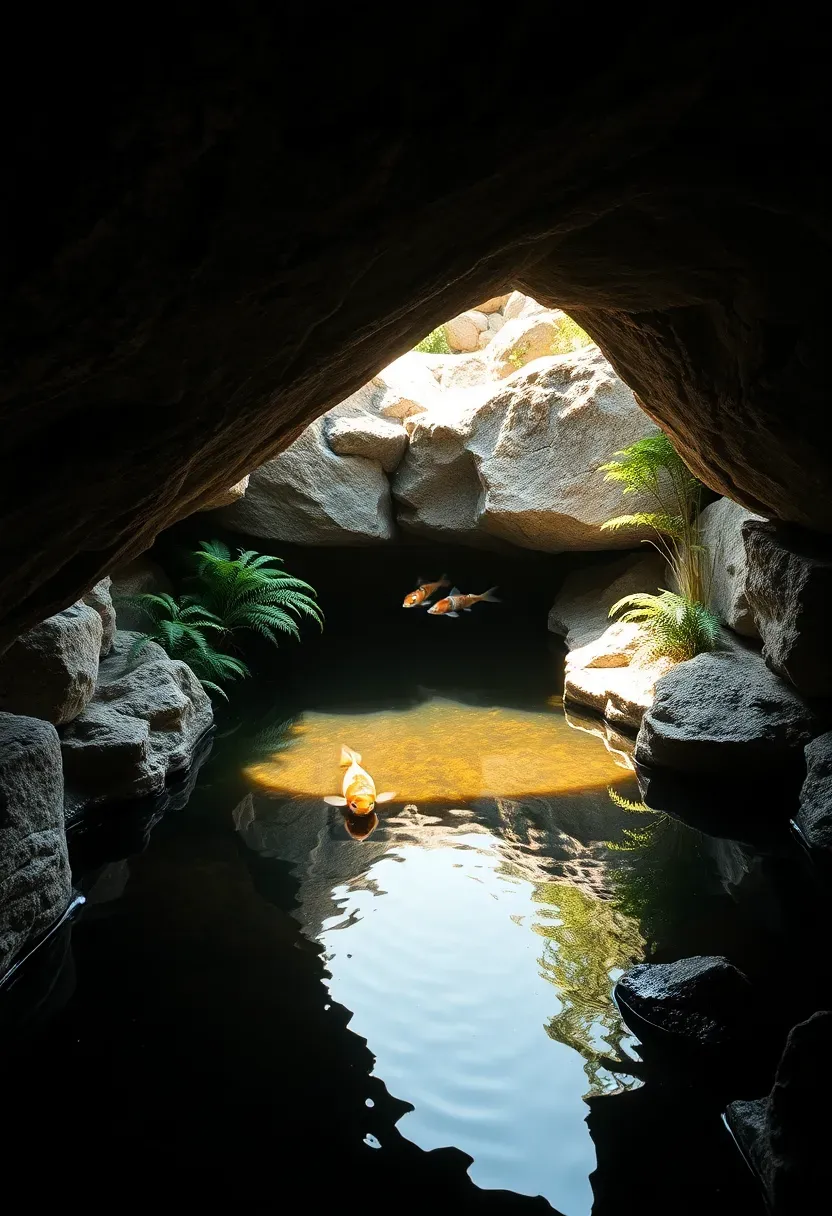
23. Pond with Rock Grotto
A grotto is a partially enclosed rock overhang at one end of the pond. It gives koi a sheltered hiding spot — important for reducing stress, especially in ponds exposed to foot traffic or wildlife. Stack large flat boulders to create a shallow cave with an opening wide enough for fish to swim through freely. The grotto also shades part of the water, which helps control algae in that zone.
Construction approach
- Place the largest boulder as a base, partially submerged
- Stack two side walls using interlocking stones, leaning them slightly inward
- Bridge the top with a wide capstone, shimming with smaller rocks as needed
- Seal gaps with waterfall foam to prevent water from leaking behind the structure
Watch out
- Ensure the grotto is stable before filling the pond — test by pushing firmly on the capstone
- Leave a clear sightline into the grotto so you can still observe fish sheltering inside
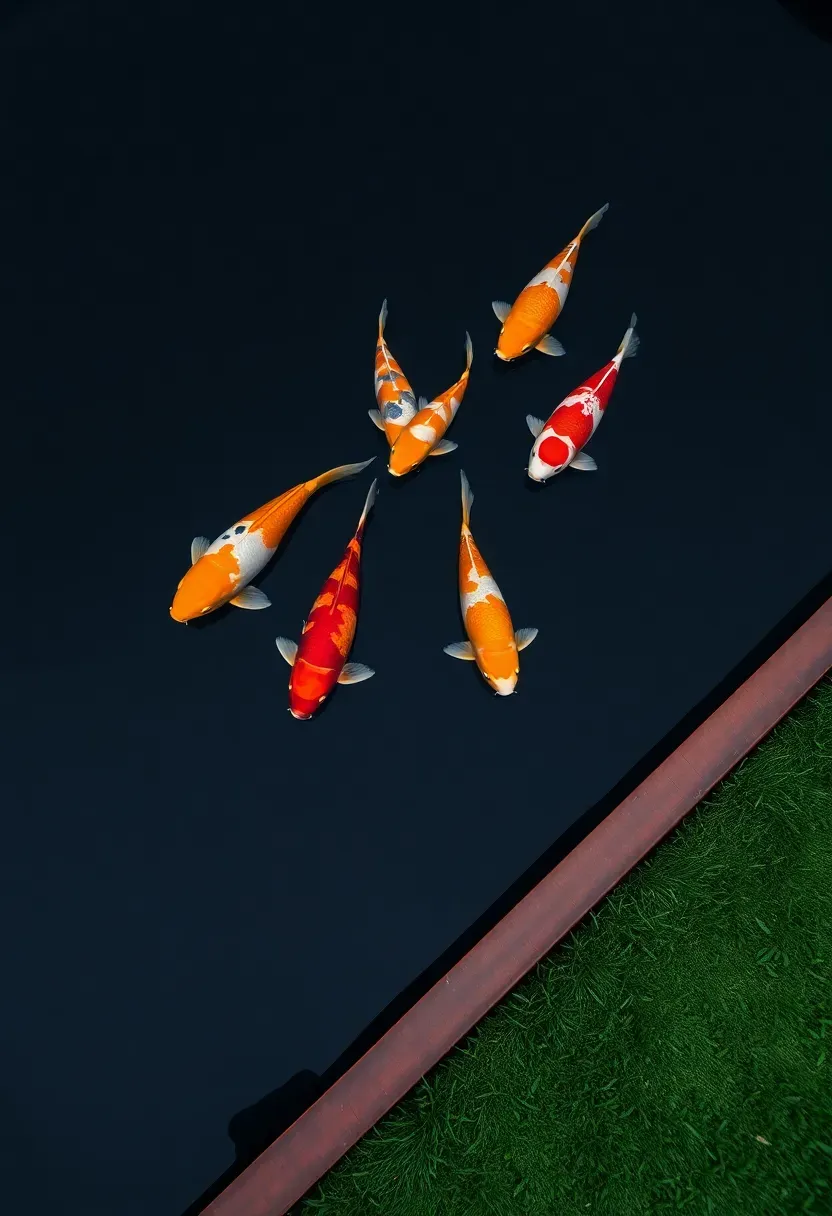
24. Minimalist Black-Liner Pond
Skip the rocks, skip the waterfalls, skip the marginal plants. A clean-edged pond with nothing but dark water and koi is a legitimate design choice. The black liner makes the water look deeper and darker, turning the fish into the sole focal point. Edge the pond with flush-cut pavers or steel edging for a razor-sharp line between lawn and water.
Who this suits
Homeowners who value clean design over naturalistic looks, and koi keepers who want maximum visibility for inspecting fish. Breeders often prefer this style because it simplifies netting, water changes, and health checks.
Maintenance
- Without plants, you rely entirely on mechanical and biological filtration — size your filter generously
- Algae grows faster on an unshaded black liner, so a UV clarifier becomes essential
- Feed carefully and remove uneaten food promptly
Recommended
Items for this idea
25. Tropical Koi Pond
Where this thrives
Zones 9 through 11 — Southern Florida, coastal Texas, Hawaii, Southern California — where water rarely drops below 55 degrees Fahrenheit.
What makes it different
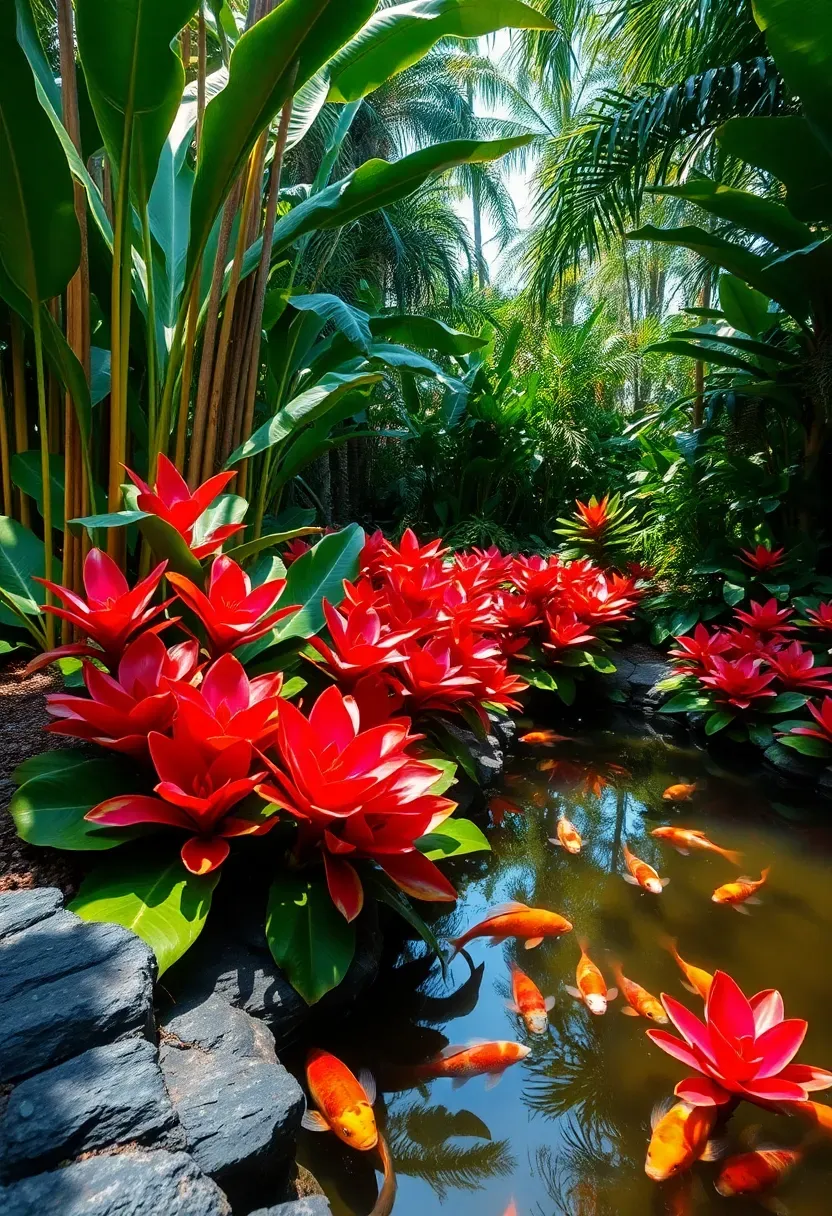
Warm-climate ponds let you grow tropical marginals that cold-region keepers can only dream about. Papyrus, elephant ear, tropical water lilies in blue and purple, lotus, and canna all flourish year-round. Koi metabolism stays high in warm water, so they grow faster and need more frequent feeding. The trade-off is that bacteria and parasites also thrive, making filtration and water quality monitoring even more critical.
Apply at home
If you garden in a colder zone, you can still achieve a tropical feel by growing tender plants in submerged pots and bringing them indoors for winter. Hardy banana and canna survive to zone 7 with heavy mulching.
26. Pond with Stepping Stones
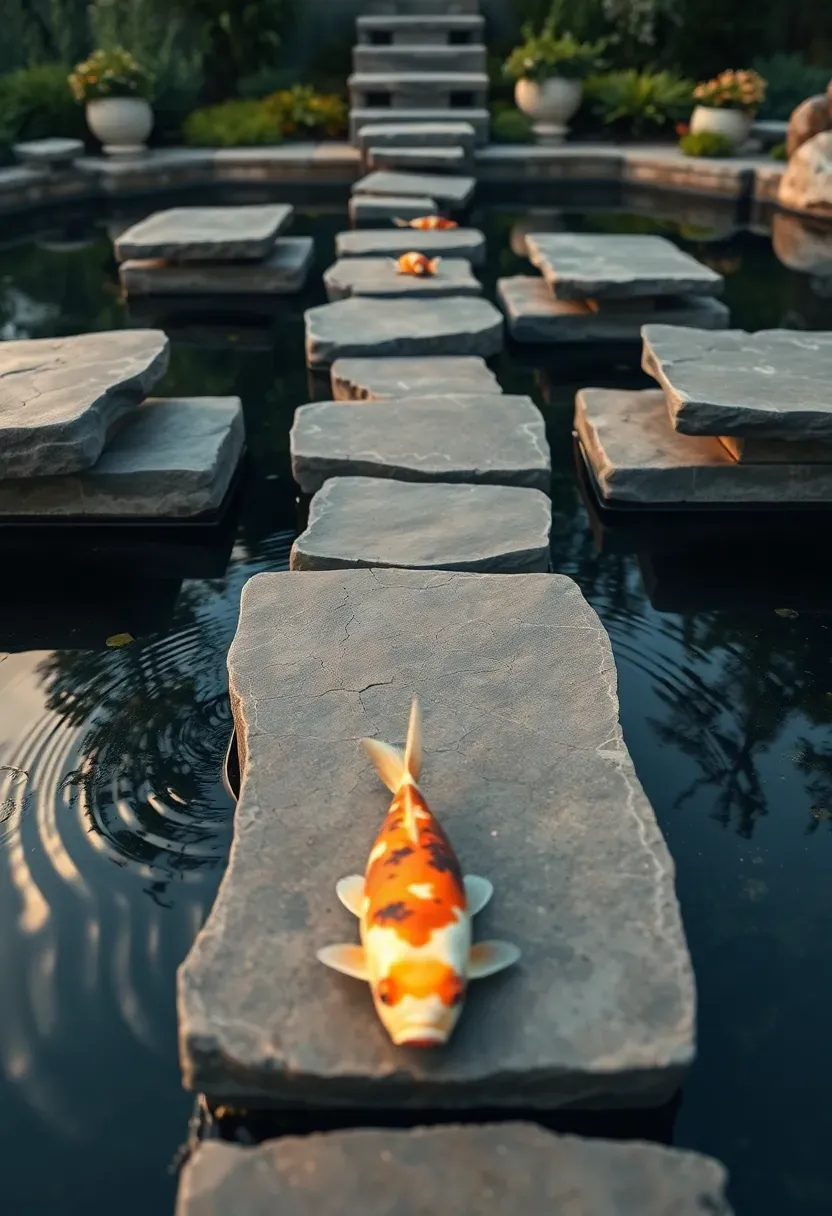
Flat stones set on hidden pedestals just above the waterline let you walk across the pond surface. The pedestals can be stacked cinder blocks, poured concrete piers, or stone columns — whatever brings the stepping surface to 1 inch above water level. Koi swim beneath your feet as you cross, which is an experience that never gets old no matter how many times you do it.
How to place them
- Space stones 16 to 20 inches apart, center to center
- Each stone should be at least 16 inches across for secure footing
- Set the pedestals on the pond floor before filling and verify they are level
- Avoid placing stones directly over the bottom drain
Recommended
Items for this idea
27. Gravity-Fed Filter Pond
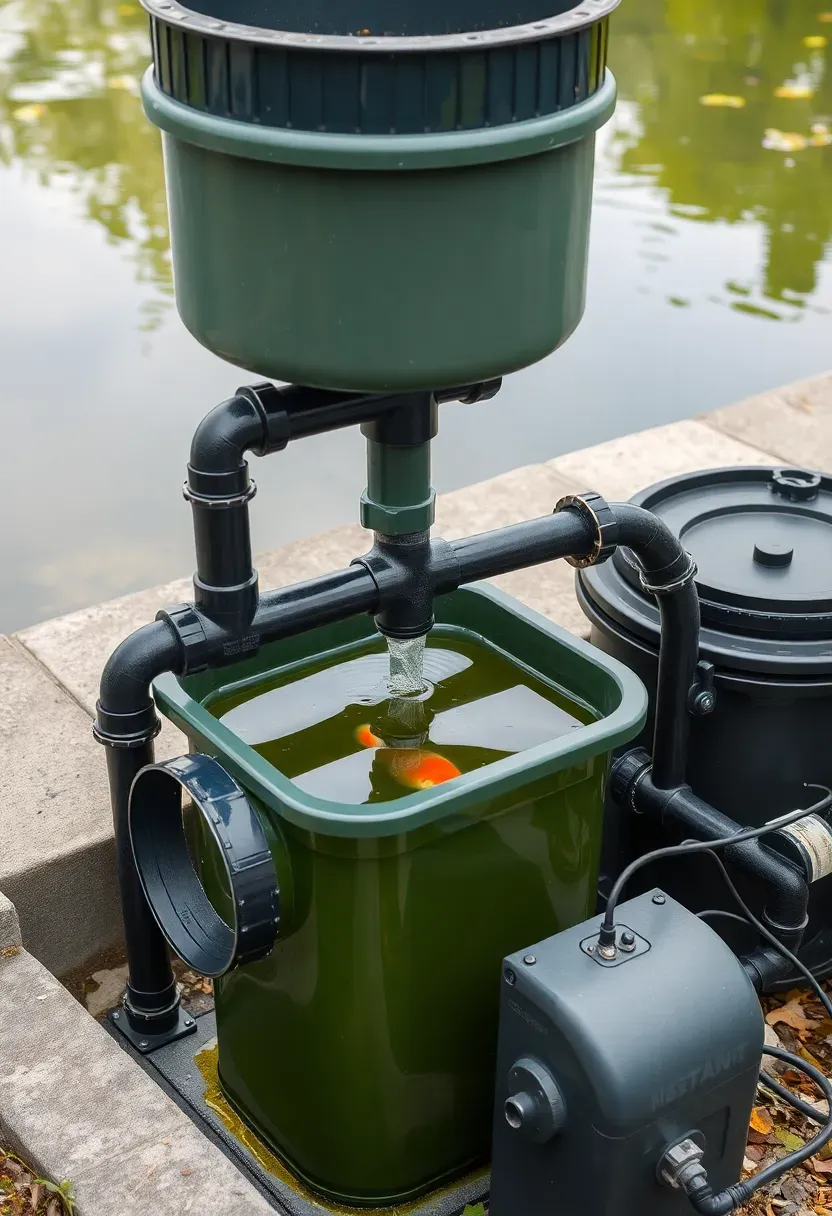
Most koi ponds use a pump to push water through a pressurized filter. A gravity-fed system reverses that — water flows by gravity from the pond into a filter chamber set at the same level, and a pump in the filter returns clean water to the pond. This design handles higher flow rates with less head pressure, which means your pump works less and lasts longer. Serious koi keepers in Japan and Europe overwhelmingly prefer gravity-fed systems.
Components
- Bottom drain in the pond connected via 4-inch pipe to a vortex settlement chamber
- Settlement chamber overflows into a biological media chamber (Japanese matting or K1 media)
- Pump in the last chamber returns water to the pond through a venturi aerator
Tips
- The pond and filter chambers must share the same water level — any elevation difference and the system fails
- Gravity systems need wider pipes than pumped setups, so plan plumbing during construction
28. Cottage Garden Koi Pond
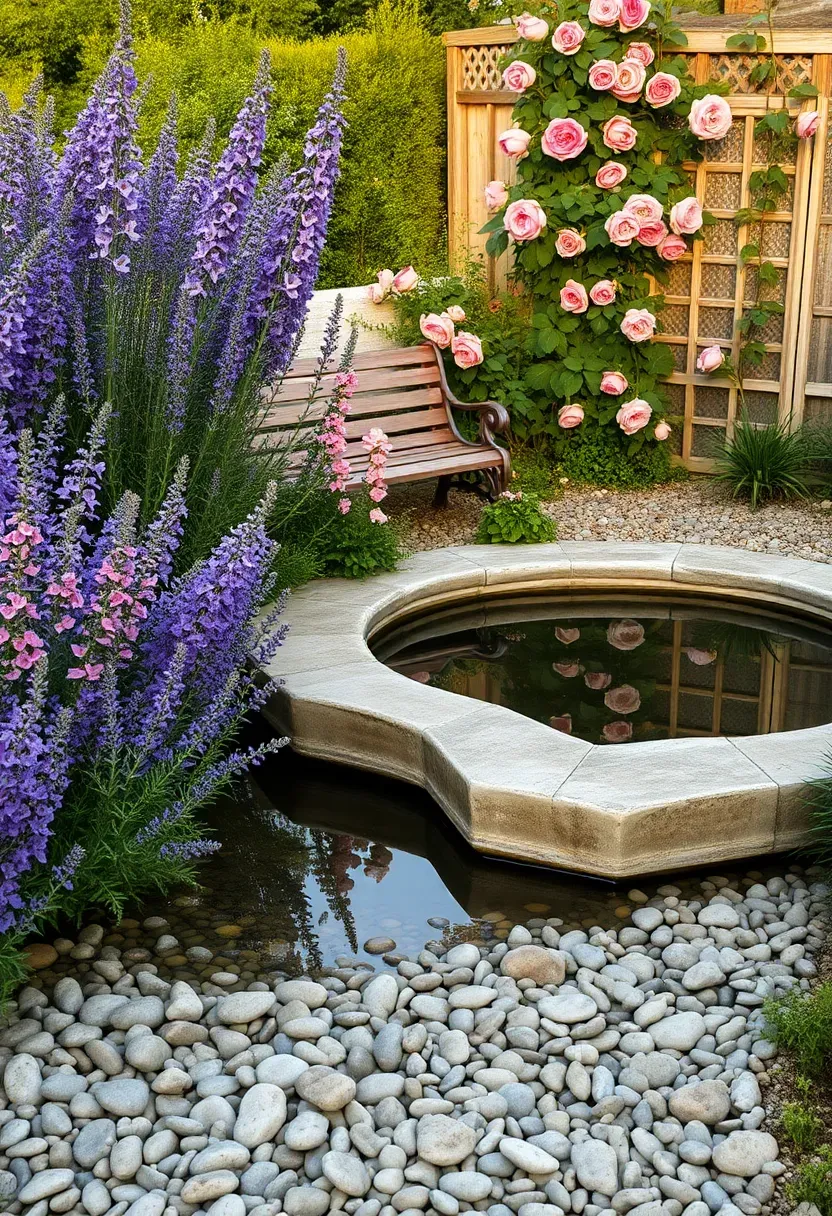
Surround your koi pond with the unstructured abundance of a cottage garden and the whole installation feels approachable rather than precious. Lavender, catmint, foxglove, and hollyhocks crowd the banks. A gravel path meanders to a weathered teak bench positioned for the best view. The pond itself can be simple — an irregular oval with a pebble beach edge on one side and a deeper section on the other. This is the opposite of a show pond, and that is exactly why it works.
Tips
- Choose plants that do not require heavy pesticide use — chemical runoff kills fish
- Leave 18 inches of clear gravel between the densest plantings and the water line for maintenance access
- Let self-seeding annuals fill gaps naturally rather than planting in rigid rows
Recommended
Items for this idea
29. Indoor-Outdoor Koi Pond
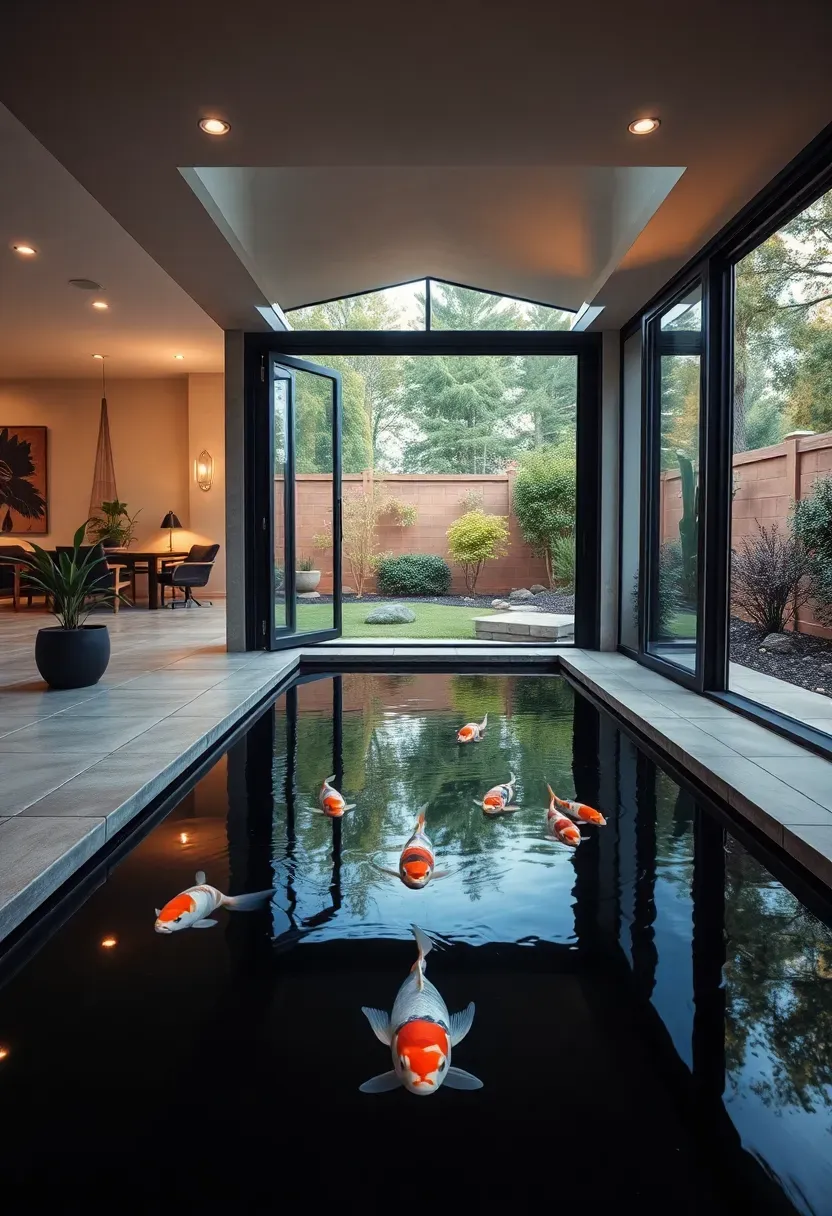
The most ambitious idea on this list: a pond that starts inside your home — under a glass floor or alongside a sunroom — and extends through the wall into the backyard. Koi swim freely between interior and exterior sections. The indoor portion stays warm in winter, giving fish a heated refuge without a separate indoor tank. This requires serious engineering — waterproofing, structural support, humidity control — but the result is a living feature that makes every other design feel ordinary.
What it takes
- A structural engineer to verify floor loads (water weighs 8.3 pounds per gallon)
- Waterproofing membrane under and around the indoor section with a leak detection layer
- HVAC upgrades to manage humidity from the indoor water surface
- A pass-through opening in the wall sealed with a rubber boot around the liner
Quick FAQ
How deep should a koi pond be? At least 3 feet in most climates. Deeper water — 4 to 5 feet — provides better temperature stability and more protection from predators. In zones with harsh winters, the extra depth keeps an unfrozen zone at the bottom where koi can overwinter safely.
Can koi survive in a small pond? They can for a while, but koi grow 12 to 36 inches long depending on variety. A pond under 500 gallons works only as a temporary setup. Plan for at least 250 gallons per adult fish, and more is always better for water quality.
Do koi ponds need a filter? Yes, without exception. Koi produce far more waste than goldfish or other pond species. A properly sized biological filter paired with mechanical filtration keeps ammonia and nitrite at safe levels. Skipping filtration leads to sick fish and green water within weeks.
What plants work best with koi? Koi eat soft-leaved plants aggressively. Hardy water lilies, lotus, and horsetail survive because their leaves are tough or out of reach. Protect submerged plants with rock cages or grow them in a separate bog zone the fish cannot access.
How much does a backyard koi pond cost? A basic DIY liner pond runs $1,500 to $3,000. A professionally installed pond with filtration, plumbing, and landscaping typically costs $5,000 to $15,000. High-end builds with concrete, viewing windows, or multi-level systems can exceed $30,000.
Koi keeping rewards patience. The pond you build this year will look completely different in three years — plants fill in, fish grow, the ecosystem matures, and the whole thing settles into something that feels like it belongs. Pick a design from this list that matches your yard, your budget, and how much weekend time you actually want to spend on maintenance. Start with good filtration and proper depth, and the rest is just details you refine over time.
Pinterest cover for 29 Backyard Koi Pond Ideas for Every Yard
About the author
OBCD
CGI visualization and interior design content. We create detailed 3D renders and curate practical design ideas for every room in your home.