25 Backyard Swim Spa Deck Ideas
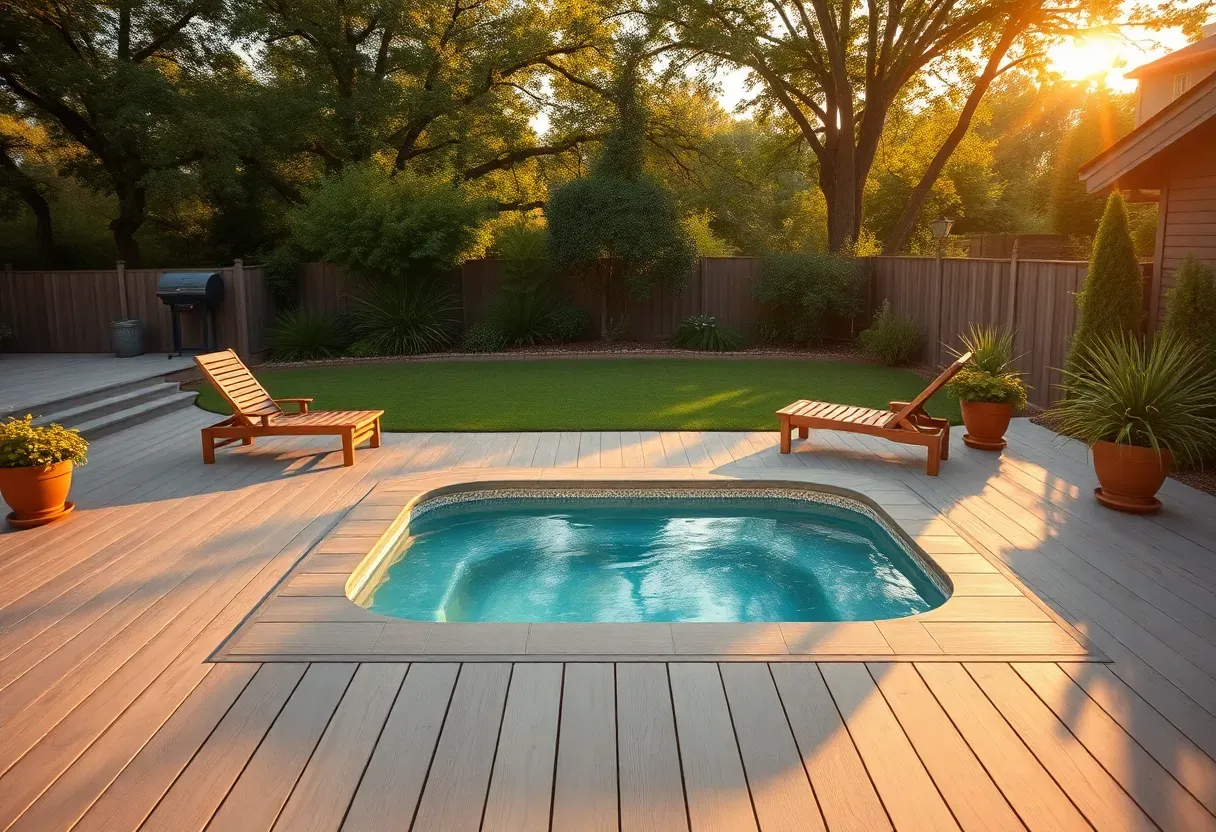
Most swim spas arrive as a big rectangular box. Without a deck that fits around it properly, you end up with an expensive appliance sitting awkwardly on a concrete slab. The deck is what turns it into a place you actually want to spend time — it handles the transition between yard and water, gives you somewhere to sit, and hides the mechanical side of things. I have looked at dozens of installations over the past year, from simple platform builds on suburban lots to full multi-level projects with outdoor kitchens attached. The 25 setups here cover real materials, realistic budgets, and layouts that work on yards of different sizes.
Here are 25 swim spa deck designs grouped by style, from flush-mounted platforms to raised wraparound builds and everything between.
Table of Contents
- Flush-Mount Composite Platform
- L-Shaped Wraparound Deck
- Multi-Level Redwood Terrace
- Concrete Pad with Wood Border
- Sunken Spa with Level Deck Surface
- Floating Deck on Gravel Base
- Pergola-Integrated Deck
- Stone and Timber Hybrid Platform
- Semi-Recessed Spa with Step-Down Deck
- Rooftop Deck Swim Spa
- Tropical Hardwood Surround
- Budget Pallet-Style Deck
- Cantilevered Deck Over Slope
- Modular Interlocking Deck Tiles
- Fire Pit Lounge and Swim Spa Deck
- Japanese-Inspired Minimalist Platform
- Farmhouse Deck with Board-and-Batten Skirting
- Pool House and Swim Spa Deck Combo
- Corner Lot Privacy Deck
- Stamped Concrete with Wood Inlay
- Raised Deck with Built-In Storage
- Coastal-Style Whitewashed Deck
- Hillside Terraced Deck
- Desert Xeriscape Deck Surround
- Smart Deck with LED Integration
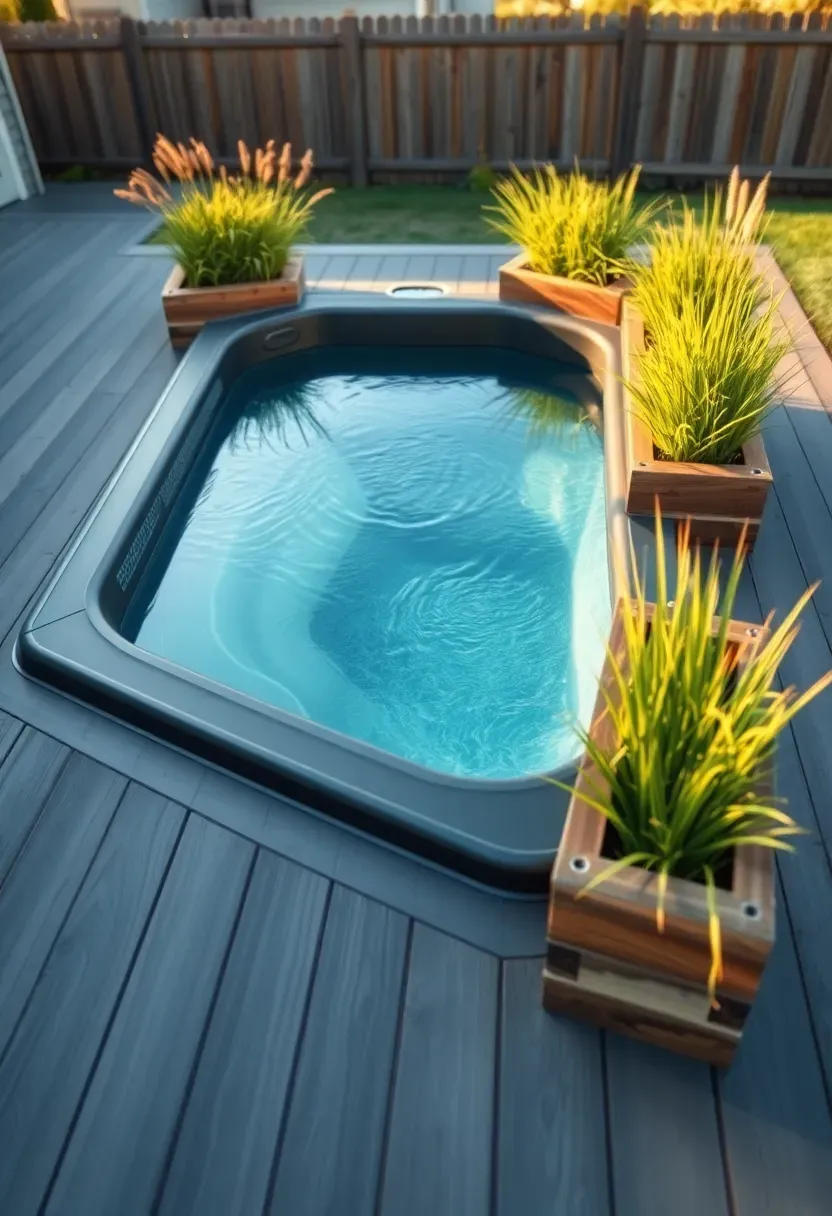
1. Flush-Mount Composite Platform
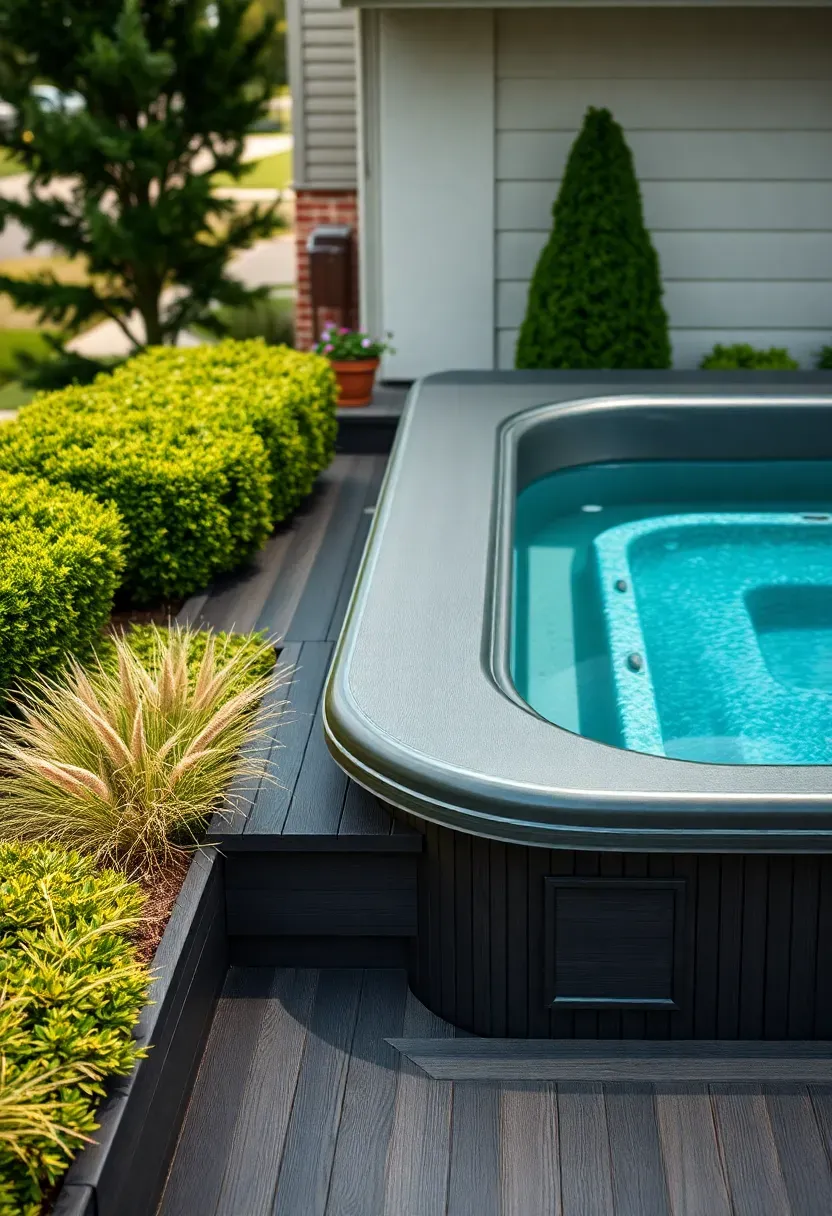
Building the deck surface level with the swim spa rim is the cleanest look you can get. The spa shell sits in a pit dug to the right depth, and the composite boards run right up to the edge with a narrow reveal gap for drainage. You avoid the climb-over-the-wall problem entirely — just step down into the water from deck level. Composite materials like Trex Transcend or TimberTech Advanced handle constant splash exposure without warping the way natural wood does after a couple of seasons.
Planning Tips
- Excavate 6 inches wider than the spa on all sides for structural support framing
- Use hidden fastener clips rather than face screws to keep the surface smooth near bare feet
- Run a perimeter drain channel under the deck edge to catch overflow
We picked a few things that go well with this idea: Mondaria Composite Deck Tiles (9-Pack, Brown), Interlocking Composite Deck Tiles (9-Pack, Coffee) (★4.8) and Mondaria Composite Deck Tiles (9-Pack, Gray). As an Amazon Associate we earn from qualifying purchases.
2. L-Shaped Wraparound Deck
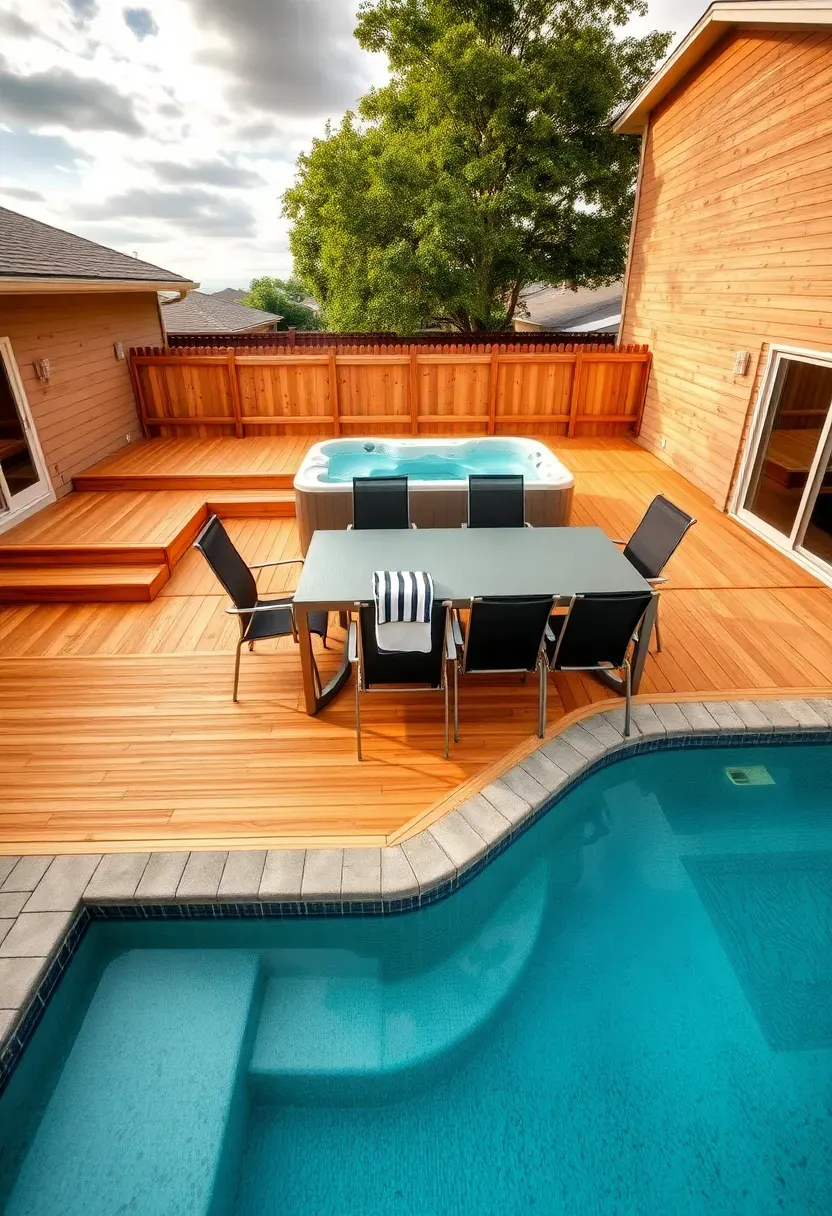
An L-shape gives you two distinct zones — one for lounging next to the spa and another for dining or a grill station. The configuration works well on rectangular lots where a full wraparound would eat too much yard space. Pressure-treated southern yellow pine keeps costs under $18 per square foot installed, though you will need to seal it annually. The corner where the two wings meet becomes a natural gathering point; consider widening it by 2 feet to fit a small table.
Layout Advice
- Keep the longer wing at least 10 feet deep for a dining table plus circulation space
- Angle the shorter wing toward afternoon sun if you want a warm lounging area
- Install step lighting at the transition between deck levels for safety after dark
We picked a few things that go well with this idea: Hot Tub Scum Absorber Whale (2-Pack) (★4.2), Hot Tub Skimmer Net with Aluminum Pole (★4.6) and Boao Oil Absorbing Sponge (16-Piece) (★4.0). As an Amazon Associate we earn from qualifying purchases.
3. Multi-Level Redwood Terrace
Why This Works
A yard with even slight grade changes is perfect for a tiered layout. The swim spa sits on the lower level where excavation is easier, and the upper deck serves as a lookout with seating. Redwood — specifically construction heart grade — resists rot naturally without chemical treatment, and it weathers to a silver-gray that looks better with age.
How to Build It
Start by establishing the lower pad at grade or slightly below. Frame the upper tier on 6x6 posts with cross-bracing. Connect the two levels with wide stairs (at least 48 inches) rather than a narrow staircase. Budget roughly $28-35 per square foot for redwood materials and labor in most US markets.
Watch Out For
- Redwood supply varies by region — West Coast prices are 30% lower than East Coast
- Two levels means two sets of footings; check your frost line depth before pouring
We picked a few things that go well with this idea: SMY Recessed LED Deck Light Kit IP67 (★4.6), Warm White Recessed Deck Lights (16-Pack) (★4.4) and GKOLED Recessed LED Step Lights (12-Pack) (★4.5). As an Amazon Associate we earn from qualifying purchases.
4. Concrete Pad with Wood Border
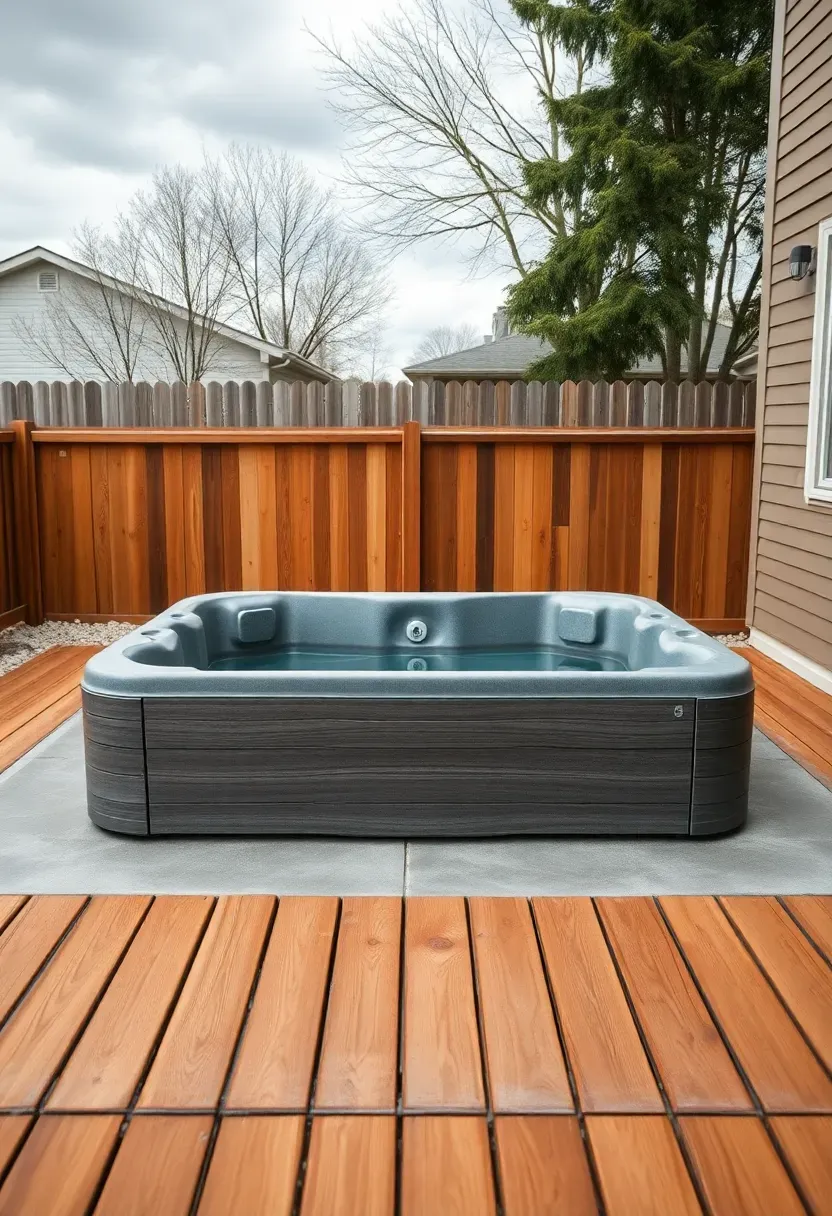
Not every project needs a full deck. A reinforced concrete slab for the spa itself — minimum 4 inches thick with rebar on 18-inch centers — gives you a dead-flat, load-bearing surface at lower cost. Then surround the pad with a 3-to-4-foot border of cedar or composite decking. The wood border softens the industrial look and gives you a warm surface to stand on barefoot. Total cost often comes in 40% below a full deck build because the concrete does the heavy structural work.
Tips
- Slope the concrete 1/8 inch per foot away from the spa for drainage
- Use a stamped or broom finish on the concrete to reduce slipping when wet
- Leave a 1-inch expansion gap between the concrete edge and the wood border
Recommended
Items for this idea
5. Sunken Spa with Level Deck Surface
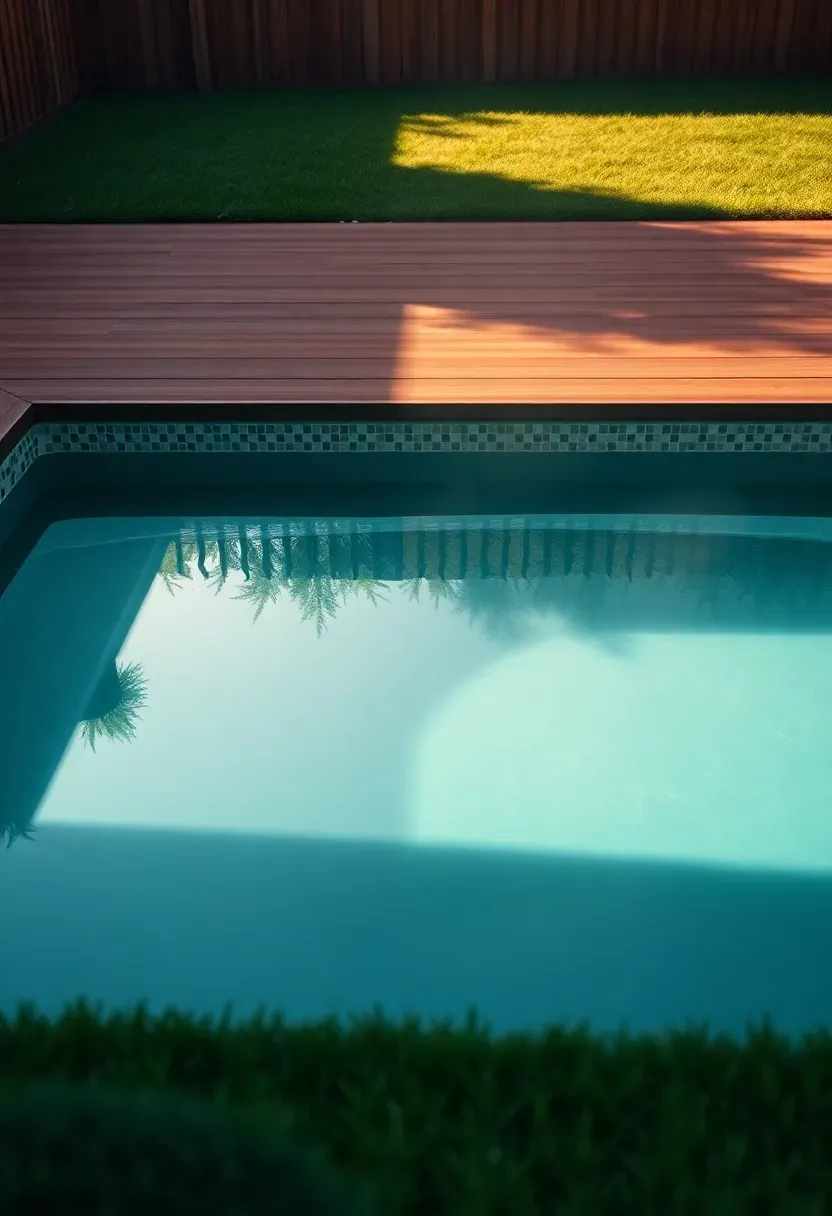
Sinking the entire swim spa below grade creates the most integrated look — the deck and yard appear continuous, with the water sitting like a reflecting pool. This approach requires serious excavation (most swim spas are 40-50 inches deep) plus a gravel drainage bed, concrete vault walls, and waterproof membrane. Budget $5,000-8,000 for the vault alone before the deck goes on. But the result is worth it if your goal is a seamless backyard where the spa does not dominate the view.
Pros and Cons
- Pro: Easiest entry and exit — sit on the edge and slide in
- Pro: Wind protection since the water sits below the deck plane
- Con: Pump and heater access requires removable deck panels or a side vault
- Con: Groundwater in high water-table areas can push against the shell
6. Floating Deck on Gravel Base
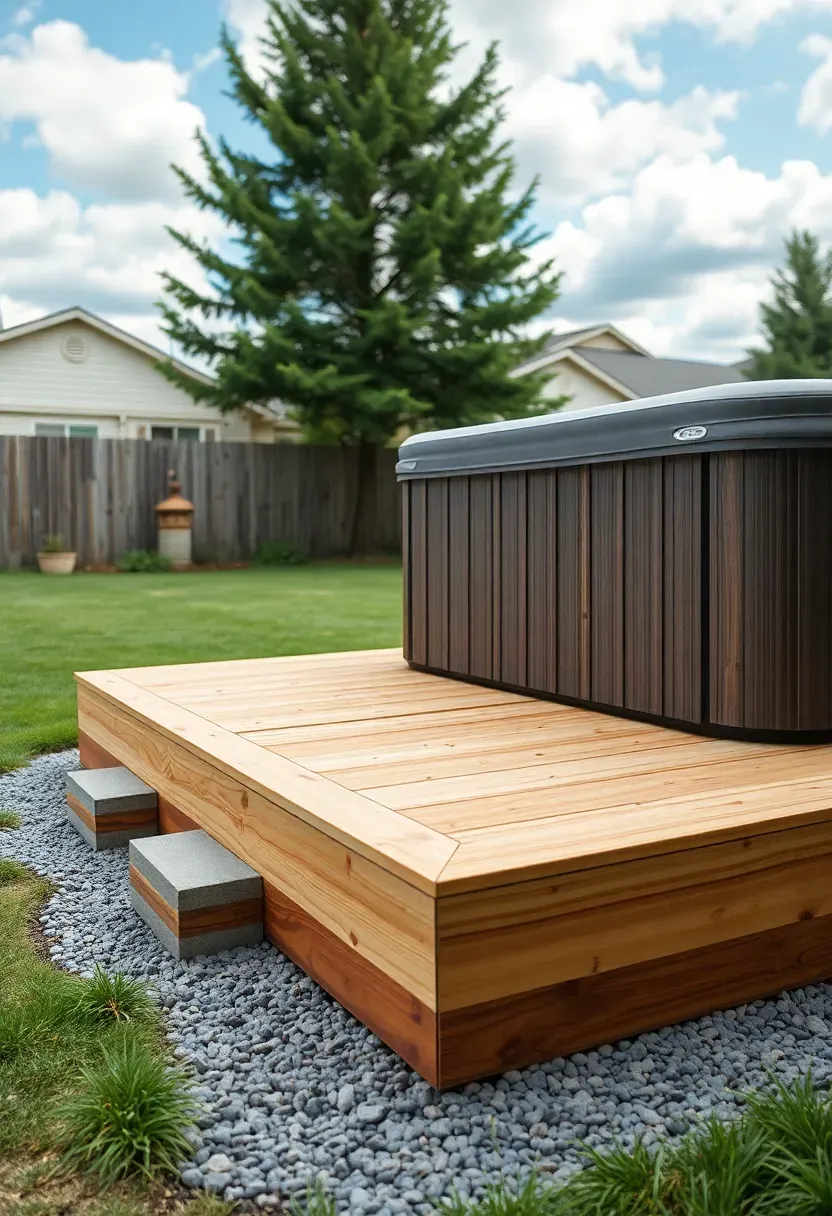
A floating deck skips the concrete footings entirely. You compact a 6-inch gravel base, set deck blocks at 4-foot intervals, and frame directly on top. The swim spa sits beside the deck on its own reinforced pad. This is a renter-friendly and removable option — the whole thing can come apart in a weekend. Use 2x6 joists at 16-inch centers for a platform that feels solid underfoot. The gravel base handles drainage automatically, which prevents the pooling issues you get with a deck sitting on bare dirt.
Tips
- Landscape fabric under the gravel stops weeds from growing through the gaps
- Keep the deck within 18 inches of grade to avoid needing a railing in most code jurisdictions
- Pre-drill all deck screws to prevent splitting on the end boards
Recommended
Items for this idea
7. Pergola-Integrated Deck
The Issue
A swim spa in full sun gets uncomfortably hot in summer, and UV breaks down the cover faster. A pergola fixed to the deck framing solves both problems while giving the space architectural presence.
The Solution
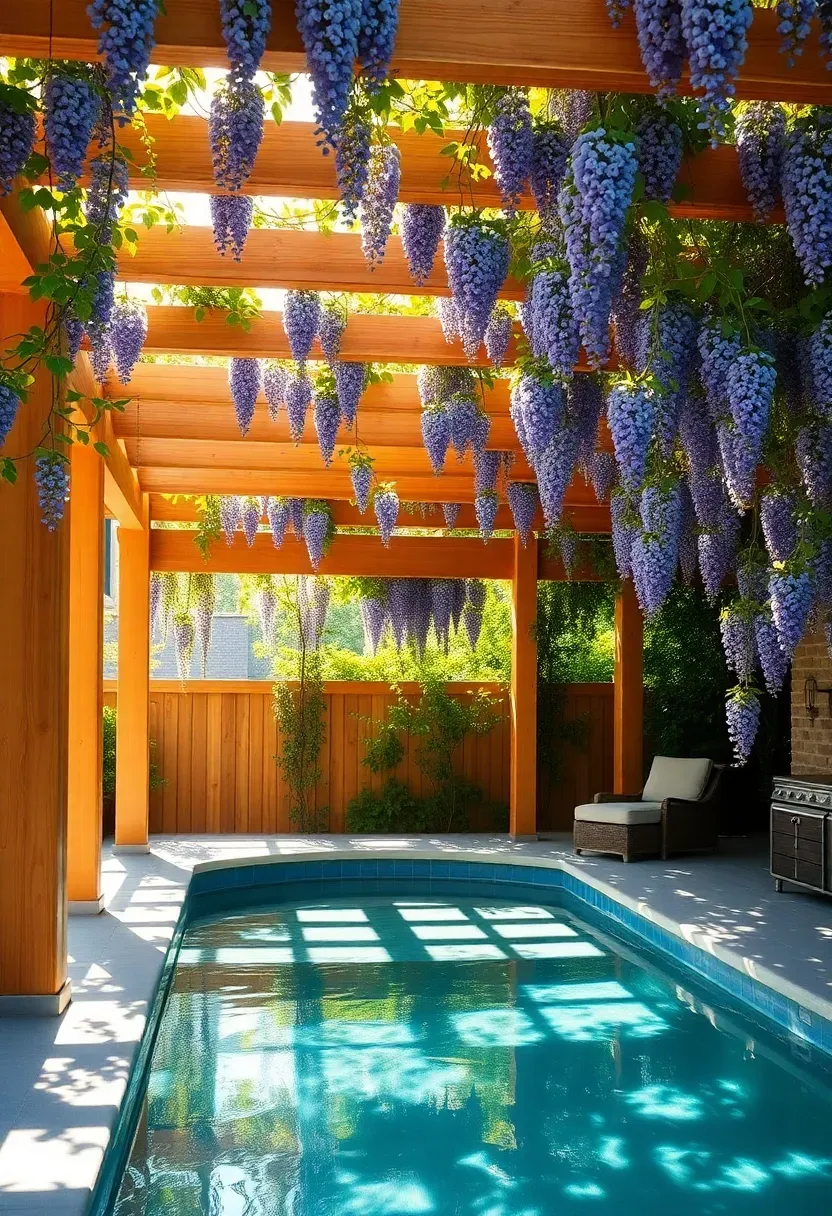
Build the pergola posts directly into the deck subframe using through-bolted post bases. Size the rafters to span the swim spa length plus 2 feet of overhang on each end. For a 14-foot swim spa, that means 18-foot rafters — typically 2x8 or 2x10 cedar. Train a deciduous vine like wisteria or trumpet creeper along the top for summer shade that drops in winter to let sunlight through. The filtered light pattern on the water surface is a nice side effect.
Pros and Cons
- Pro: Reduces UV exposure on the spa cover by roughly 60%
- Pro: Creates a defined room-like feeling on the deck
- Con: Adds $3,000-6,000 to the project depending on size and wood species
8. Stone and Timber Hybrid Platform
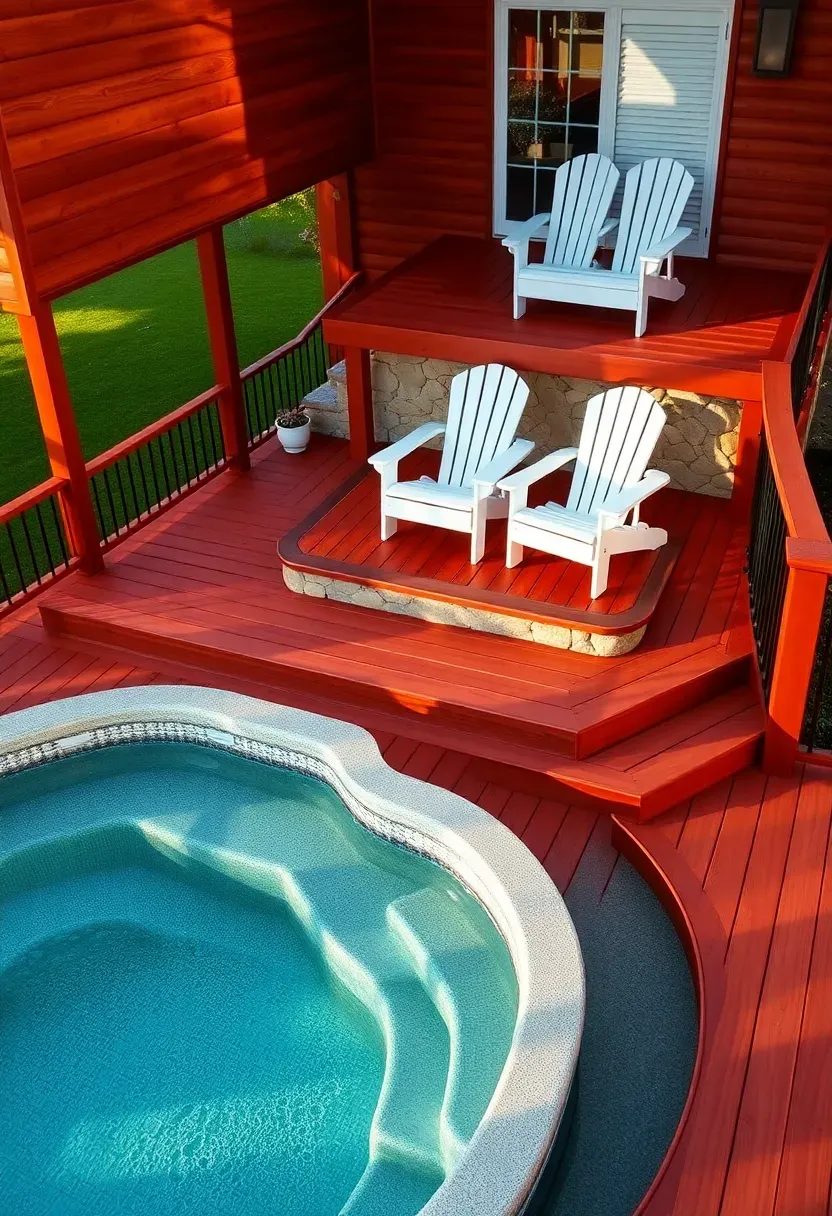
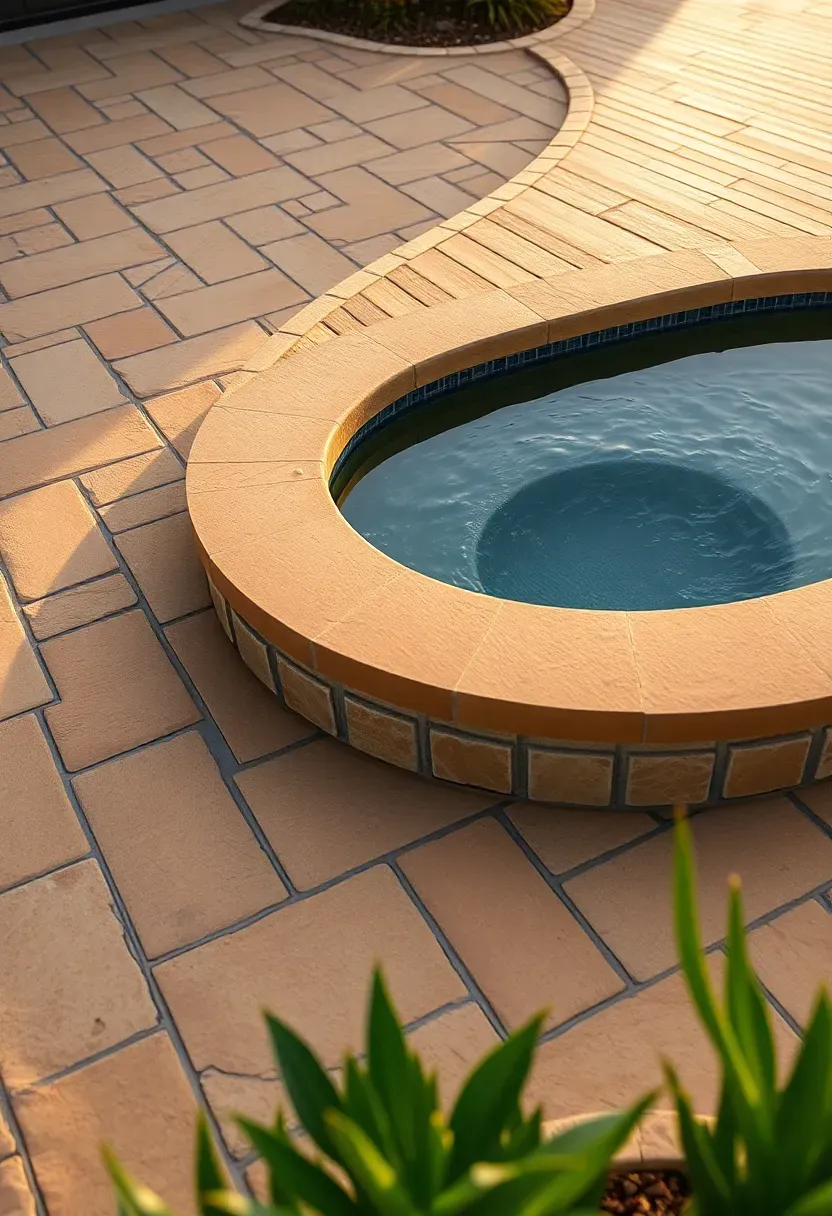
Mixing materials breaks up the visual monotony of a single-surface deck. Flagstone or bluestone pavers handle the high-traffic zone directly around the spa, while timber decking extends outward for lounging areas. The stone section stays cooler underfoot on hot days and handles chemical splash without staining. Lay the stone on a compacted base with polymeric sand joints, and butt the timber deck framing right up to the stone edge using a metal ledger bracket. The contrast between natural stone texture and straight-grained wood gives the space a resort quality without a resort price tag.
Key Details
- Choose stone with a thermal or flamed finish for grip — polished stone is dangerously slippery when wet
- Timber sections should sit 1/4 inch above the stone surface to allow water runoff direction
- Expect $22-30 per square foot for the stone area versus $15-22 for the timber
Recommended
Items for this idea
9. Semi-Recessed Spa with Step-Down Deck
This is the middle ground between a fully sunken spa and a surface-mounted one. You dig a pit roughly half the spa depth, so the rim sits about 20 inches above the surrounding deck. A step-down from the main deck level to the spa surround creates a subtle separation between zones. The 20-inch rim height doubles as seating — guests naturally perch there with drinks while someone uses the spa. Structurally, the partial burial means less excavation and a simpler vault than a full sunken installation.
Steps to Build
- Excavate to half the spa shell depth plus 6 inches for the gravel drainage bed
- Pour a reinforced concrete base slab at the bottom of the pit
- Set the spa shell and backfill with pea gravel for drainage around the sides
- Frame the deck at a height that meets the spa rim, with a step-down transition from the main yard-level deck
10. Rooftop Deck Swim Spa
The Challenge
Rooftop installations need structural approval because a filled swim spa weighs 10,000-15,000 pounds. Most residential roofs are not built for that kind of point load.
Making It Work
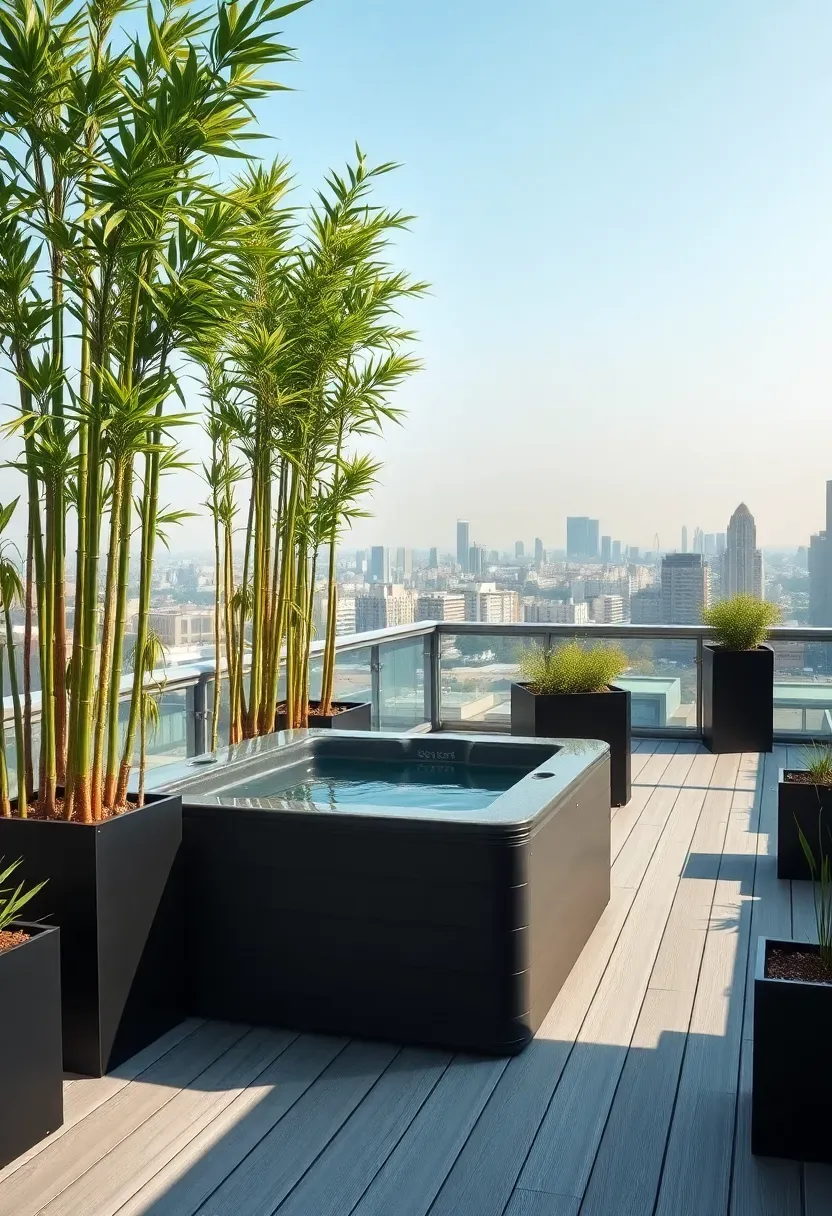
Work with a structural engineer to identify load paths down to the building foundation. Steel beam reinforcement under the spa location is typical, costing $2,000-5,000 depending on the span. Use lightweight composite or aluminum deck boards to offset some of the weight. Compact swim spas (12 feet or shorter) are the practical choice up here — anything longer gets difficult to crane into position. Bamboo screens in planters provide wind protection without adding structural load.
Choose This If
- You live in a dense urban area with no yard
- You want the visual drama of a rooftop water feature
- Your building structure can handle the load after engineering review
Recommended
Items for this idea
11. Tropical Hardwood Surround
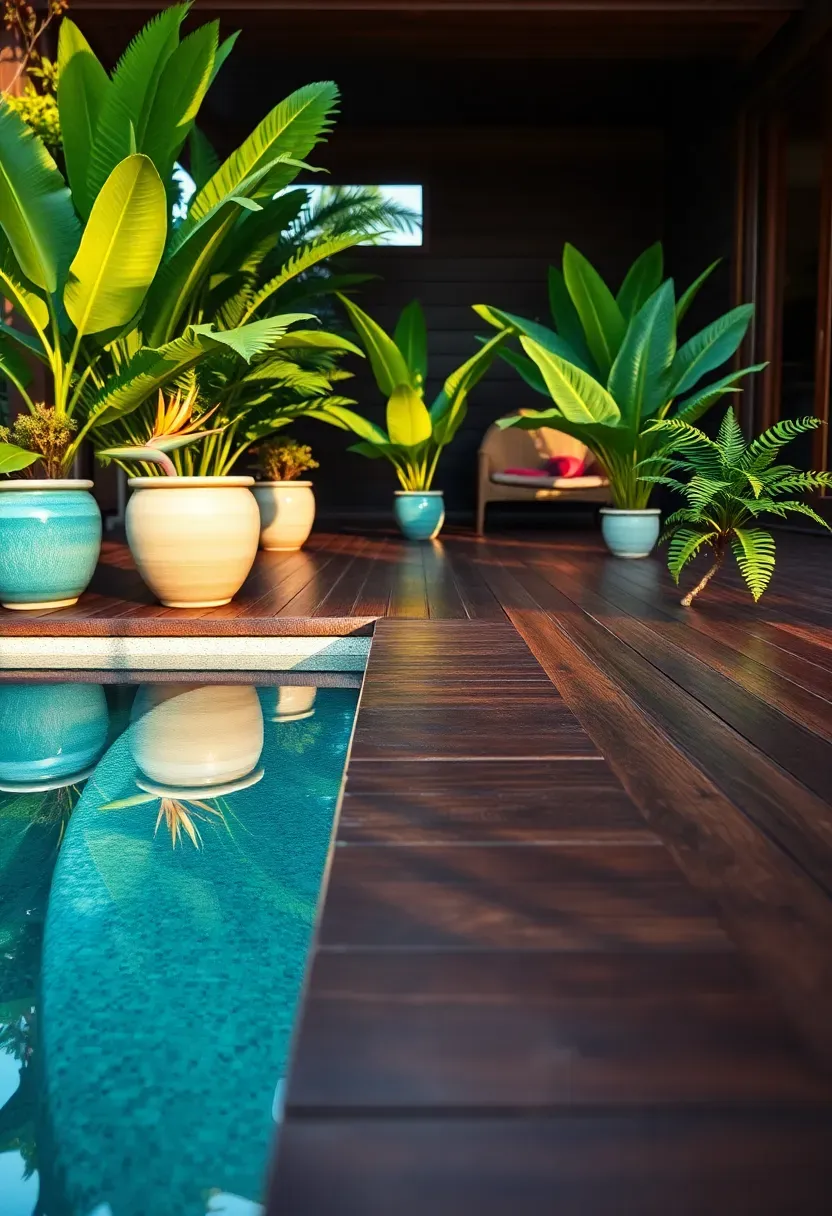
Ipe, cumaru, and garapa are South American hardwoods that laugh at water exposure. An ipe deck will outlast composite by a decade or more with minimal maintenance — just an annual oil application to keep the warm brown tone, or let it silver naturally. The material is dense enough (over 60 pounds per cubic foot) that it sinks in water, which tells you something about its rot resistance. Pre-drill every screw hole because these woods will snap drill bits and reject screws that go in crooked. Budget $30-45 per square foot installed, roughly double the cost of composite.
Tips
- Buy from FSC-certified suppliers to ensure responsible sourcing
- Use stainless steel screws exclusively — standard galvanized fasteners react with the tannins and stain the wood
- Let boards acclimate outdoors for two weeks before installation to reduce movement
12. Budget Pallet-Style Deck
The Problem
A swim spa already stretched the budget. Spending another $8,000 on a custom deck is not happening this year.
The Fix
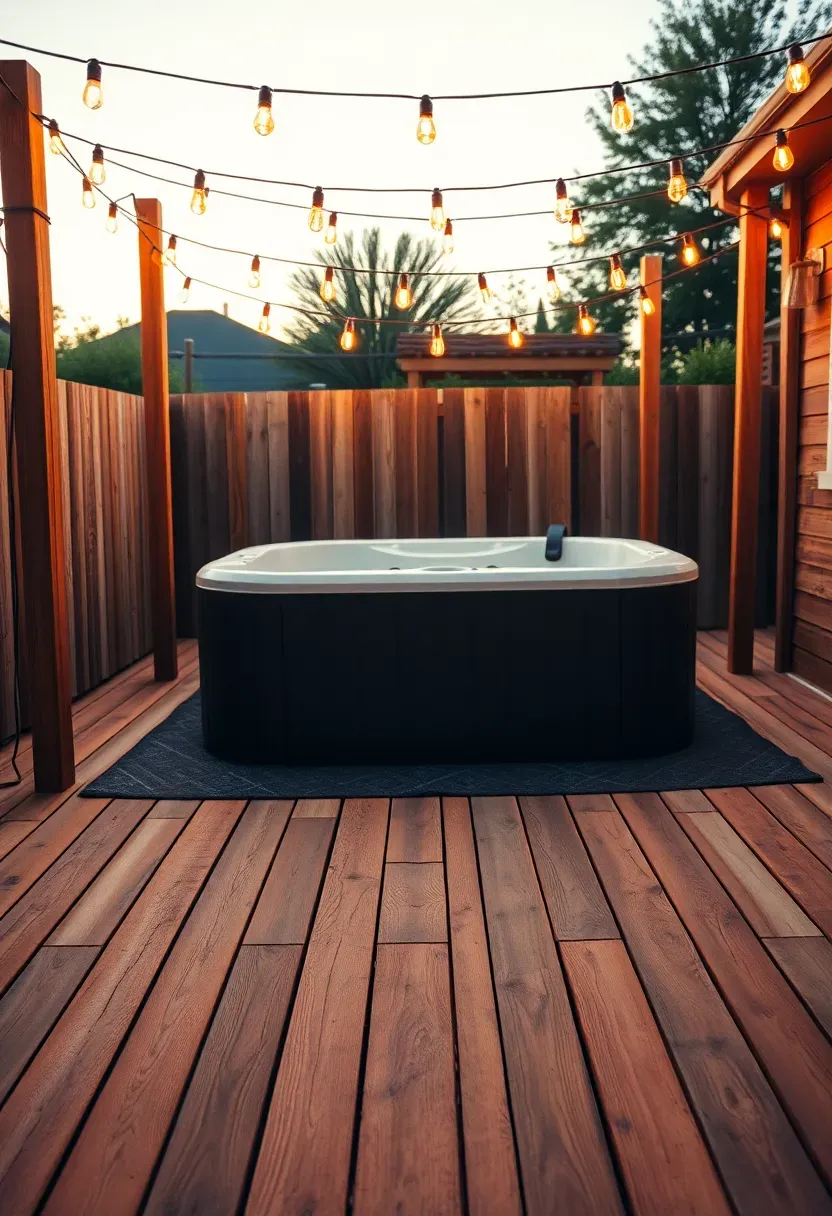
Reclaimed pallet lumber or economy-grade pine can build a functional platform for under $500 in materials. Sand everything aggressively to remove splinters, treat with a penetrating deck stain, and lay the boards in a herringbone or diagonal pattern to make the cheap wood look intentional. The platform will not last ten years, but it buys you time until a proper deck is in the budget. Add string lights and a couple of outdoor rugs to distract from the rough edges.
Be Honest About
- Pallet wood is inconsistent in thickness — expect to shim and plane
- Chemical treatments on some pallets make them unsafe for barefoot use; only use heat-treated (HT stamped) pallets
- Plan to rebuild in 3-5 years
Recommended
Items for this idea
13. Cantilevered Deck Over Slope
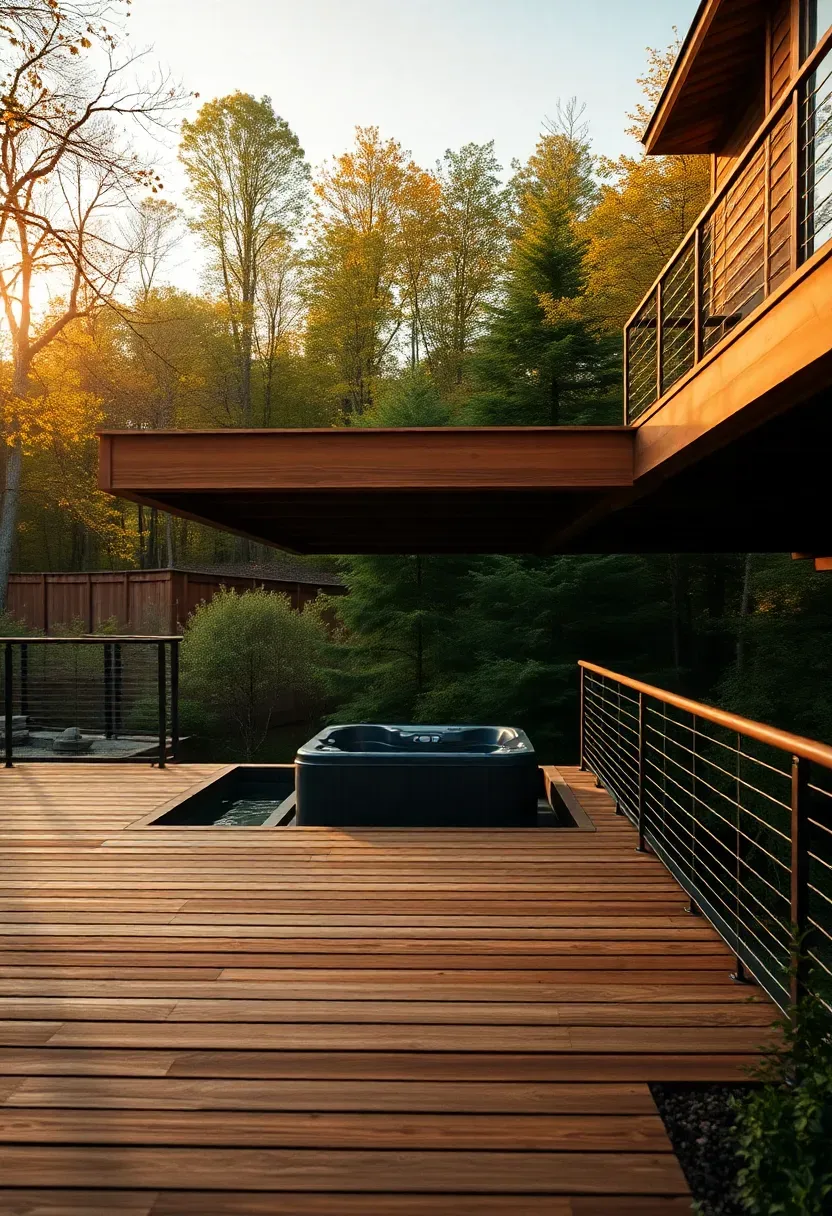
Sloped lots are expensive to flatten but perfect for a cantilevered build. The deck extends outward from the house on beams anchored to deep-set footings uphill, with the swim spa positioned at the outer edge where the view is best. Engineering matters here — the cantilever portion typically cannot exceed one-quarter of the total joist span under load. For a swim spa weighing 12,000 pounds full, you are looking at steel beam support rather than standard lumber. The payoff is a dramatic floating effect with unobstructed sightlines from the spa.
Key Considerations
- Steel I-beams (W8x31 or similar) are typical for the cantilever support
- Footings on slopes must go below the frost line measured from the downhill grade
- Factor in $1,500-3,000 for engineering plans specific to your slope angle and soil type
14. Modular Interlocking Deck Tiles
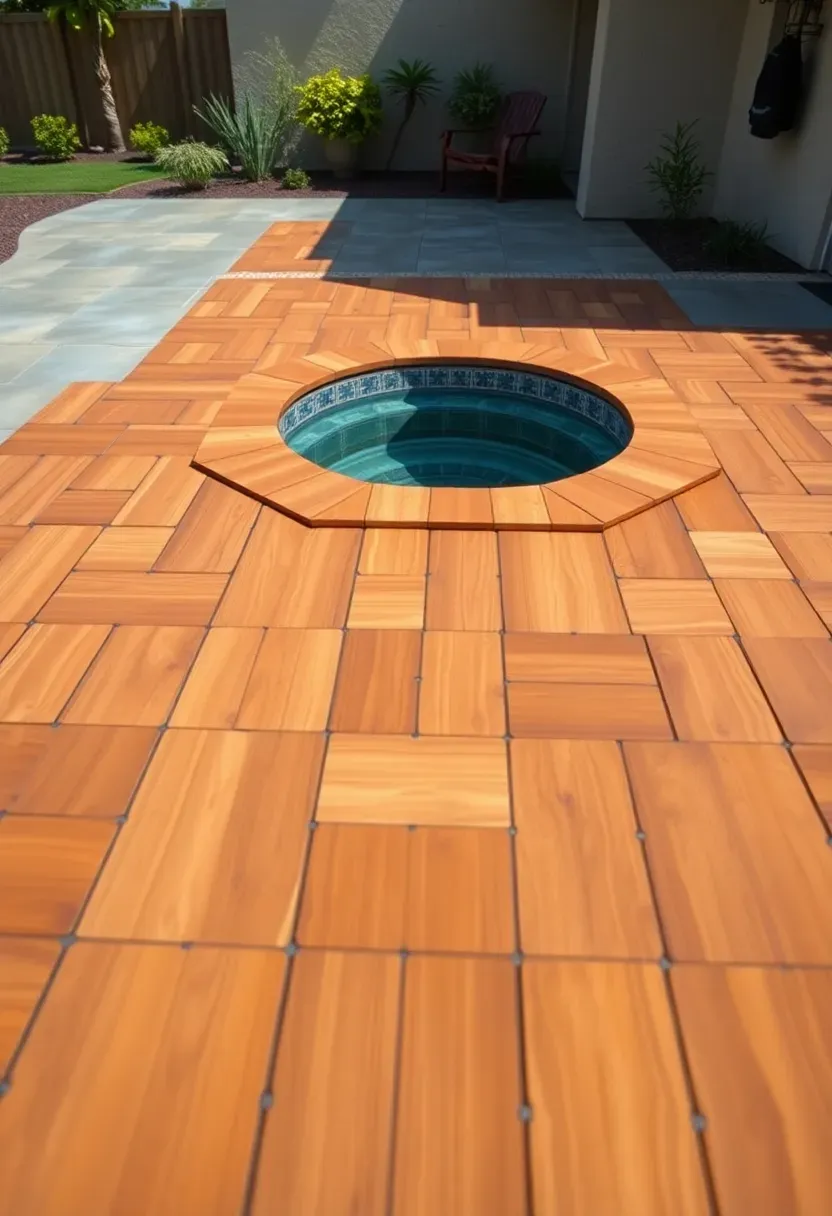
These snap-together tiles sit on any flat hard surface — existing concrete, compacted pavers, even a level plywood subfloor. Each tile is typically 12x12 or 24x24 inches with a built-in drainage grid underneath. Installation takes hours instead of days. Around a swim spa, they give you an instant upgrade over bare concrete without permanent construction. Brands like Kontiki and NewTechWood offer composite options in wood-grain finishes that look surprisingly convincing from standing height.
Tips
- Verify the tile system is rated for the weight load if tiles will sit under the spa edge
- Start from the spa perimeter and work outward to ensure even spacing
- Buy 10% extra tiles for cuts and future replacements
Recommended
Items for this idea
15. Fire Pit Lounge and Swim Spa Deck
Origins of the Combo
Pairing fire and water in outdoor design goes back to ancient Roman bath complexes. The modern backyard version is more practical than philosophical — a fire pit extends your swim spa season into cooler months by giving you a warm spot to dry off.
Modern Application
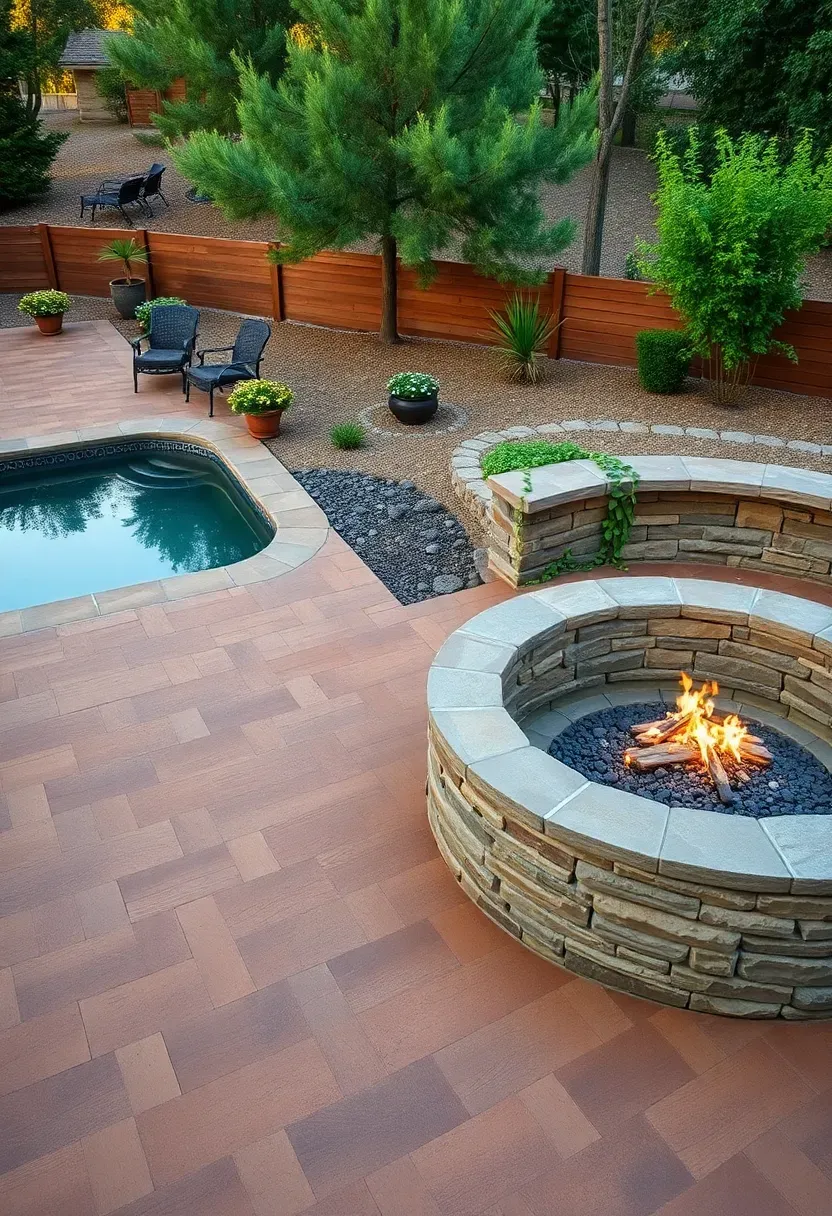
Position the fire pit at least 10 feet from the swim spa to keep embers away from the cover. A gas fire pit is safer than wood-burning near a spa. Build a low divider wall (18-24 inches) between the two zones using stacked stone or a planter box to define the areas without blocking the view. The deck material between them should be fire-rated composite or non-combustible like porcelain pavers.
Apply This At Home
- Gas fire pits with electronic ignition let you light up without matches while still wet
- A 36-inch round fire pit seats 4-6 people comfortably around the rim
- Budget $2,500-4,500 for a built-in gas fire pit with stone surround
16. Japanese-Inspired Minimalist Platform
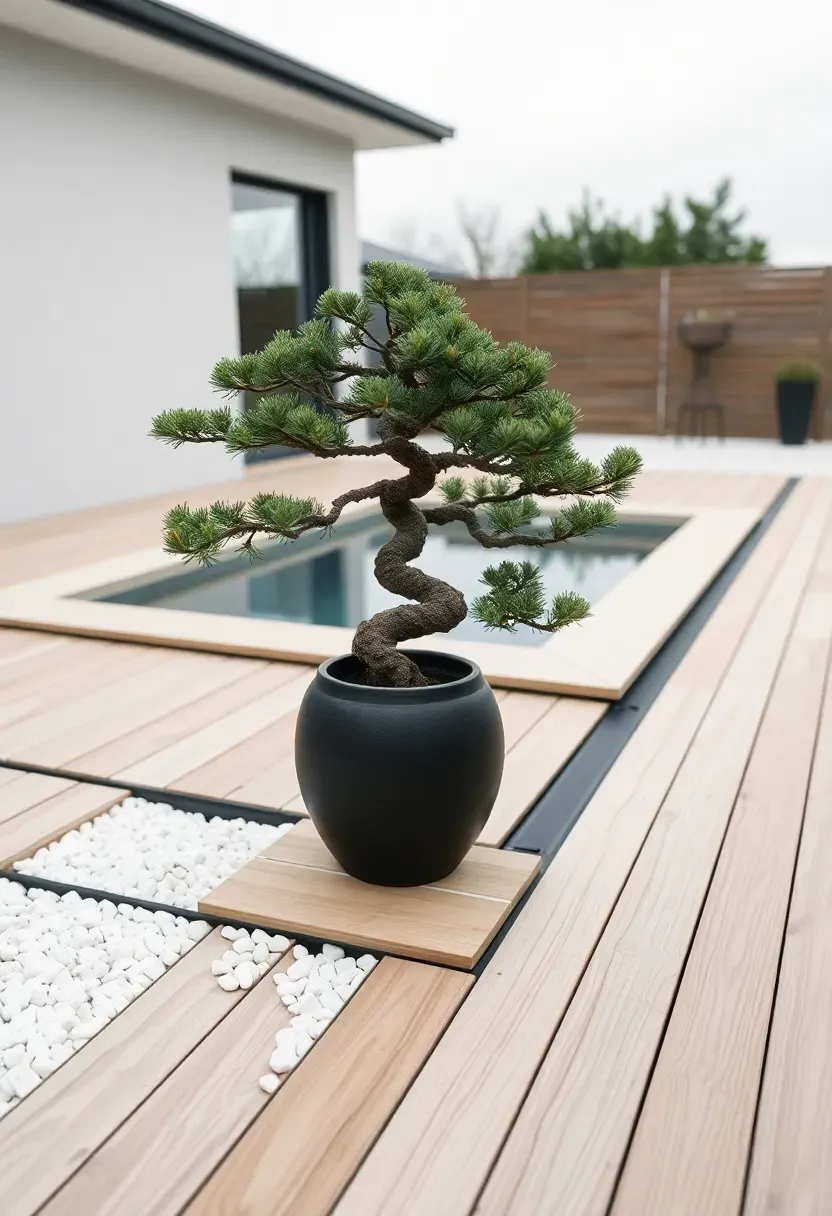
Strip away the clutter and let the swim spa itself be the focal point. A flat cedar platform with no railing, no built-in seating, and no accessories creates a meditative quality. Border the deck with raked gravel or river pebbles in the karesansui tradition. One carefully placed specimen tree — a Japanese maple or sculpted pine — provides the only vertical element. The restraint is the design. Use light-toned wood (western red cedar left natural or Port Orford cedar) to keep the palette soft.
Tips
- Limit the deck to 150-200 square feet to maintain the minimalist intent
- Edge the gravel border with black steel landscape edging for clean lines
- Avoid overhead structures — the open sky is part of the composition
Recommended
Items for this idea
17. Farmhouse Deck with Board-and-Batten Skirting
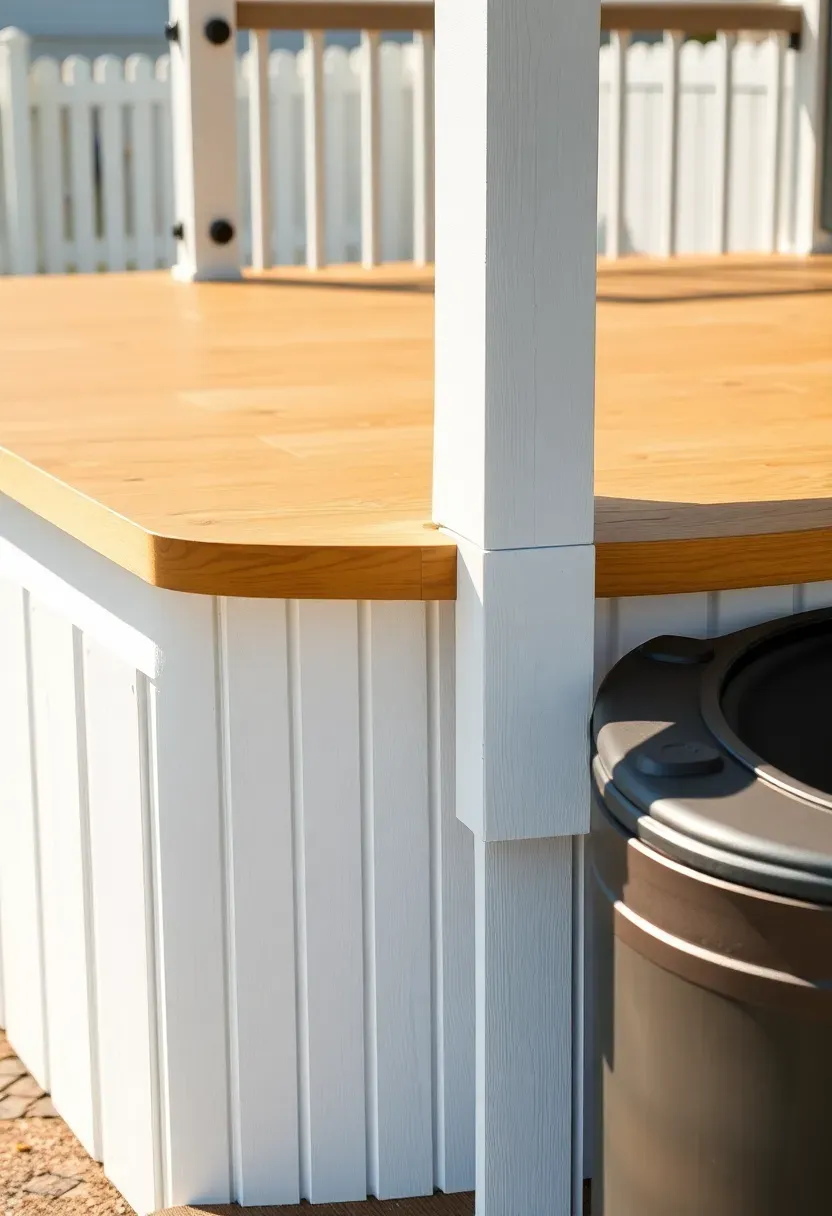
Board-and-batten skirting around the deck and spa base hides the mechanical equipment while matching the farmhouse aesthetic that dominates Pinterest searches right now. Paint the skirting panels white or cream to contrast against a natural wood deck surface. Use 1x8 boards with 1x3 battens, and hinge at least two panels for equipment access. The style reads as intentional architectural detail rather than afterthought screening. Pair with black metal deck rail brackets and simple post caps to complete the look.
Steps
- Frame the skirting openings between deck posts using 2x4 nailers
- Cut 1x8 boards to height and attach vertically with 1-inch gaps
- Cover each gap with a 1x3 batten strip nailed through the center
- Prime and paint with exterior latex in two coats before installation
18. Pool House and Swim Spa Deck Combo
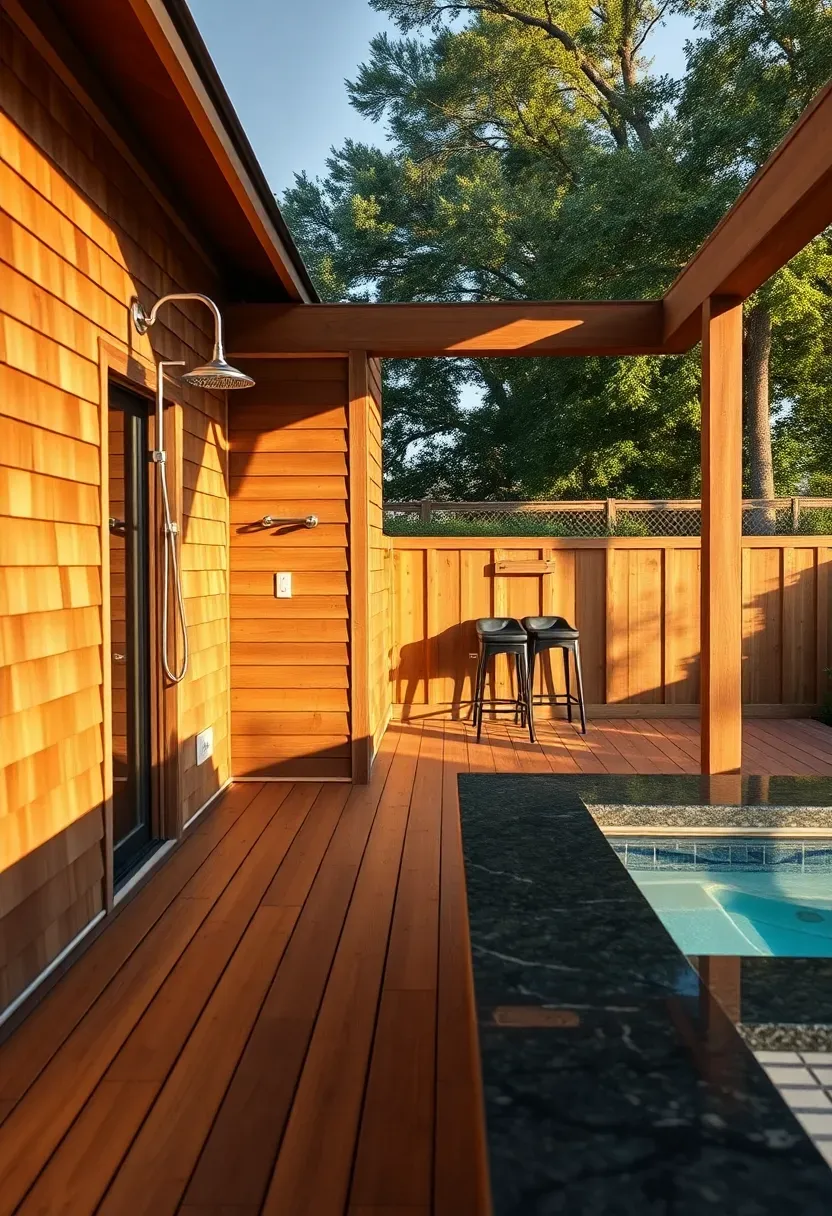
If you are building a pool house anyway — even a small 10x12 structure — extending its deck to include the swim spa ties the whole backyard together under one design. The pool house provides a changing room, towel storage, and equipment housing. Run the deck from the pool house doors to the spa edge at a consistent level. Add a small bar counter on the pool house exterior wall facing the spa for drinks without going inside. An outdoor shower mounted on the pool house wall lets you rinse off before and after using the spa.
Key Details
- Match the deck boards to the pool house trim material for visual continuity
- Run electrical from the pool house subpanel to the swim spa to avoid a second utility trench
- Size the pool house overhang at 4 feet to shelter the bar counter from rain
Recommended
Items for this idea
19. Corner Lot Privacy Deck
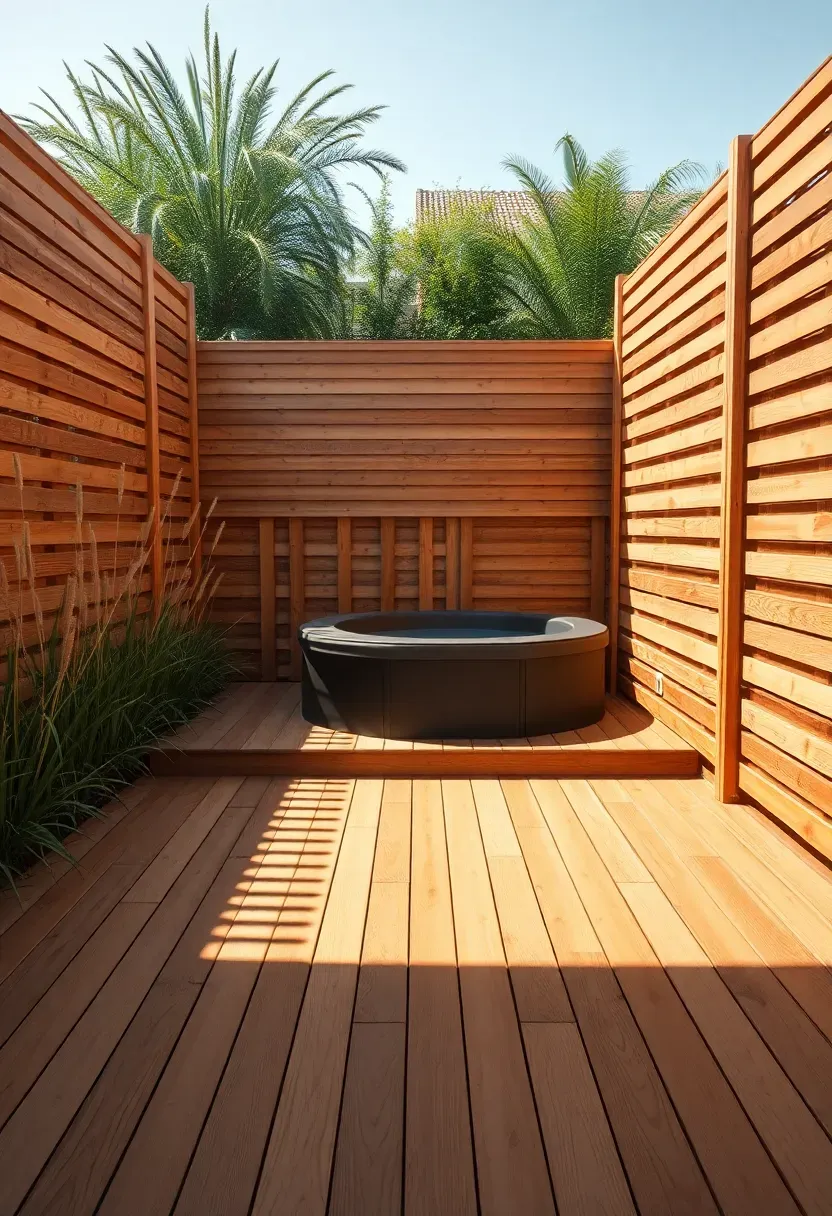
Corner lots give you more yard space but less privacy — neighbors and pedestrians see right in from two sides. A dedicated privacy structure around the swim spa deck solves this without fencing the entire property. Build 6-foot horizontal slat screens on the two exposed sides, using 1x6 cedar boards with 1/2-inch gaps for airflow. The gaps are narrow enough to block sightlines from street level but still let breeze through. Attach the screens to the deck post structure so everything reads as one unified build.
Tips
- Check local fence height ordinances — some jurisdictions limit screens to 6 feet even when attached to a deck
- Stagger the slat gaps between inner and outer layers for full visual privacy with maximum airflow
- Plant tall ornamental grasses along the outside of the screens to soften the look from the street
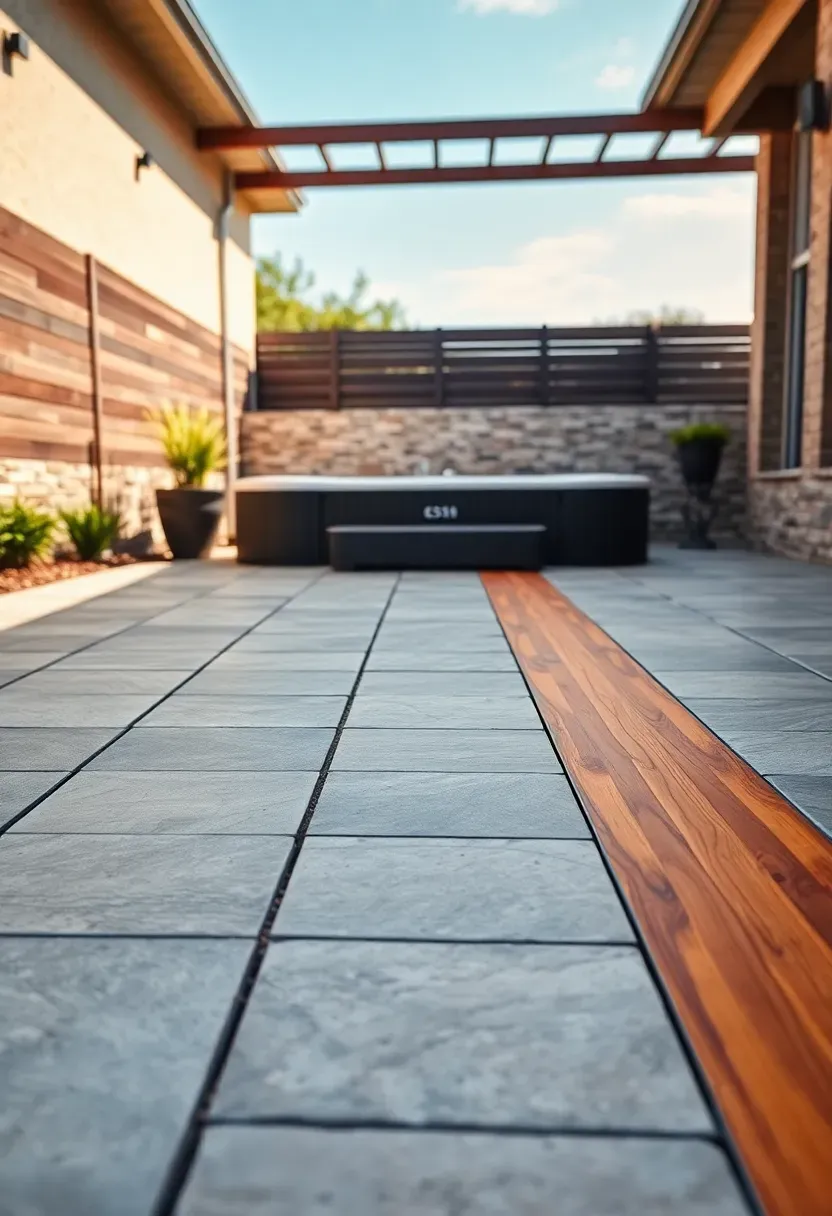
20. Stamped Concrete with Wood Inlay
Stamped concrete gives you a stone or slate look at concrete prices — roughly $12-18 per square foot including color and sealer. Breaking up the concrete field with 12-inch-wide strips of wood decking every 4-5 feet adds warmth and prevents the surface from reading as one monotonous slab. The wood strips also serve as control joints, letting the concrete expand and contract without random cracking. Use composite lumber for the inlay strips since they sit in direct contact with concrete and water.
Watch Out For
- The concrete contractor and the deck installer need to coordinate sequencing — wood strips install after concrete cures
- Seal stamped concrete annually to maintain color and prevent surface scaling
- Choose a stamp pattern that complements rather than competes with the wood grain
Recommended
Items for this idea
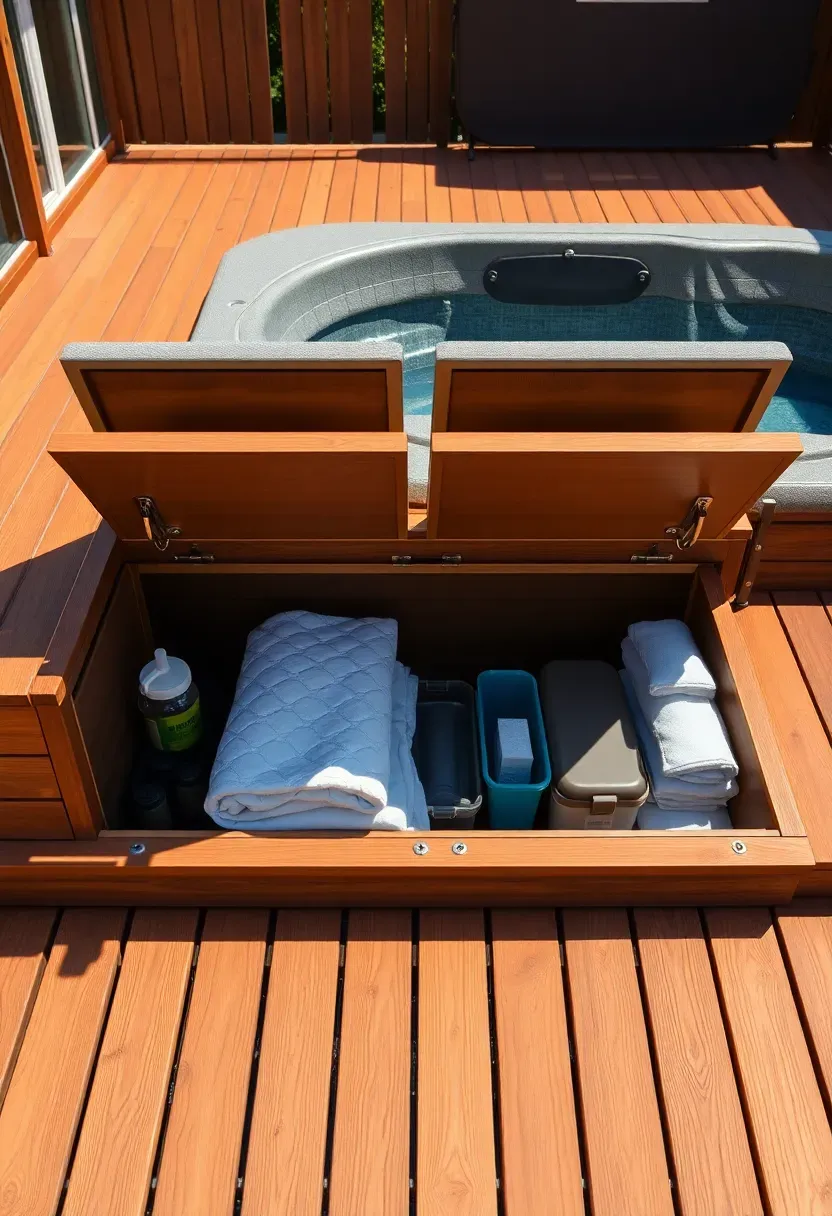
21. Raised Deck with Built-In Storage
A raised deck creates dead space underneath that is too useful to waste. Build hinged bench seats along the deck perimeter that open to reveal storage for spa chemicals, pool noodles, towels, and the thermal cover when it is folded. Size the storage cavities at least 18 inches deep and line them with weather-resistant fabric to keep contents dry. The benches double as seating — guests use them without knowing they are sitting on a supply closet. This is the most practical layout for small yards where a separate storage shed is not an option.
Tips
- Use marine-grade piano hinges on bench lids for smooth operation and rust resistance
- Add a small pneumatic lid support so the bench stays open while you rummage inside
- Ventilate the chemical storage section with small screened openings to prevent fume buildup
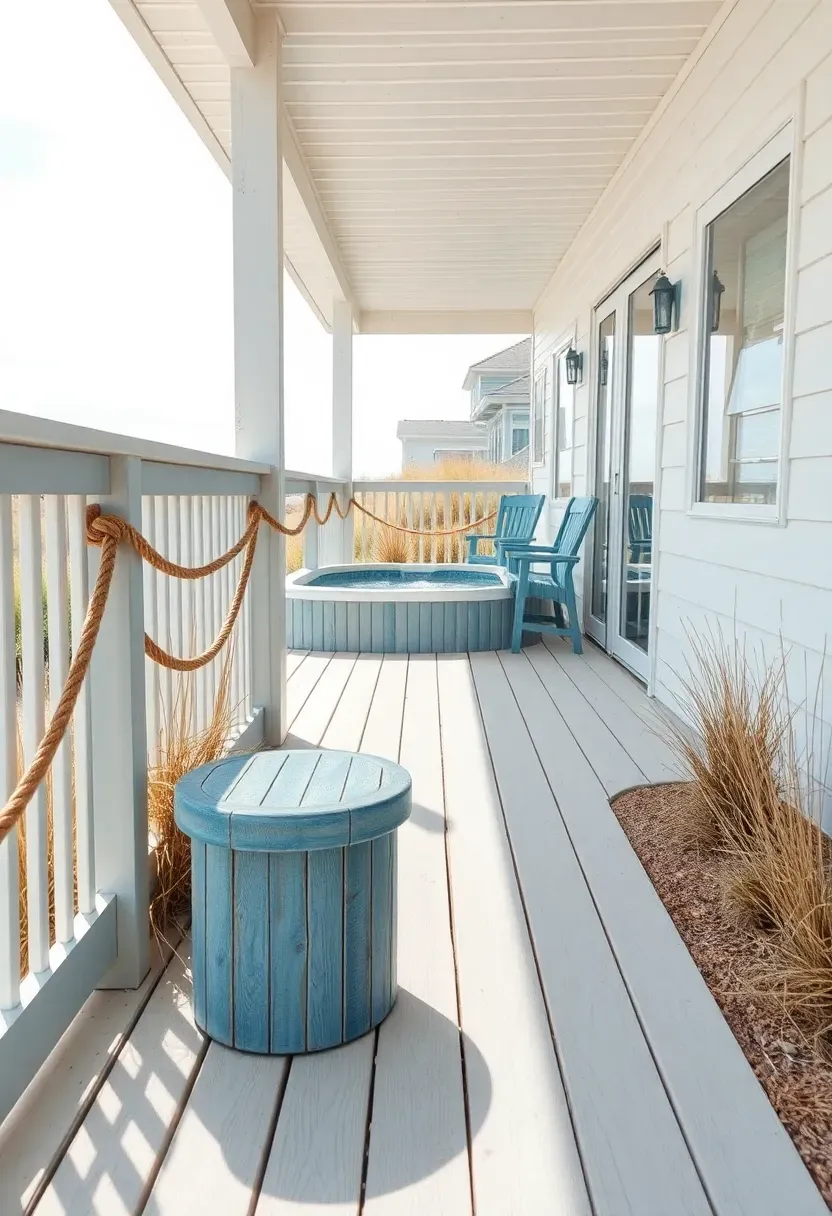
22. Coastal-Style Whitewashed Deck
A whitewash finish on pine or cedar decking gives that faded, sun-bleached look you see at beach houses. Mix exterior white stain at 50% with water, brush it on, and wipe off the excess with a rag before it dries. The wood grain shows through with a pale, chalky tone. Pair the deck with rope-wrapped posts, galvanized steel hardware left unpolished, and weathered blue or gray accents. Plant dune grass (Ammophila breviligulata) or blue fescue in the deck perimeter beds. The whole package says coast without being a theme park about it.
Tips
- Reapply the whitewash every 18-24 months as foot traffic wears the high spots
- Use stainless steel nails and screws — the salt-air aesthetic should not come with actual corrosion
- Add a teak or eucalyptus accent table to break up the white palette
Recommended
Items for this idea
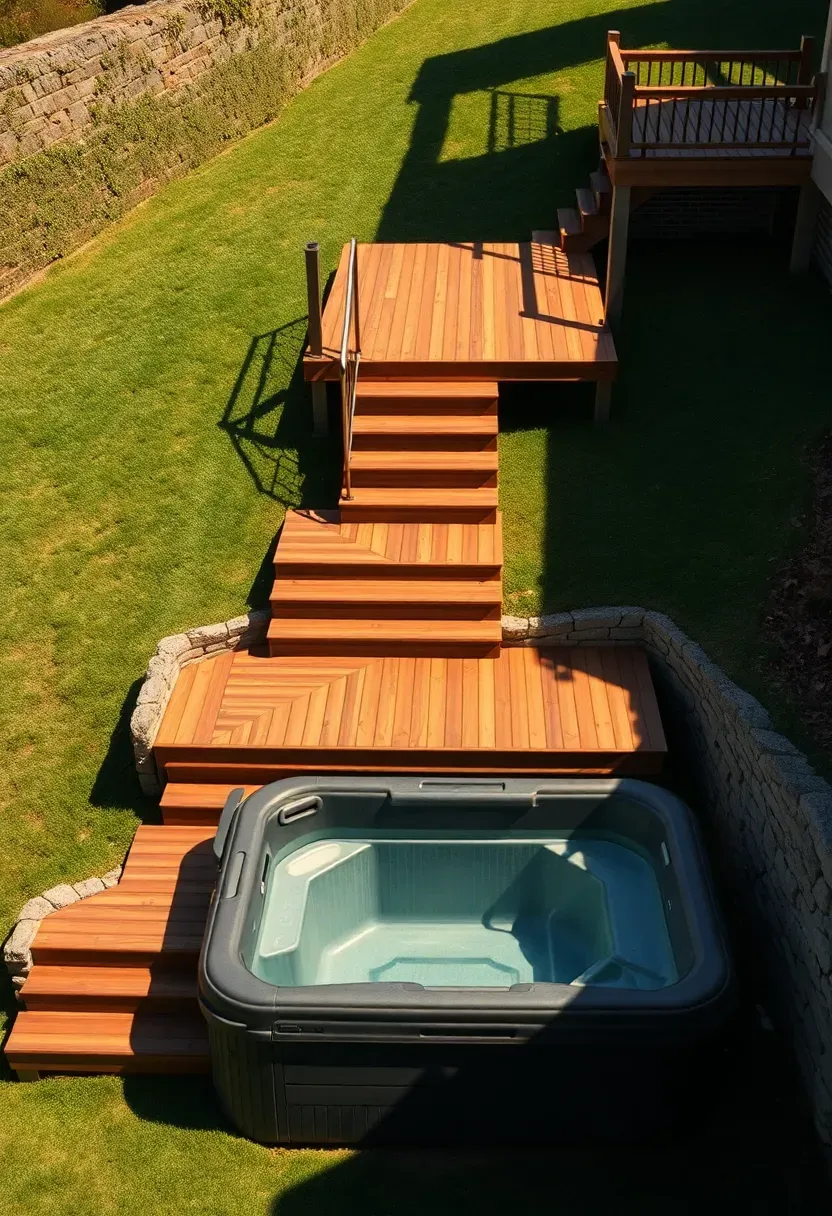
23. Hillside Terraced Deck
How It Differs From a Simple Slope Build
A cantilevered deck fights the slope. A terraced deck works with it. Instead of extending one platform outward, you build three or four smaller platforms stepping down the hill at natural grade changes. The swim spa sits at the lowest level where water delivery and drainage are easiest. Each terrace is only 2-3 steps below the one above, so the individual platforms can be ground-level builds without tall post structures.
Practical Steps
- Survey the slope and mark natural flat spots or inflection points
- Build each terrace as an independent floating deck on its own gravel pad
- Connect terraces with wide steps (48 inches minimum) built from matching deck material
- Position the spa terrace with a 2% slope away from the spa for surface drainage
Choose This If
- Your backyard drops more than 6 feet from house to property line
- You want multiple outdoor rooms rather than one large deck
- Budget allows phased construction — build one terrace at a time over multiple seasons
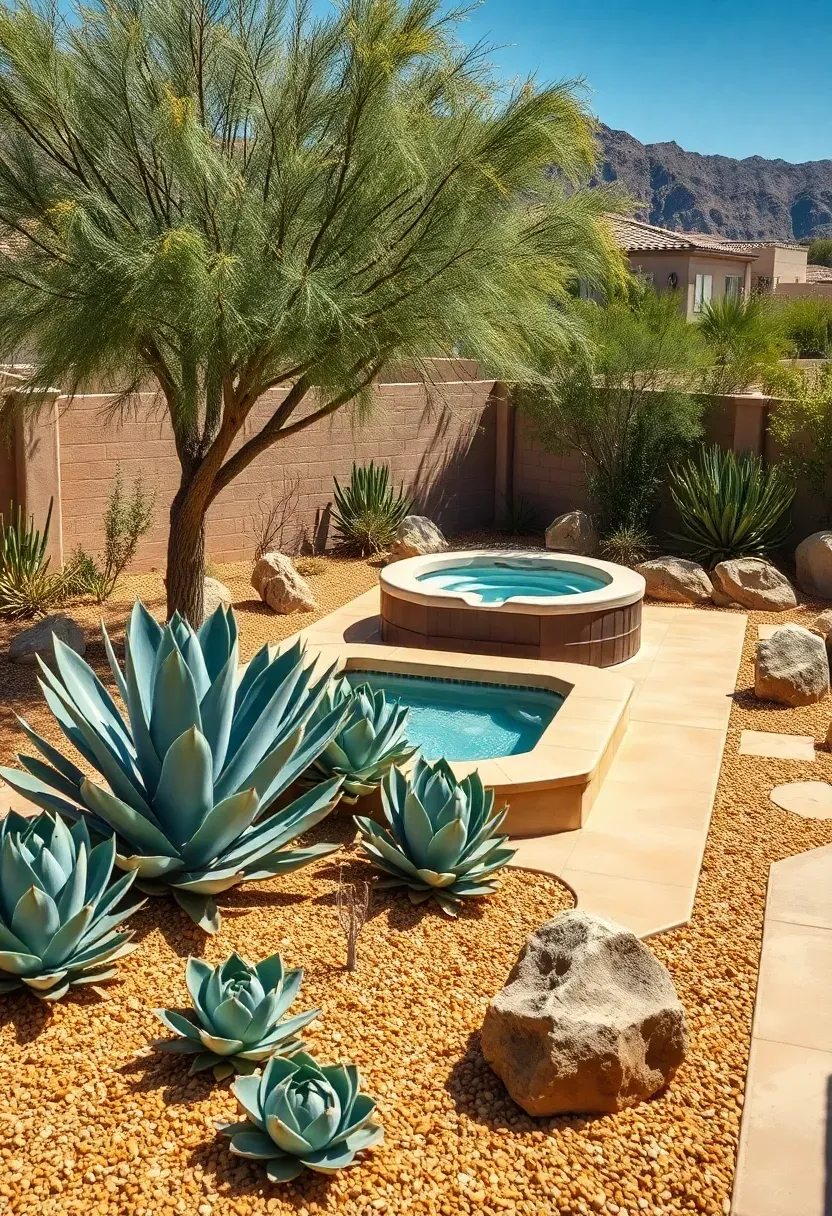
24. Desert Xeriscape Deck Surround
In the Southwest, grass around a swim spa is a water bill disaster. Replace turf with decomposed granite (DG), decorative gravel, and drought-tolerant plantings — agave, yucca, desert spoon, and palo verde trees. The deck itself should be composite or aluminum; natural wood dries out and cracks quickly in low-humidity climates. Keep the deck footprint compact and let the xeriscape fill the rest of the yard. The contrast between the blue swim spa water and the warm desert tones of gravel and terracotta creates a strong visual effect without any effort.
Tips
- DG compacts firm enough for foot traffic at 3 inches deep over landscape fabric
- Leave 18 inches of clearance between spiny plants (agave, cactus) and the deck edge for safety
- Use a light-colored composite to reduce surface temperature — dark boards in Phoenix sun can exceed 150 degrees F
Recommended
Items for this idea
25. Smart Deck with LED Integration
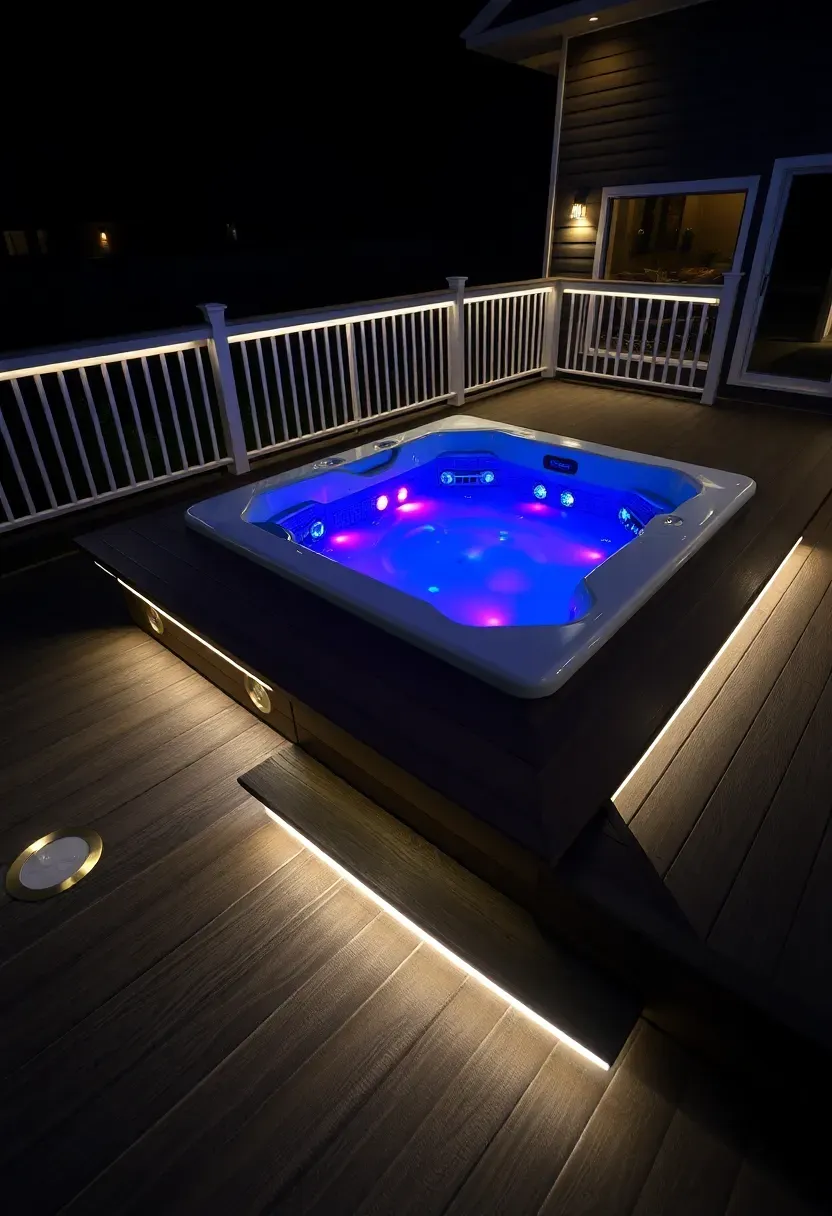
Recessed LED deck lights transform the swim spa area after dark without the harsh glare of floodlights. Install low-voltage fixtures in the stair risers, along the deck perimeter, and in the fascia board facing the spa. Most LED deck light kits run on 12-volt transformers with smartphone control for color and dimming. Pair the deck lighting with the swim spa's built-in LED jets for a coordinated color scheme. Add waterproof LED strip lights under the deck cap rail for a soft glow that outlines the entire platform.
Steps
- Plan the lighting layout before deck construction — running wire is ten times easier during framing
- Install a low-voltage transformer rated for the total wattage plus 20% headroom
- Use IP67-rated fixtures for anything within 5 feet of the water
- Connect to a smart controller (Lutron Caseta or similar) for phone-based scheduling and scene presets
Quick FAQ
How thick should a deck be to support a swim spa? A swim spa filled with water and people can weigh 12,000-15,000 pounds. The deck itself does not carry this load — the spa needs its own reinforced concrete pad or vault beneath it. The deck framing around the spa typically uses 2x10 or 2x12 joists at 12-inch centers with doubled beams at the spa perimeter.
Can I put a swim spa on an existing deck? Almost never without reinforcement. Most residential decks are designed for 40-50 pounds per square foot live load. A swim spa concentrates 150+ PSF in one area. Have a structural engineer evaluate your existing framing before placing any large water feature on a deck.
What deck material holds up best near a swim spa? Composite and PVC decking handle moisture, chlorine splash, and UV better than natural wood. Ipe and other tropical hardwoods also perform well but cost significantly more. Pressure-treated pine works on a budget but needs annual sealing and will show wear faster in the splash zone.
Do I need a permit to build a swim spa deck? In most US jurisdictions, yes. Any deck over 200 square feet or higher than 30 inches above grade typically requires a building permit. The swim spa electrical connection (usually 240V/50A) also requires an electrical permit and inspection. Check your local building department before starting work.
How far should a swim spa sit from the house? Most codes require a minimum 5-foot setback from the house wall for the water's edge. This distance allows access for maintenance and reduces moisture damage to the siding. Practically, 8-10 feet gives you room for a comfortable deck between the house and the spa.
A swim spa deck is half the experience of owning a swim spa. The right deck material, layout, and details determine whether the space gets used daily or just looked at through the kitchen window. Start with the practical constraints — your lot shape, slope, budget, and climate — and let those narrow down which of these 25 approaches fits. If you are working with a contractor, bring photos of three or four favorites from this list as a starting point for the conversation. If you are building it yourself, the floating deck and modular tile options are the most forgiving first projects.
Pinterest cover for 25 Backyard Swim Spa Deck Ideas
About the author
OBCD
CGI visualization and interior design content. We create detailed 3D renders and curate practical design ideas for every room in your home.