17 Backyard Seating Ideas for Any Budget
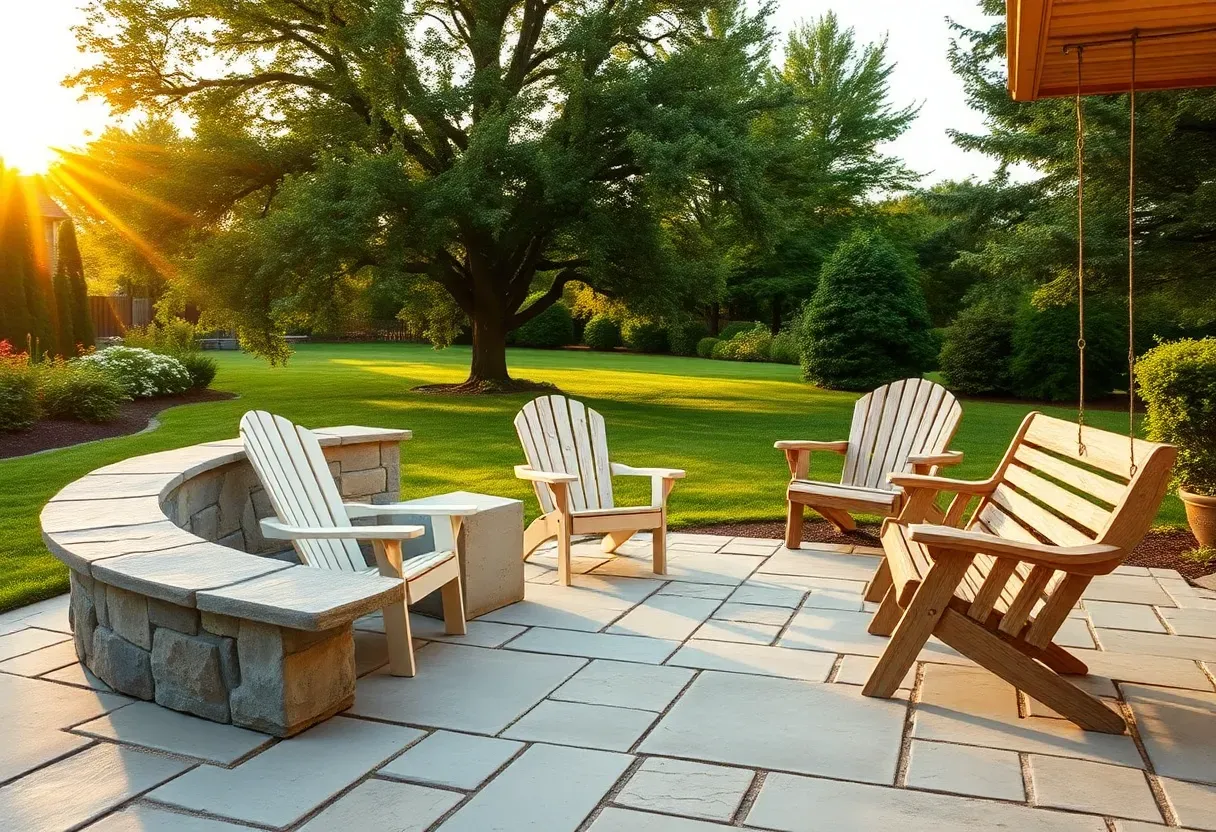
Last summer I dragged a pair of old dining chairs onto the back patio and realized how much time I had been wasting indoors. The chairs were terrible — hard seats, wobbly legs, zero weather resistance — but just sitting outside changed the whole evening routine. That experience kicked off months of testing different backyard seating setups across budgets, materials, and yard sizes. Some ideas cost nothing. Others require a contractor. All of them made the yard a place people actually wanted to be. Here are 17 backyard seating ideas worth considering, with honest notes on comfort, durability, and what each one really costs.
Below you will find options organized from simple drop-in furniture to permanent built-in structures, covering different materials and price ranges.
Table of Contents
- Adirondack Chairs on Gravel Pad
- Built-In Stone Bench
- Hammock Between Trees
- Pallet Sofa with Cushions
- Curved Fire Pit Bench
- Hanging Egg Chair
- Dining Table and Chairs Set
- Daybed Lounge
- Tree Stump Stools
- Pergola Swing Bench
- Low Deck with Floor Cushions
- Metal Bistro Set
- Gabion Bench
- Sectional Sofa on Paver Patio
- Rope Swing from Branch
- Sunken Conversation Pit
- Cinder Block and Timber Bench
1. Adirondack Chairs on Gravel Pad
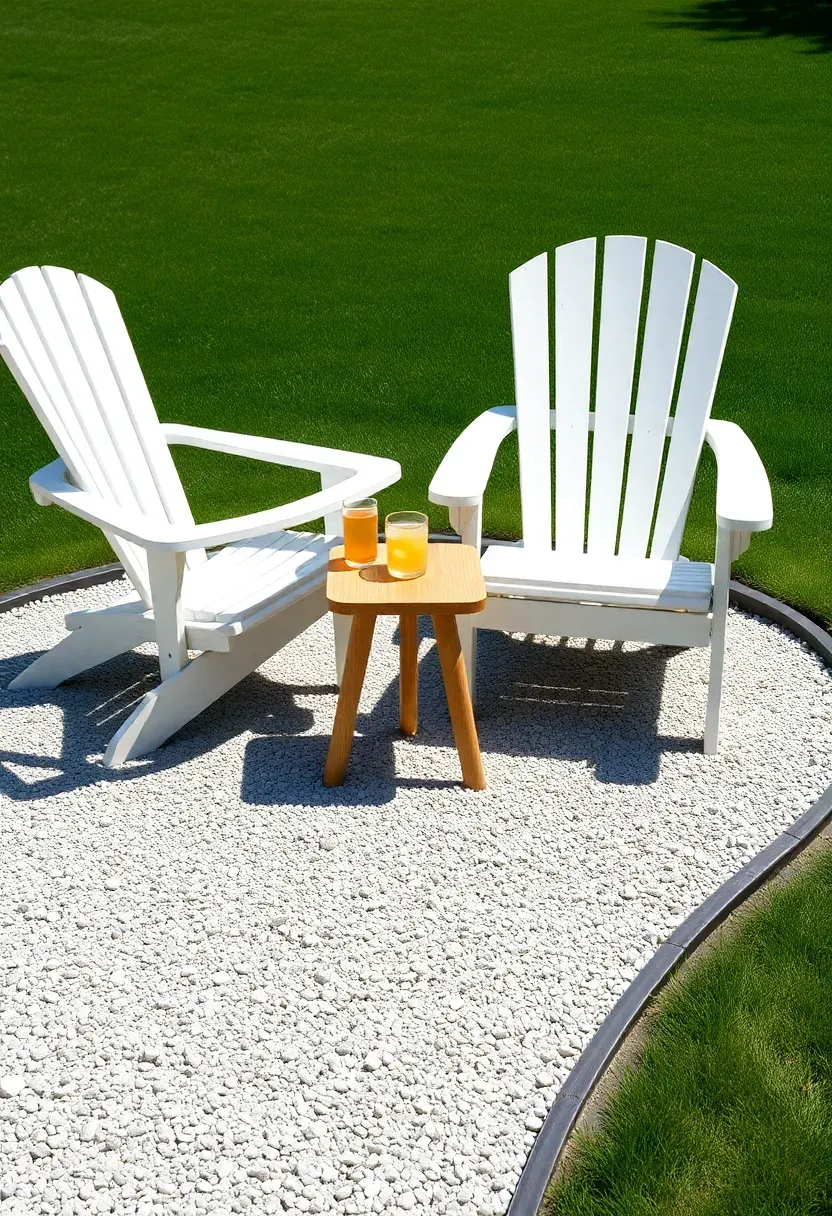
Adirondack chairs work in almost any yard because the wide armrests, reclined angle, and low seat height hit that sweet spot between lounging and sitting upright. Polywood (recycled plastic lumber) versions run $150 to $300 per chair and handle rain, sun, and snow without maintenance. Cedar models cost less upfront but need oiling every year or two. The gravel pad underneath keeps chairs level on uneven ground and drains instantly after rain — no puddles under your seat. Lay landscape fabric first, frame the area with steel edging, and fill with 3/4-inch crushed stone about 4 inches deep. Total cost for a two-chair setup with gravel pad: roughly $400 to $700.
Tips
- Set chairs 30 inches apart measured from armrest to armrest for comfortable conversation distance
- Add a small cedar side table between chairs — it doubles as a plant stand when not holding drinks
- Choose a muted color like slate gray or forest green if you want the chairs to blend into the yard rather than dominate it
We picked a few things that go well with this idea: HDPE Folding Adirondack Chair Set (2-Pack) (★4.7), HDPE Folding Adirondack Chair with Cup Holder (★4.8) and Stackable HDPE Adirondack Chairs (2-Pack) (★4.6). As an Amazon Associate we earn from qualifying purchases.
2. Built-In Stone Bench
Why permanent seating works
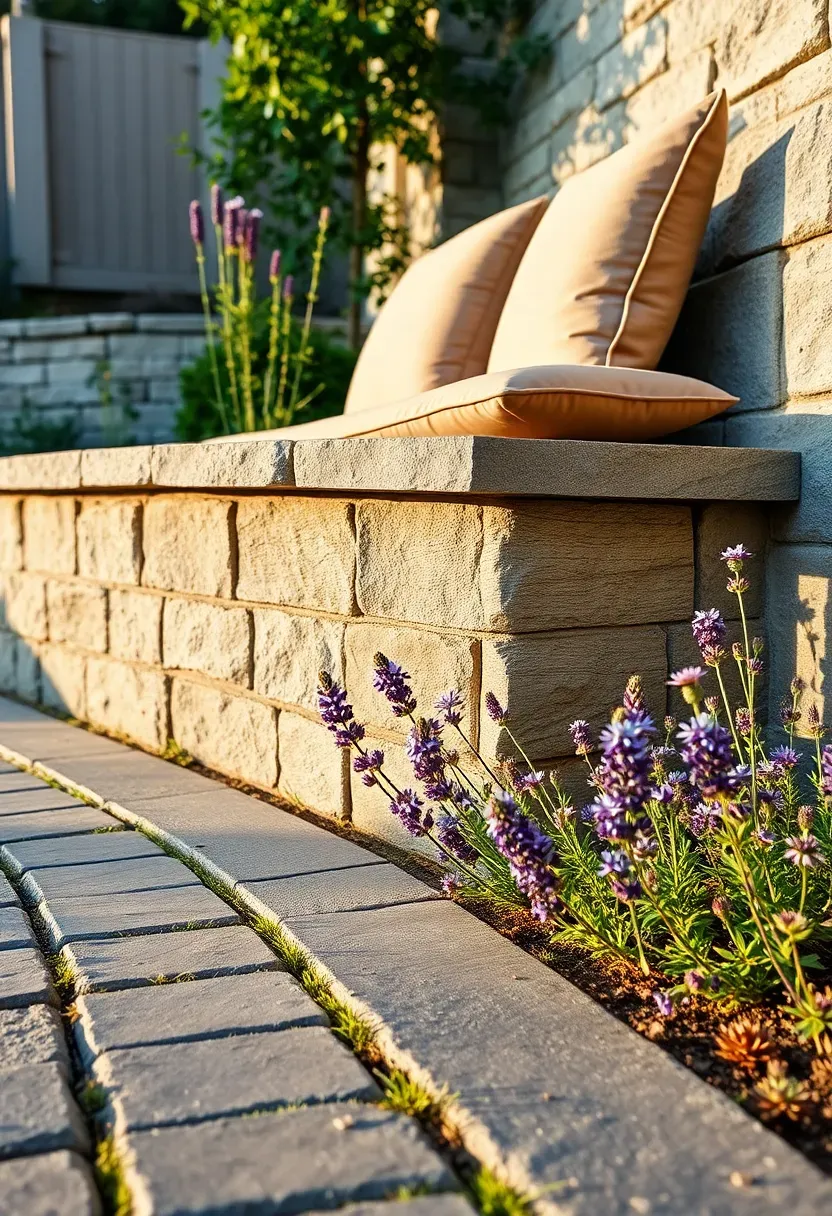
A stone bench built into a retaining wall or garden border gives you seating that never gets dragged around by wind, never needs storage in winter, and never looks out of place. Natural stone like bluestone or limestone on a concrete block core is the most common approach. The seat slab should overhang the wall face by 2 inches and be at least 2 inches thick to resist cracking.
The tradeoff
You gain permanence and visual weight but lose flexibility. Once it is built, the bench stays where it is. Seat height matters more than with movable chairs — 17 to 19 inches is comfortable for most adults. Without cushions, stone is hard and cold in early spring or late fall, so budget for weatherproof seat pads if you want three-season comfort.
Choose this if
- You want seating that doubles as a landscape feature
- Your yard has a retaining wall or raised bed that could incorporate a seat cap
- You prefer a clean, permanent look over a furniture arrangement that shifts weekly
We picked a few things that go well with this idea: LEX CRAFT Hanging Egg Chair with Stand (★4.6), NICESOUL Rattan Hanging Egg Chair with Cushion (★4.7) and LEVELEVE Rattan Wicker Egg Chair with Stand (★4.4). As an Amazon Associate we earn from qualifying purchases.
3. Hammock Between Trees
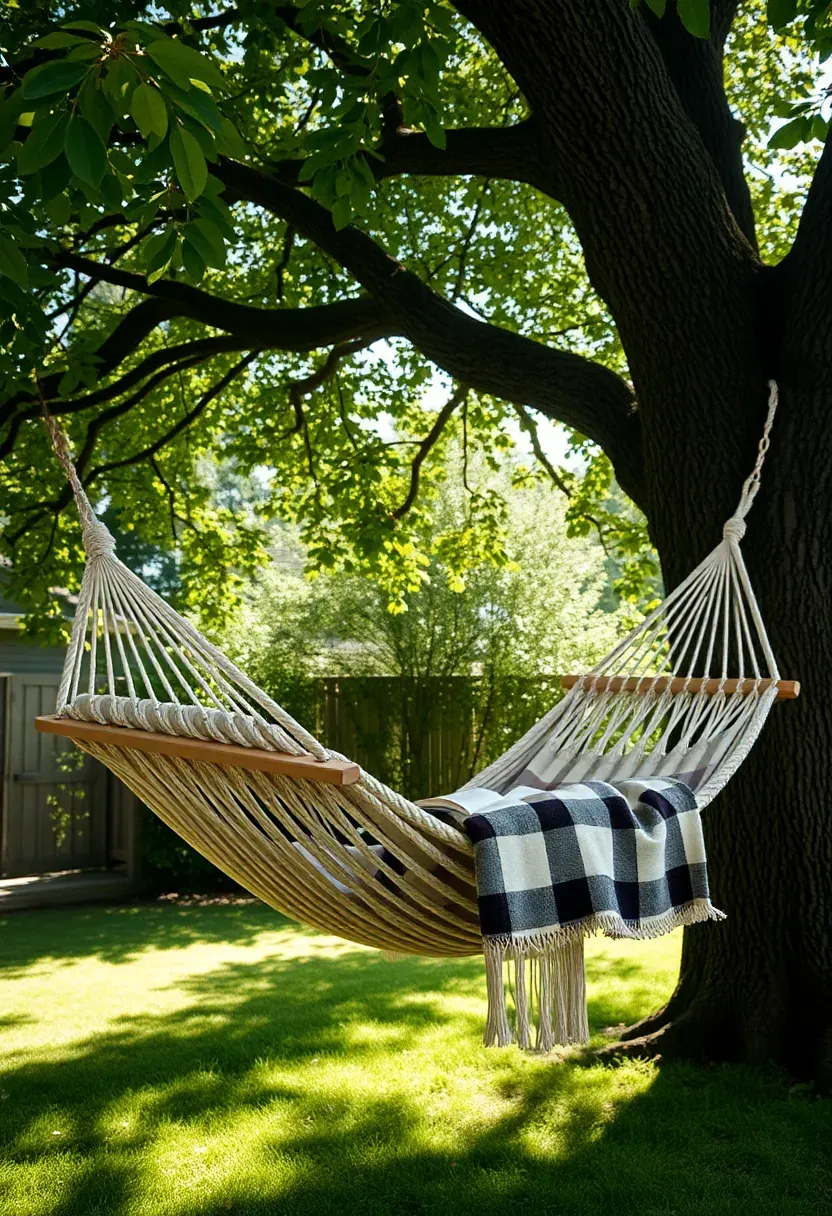
Two trees 12 to 15 feet apart with trunks at least 8 inches in diameter give you a free hammock frame. Quilted fabric hammocks ($40 to $100) suit warmer climates. Rope hammocks ($30 to $80) breathe better but leave grid marks on your skin after a nap. Mayan-style woven hammocks ($50 to $120) conform to your body shape and pack small. Use tree straps instead of hooks — straps distribute weight across 3 to 4 inches of bark surface instead of concentrating force at a single bolt point, which prevents long-term bark damage. Hang the hammock so the lowest point sits about 18 inches off the ground when loaded. No trees? A steel stand ($80 to $200) works anywhere but takes up more ground space.
Tips
- Hang the hammock with about 30 degrees of sag — too tight feels like a balance beam, too loose dumps you in the middle
- Position it where you get afternoon shade; full sun makes the fabric uncomfortably hot by 2 PM
- Bring the hammock inside or into a garage during extended rain to prevent mildew on cotton or quilted models
We picked a few things that go well with this idea: 4-Piece Wicker Patio Set with Fire Pit Table (★4.2), 5-Piece Patio Sectional with Fire Pit Table (★4.4) and Solaste 7-Seat Aluminum Patio Set with Fire Pit (★4.4). As an Amazon Associate we earn from qualifying purchases.
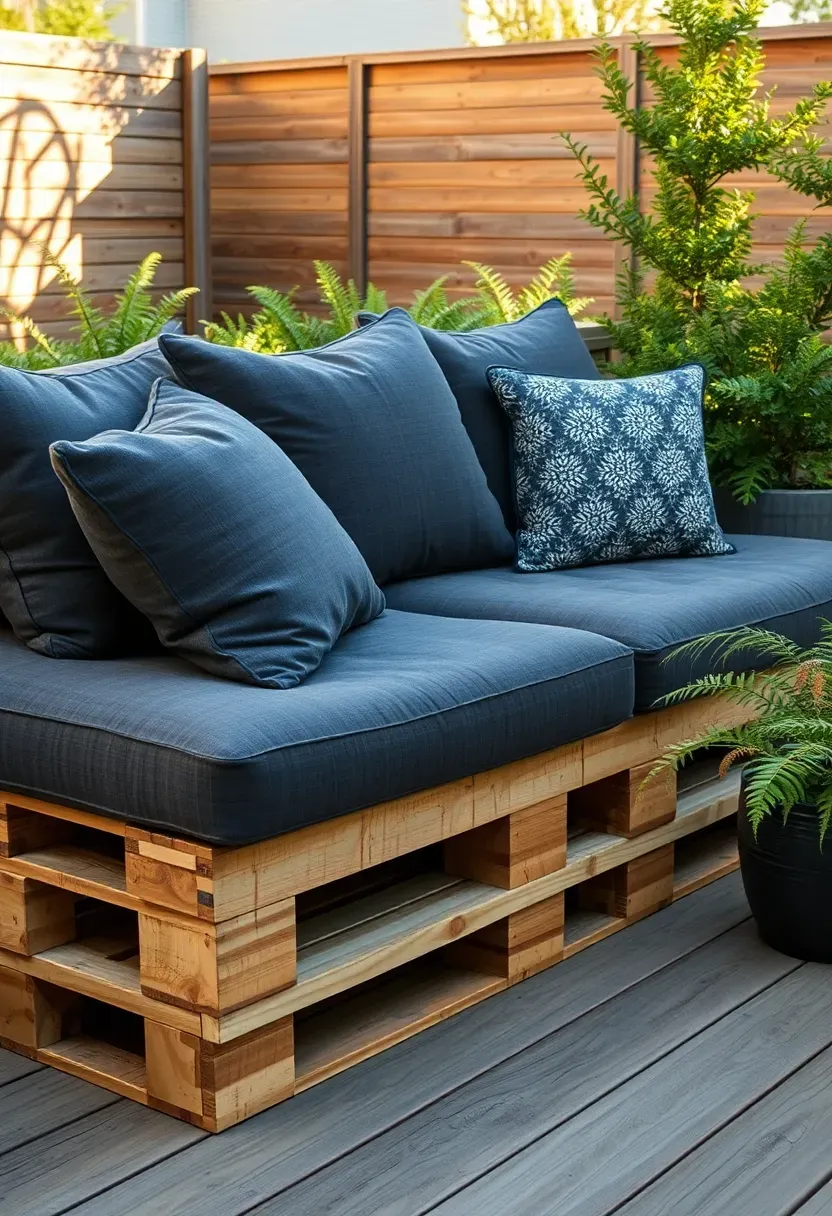
4. Pallet Sofa with Cushions
How to build one that lasts
Standard shipping pallets (48x40 inches) make a decent outdoor sofa base if you choose the right ones. Look for heat-treated (HT stamped) pallets rather than chemically treated (MB stamped) ones. Stack two pallets for seat height, secure them with 3-inch deck screws, and stand a third pallet vertically as the backrest. Sand every surface thoroughly — rough pallet wood catches fabric and skin.
What to expect
The frame itself costs almost nothing if you source pallets for free from warehouses or loading docks. The real expense is outdoor cushions, which run $150 to $300 for a full set of seat and back cushions in Sunbrella or similar solution-dyed fabric. Without quality cushions, a pallet sofa is just a splinter factory. With them, it is a legitimate conversation-starter that seats three comfortably. Expect 3 to 5 years of life from the pallet frame before the wood degrades, longer if you seal it with exterior deck stain.
Watch out for
- Pallets absorb ground moisture from below — set them on rubber feet or concrete pavers, never directly on soil
- The gaps between slat boards trap leaves, insects, and crumbs, making cleaning a constant chore
- Weight is substantial (about 100 pounds per finished section), so plan the location before building
Recommended
Items for this idea
5. Curved Fire Pit Bench
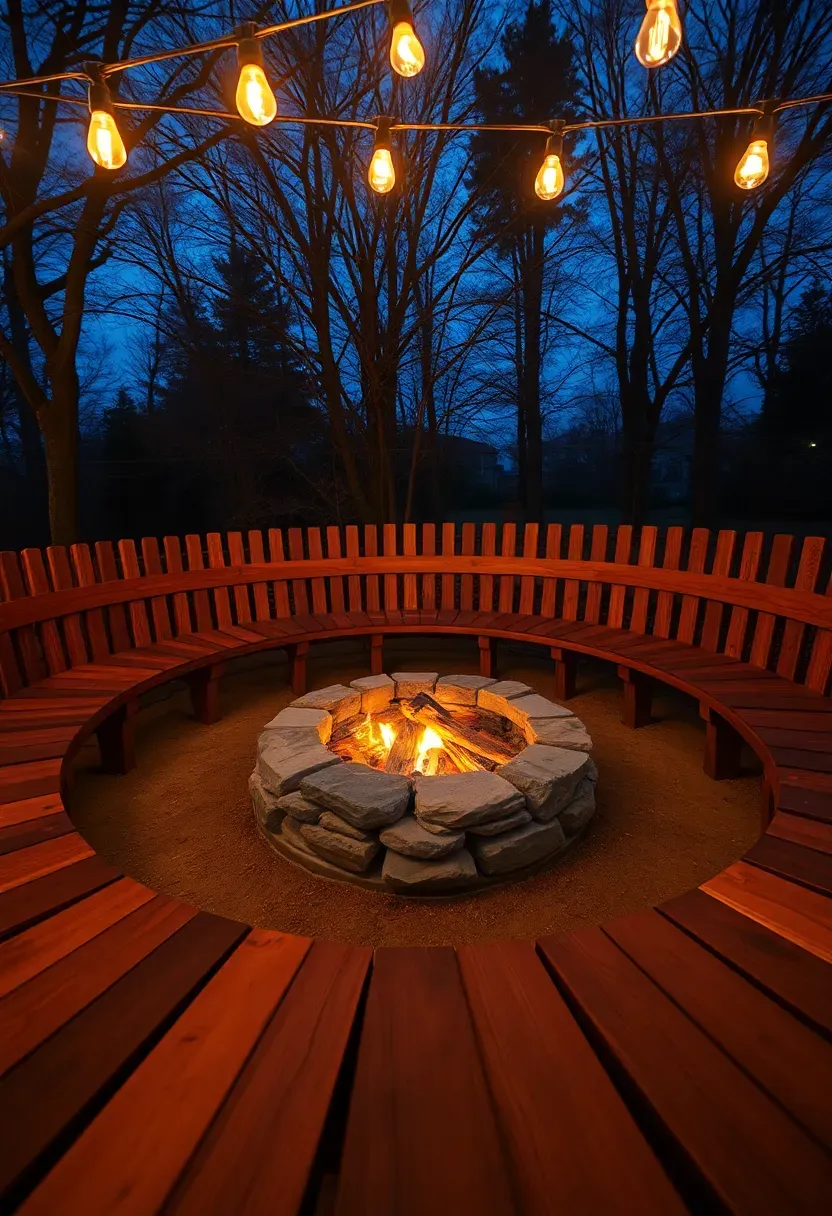
A curved bench around a fire pit creates a natural gathering spot where everyone faces the flames and each other. The curve should follow a radius 4 to 5 feet from the pit edge — close enough to feel warmth but far enough to avoid smoke and radiant heat on your shins. Cedar and redwood handle outdoor exposure well and cost $15 to $25 per board foot for bench-grade lumber. The typical curved bench uses three to five segments joined at slight angles, with each segment about 4 feet long. Seat depth of 16 to 18 inches gives enough room to sit comfortably without the bench feeling like a shelf. A backless design keeps sightlines open and lets people sit facing either direction.
Tips
- Seal the wood with a penetrating oil finish before the first use — film-forming finishes like polyurethane peel in outdoor conditions
- Set bench legs on buried concrete piers rather than directly on soil to prevent rot at the contact points
- Leave a 2-foot gap in the curve for entry and exit rather than making a full circle that traps people
6. Hanging Egg Chair
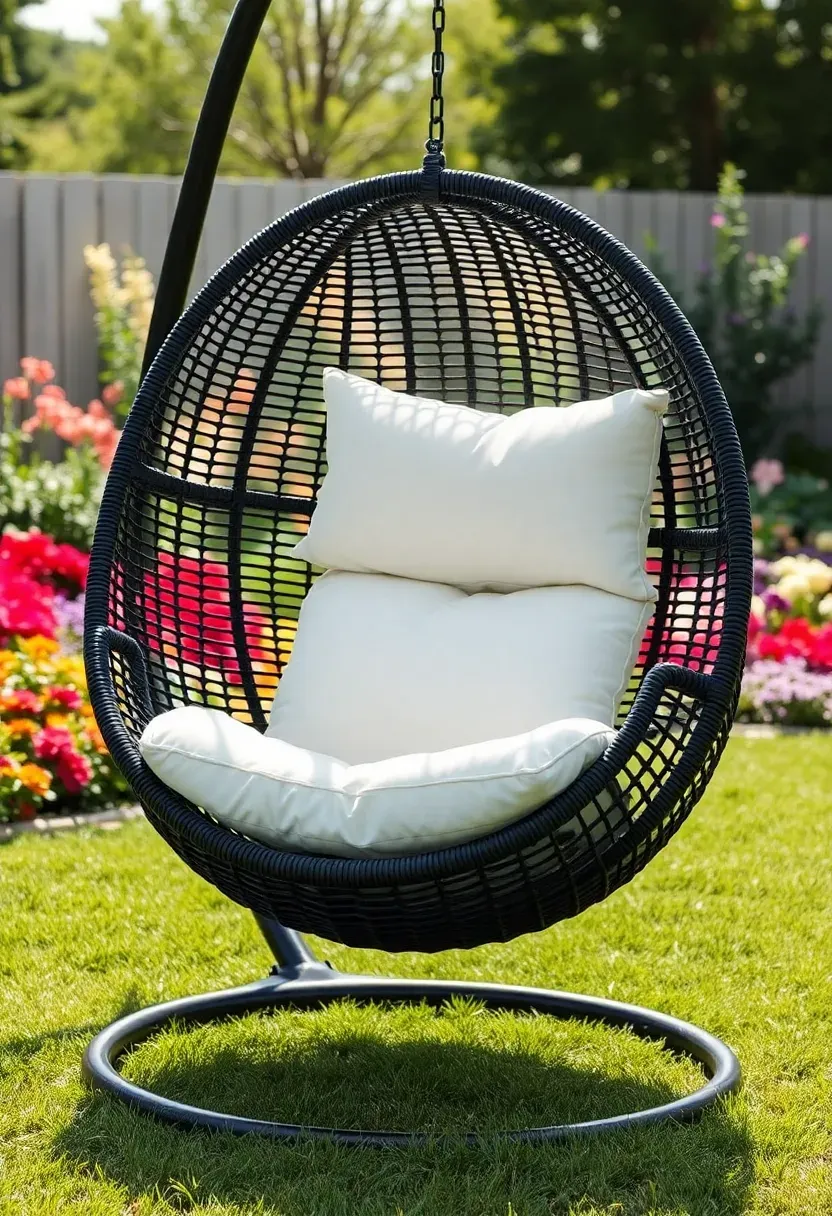
Hanging egg chairs became a backyard cliche for a reason: they are genuinely comfortable. The enclosed shape blocks peripheral distractions, the gentle swing motion is calming, and the deep seat lets you curl up in ways a regular chair does not allow. Synthetic rattan (PE wicker) frames handle weather without rotting and cost $250 to $600 with a stand. Indoor-only rattan versions look identical but fall apart in one rainy season. Weight capacity varies widely — check the rating and buy based on the heaviest person who will use it, not the average. A steel C-stand is the most practical mounting option unless you have a pergola beam rated for 300+ pounds of dynamic load.
Tips
- Test the chain length so the seat bottom sits about 20 inches off the ground — too high makes it hard to get in and out
- Add a small outdoor rug underneath to catch the swing motion's footprint and protect grass from wear
- Store the cushion indoors when not in use; even Sunbrella fabric develops mildew if left wet for days
Recommended
Items for this idea
7. Dining Table and Chairs Set
Picking the right material
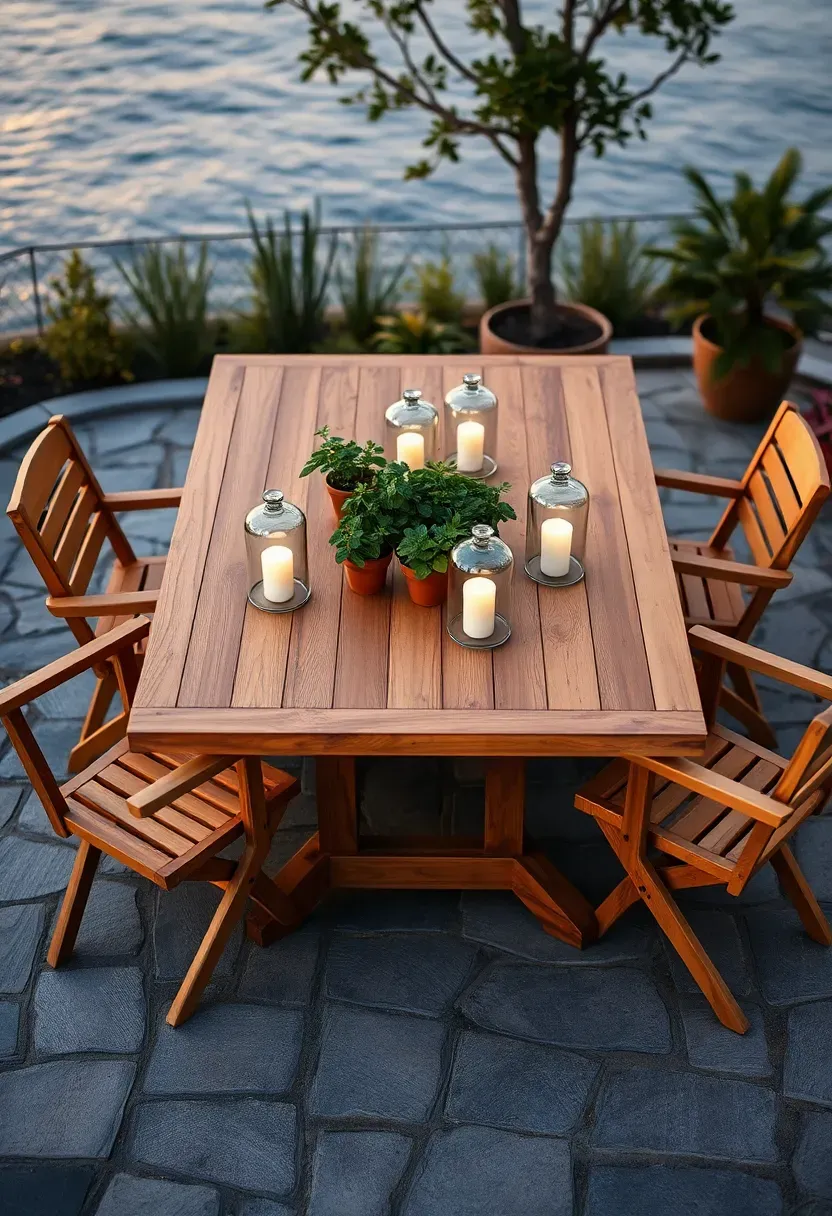
Teak is the gold standard for outdoor dining furniture — naturally oily wood that resists rot and insects without treatment. A six-seat teak set costs $1,200 to $3,000. Eucalyptus offers similar durability at about 60% of the price. Aluminum frames with synthetic wood slats weigh less and cost $400 to $900 but lack the warmth of real wood. Avoid steel frames in humid climates unless they are powder-coated and treated for rust.
Sizing the table
Allow 24 inches of table width per person and 30 inches of depth for place settings plus serving dishes in the center. A 72x36-inch rectangle seats six comfortably. Leave 36 inches of clearance on all sides for chair pullout — this is the detail most people miss, cramming a too-large table onto a too-small patio.
Recommendation
- For year-round outdoor use: teak or eucalyptus with annual oiling
- For seasonal use (brought inside in winter): aluminum frame with wood-look slats saves money and weight
- For budget-conscious: a pressure-treated pine farmhouse table built from 2x lumber costs under $200 in materials
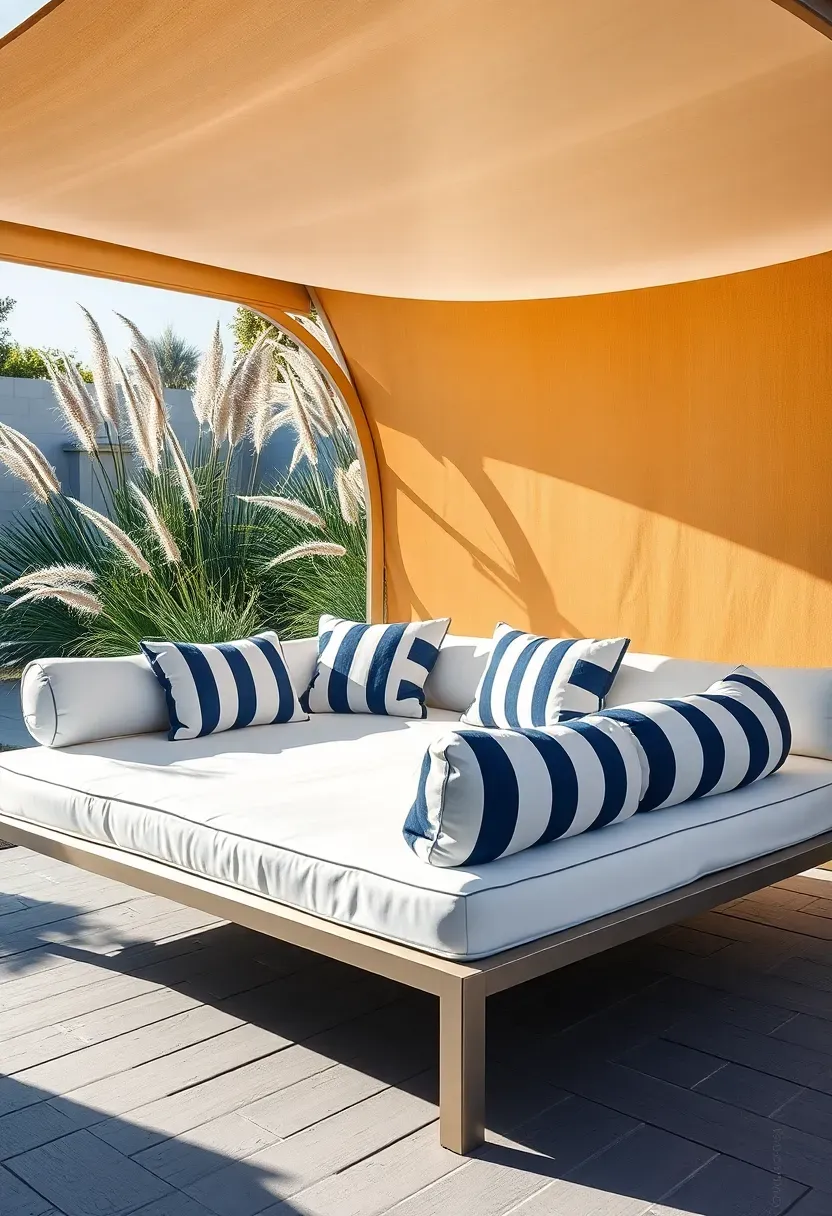
8. Daybed Lounge
An outdoor daybed is a commitment to doing nothing, and that is exactly the point. These are large — typically 6 to 7 feet long and 4 to 5 feet deep — so they need a dedicated space on a deck or patio. Aluminum-frame daybeds with Sunbrella mattress pads run $800 to $2,000. Teak versions cost more. The canopy or shade element is practically required; lying horizontal in direct sun gets uncomfortable fast. A retractable fabric canopy on an arched frame is the most common solution. Some designs include side curtains for privacy and wind protection, turning the daybed into a semi-enclosed cabana.
Tips
- Position the daybed where you get morning sun and afternoon shade for the widest usable window
- Use a fitted waterproof cover underneath the decorative cushion fabric — it protects the foam core from rain that soaks through
- Bolt the frame to the deck surface in windy areas; a daybed canopy acts like a sail in strong gusts
Recommended
Items for this idea
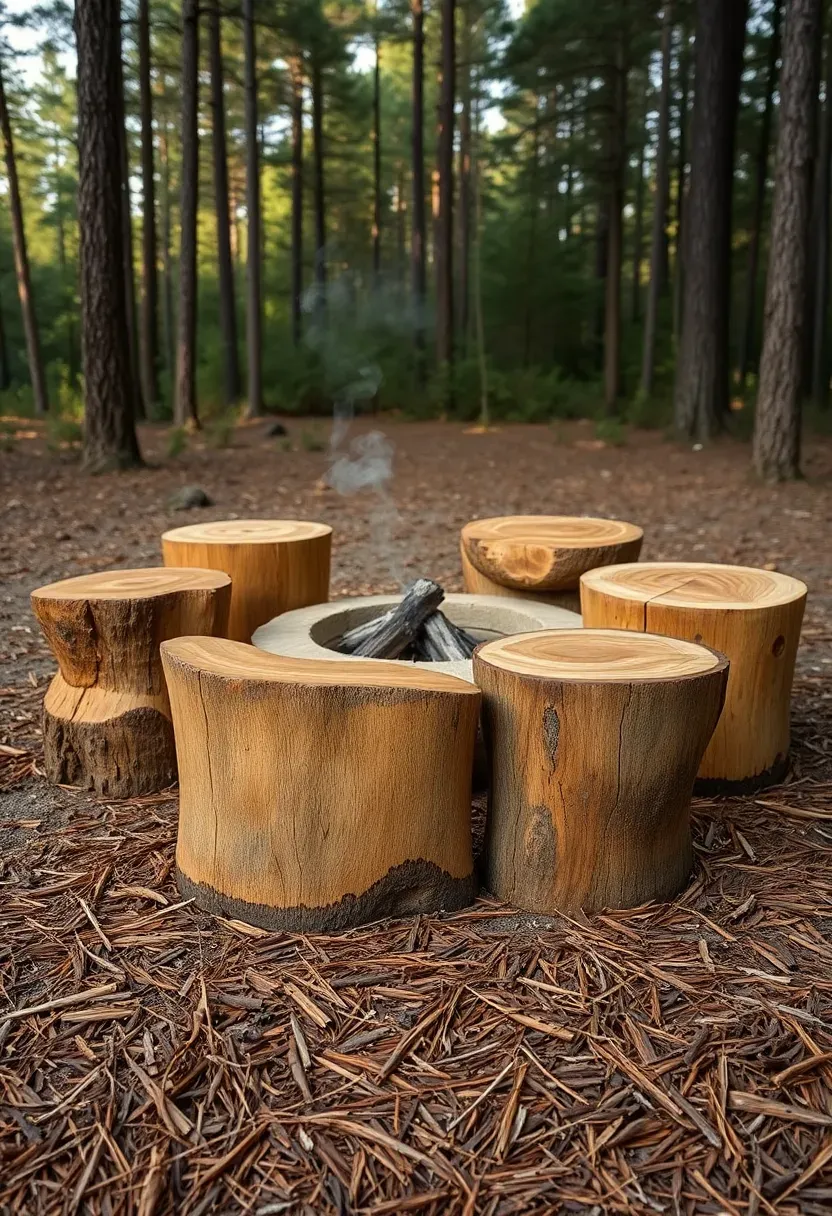
9. Tree Stump Stools
If you have access to freshly cut hardwood logs, stump stools cost nothing except the effort of cutting and moving them. Slice a trunk into 18-inch-tall sections (standard seat height) using a chainsaw, then let the rounds dry for 6 to 12 months in a covered area before sealing. Green wood cracks as it dries, and the splits worsen if you seal too early. Oak, maple, and walnut produce the most durable stools. Once dry, sand the top surface, apply two coats of exterior polyurethane or spar varnish, and you have a seat that weighs 30 to 60 pounds and survives decades outdoors. The weight is actually useful — wind does not move them, and they double as side tables. Arrange five or six around a fire pit for a camp-style setup that looks intentional.
Watch out for
- Bark left on the sides will eventually loosen and harbor insects — strip it during the drying phase
- Level the bottom with a belt sander or by cutting a flat base so the stool does not rock
- Place stumps on gravel or pavers, not bare soil, to prevent moisture wicking into the end grain
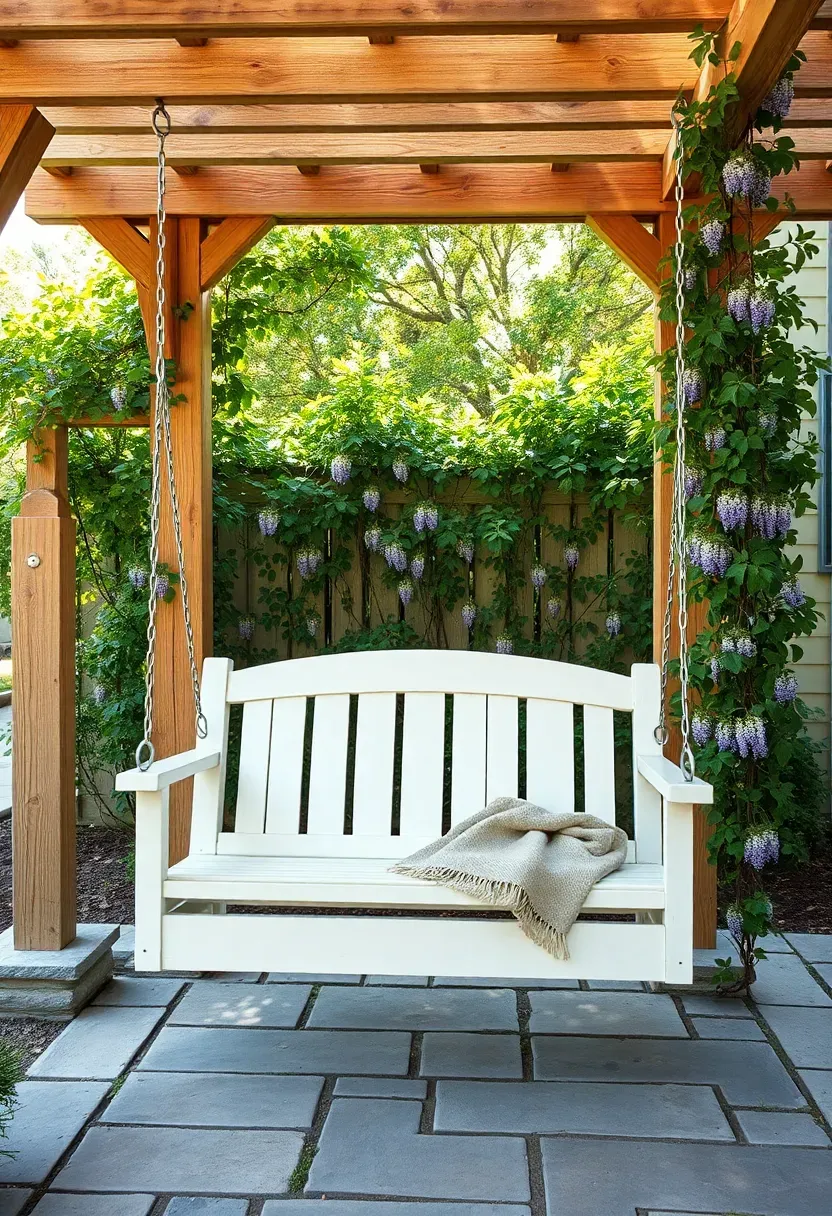
10. Pergola Swing Bench
A swing bench hanging from a pergola beam combines two outdoor features into one. The pergola provides shade and vertical structure; the swing provides motion and a reason to sit still for an hour. The beam needs to be at least a 6x6 or doubled 2x8 to support 500+ pounds of dynamic load (two adults swinging creates more force than two adults sitting still). Hanging hardware matters — use heavy-duty eye bolts with backing plates, not screw hooks. A 5-foot swing bench seats two adults and costs $150 to $400 for a wooden version, $200 to $600 for a Polywood model. Chain length should position the seat 18 to 20 inches off the ground. Allow 4 feet of clear space behind and in front of the swing for arc travel.
Tips
- Attach chains to the outer thirds of the seat, not the ends, to prevent the swing from tipping sideways when one person shifts weight
- Apply a coat of paste wax to chain links annually to prevent squeaking at the eye bolt connection
- Install the swing on the side of the pergola that faces the yard, not the house wall, so you have something to look at while swinging
Recommended
Items for this idea
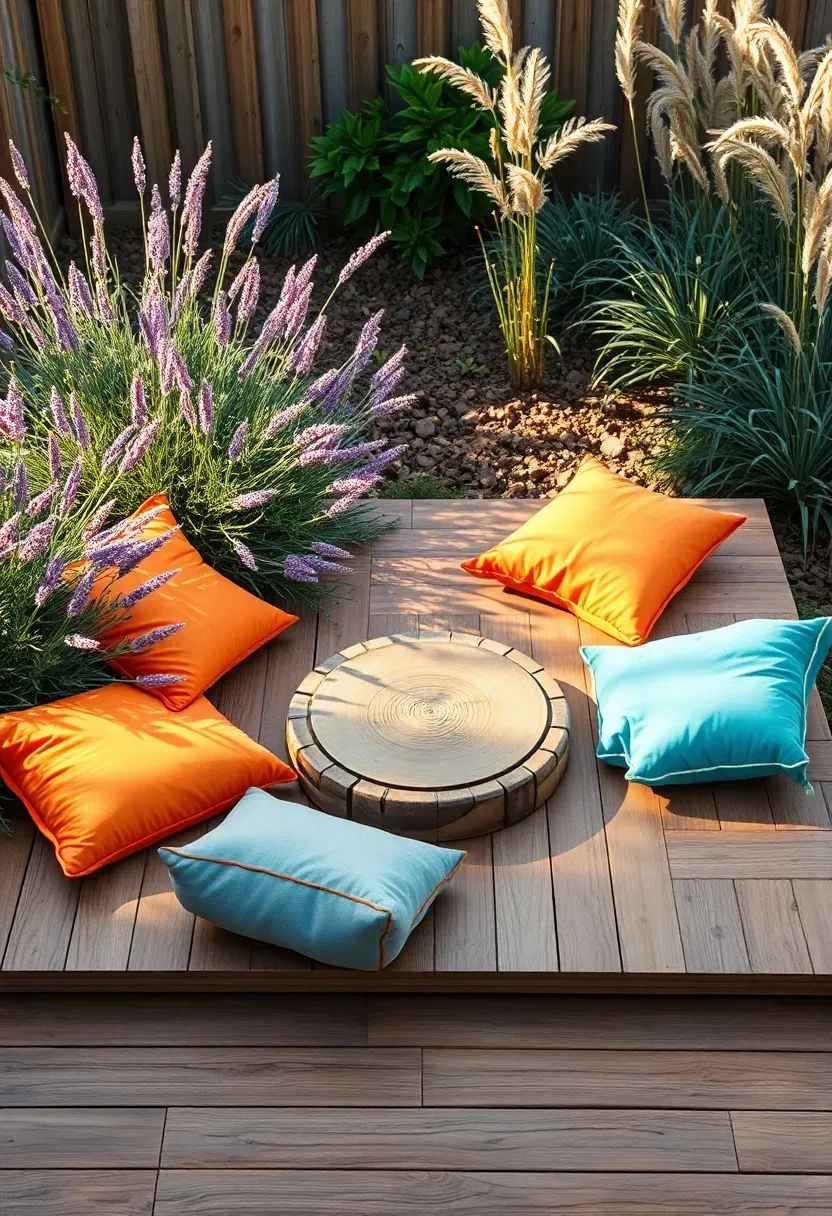
11. Low Deck with Floor Cushions
The concept
A ground-level deck — 6 to 12 inches off the soil — creates a flat, dry surface in any part of the yard without the cost or permits of a raised deck. Frame it with pressure-treated 2x6 joists on concrete deck blocks (no digging required) and surface it with composite or cedar decking. A 10x10-foot platform costs $500 to $1,200 in materials depending on decking choice.
Making it work as seating
Scatter oversized floor cushions (24x24 inches or larger), a few bolster pillows, and a low coffee table 12 to 16 inches tall. The Japanese-inspired floor seating works better than you might expect for casual gatherings. The key is cushion thickness — at least 4 inches of dense foam wrapped in outdoor fabric. Thin cushions bottom out on the hard deck surface within minutes.
Watch out for
- Store cushions in a deck box or indoor bin when not in use — even waterproof covers can not prevent mildew if cushions stay damp for days
- Weed barrier fabric under the deck prevents grass from growing through the gaps and pushing against the joists
- This setup works best for adults under 40 or anyone comfortable getting up from the ground; add a nearby bench or chair for guests who need it
12. Metal Bistro Set
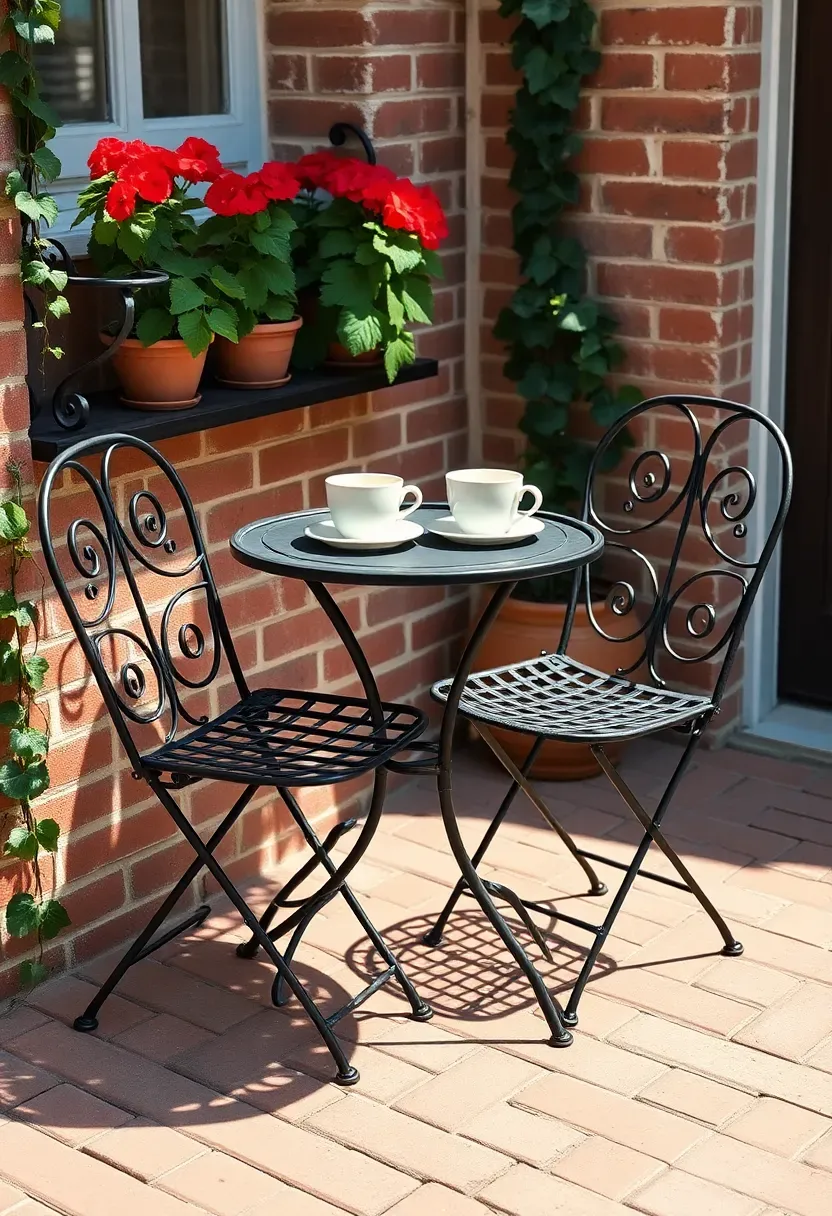
A bistro set — one small round table and two folding chairs — is the minimum viable backyard seating arrangement. It fits in spaces where nothing else works: a narrow side yard, a small concrete pad, or the corner of a shared patio. French-style steel sets (powder-coated or zinc-plated) cost $100 to $300 and fold flat for winter storage. The table diameter is usually 24 to 28 inches, big enough for two coffee cups and a plate of food but not much more. That constraint is actually helpful — it keeps the setup compact and forces you to use the space for what it does best: morning coffee, a quick lunch, or a glass of wine after work. Iron sets weigh more and rust faster but have a heavier, more grounded feel.
Tips
- Apply clear paste wax to bare metal surfaces twice a year to slow rust development at chip or scratch points
- Add a 2x3-foot outdoor rug under the set to define the seating area and prevent chair legs from sinking into soft ground
- Choose a table with a center hole for a patio umbrella if the spot gets direct afternoon sun
Recommended
Items for this idea
13. Gabion Bench
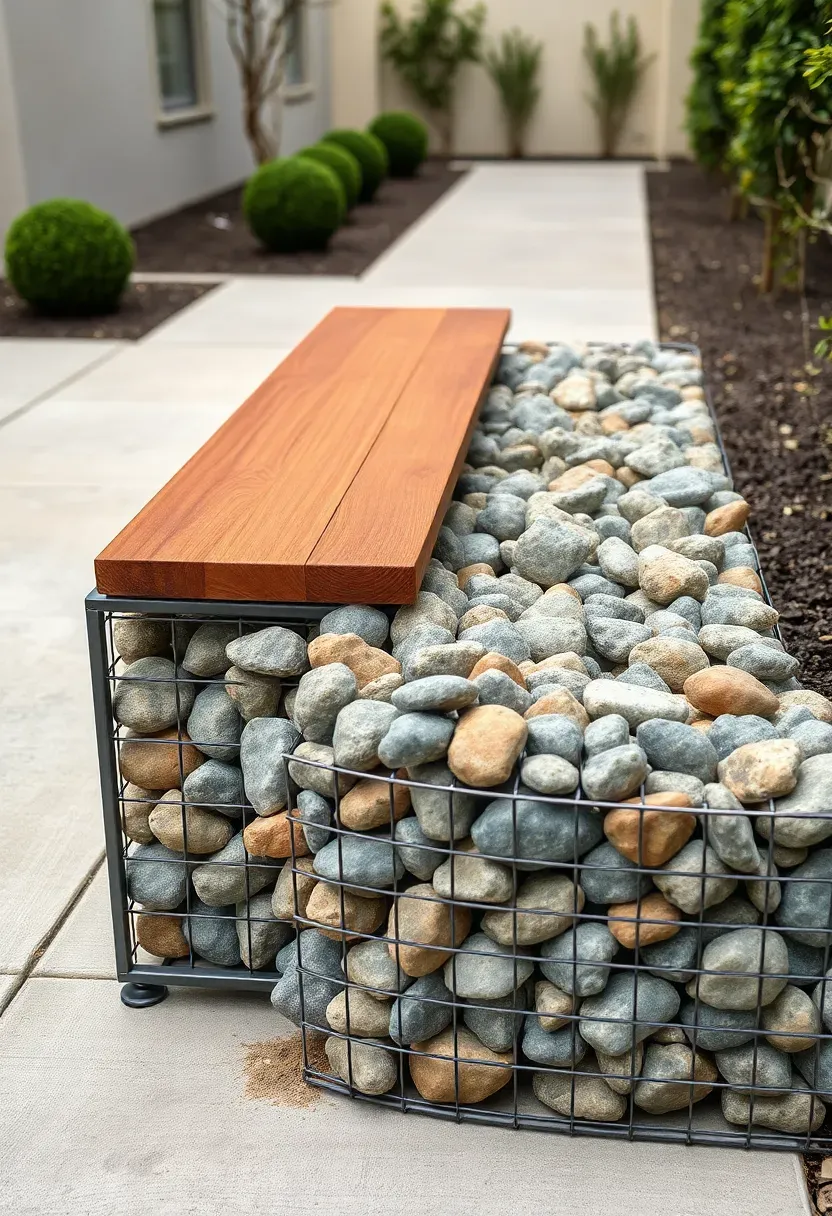
Gabion cages — the same wire mesh boxes used for retaining walls — make surprisingly good bench bases. Fill two cages (each about 18 inches tall, 18 inches wide, and 36 inches long) with river rock, crushed stone, or reclaimed brick, then lay a thick hardwood plank or concrete slab across the top as a seat surface. The stone-filled cages weigh hundreds of pounds, so the bench stays put in any weather. Material cost is low: about $30 to $50 per cage, $50 to $100 for stone fill, and $40 to $80 for a quality seat plank. The industrial texture of stone behind wire mesh pairs well with concrete patios, modern gardens, and contemporary architecture. It reads as intentional design rather than improvised furniture.
Tips
- Use a seat plank at least 2 inches thick — thinner boards flex and bounce under body weight
- Round or chamfer the plank edges so they do not dig into the backs of your thighs
- Leave a 1-inch overhang on each end of the plank to make it easier to grip when repositioning
14. Sectional Sofa on Paver Patio
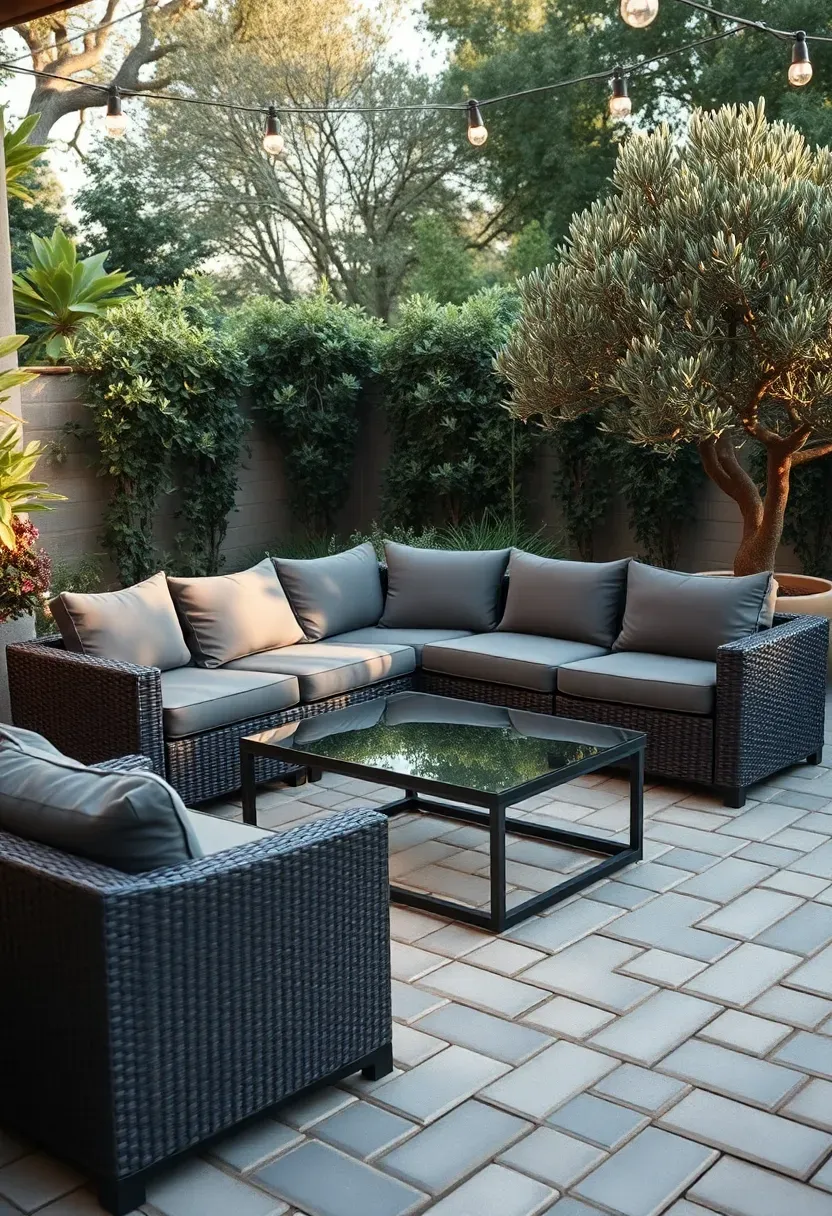
An outdoor sectional is the living room transplanted outside. L-shaped or U-shaped configurations seat 4 to 8 people and create a defined conversation area without separate chairs drifting apart. Aluminum-frame sectionals with PE wicker wrap run $600 to $2,500 depending on size and cushion quality. The paver patio underneath matters as much as the furniture — a level, well-compacted base keeps the sectional from rocking or sinking. Allow 12x12 feet minimum for an L-shaped sectional with a coffee table and walkway space around the edges.
Tips
- Arrange the L so the longer side faces the best view (garden, pool, fire pit) and the shorter side acts as the entry point
- Buy a furniture cover sized to your exact configuration — generic tarps trap moisture and cause more mildew than they prevent
- Lift cushion covers monthly and check for mold on the foam underneath, especially in humid climates
Recommended
Items for this idea
15. Rope Swing from Branch
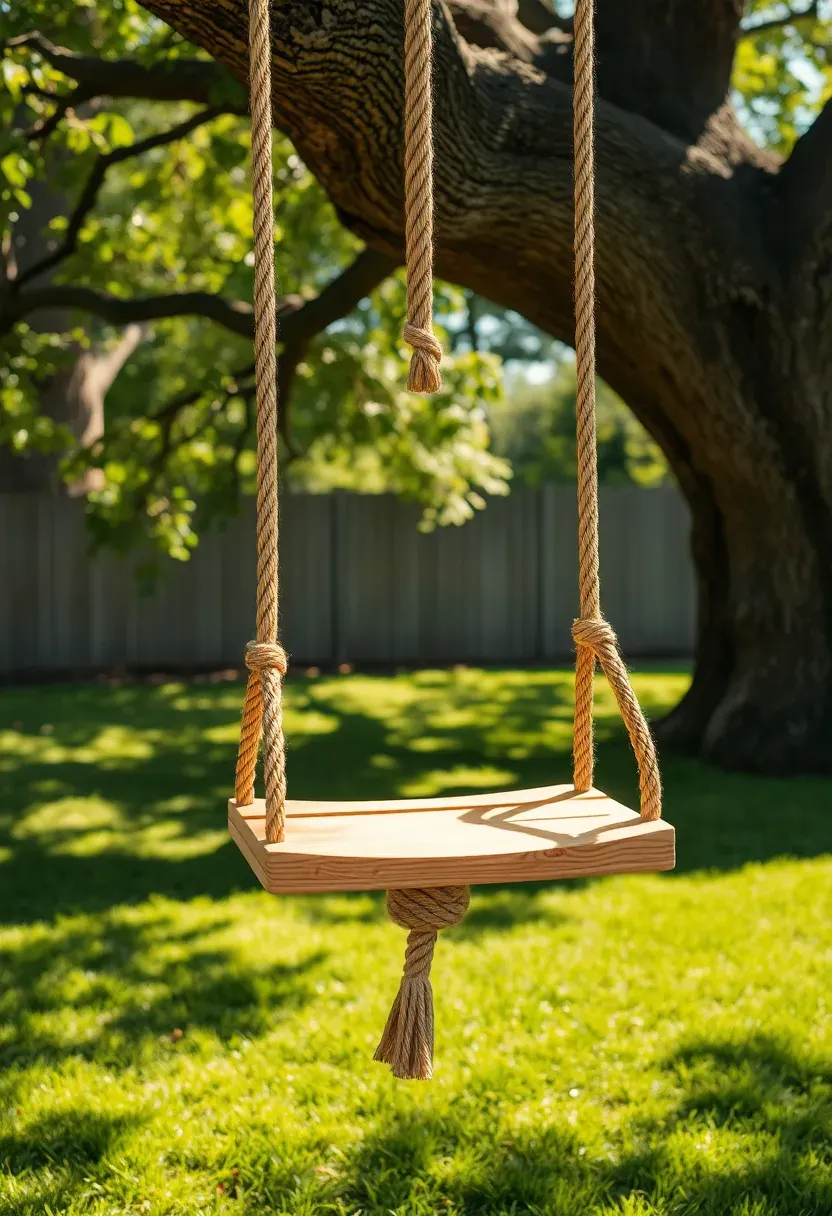
A rope swing is the most nostalgic backyard seat you can build. You need one live hardwood branch at least 8 inches in diameter, positioned 10 to 15 feet above the ground and extending 6 or more feet from the trunk. Use 3/4-inch braided polyester rope ($1 to $2 per foot) rather than natural fiber — polyester does not rot, stretch, or weaken in UV light the way manila or cotton does. The seat can be a simple 2x10 plank 24 inches long with rounded edges, or a carved contour seat for more comfort. Drill the rope holes 2 inches from each end of the plank and tie figure-eight knots below to lock the seat in place.
Watch out for
- Inspect the branch annually for cracks, dead wood, or fungal growth — a swing puts repetitive dynamic stress on the attachment point
- Wrap the rope around the branch with a running bowline rather than drilling through it; holes in living branches invite disease
- Keep the ground below the swing clear of rocks and roots for a safe dismount zone in case of falls
16. Sunken Conversation Pit
Origins and modern revival
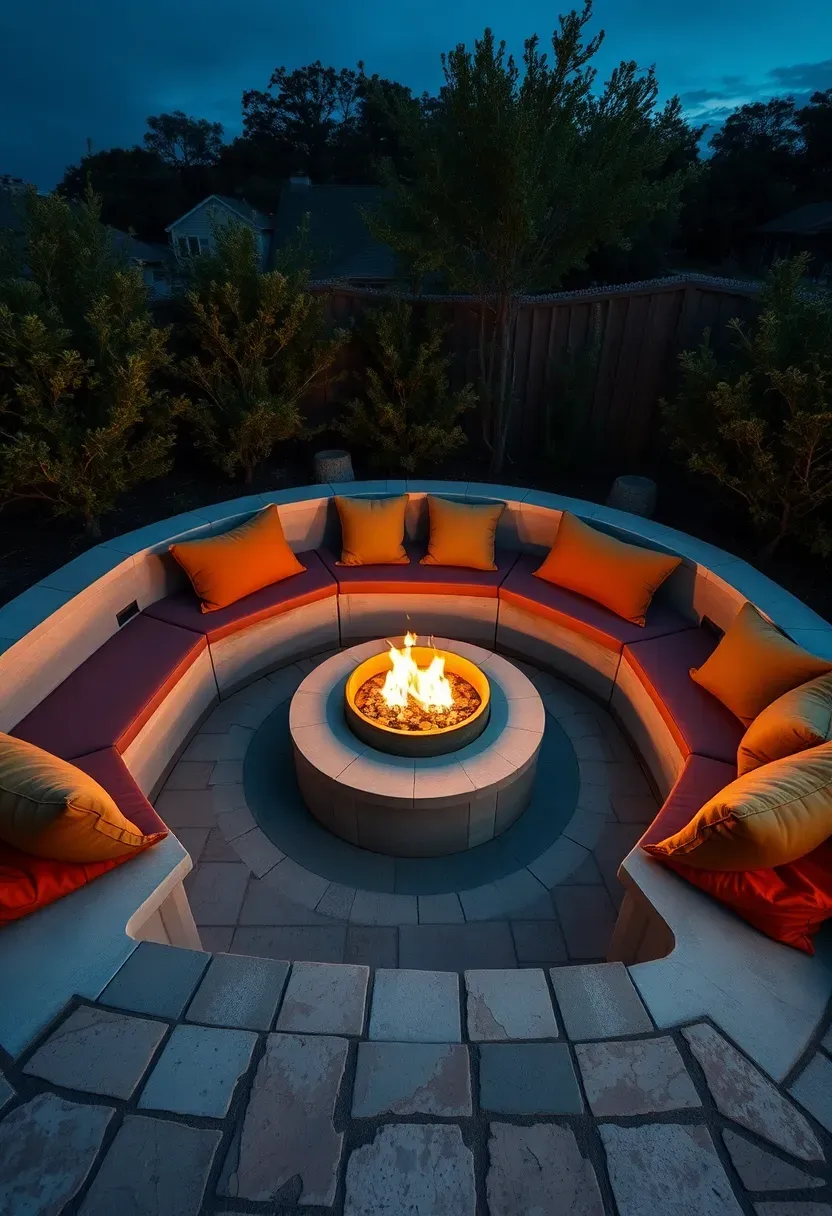
Sunken living rooms peaked in the 1960s and 70s, then disappeared for decades. The outdoor version — a conversation pit dug 18 to 24 inches below grade with built-in bench seating around the perimeter — has made a quiet comeback in landscape design. The sunken position creates a sense of enclosure without walls, naturally blocks wind at seated height, and separates the seating area from the rest of the yard both visually and physically.
How to build one
Excavate a rectangular or circular area, pour a concrete slab floor with proper drainage (a center drain connected to a French drain is essential), and build concrete block bench walls around the inside perimeter. Top the benches with stone or wood caps and add thick outdoor cushions. A fire pit or fire bowl in the center completes the setup. Budget $3,000 to $8,000 depending on size, materials, and whether you hire the excavation.
Apply at home
- Start small — a 10x10-foot pit seats 8 to 10 people and requires less excavation than you might expect
- Include at least two entry points (steps) on opposite sides so the pit does not feel like a trap
- Grade the surrounding landscape to slope away from the pit edges to prevent rainwater from draining inward
Recommended
Items for this idea
17. Cinder Block and Timber Bench
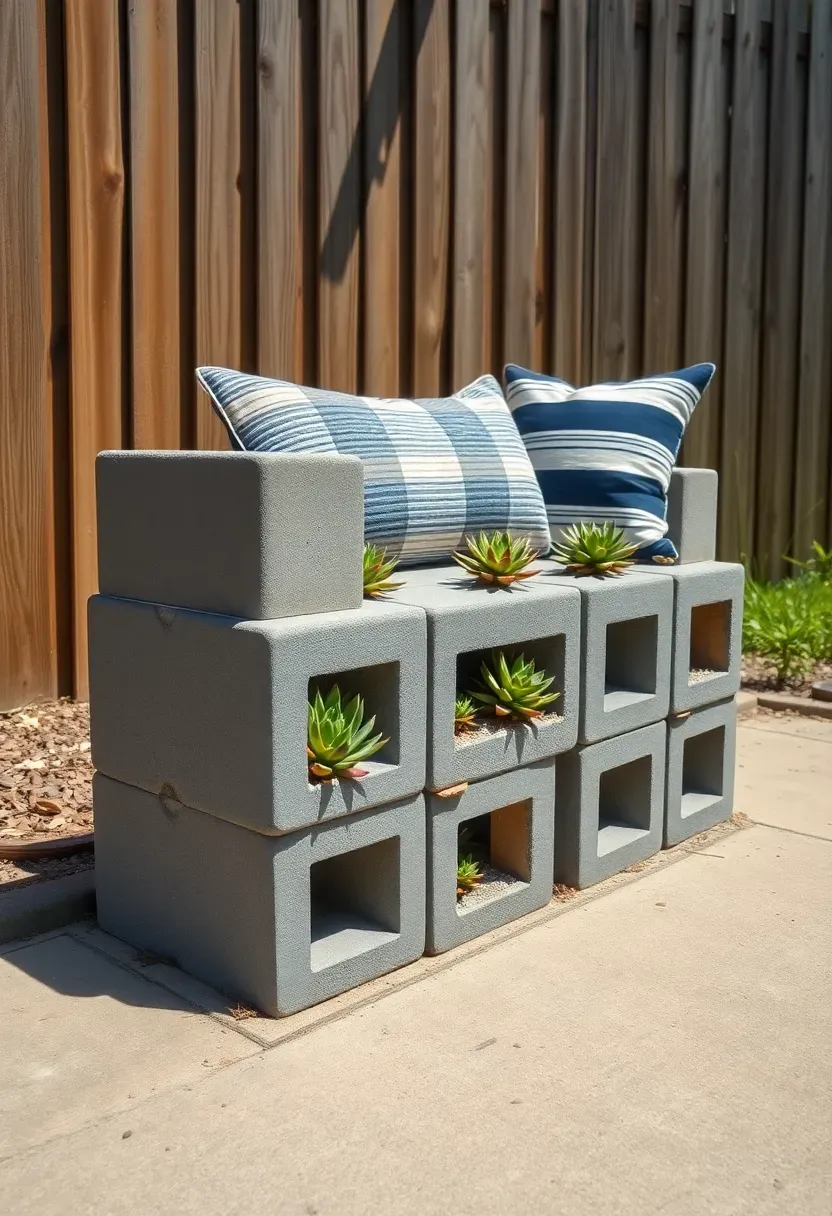
This is the fastest backyard bench you can build: stack cinder blocks two or three high, slide 4x4 landscape timbers through the holes, and you have a seat. Total build time is under 30 minutes. Total cost is under $50. The blocks provide the structure and the timbers provide the seat surface. No fasteners, no cutting, no tools beyond a level. The hollow block cells on the ends make planting pockets — fill them with potting soil and drop in succulents, herbs, or trailing flowers for a built-in green accent. Paint or stain the blocks to match your yard's color scheme, or leave them raw for an industrial look.
Steps to build
- Level the ground where the bench will sit using a flat shovel and a 4-foot level. Compact the soil or set a row of pavers as a stable base.
- Stack the blocks in columns of 2 or 3, with the holes facing sideways (toward the seating direction). Space columns 4 feet apart for a standard bench length.
- Thread the timbers through the aligned holes. Use two timbers side by side for a 7-inch seat depth, or three for a deeper seat.
- Plant the end cells with drought-tolerant succulents or herbs. Water sparingly — cinder block dries out fast.
Quick FAQ
What is the most durable material for backyard seating? Cast aluminum and Polywood (recycled plastic lumber) both handle years of sun, rain, and freezing temperatures without significant degradation. Polywood never needs painting or sealing. Cast aluminum resists rust but can dent. Both materials last 20+ years with minimal care, making them the best long-term investments for permanent outdoor seating.
How much space do I need for a backyard seating area? A two-chair arrangement fits in a 6x6-foot area. A four-person dining set needs about 10x10 feet including chair pullout space. A sectional sofa layout requires 12x12 feet minimum. Always measure your available space before shopping and remember to account for walkway clearance of at least 30 inches around the furniture.
Can I leave outdoor furniture outside year-round? Teak, Polywood, cast aluminum, and powder-coated steel can stay outside in all seasons. Cushions and fabric elements should come inside or go into a weatherproof storage box during extended wet or cold periods. Wicker (natural or synthetic) lasts longer with a breathable cover. Untreated wood and bare steel will deteriorate rapidly without seasonal protection.
Which backyard seating ideas work best on a small budget? Cinder block and timber benches cost under $50. Pallet sofas cost nothing for the frame if you source free pallets. Tree stump stools are free if you have access to cut logs. A basic rope swing costs about $30 in materials. Even a quality bistro set can be found for $100 to $150 on sale. Budget seating works fine — just invest in decent cushions for anything you will sit on for more than 15 minutes.
Do I need a patio or deck for outdoor seating? Not necessarily. Gravel pads, compacted crushed stone, and even level areas of mown grass work as seating surfaces for lighter furniture. Heavier pieces like sectionals and dining sets benefit from a hard, level surface like pavers, concrete, or decking to prevent sinking and rocking. A simple 10x10-foot gravel pad costs $200 to $400 and provides a stable base for most furniture types.
Backyard seating does not need to be complicated or expensive to change how you use your outdoor space. Start with what you have — a flat patch of ground, a couple of trees, some leftover materials — and build from there. The best outdoor seat is the one you actually sit in, not the one that looks best in a photo. Pick one idea from this list, set it up this weekend, and spend an evening outside. You will probably end up adding a second seating area within the month.
Pinterest cover for 17 Backyard Seating Ideas for Any Budget
About the author
OBCD
CGI visualization and interior design content. We create detailed 3D renders and curate practical design ideas for every room in your home.