19 Backyard Walkway Ideas That Look Great
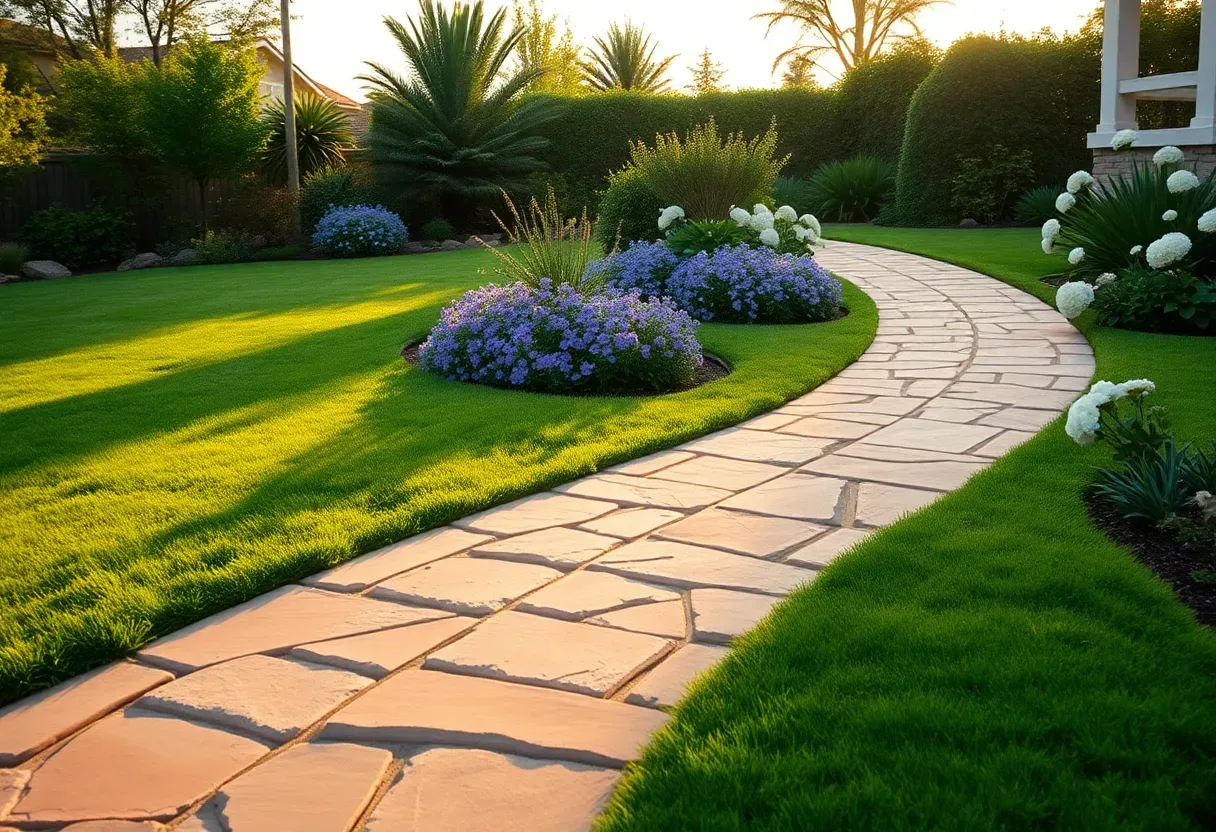
My backyard used to have a beaten dirt trail between the patio and the shed. It turned into a mud channel every time it rained, and by November the grass on either side was dead from foot traffic. Installing a proper walkway fixed all of that, but the harder part was picking a material. Flagstone looked right but cost more than I expected. Gravel was cheap but migrated into the lawn. Pavers split the difference. After building three different paths across my property and pricing out a dozen materials, I pulled together these 19 backyard walkway ideas covering everything from quick weekend gravel paths to full mortared stone installations.
Below you will find options organized by material type, with honest notes on cost, maintenance, and how each one holds up in different climates.
Table of Contents
- Flagstone Stepping Stones
- Pea Gravel Path
- Brick Paver Walkway
- Poured Concrete Path
- Decomposed Granite Trail
- Natural Stone Slab Walkway
- Cobblestone Path
- Wood Slice Stepping Stones
- Concrete Paver Walkway
- Crushed Shell Path
- Slate Tile Walkway
- Railroad Tie and Gravel
- Dry-Laid Bluestone
- Mulch Path
- Stamped Concrete Walkway
- Mosaic Pebble Path
- Permeable Paver Walkway
- Sandstone Pathway
- Mixed Material Walkway
1. Flagstone Stepping Stones
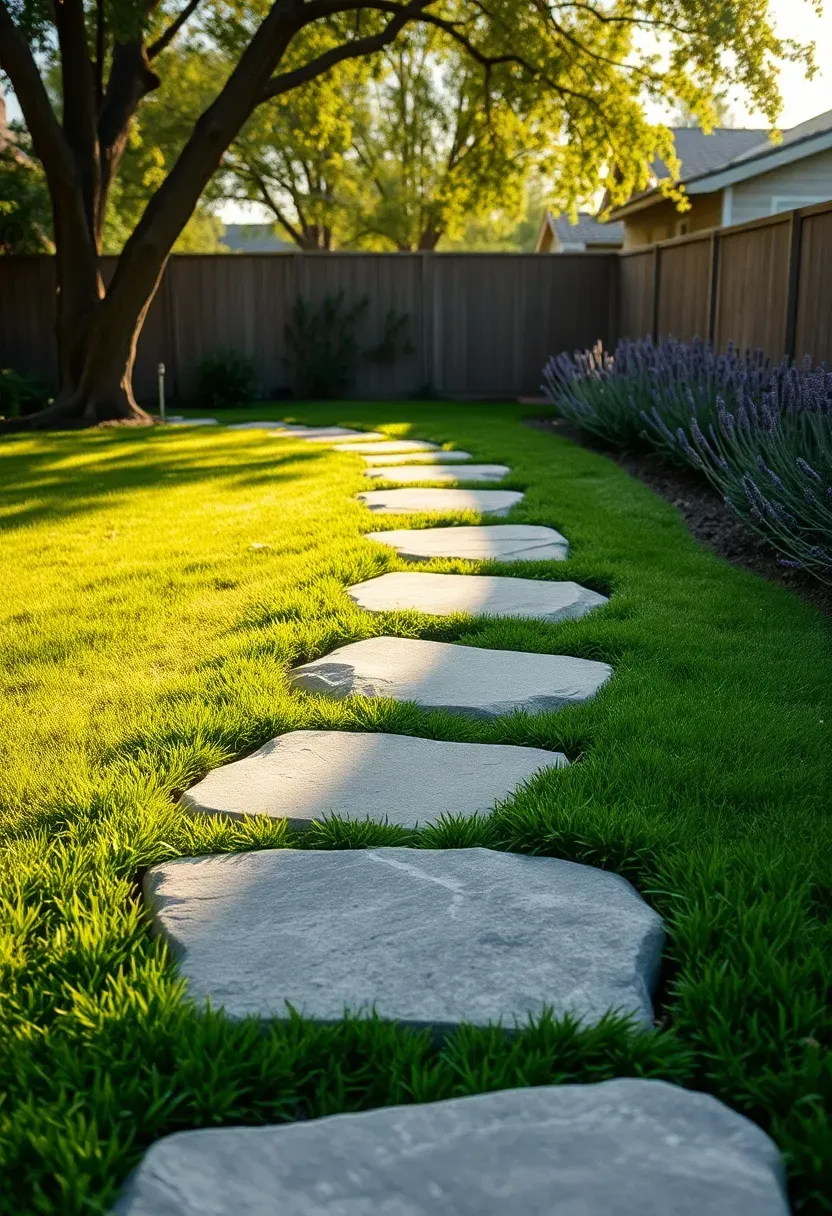
Flagstone stepping stones are the most forgiving walkway project you can tackle. Buy a dozen flat stones from a landscape yard, set them directly on the lawn about 22-24 inches center to center, and you have a path. No excavation, no base material, no edging. The stones sink slightly into the turf over a season and the grass fills in around them for a look that feels like it has always been there. Arizona flagstone runs $3-6 per square foot for irregulars, and a 30-foot path uses roughly 15 stones.
Tips
- Choose stones at least 2 inches thick so they stay put when stepped on
- Cut the turf outline with a flat spade and set each stone flush with the grass for easy mowing
- Space stones at a natural stride length — too close feels awkward, too far makes you hop
We picked a few things that go well with this idea: Sekcen Rubber Stepping Stones (3-Pack) (★4.5), TierraVerde Natural Rock Stepping Stones (4-Pack) (★4.4) and Non-Slip Rubber Stepping Stones (5-Pack) (★4.6). As an Amazon Associate we earn from qualifying purchases.
2. Pea Gravel Path
Why gravel works for walkways
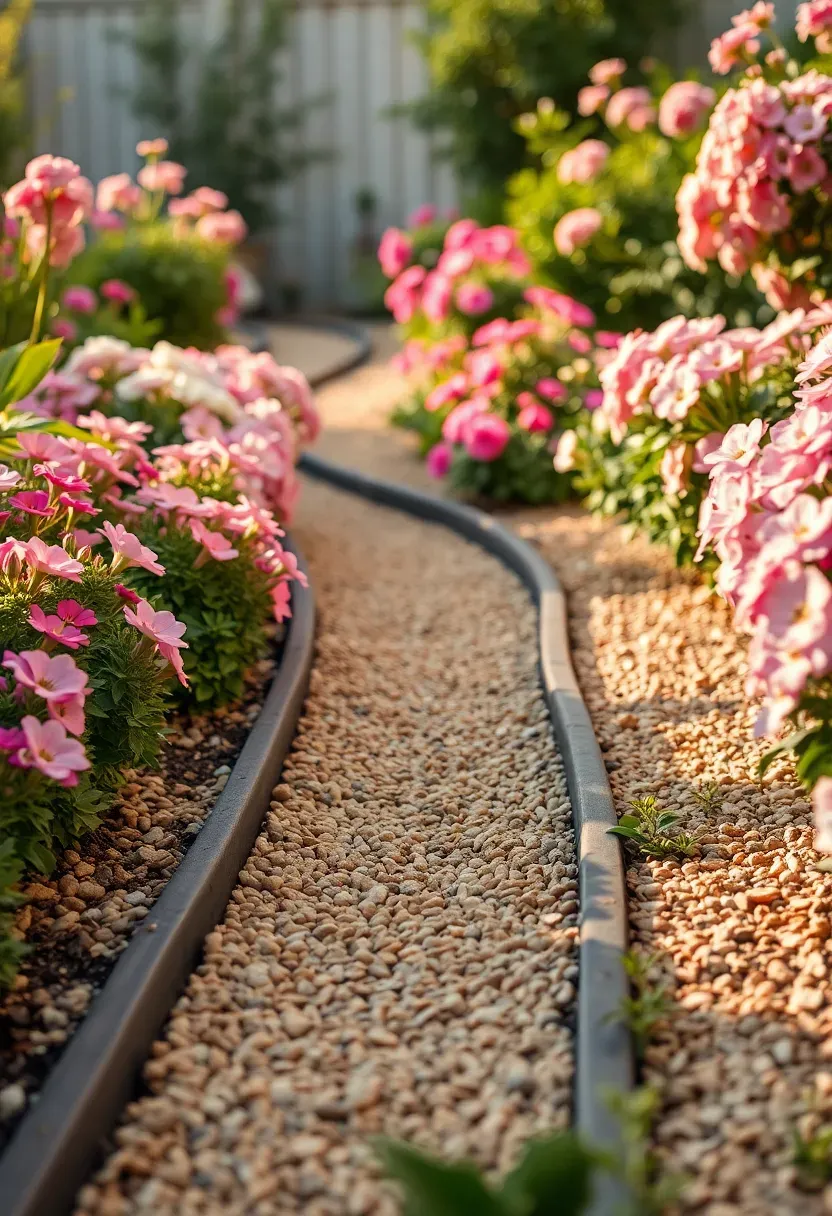
Pea gravel gives you a finished path in a single weekend. A 3-foot-wide, 40-foot-long walkway needs roughly 1.5 cubic yards of gravel at about $40 per yard delivered. The rounded stones drain instantly, so puddles are never a problem. The crunch underfoot also works as a low-tech security feature — you hear anyone walking.
The tradeoff
Gravel migrates. Without containment it spreads into beds and lawn within a month. Steel edging is essential, not optional. High heels and narrow wheelchair tires also struggle on loose gravel. And if your yard slopes more than about 5%, the gravel washes downhill during heavy rain no matter what you do.
Pros and cons
- Pro: Cheapest installed walkway material available
- Pro: Excellent drainage, no standing water
- Con: Requires edging and periodic raking to maintain a clean line
We picked a few things that go well with this idea: DOMINATOR Polymeric Sand Gray Beige (10lb) (★4.2), DOMINATOR Polymeric Sand Camel Brown (10lb) (★4.2) and DOMINATOR Polymeric Sand Charcoal Gray (10lb) (★4.2). As an Amazon Associate we earn from qualifying purchases.
3. Brick Paver Walkway
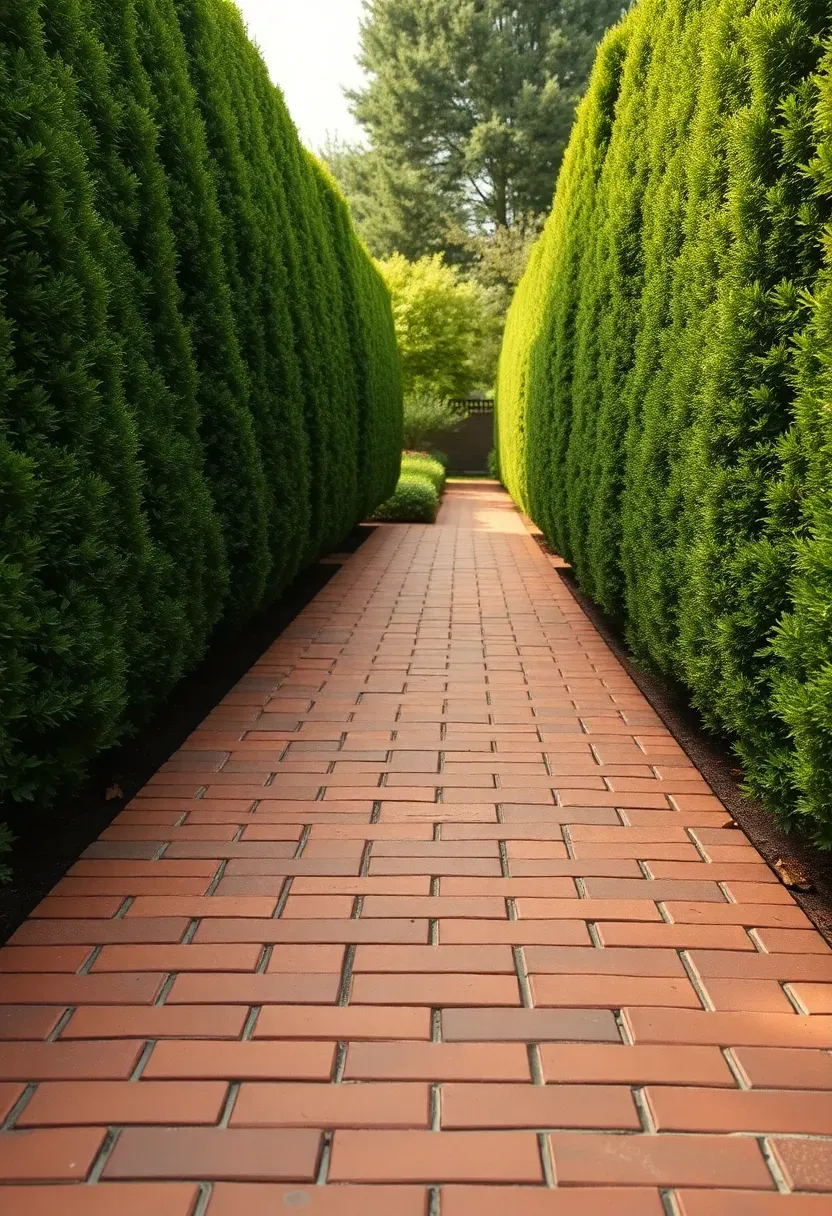
Brick pavers give a backyard walkway a classic warmth that concrete never quite matches. The standard paver is 4x8 inches and about 2.25 inches thick, sized to lay in herringbone, running bond, or basketweave patterns without any cutting. You need a compacted gravel base, a 1-inch sand setting bed, and polymer sand in the joints to lock everything together. A 3-foot-wide brick path runs $8-14 per square foot installed, depending on the pattern complexity and your region. Herringbone costs more because every edge piece needs a cut.
Tips
- Herringbone is the strongest pattern for foot traffic — it distributes weight across multiple pavers
- Use tumbled pavers for a weathered look that hides chips better than smooth-faced ones
- Seal the path every 2-3 years to prevent moss and algae in shaded areas
We picked a few things that go well with this idea: Galvanized Steel Landscape Edging (10-Pack, 33ft) (★4.5), Galvanized Steel Garden Border (6-Pack, 20ft) (★4.5) and VEVOR Bendable Steel Landscape Edging (6-Pack) (★4.6). As an Amazon Associate we earn from qualifying purchases.
4. Poured Concrete Path
How to build a lasting concrete walkway
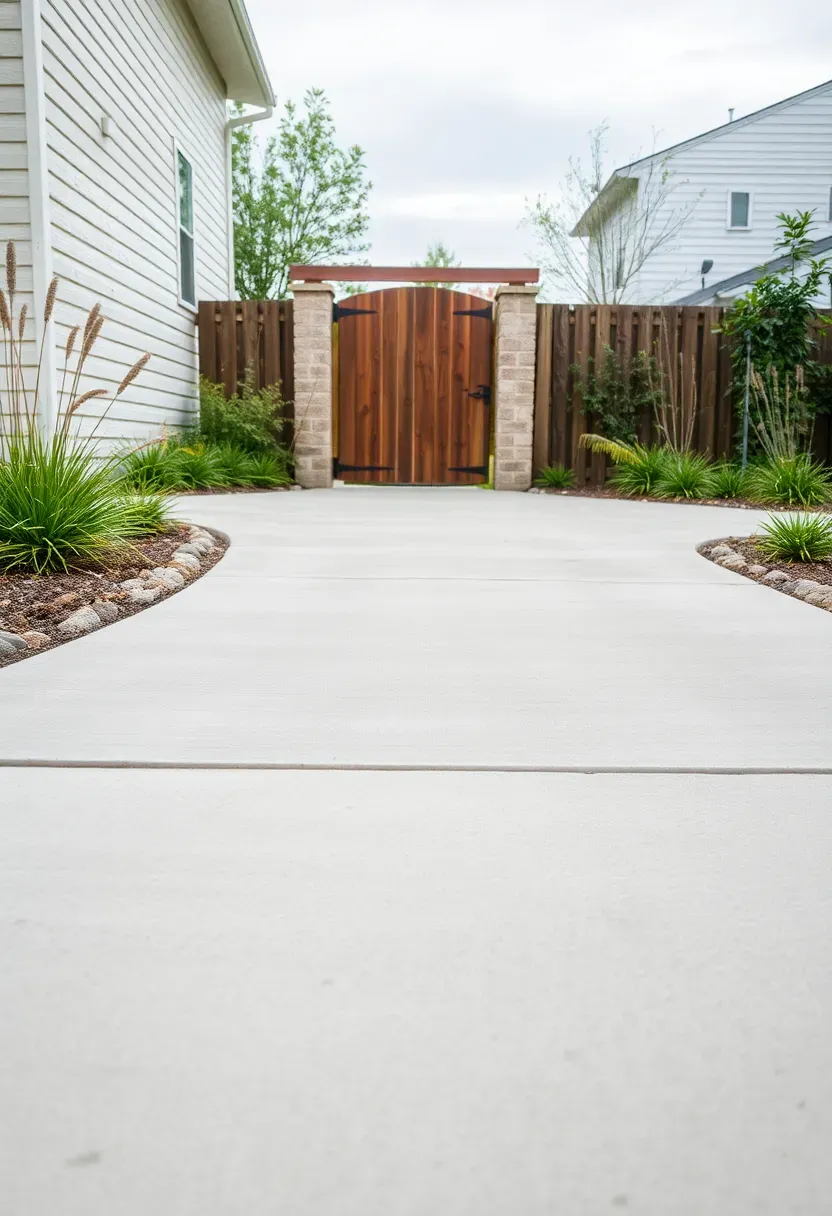
Concrete is the most durable walkway material if the base prep is done right. Here is the sequence that prevents cracking.
Step 1: Excavate and compact
Dig 6-8 inches deep and 6 inches wider than the finished path on each side. Compact the subsoil, then add 4 inches of crushed gravel base and compact again.
Step 2: Form and pour
Set 2x4 forms staked every 3 feet. Pour 4 inches of 4000-PSI concrete with fiber mesh reinforcement. Screed level and bull-float smooth.
Step 3: Finish and cure
Cut control joints every 4-5 feet to control where cracks form. Broom-finish the surface for traction. Keep the slab moist for 7 days while curing.
Watch out
Concrete without control joints will crack randomly. And if your soil has heavy clay, add an extra 2 inches of gravel base to account for expansion.
Recommended
Items for this idea
5. Decomposed Granite Trail
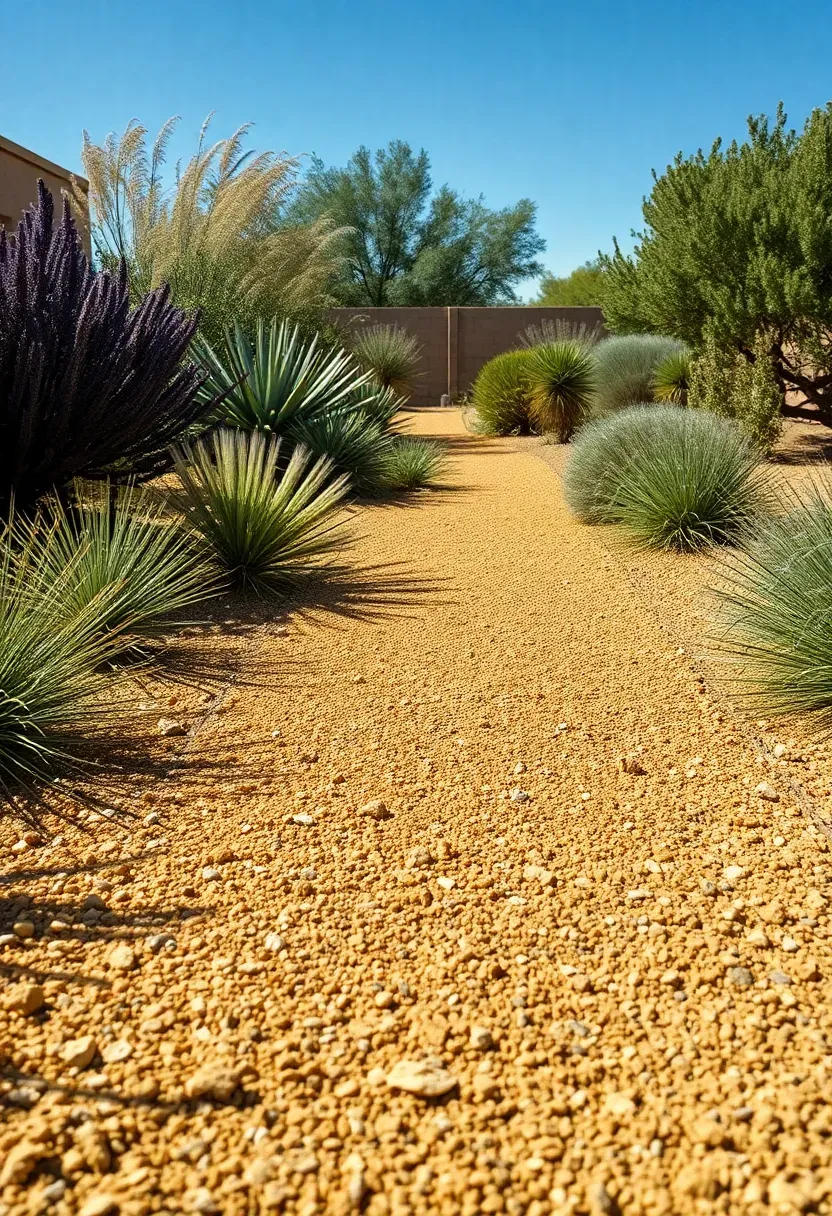
Decomposed granite — or DG — is crushed granite rock that packs into a firm, natural-looking surface. It comes in gold, tan, gray, and reddish tones depending on the quarry source. The loose version costs about $40-60 per cubic yard, while stabilized DG (mixed with a resin binder) costs $60-100 and resists erosion much better. A 3-inch layer over compacted base gives you a walkway that feels solid underfoot but still looks informal. DG works particularly well in dry climates and pairs naturally with drought-tolerant plantings, agave, and ornamental grasses.
Tips
- Stabilized DG is worth the upcharge in rainy climates — loose DG washes out on slopes
- Compact in 1.5-inch lifts with a plate compactor for maximum density
- Add steel or aluminum edging to keep the material from spreading into adjacent beds
6. Natural Stone Slab Walkway
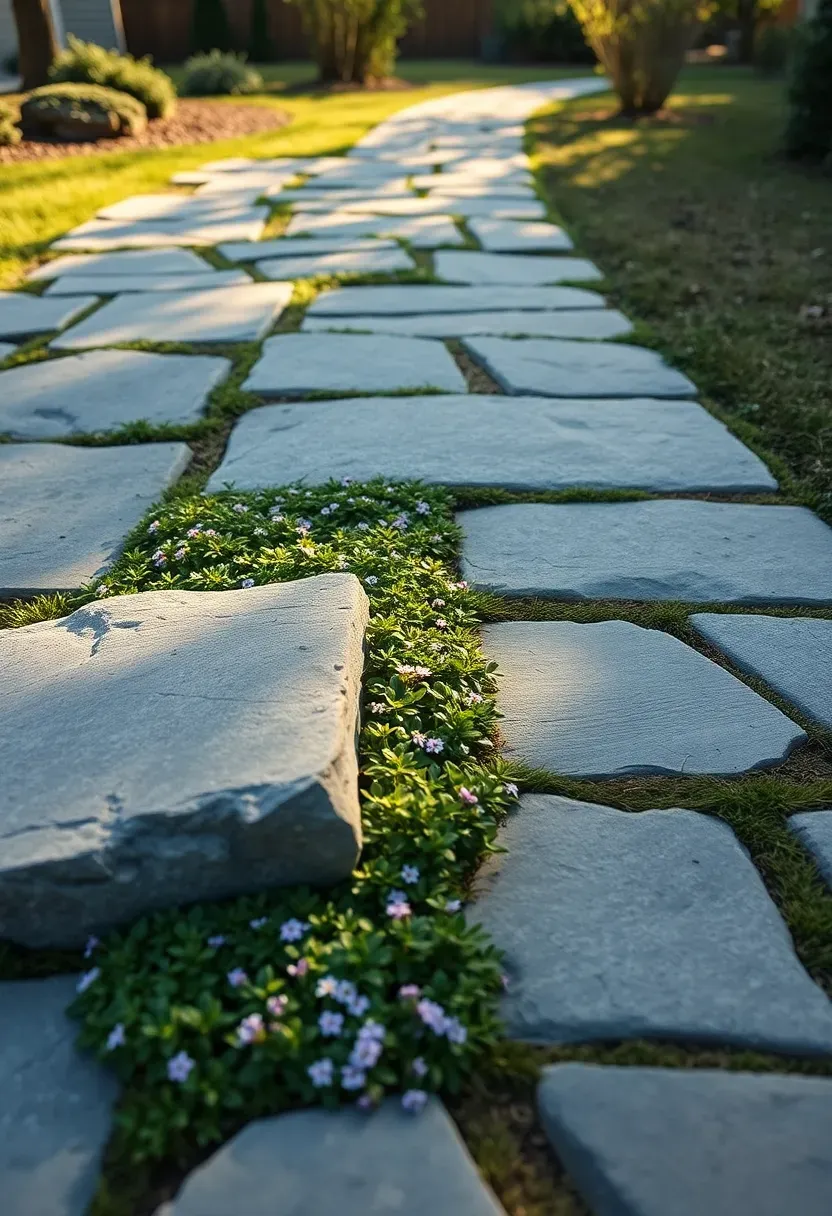
Full stone slabs — 18 to 30 inches across and 2-3 inches thick — create a walkway with real visual weight. Unlike small stepping stones, these large pieces cover enough ground that you can walk naturally without watching your feet. Pennsylvania bluestone, Tennessee fieldstone, and Montana quartzite are the most common choices. Expect to pay $6-15 per square foot for the stone alone, plus delivery charges that add up fast because this stuff is heavy. Two people can handle stones up to about 80 pounds; anything larger needs a hand truck or a strong neighbor.
Tips
- Set slabs on a 2-inch sand bed over 4 inches of compacted gravel for stability
- Fill joints with creeping thyme, dwarf mondo grass, or polymeric sand
- Select stones with at least one flat edge so you get a clean line along the walkway border
Recommended
Items for this idea
7. Cobblestone Path
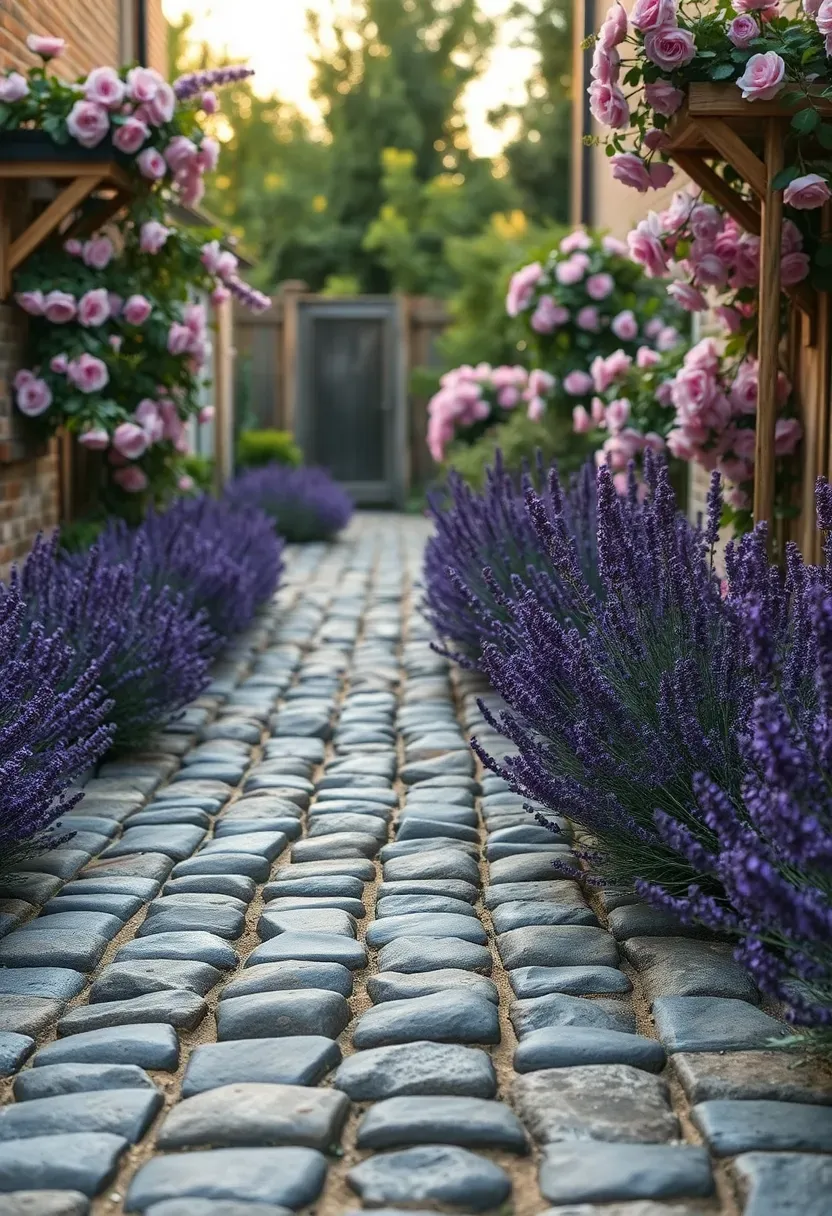
Cobblestones bring old-world texture to a backyard. Genuine cobbles are rounded granite or basalt stones, 4-7 inches across, originally used as ballast in sailing ships and later repurposed as street paving. Salvaged antique cobbles run $8-20 per square foot. New manufactured cobbles cost less — around $5-10 — and come in more uniform sizes. The uneven surface is part of the charm but also means cobblestone is a poor choice for anyone who needs a smooth, accessible path. Wheelchairs, strollers, and rolling carts all struggle on the bumpy surface. These paths work best as decorative secondary routes rather than your main walkway.
Tips
- Set cobbles in a concrete bed for permanence, or dry-lay on sand for a rustic feel
- Mix cobble sizes for an authentic look — uniform sizing reads as modern and manufactured
- Brush polymeric sand into joints to prevent weed growth and keep stones from shifting
8. Wood Slice Stepping Stones
Why people love this idea
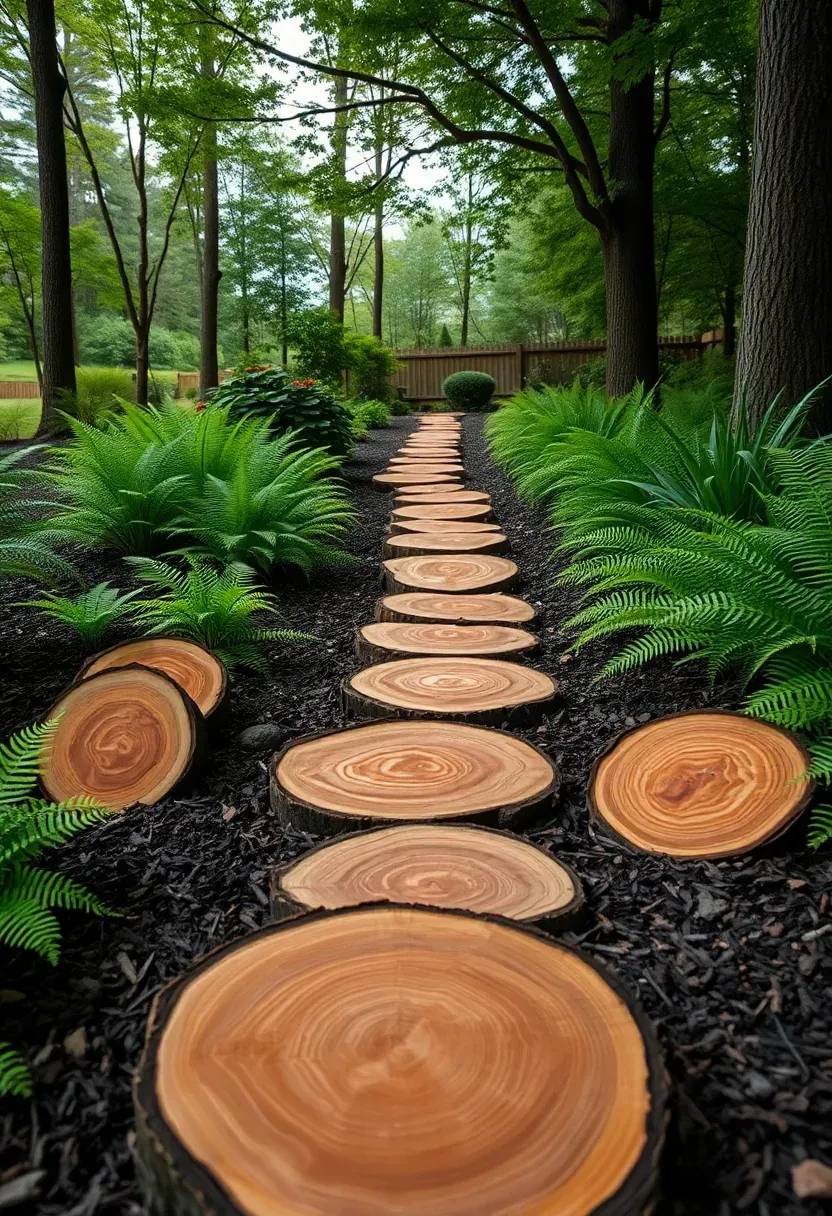
Wood slices cut from fallen trees or leftover logs add a rustic, woodland feel that no other material duplicates. A 12-14 inch diameter round from a hardwood log, cut 3-4 inches thick, costs nothing if you have the log and a chainsaw.
The honest problem
Wood rots. Even sealed and treated, wood rounds in ground contact last 3-5 years before they soften and crack. In humid climates, they also get dangerously slippery with algae unless you scrub them every few months. Cedar and black locust last longest because of their natural rot resistance, but neither is permanent.
Pros and cons
- Pro: Free or nearly free if you source your own wood
- Pro: Unique organic look that works in woodland and cottage gardens
- Con: Short lifespan requires replacement every few years
Recommended
Items for this idea
9. Concrete Paver Walkway
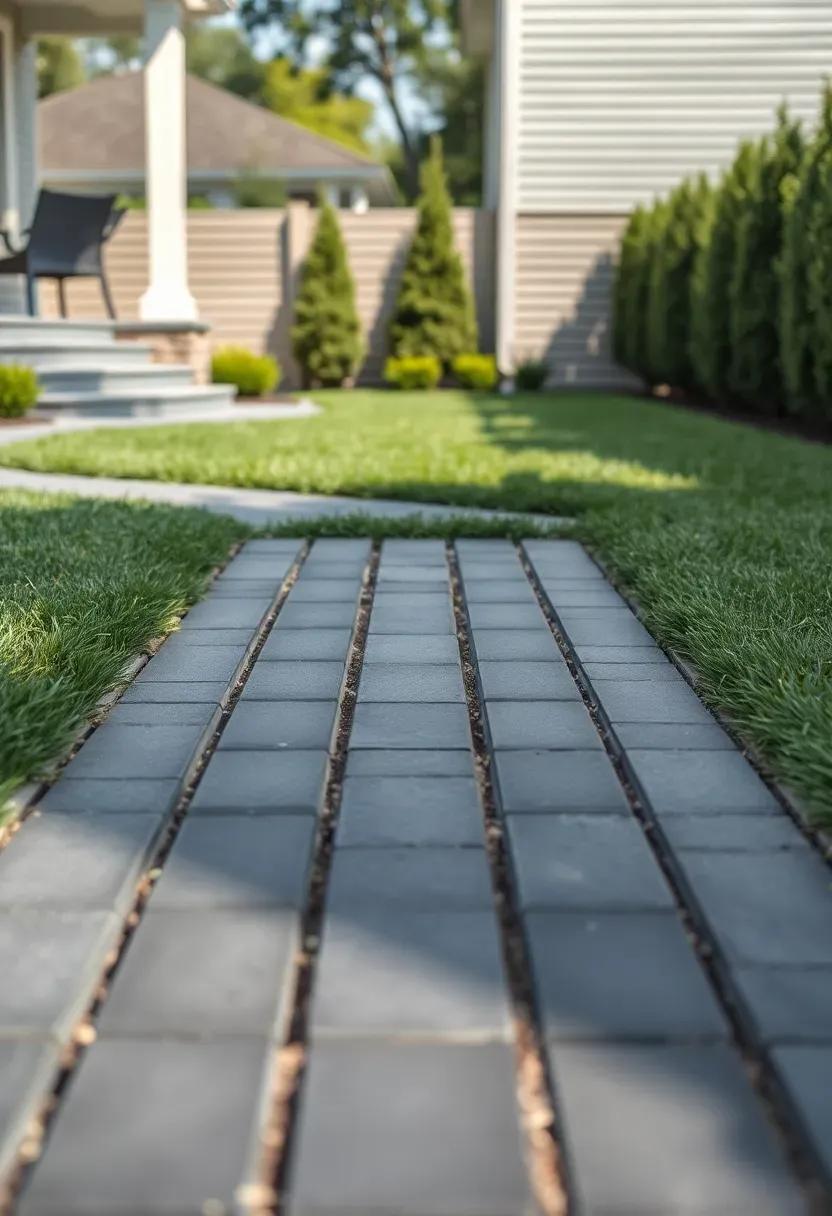
Concrete pavers look similar to brick but cost 20-30% less and come in a wider range of colors and shapes. Standard concrete pavers are 2 3/8 inches thick, made from dense pressed concrete, and available in sizes from 4x8 to 12x12 inches. They install the same way as brick — compacted gravel base, sand setting bed, polymeric sand joints. The main disadvantage compared to brick is fading: concrete pavers lose some color intensity over 5-10 years, especially in direct sun. Integral color pavers hold up better than surface-coated ones, so ask your supplier which type they stock.
Tips
- Buy 10% extra to cover cuts and future replacements
- Avoid pure white or very light pavers in shaded areas — they show algae stains quickly
- Pull pavers from multiple pallets during installation to blend any color variation
10. Crushed Shell Path
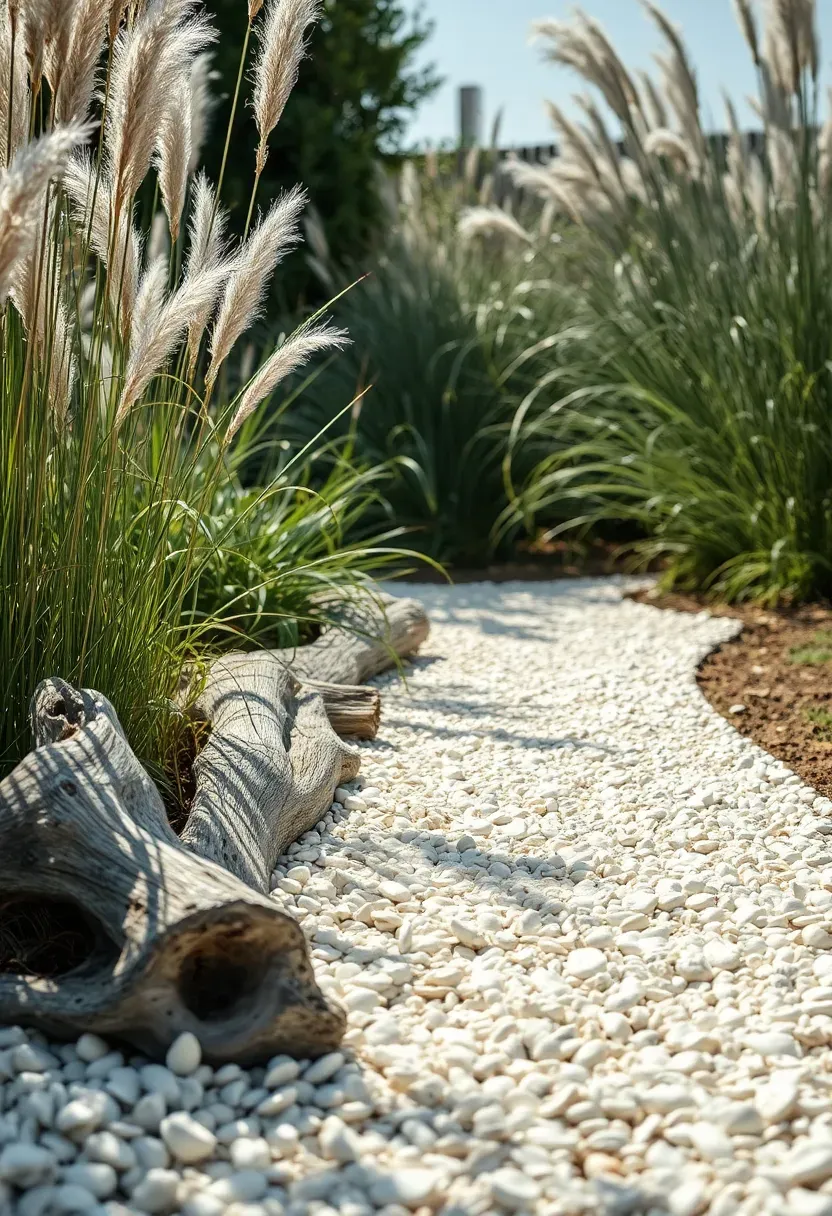
Crushed oyster or clam shells create a distinctive white-to-cream path that works perfectly in coastal and cottage-style yards. The shells compact reasonably well and drain fast. A cubic yard costs $30-60 depending on your distance from the coast — it is cheap in the Gulf states and expensive in the Midwest. Shell paths feel slightly softer underfoot than gravel, and they do not get as hot in direct sun. The calcium in the shells also slowly raises soil pH in adjacent beds, which suits some plants and harms others, so check what you are growing nearby.
Tips
- Layer shells 3-4 inches thick over landscape fabric and a compacted base
- Expect to top off the path with fresh shells every 1-2 years as they break down
- Combine with driftwood edging for a cohesive beachy look
Recommended
Items for this idea
11. Slate Tile Walkway
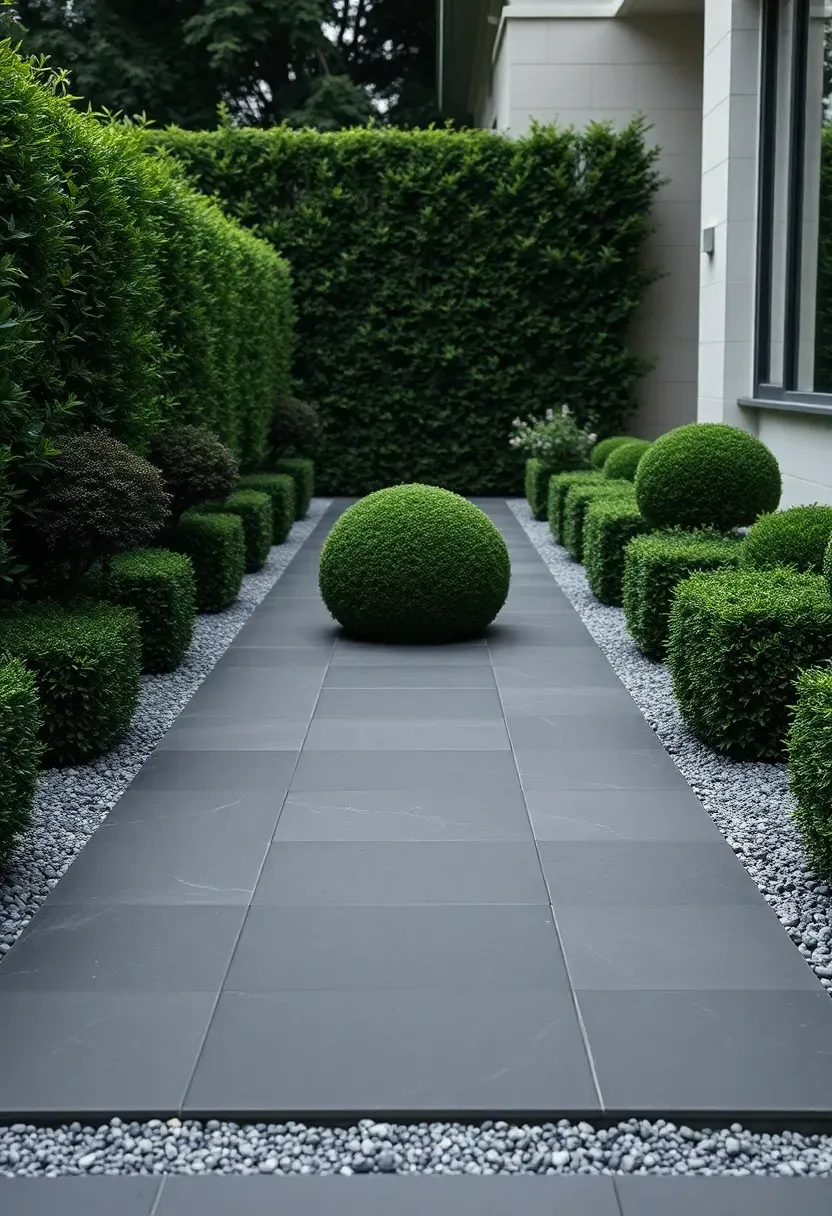
Slate brings a refined, flat surface that reads as more formal than flagstone. Natural cleft slate has a slightly textured surface that grips well when wet, unlike polished stone which gets treacherous. Tiles come in 12x12, 12x24, and 16x16 inch sizes that lay quickly in straight patterns. Color ranges from dark charcoal to green, purple, and rust depending on the quarry. Slate runs $5-10 per square foot for material. The main concern is thickness: outdoor slate should be at least 3/4 inch thick. Thinner tiles crack under freeze-thaw cycles in cold climates.
Tips
- Set on a mortar bed over concrete for a permanent installation
- Use only natural cleft finish outdoors — gauged smooth slate is for interior floors
- Seal slate every 2 years to prevent moisture absorption and flaking in winter
12. Railroad Tie and Gravel
How to build this combination path
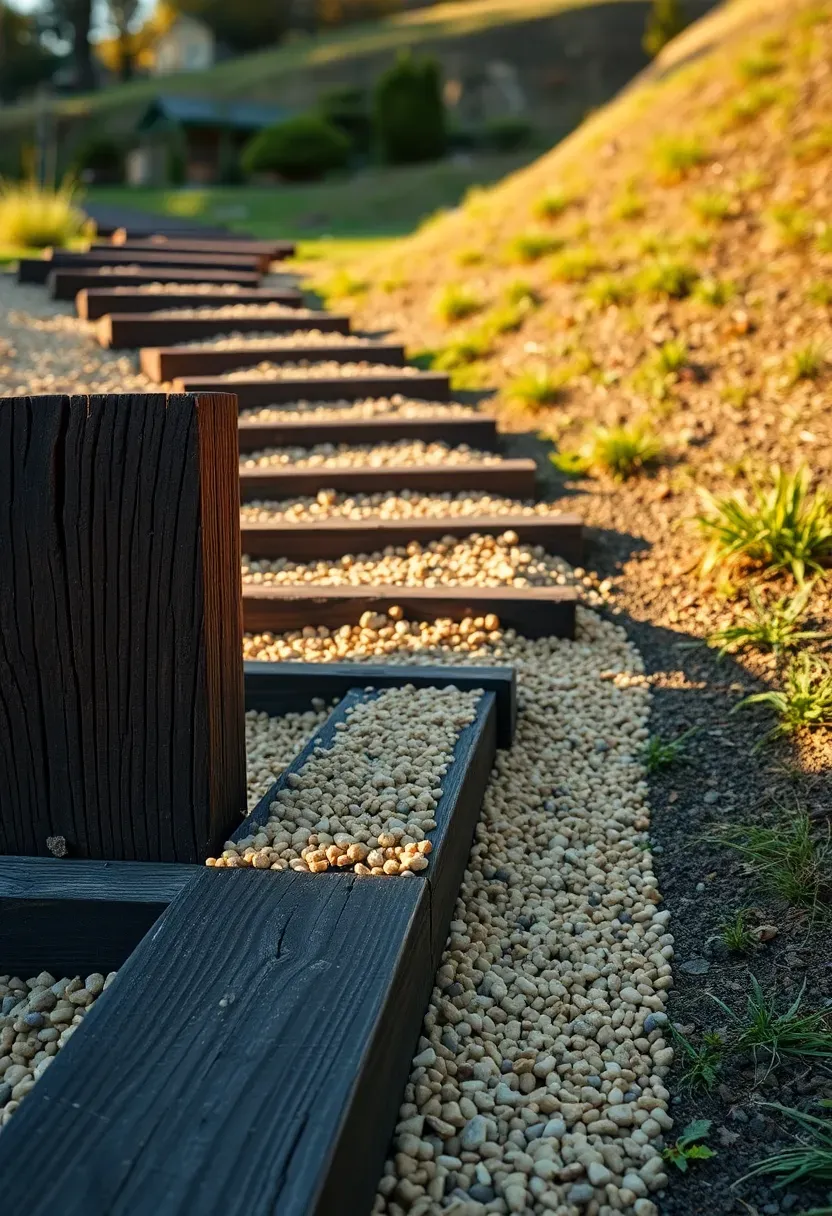
Railroad ties spaced 24-30 inches apart with gravel infill between them create a rugged, structured walkway that handles slopes well. The ties act as speed bumps for the gravel, preventing it from washing downhill.
Step 1: Set the ties
Dig a shallow trench for each tie so they sit half-buried. Use 6x6 or 6x8 inch landscape timbers if you prefer new wood over creosote-treated salvage ties.
Step 2: Fill between
Pour 2-3 inches of compacted pea gravel or crushed stone between the ties. The gravel should sit slightly below the top of the timber so the ties still define each step.
Step 3: Secure on slopes
On sloped sections, drive 18-inch rebar pins through pre-drilled holes in each tie to anchor them against sliding.
Watch out
Genuine railroad ties contain creosote, which leaches into soil and is toxic to plants. Use untreated landscape timbers near garden beds.
Recommended
Items for this idea
13. Dry-Laid Bluestone
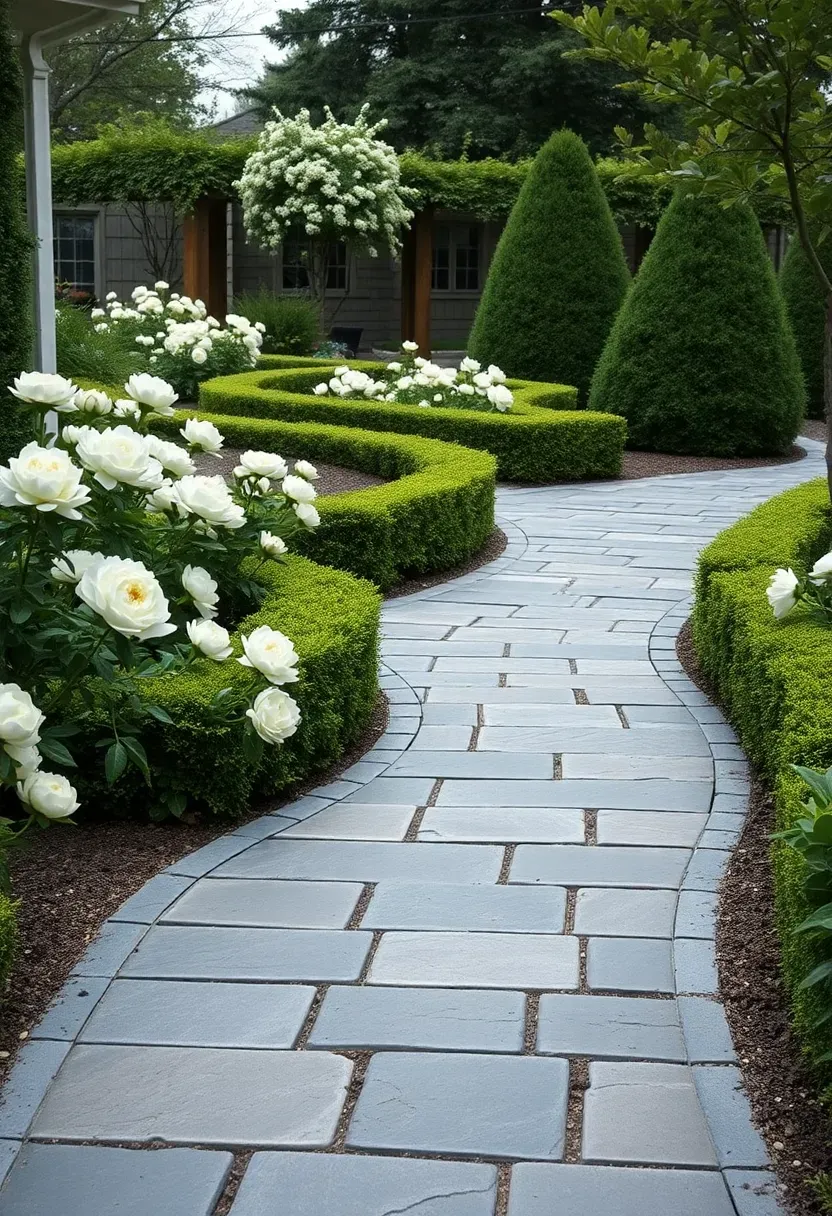
Bluestone — a type of sandstone quarried primarily in New York and Pennsylvania — is the gold standard for northeastern backyard walkways. Dry-laid means the stones sit on a sand bed without mortar, which allows for slight seasonal movement without cracking. The blue-gray color darkens when wet and lightens when dry, giving the path a living quality that poured materials lack. Full-range bluestone includes blue, gray, green, and lilac tones in the same batch. Thermal-finished bluestone has a consistent flat surface; natural cleft has more texture and character.
Tips
- Use 1.5-inch thick bluestone for walkways on sand base; 3/4-inch works only on concrete
- Leave 1/4-inch joints and sweep polymeric sand for a semi-formal look
- Pattern-cut bluestone costs more but eliminates the wide, irregular joints of random shapes
14. Mulch Path
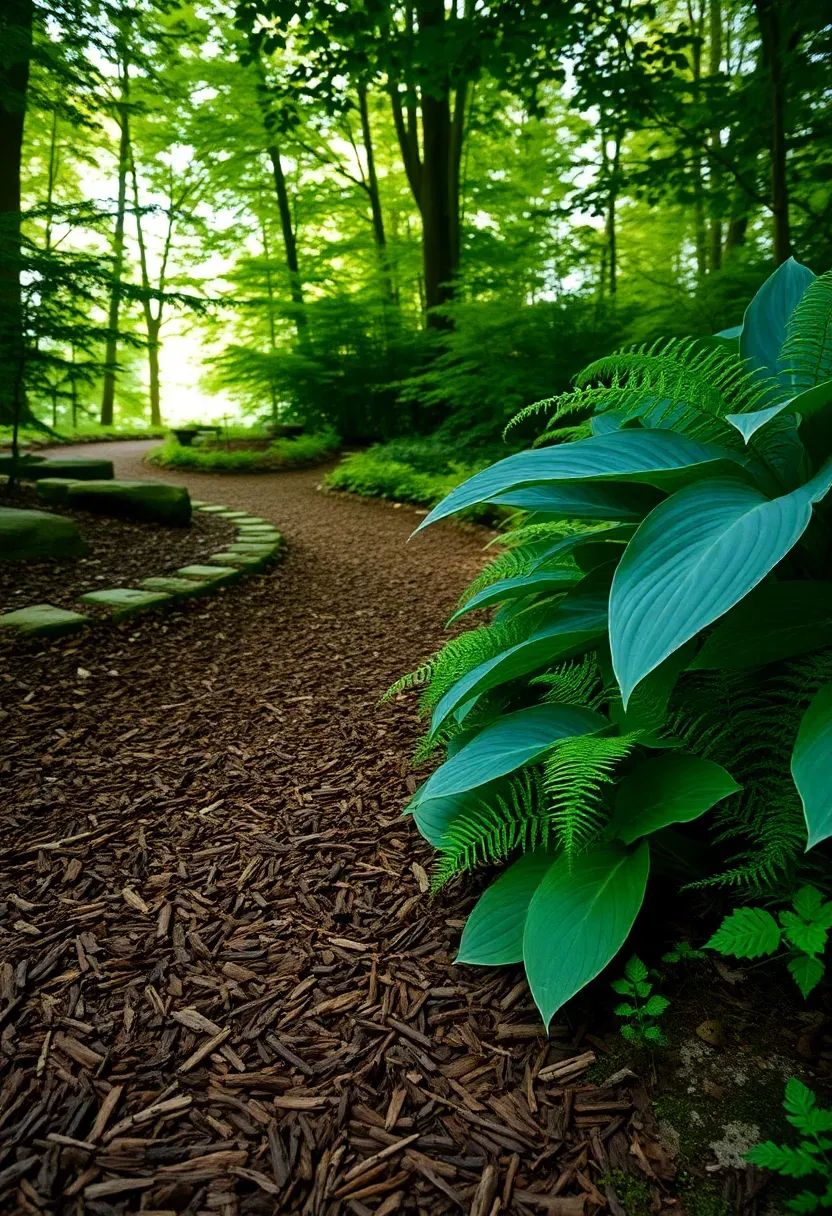
Mulch is the lowest-cost, lowest-commitment walkway material. Hardwood mulch, pine bark nuggets, or wood chips spread 3-4 inches thick over landscape fabric give you a soft, quiet path that blends into garden settings. A cubic yard of mulch covers about 100 square feet at 3 inches deep and costs $25-40. Mulch paths decompose into the soil over 1-2 seasons, which means annual replenishment. That decomposition is actually beneficial for adjacent plantings — it feeds the soil as it breaks down. The soft surface is forgiving on joints and bare feet, making mulch a good choice for garden paths where you wander rather than march.
Tips
- Use double-shredded hardwood for the densest, most walkable surface
- Avoid dyed mulch near edible gardens — the dyes are cosmetic but the wood sources vary
- Define edges with stone, brick, or steel edging to keep the mulch contained
Recommended
Items for this idea
15. Stamped Concrete Walkway
Stamped concrete applies the same technique used for patios to a narrower walkway format. The concrete is poured, colored with integral pigment or dry-shake hardener, and then pressed with rubber stamp mats to replicate stone, slate, brick, or wood plank patterns. A stamped walkway costs $12-20 per square foot installed, which is more than plain concrete but less than actual stone. The continuous surface has no joints for weeds to exploit, and it handles heavy foot traffic without shifting. The pattern options are wide — ashlar slate and cobblestone are the most popular for walkways because their smaller repeat units scale well to a 3-foot width.
Tips
- Request a sample board from your contractor showing the exact color and stamp combination
- Insist on control joints every 4-5 feet even though they interrupt the pattern
- Reapply sealer every 2-3 years to maintain color depth and surface protection
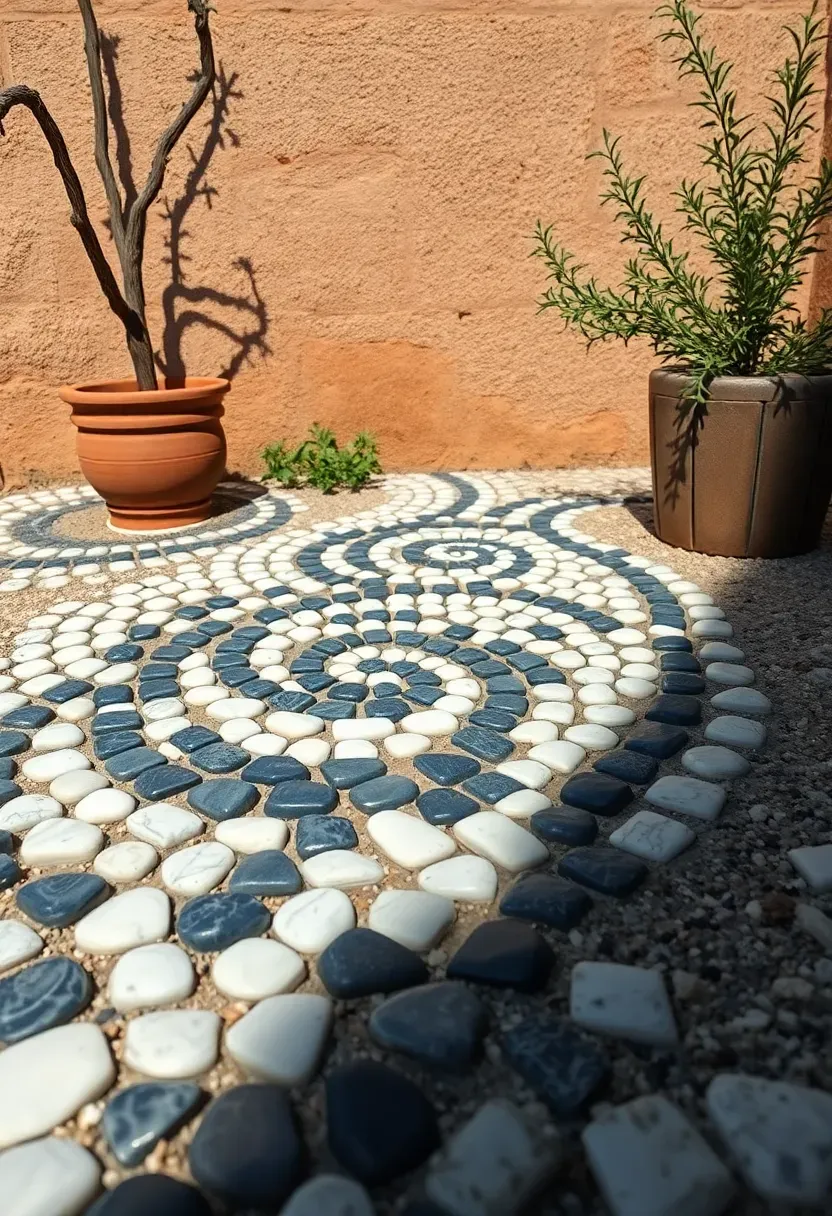
16. Mosaic Pebble Path
Pebble mosaics turn a walkway into artwork. Small river stones — 1 to 3 inches — are set on edge in a mortar bed to create patterns, borders, or full pictorial designs. This technique has roots in ancient Greece and shows up throughout Mediterranean and Chinese garden traditions. A skilled installer can produce intricate geometric or floral patterns that make the path itself a destination. The cost is high — $20-40 per square foot for custom work — and installation is slow because each stone is placed by hand. But the result lasts decades with minimal maintenance and only gets better looking as the stones weather.
Tips
- Start with simple border patterns before attempting full-surface mosaics
- Sort stones by size and color before beginning — organization speeds installation significantly
- Set stones in Type S mortar over a concrete slab for maximum durability
Recommended
Items for this idea
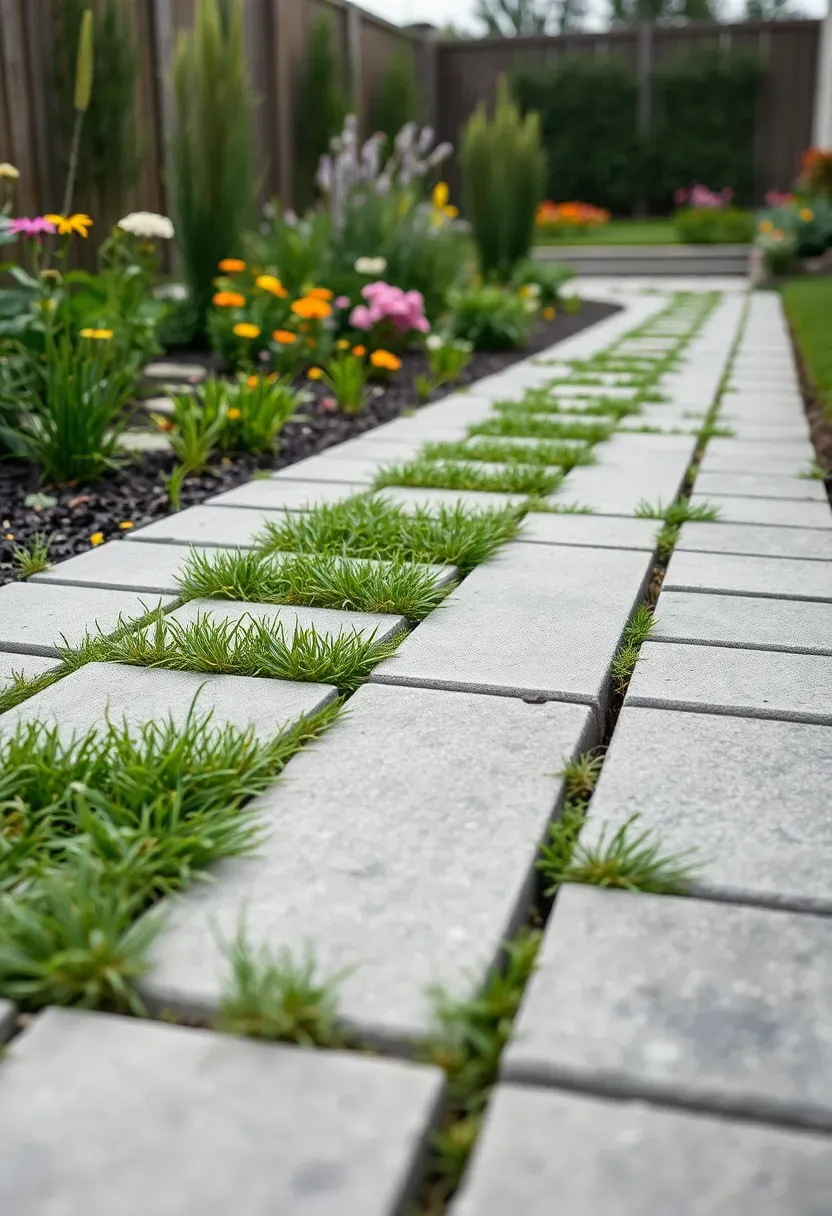
17. Permeable Paver Walkway
Permeable pavers address drainage and walkway needs simultaneously. These pavers have built-in spacing nibs or wider joints that allow rainwater to filter through into a gravel reservoir below. Municipal stormwater regulations in many areas now incentivize or require permeable surfaces for new hardscape, and a walkway is an easy place to comply. The pavers themselves cost about 15-20% more than standard concrete pavers. The base system is the bigger expense — you need a deep open-graded gravel reservoir instead of the standard compacted base, which adds excavation and material costs.
Tips
- Fill joints with small angular aggregate, not sand — sand clogs the drainage channels
- Avoid sealers on permeable pavers — they defeat the purpose by blocking water flow
- Vacuum or pressure-wash joints annually to remove fine sediment that reduces permeability
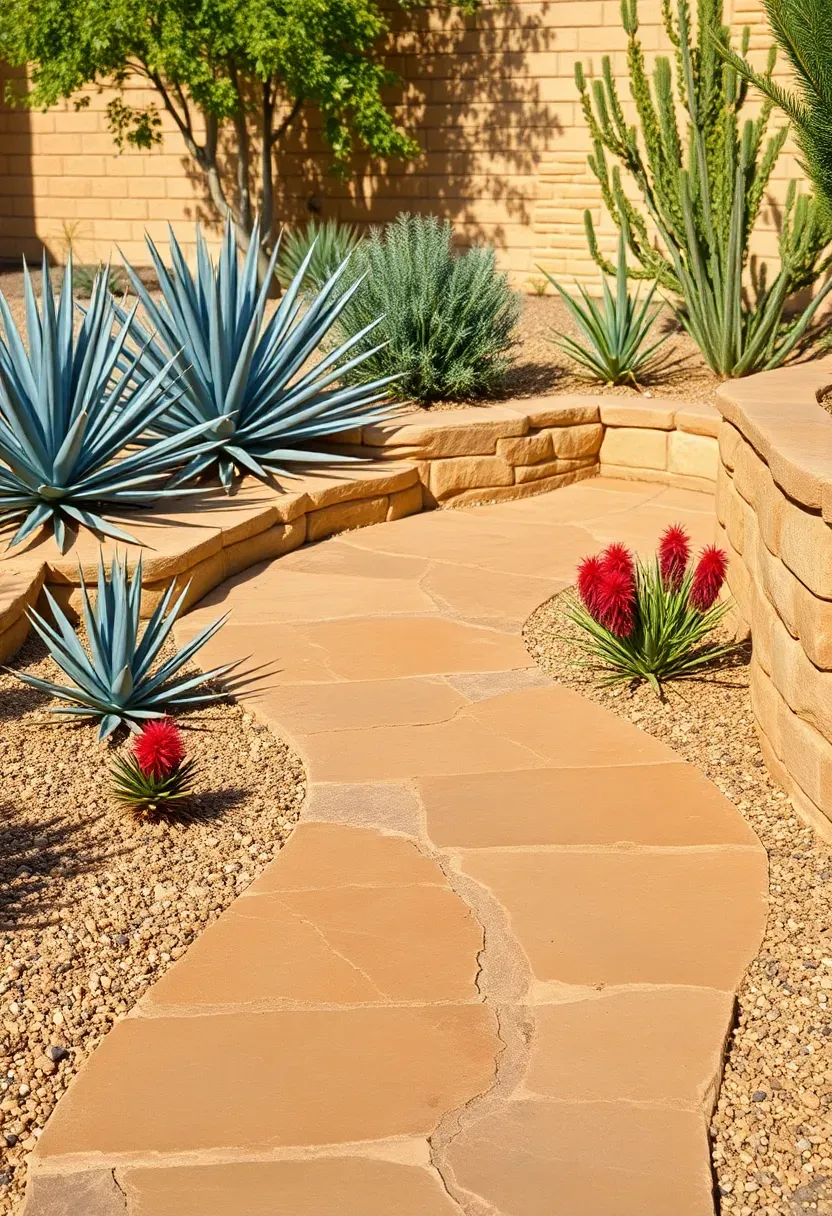
18. Sandstone Pathway
Sandstone is softer and warmer-toned than bluestone or slate, with colors ranging from pale buff to deep red depending on the iron content. Indian sandstone and Arizona sandstone are the most common imports. The material cuts and shapes easily, which makes custom fitting affordable. Sandstone absorbs water more readily than granite or bluestone, so it needs sealing in wet climates to prevent staining and moss growth. In dry western climates it performs beautifully with almost no maintenance. The warm tones pair naturally with adobe, stucco, and earthen garden walls.
Tips
- Choose sandstone rated for your freeze zone — not all sandstone handles frost
- Apply an impregnating sealer rather than a topical one to maintain the natural texture
- Pair buff sandstone with terracotta pots and warm-toned gravel for a cohesive palette
Recommended
Items for this idea
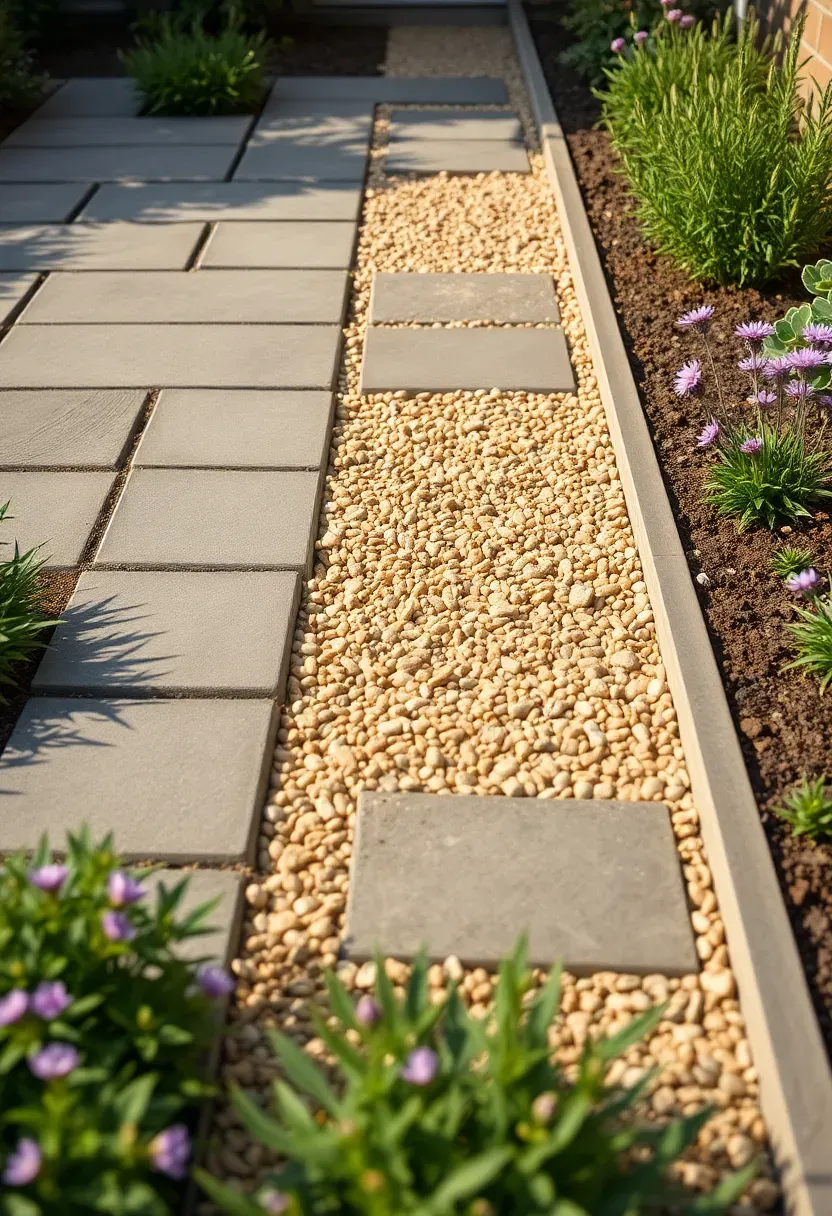
19. Mixed Material Walkway
Combining two or three materials in a single walkway adds visual interest and lets you match the path to different yard zones. A common approach: large stone slabs through the lawn transitioning to gravel through the garden beds, then brick pavers near the patio. Each material signals a different area while maintaining a connected route. The key to making mixed materials work is consistency in at least one dimension — keep the walkway width constant even as the material changes, or use a shared border material like steel edging to unify the transitions. Random mixing without a plan looks like leftover materials rather than a design choice.
Tips
- Limit yourself to 2-3 materials maximum — more than that reads as chaotic
- Transition materials at natural break points like garden bed edges or grade changes
- Use the most durable material in the highest-traffic section near doors and gates
Quick FAQ
How wide should a backyard walkway be? A primary walkway should be at least 36 inches wide so two people can walk side by side comfortably. Secondary garden paths can be as narrow as 18-24 inches. Check local building codes — some jurisdictions require 44-inch minimum width for accessible paths.
Which walkway material lasts the longest? Properly installed natural stone and poured concrete both last 25-50 years with minimal maintenance. Brick pavers fall close behind at 20-30 years. Loose materials like gravel, mulch, and DG need regular replenishment but the base structure lasts indefinitely.
Can I install a backyard walkway myself? Loose material paths like gravel, mulch, and stepping stones are straightforward DIY projects. Dry-laid pavers and flagstone require more skill but are manageable with research and patience. Poured concrete and mortared stone are best left to professionals unless you have experience with wet masonry.
Do backyard walkways need a permit? Most jurisdictions do not require permits for walkways at grade level. However, walkways that include steps, retaining walls over 30 inches, or connect to public sidewalks may trigger permit requirements. Check with your local building department before starting.
What goes under a backyard walkway? Most walkways need a compacted gravel base (4-6 inches), a sand or stone dust setting bed (1 inch), and edging to contain the surface material. Loose material paths benefit from landscape fabric between the base and surface to limit weed growth. Skip the fabric under pavers — it does not help and can trap moisture.
The right walkway material depends on three things: your budget, your climate, and how much maintenance you are willing to do. Gravel and mulch get you a path this weekend for under $200. Stone and pavers cost more but last decades. Pick the material that fits your yard's style and your own tolerance for upkeep, lay a solid base, and the path will serve you well for years. Start with the section you walk most — the route from the back door to wherever you spend your evenings — and expand from there.
Pinterest cover for 19 Backyard Walkway Ideas That Look Great
About the author
OBCD
CGI visualization and interior design content. We create detailed 3D renders and curate practical design ideas for every room in your home.