23 Backyard Water Feature Ideas
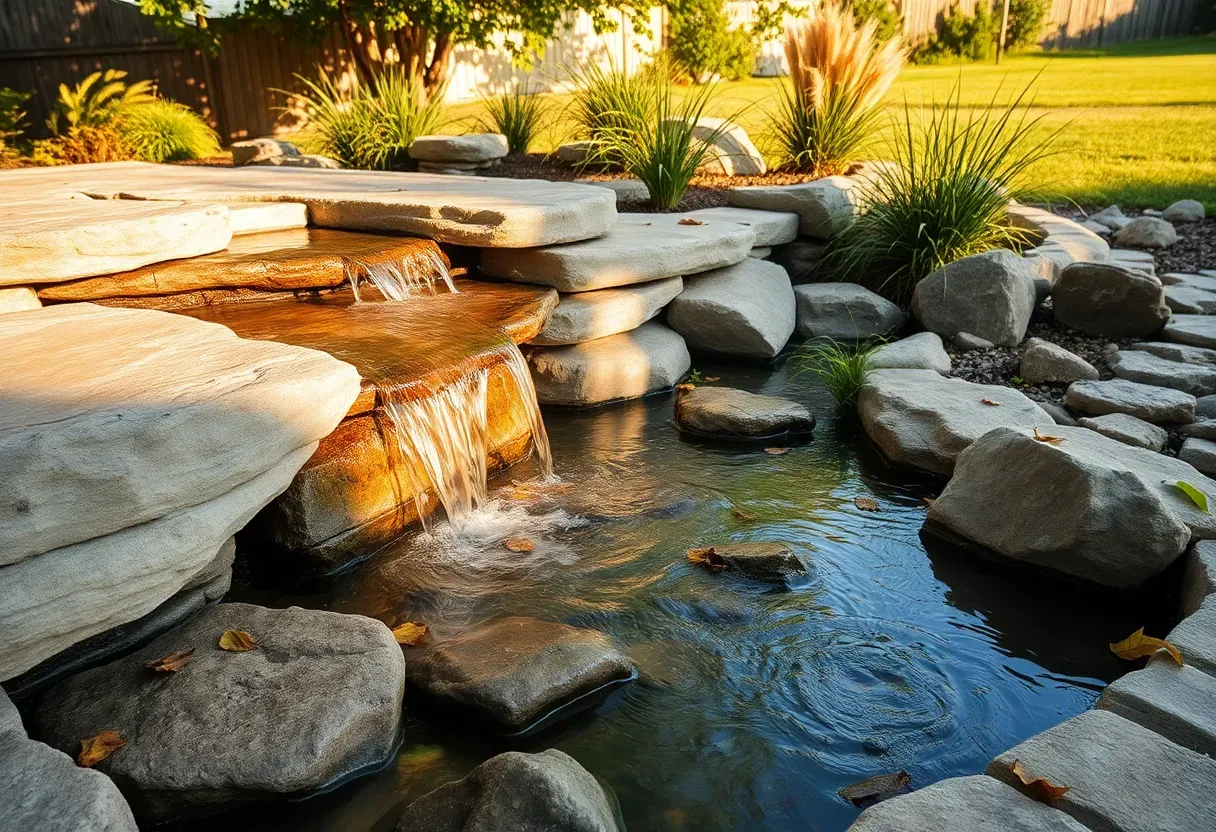
Water does something to a yard that no amount of landscaping can replicate. The sound alone changes how a space feels — blocking traffic noise, masking neighbors, giving you a reason to sit outside longer. I installed a simple recirculating boulder fountain three years ago for about $400, and it became the one thing every visitor comments on. Not the pergola, not the fire pit. The rock with water coming out of it. These 23 ideas range from weekend projects under $200 to full-scale installations that need professional help, with honest cost breakdowns and the maintenance reality nobody puts on Pinterest.
Here are water features organized from simple standalone pieces through ponds, streams, and larger architectural installations.
Table of Contents
- Bubbling Rock Fountain
- Ceramic Urn Spillover
- Millstone Fountain
- Copper Bowl Cascade
- Japanese Bamboo Deer Chaser
- Stacked Slate Column
- Wall-Mounted Sheer Descent
- Corten Steel Blade Waterfall
- Rain Curtain Panel
- Natural Stream Channel
- Pondless Waterfall
- Wildlife Bog Garden
- Raised Reflecting Pool
- Stock Tank Water Garden
- Disappearing Fountain Basin
- Tiered Concrete Bowls
- Fire and Water Bowl
- Courtyard Scupper Wall
- Swimming Pool Spillover Spa
- Dry Creek Bed with Recirculating Flow
- Solar Birdbath Bubbler
- River Rock Splash Pad
- Infinity Edge Catch Basin
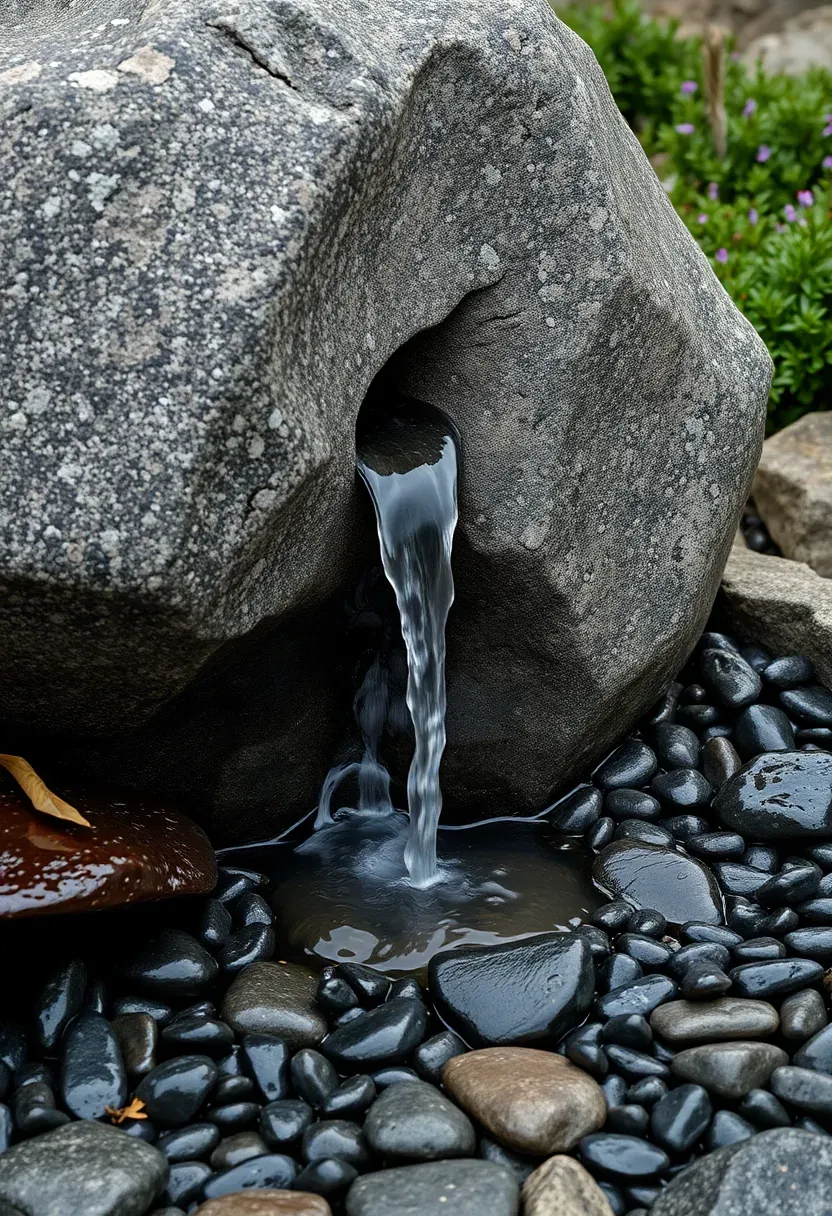
1. Bubbling Rock Fountain
The most forgiving water feature you can build. A drilled boulder sits on a buried basin filled with a submersible pump, and water recirculates from the top of the rock back down into the reservoir. No exposed standing water means no mosquito breeding, no drowning risk for small children, and minimal evaporation. You can source a suitable boulder from a local stone yard for $50-200 depending on size, and the pump and basin kit adds another $80-150.
Getting Started
- Pick a boulder with a flat enough base to stay upright — a wobbly rock on a basin lid is a headache you do not need.
- Use a 1/2-inch masonry bit and a hammer drill to bore the center hole, or pay the stone yard to do it for around $40.
- Size the underground basin at least 6 inches wider than the boulder on all sides to catch splash and reduce how often you refill.
We picked a few things that go well with this idea: DDcafor 1.5W Solar Birdbath Fountain Pump (★4.0), Mademax Solar Fountain Pump (6 Nozzles) (★4.0) and Mademax 1W Solar Birdbath Fountain (★4.0). As an Amazon Associate we earn from qualifying purchases.
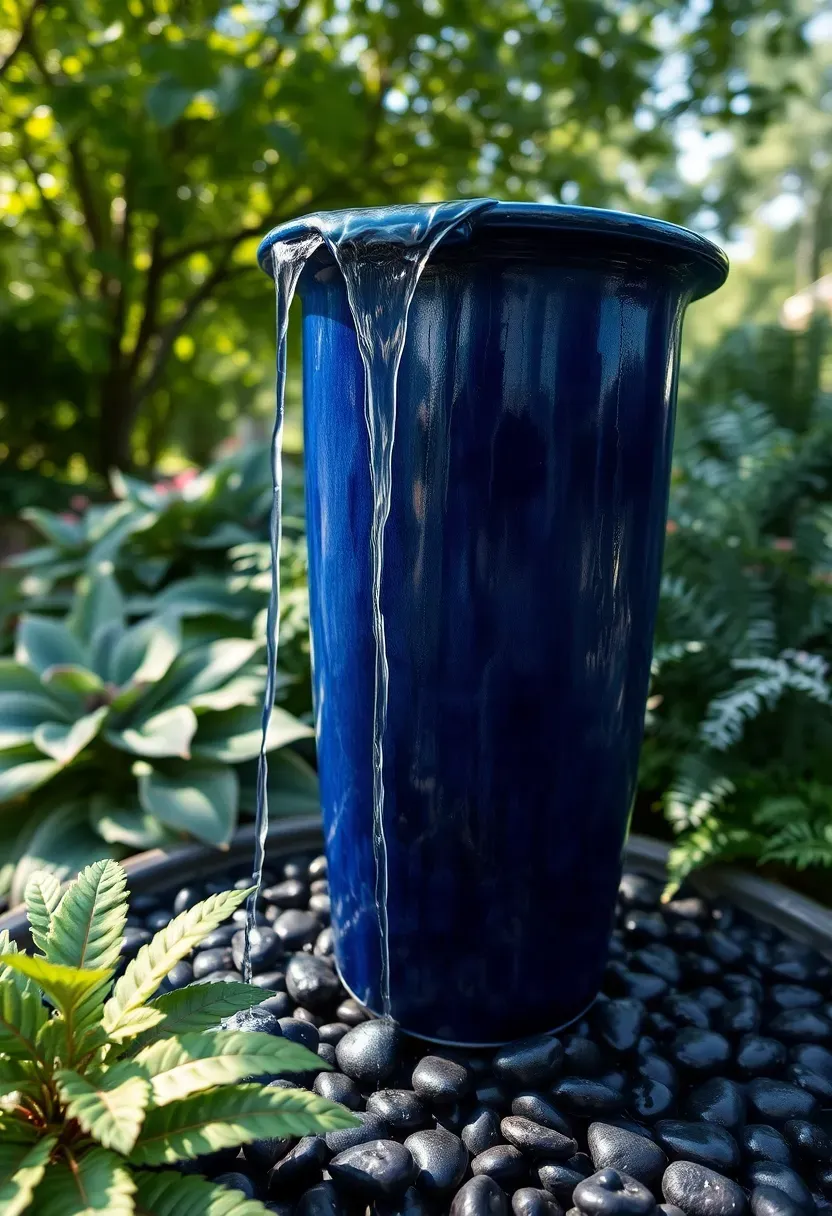
2. Ceramic Urn Spillover
The Problem
Most off-the-shelf fountain kits look exactly like off-the-shelf fountain kits. They share the same gray resin molds and the same weak pump that dies after one winter.
A Better Approach
Buy a single large ceramic urn — the kind garden centers sell for planting — and convert it yourself. Drill a drainage hole in the bottom, run tubing from a pump in a buried reservoir up through the urn, and let water sheet over the rim. A 24-inch glazed ceramic pot costs $60-120 and looks ten times better than any resin kit at twice the price. The glaze adds color that shifts in different light, and the pot can be swapped out if you want a new look in a few years.
Watch For
- Ceramic cracks in freeze-thaw climates. Drain the system before first frost or bring the urn inside.
- Use a pump with adjustable flow so the water sheets over the rim instead of shooting up like a geyser.
We picked a few things that go well with this idea: Half Off Ponds Pondless Waterfall Kit (3200 GPH) (★5.0), Aquascape Backyard Waterfall Fountain Kit (★4.1) and Aquascape DIY Backyard Waterfall Kit (★4.2). As an Amazon Associate we earn from qualifying purchases.
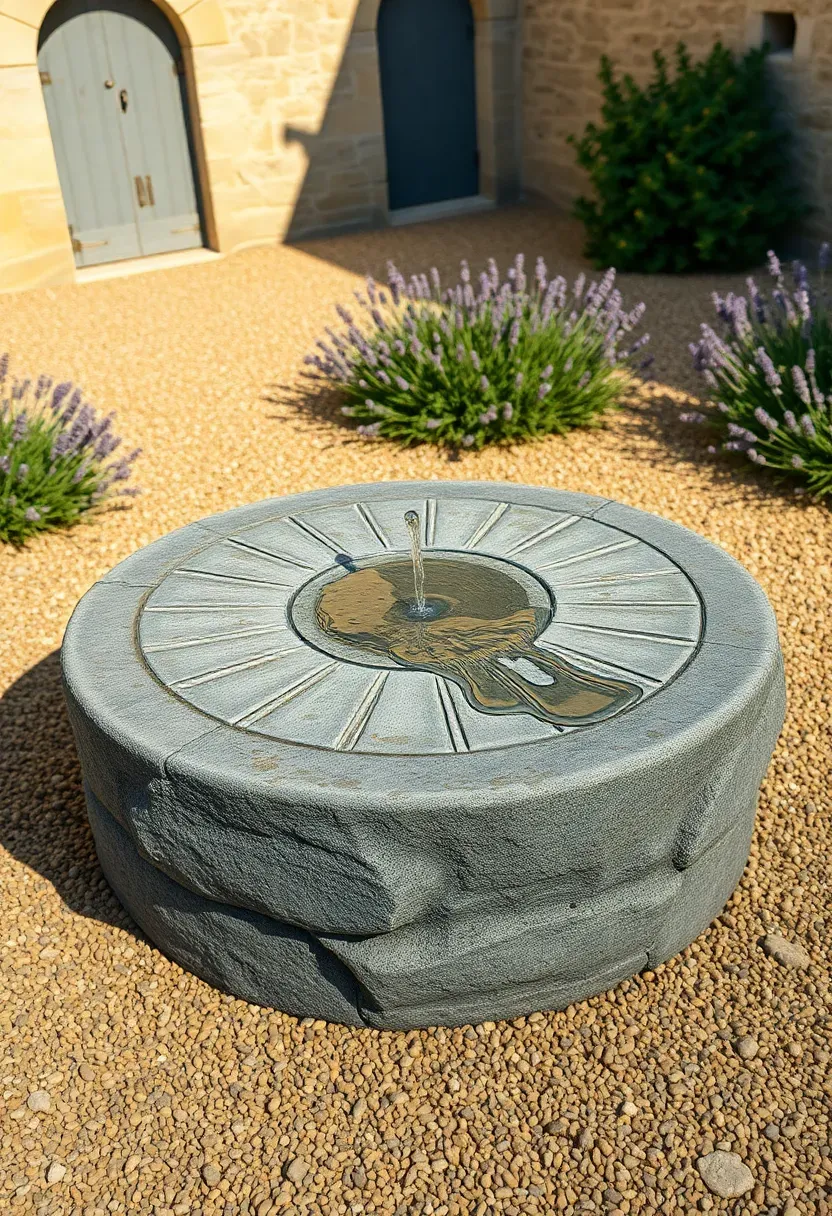
3. Millstone Fountain
Reclaimed millstones from old grain mills make some of the most visually interesting fountain bases you can find. The carved grooves direct water in spiral patterns as it flows across the surface, and the aged stone has a patina that new materials cannot match. Authentic millstones run $200-800 depending on size and condition. Reproduction versions in cast concrete cost less but weigh nearly the same and skip the history.
Tips
- Place the millstone on a sturdy metal grate over the basin — these stones weigh 200-500 pounds and will crush a plastic basin lid.
- A low-flow pump (200 GPH) creates the best effect since you want water to follow the grooves rather than flood over them.
- Pair with creeping thyme planted between surrounding flagstones for a look that feels like it has been there for decades.
We picked a few things that go well with this idea: VIVOSUN 800GPH Submersible Fountain Pump (★4.4), 400GPH Submersible Outdoor Fountain Pump (★4.2) and WaterRebirth 3200GPH Large Fountain Pump (★4.4). As an Amazon Associate we earn from qualifying purchases.
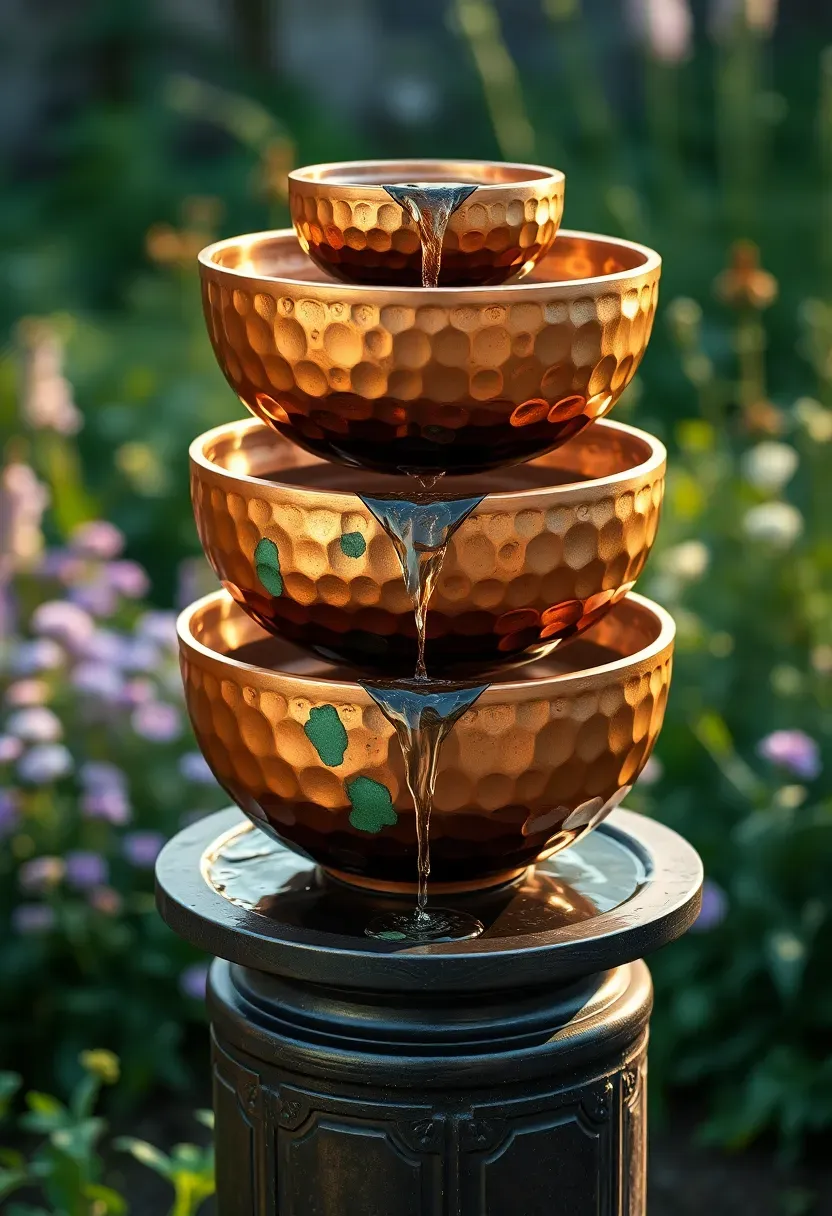
4. Copper Bowl Cascade
How to Build It
Copper develops a green patina over 6-12 months outdoors, which is either the whole point or something you need to prevent with sealant — decide before you start.
Step 1: Source the Bowls
Buy three to five copper mixing bowls or planters in graduated sizes. Restaurant supply stores sell heavy-gauge copper bowls cheaper than garden retailers.
Step 2: Drill and Stack
Drill a 1/2-inch hole in the center of each bowl except the bottom one. Thread vinyl tubing through the stack, silicone each joint, and connect to a small pump in the lowest bowl or a buried basin.
Step 3: Adjust the Flow
Start with the pump on its lowest setting. Copper is smooth, so water moves fast — too much flow and it overshoots the lower bowls entirely.
Watch Out
- Copper is toxic to fish and many aquatic plants. Keep this feature separate from any pond system.
- Total cost for materials runs $150-300 plus $60-80 for pump and tubing.
Recommended
Items for this idea
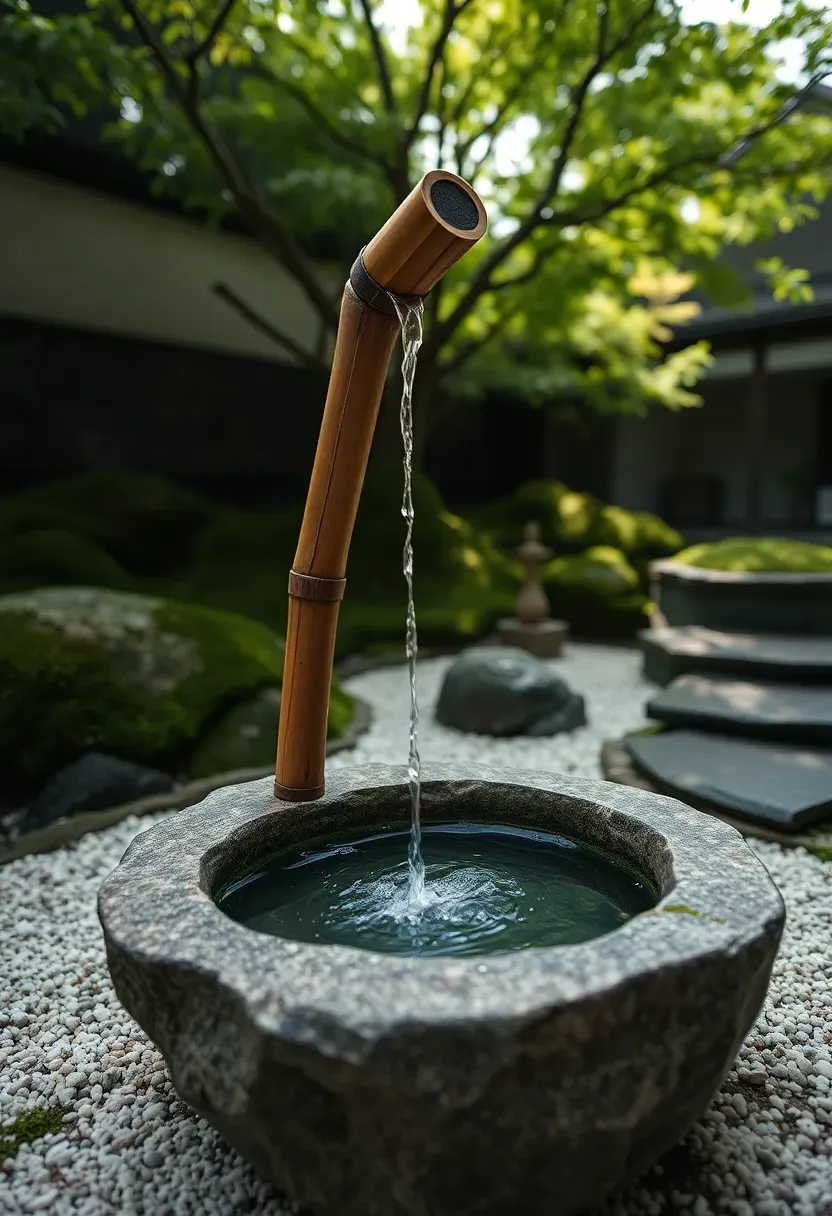
5. Japanese Bamboo Deer Chaser
The shishi-odoshi works on a simple principle: a bamboo tube fills with water, tips from the weight, empties, then rocks back and strikes a stone with a hollow knock. That rhythmic sound is the entire point — it was originally designed to scare deer away from gardens, but now it just makes any corner of a yard feel like a Kyoto temple garden.
What Matters
- Use thick-walled bamboo (at least 3-inch diameter) or it splits within one season. Moso bamboo holds up best outdoors.
- The pivot point needs to sit slightly off-center so gravity returns the tube to its filling position. Getting this balance right takes 15-20 minutes of adjustment.
- Pair it with a tsukubai stone basin for authenticity, or just let the water drain into a buried reservoir for a simpler setup.
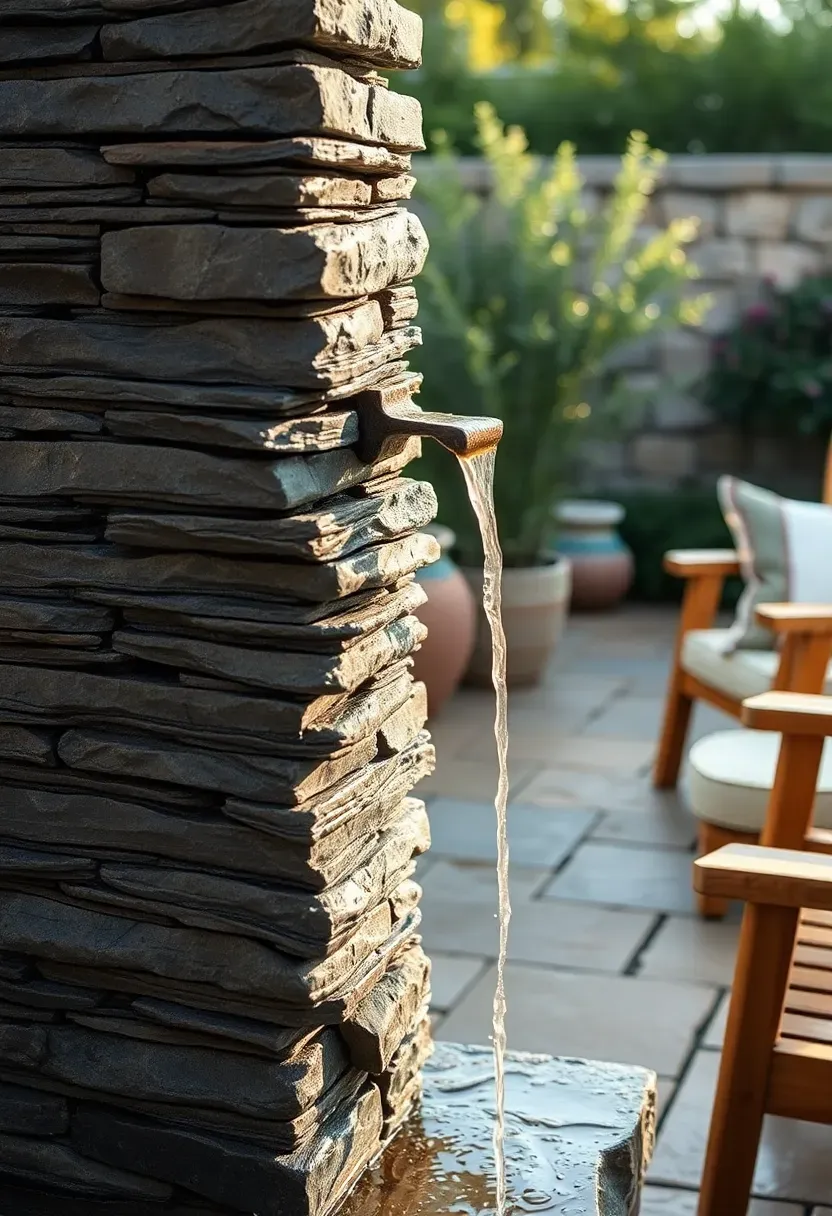
6. Stacked Slate Column
Slate vs. Granite vs. Basalt
All three work as stacked column fountains, but they handle water differently. Slate splits into thin, flat pieces that create more visual layers per foot of height. Granite is denser and harder to drill but nearly indestructible. Basalt columns come pre-drilled from specialty suppliers and offer a darker, more modern look.
For most backyards, slate offers the best balance of appearance, cost ($150-350 for materials), and workability. You can shape it with a masonry blade on a standard circular saw.
Choose Slate If
- You want a natural, layered look with visible texture.
- Your budget is under $400 for the complete feature.
Choose Basalt If
- You prefer a sleek, contemporary column.
- You do not want to drill stone yourself — pre-drilled basalt columns ship ready to stack.
Recommended
Items for this idea
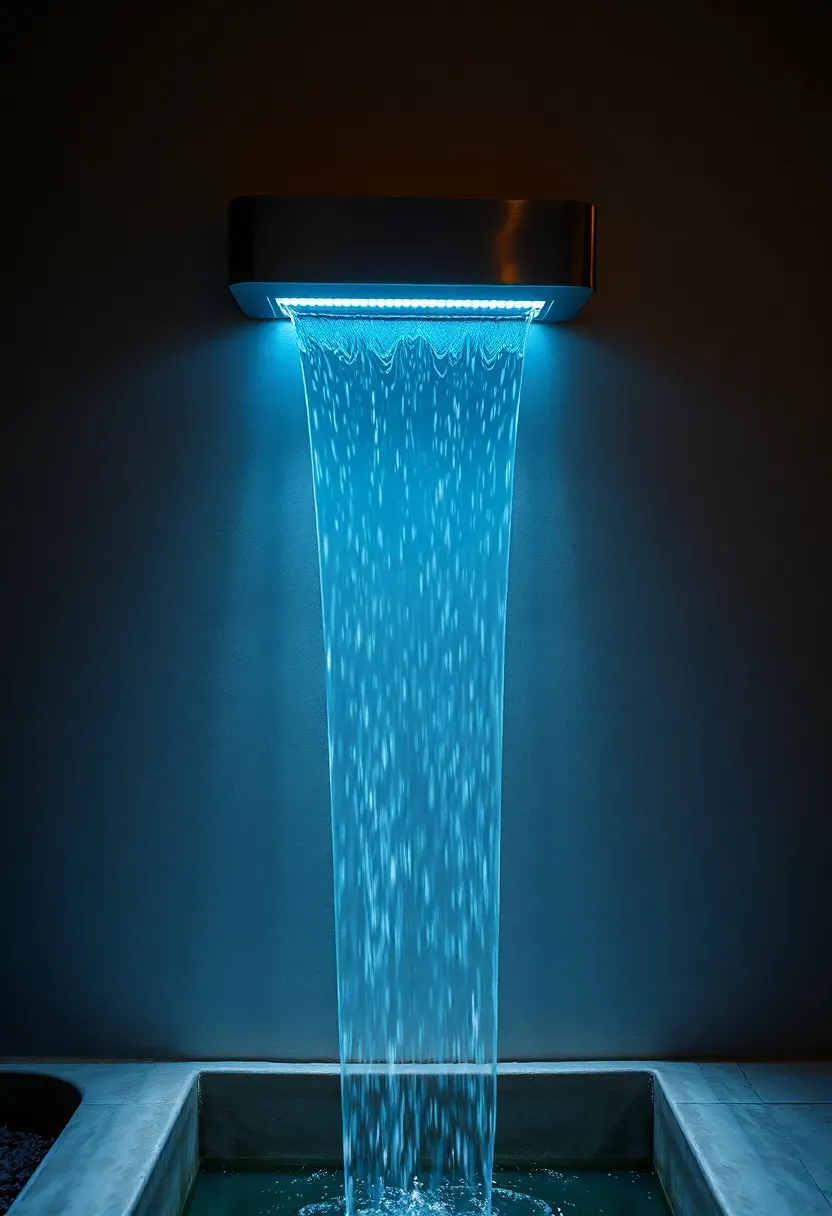
7. Wall-Mounted Sheer Descent
A sheer descent creates a thin, unbroken sheet of water falling from a horizontal slot — the kind of thing you see at resort pools. Installing one on a garden wall or fence brings that same effect to a residential yard. The hardware itself (a stainless steel or acrylic sheer descent spillway) costs $200-600 depending on width. Most residential versions span 18-36 inches. The pump needs to push enough volume to maintain an unbroken curtain: typically 30-50 GPM for a 24-inch unit, which means a dedicated pump, not a small fountain pump.
Tips
- Mount the spillway perfectly level or the sheet breaks into uneven streams — use a laser level, not a bubble level.
- Backlight the sheet with a single LED strip behind the spillway for a dramatic nighttime effect at minimal electrical cost.
- The catch basin below should be at least 18 inches wide to handle splash from wind.
8. Corten Steel Blade Waterfall
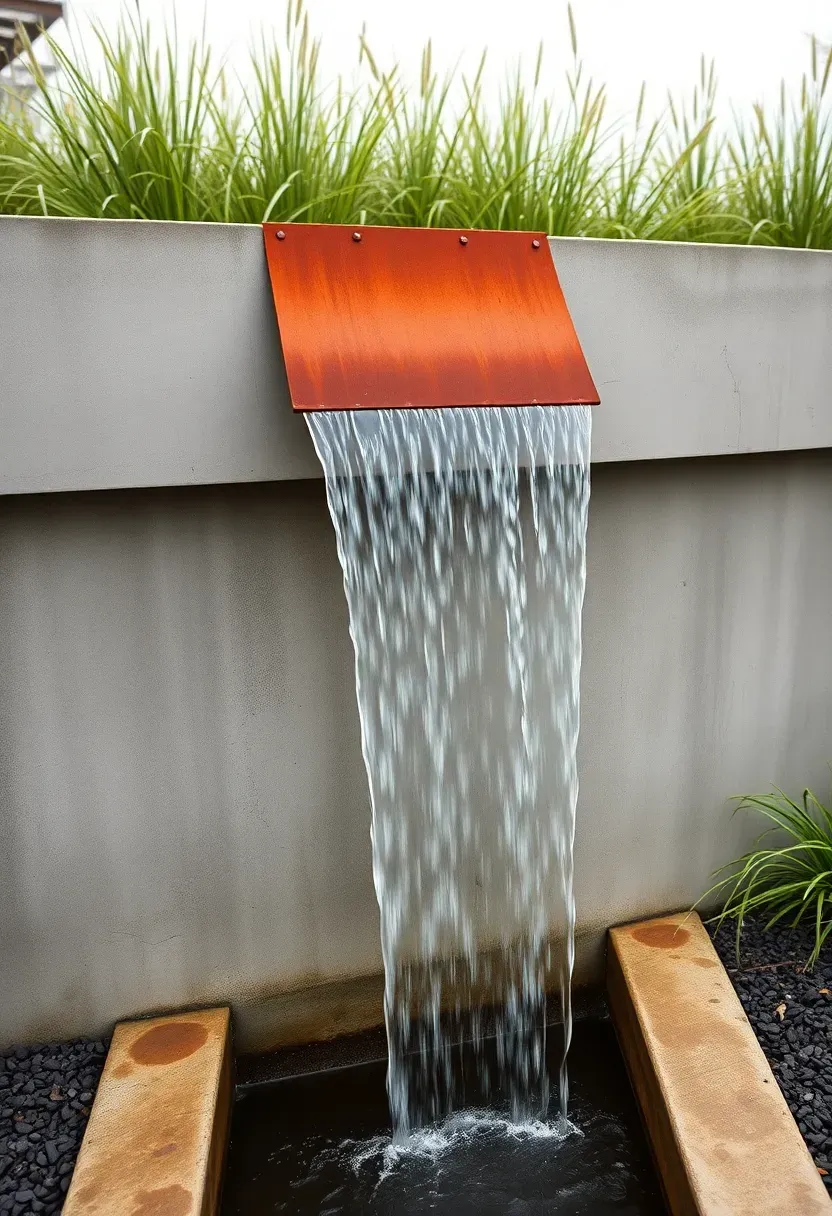
Corten steel develops a stable rust-orange surface layer that protects the metal underneath from further corrosion. As a waterfall blade, it creates a wide, thin curtain of water with a distinctly industrial-modern aesthetic. The rust color looks particularly good against concrete, dark stone, or deep green planting. A 48-inch corten blade runs $400-700 from landscape supply vendors. It weighs 30-60 pounds and needs solid mounting — lag-bolt it into a concrete or masonry wall, not a wood fence.
Pros
- Zero maintenance on the steel itself once the patina develops (8-12 weeks).
- The warm rust tone softens over time and blends with natural surroundings better than stainless steel.
Cons
- Rust runoff stains concrete and light-colored stone during the first few months of patina development. Place sacrificial pavers below the blade or seal the catch area.
- Not suitable for chlorinated or high-pH water — it accelerates corrosion past the protective layer.
Recommended
Items for this idea
9. Rain Curtain Panel
What It Is
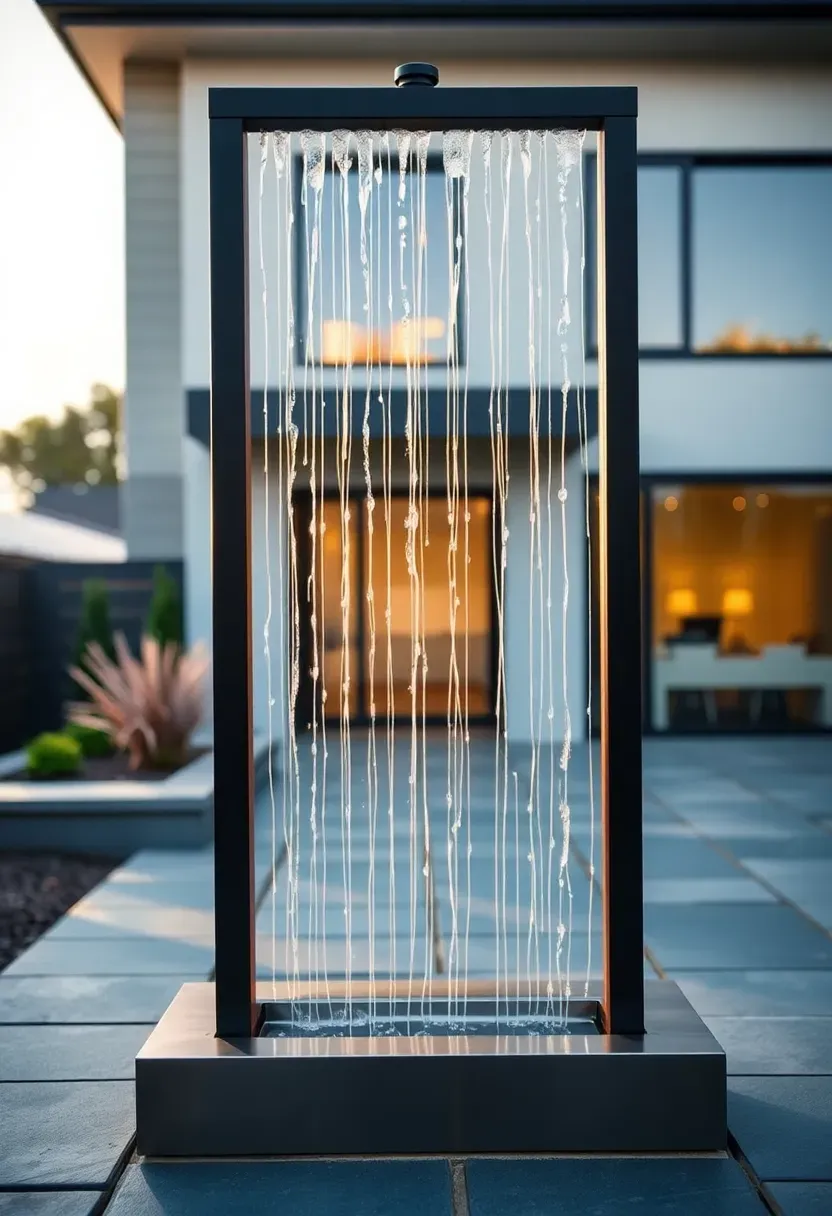
A rain curtain uses a perforated header pipe to release individual streams of water that fall in parallel lines — like a controlled rain shower you can see through. The visual effect is quieter and more meditative than a solid sheet of water.
Building One
Frame two vertical posts (steel, copper, or heavy timber) about 6-8 feet tall. Run a horizontal pipe across the top with evenly spaced 1/16-inch holes drilled every inch. Connect to a pump in a trough basin at the base. The spacing of the holes determines whether you get distinct streams or a merged curtain. Wider spacing (1.5 inches) gives cleaner individual lines. Total build cost: $300-600 for a 4-foot-wide panel.
Best Placement
- Position where you can see through it from seating areas — rain curtains work as semi-transparent room dividers.
- Avoid windy, exposed locations. Even light wind disrupts the streams and throws water outside the catch basin.
10. Natural Stream Channel
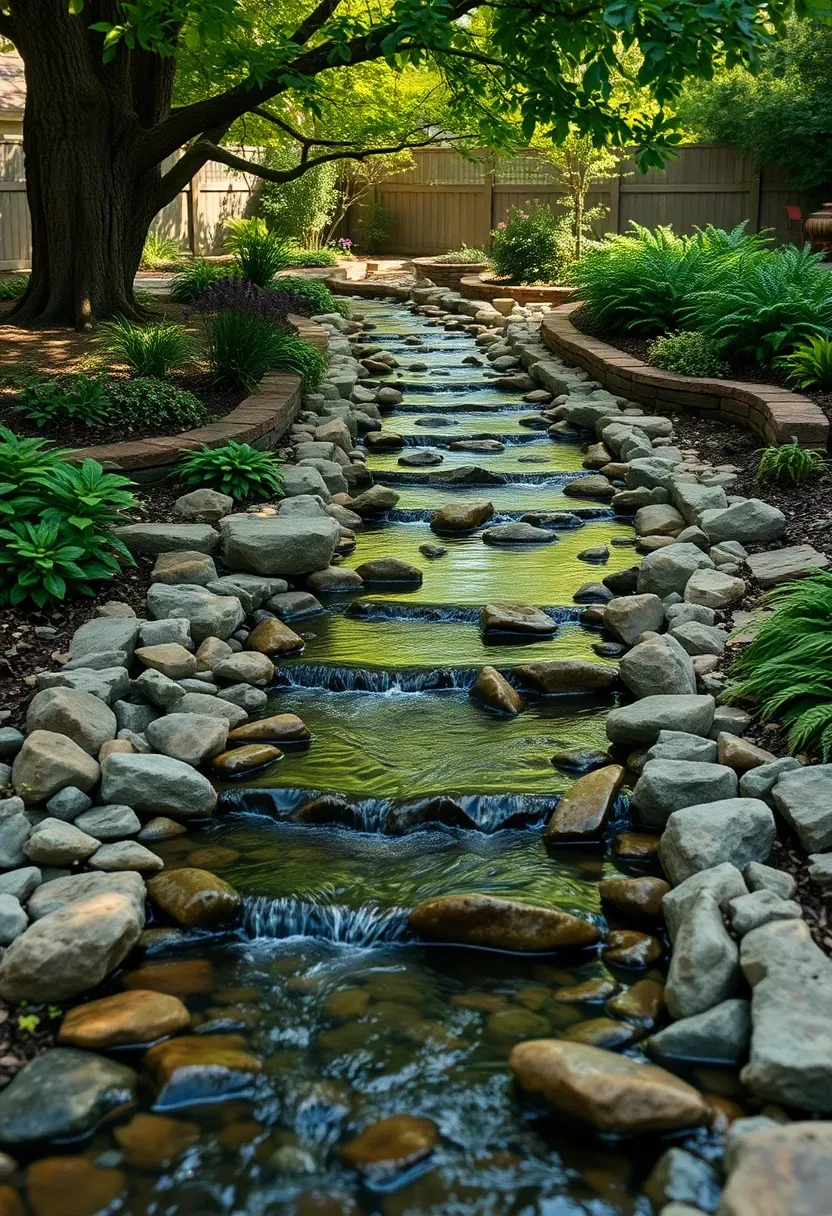
A recirculating stream is the most ambitious DIY water feature on this list, but also the most rewarding. You are building a miniature creek: a pump pushes water to the high point of your yard, and it flows downhill through a lined channel back to a collection basin. Even a 1-2% grade is enough. Most residential streams run 15-30 feet long and 18-24 inches wide.
How to Build
- Dig a shallow, winding trench following the natural slope of your yard. Straight lines look artificial — add gentle curves.
- Line with EPDM rubber liner (45 mil minimum), fold it around the edges, and hide the edges with overhanging stones.
- Place larger anchor rocks first to define the channel shape, then fill gaps with smaller river rock.
- Install a pump rated for the total head height plus friction loss. A 20-foot stream with 3 feet of elevation change needs roughly 1,500-2,000 GPH.
Watch Out
- Liner punctures from sharp rocks underneath. Use geotextile fabric beneath the liner as protection.
Recommended
Items for this idea
11. Pondless Waterfall
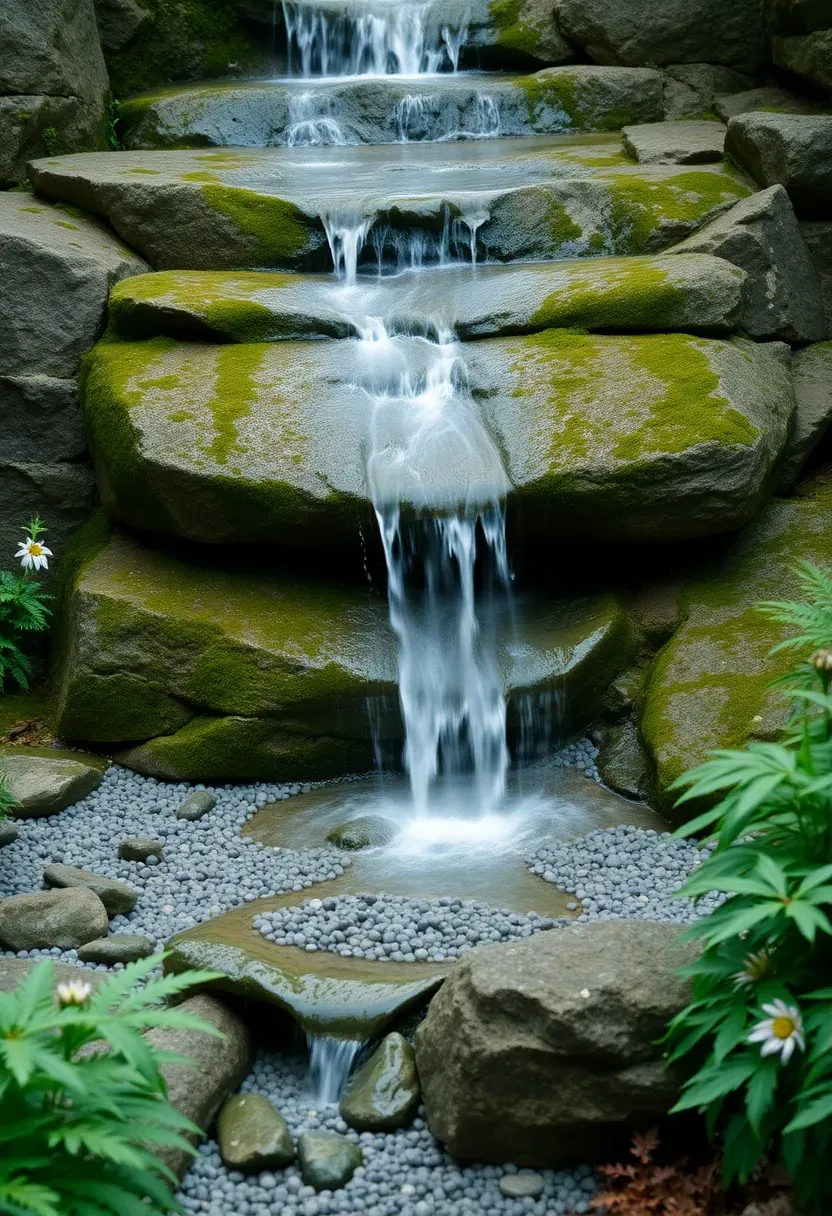
All the visual and audio appeal of a waterfall without maintaining a pond. Water falls over stacked rocks into a buried vault filled with gravel, where a pump sends it back to the top. The reservoir sits underground, so you see rocks, hear water, but there is no open pool. This makes it safe around children and pets, and dramatically reduces algae problems since there is no standing water exposed to sunlight.
Tips
- The buried vault needs to hold enough water to keep the pump submerged even when the system is running and water is distributed across the rock face. Oversize the vault by at least 30%.
- Use foam sealant between the waterfall rocks to direct water flow and prevent it from disappearing behind the stones where nobody can see it.
- Budget $1,500-4,000 installed, or $600-1,200 as a DIY project using a pondless waterfall kit.
12. Wildlife Bog Garden
Why Consider One
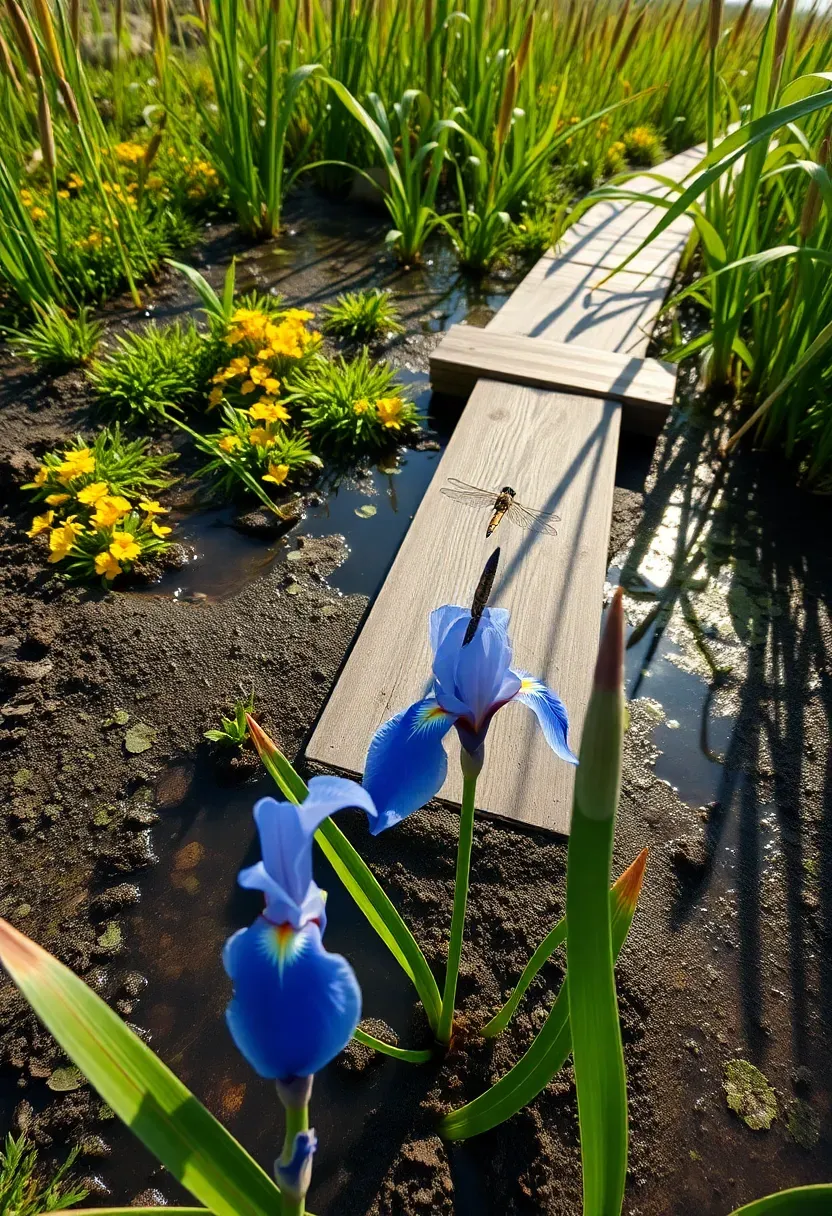
Most water features are decorative. A bog garden is functional ecology. It creates habitat for frogs, dragonflies, and beneficial insects while filtering water naturally through plant roots. If you already have a wet, poorly drained corner of your yard, you are halfway there — instead of fighting the drainage, lean into it.
How to Make It Work
Dig a shallow depression (12-18 inches deep), line it with pond liner, and poke a few small holes at the 6-inch mark so excess water drains slowly rather than pooling indefinitely. Fill with a mix of pea gravel and organic soil. Plant native wetland species: blue flag iris, marsh marigold, cardinal flower, sedges. Keep 30-40% open water surface for wildlife access.
Honest Tradeoffs
- Looks wild and unkempt by suburban standards. If your HOA has opinions about tidy yards, this may not fly.
- Mosquitoes breed in still, shallow water. Add a small bubbler pump or introduce mosquitofish (Gambusia) to keep larvae in check.
Recommended
Items for this idea
13. Raised Reflecting Pool
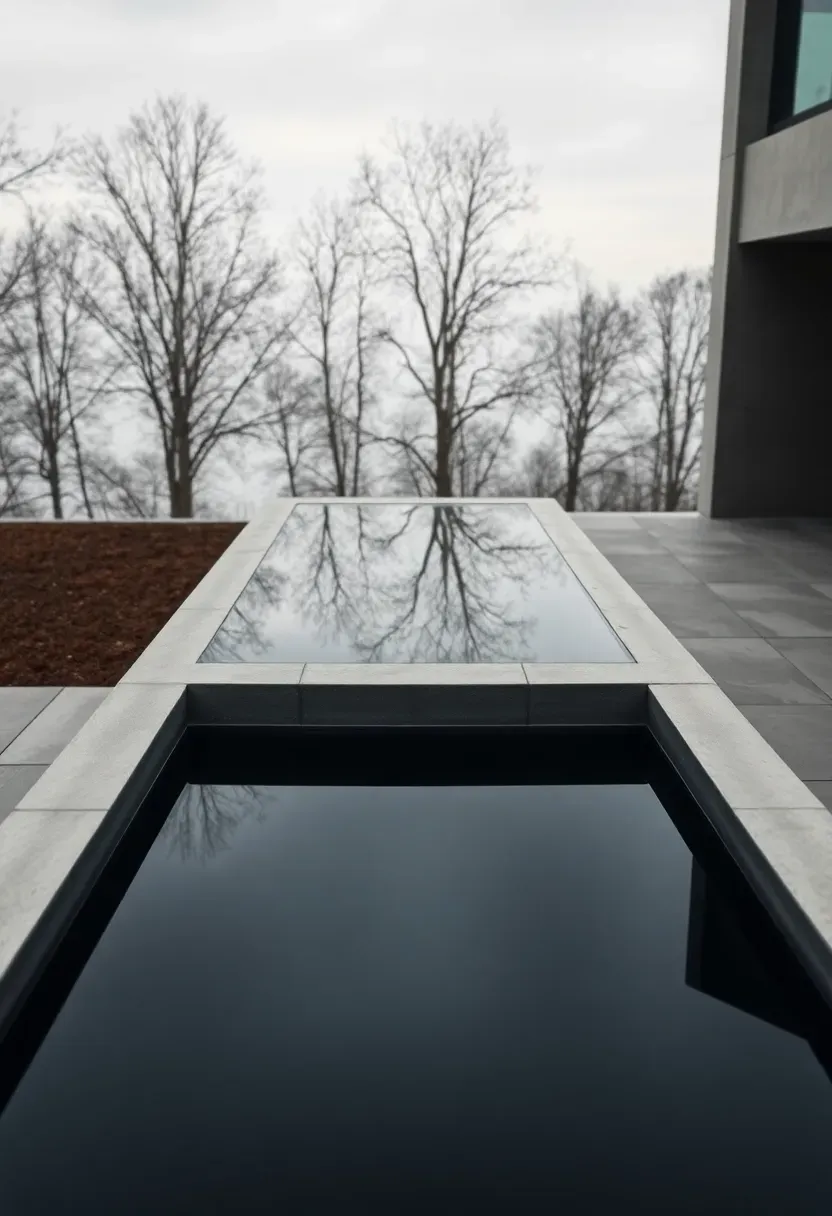
A reflecting pool works through restraint. No fountain, no cascade, no bubbling — just still water in a geometric container that mirrors the sky and surrounding landscape. The effect depends entirely on keeping the water clean and the edges precise. Raised pools (18-24 inches off ground level) work better than in-ground versions because the elevated waterline catches more sky and the walls create built-in seating.
Tips
- Use dark interior finishes (black plaster, dark aggregate, or black pond liner) to maximize reflection. Light-colored interiors show the bottom instead of the sky.
- Add a very small recirculating pump on a timer — 30 minutes twice a day prevents stagnation without disrupting the surface.
- Keep overhanging trees trimmed. Leaf debris is the primary maintenance burden with reflecting pools.
14. Stock Tank Water Garden
Stock Tank vs. Whiskey Barrel vs. Ceramic Pot
All three work as container water gardens. Here is how they compare.
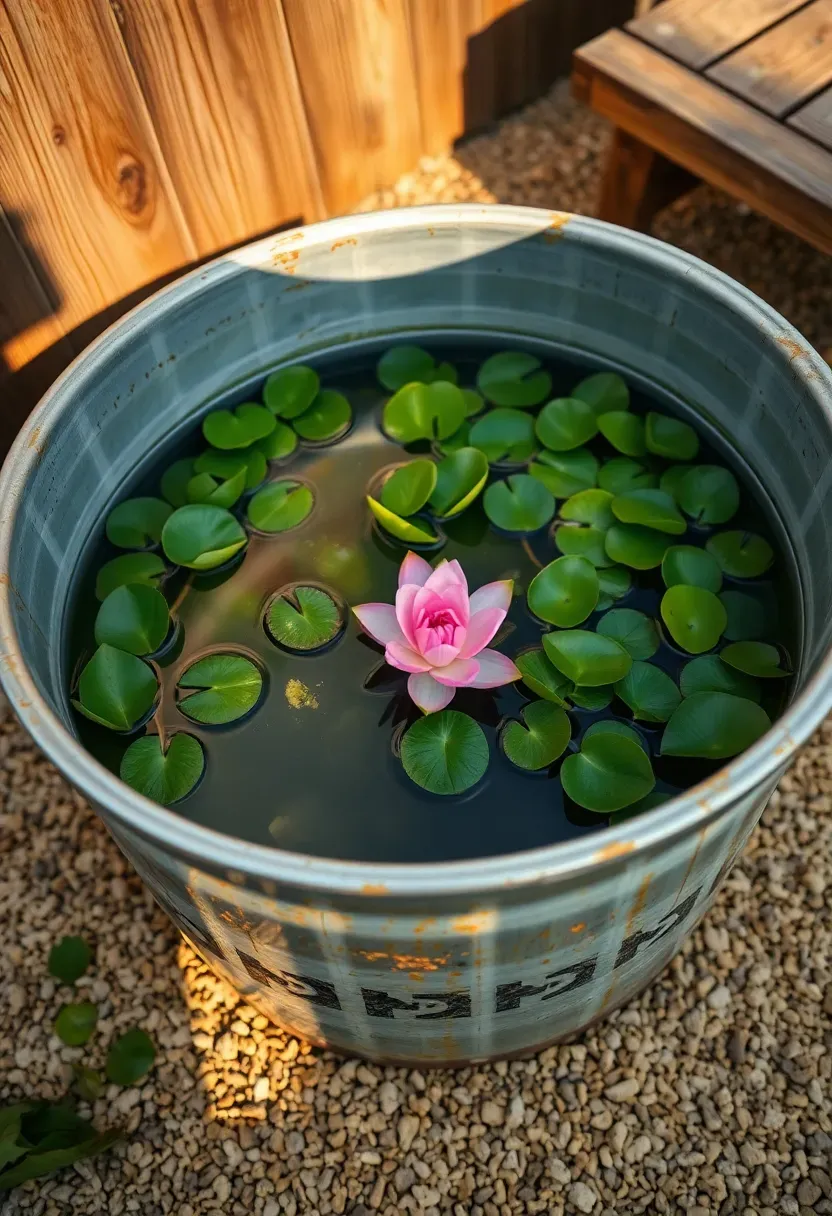
Stock tanks (galvanized steel, 50-150 gallon) cost $80-200, last 15-20 years, and hold enough water volume to support a small ecosystem with plants and a few goldfish. They heat up in direct sun, which limits plant choices.
Whiskey barrels look rustic but rot from the inside within 3-5 years unless lined with plastic. They hold only 25-30 gallons — enough for plants but too small for fish.
Ceramic pots are the most attractive option and the most fragile. They crack in freezing temperatures and rarely exceed 15 gallons.
Best Pick
For most backyards, the oval stock tank (Rubbermaid 100-gallon) hits the sweet spot. Big enough for one dwarf water lily, three to four marginal plants, and a handful of goldfish. Small enough to drain and move if needed.
Recommended
Items for this idea
15. Disappearing Fountain Basin
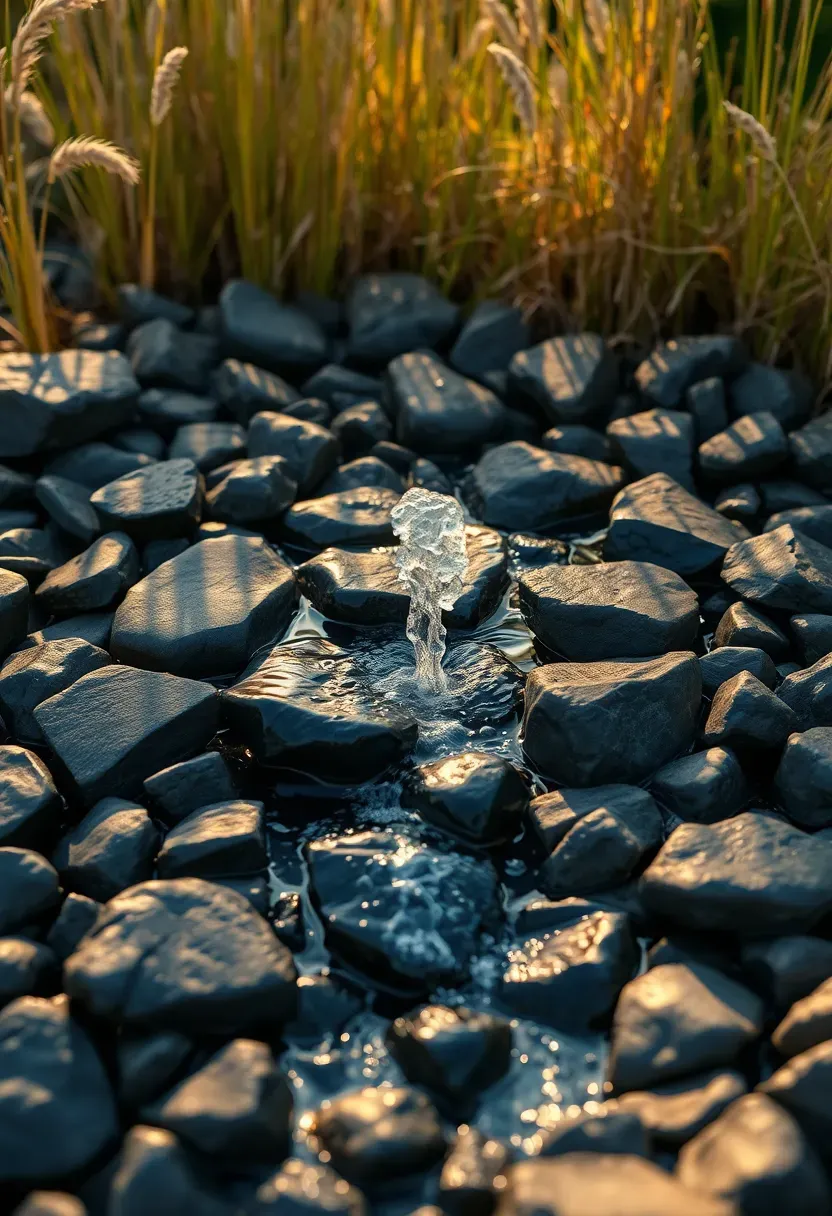
This is the minimalist version of the bubbling rock — water emerges from a covered basin, flows over decorative stones on the surface, and drains back through the gaps. No visible water pool. The appeal is the sound and the wet sheen on the stones without any open water to maintain. It works in spaces as small as 3x3 feet, making it one of the few water features genuinely suited to small patios and courtyard gardens.
Tips
- The basin cover (usually a heavy-duty grate or fiberglass lid) must support the weight of the decorative stone plus foot traffic if people walk near it. Check the load rating.
- Use a mix of stone sizes on top — all same-sized rocks look unnatural. Blend 4-8 inch river rock with 1-2 inch pebbles.
- Install an auto-fill valve connected to a garden hose to maintain water level during hot weather. Evaporation through the rock layer is faster than you expect.
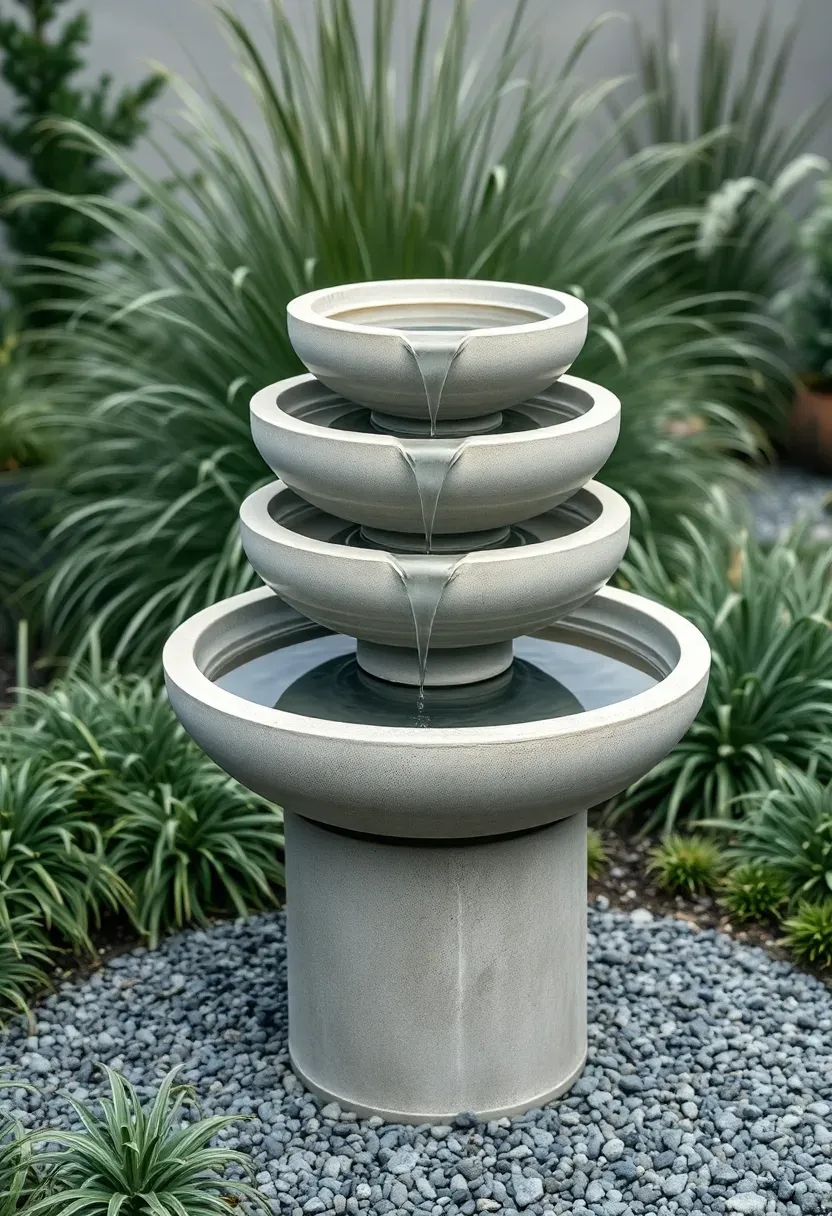
16. Tiered Concrete Bowls
How to Build
Pour your own tiered fountain using concrete and plastic bowl molds — it costs a fraction of buying a cast-stone version retail.
Step 1: Mold Selection
Buy three nesting stainless steel mixing bowls (14-inch, 11-inch, 8-inch). Coat interiors with cooking spray as a release agent.
Step 2: Concrete Mix
Use a high-strength concrete mix (like Quikrete 5000) with acrylic fortifier added to the water. This produces a smoother finish and better waterproofing than standard mix. Pack concrete into the molds at 1.5 inches thick. Embed a short length of PVC pipe in the center of each bowl for the water tube.
Step 3: Cure and Stack
Demold after 48 hours. Cure for a full week with daily misting. Stack on a central riser pipe, seal joints with silicone, and connect to a pump in the bottom basin. Total materials cost: $40-80.
Recommended
Items for this idea
17. Fire and Water Bowl
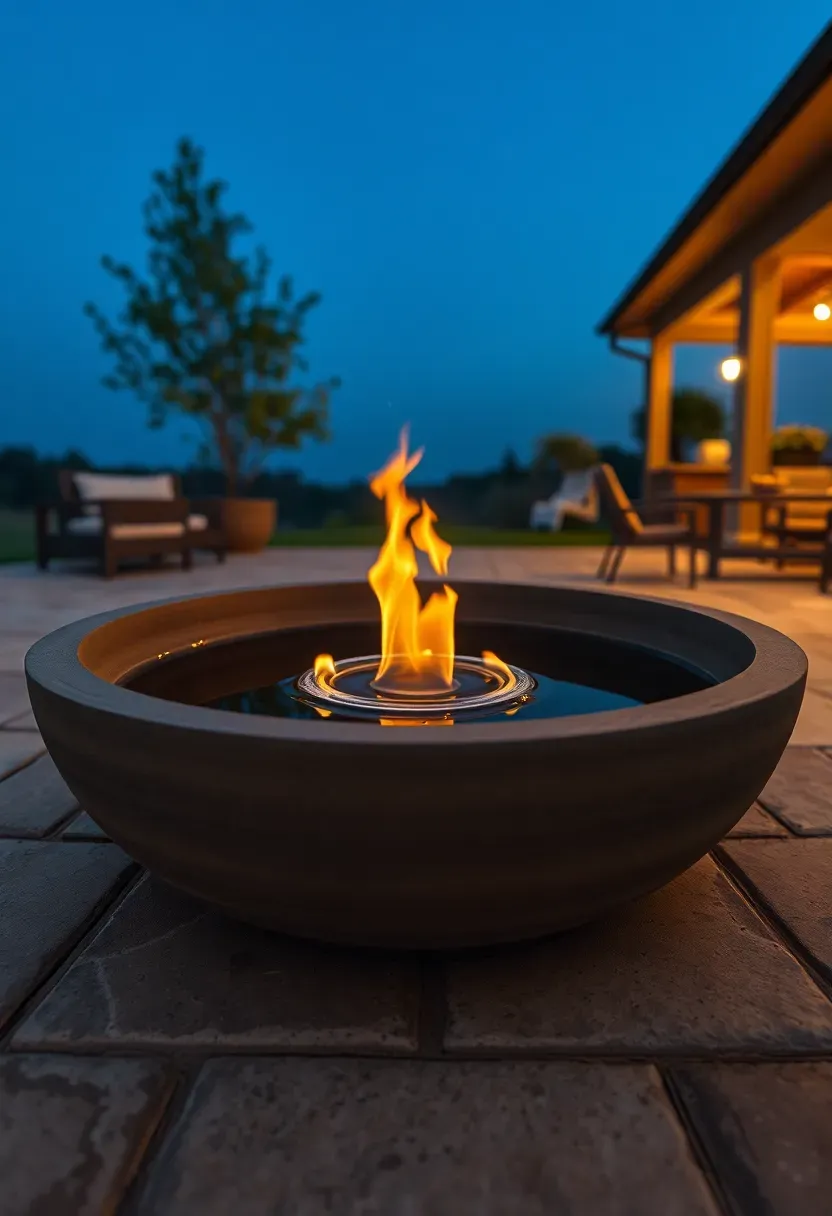
Fire and water in the same vessel creates a contrast that people cannot stop watching. A fire and water bowl is typically a concrete or cast-stone basin with a gas burner ring mounted above the waterline. The flames sit on top of the water surface. Most residential units use natural gas or propane and produce 50,000-90,000 BTU — enough heat to warm a seating area on cool evenings while the water below reflects the flames.
What to Know
- Requires a gas line run by a licensed plumber. This is not a DIY gas project — codes in most jurisdictions require permits and professional installation.
- Budget $1,200-3,500 for the bowl, burner, and gas line installation.
- Wind is the main annoyance. The flame dances in breezes above 10 mph and can blow out entirely in strong gusts. Position in a sheltered spot or add a glass wind guard.
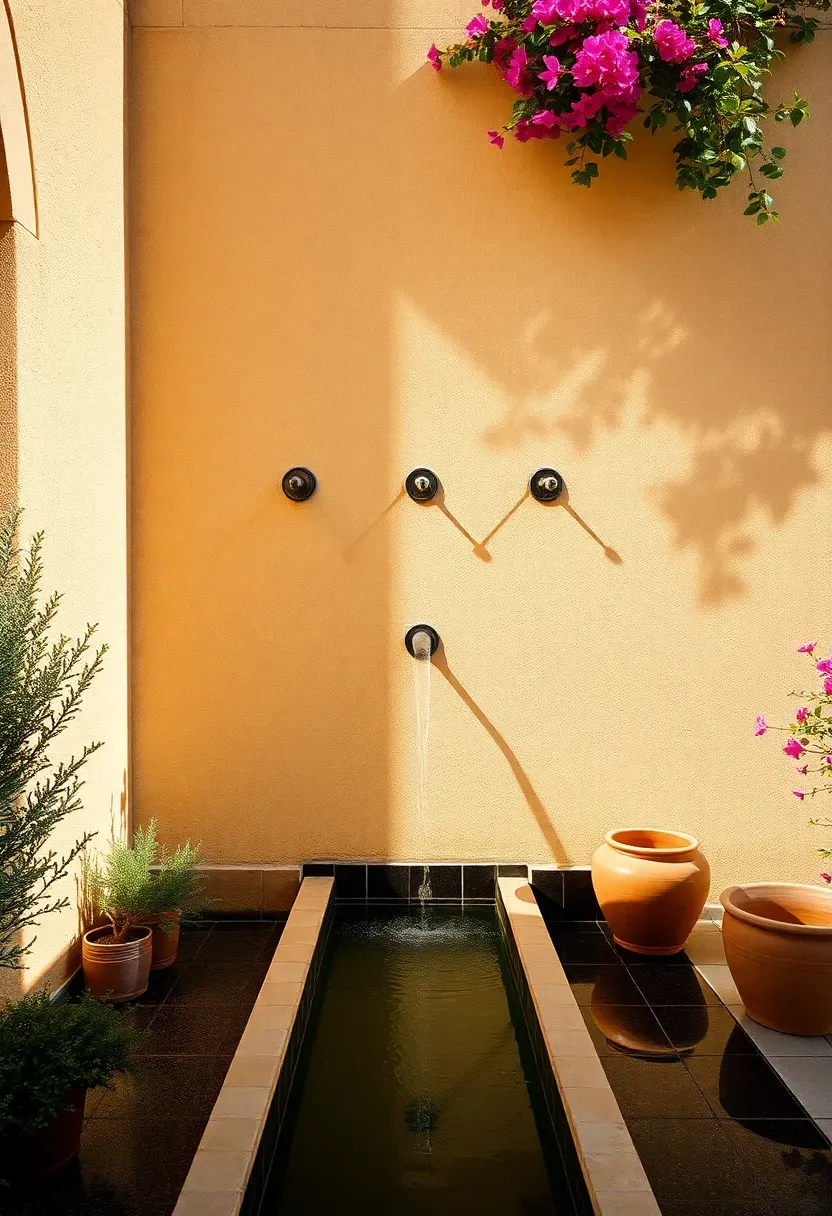
18. Courtyard Scupper Wall
Scuppers are horizontal spouts that project water outward from a wall in a smooth arc before it drops into a catch basin below. Three or five scuppers evenly spaced across a 6-8 foot wall section create a rhythmic visual pattern and a layered water sound that fills a courtyard. Copper scuppers develop patina; stainless steel stays reflective. The choice is aesthetic.
Tips
- The arc distance depends on water pressure and scupper diameter. A 2-inch scupper with 15 GPM flow throws water about 8-10 inches from the wall face. Size the catch basin accordingly.
- Mount scuppers at slightly different heights (stagger by 2-3 inches) for a more dynamic look than a perfectly straight row.
- Mediterranean, Spanish Colonial, and modern minimalist homes all suit this feature — it is more versatile than it first appears.
Recommended
Items for this idea
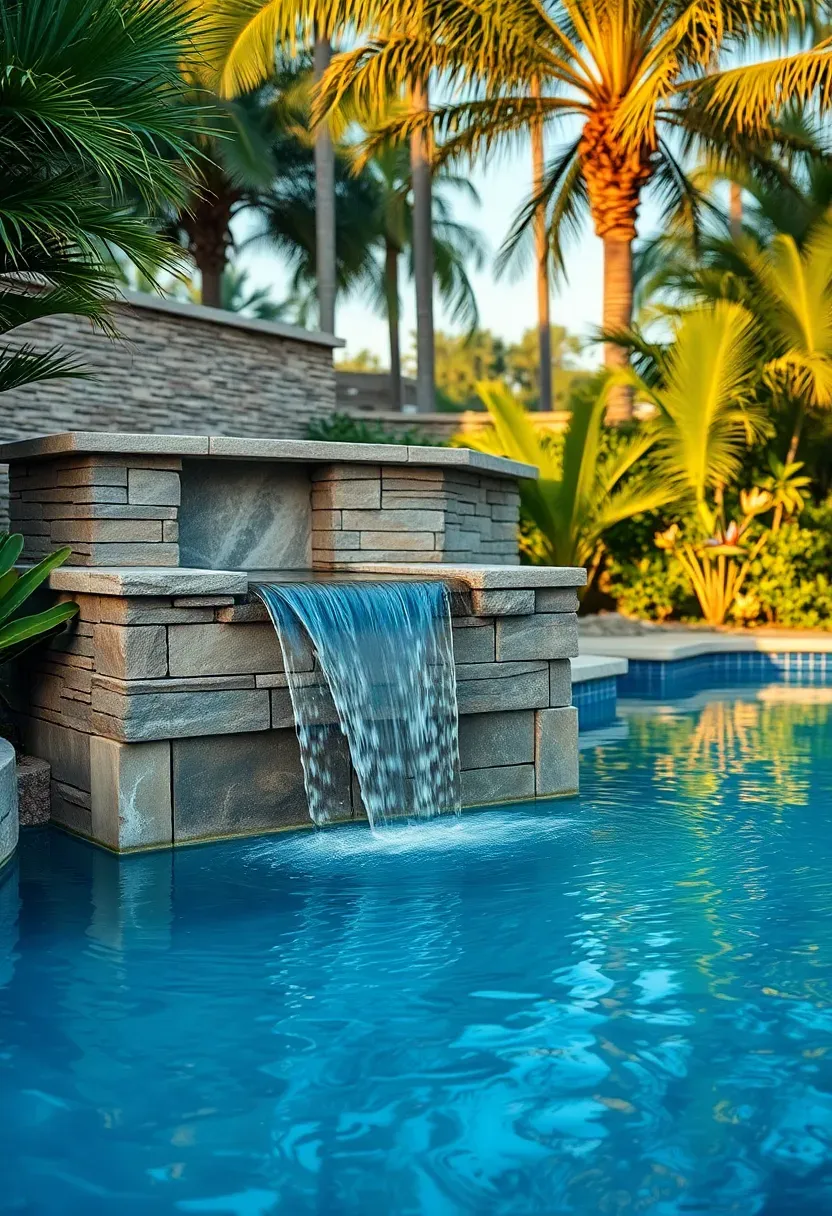
19. Swimming Pool Spillover Spa
What Makes It Different
A spillover spa sits elevated above the main pool, and water cascades over one edge into the pool below. You get a hot tub, a waterfall sound feature, and a visual focal point from one installation. The spa water mixes with pool water during overflow, so both share one filtration and chemical treatment system.
Costs and Considerations
Add $15,000-30,000 to a standard pool build for an integrated spillover spa. The elevation difference (usually 12-18 inches) requires additional structural engineering and reinforced walls to hold the water weight at the raised level. The spillover edge can be a smooth sheet (using a sheer descent lip) or a natural rock cascade — the choice drives the entire aesthetic of the pool area.
Best For
- Homeowners already building or renovating a pool.
- Yards where the spa provides a natural transition between pool and upper landscape level.
20. Dry Creek Bed with Recirculating Flow
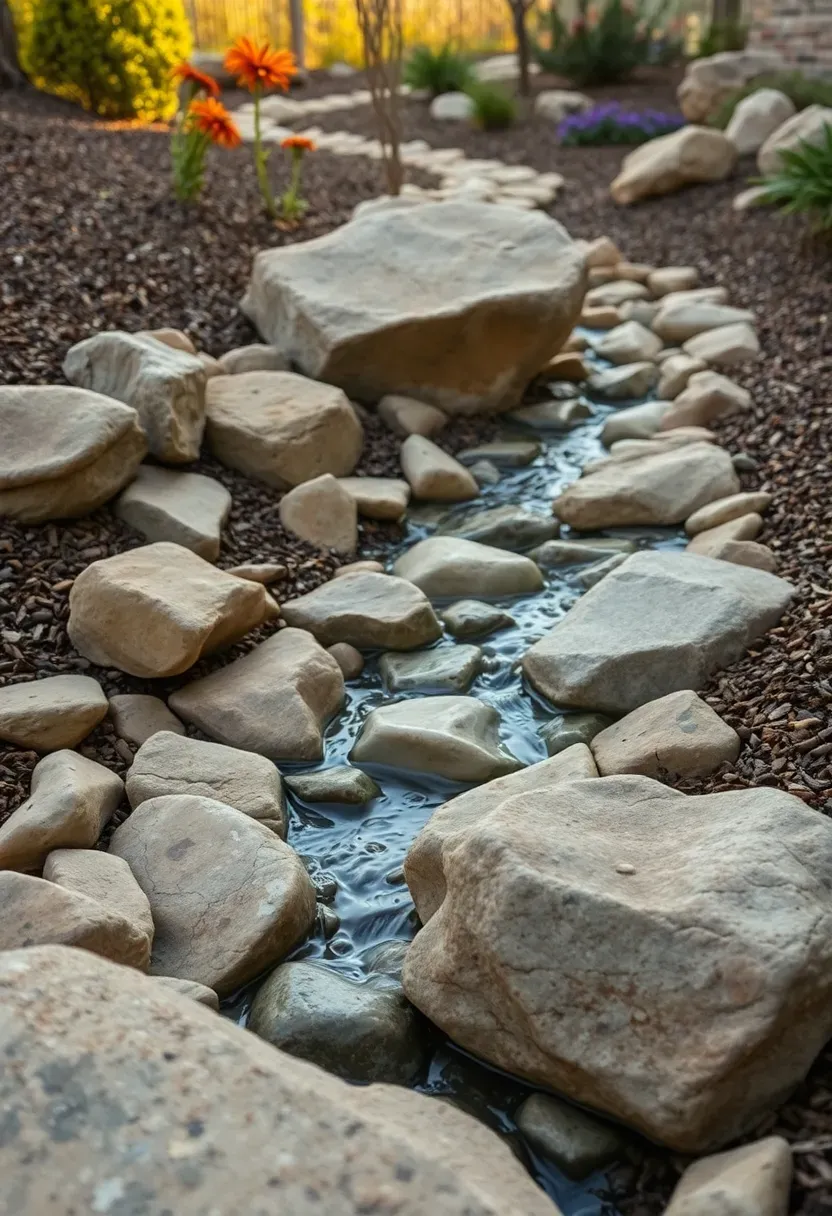
A dry creek bed manages rainwater runoff while looking like a natural landscape feature. Adding a recirculating pump turns it into an active water feature between rainstorms. The pump runs water through the creek during dry periods, and during heavy rain, the creek handles real drainage. You get a feature that looks good year-round instead of a dry stone channel that only comes alive when it rains.
How to Build
- Map your yard's natural drainage path — water already wants to go somewhere. Follow that route.
- Dig a shallow, irregular trench (4-8 inches deep, 18-36 inches wide) with gradual curves and varying widths.
- Line with landscape fabric, not pond liner, so rain can still percolate into the soil along the route.
- Place boulders at curves where real water would naturally slow and pool. Fill between with a mix of 3-6 inch river rock.
- Install a buried pump at the low end and run tubing to the high end under the stones.
Recommended
Items for this idea
21. Solar Birdbath Bubbler
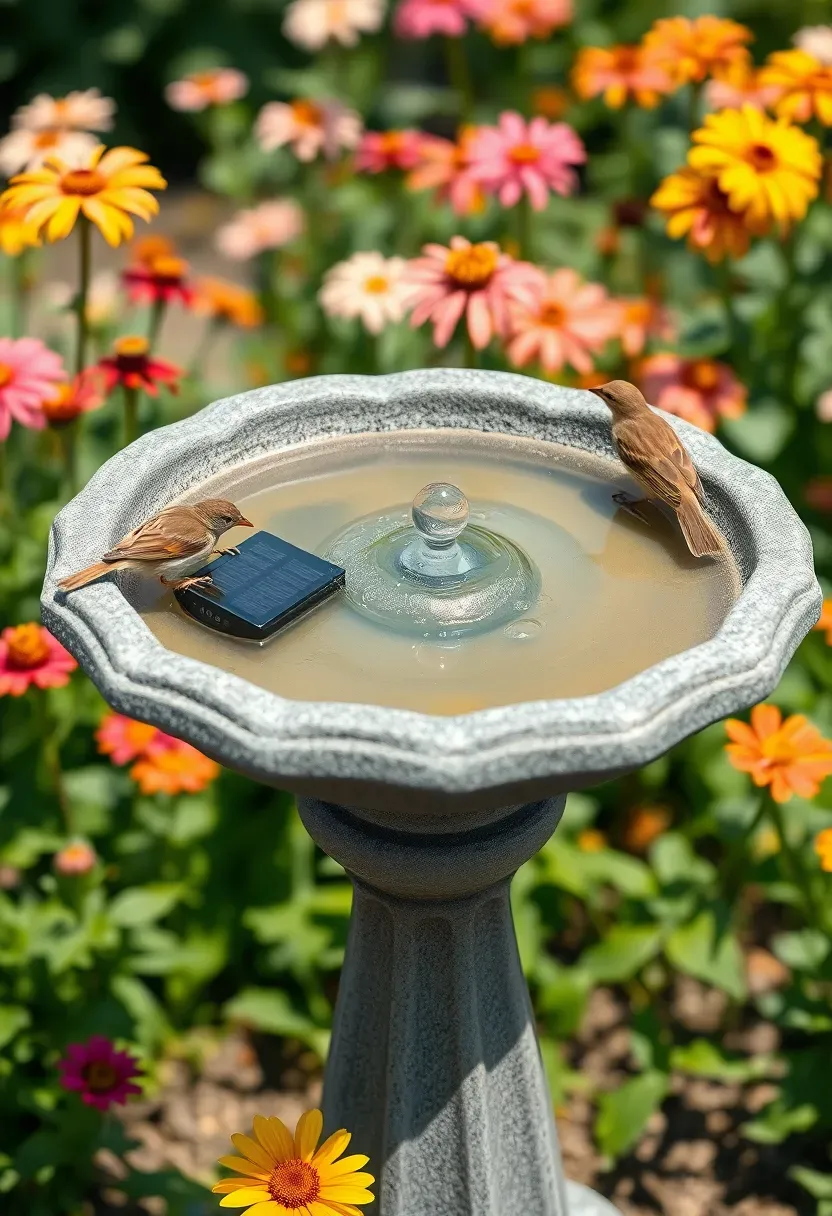
The cheapest and fastest water feature on this list. A solar-powered floating bubbler sits in any existing birdbath and creates a small fountain using a tiny panel — no wiring, no plumbing, no digging. Units cost $10-25 online and install in under a minute. The movement keeps water fresh enough that birds prefer it over stagnant baths, and the gentle ripple prevents mosquito larvae from developing on the surface.
Tips
- Solar bubblers only run in direct sunlight. In shaded gardens, look for units with a small battery backup that stores 2-3 hours of charge.
- Clean the pump intake screen weekly — birdbath debris clogs these tiny pumps quickly.
- Upgrade the birdbath itself to a pedestal style (30-36 inches tall) to keep the water away from ground predators like cats.
22. River Rock Splash Pad
The Problem
Kids love playing in water, but backyard pools come with fencing requirements, insurance headaches, and supervision demands that never end.
The Solution
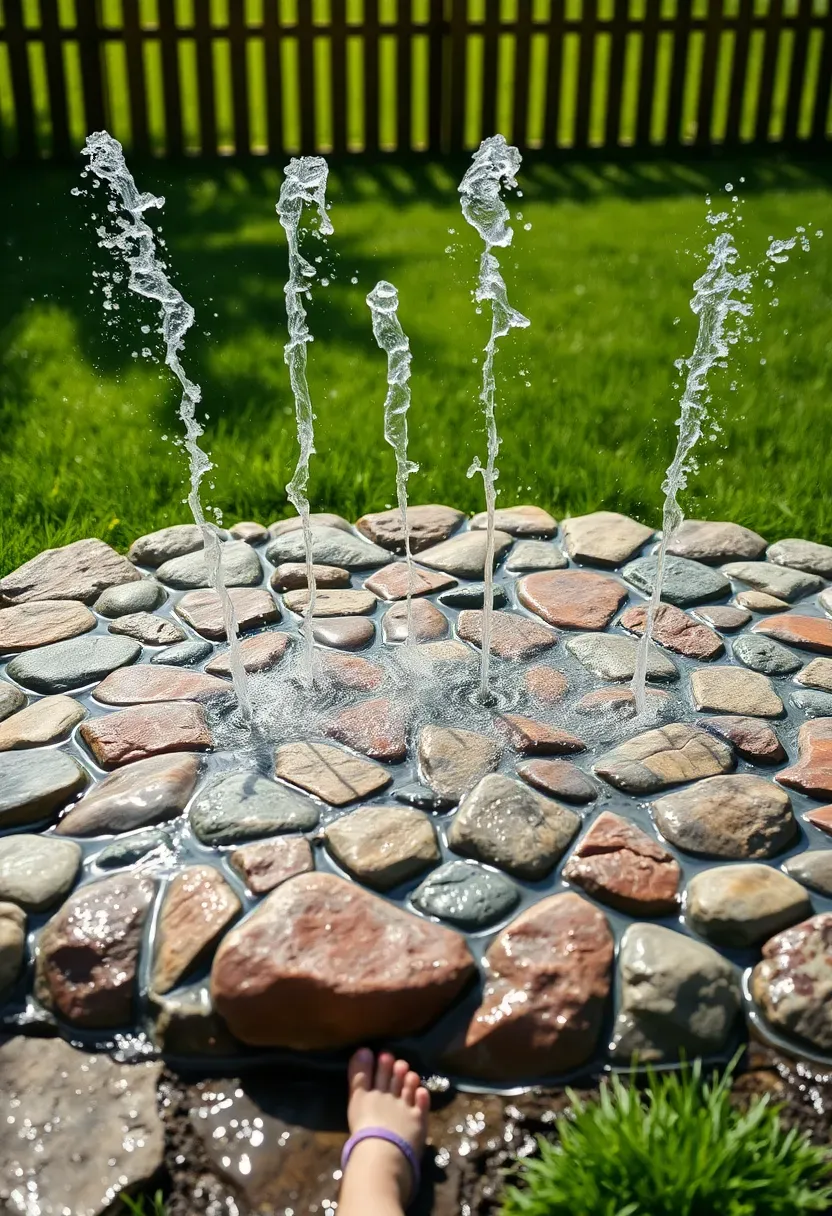
A recirculating splash pad embedded in a river rock surface gives kids water play without any standing water. Jets spray upward from flush-mounted nozzles, water drains through the rock into a buried tank, and a pump sends it back through the jets. When the system is off, it looks like a decorative stone patio. Turn it on and you have a water park.
Practical Details
- Professional installation runs $3,000-8,000 depending on size and number of jets. DIY kits exist in the $800-1,500 range.
- Add a UV sanitizer to the recirculating system to keep the water safe for skin contact without heavy chlorination.
- Most municipalities do not require fencing for splash pads since there is no standing water — but check local codes before building.
Recommended
Items for this idea
23. Infinity Edge Catch Basin
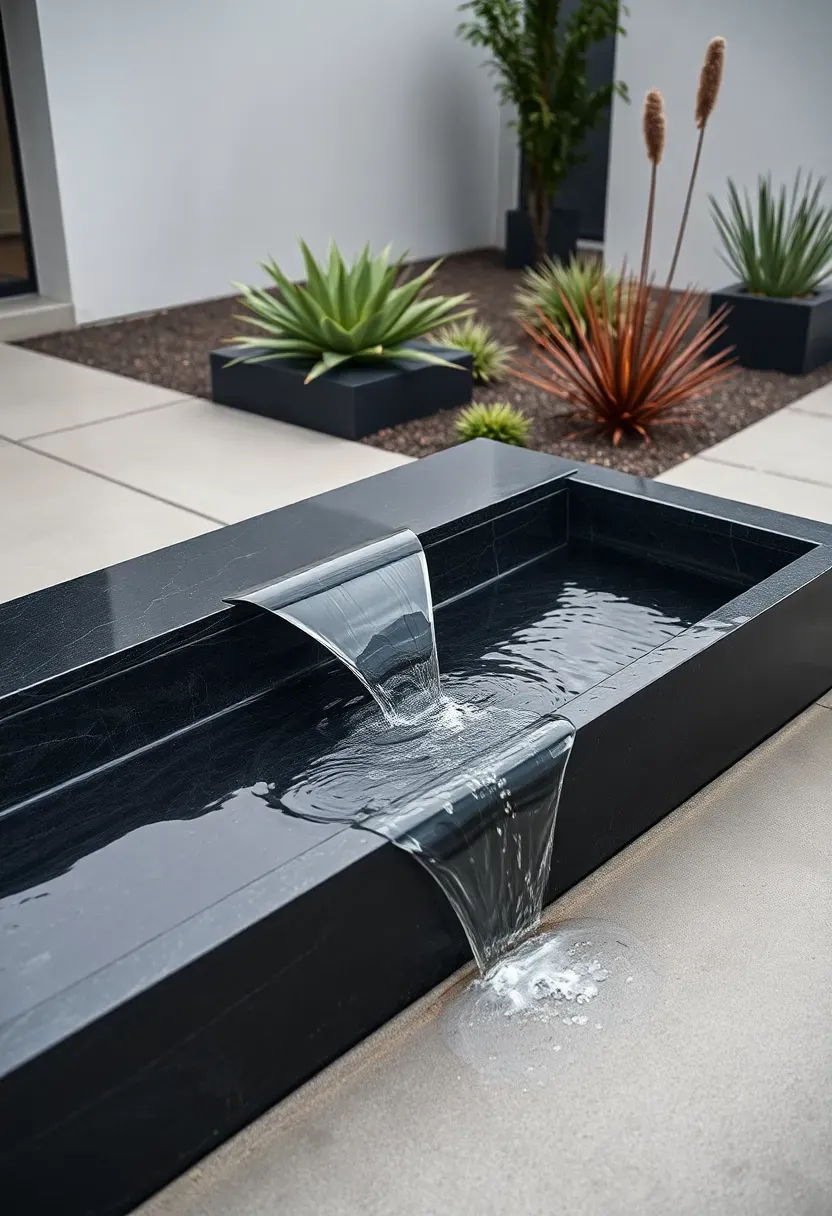
The infinity edge effect — water flowing over a level rim and vanishing — is not exclusive to resort pools. You can achieve it on a small scale with a raised basin as narrow as 4 feet wide. The water flows over one polished edge into a concealed channel below, gets pumped back into the basin, and the cycle repeats. From the viewing side, the water appears to have no boundary, which makes a 4-foot feature look much larger than it is.
Tips
- The weir edge must be perfectly level across its entire width. Even a 1/16-inch variation creates an uneven flow that ruins the effect.
- Dark basin interiors (black tile, dark plaster) are mandatory for the infinity illusion to work. Light interiors show the basin edge.
- Budget $2,000-5,000 for a custom-built residential version. Prefab units in fiberglass start around $1,200 but offer fewer size and finish options.
Quick FAQ
How much does a basic backyard water feature cost? Simple recirculating features like bubbling rocks and solar bubblers range from $15-400 all in. Mid-range projects like pondless waterfalls and stacked columns run $600-2,000. Larger installations — reflecting pools, stream channels, fire and water bowls — can reach $3,000-8,000 or more with professional help.
Do water features attract mosquitoes? Only if the water is still. Any feature with a pump that keeps water moving will not support mosquito larvae, which need calm standing water to develop. Pondless designs, bubblers, and recirculating systems are all mosquito-safe. For ponds and bog gardens, add mosquitofish or a bubbler to keep the surface agitated.
Can I run a water feature through winter in cold climates? Most submersible pumps cannot handle freezing. In USDA zones 6 and colder, drain recirculating features before the first hard freeze and store pumps indoors. Ponds deeper than 24 inches can overwinter fish under ice if you use a floating de-icer to maintain a gas exchange hole. Ceramic and terra cotta containers will crack — bring them inside or choose freeze-resistant materials like concrete, corten steel, or polyethylene.
Which water feature needs the least maintenance? Pondless systems and disappearing fountains rank lowest for maintenance because there is no exposed water to develop algae. You top off the reservoir every week or two in summer and clean the pump screen monthly. Reflecting pools and open ponds sit at the other end — expect weekly skimming, algae management, and seasonal deep cleans.
Is it worth hiring a professional or should I DIY? Features under $1,000 are almost always worth doing yourself. The tools are basic (drill, shovel, level) and the materials are available at any home center. Once you get into gas-fired bowls, large stream systems, or anything integrated with a pool, professional installation pays for itself in avoided mistakes and code compliance.
Adding water to a backyard does not need to be a massive project. A $20 solar bubbler in an existing birdbath counts. So does a weekend spent drilling a boulder and burying a pump basin. Start with the sound you want to hear from your seating area and work backward from there — that single question eliminates half the options and points you toward the right feature for your yard, your budget, and the amount of Saturday maintenance you are actually willing to do.
Pinterest cover for 23 Backyard Water Feature Ideas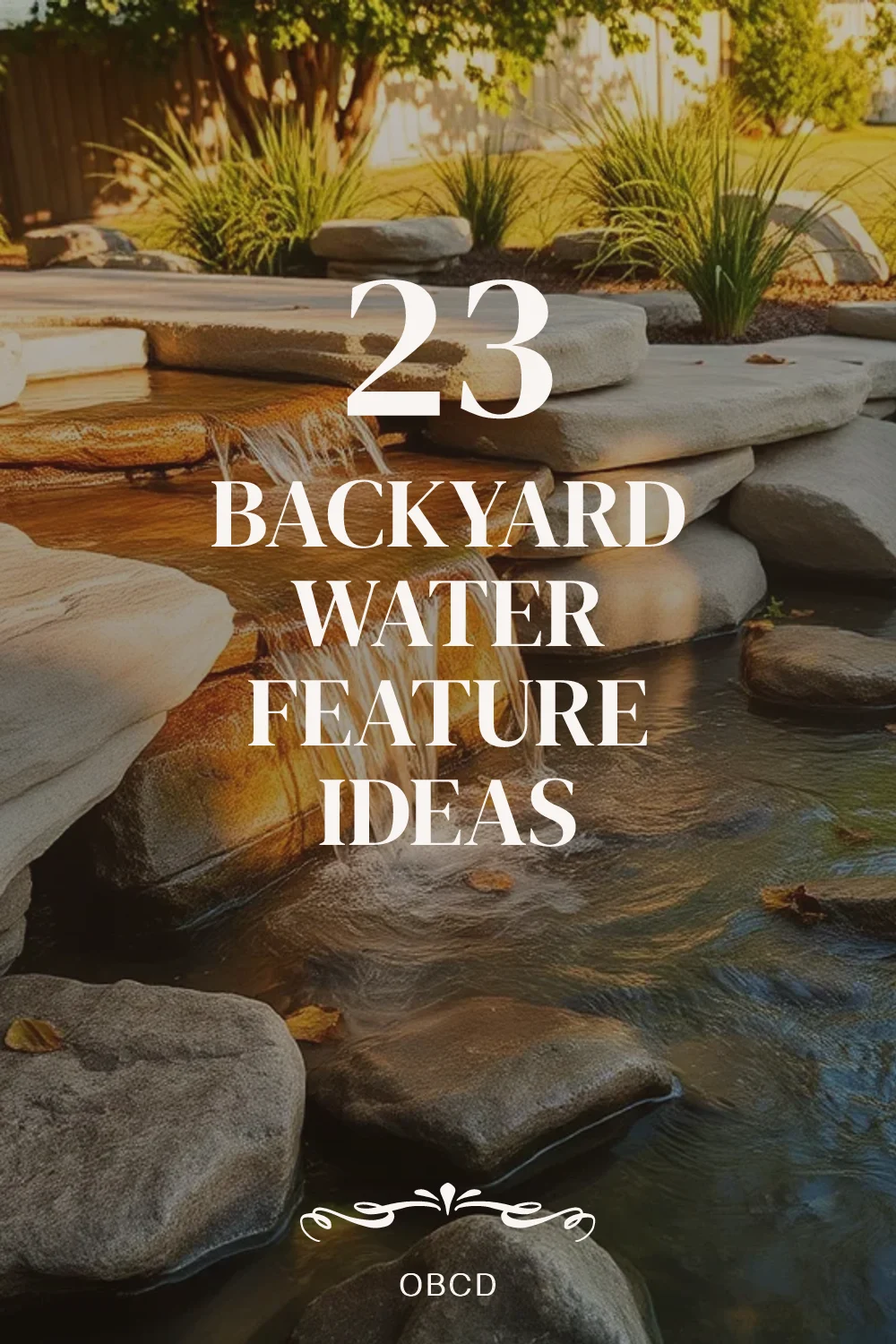
About the author
OBCD
CGI visualization and interior design content. We create detailed 3D renders and curate practical design ideas for every room in your home.