17 Backyard String Light Ideas
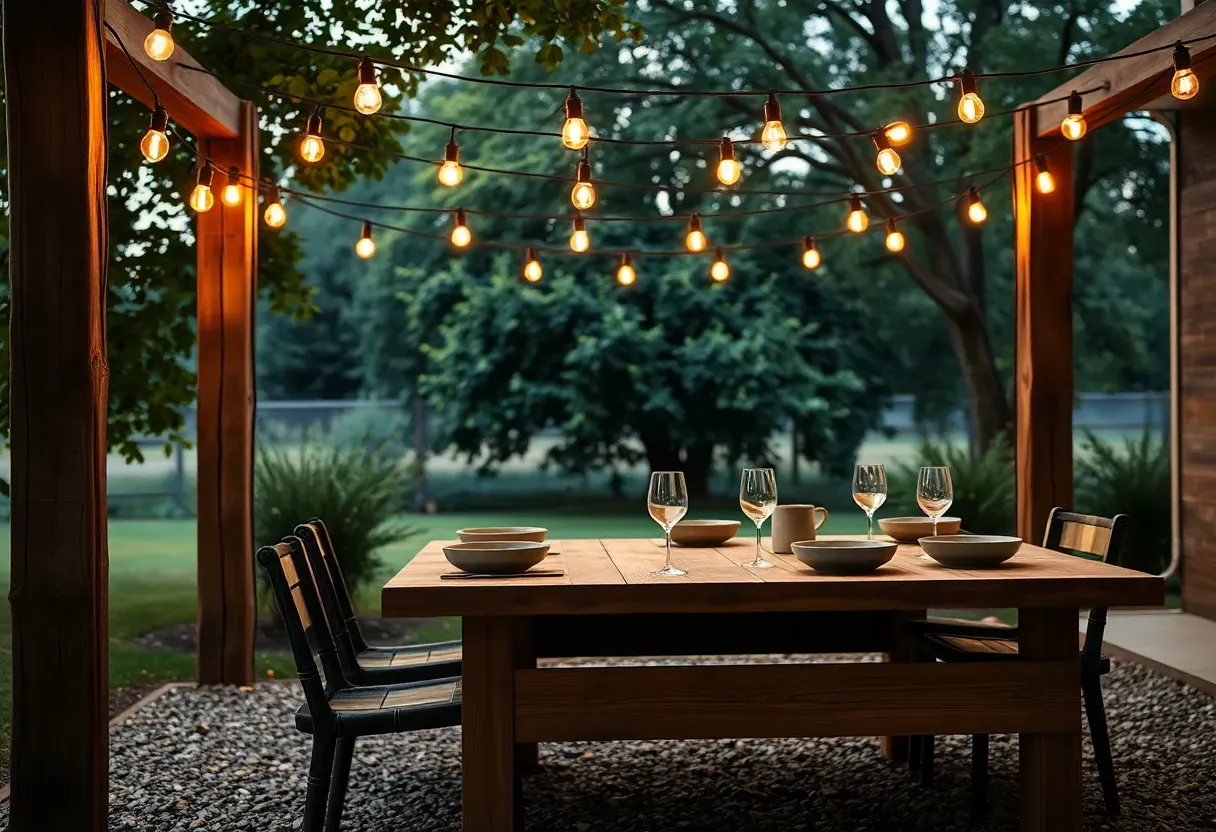
String lights fix a backyard's biggest problem after dark: nobody wants to sit under a single flood lamp that makes the yard look like a gas station parking lot. The right string light setup gives you enough glow to eat, talk, and find your drink without blinding anyone. I have hung lights from pergolas, trees, standalone poles, and the side of a house. Some setups lasted five years. One fell down during the first thunderstorm because I used cup hooks in rotten fascia board. The 17 arrangements here cover different mounting situations, bulb types, and budgets so you can pick the one that matches your yard.
Each idea includes specifics on bulb spacing, wire gauge, and attachment hardware so you can skip the guesswork.
Table of Contents
- Zigzag Over a Patio
- Pergola Perimeter Wrap
- Tree-to-Tree Canopy
- Pole-Mounted Grid
- Fence-Top Line
- Edison Bulbs on a Pergola
- Globe Lights Along a Walkway
- Draped Curtain Wall
- Wagon Wheel Chandelier
- Solar String Lights on Deck Rails
- Café Lights Over a Dining Table
- Cascading Lights From a Balcony
- Wrapped Tree Trunks
- Overhead Canopy With a Center Post
- Mixed Bulb Sizes
- Low-Hung Bistro Lights Over Seating
- String Lights With Hanging Planters
1. Zigzag Over a Patio
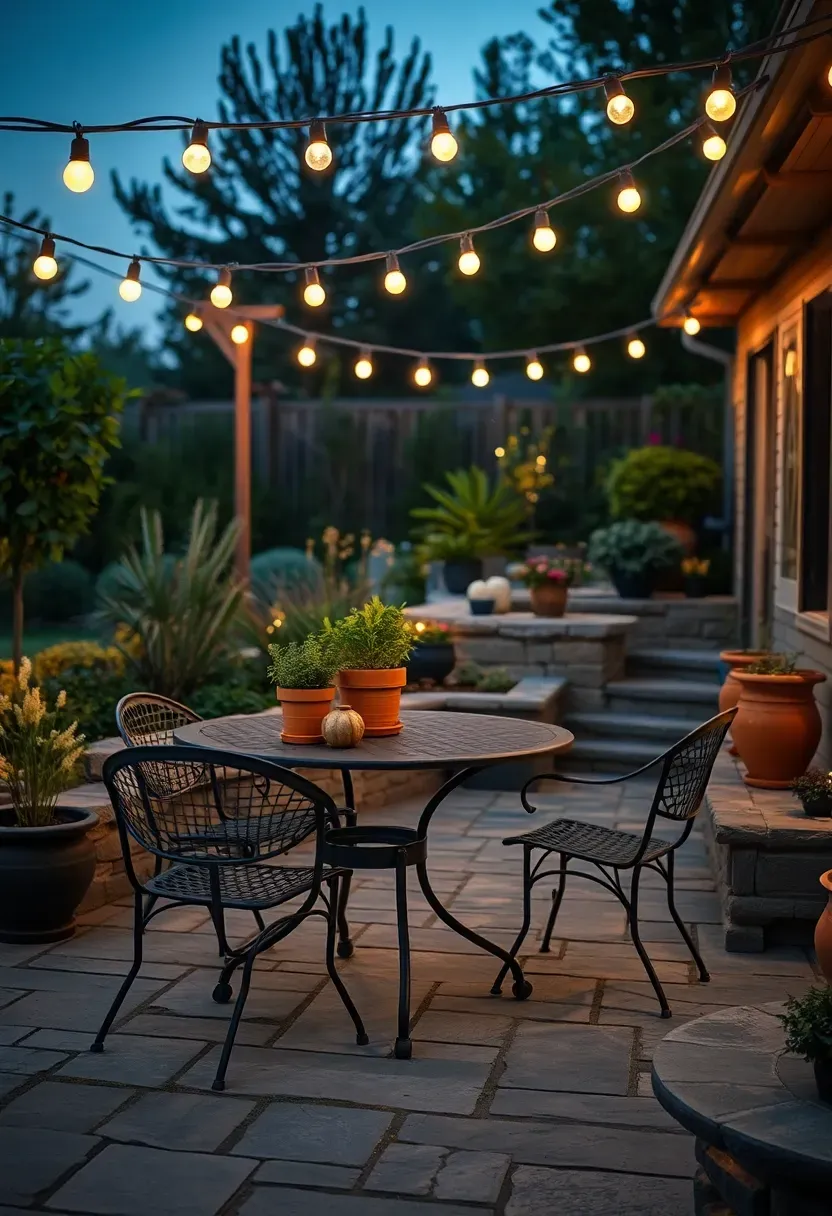
A zigzag pattern covers more square footage per strand than a straight run. Anchor points go on alternating sides of the patio — house wall on one side, fence posts or dedicated poles on the other. Use 14-gauge outdoor-rated extension cord for the supply line and keep the sag consistent at about 12 inches per 20-foot span. This pattern works especially well over rectangular patios between 10 and 20 feet wide. Total cost for a 400-square-foot patio runs about $80 to $150 depending on bulb type.
Mounting details
- Screw-in eye hooks rated for 50 lbs into solid framing, not trim boards
- Run a guide wire (vinyl-coated steel cable) between anchor points first, then zip-tie the light strand to it
- Leave a drip loop at each end to keep water from running into the outlet
We picked a few things that go well with this idea: Brightever 100FT Outdoor Patio String Lights (★4.6), 100FT Waterproof LED Patio String Lights (★4.3) and Brightown 50FT G40 Globe Patio Lights (★4.7). As an Amazon Associate we earn from qualifying purchases.
2. Pergola Perimeter Wrap
The problem with random draping
Most people toss string lights over their pergola rafters and call it done. The result is uneven brightness — bright spots directly under bulbs, dark patches in between — and sagging wires that catch on tall guests' heads.
A better approach
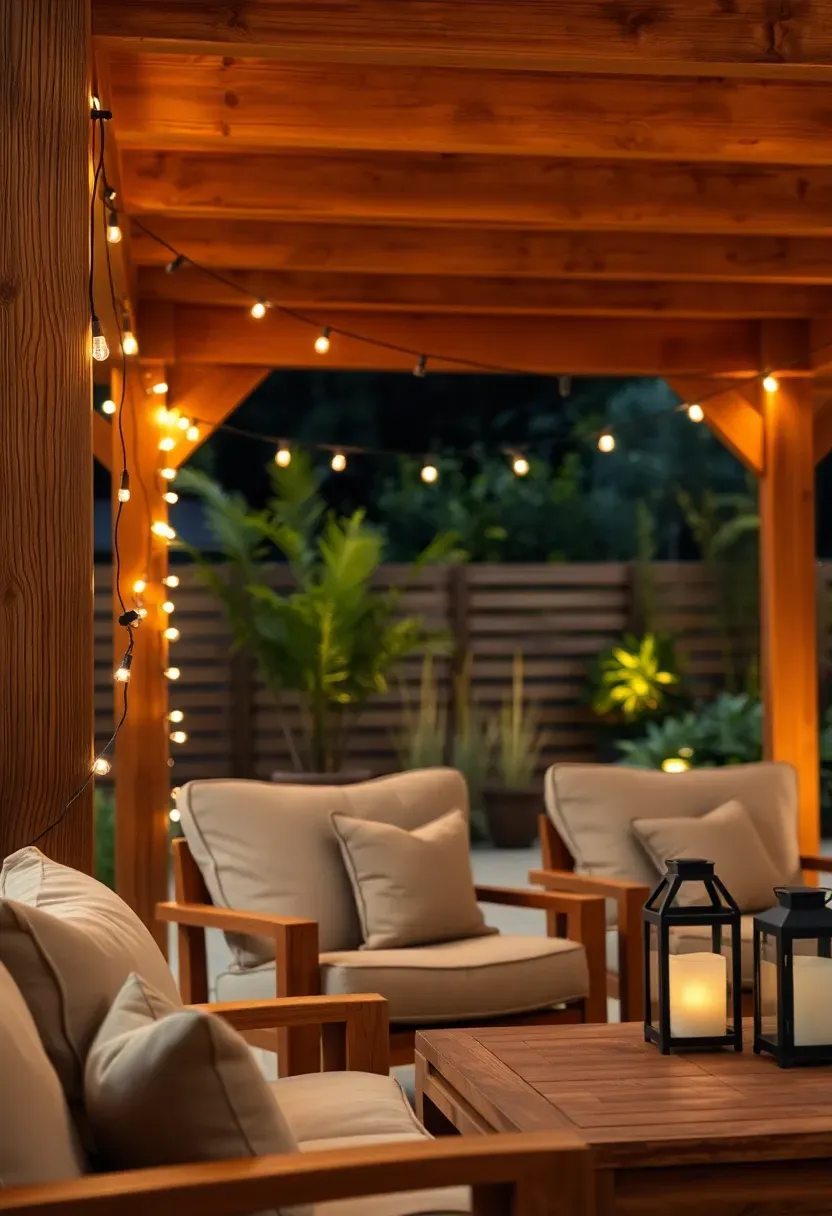
Run lights along the inside perimeter of the pergola beams, securing them every 18 inches with cable clips rated for outdoor use. This creates a clean rectangle of light overhead. For a 12x14-foot pergola, you need about 52 linear feet of lights. Shaded-bulb strands (the kind with a small downward-facing reflector) push more light toward the ground where you need it.
Pros and cons
- Even, predictable illumination around the full seating area
- Clean look that follows architectural lines
- Fewer bulbs reach the center of large pergolas — add a single pendant drop if the middle feels dark
We picked a few things that go well with this idea: Brightever 100FT Edison Bulb String Lights (★4.6), Addlon 50FT Commercial Grade Edison Lights (★4.6) and Addlon 48FT Vintage Edison Patio Lights (★4.5). As an Amazon Associate we earn from qualifying purchases.
3. Tree-to-Tree Canopy
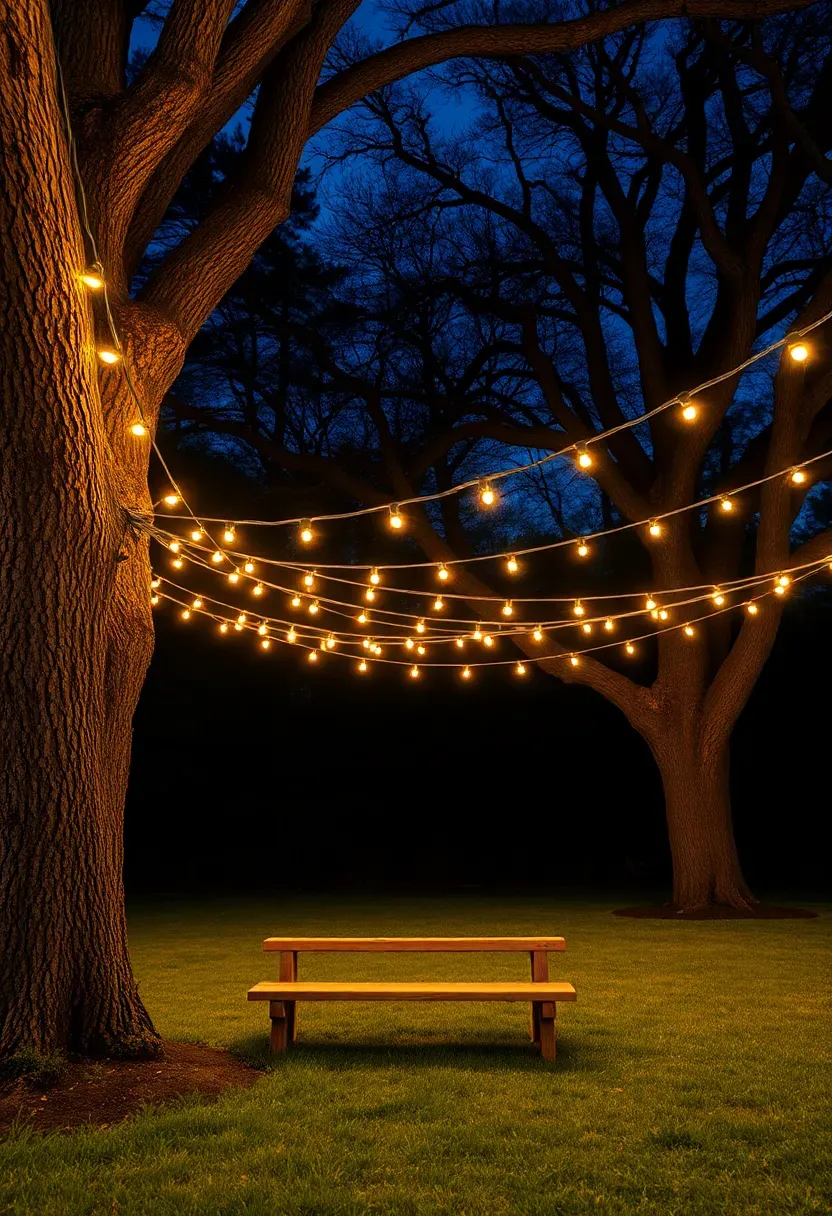
Two mature trees 20 to 40 feet apart make natural anchor points for a string light canopy. The key is height: hang the lights at least 10 feet off the ground so they clear anyone walking underneath. Use tree-friendly mounting — wide nylon straps with D-rings, not screws or nails driven into bark. Run three to five parallel strands spaced 3 to 4 feet apart to fill the gap. LED strands rated for commercial use (think 18-gauge wire, shatterproof bulbs) handle wind and rain better than the thin 22-gauge party lights.
Practical notes
- Check that both trees are healthy — a dead limb can drop a whole strand during a storm
- Use a pulley system on one end so you can lower the lights for bulb replacement
- Budget about $120 to $200 for a three-strand setup using commercial-grade lights
We picked a few things that go well with this idea: 100FT Solar Rechargeable Patio String Lights (★4.1), Solar Waterproof 100FT Edison String Lights (★4.0) and Brightown 58FT Solar String Lights with Remote (★4.3). As an Amazon Associate we earn from qualifying purchases.
4. Pole-Mounted Grid
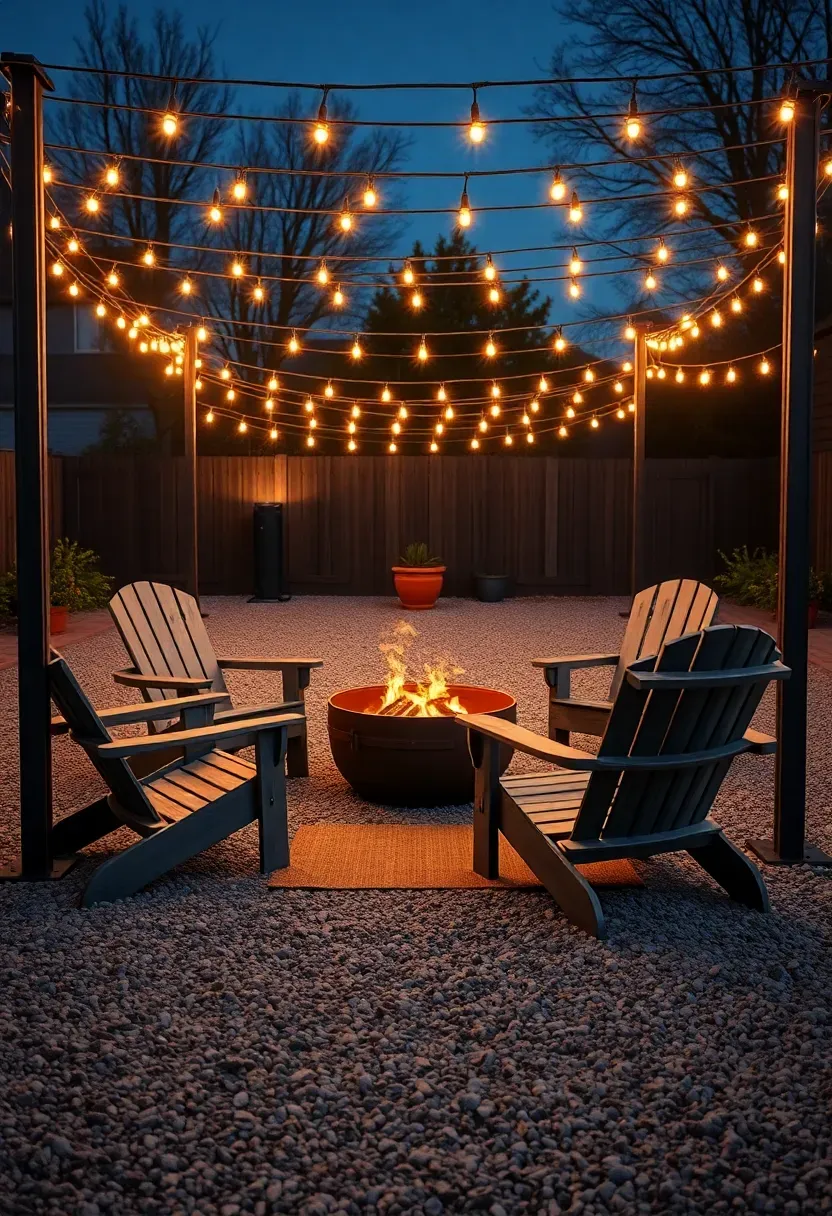
No trees, no pergola, no problem. Freestanding poles let you put string lights anywhere in the yard. Use 10-foot galvanized steel poles (fence post diameter works fine) set in 5-gallon bucket footings filled with concrete. Space four poles in a square, then run lights in a grid pattern — two parallel lines in each direction. The grid gives more uniform coverage than a simple zigzag and looks deliberate rather than improvised.
Step 1: Set the poles
Dig 18-inch deep holes or use bucket footings. Plumb each pole and let the concrete cure 48 hours before hanging lights.
Step 2: Run the guide wires
String vinyl-coated cable between pole tops, pulling it taut with a turnbuckle at each end.
Step 3: Attach the lights
Zip-tie or clip the light strand to the guide wire every 24 inches. This prevents sagging during wind.
Watch out for
- Poles that lean after a season — check plumb annually and add concrete if needed
- Running more than 3 strands from a single outlet — calculate your wattage first
Recommended
Items for this idea
5. Fence-Top Line
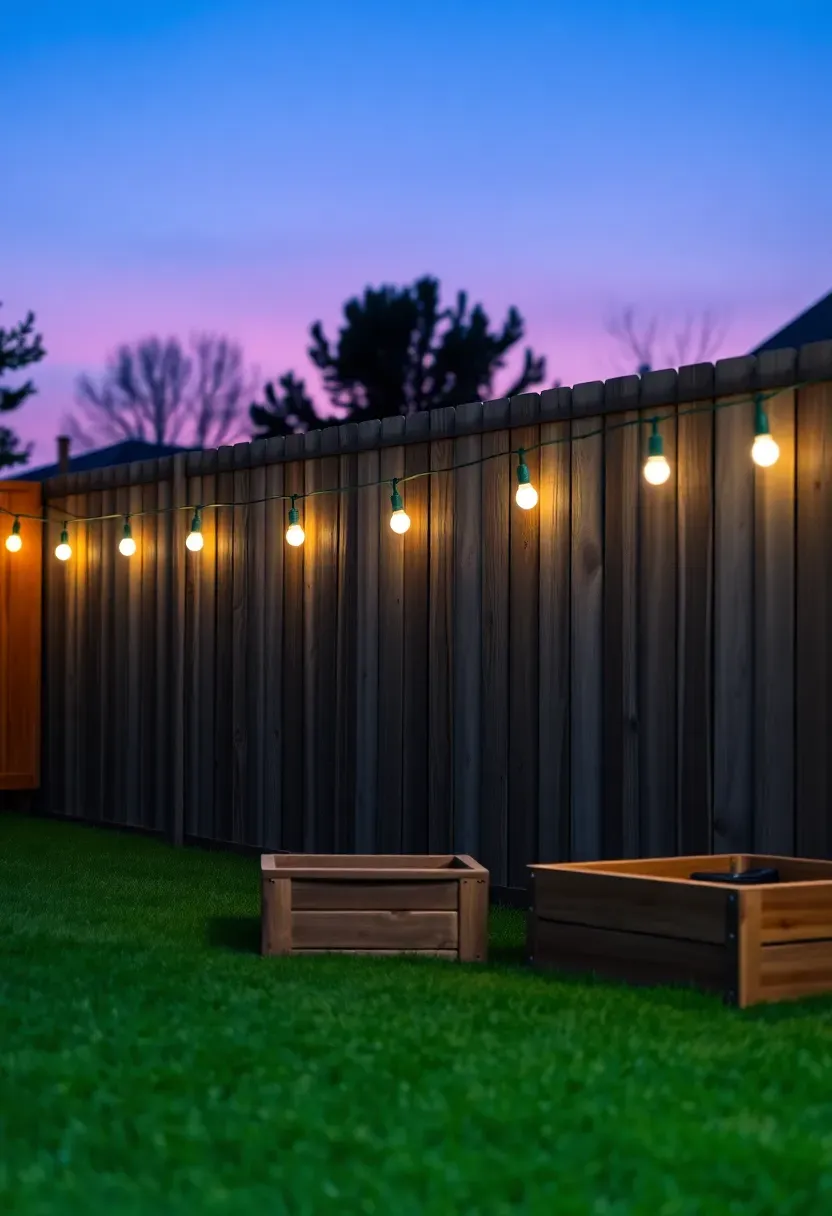
Running a single strand of string lights along the top rail of a fence is the simplest installation on this list. It takes about 20 minutes for a 50-foot fence run. The result is subtle — a low-level ambient glow that defines the yard's edges rather than lighting a specific area. This works well as a complement to brighter overhead lights near the patio. Use cable staples designed for outdoor wiring (not standard indoor staples, which rust) and space them every 12 inches along the rail.
Tips
- Overlap bulbs at corner posts so you do not get a dark spot at the turn
- Choose warm white (2700K) for a mellow glow or soft white (3000K) if you need a bit more visibility
- Replace any cracked or fogged bulbs immediately — moisture gets inside and corrodes the socket
6. Edison Bulbs on a Pergola
Incandescent vs. LED filament
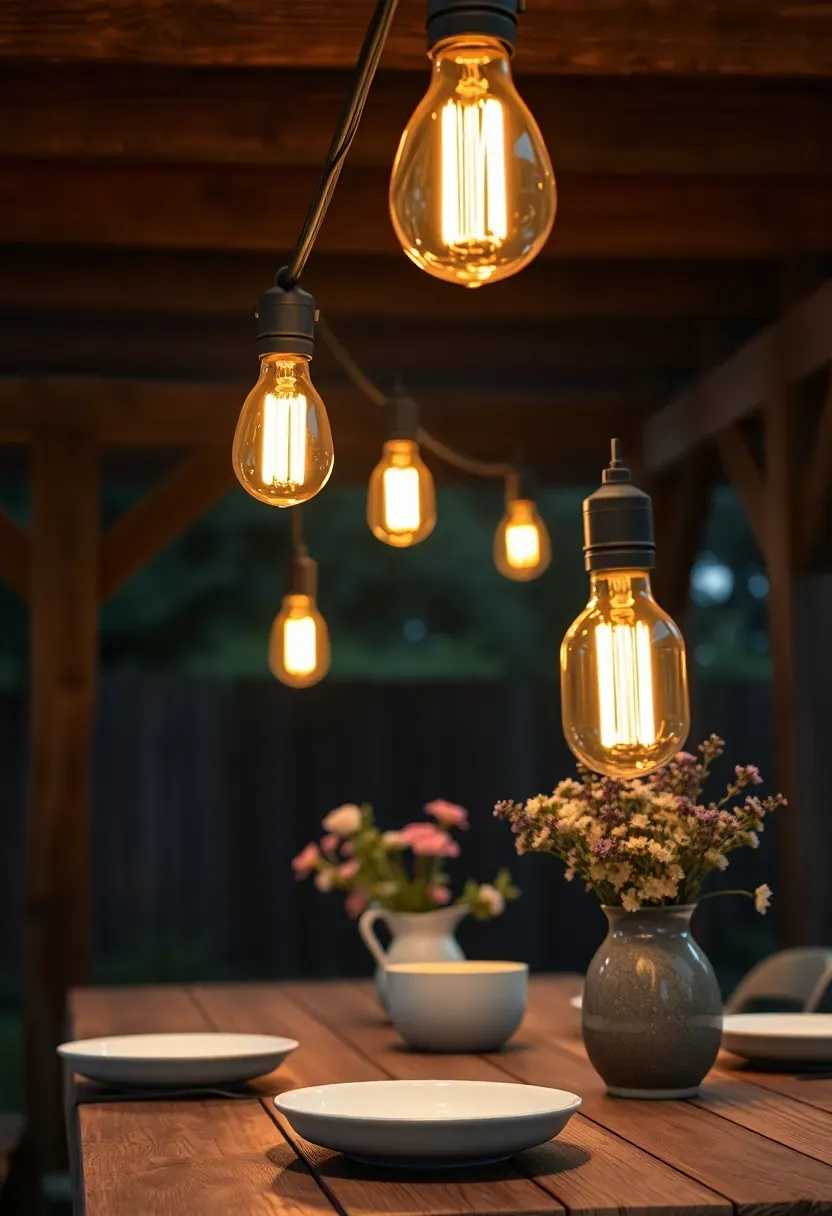
Real incandescent Edison bulbs draw 40 to 60 watts each and throw a warm amber glow. LED filament copies look nearly identical now and draw 4 to 6 watts. With 15 bulbs on a strand, that is 600 to 900 watts incandescent versus 60 to 90 watts LED. Your electric bill notices the difference over a summer.
The right look
Edison bulbs suit rustic or industrial setups — rough-sawn pergola beams, metal furniture, exposed brick. They look odd next to sleek white modern furniture. Space them 24 inches apart on a heavy-gauge cord (16 AWG minimum) for that classic restaurant-patio feel.
Choose Edison bulbs if
- Your pergola has natural wood or dark-stained beams
- You want a focal-point fixture rather than background ambiance
- You prefer the visible filament aesthetic over frosted bulbs
Recommended
Items for this idea
7. Globe Lights Along a Walkway
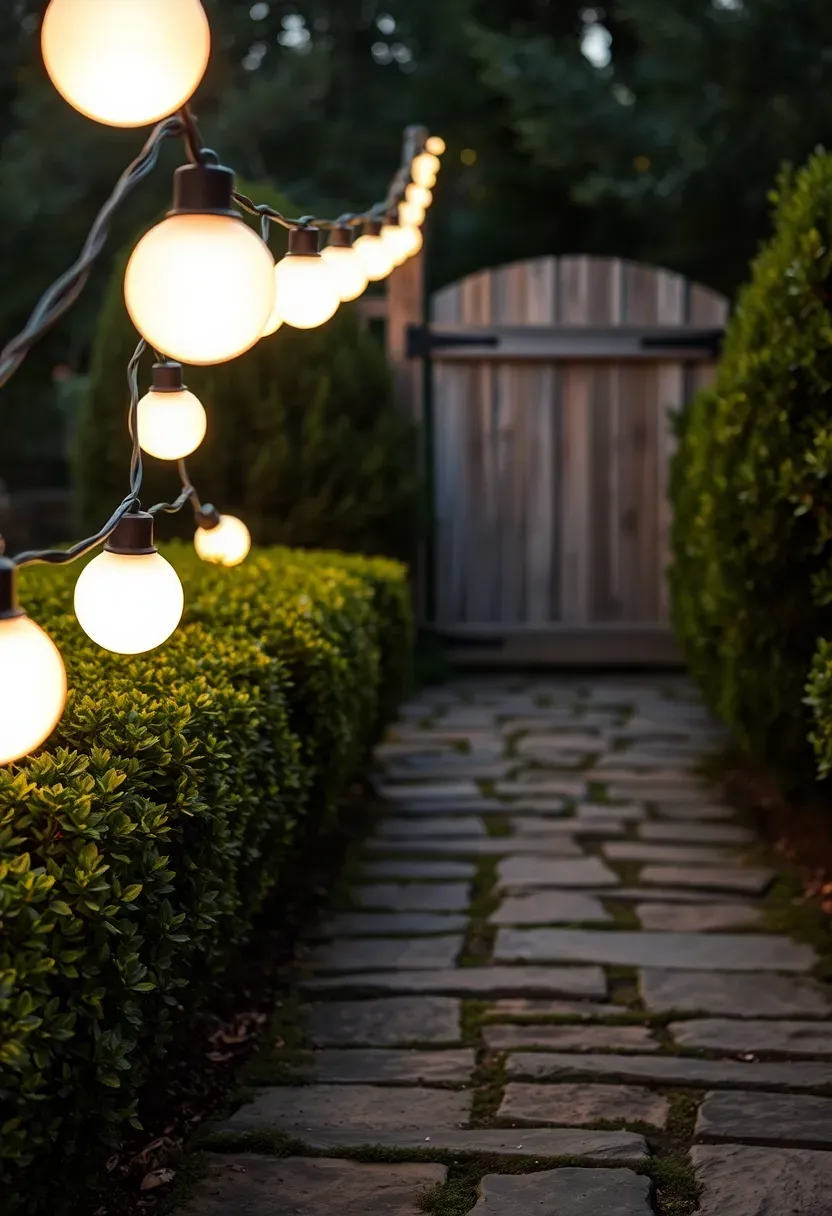
Globe lights — the round, frosted kind about 3 inches in diameter — hung at waist height along a walkway create a runway effect that guides people from the house to a seating area, fire pit, or garden. Mount them on short shepherd's hooks (30 inches tall) pushed into the ground along both sides of the path, spacing the hooks about 6 feet apart. This setup uses the lights as functional wayfinding, not just decoration.
Tips
- Use shatterproof acrylic globes if the path is near a play area
- Stake the shepherd's hooks at a slight outward angle so the lights do not crowd the walking path
- Battery-powered or solar globe strands eliminate the need to run extension cords across the lawn
8. Draped Curtain Wall
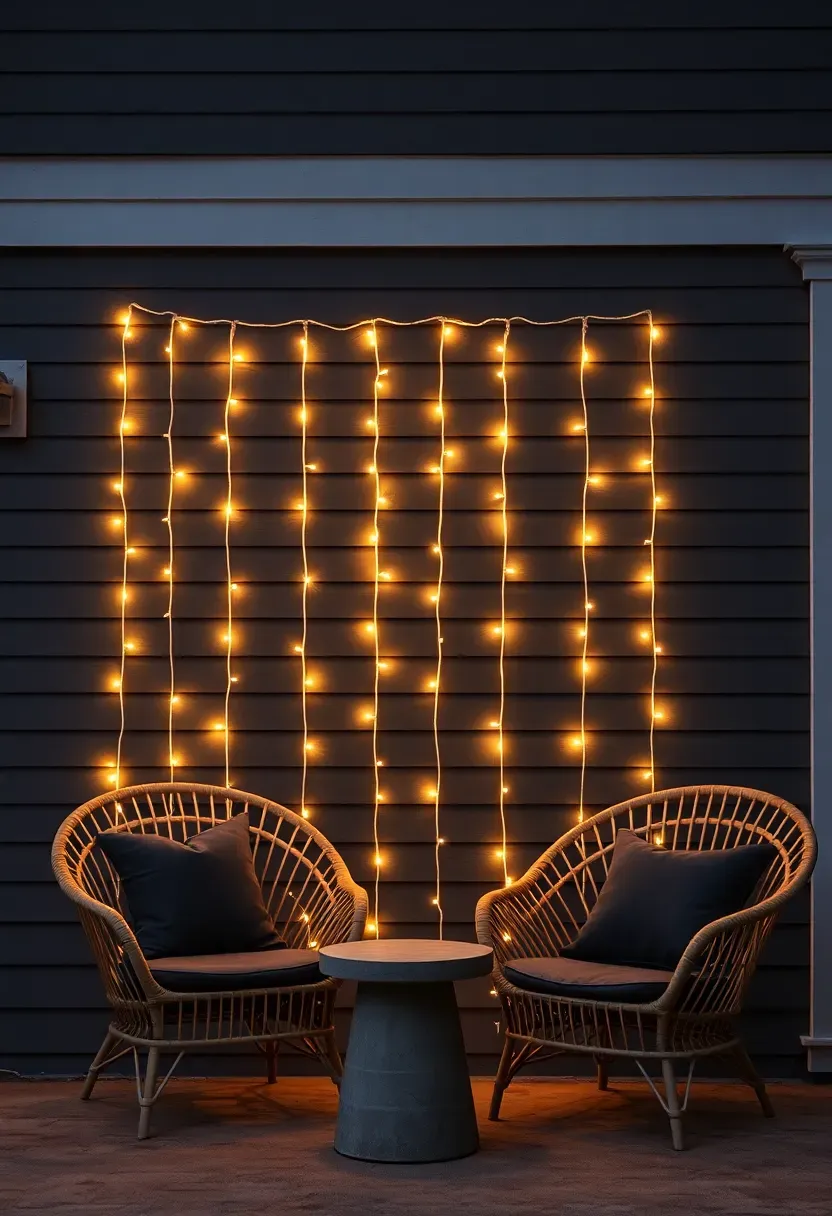
A curtain of vertical string light strands makes a glowing backdrop behind a seating area or hot tub. Attach a horizontal mounting bar (a simple 2x4 painted to match your house works fine) high on an exterior wall, then hang individual strands at 6-inch intervals so they drape straight down like a curtain. Most curtain light sets come as a single connected unit with 300 to 600 LEDs on 10 to 20 vertical drops. They draw 20 to 40 watts total and plug into a standard outlet.
Practical notes
- Anchor the bottom of each strand with small weights (fishing sinkers work) to prevent tangling in wind
- Use warm white LEDs — cool white on a curtain wall looks like a hospital examination room
- A dimmer-compatible set lets you dial back brightness for late-night conversation
Recommended
Items for this idea
9. Wagon Wheel Chandelier
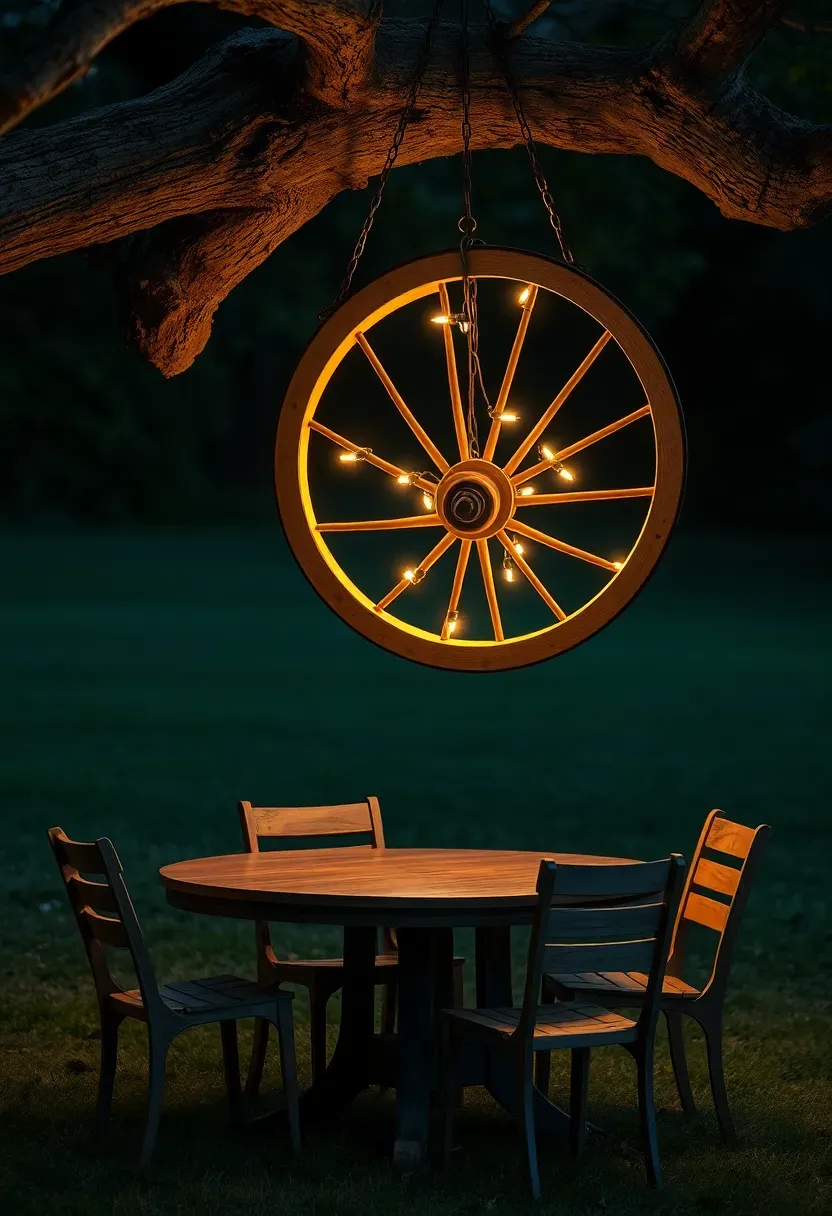
Find a wooden wagon wheel at a salvage yard or antique shop (usually $40 to $100 depending on size and condition). Wrap a string light strand around the spokes, then hang the wheel horizontally from a sturdy tree branch or pergola beam using three chains at equal spacing. The result is a rustic chandelier that costs a fraction of a purpose-built outdoor fixture. A 36-inch wheel with 25 LED bulbs throws enough light for a 6-person dining table underneath.
Assembly tips
- Sand and seal the wheel with outdoor polyurethane before wrapping lights — raw wood rots fast outside
- Use 3/16-inch proof coil chain rated for at least 100 lbs and attach it with screw-link connectors
- Wrap lights loosely enough to replace individual bulbs without unwinding the whole strand
10. Solar String Lights on Deck Rails
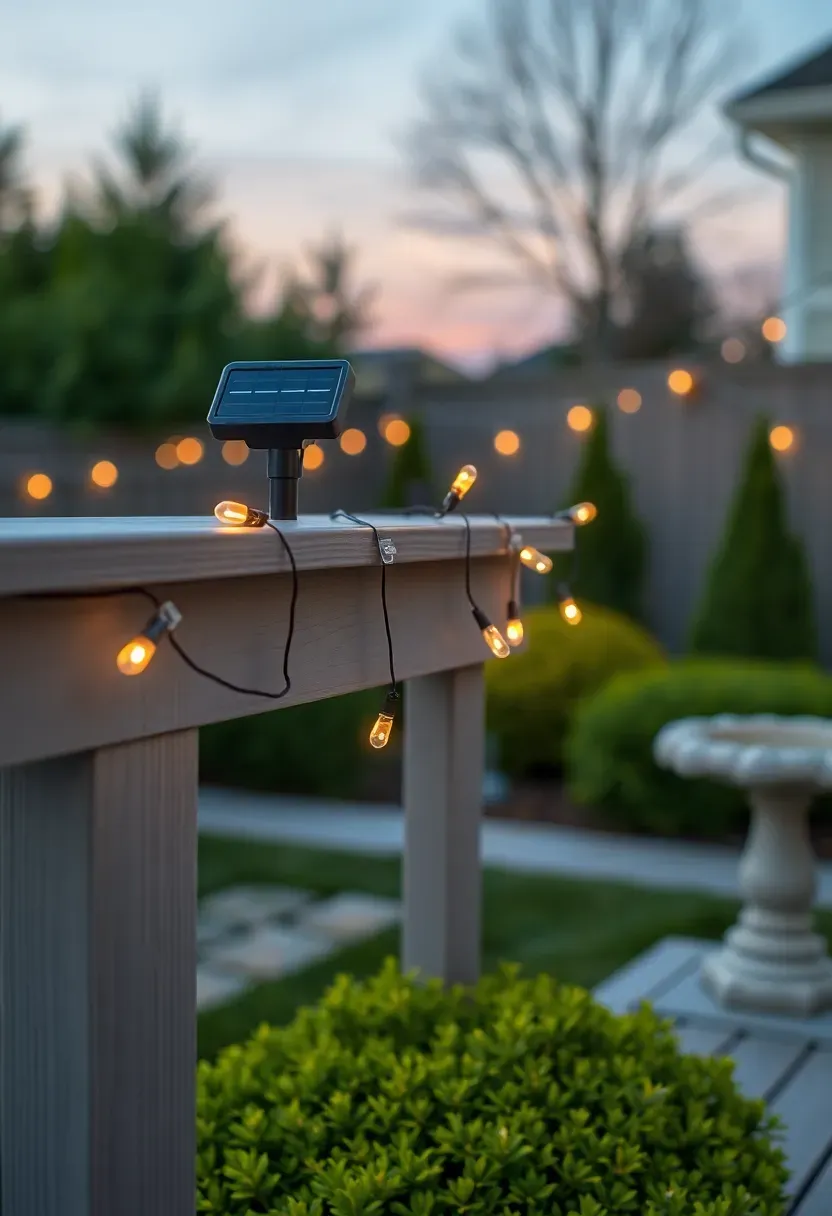
Solar string lights have gotten noticeably better in the past few years. The current generation of panels charges faster, stores more energy, and keeps lights going for 8 to 10 hours on a full charge. Clip the panel to the top of a railing post where it gets direct sun, then run the strand along the top rail using small adhesive clips. No wiring, no outlet, no electrician. The tradeoff: they are dimmer than plug-in options. Solar works for ambient mood lighting, not for reading or cooking.
When solar falls short
- Patios on the north side of a house that get less than 4 hours of direct sun
- Winters above 45 degrees latitude where short days limit charging time
- Situations where you need consistent brightness for task lighting
Recommended
Items for this idea
11. Café Lights Over a Dining Table
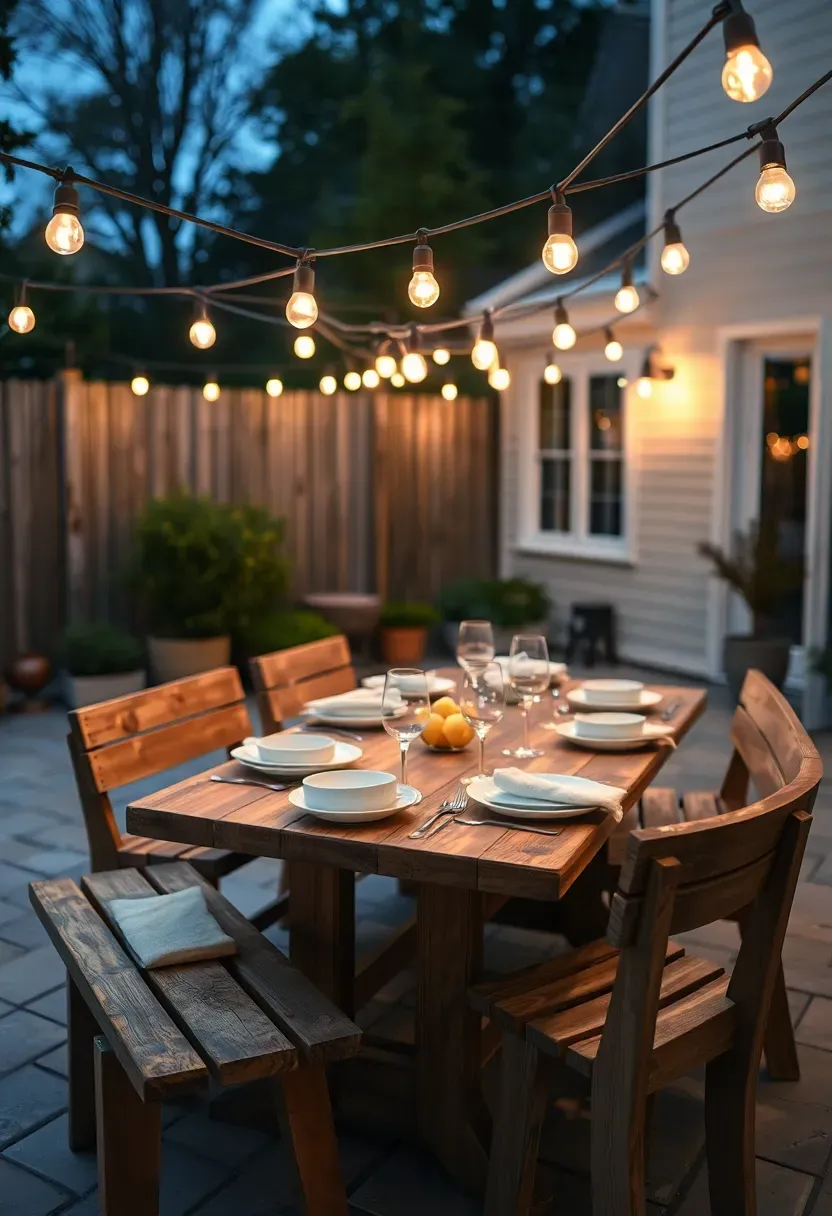
Hang a single strand of café lights (the commercial type with 12-inch bulb spacing) in a straight line directly over your dining table, about 7 to 8 feet above the ground. This is not ambient background lighting — it is a dedicated fixture for the eating area. The concentrated placement puts light exactly where you need it: on the food and faces. Use two eye hooks on opposite structures (house wall and pergola post, two trees, two poles) and pull the strand taut with minimal sag.
Tips
- Frosted bulbs reduce glare when you are seated directly below
- A photocell plug adapter turns the lights on at dusk and off at dawn automatically
- One 48-foot commercial strand covers a table up to 8 feet long
12. Cascading Lights From a Balcony
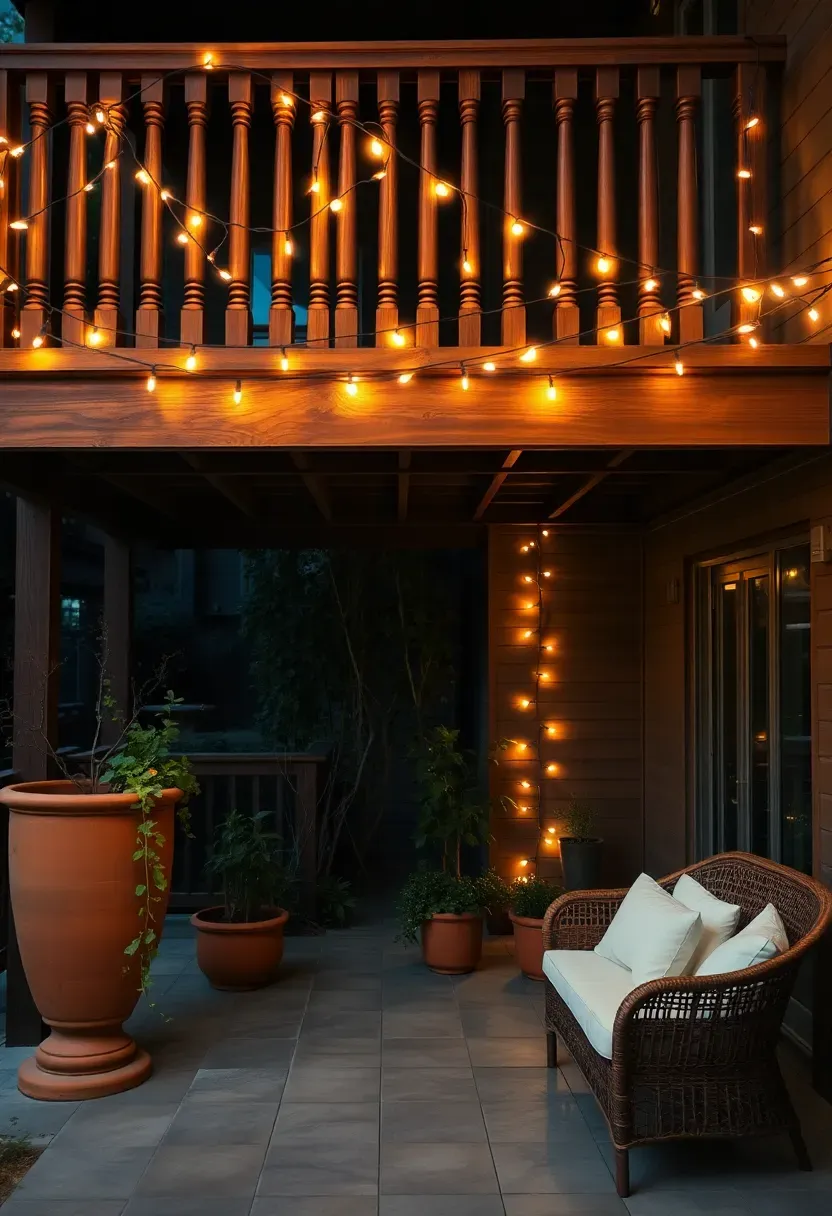
If your house has a second-floor deck or balcony above the patio, drape string lights from the upper railing down to anchor points at ground level. This creates a waterfall of light between levels. Use 5 to 8 strands spaced 2 feet apart across the balcony width. Attach the top ends to the railing with zip ties and stake the bottom ends into the ground or tie them to heavy planters. The diagonal angle gives depth to the yard that flat overhead arrangements miss.
Watch out for
- Wind catching the unsupported middle section — add a horizontal guide wire halfway down
- Strands resting against vinyl siding, which can discolor from prolonged bulb heat (use LED only)
- Check local code for maximum wattage on exterior circuits before connecting multiple strands
Recommended
Items for this idea
13. Wrapped Tree Trunks
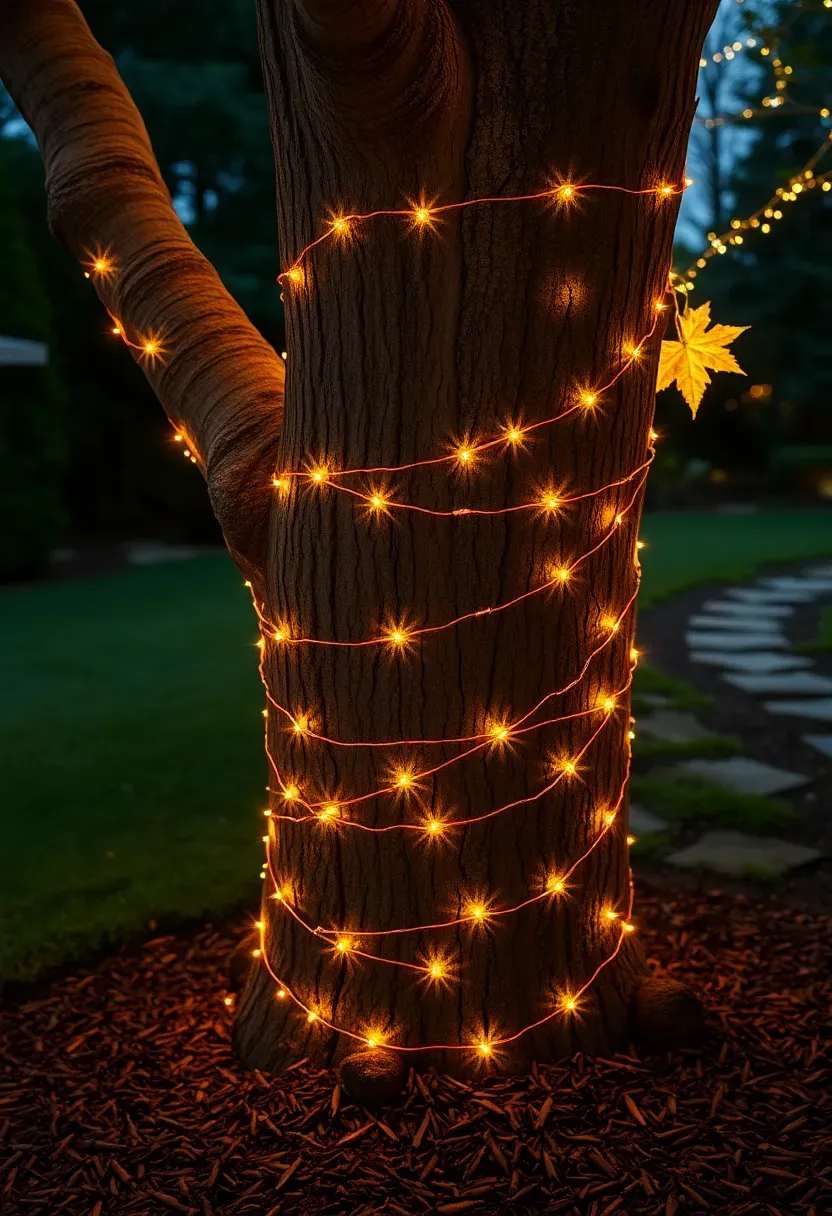
Wrapping string lights around a tree trunk is one of the oldest outdoor lighting tricks, and it still works. Use micro LED lights (the thin copper-wire type) rather than bulky C7 or C9 bulbs for a cleaner look. Start at the base and spiral upward, keeping wraps about 3 inches apart. For a trunk 12 inches in diameter, you will need roughly 50 feet of strand to cover 4 feet of height. Extend a few wraps onto the lowest major branches for a natural fade-out effect.
Tips
- Do not cinch the wire tight against bark — leave a finger's width of slack to accommodate trunk growth
- Use brown or green wire to blend with bark during the day
- Plug into a weatherproof outlet box at ground level and hide the cord under mulch
14. Overhead Canopy With a Center Post
How it differs from a grid
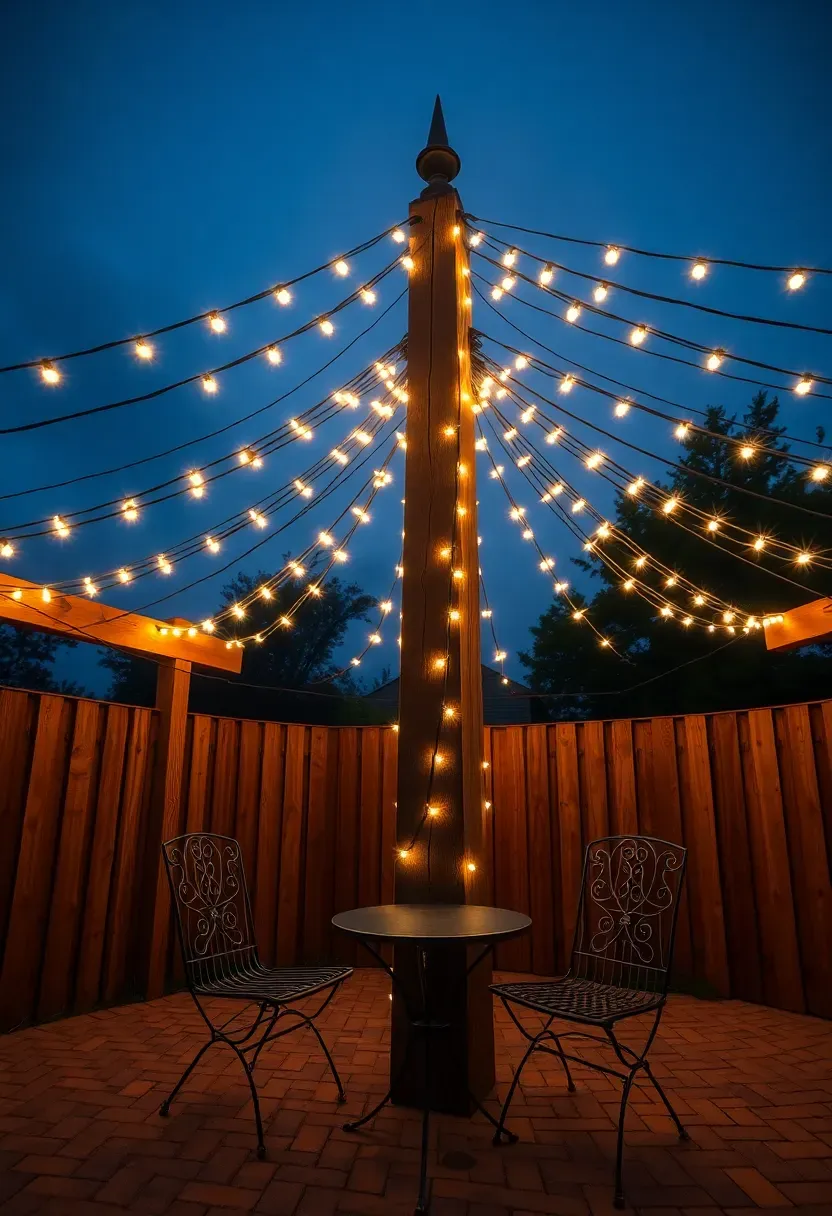
A center-post design radiates strands outward from a single tall point (12 to 14 feet) to shorter anchor points around the perimeter. This creates a tent-like canopy shape instead of a flat grid. The peak gives the arrangement vertical interest and lets rainwater slide off the strand rather than pooling in sags.
Building it
Set one tall post in the center of your seating area and run 6 to 8 strands outward to fence posts, pergola corners, or dedicated shorter poles at the yard's edges. The center post needs a heavier footing — use a 6x6 treated timber in an 18-inch-deep concrete footing.
Best suited for
- Round or square patios where radial symmetry matches the layout
- Open yards without overhead structures
- Events and parties where you want a focal point overhead
Recommended
Items for this idea
15. Mixed Bulb Sizes
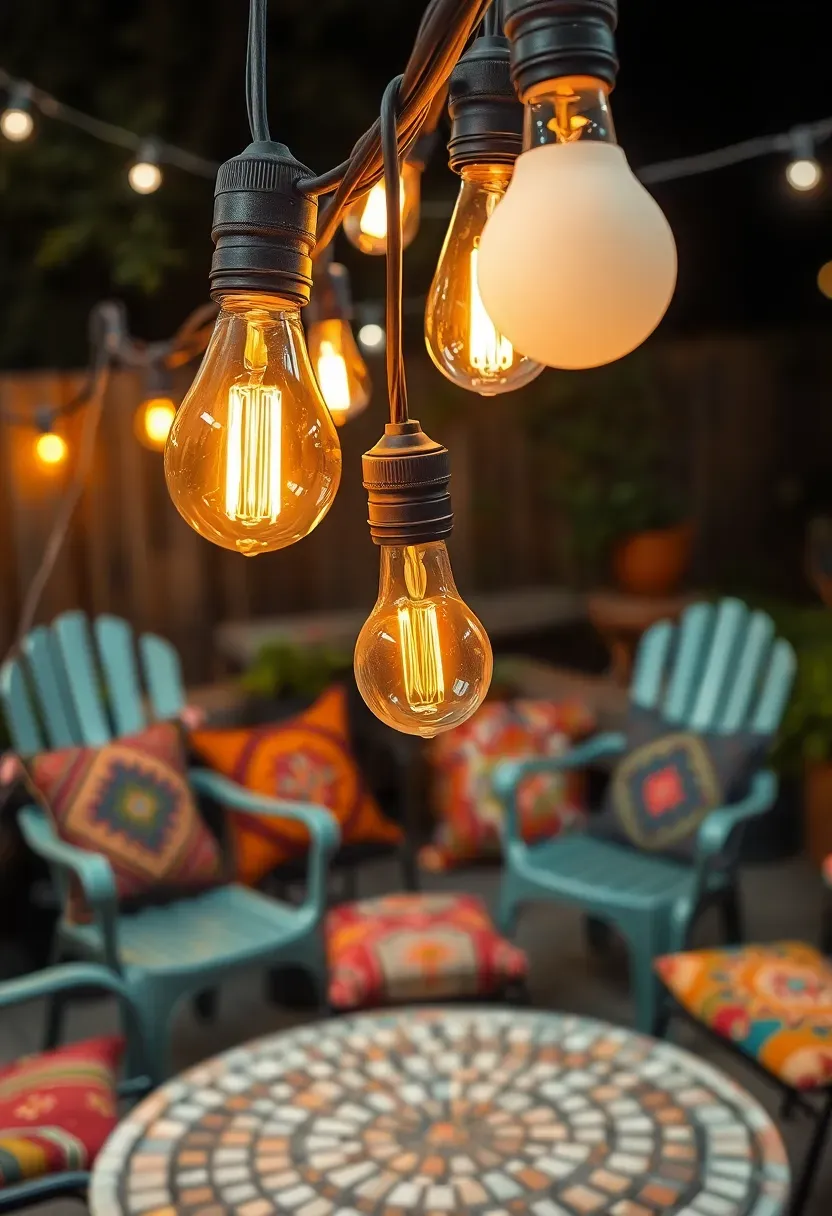
Mixing bulb sizes on the same strand — or combining two different strand types — breaks the uniformity that can make string lights look generic. Alternate large Edison bulbs (2.5-inch diameter) with small globe bulbs (1.5-inch) on a custom strand, or hang two separate strands at different heights. The varied sizes create visual rhythm, like a sentence with long and short words. This works best in eclectic or bohemian outdoor setups where perfection is not the goal.
Tips
- Keep all bulbs within the same color temperature (2700K) so the mix looks intentional, not mismatched
- Use the larger bulbs at wider spacing (36 inches) and smaller ones between (12 inches)
- LED filament versions are available in both sizes from most commercial lighting suppliers
16. Low-Hung Bistro Lights Over Seating
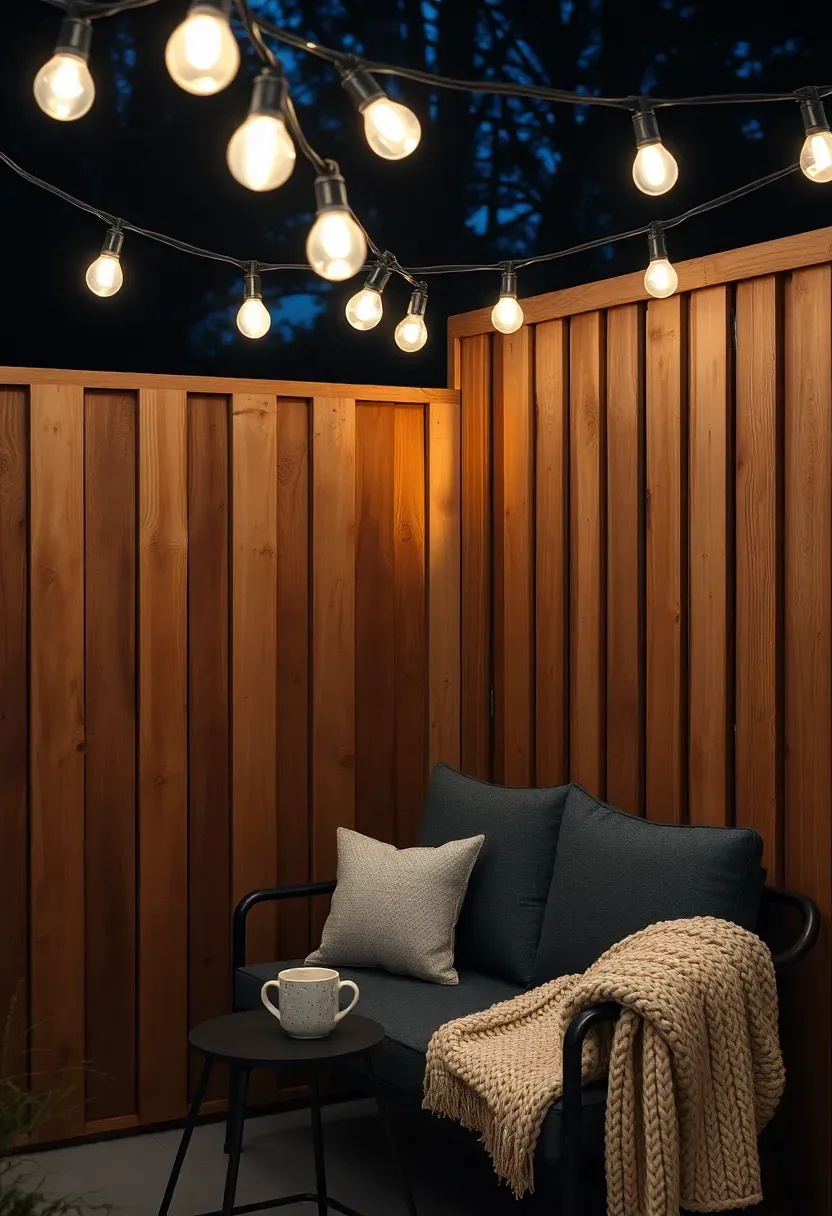
Hanging string lights lower than usual — about 7 feet instead of the typical 10 to 12 — creates an intimate, enclosed feeling over a seating nook. This only works for areas where people sit, not walk through, since the lights are at head-clearing height. The lower position means each bulb illuminates a smaller area more brightly, which reduces the number of strands you need. A single strand in a U-shape over a loveseat or two armchairs is usually enough.
Practical notes
- Mark the light height with tape on a nearby wall or post before committing to hook placement
- Use dimmable lights — at 7 feet, full brightness can feel harsh
- This arrangement pairs well with a corner fence or wall that gives the nook a sense of enclosure
Recommended
Items for this idea
17. String Lights With Hanging Planters
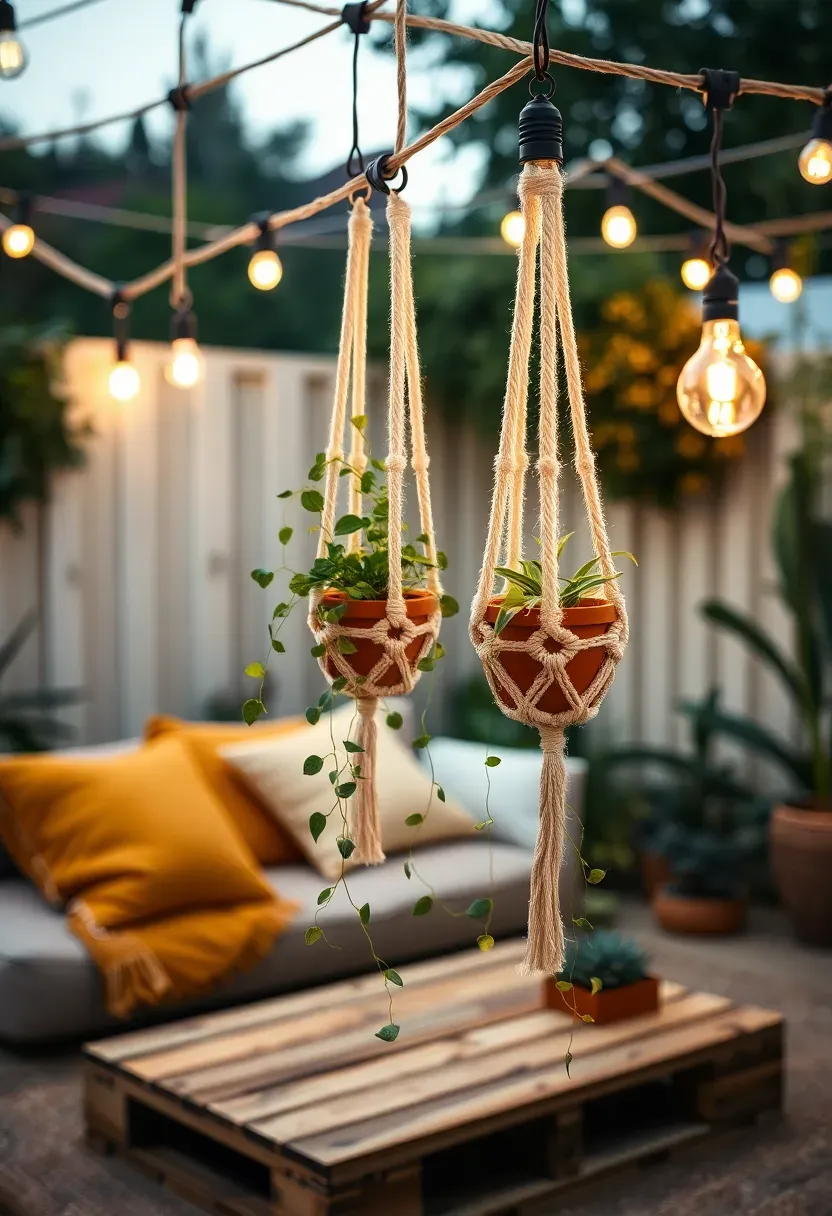
Combine string lights with lightweight hanging planters for a setup that does double duty. Small macramé or wire-frame planters (6-inch pots maximum) clip onto the light strand between bulbs using S-hooks. Fill them with trailing plants like pothos, string of pearls, or creeping jenny. The plants soften the look of bare wires during the day, and the lights illuminate the greenery at night. Keep total added weight under 2 lbs per attachment point and make sure your guide wire and hooks are rated accordingly.
What to plant
- Trailing succulents for dry climates — minimal watering needed
- Pothos or ivy for shaded patios — tolerates low light well
- Nasturtiums for a seasonal pop of color (replant annually)
Quick FAQ
Do LED string lights use less power than incandescent? Significantly. A typical 48-foot LED strand draws 15 to 25 watts, while an equivalent incandescent strand draws 200 to 300 watts. Over a summer of nightly 5-hour use, that difference adds up to roughly $20 to $35 on your electric bill. LED bulbs also run cooler, which matters when they are near plants, fabric shades, or wooden structures.
How do I keep string lights from sagging? The main culprit is stretching over time combined with wind. Run a separate guide wire (vinyl-coated steel cable with turnbuckles) between your anchor points first, then attach the light strand to it with zip ties every 18 to 24 inches. The guide wire handles the tension so the electrical cord does not stretch.
Can I leave outdoor string lights up year-round? Commercial-grade lights rated for outdoor use (look for UL or ETL wet-location listing) handle year-round exposure in most climates. Budget party lights from seasonal displays usually last one season before UV damage cracks the insulation. Cold climates with heavy snow loads should either use a pulley system to lower lights before storms or take them down between October and April.
What height should backyard string lights be? For walkable areas, 10 to 12 feet is standard clearance. Over dining tables, 7 to 8 feet feels more intimate. Below 7 feet gets in the way of standing guests. Above 14 feet and the lights start feeling disconnected from the ground-level activity. Match the height to what happens beneath them.
Are solar string lights bright enough for a patio? For ambiance, yes. For reading a menu or cooking at a grill, no. Current solar string lights produce roughly 1 to 3 lumens per bulb compared to 15 to 50 lumens for plug-in LED bulbs. They are best used as a secondary layer alongside brighter task lighting where needed.
String lights are cheap, reversible, and fixable when something breaks — which makes them the lowest-risk lighting upgrade you can do in a backyard. Start with one strand over your most-used area, figure out the height and color temperature you prefer, then expand from there. The hardware store will still be open next weekend.
Pinterest cover for 17 Backyard String Light Ideas
About the author
OBCD
CGI visualization and interior design content. We create detailed 3D renders and curate practical design ideas for every room in your home.