21 Backyard Wall Ideas
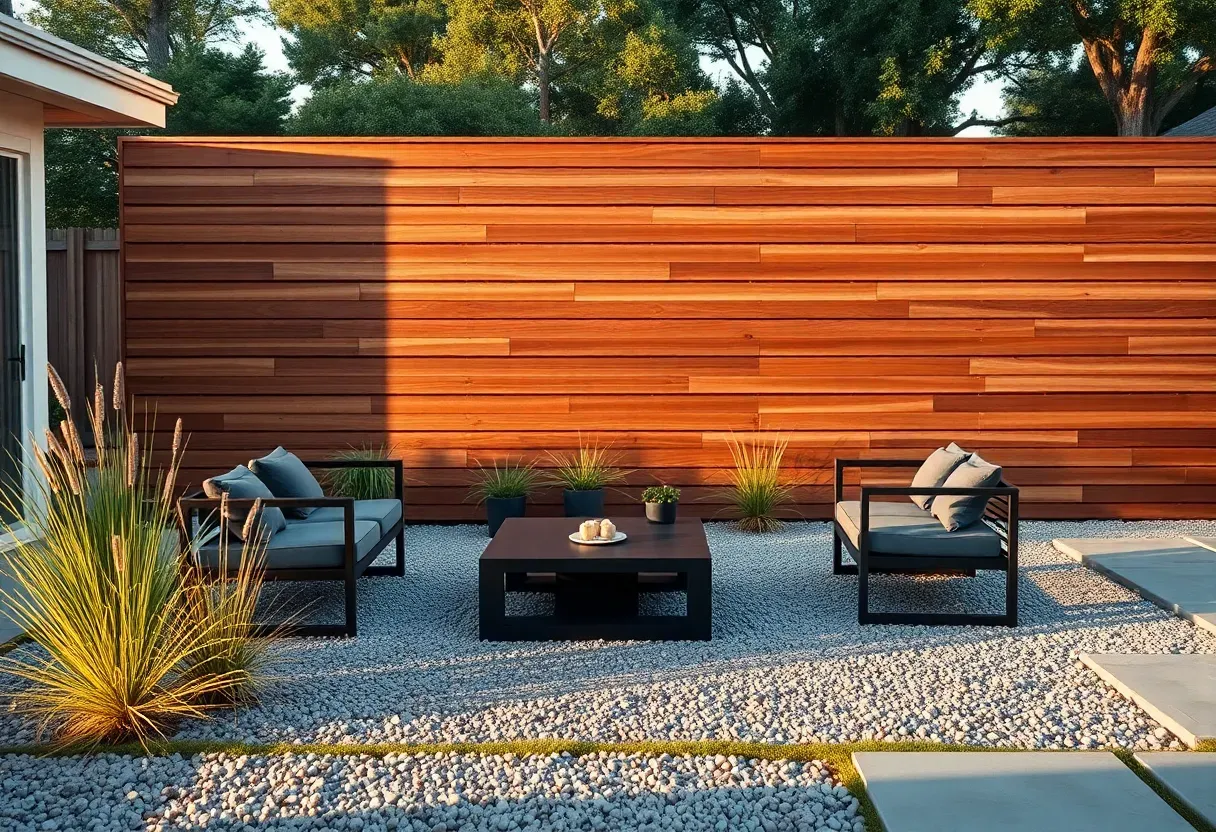
Most backyards have at least one wall problem. Maybe it is a plain cinder block fence that makes the yard feel like a loading dock. Maybe there is no wall at all and the neighbors can watch you grill in your bathrobe. I have dealt with both situations and a few in between. The fix usually comes down to picking the right material for your budget, your climate, and how much maintenance you actually want to do on a Saturday. These 21 ideas range from quick weekend projects like mounting a trellis panel to bigger builds like poured concrete retaining walls. Some cost under $200. Others require a contractor and a permit.
Here are the ideas grouped roughly by material and purpose, from simple privacy screens to full accent walls.
Table of Contents
- Horizontal Cedar Slat Wall
- Stacked Stone Accent Wall
- Cinder Block With Stucco Finish
- Living Wall With Pocket Planters
- Corrugated Metal Privacy Screen
- Gabion Wall
- Lattice Trellis With Climbing Vines
- Painted Mural on a Block Wall
- Dry-Stacked Fieldstone Wall
- Bamboo Roll Fence
- Poured Concrete Retaining Wall
- Reclaimed Wood Plank Wall
- Vertical Herb Garden Wall
- Brick With Whitewash Finish
- Composite Privacy Panels
- Rammed Earth Wall
- Outdoor Tile Mosaic Wall
- Reed and Wire Frame Screen
- Concrete Block Breeze Wall
- Weathering Steel Panel Wall
- Stone Veneer Over Existing Block
1. Horizontal Cedar Slat Wall
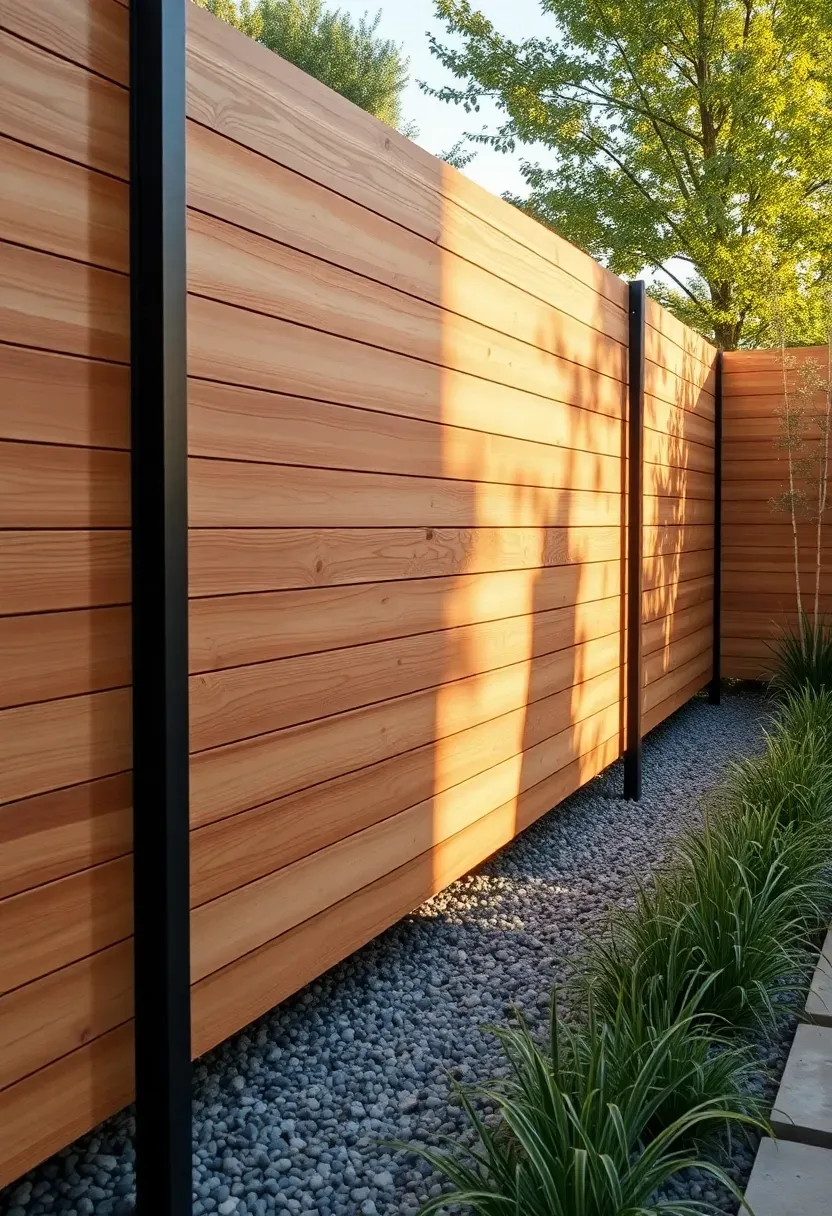
Horizontal slats give a backyard a modern, clean feel that vertical boards cannot quite match. Use 1x6 western red cedar boards spaced 3/4 inch apart on 4x4 posts set 6 feet on center. The gaps let air through, which matters in windy areas where a solid wall acts like a sail. Cedar resists rot for 15 to 20 years without chemical treatment, though a clear UV-blocking sealer every two to three years keeps the color from going gray. Budget roughly $25 to $35 per linear foot for materials.
Build tips
- Set posts in concrete footings below the frost line, not just tamped gravel
- Use stainless steel screws — galvanized will leave black streaks on cedar within a year
- Pre-drill every screw hole to prevent splitting at the board ends
We picked a few things that go well with this idea: Enclo Concord Cedar Privacy Screen Panel (★4.4), Enclo Richmond Cedar Privacy Screen (2 Panels) (★4.5) and Modern Shade Cedar Privacy Fence (3 Panels) (★4.7). As an Amazon Associate we earn from qualifying purchases.
2. Stacked Stone Accent Wall
Why stone works outdoors
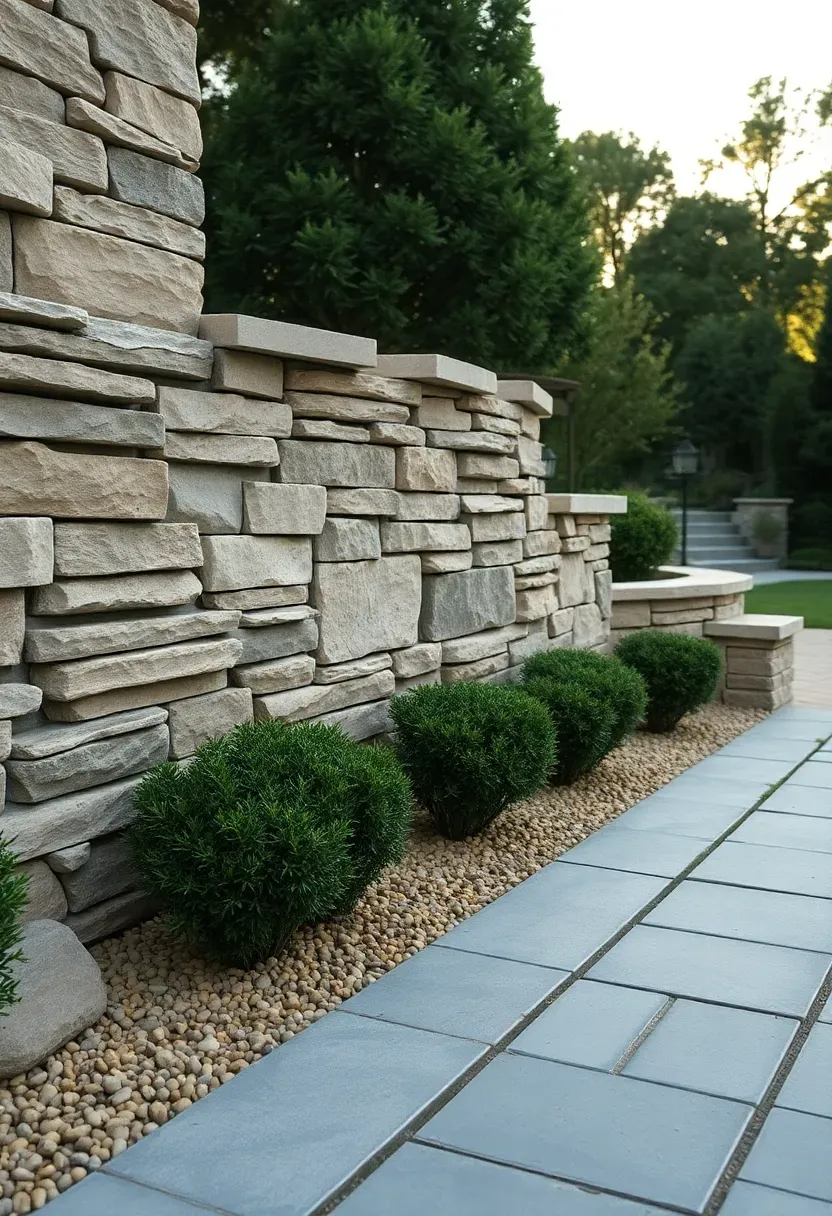
Natural stone handles freeze-thaw cycles, UV exposure, and rain without fading or warping. A 3-foot-tall stacked stone wall along one side of a patio creates a visual anchor that makes the whole space feel deliberate rather than just a slab of concrete dropped in the yard.
How to build it
Start with a compacted gravel base 6 inches deep and 4 inches wider than the wall on each side. Dry-stack the first two courses, then switch to Type S mortar for anything above 24 inches. Choose flat-faced stones like bluestone or limestone for easier stacking. A 20-foot-long, 3-foot-tall wall costs roughly $1,200 to $2,500 in materials depending on stone type.
Tradeoffs
- Extremely durable with almost zero maintenance
- Adds property value and looks good from day one
- Heavy — you need a helper and possibly a hand truck for anything over 50 pounds per stone
We picked a few things that go well with this idea: vidaXL Steel Gabion Basket (39.4") (★4.3), AdirPro Welded Gabion Basket (3-Pack) (★3.6) and vidaXL Galvanized Gabion Wall with Covers (★4.2). As an Amazon Associate we earn from qualifying purchases.
3. Cinder Block With Stucco Finish
Plain cinder block is ugly. Everyone agrees on that. But the bones are solid, cheap, and fast to lay. The trick is the finish. A three-coat stucco application — scratch coat, brown coat, finish coat — turns a $6-per-block wall into something that looks like it belongs in a Mediterranean courtyard. Total thickness adds about 3/4 inch. Choose a smooth trowel finish for modern yards or a rough skip-trowel texture for something with more character. The stucco itself runs $3 to $5 per square foot for materials when you mix from bags.
Tips
- Apply a bonding agent to the block before the scratch coat — stucco will crack and peel without it
- Mist the wall with water for three days after application to cure the stucco slowly
- Add integral color to the finish coat instead of painting — it lasts longer and never peels
We picked a few things that go well with this idea: ShopLaLa Wooden Wall Planter (2-Pack) (★4.3), SunVara Vertical Wall Planter (64 Pockets) (★3.6) and Outsunny 3-Tier Wall Planter (6 Pots) (★4.0). As an Amazon Associate we earn from qualifying purchases.
4. Living Wall With Pocket Planters
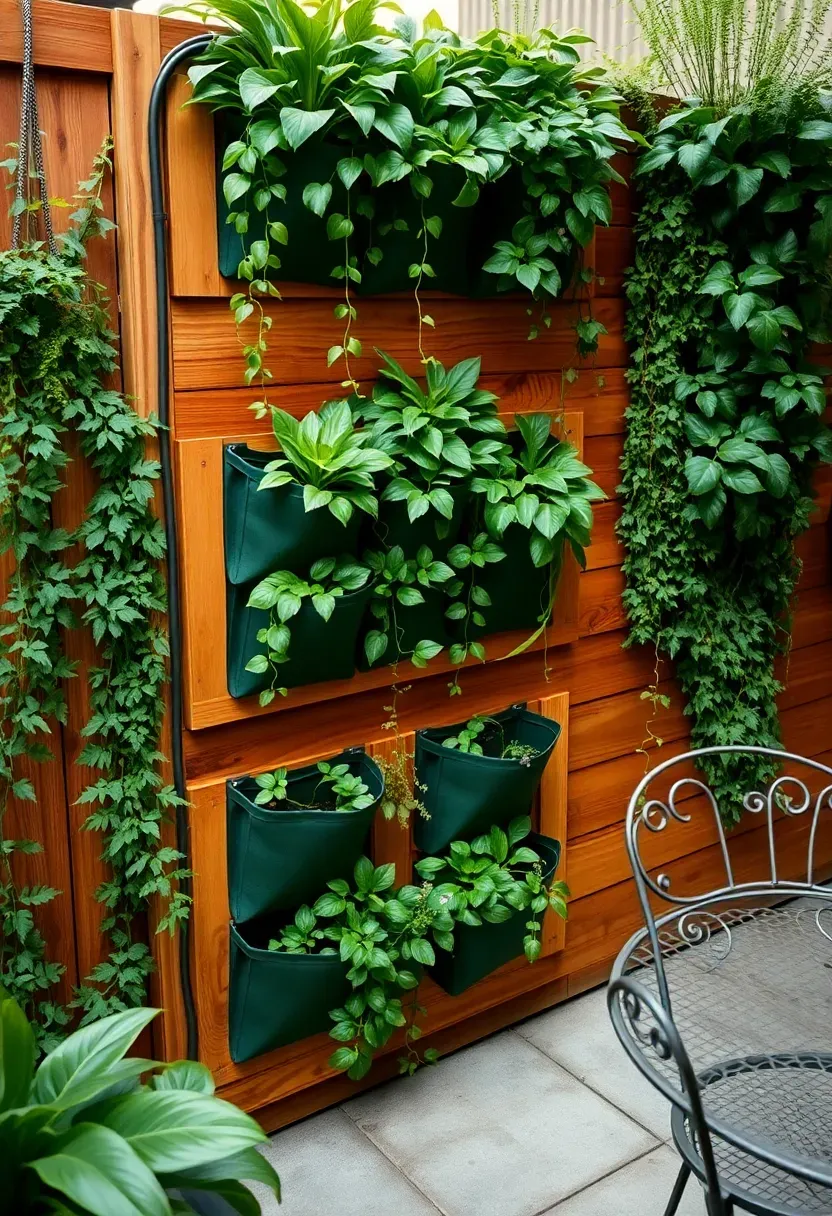
A living wall turns a blank fence into a vertical garden. Felt pocket systems are the easiest entry point — brands like Florafelt and Wally Pro sell panels with built-in pockets that hold 4-inch nursery pots. Mount the panel on a waterproof backer board (marine plywood or PVC sheet) attached to your existing fence or wall. An automatic drip irrigation line across the top feeds water down through each pocket. Choose shade-tolerant plants like pothos, ferns, and creeping fig for walls that get less than 4 hours of direct sun.
What to watch out for
- Weight adds up fast — a 4x8-foot panel fully planted and watered weighs 200+ pounds
- The backer board must be waterproof or the fence behind it will rot within two seasons
- Plan for drainage at the bottom or you will have a muddy puddle on the patio
Recommended
Items for this idea
5. Corrugated Metal Privacy Screen
The appeal
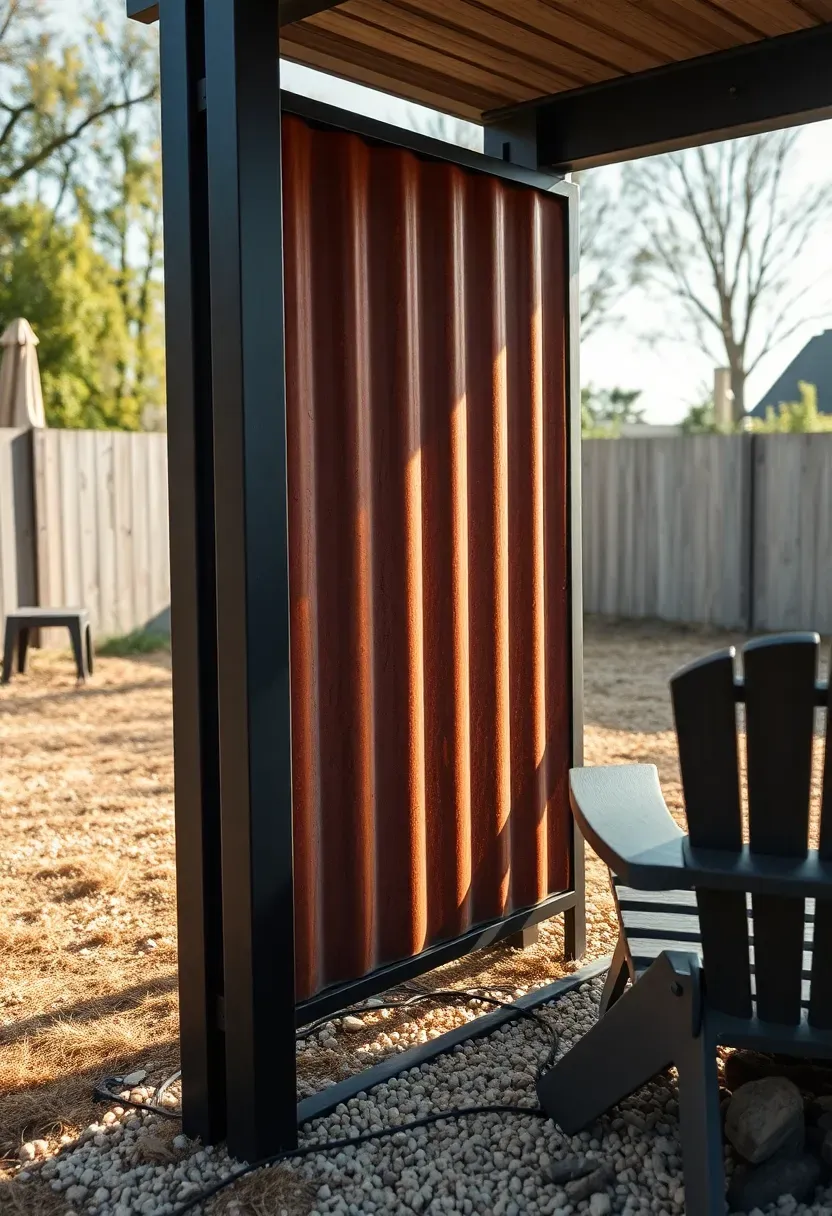
Corrugated metal is cheap, fast to install, and weathers in a way that actually looks better over time. A panel of 26-gauge corrugated steel costs about $15 for a 2x8-foot sheet. You can leave it bare for an industrial look, let it develop a natural rust patina, or spray it with a clear sealant to keep the shiny galvanized finish.
Installation
Bolt panels to a frame made from 2-inch square steel tubing or pressure-treated 4x4 posts. Overlap panels by one corrugation and use self-tapping metal screws with neoprene washers every 12 inches along the overlap. A 6-foot-tall, 16-foot-long screen takes about three hours to build with two people.
Choose this if
- You want an affordable privacy screen that goes up in a day
- Your yard has an industrial, farmhouse, or desert aesthetic
- You do not mind the sound of rain hitting metal (some people love it, some hate it)
6. Gabion Wall
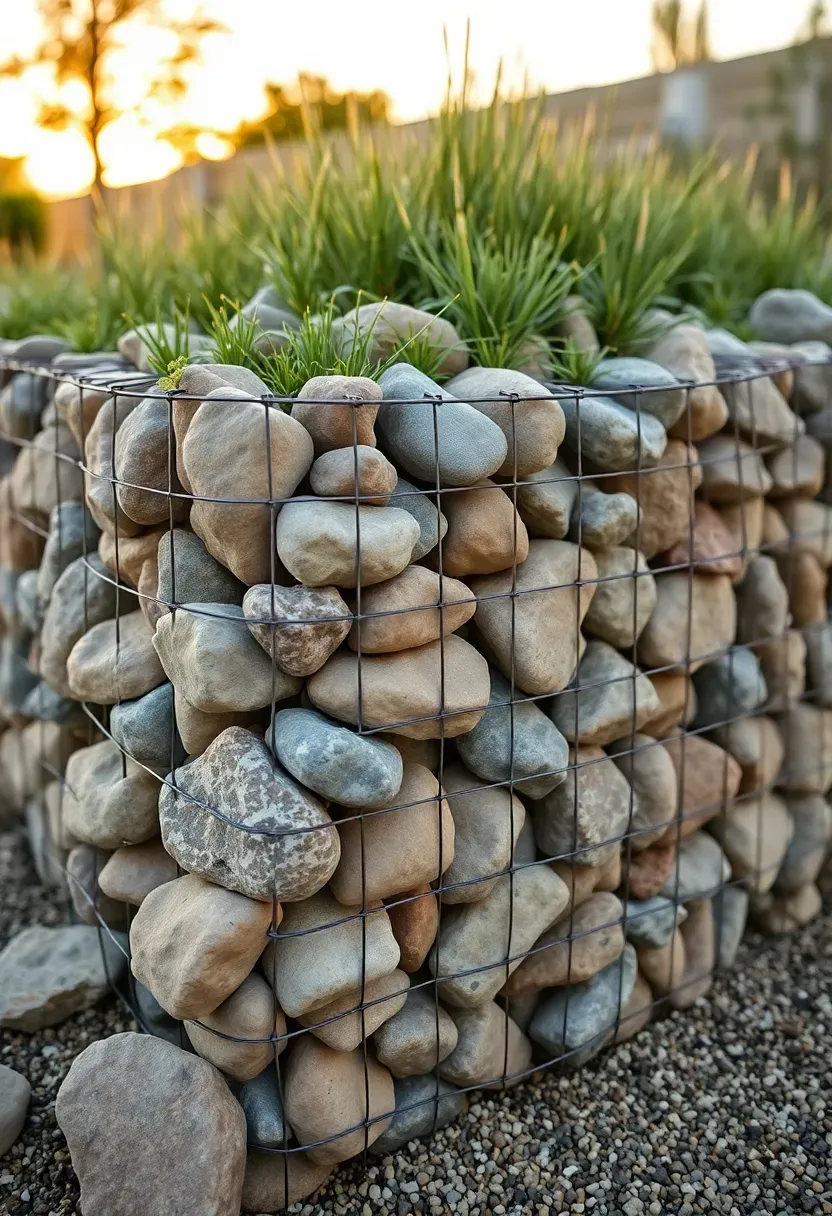
Gabion walls are wire cages filled with rocks. They started as erosion control on riverbanks and highway cuts, but landscape designers started using them about 15 years ago for residential walls and they have stuck around because they work. Buy pre-fabricated gabion baskets in standard sizes (typically 3x3x1 foot or 3x3x3 foot), set them on a level gravel pad, wire them together, and fill with whatever stone fits your budget. River rock looks clean. Crushed granite is cheaper. Broken concrete from a demolition project is free and has a raw, honest look.
Practical notes
- No mortar, no footings, no curing time — you can build and fill in a single weekend
- Water drains straight through, so gabion walls work well on slopes where drainage is a concern
- The wire baskets are galvanized or PVC-coated and last 30+ years before corrosion becomes an issue
Recommended
Items for this idea
7. Lattice Trellis With Climbing Vines
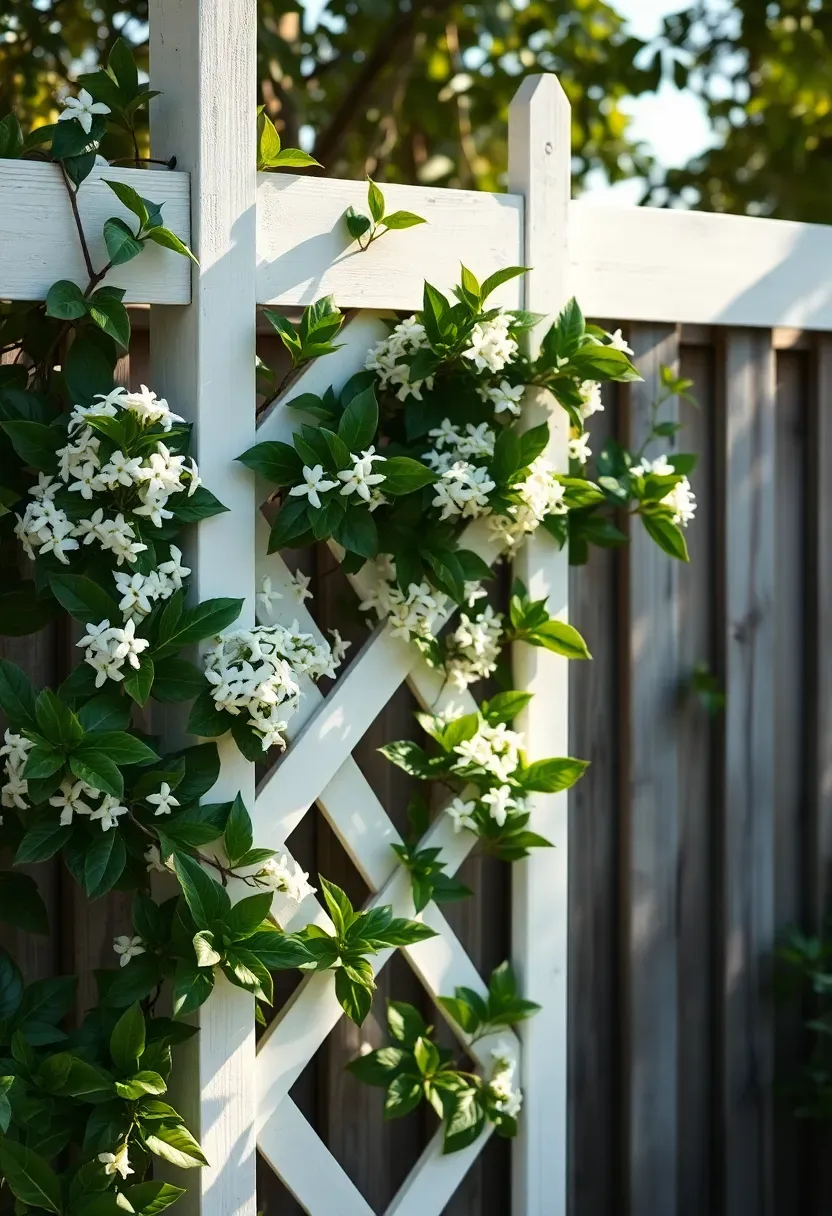
This is the lowest-cost way to turn a boring fence into something worth looking at. A 4x8-foot vinyl or cedar lattice panel costs $20 to $45. Mount it on top of an existing fence or attach it to posts as a standalone screen. Then plant a fast-growing climber at the base: jasmine for fragrance, clematis for flowers, or Virginia creeper if you just want green coverage fast. Most climbers reach the top of an 8-foot trellis within two growing seasons.
Picking the right vine
- Measure your sun exposure — jasmine and bougainvillea need 6+ hours of direct sun, while climbing hydrangea tolerates shade
- Check the growth habit — twiners (wisteria, honeysuckle) wrap around supports, while clingers (ivy, Virginia creeper) attach to flat surfaces with adhesive pads
- Consider maintenance — some climbers like trumpet vine spread aggressively and need annual cutting back to stay on the trellis
Watch out for
- Woody vines like wisteria can crush lightweight lattice — use heavy-duty lattice or build a sturdier frame
- Climbing plants trap moisture against fences, which accelerates rot on untreated wood
8. Painted Mural on a Block Wall
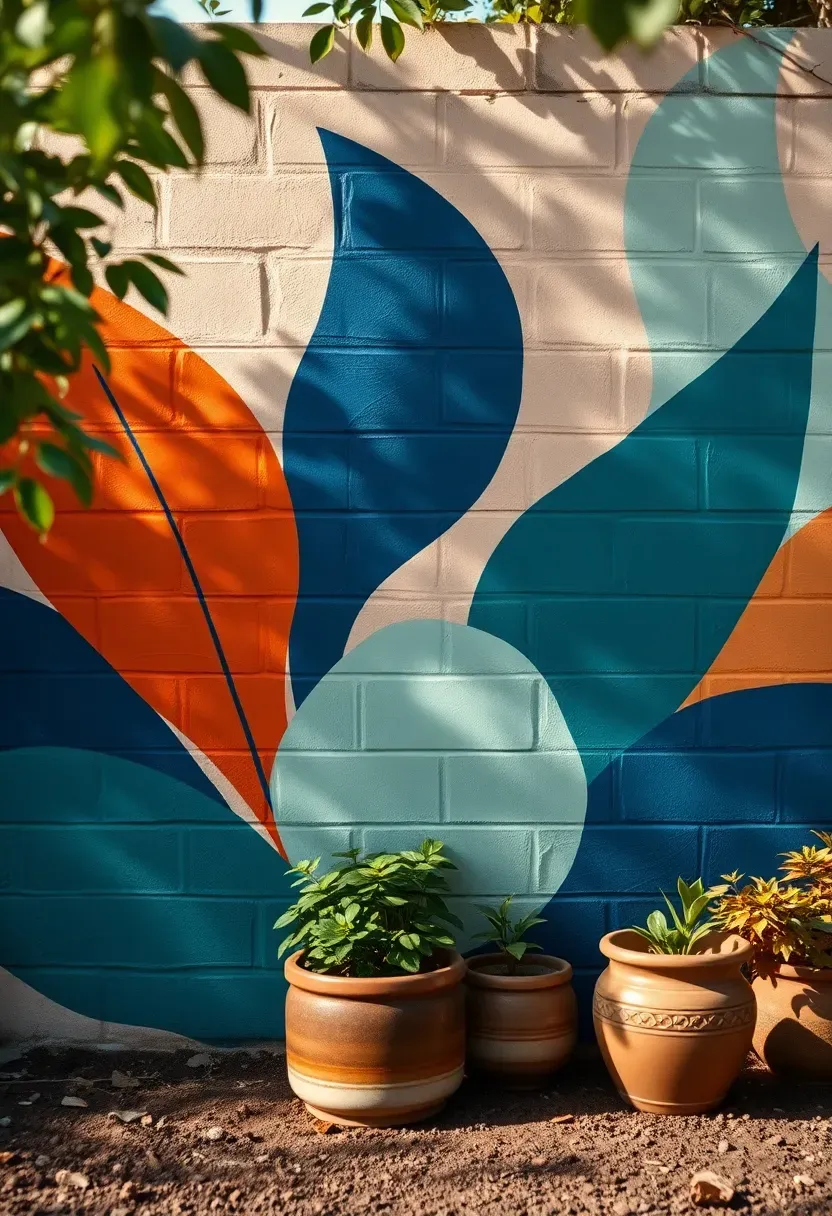
A mural costs almost nothing in materials — a gallon of exterior latex covers about 350 square feet and runs $30 to $50. The labor is either free (you paint it) or $500 to $2,000 if you hire a local artist. Clean the wall with TSP, prime with a masonry primer, and paint. Use exterior-grade acrylic latex for the design and seal the finished mural with a clear UV-resistant topcoat. Abstract geometric patterns are forgiving for beginners. Botanical motifs, landscapes, and color-block designs all work well on the flat surface of a block wall.
Tips
- Project your design onto the wall with a projector at night to trace outlines before painting
- Stick to a palette of 4 to 6 colors to keep the design cohesive
- Reapply the UV sealant every 3 years — without it, colors fade noticeably within 18 months
Recommended
Items for this idea
9. Dry-Stacked Fieldstone Wall
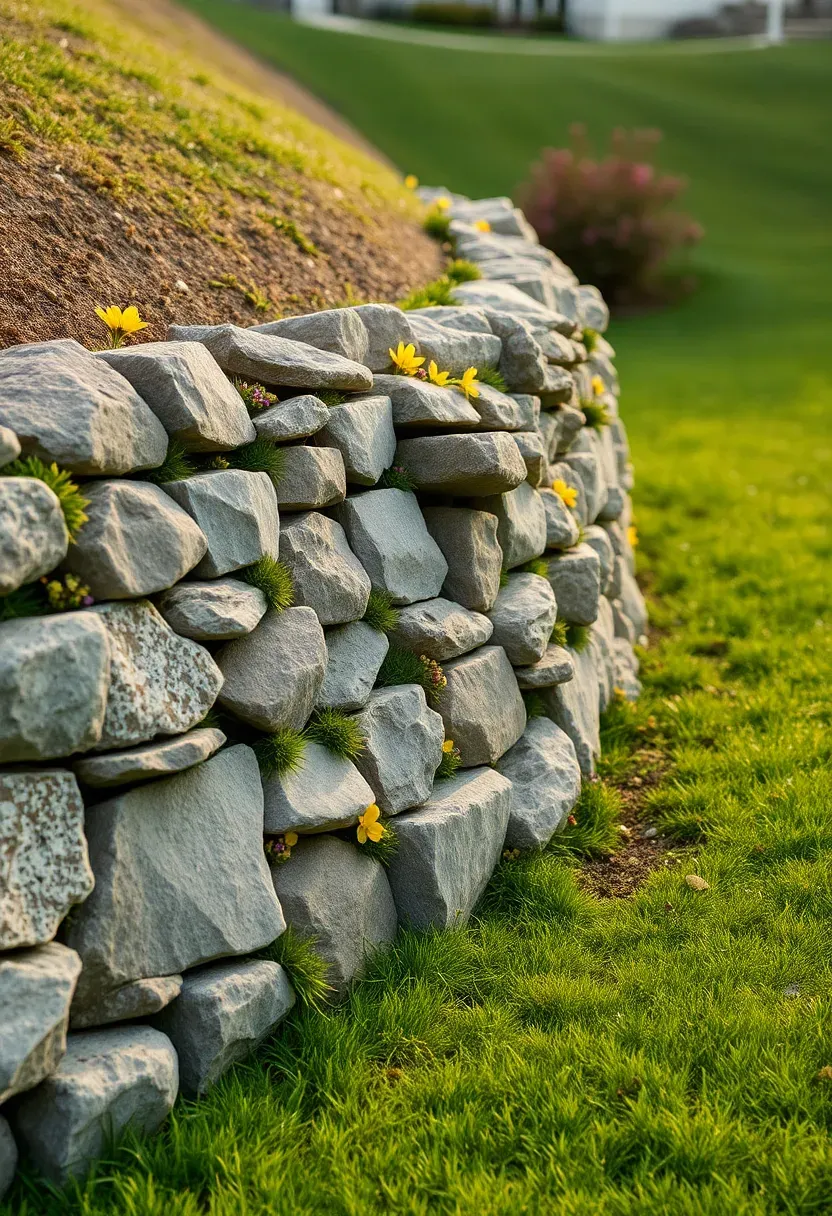
Dry stacking means no mortar. You rely on gravity, friction, and careful stone selection to hold the wall together. This limits practical height to about 3 feet for freestanding walls (taller walls need an engineer and usually mortar). The look is rustic and timeless — think New England stone fences that have stood for 200 years. Source fieldstone locally if possible. Quarry-cut stone is more uniform but costs twice as much and loses the character that makes dry-stack walls interesting.
How to approach it
- Sort your stones into three piles: large flat ones for the base, medium irregular ones for the fill, and long flat ones for the cap
- Lay the first course on compacted gravel, biggest stones first, flat side down
- Stagger joints like brickwork — never stack a vertical joint directly over another
- Batter the wall (lean it slightly backward) at about 1 inch of setback per foot of height for stability
10. Bamboo Roll Fence
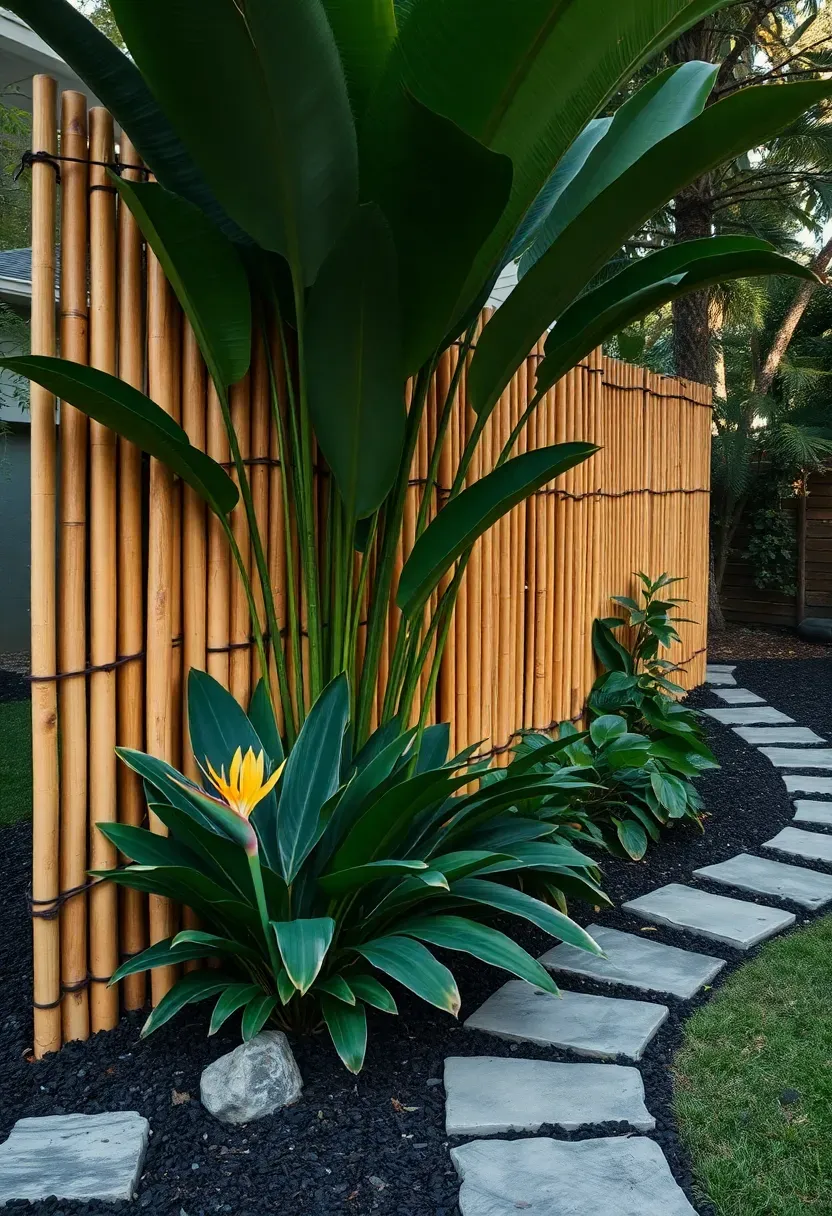
Bamboo roll fencing is sold in 6-foot-tall rolls, 8 or 16 feet long, for about $25 to $60 per roll. It attaches to an existing chain-link or wood fence with galvanized wire ties every 12 inches. Installation takes 30 minutes per 8-foot section. The result is an immediate tropical or Asian-garden feel. Tonkin bamboo (the thin, uniform poles) gives a refined look. Black bamboo rolls exist too and pair well with modern landscapes.
Durability
- Untreated bamboo lasts 3 to 5 years outdoors before splitting and graying
- A coat of exterior wood sealant doubles the lifespan
- If a section fails, you just unroll a new one and wire it on — replacement is fast and cheap
Recommended
Items for this idea
11. Poured Concrete Retaining Wall
When you need serious structure
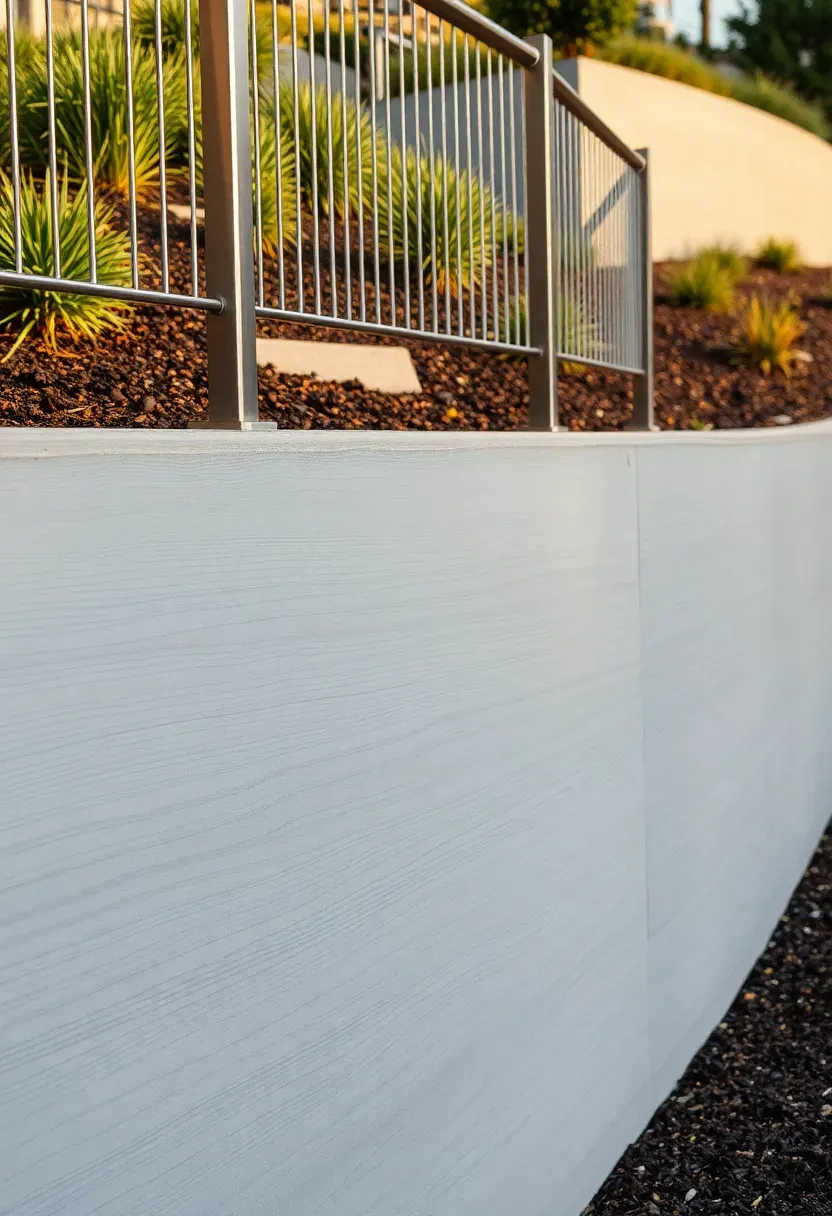
If your yard has a slope steeper than 3:1, a retaining wall is not decorative — it is structural. Poured concrete is the strongest option for walls over 4 feet tall. A properly engineered concrete retaining wall with steel rebar and drainage behind it will hold back thousands of pounds of soil for 50+ years.
What is involved
This is not a DIY weekend project. You need forms built to the exact profile, rebar placed per engineering specs, and a concrete truck to pour. Expect to spend $40 to $75 per square face foot installed. A 30-foot-long, 5-foot-tall wall runs $6,000 to $11,000 with a contractor. Always install a perforated drain pipe behind the wall with gravel backfill — hydrostatic pressure from trapped water is the number one reason retaining walls fail.
Pros and cons
- Strongest retaining wall option available
- Can be formed into curves, steps, and seat walls
- Requires permits in most jurisdictions for walls over 4 feet
12. Reclaimed Wood Plank Wall
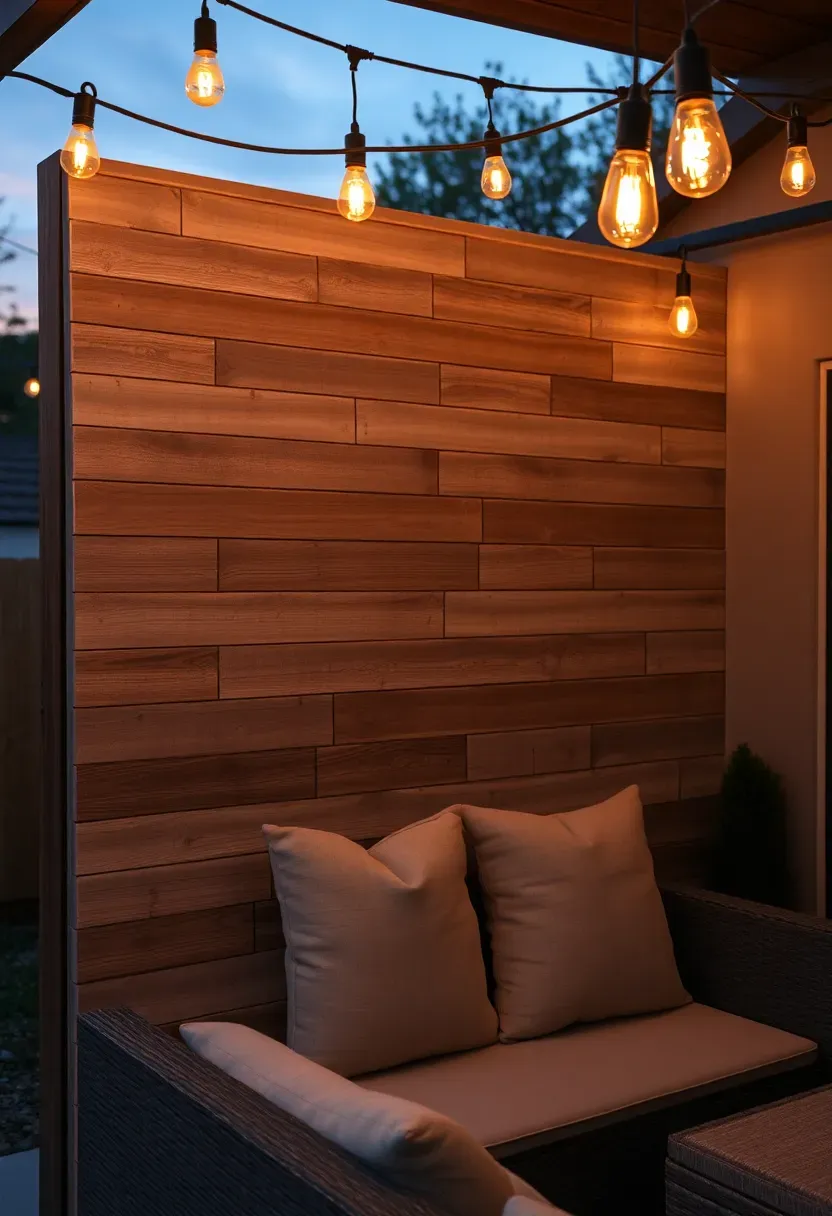
Reclaimed barn wood, pallet wood, or salvaged fence boards mounted on an exterior wall or fence create a textured accent that no new lumber can replicate. The mixed patina — grays, browns, weathered whites — gives depth without any stain or paint. Source boards from local salvage yards, old barn demolitions, or online marketplaces. Expect to pay $3 to $8 per square foot for genuine reclaimed wood.
Installation steps
- Build a frame of pressure-treated 2x4s on the wall surface, shimming as needed to create a flat plane
- Nail or screw boards horizontally, staggering end joints randomly for a natural look
- Leave 1/16-inch gaps between boards to allow for wood movement — reclaimed wood is often dry and stable, but outdoor humidity changes will cause slight expansion
- Seal the finished wall with a penetrating exterior wood oil to slow further weathering without changing the aged color
Recommended
Items for this idea
13. Vertical Herb Garden Wall
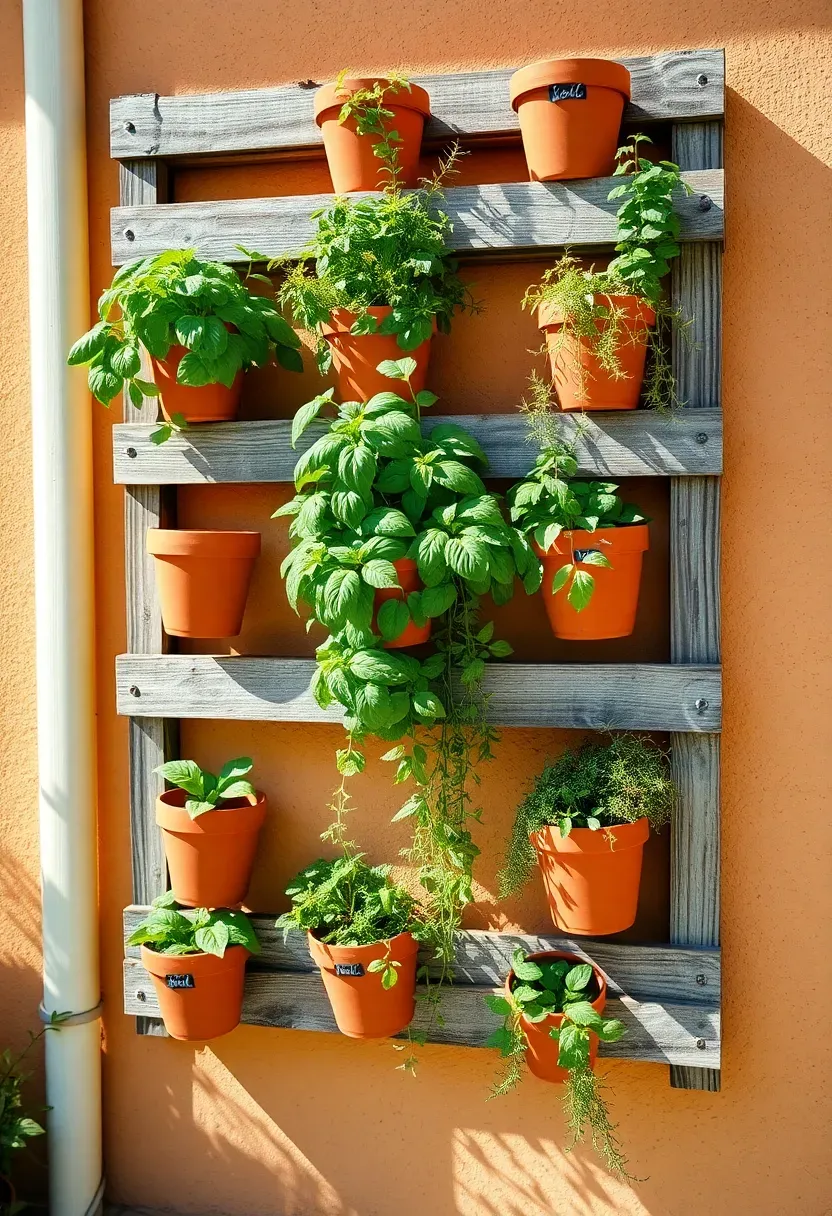
This idea combines function and decoration. Mount a series of terra cotta or galvanized pots on a wall-mounted rack, pallet frame, or custom-built wooden grid. Plant kitchen herbs — basil, rosemary, thyme, mint, oregano, cilantro — within arm's reach of your grill or outdoor kitchen. A south-facing wall with 6+ hours of sun is ideal. Each pot needs a drainage hole and a catch tray or the wall behind will stain from mineral runoff.
Tips
- Group herbs by water needs: rosemary and thyme like dry soil, basil and cilantro need consistent moisture
- Use a drip irrigation line with individual emitters per pot if you have more than 8 pots — hand watering gets tedious fast
- Swap out annuals like basil and cilantro each season; perennials like rosemary and thyme come back on their own
14. Brick With Whitewash Finish
The look vs. full paint
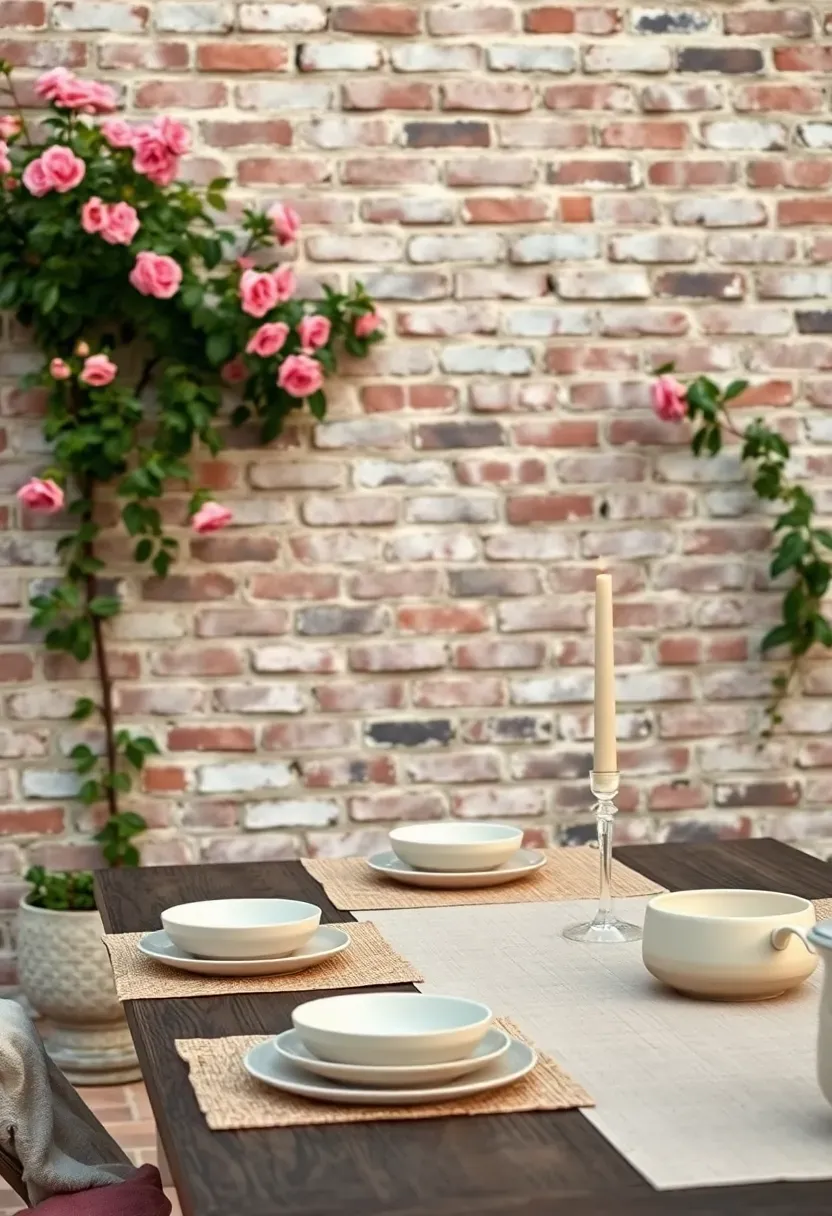
Whitewash lets the texture and color variation of the brick show through. Full paint covers everything and looks flat. For a backyard wall, whitewash wins because it ages well — it wears off gradually in a way that adds character, while peeling paint just looks neglected.
How to whitewash brick
Mix white latex paint with water at a 1:1 ratio. Wet the brick with a hose first (dry brick absorbs too fast and gives you a solid white coat instead of a wash). Apply with a wide masonry brush in random strokes. Build up coverage in thin layers rather than trying to get it right in one pass. Two to three coats give a nice balance where about 40% of the original brick color still reads through.
Best for
- Existing brick walls that look dark or dated
- Yards with a French country, farmhouse, or coastal aesthetic
- People who want a low-cost refresh — the whole project costs under $50 in materials
Recommended
Items for this idea
15. Composite Privacy Panels
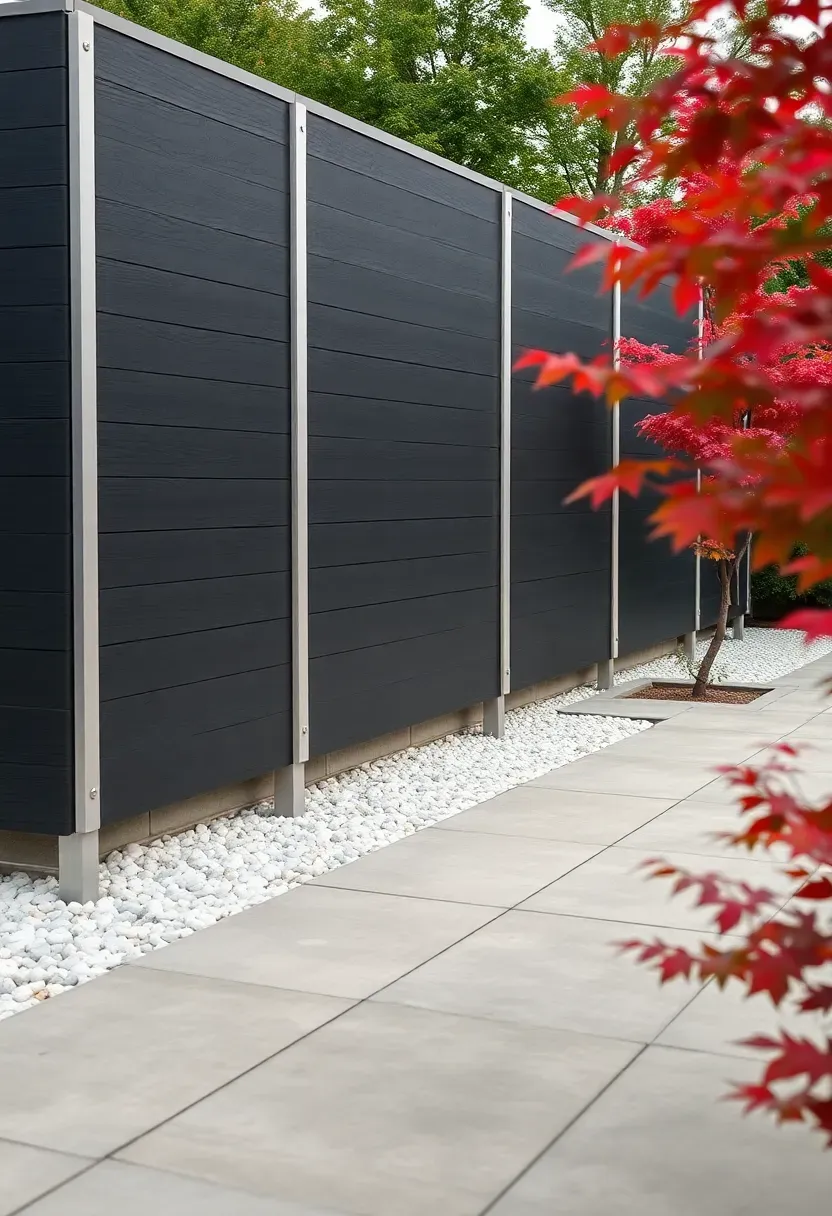
Composite lumber (the same material used for Trex and TimberTech decking) is now sold as fence and wall panels. The advantages over wood are real: no rotting, no warping, no painting, no termites. Composite panels come in woodgrain textures and colors from light cedar to dark walnut. They mount to aluminum or steel posts with hidden bracket systems. Cost is higher than wood — roughly $35 to $55 per linear foot for a 6-foot-tall wall — but the 25-year warranty and zero maintenance math usually works out over time.
Considerations
- Composite gets hot in direct sun — do not lean against it barefoot on a July afternoon
- Color fades slightly in the first year then stabilizes
- Panels are heavy (a 6x6-foot panel weighs 60+ pounds) so plan for two-person installation
16. Rammed Earth Wall
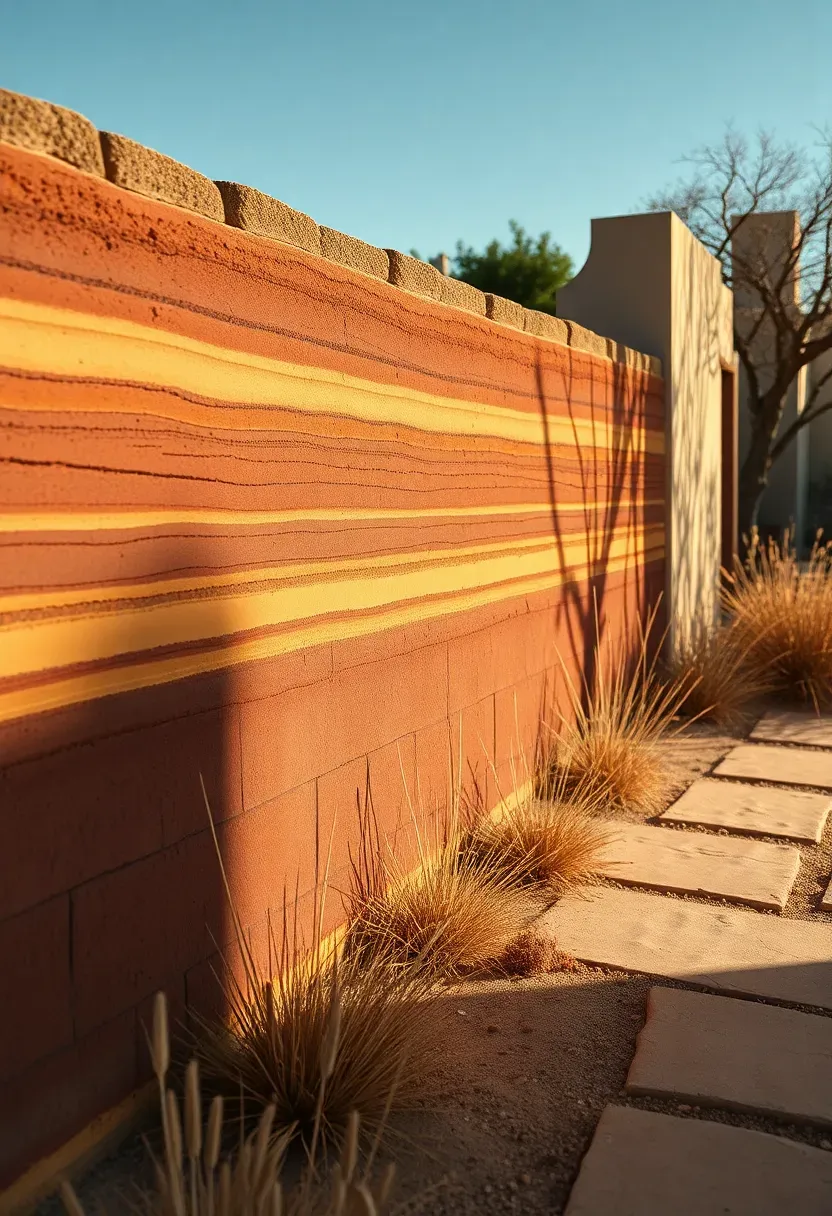
Rammed earth is one of the oldest building techniques on the planet. You compact layers of damp earth mixed with a small percentage of cement (typically 6-10%) inside temporary forms. The result is a solid wall with visible horizontal strata — bands of color that shift depending on the local soil. The look is striking and completely unique to your specific location because the soil itself provides the pigment. Rammed earth walls are load-bearing, fireproof, and have excellent thermal mass, staying cool in hot climates.
Practical reality
- This is labor-intensive — expect two to three days of compacting for a 10-foot section
- You need specific soil composition (roughly 30% clay, 70% sand/gravel) or the wall cracks
- Hire a specialist for walls over 3 feet tall unless you have experience with formwork
Recommended
Items for this idea
17. Outdoor Tile Mosaic Wall
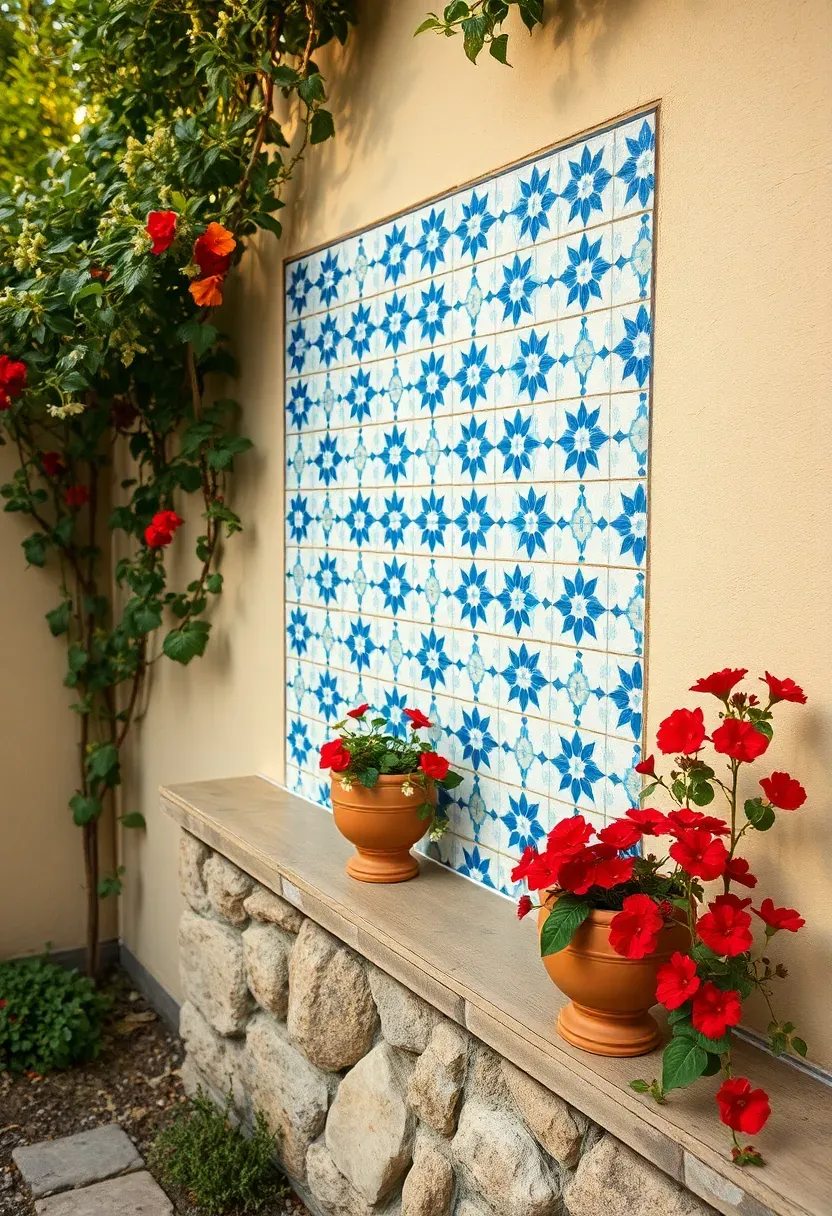
Mosaic tile on an outdoor wall works if you use the right materials. Porcelain tile with a water absorption rate below 0.5% handles freeze-thaw cycles. Glass mosaic tile adds color depth but needs a flexible thin-set mortar that accommodates thermal movement. Pick a section of wall — 4x6 feet is a manageable first project — and create a focal point rather than tiling the entire surface. Patterns range from Moroccan geometric to freeform broken-tile designs using leftover materials.
Steps to get it right
- Prepare the surface — apply a cement board backer if the wall is wood or painted block
- Lay out the design on the ground first using mesh-backed sheets or loose tiles on a template
- Set with exterior-rated flexible thin-set and grout with sanded epoxy grout for waterproof, stain-resistant joints
- Seal porous tiles (natural stone, terracotta) before grouting to prevent grout haze staining
18. Reed and Wire Frame Screen
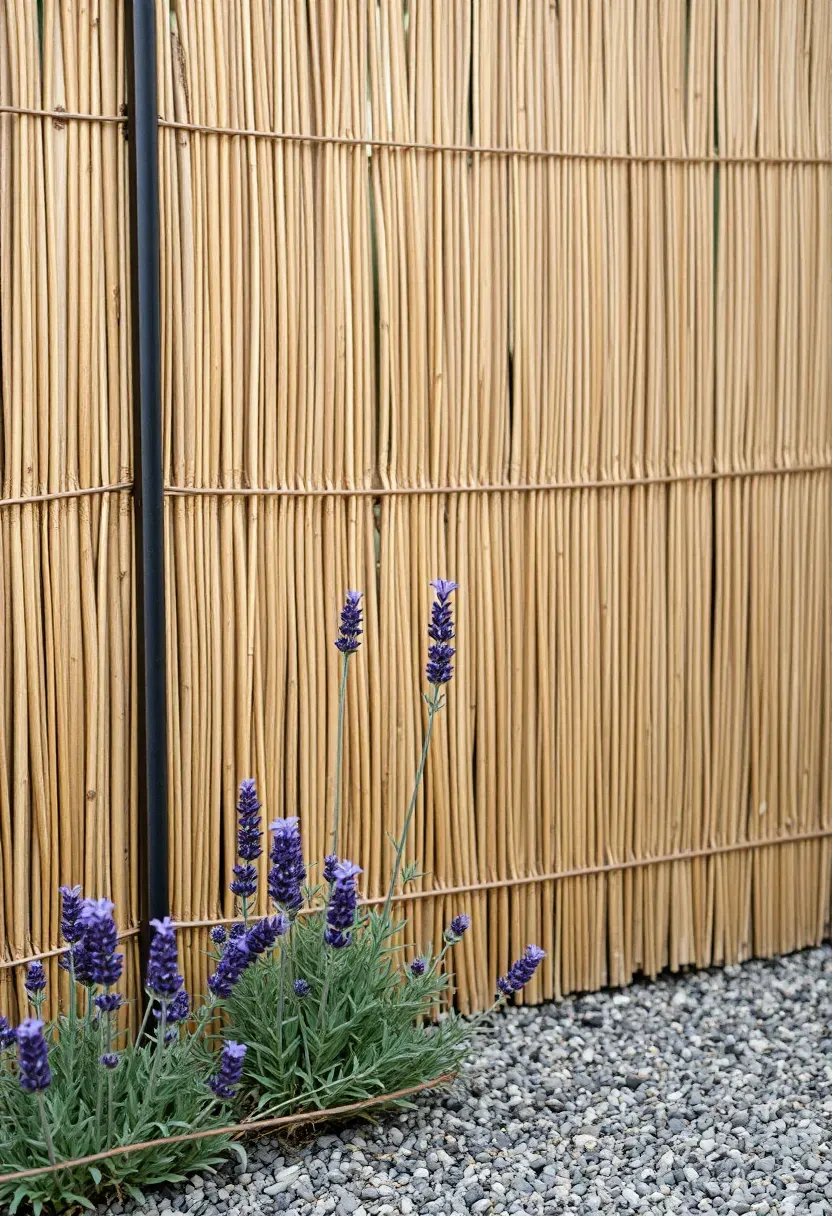
Reed screens are even cheaper than bamboo — about $15 to $25 per 6x16-foot roll. Wire them to a simple frame made from rebar, conduit, or thin steel tubing. The look is natural, lightweight, and easy to replace when the reeds eventually split after a few seasons. This works well as a seasonal screen around a hot tub, outdoor shower, or composting area where you need privacy but do not need a permanent structure.
Tips
- Double-layer the reed for better opacity — a single layer lets about 30% of light and sightlines through
- Attach with galvanized wire every 8 inches along the frame rails
- Store or cover reed screens during heavy winter weather to extend their life
Recommended
Items for this idea
19. Concrete Block Breeze Wall
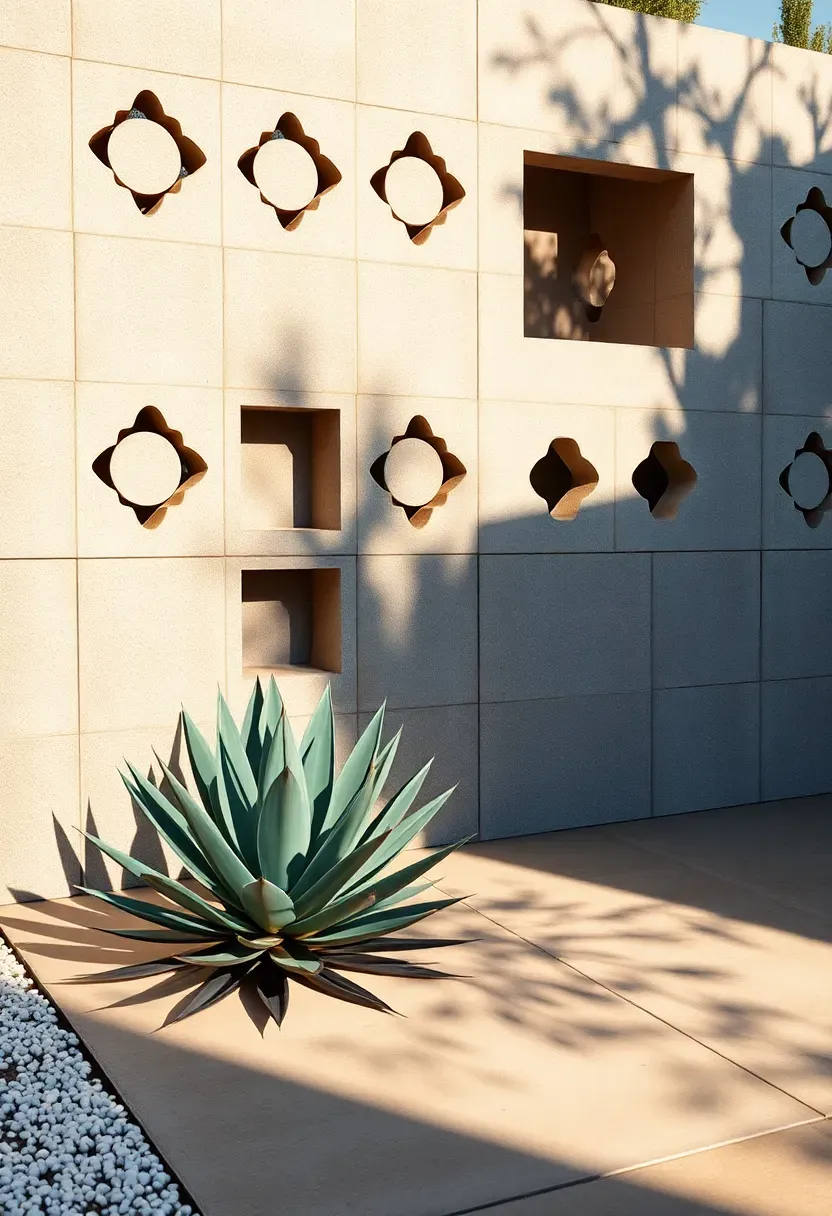
Breeze blocks — those decorative concrete blocks with geometric cutout patterns — were everywhere in the 1950s and 60s. They are back now, and for good reason. The openings let air flow through while providing partial privacy and casting interesting shadow patterns that change throughout the day. Standard sizes are 12x12 inches and 16x16 inches, costing $3 to $8 per block. Stack them on a reinforced concrete footing with rebar running vertically through the cells every 32 inches.
Practical notes
- Breeze walls provide about 50-60% privacy depending on the pattern — not ideal if you need full screening
- The shadow patterns they cast on adjacent surfaces are a design feature in themselves
- Pair with climbing plants for more privacy while keeping the architectural interest of the block pattern visible
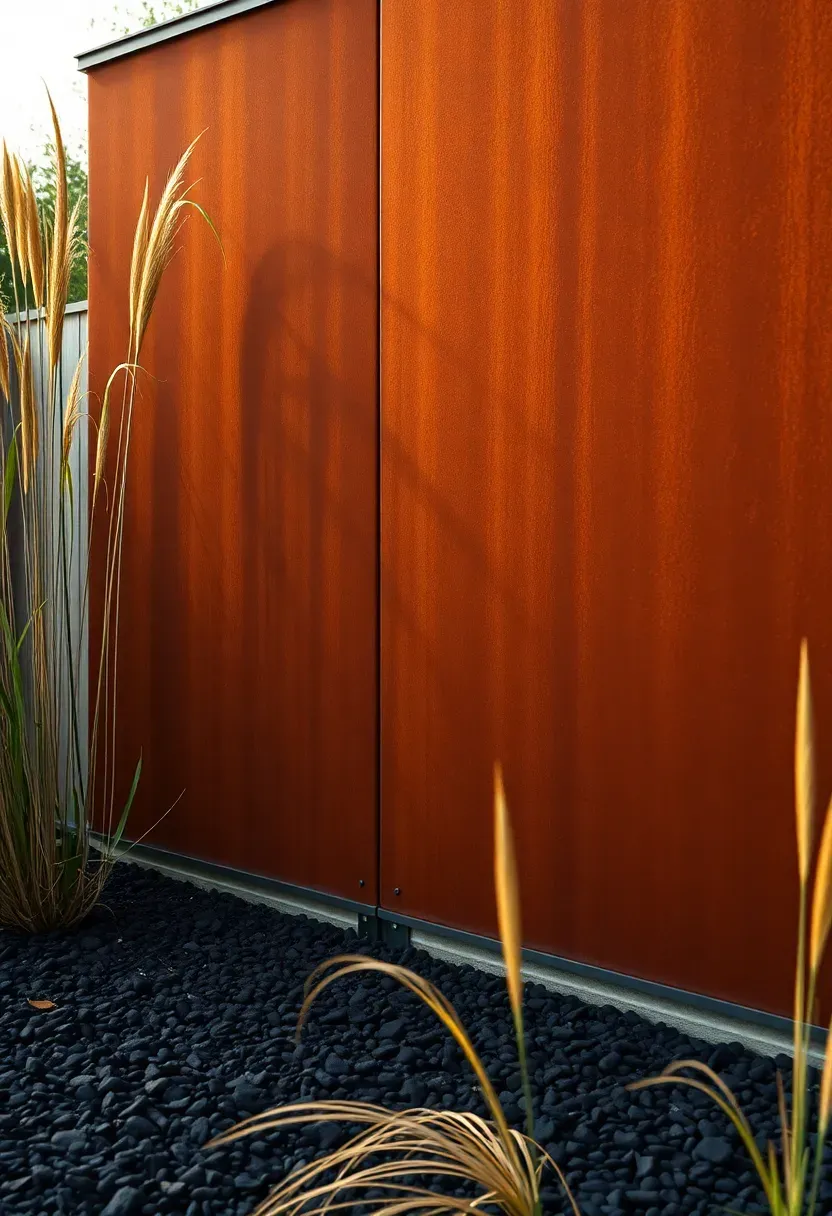
20. Weathering Steel Panel Wall
What weathering steel is
Corten steel (the common brand name) is an alloy designed to form a stable rust layer that protects the underlying metal from further corrosion. You get the look of rust without the structural decay. Panels come in standard 4x8-foot sheets, about 1/8 inch thick, at $150 to $250 per panel.
Why it works in backyards
The deep orange-brown color pairs well with concrete, dark gravel, and green plantings. It reads as both industrial and natural at the same time. Panels can be welded, cut with a plasma cutter into custom patterns, or left as plain sheets. They need no painting, sealing, or maintenance — the rust is the finish.
One warning
- For the first 6 to 12 months, Corten sheds rust-colored runoff when it rains. Do not install it above light-colored concrete, limestone, or any surface that will stain permanently. Set panels in gravel or dark mulch beds during the initial weathering period.
Recommended
Items for this idea
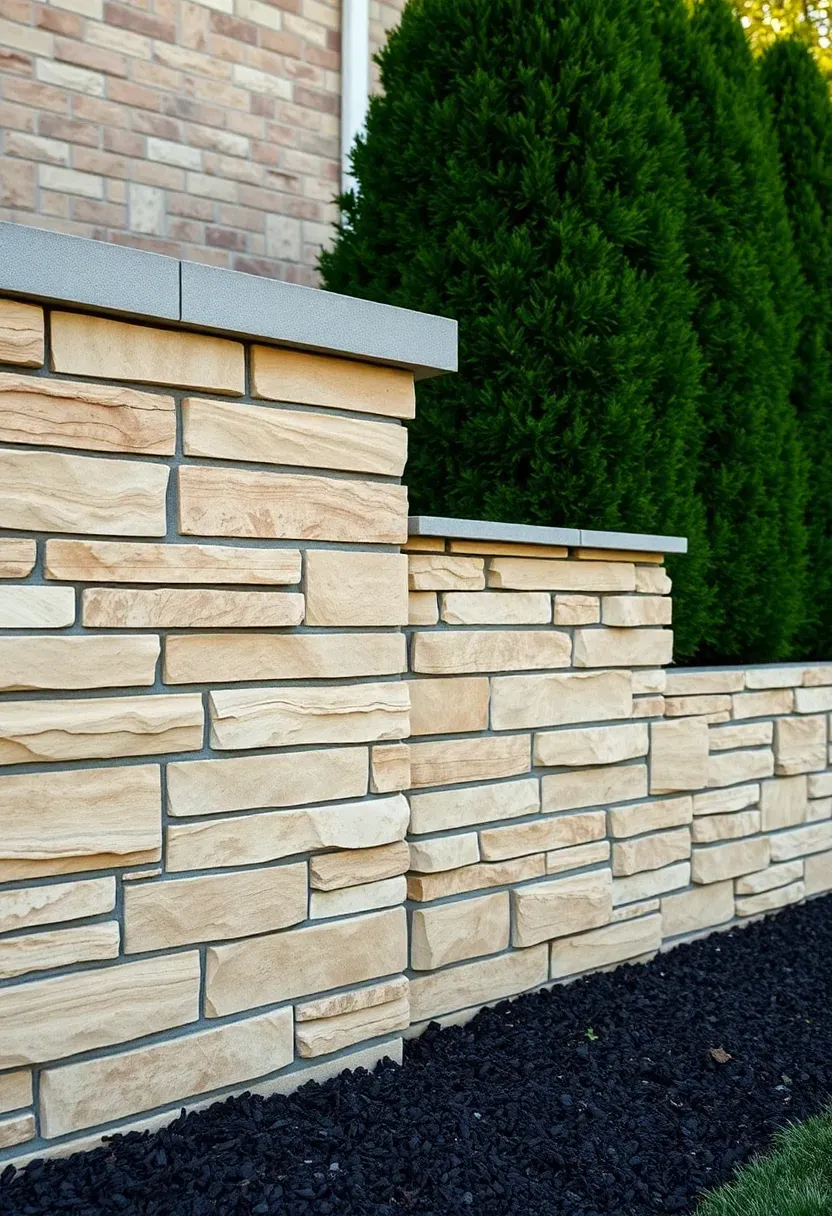
21. Stone Veneer Over Existing Block
If you already have a cinder block or poured concrete wall and want the look of natural stone without rebuilding from scratch, manufactured stone veneer is the shortcut. These are lightweight concrete panels molded and colored to mimic limestone, ledgestone, or fieldstone. They weigh 8 to 12 pounds per square foot (compared to 30+ pounds for real stone) and attach with mortar directly to a concrete or block substrate. Cost runs $8 to $15 per square foot for materials. A skilled installer can cover 100 square feet in a day.
Installation basics
- Clean the existing wall and apply a scratch coat if the surface is smooth or painted
- Start from the bottom and work up, staggering sizes and colors randomly
- Use corner pieces at wall ends and tops for a convincing three-dimensional look
- Grout joints to match your preferred style — tight joints for a modern look, wide joints with dark grout for a rustic feel
Quick FAQ
How tall can I build a backyard wall without a permit? In most US jurisdictions, walls under 4 feet tall do not require a building permit. Retaining walls holding back soil often have a lower threshold — sometimes 30 inches. Check your local building department before starting. HOA rules may impose additional height limits and material restrictions.
Which backyard wall material lasts the longest? Poured concrete and natural stone walls routinely last 50 to 100 years with minimal maintenance. Gabion walls and weathering steel panels come close at 30 to 50 years. Wood walls — even cedar and redwood — top out at 15 to 25 years depending on climate and care.
Can I attach a wall to my existing fence? You can mount lightweight materials like lattice, bamboo rolls, and reed screens directly onto an existing fence. Heavier materials like stone veneer, gabion baskets, or composite panels need their own independent posts and footings. Attaching heavy materials to a standard fence will cause it to lean or collapse.
What is the cheapest backyard wall option? Reed screens ($15 per roll) and bamboo roll fencing ($25 per roll) are the least expensive. Pallet wood walls are nearly free if you source the pallets locally. For a permanent wall, cinder block with stucco finish offers the best cost-to-durability ratio at roughly $10 to $15 per square foot installed.
Do backyard walls need drainage? Any wall that retains soil (holds back earth on one side) needs drainage — a perforated pipe in gravel behind the base of the wall. Freestanding decorative walls and privacy screens do not need drainage systems, but you should leave a small gap at the base to prevent water from pooling against the wall face.
The right backyard wall depends on what you are solving for. Privacy from neighbors, retaining a slope, hiding an ugly fence, or adding a focal point to a flat yard all call for different materials and different budgets. Start with one wall. Get the height, material, and finish right on that section before committing to a larger project. A single well-built 10-foot accent wall does more for a backyard than 60 feet of mediocre fencing.
Pinterest cover for 21 Backyard Wall Ideas
About the author
OBCD
CGI visualization and interior design content. We create detailed 3D renders and curate practical design ideas for every room in your home.