23 Backyard Waterfall Ideas
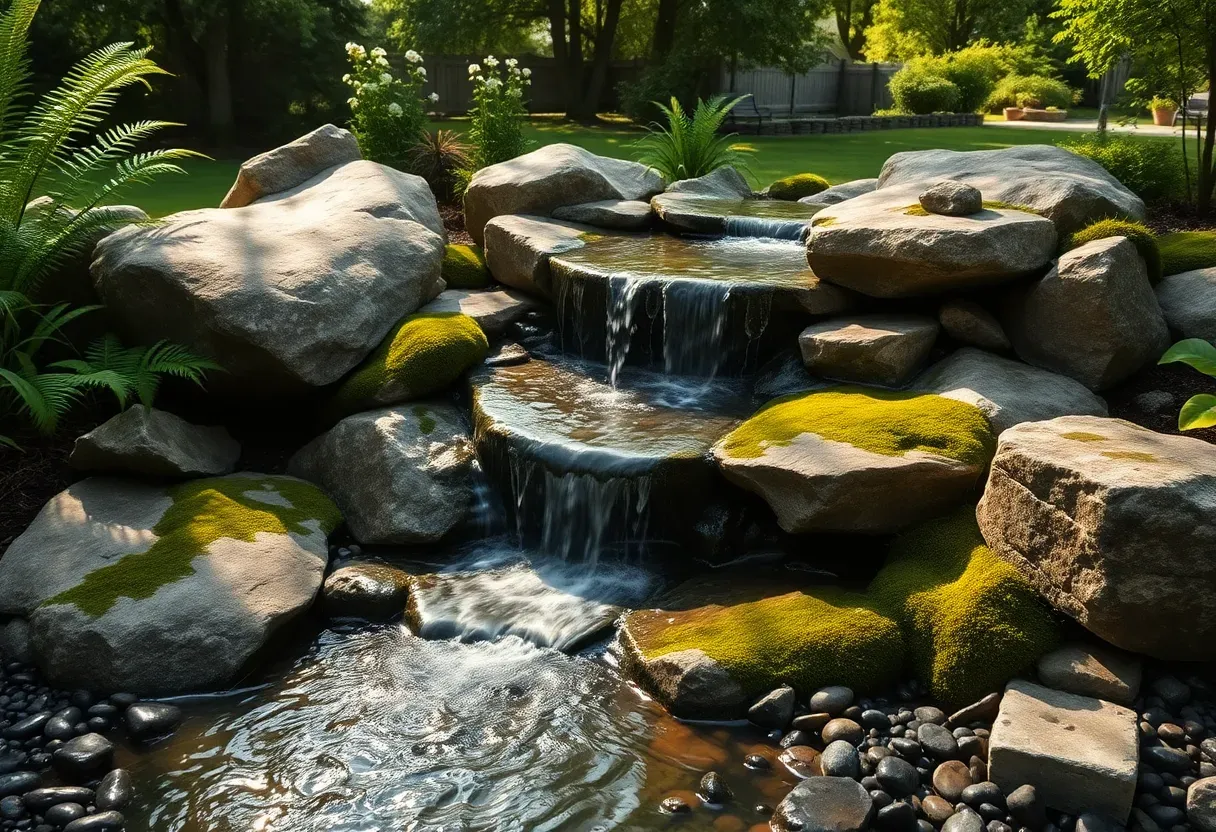
My neighbor spent $14,000 on a custom waterfall that broke down within eight months because the contractor undersized the pump. Meanwhile, the guy two doors down built a three-tier rock cascade over a single weekend using fieldstone from a local quarry and a $120 pond pump. Both look great from the street. The difference is one person did their homework. Waterfalls work on simple physics — water flows downhill, a pump pushes it back up, and gravity does the rest. What separates a good backyard waterfall from a money pit is understanding your drop height, flow rate, and basin capacity before you start stacking rocks. Here are 23 approaches worth considering.
Below you will find waterfalls organized from simple standalone builds to full landscape installations with ponds and streams.
Table of Contents
- Stacked Fieldstone Cascade
- Pondless Disappearing Waterfall
- Moss Rock Grotto
- Sheer Descent Blade
- Tiered Flagstone Spillway
- Garden Wall Waterfall
- Japanese Koi Pond Waterfall
- Corten Steel Sheet Fall
- Boulder Cluster Cascade
- Concrete Weir Waterfall
- Hillside Stream Waterfall
- Rain Wall Panel
- Swimming Pool Rock Waterfall
- Staircase Waterfall Planter
- Basalt Column Waterfall
- Tropical Paradise Waterfall
- Dry-Stacked Slate Waterfall
- Fire and Water Feature Combo
- Mini Tabletop Cascade
- Recirculating Creek with Waterfall Head
- Courtyard Corner Waterfall
- Natural Swimming Pond Waterfall
- Infinity Edge Spillover Wall
1. Stacked Fieldstone Cascade
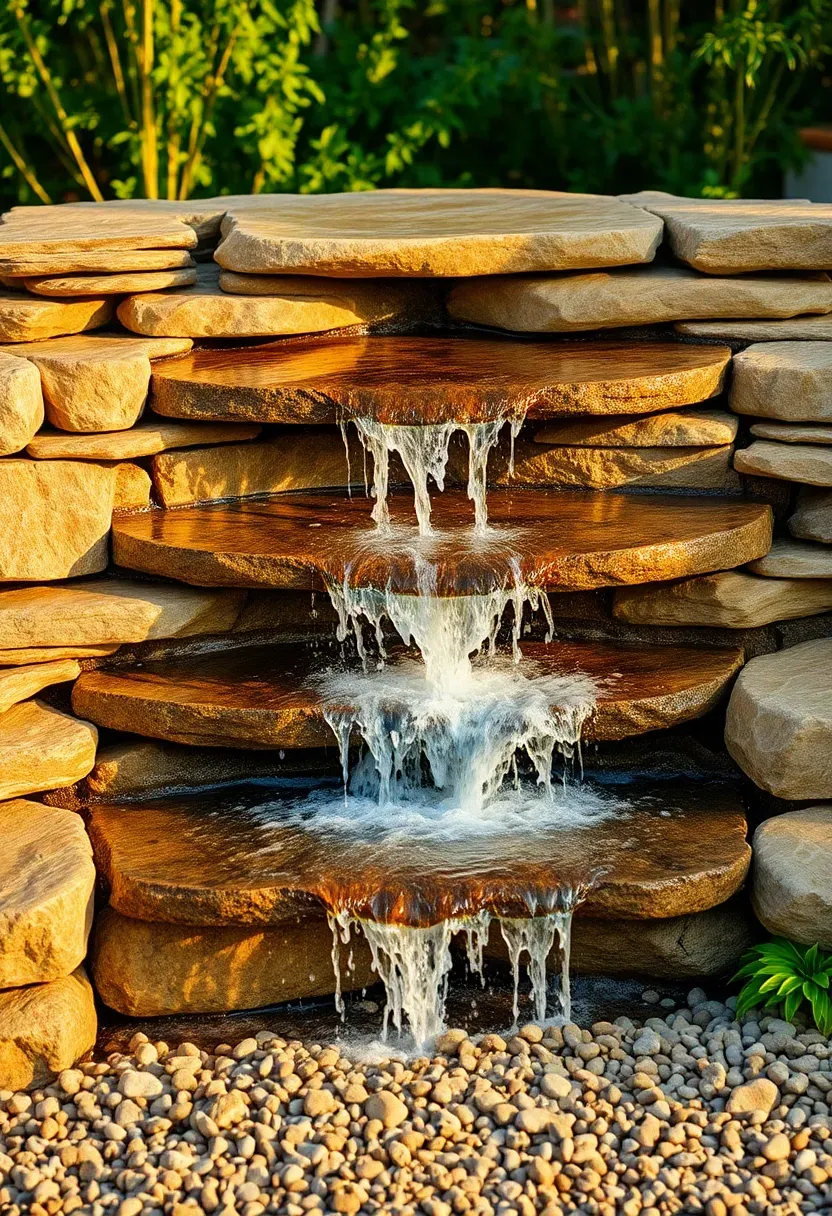
Fieldstone is the workhorse material for backyard waterfalls because it is cheap, widely available, and looks natural from day one. A three-tier cascade needs about 1.5 to 2 tons of stone for a 4-foot height, which runs $150-400 at most landscape supply yards. The key detail that separates a convincing build from an obvious pile of rocks is how you angle the spillway stones — each one should tilt forward slightly so water sheets off the front edge cleanly instead of trickling down the back side.
Building Tips
- Set each spillway stone on a bed of mortar or expanding foam to prevent shifting when the ground settles after rain.
- Use a 2,000 GPH pump for every 4 feet of vertical drop — undersizing is the single most common mistake.
- Tuck the liner edges behind stones rather than trimming flush, so you have adjustment room later.
We picked a few things that go well with this idea: WaterRebirth 3200GPH Submersible Waterfall Pump (★4.4), OYO WATER 1800GPH Submersible Pond Pump (★4.4) and VIVOSUN 800GPH Quiet Fountain Pump (★4.4). As an Amazon Associate we earn from qualifying purchases.
2. Pondless Disappearing Waterfall
Why Consider This
Not everyone wants a pond. Ponds mean mosquitoes, algae, leaf nets, and toddler anxiety. A pondless waterfall gives you the sound and visual movement of falling water without any standing water on the surface.
How It Works
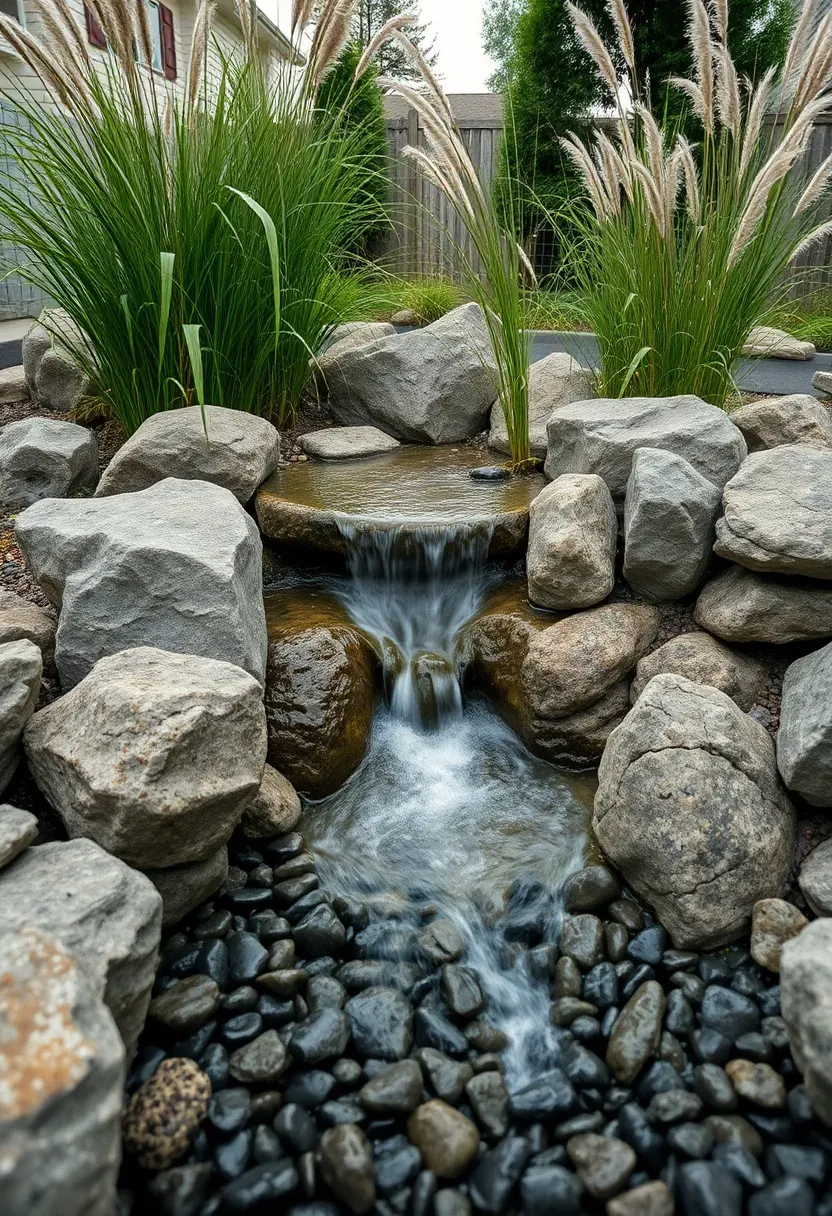
Water falls over rocks into a buried vault — basically a heavy-duty plastic basin covered with a grate and decorative stone. A pump inside the vault pushes water back to the top through buried tubing. The entire reservoir is underground and invisible. Total cost for a 3-foot-tall pondless kit runs $300-600 for materials, and you can install it in a day if your digging muscles are in shape. The vault holds 30-50 gallons depending on size, which means less evaporation loss than an open pond.
Pros and Cons
- Pro: Zero drowning risk, minimal maintenance, no algae problems.
- Con: No fish or aquatic plants, and the buried basin needs cleaning once a year.
- Pro: Works in small yards — the footprint can be as tight as 4 by 6 feet.
We picked a few things that go well with this idea: Aquascape Backyard Waterfall Fountain Kit (★4.1), Half Off Ponds 3200 Pondless Waterfall Kit (★5.0) and Aquascape DIY Backyard Waterfall Kit (★4.2). As an Amazon Associate we earn from qualifying purchases.
3. Moss Rock Grotto
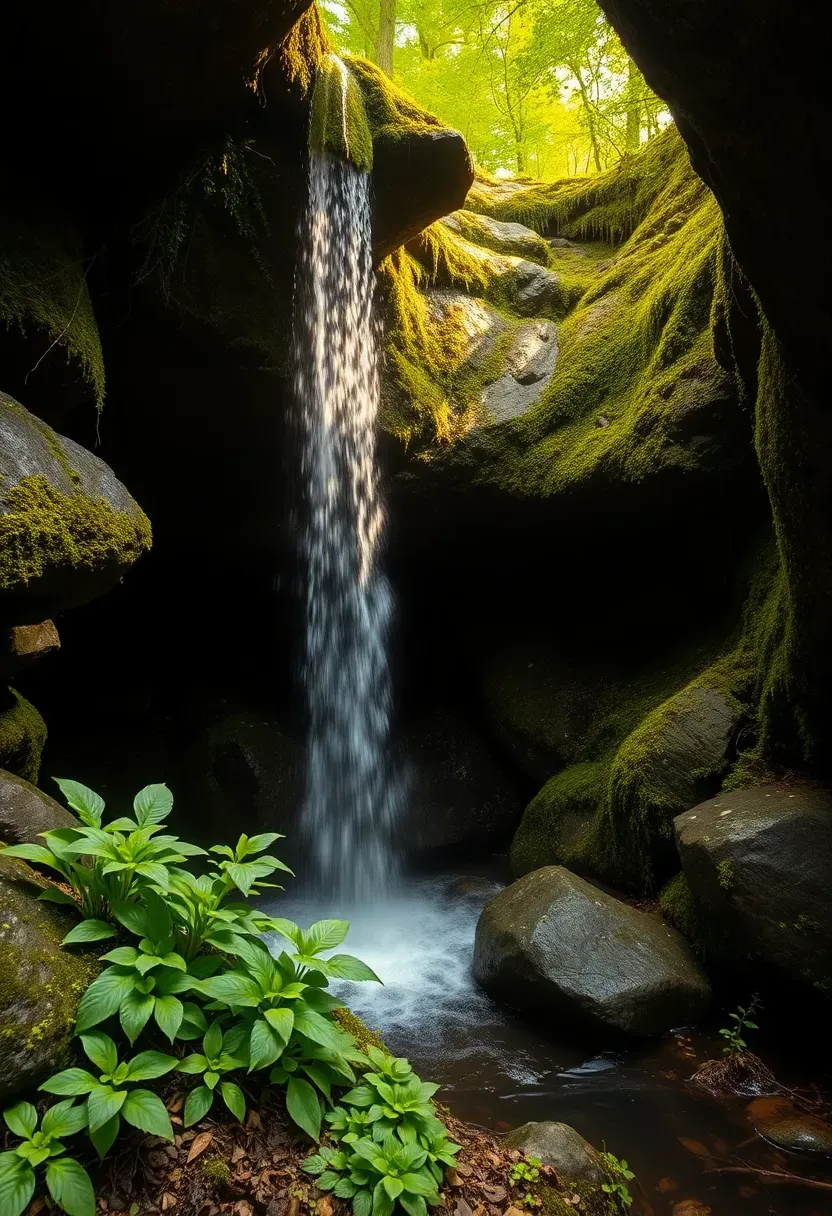
A grotto waterfall creates an enclosed, cave-like space where water drops from an overhang into a pool below. This is the high-drama option — it looks like something out of a nature documentary. You need a natural slope or a lot of fill dirt to create the elevation, plus large capstone boulders (800+ pounds each) to form the overhang. Budget $3,000-8,000 for materials alone on a 6-foot grotto. The payoff is a shaded microclimate where moss and ferns colonize the rock face naturally within one growing season.
Tips
- Anchor the overhang boulders with rebar pins drilled into the supporting stones — a shifting capstone is dangerous.
- Install a dedicated GFCI outlet within 6 feet of the pump for code compliance.
- Plant maidenhair ferns and creeping jenny in the splash zone for that lush, established look.
We picked a few things that go well with this idea: POPOSOAP 4-in-1 Waterproof Pond Lights (★4.2), Submersible LED Pond Spotlight (6-Pack) (★3.9) and Aquascape Submersible LED Pond Spotlight (★4.0). As an Amazon Associate we earn from qualifying purchases.
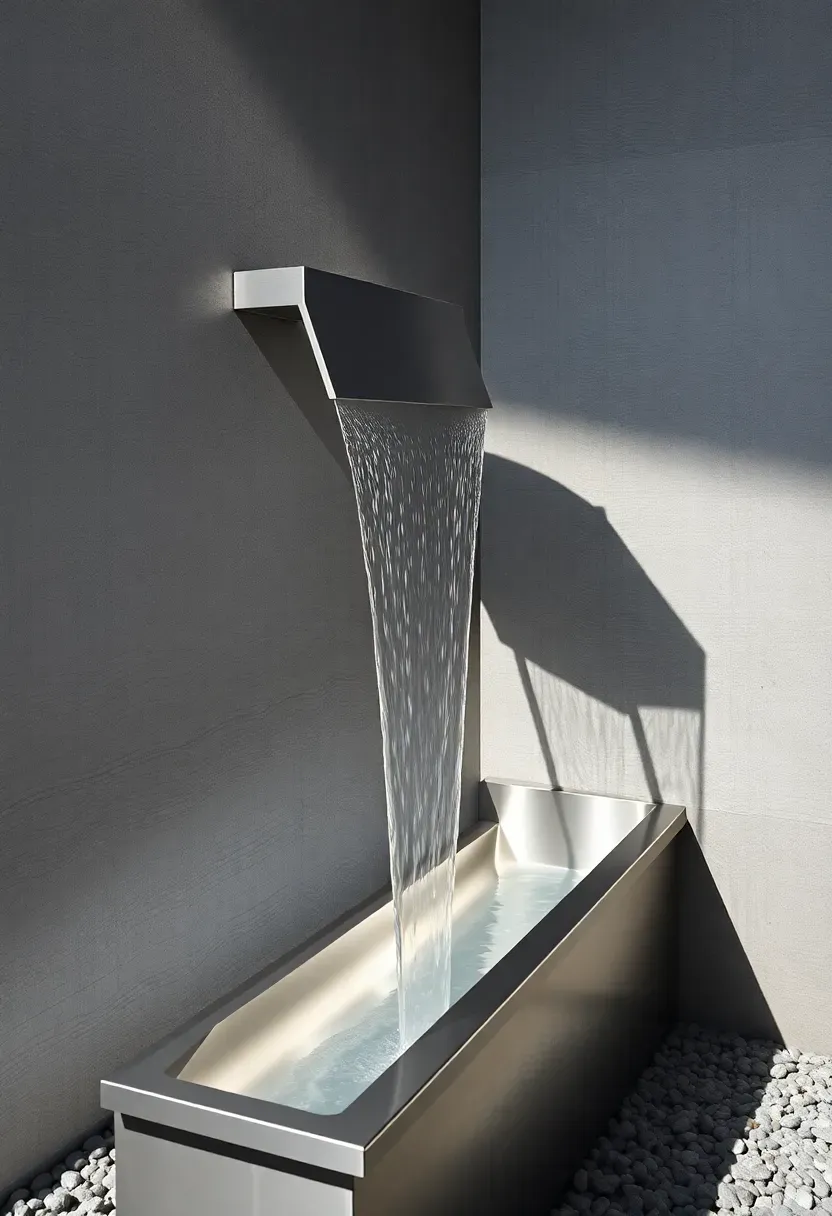
4. Sheer Descent Blade
Modern vs. Natural
Where rock waterfalls aim for an organic look, sheer descent blades go the opposite direction. A stainless steel or acrylic blade mounted to a wall produces a perfectly uniform sheet of water — no splashing, no irregularity, just a glass-smooth curtain.
Installation
The blade itself costs $150-500 depending on width (12 to 48 inches is standard). Mount it to a retaining wall, fence, or purpose-built column using the included brackets. Run 1.5-inch PVC from a pump in a catch basin below. The critical spec is flow rate — you need 30 GPH per inch of blade width for a solid sheet. Go lower and you get an uneven dribble.
Choose This If
- Your yard leans contemporary with clean lines and minimal planting.
- You want precise control over water sound — narrow blades whisper, wide blades produce a steady hush.
Recommended
Items for this idea
5. Tiered Flagstone Spillway
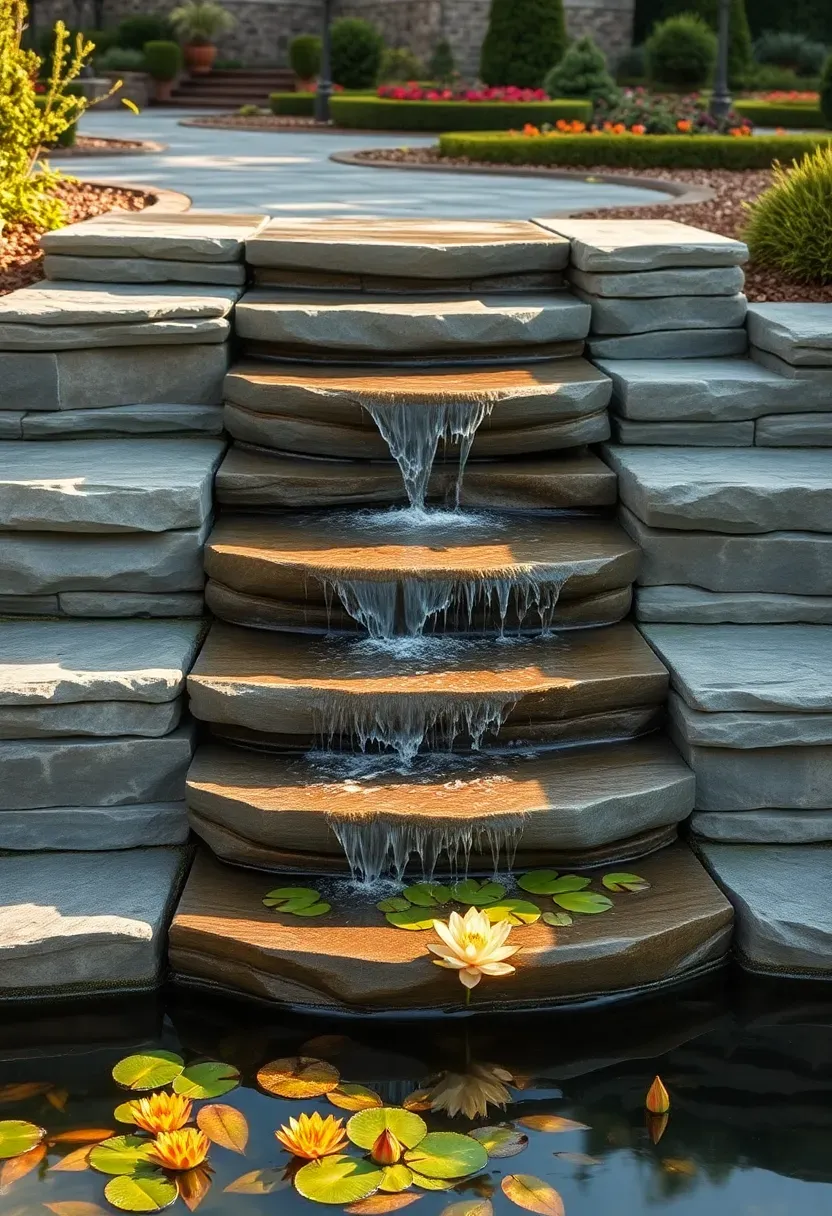
Flagstone works differently than fieldstone because of its flat, layered structure. You can stack it like a natural staircase where each step is a distinct shelf. The flat surfaces create wide, shallow sheets of water rather than narrow streams, which produces a softer sound. A five-tier spillway using 2-inch-thick flagstone runs about $200-500 in material, plus you can cut flagstone with a standard circular saw and a diamond blade if pieces need trimming. The horizontal lines also pair well with formal garden layouts where rough boulders would look out of place.
Tips
- Seal the top surface of each flagstone step with a penetrating stone sealer to prevent freeze-thaw cracking in cold climates.
- Offset each tier by 3-4 inches horizontally so water drops visibly between levels.
- Bed the bottom tier into a poured concrete footing if your soil tends to shift.
6. Garden Wall Waterfall
The Problem
Flat yards with no slope make traditional ground-level waterfalls difficult. You either truck in tons of fill dirt or build something that looks like a rock pile in the middle of a lawn.
The Solution
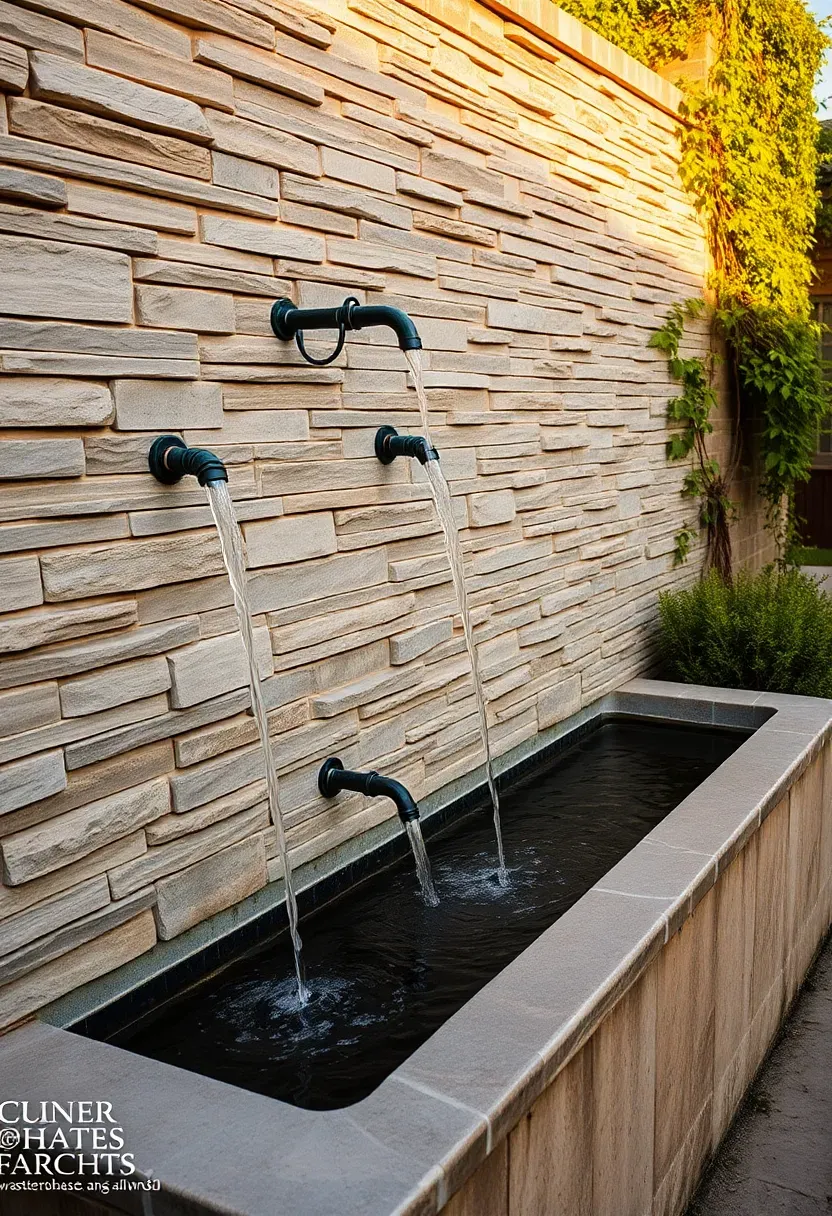
Build a freestanding wall — cinder block core with stone veneer — and install spillway spouts near the top. The wall does double duty as a privacy screen and a water feature. A 6-foot-tall, 8-foot-wide wall costs roughly $1,200-2,500 in materials. You run plumbing up through the hollow block cores, which keeps everything hidden. Three copper spouts at the top, a trough basin at the bottom, and the pump recirculates.
Pros and Cons
- Pro: Works on dead-flat lots, adds vertical interest and privacy.
- Con: Requires basic masonry skills or a hired hand for the block work.
- Pro: Stone veneer is available in dozens of styles from modern ledgestone to rustic stack.
Recommended
Items for this idea
7. Japanese Koi Pond Waterfall
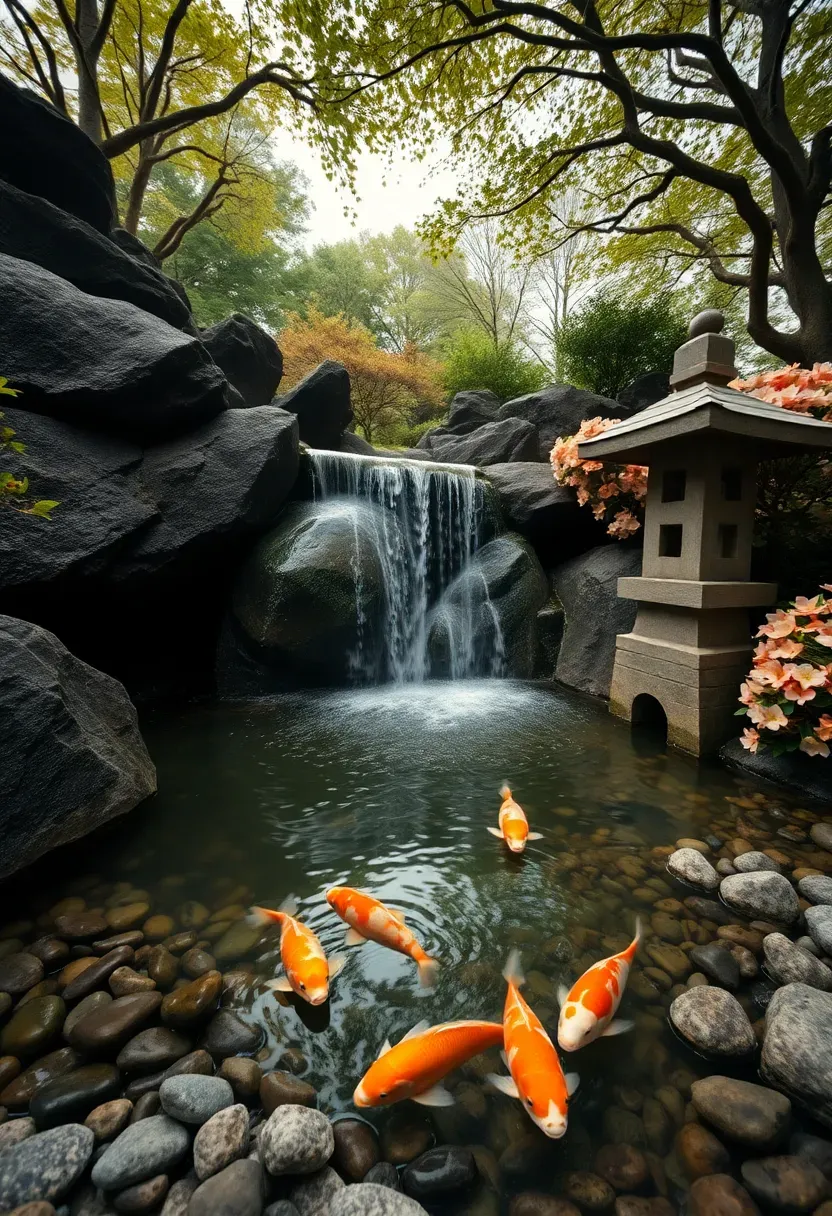
Japanese garden waterfalls follow specific design principles that most Western builders overlook. Water should enter the pond at a single point and appear to originate from a natural source — you should not be able to see the top of the cascade from the main viewing area. The rocks are chosen individually for shape and placed to suggest they have been there for decades. A koi pond waterfall also serves a functional purpose: the turbulence oxygenates the water, which keeps fish healthy and reduces the load on your filtration system. Plan on a minimum 1,000-gallon pond for koi, with a waterfall flow rate of 1,500-2,500 GPH.
Getting Started
- Sketch the layout from your primary viewing spot (patio, deck, or window) first — the view matters more than the construction angle.
- Select three to five anchor boulders with distinct character, then fill gaps with smaller stones.
- Plant the perimeter with species that suggest a Japanese aesthetic: Japanese maple, azalea, dwarf bamboo, or mondo grass.
8. Corten Steel Sheet Fall
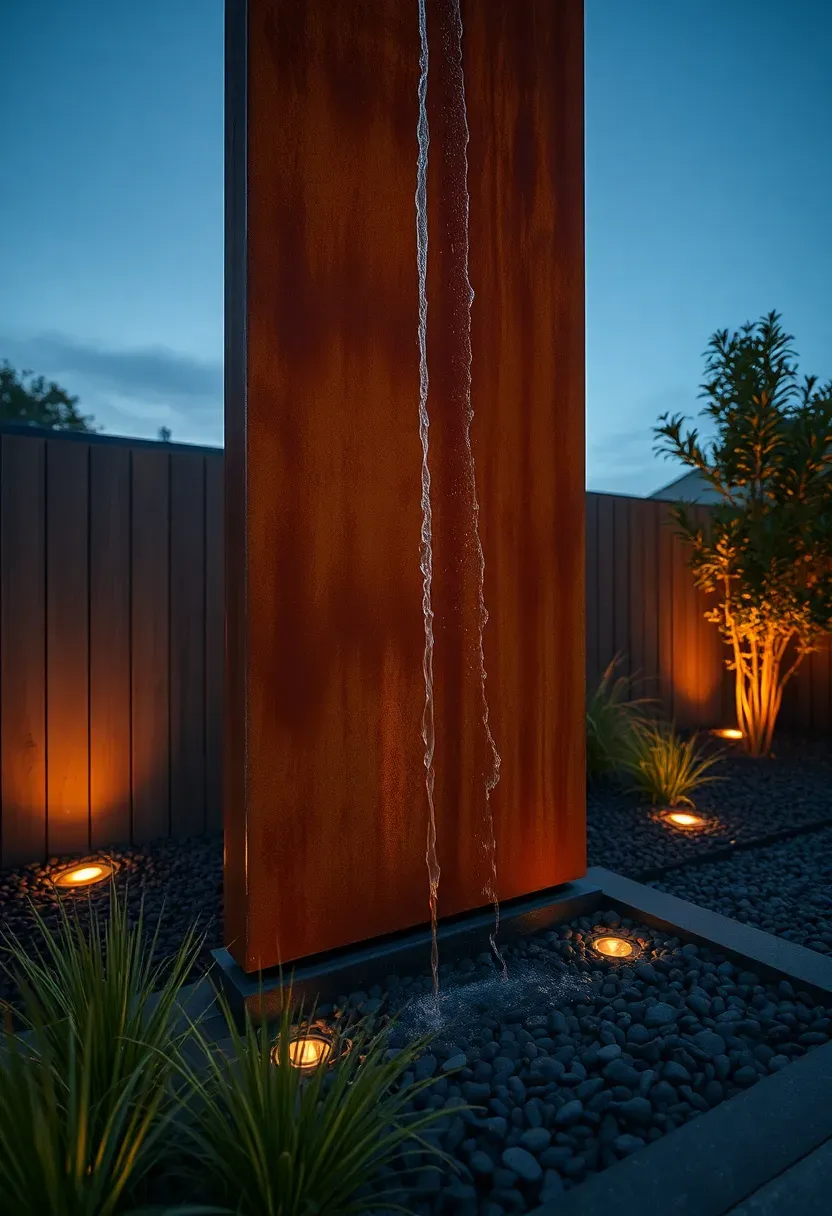
Corten steel develops a stable rust patina over 6-12 months and then stops corroding, which means it actually looks better as it ages. A custom-fabricated corten waterfall panel (typically 4 feet wide, 6 feet tall) costs $800-2,000 from a metal fabricator. The orange-brown patina against green foliage creates a contrast that photographs exceptionally well. Water sheets down the flat surface in a thin film, and the slight texture of the oxidized steel gives the water a rippled quality that polished stainless cannot match.
Tips
- Order the panel pre-weathered or spray it with a salt-vinegar solution to accelerate patina — fresh corten weeps rust-colored water for months.
- Mount on 4x4 steel posts set in concrete, not wood — the weight demands it.
- Place light-colored gravel at the base to highlight the rust-tinted water runoff.
Recommended
Items for this idea
9. Boulder Cluster Cascade
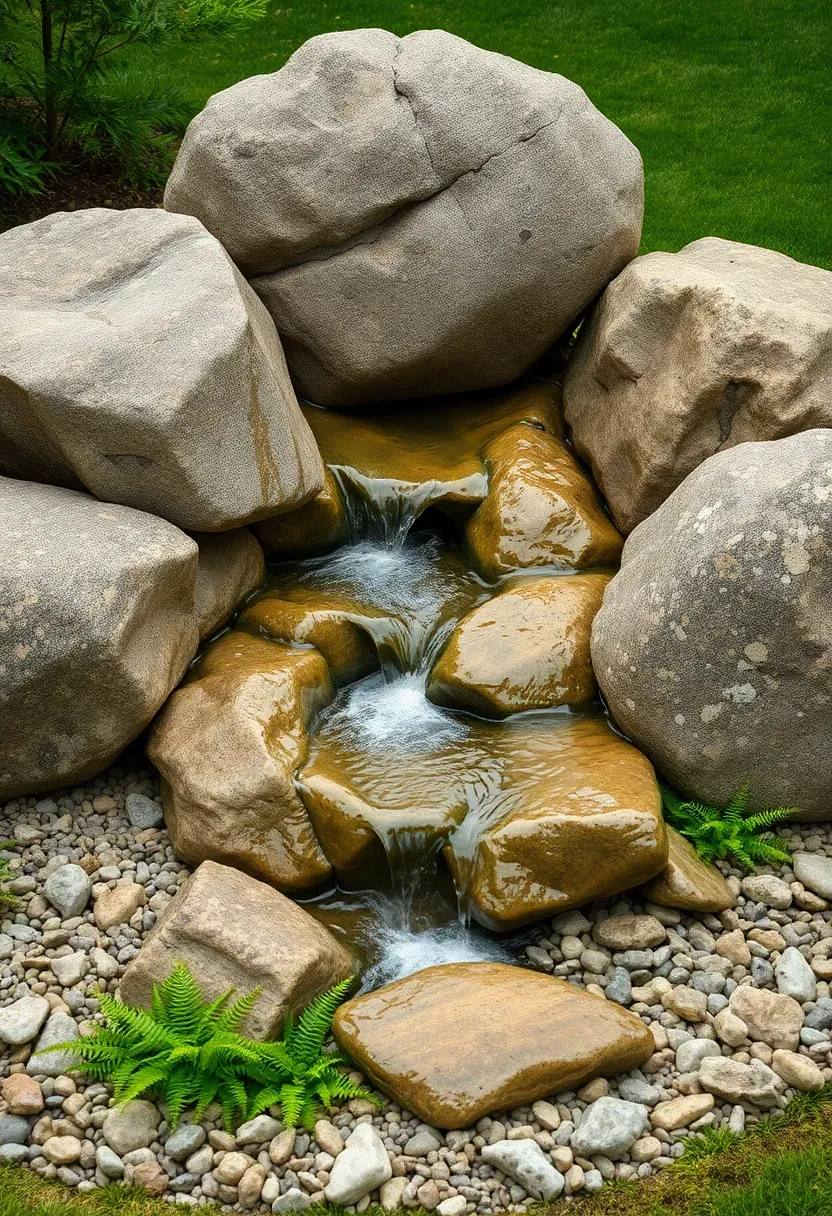
Instead of stacking rocks in an obvious line, scatter a group of 5-8 large boulders in a loose cluster and thread water through the gaps between them. The result looks like a natural rock outcropping where a spring has found its way through cracks in the stone. This approach works best with rounded river boulders or glacial erratics that already have water-worn shapes. The randomness is actually harder to design than a straight cascade — you need to test water flow paths before setting anything permanently, because water will always find the lowest point whether you intended it to go there or not.
Watch Out
- Test your layout with a garden hose before mortaring anything in place.
- Budget for 3-4 tons of boulders minimum — this look fails with too few rocks.
- Bury the bottom third of each boulder for a natural, emerging-from-the-ground appearance.
10. Concrete Weir Waterfall
The Concept
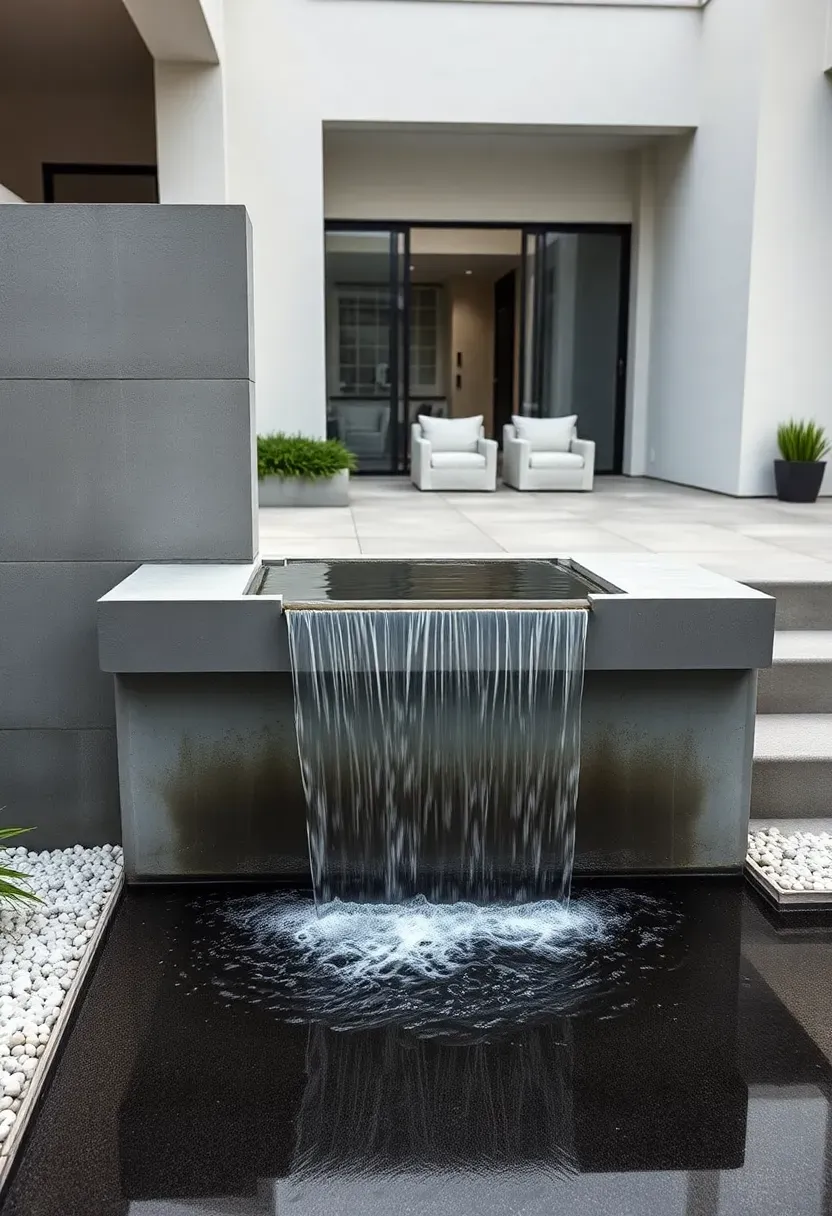
A weir is a low dam with a precisely leveled top edge. Water flows over it in a controlled, uniform curtain. In a backyard context, a poured concrete weir creates an architectural waterfall that reads as sculpture rather than nature.
Building One
Form and pour a concrete wall (18-36 inches tall works well) with a perfectly level top edge — use a laser level, not a bubble level. The top 2 inches should be troweled glass-smooth so water sheets evenly. A 6-foot-wide weir needs roughly $300 in concrete, rebar, and formwork lumber. Coat the finished concrete with a clear waterproofing sealer. The catch basin below can be a simple lined trench filled with decorative stone.
Choose This If
- You prefer geometric, gallery-like outdoor spaces.
- You want a focal piece that doubles as a low retaining wall or seat wall.
Recommended
Items for this idea
11. Hillside Stream Waterfall
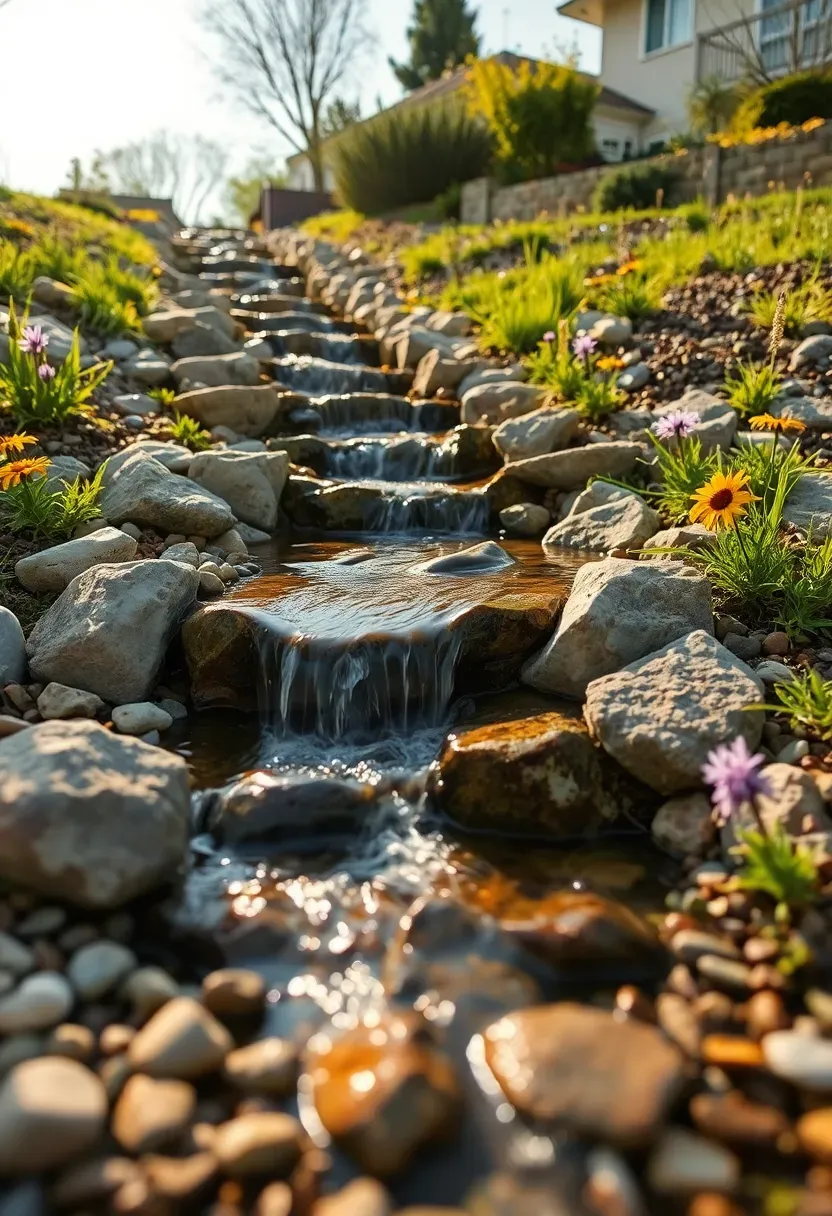
If your yard already has a slope, you are sitting on a natural advantage that flat-lot owners spend thousands trying to create. A hillside stream waterfall follows the existing grade, with a series of small drops (6-12 inches each) connected by shallow stream sections. The pump sits at the bottom and pushes water through a buried pipe back to the top. A 30-foot run with a 6-foot total drop is a solid weekend project for two people, costing $500-1,200 in liner, stone, and pump. The stream sections between falls are where you can plant water-loving perennials directly in the gravel.
Steps
- Map the water path downhill using a garden hose — let gravity show you the natural route.
- Dig a 12-inch-deep, 18-inch-wide channel and line it with 45-mil EPDM rubber liner.
- Set spillway stones at each drop point, backfilling with gravel to hide the liner edges.
- Install the pump in the lowest basin and run 2-inch flexible PVC uphill to the headwater point.
12. Rain Wall Panel
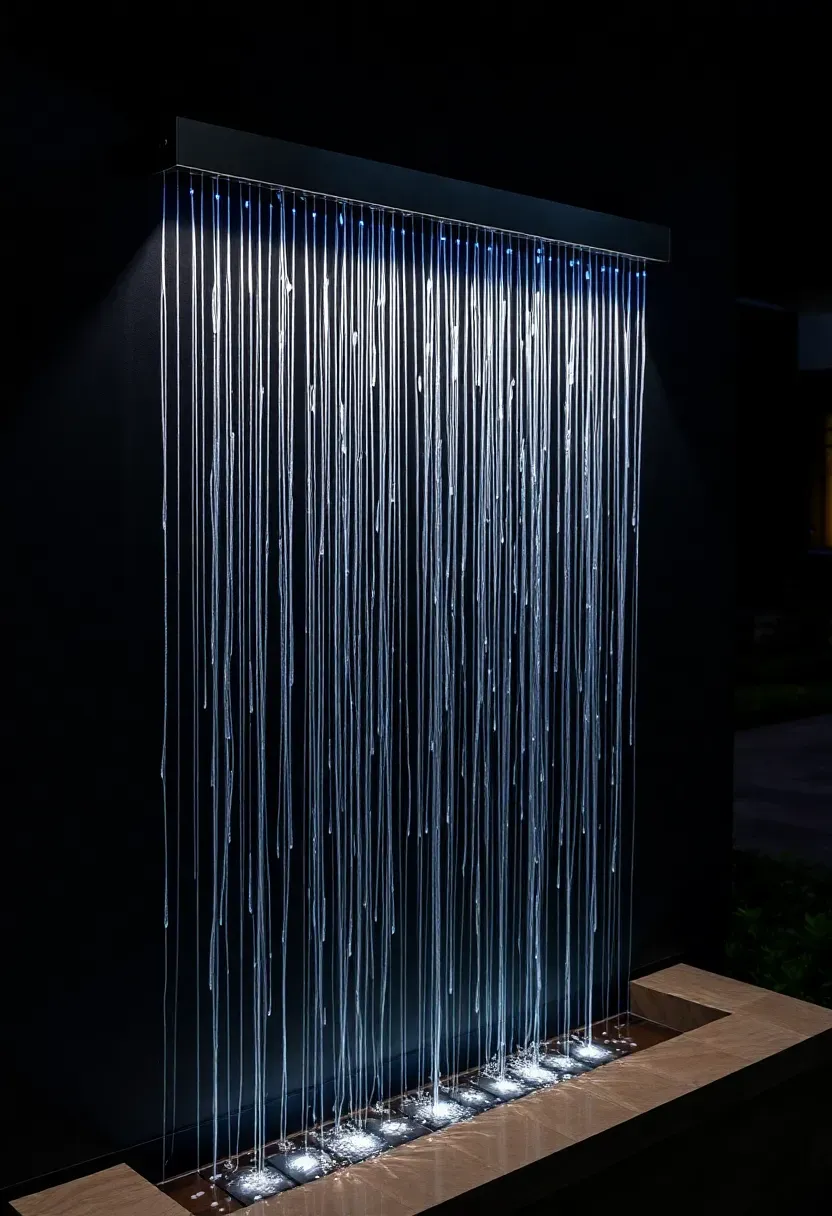
A rain wall directs water through a perforated horizontal pipe or manifold at the top of a panel, creating dozens of individual streams that fall in parallel. The visual effect is mesmerizing — like a controlled rainstorm contained within a frame. Prefabricated rain wall kits range from $400-1,500 depending on size. Custom versions using a copper manifold and stainless cables as guides can cost more but give you exact control over stream spacing. Mount against a dark wall to maximize contrast, and add uplighting from below for a dramatic nighttime effect.
Tips
- Clean the manifold holes monthly during heavy pollen season — a single clogged hole breaks the visual pattern.
- Use distilled water or add a mineral treatment to prevent calcium buildup on glass or metal surfaces.
- Keep the catch trough at least 4 inches wider than the manifold to account for wind drift.
Recommended
Items for this idea
13. Swimming Pool Rock Waterfall
The Appeal
Adding a waterfall to an existing pool creates a resort atmosphere and masks the mechanical hum of pool equipment. Kids are drawn to it like magnets.
Reality Check
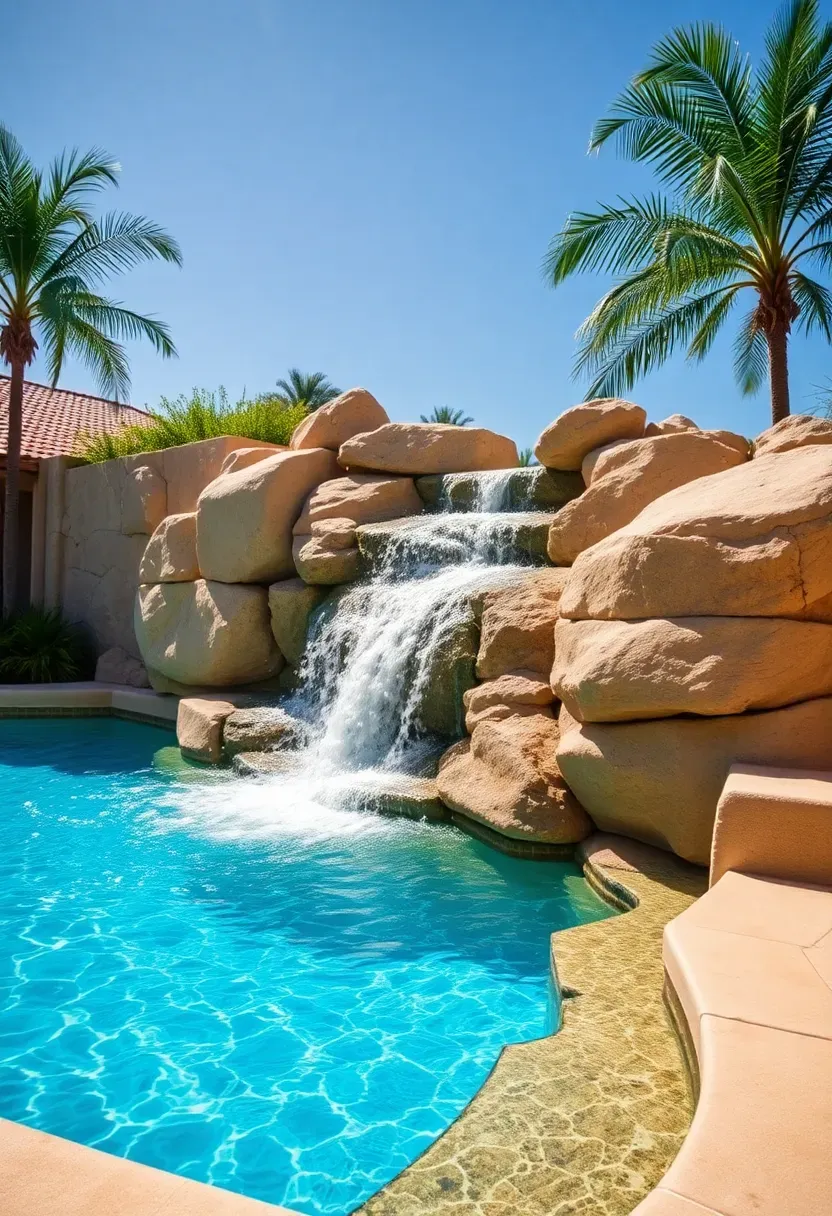
Pool waterfalls are not cheap additions. Retrofitting a rock waterfall onto an existing pool runs $3,000-10,000 depending on height and complexity. The waterfall needs its own dedicated pump (separate from the pool circulation pump) because the flow rate requirements are different. You will also need a structural engineer to verify that the pool edge can support 2-5 tons of rock sitting on top of it. New pool builds are much easier — the waterfall structure gets engineered into the shell from the start.
Pros and Cons
- Pro: Combines two features into one water volume, reducing total maintenance.
- Con: Rock waterfalls on pools trap organic debris, increasing cleaning demands.
- Pro: The waterfall can screen pool equipment behind it if positioned strategically.
14. Staircase Waterfall Planter
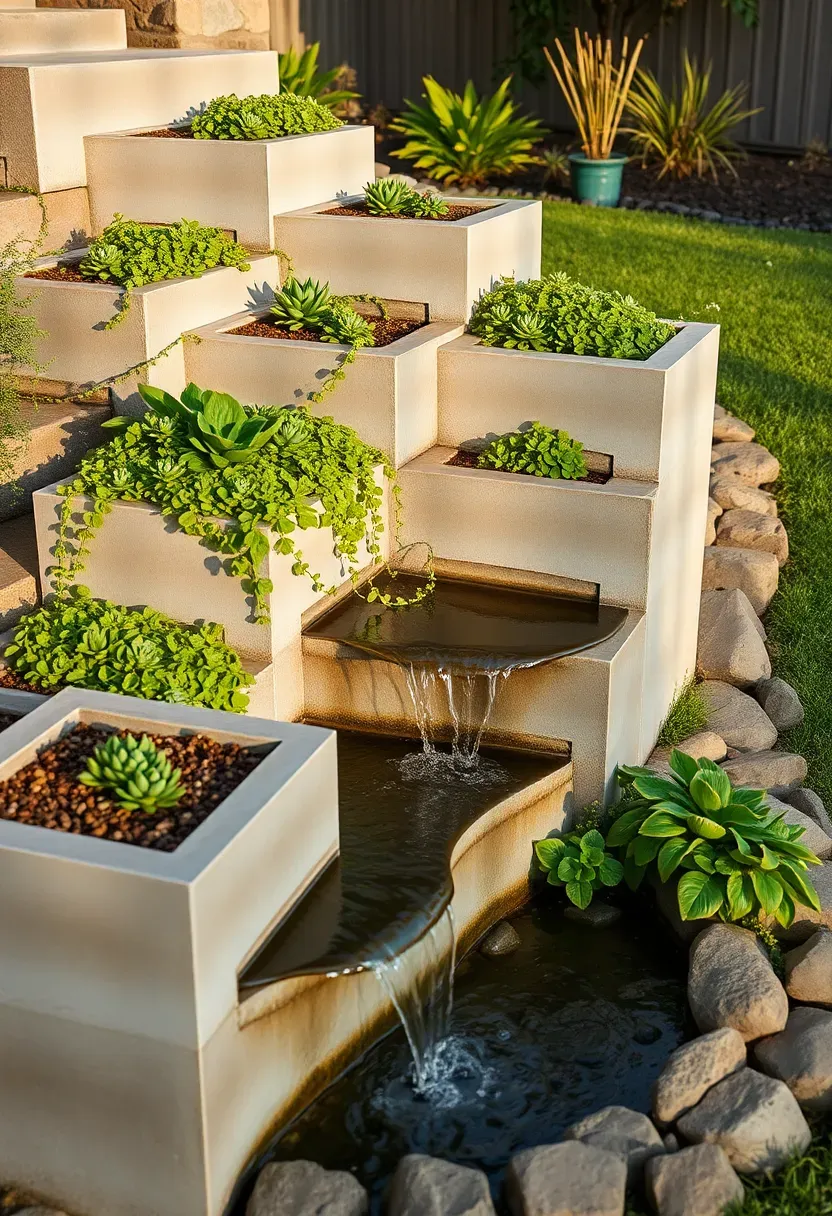
This hybrid combines raised planters with a waterfall channel running between them. Picture three or four concrete or timber planters arranged in descending order on a slope, with a narrow waterfall spilling from one level to the next alongside the planting boxes. Each planter holds soil and plants, while the water channel runs along one edge. It solves the common problem of a slope that is too steep for a garden but not steep enough for a dramatic waterfall. Materials run $400-900 for a four-tier setup using pressure-treated lumber and pond liner.
Tips
- Separate the planting soil from the water channel with liner — wet soil against wood accelerates rot.
- Plant trailing species like creeping thyme or sweet potato vine to soften the edges where planter meets waterfall.
- Grade each planter box level even if the overall structure follows the slope.
Recommended
Items for this idea
15. Basalt Column Waterfall
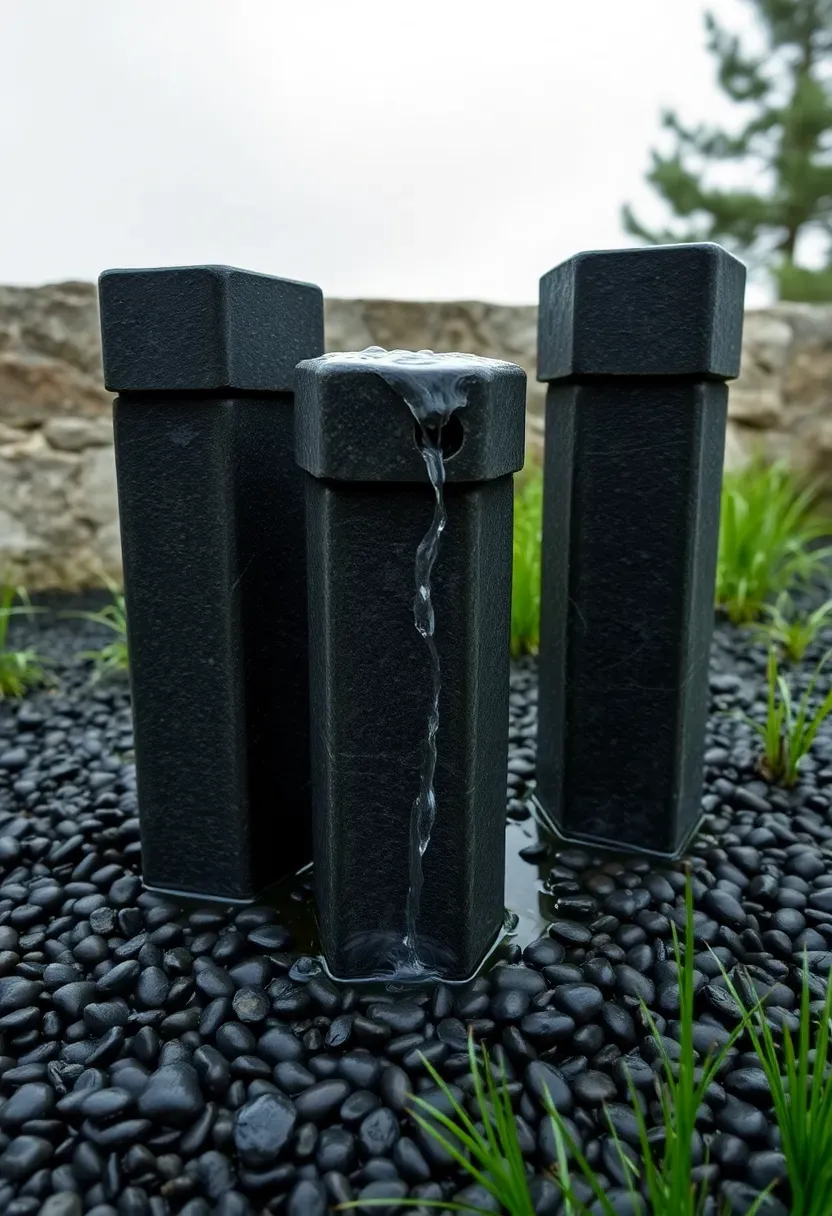
Basalt columns are hexagonal volcanic rock formations that look almost manufactured but are completely natural. Water pumped up through a drilled center hole flows over the top and down the grooved sides, catching in every crevice. You typically group three columns at different heights (24, 30, and 36 inches is a common set). Pre-drilled basalt column kits run $300-800 for a three-piece set with pump and basin. The dark gray stone works in virtually any landscape style, from minimalist gravel gardens to lush cottage borders. Installation takes about two hours once the buried basin is in place.
Watch Out
- Basalt is dense and heavy — a 36-inch column weighs 80-120 pounds, so plan your delivery access.
- The drilled hole is typically 1 inch diameter, requiring a specific tubing size from the pump.
- Algae growth on basalt actually enhances the look, so skip the algaecide on these.
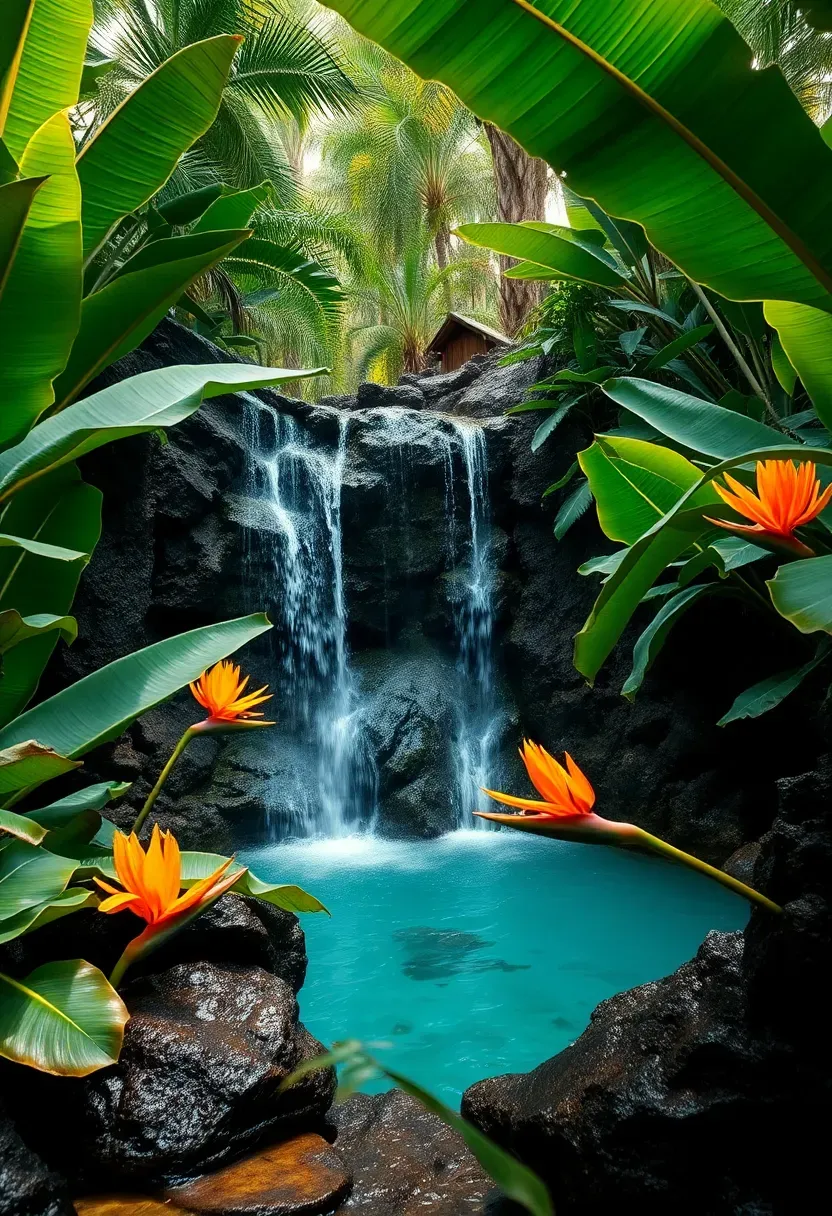
16. Tropical Paradise Waterfall
The Vision
A waterfall that makes your backyard feel like Bali or Hawaii requires more than just rock and water. The planting scheme around the waterfall is what sells the illusion.
Making It Work
Start with large, dark volcanic rock or lava stone for the waterfall structure — its porous texture reads as tropical immediately. Build the cascade 5-8 feet tall for visual impact. Then surround it with bold-leaf tropicals: banana, elephant ear, bird of paradise, canna lily, and tree ferns. In zones 8 and below, substitute hardy banana (Musa basjoo) and colocasia for true tropicals. The total investment for a convincing tropical waterfall setup runs $2,000-6,000. The maintenance reality is that tropicals need frequent watering and seasonal protection in anything colder than zone 9.
Choose This If
- You want a backyard escape that photographs like a vacation destination.
- Your climate supports bold foliage plants, or you are willing to overwinter them indoors.
Recommended
Items for this idea
17. Dry-Stacked Slate Waterfall
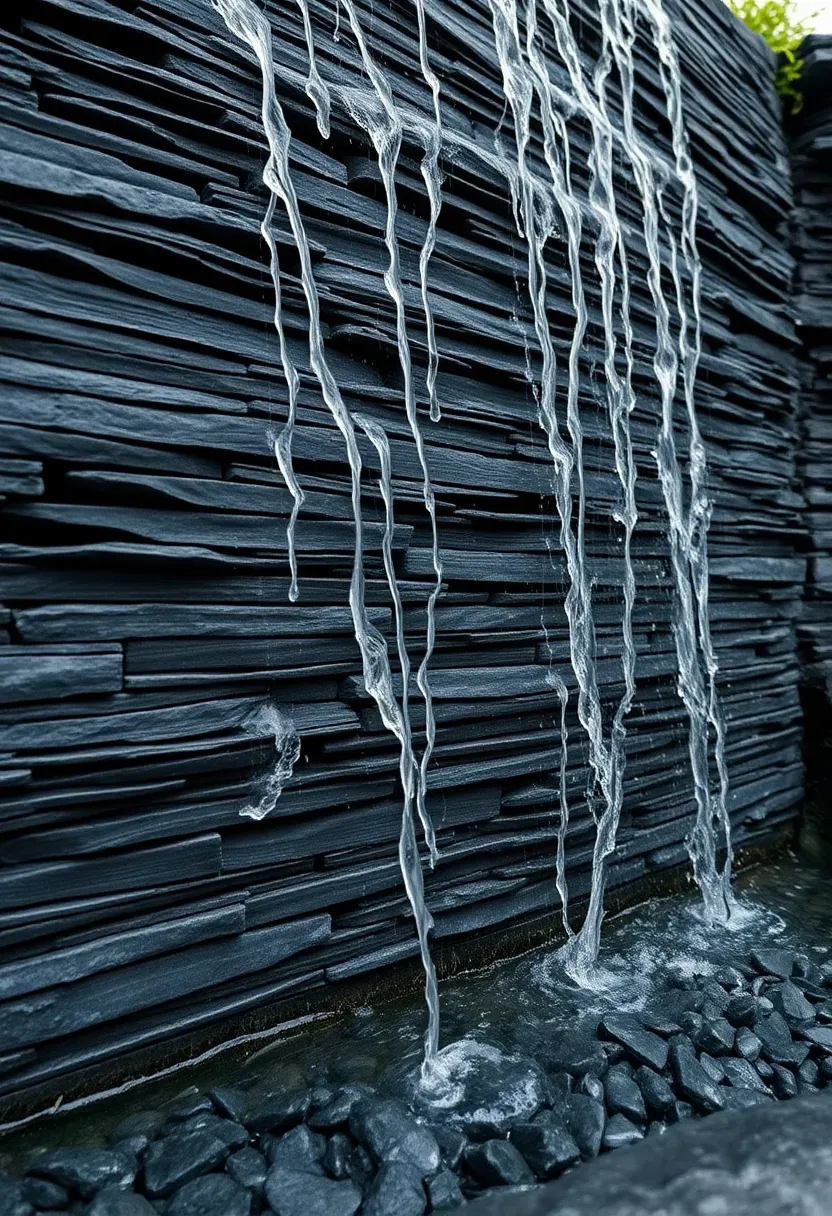
Slate's natural tendency to split into thin, flat layers makes it ideal for building waterfalls with a layered, geological look. Dry stacking means no mortar — the stones hold by gravity and friction, with pond liner hidden behind them. The dark gray or blue-black color of most slate creates strong contrast with water. A 4-foot slate waterfall requires roughly 1 ton of material at $200-400 per ton. The thin profile of each piece means you get more visual layers per vertical foot compared to bulky boulders, which gives a refined, almost architectural quality while still reading as natural.
Steps
- Build a stable back structure — either compacted fill dirt or a cinder block core works well.
- Lay the pond liner over the entire structure before placing any stone.
- Start from the bottom and stack slate pieces with a slight backward lean so each layer is stable.
- Set the spillway pieces with a forward tilt of about 10 degrees to direct water outward.
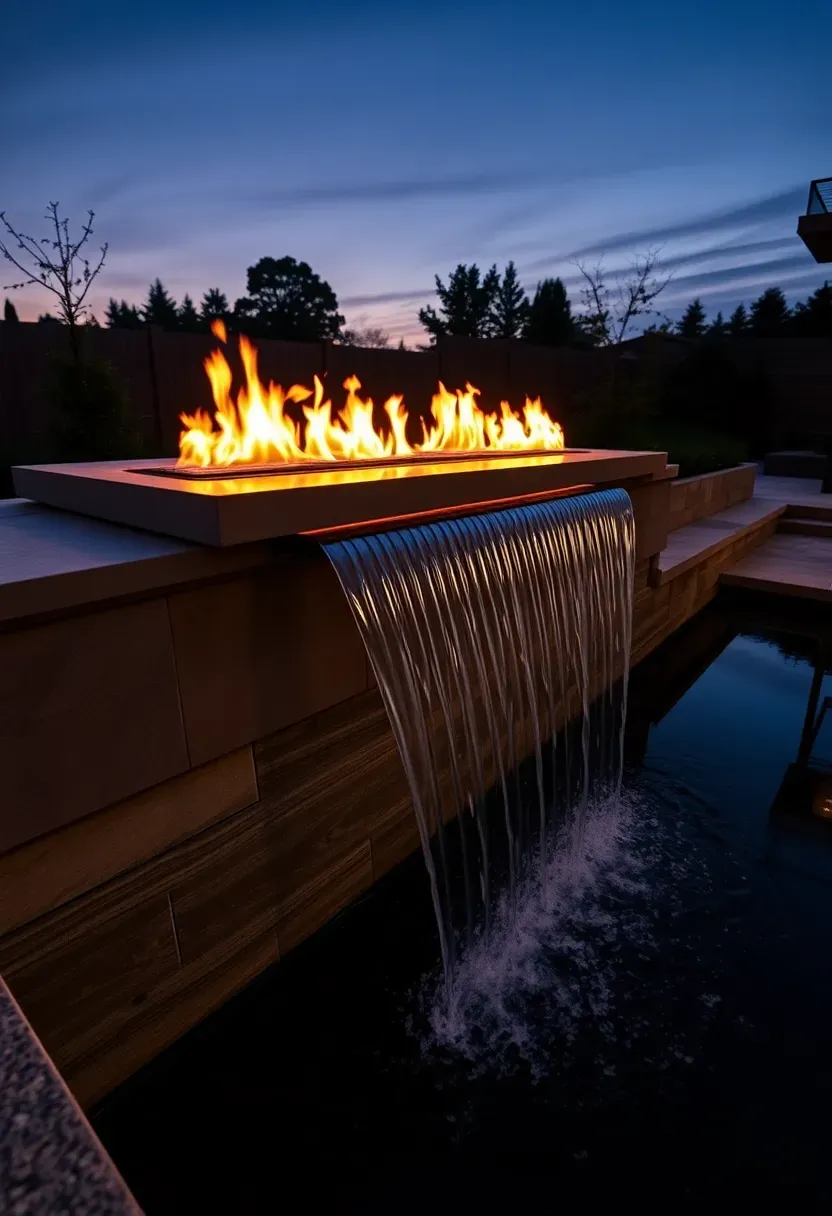
18. Fire and Water Feature Combo
Combining fire and falling water in the same structure creates a contrast that is hard to look away from — especially after dark. The standard approach is a gas fire line (fed by a natural gas or propane connection) mounted on a ledge or lip just above a sheer descent waterfall. Fire-rated stone or concrete separates the two elements. Prefabricated fire-and-water units run $1,500-4,000. Custom builds with natural gas plumbing and stone veneer start around $5,000. The fire line needs a licensed plumber for the gas connection in most jurisdictions — this is not a DIY gas project.
Tips
- Maintain at least 12 inches of vertical separation between the flame line and the water surface.
- Use a wind guard (tempered glass panels) to keep the flame steady on breezy evenings.
- LED strip lighting in the catch basin adds a third layer of visual interest beneath the waterfall.
Recommended
Items for this idea
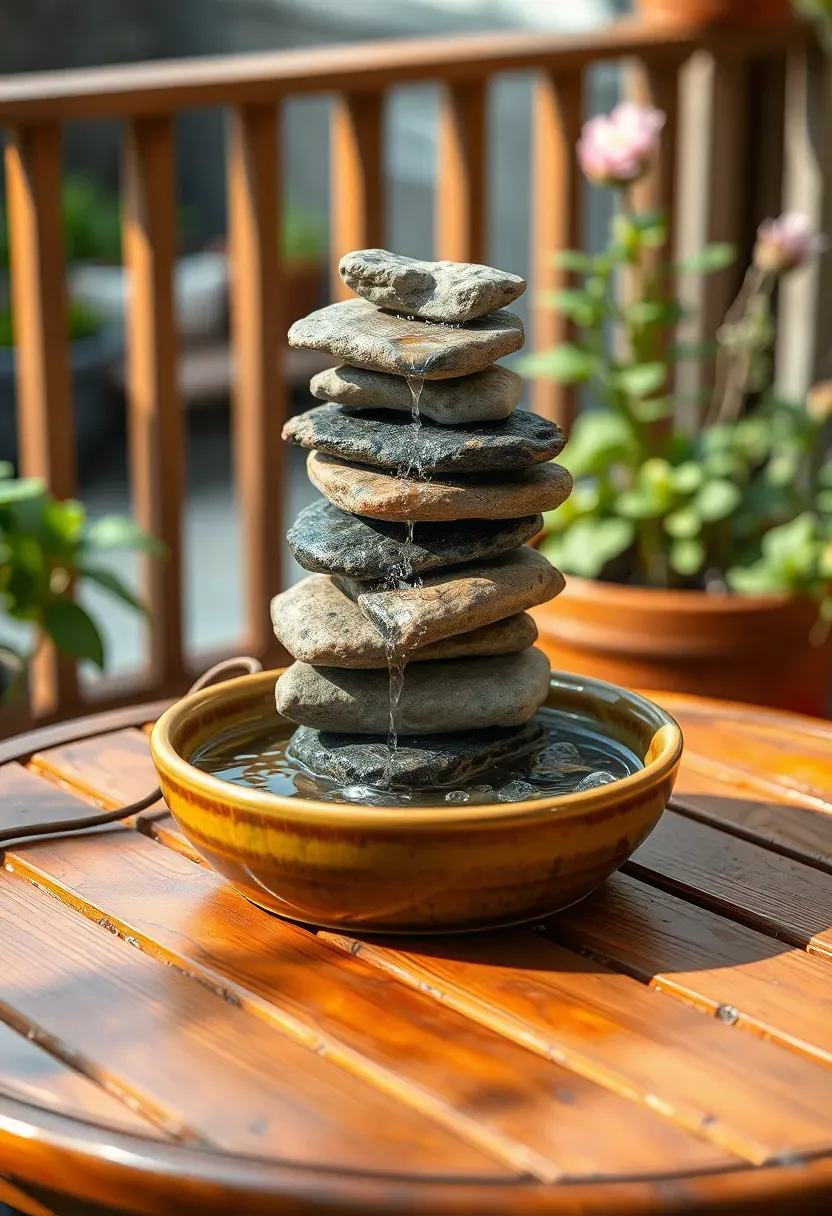
19. Mini Tabletop Cascade
Not every waterfall needs earthmoving equipment. A tabletop cascade sits on a patio table, deck railing, or garden bench and uses a tiny submersible pump (40-80 GPH) to circulate water through a stack of flat stones in a shallow dish. You can build one in under an hour for $30-60 in materials. It adds the sound of moving water to a small patio or balcony where a full-scale waterfall is impractical. The entire unit fits in a space the size of a dinner plate, runs on standard outlet power, and uses about as much electricity as a nightlight.
Tips
- Silicone aquarium sealant works better than hot glue for attaching stones — it stays flexible and waterproof.
- Use a dish with a 2-inch lip minimum to contain splash during windy conditions.
- Add a few drops of hydrogen peroxide weekly to prevent algae in the small water volume.
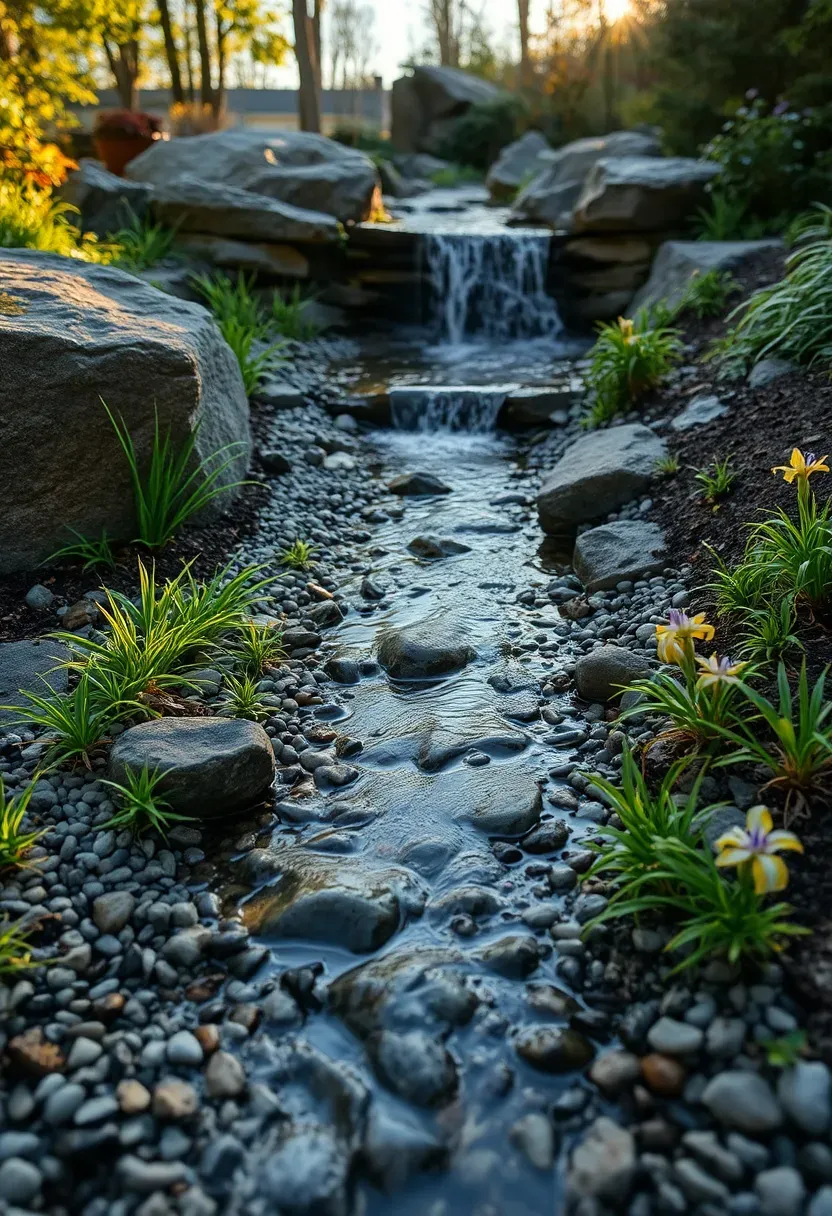
20. Recirculating Creek with Waterfall Head
The Concept
A creek that starts with a waterfall and meanders 20-40 feet through your yard before draining into a buried collection basin. The pump returns water to the headwater point through underground tubing.
Building the Creek
Dig a winding, shallow channel (6-8 inches deep, 2-3 feet wide) with gentle curves. Line it with EPDM rubber, then cover with river gravel and larger accent stones. The headwater waterfall can be modest — a 2-3 foot drop over natural boulders is plenty to establish the sound. Total material cost for a 30-foot creek with waterfall runs $800-2,000. The creek sections should have a gentle grade (1-2% slope) to keep water moving without rushing. Plant the banks with sedge, dwarf iris, and creeping ground covers to naturalize the edges within one season.
Watch Out
- Insufficient slope between the waterfall end and the collection basin causes water to pool and stagnate in the creek section.
- Oversizing the pump creates an unnaturally fast current — match the pump to the creek width and length.
Recommended
Items for this idea
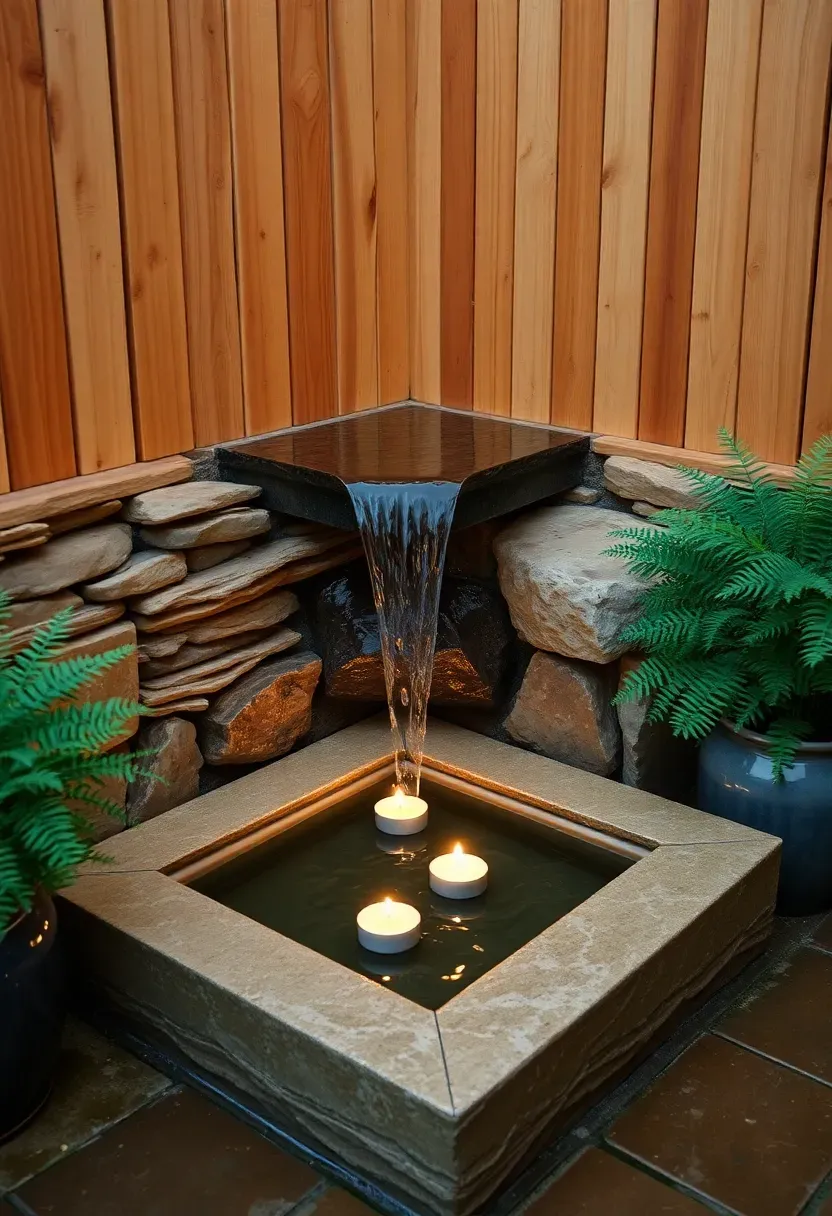
21. Courtyard Corner Waterfall
Small courtyards and side yards often have an awkward dead corner that collects leaves and looks neglected. A corner waterfall turns that dead space into the focal point of the entire area. Build a 3-4 foot tall stone or concrete column in the corner, angled at 45 degrees to face the center of the courtyard. A single spillway spout or a short sheer descent sends water into a small ground-level basin. The total footprint can be as small as 3 by 3 feet. Budget $400-1,000 for materials. The enclosed courtyard walls amplify the water sound, so even a modest flow creates noticeable ambient noise.
Tips
- Angle the waterfall to face your most-used seating position, not the entry point.
- A square or rectangular basin suits courtyard geometry better than organic pond shapes.
- Add floating candles or small solar lights in the basin for evening ambiance without electrical work.
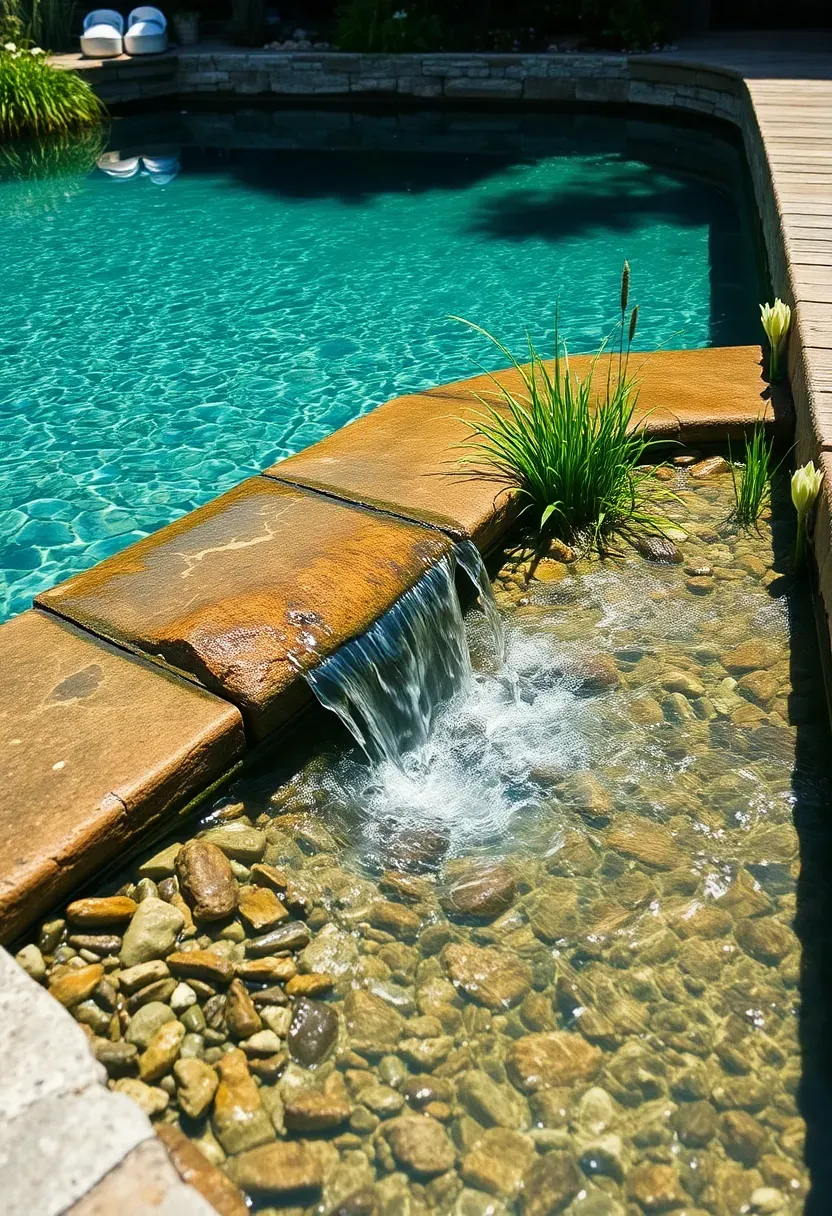
22. Natural Swimming Pond Waterfall
What Makes It Different
A natural swimming pond uses biological filtration (plants and gravel beds) instead of chlorine. The waterfall is not just decorative — it is part of the filtration system. Water flows from the swimming zone over a stone weir into a shallow regeneration zone filled with gravel and aquatic plants, then gets pumped back to the main pond through the waterfall.
The Investment
This is the most expensive option on this list. A proper natural swimming pond with integrated waterfall filtration starts around $15,000 for a modest installation and can exceed $50,000 for larger designs. The waterfall needs to process the entire pond volume every 4-6 hours, which demands a serious pump. But the result is a chemical-free swimming hole with a waterfall that earns its keep rather than just looking pretty.
Choose This If
- You want to swim without chlorine and value ecological design.
- You have the budget and yard space for a dual-zone water system (minimum 400 square feet total).
Recommended
Items for this idea
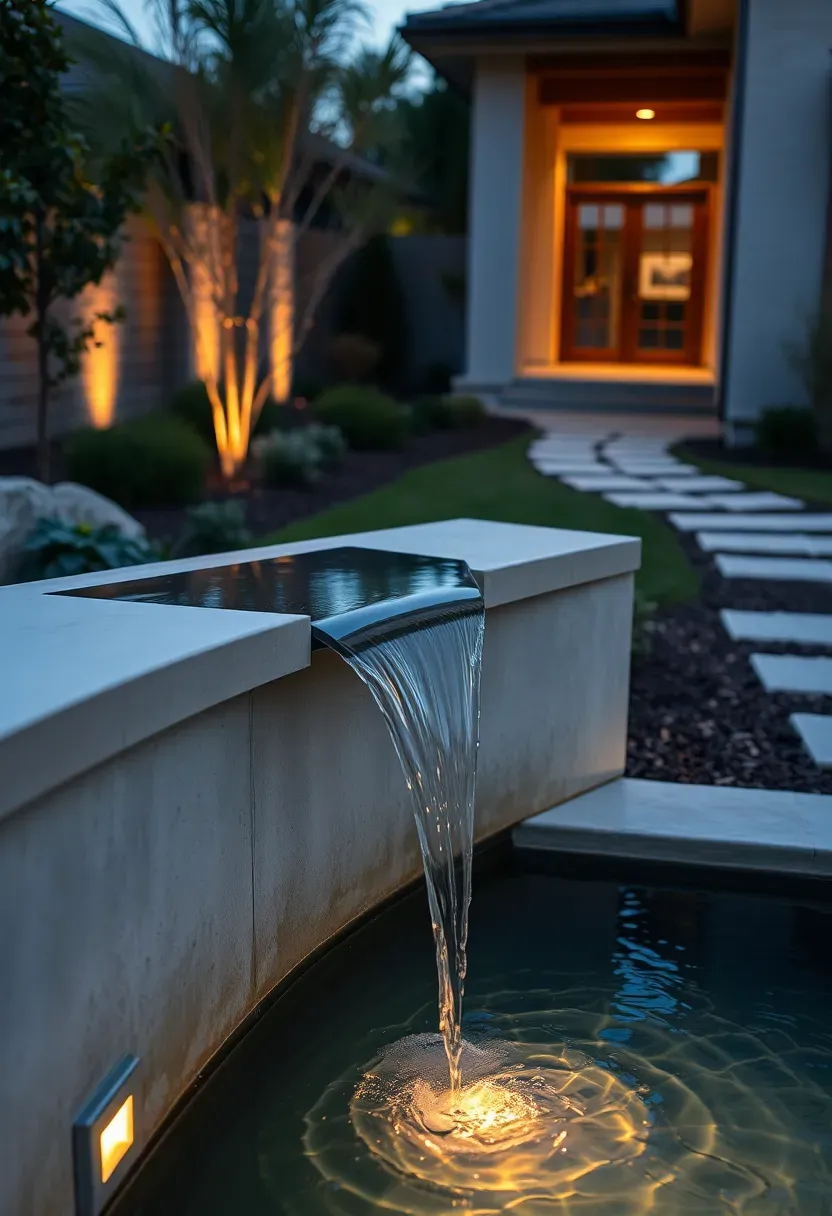
23. Infinity Edge Spillover Wall
The infinity edge effect — where water appears to vanish over a perfectly level edge — works as well on a backyard wall as it does on a luxury pool. Build a raised basin (concrete, stone, or even a large custom planter box) with one edge precisely leveled and slightly lower than the other three sides. Water overflows this edge into a hidden catch channel below and gets pumped back up. The illusion requires an extremely level top edge (within 1/16 inch over the full span) and a flow rate high enough to maintain a consistent film of water over the lip. Materials run $600-2,000 depending on size and finish.
Steps
- Build or source a watertight raised basin with interior waterproofing.
- Set the overflow edge using a laser level — precision here is non-negotiable.
- Construct a narrow catch trough (6 inches wide, 4 inches deep) directly below the overflow edge.
- Install a pump in the catch trough sized for continuous overflow across the full width.
- Test with water before any final finishing — even small level errors create uneven flow.
Quick FAQ
How much does a backyard waterfall cost to run? A typical 1,200-2,000 GPH pump draws 100-200 watts. Running it 12 hours a day costs roughly $5-12 per month depending on your electricity rate. Larger installations with 3,000+ GPH pumps can hit $20-30 monthly.
Can I build a waterfall without a pond? Absolutely. Pondless waterfalls (idea 2) use a buried reservoir instead of an open pond. You get the sound and motion of falling water with virtually no standing water maintenance.
Do backyard waterfalls attract mosquitoes? Moving water does not attract mosquitoes — they need still, stagnant water to breed. As long as your pump runs daily and there are no dead spots where water pools without circulation, mosquitoes will not be a problem.
What pump size do I need for a backyard waterfall? The general rule is 1,500 GPH per foot of waterfall width for a solid-looking flow. A 2-foot-wide waterfall needs roughly a 3,000 GPH pump. Add 1 foot of head height to your pump calculations for every 10 feet of horizontal pipe run.
Will a waterfall increase my property value? Water features generally add perceived value during showings, but appraisers rarely assign specific dollar amounts to them. A well-built waterfall that integrates with the landscape reads as a premium feature. A DIY project with visible liner and a loud pump does the opposite.
A backyard waterfall does not need to be complicated or expensive to make a real difference in how your outdoor space feels. Start with your budget, your available slope, and the sound level you actually want — a gentle trickle and a roaring cascade serve different purposes. Build the simplest version first, live with it for a season, and then expand. The best waterfalls I have seen were built incrementally by people who paid attention to what worked and what did not, rather than trying to execute a grand vision all at once.
Pinterest cover for 23 Backyard Waterfall Ideas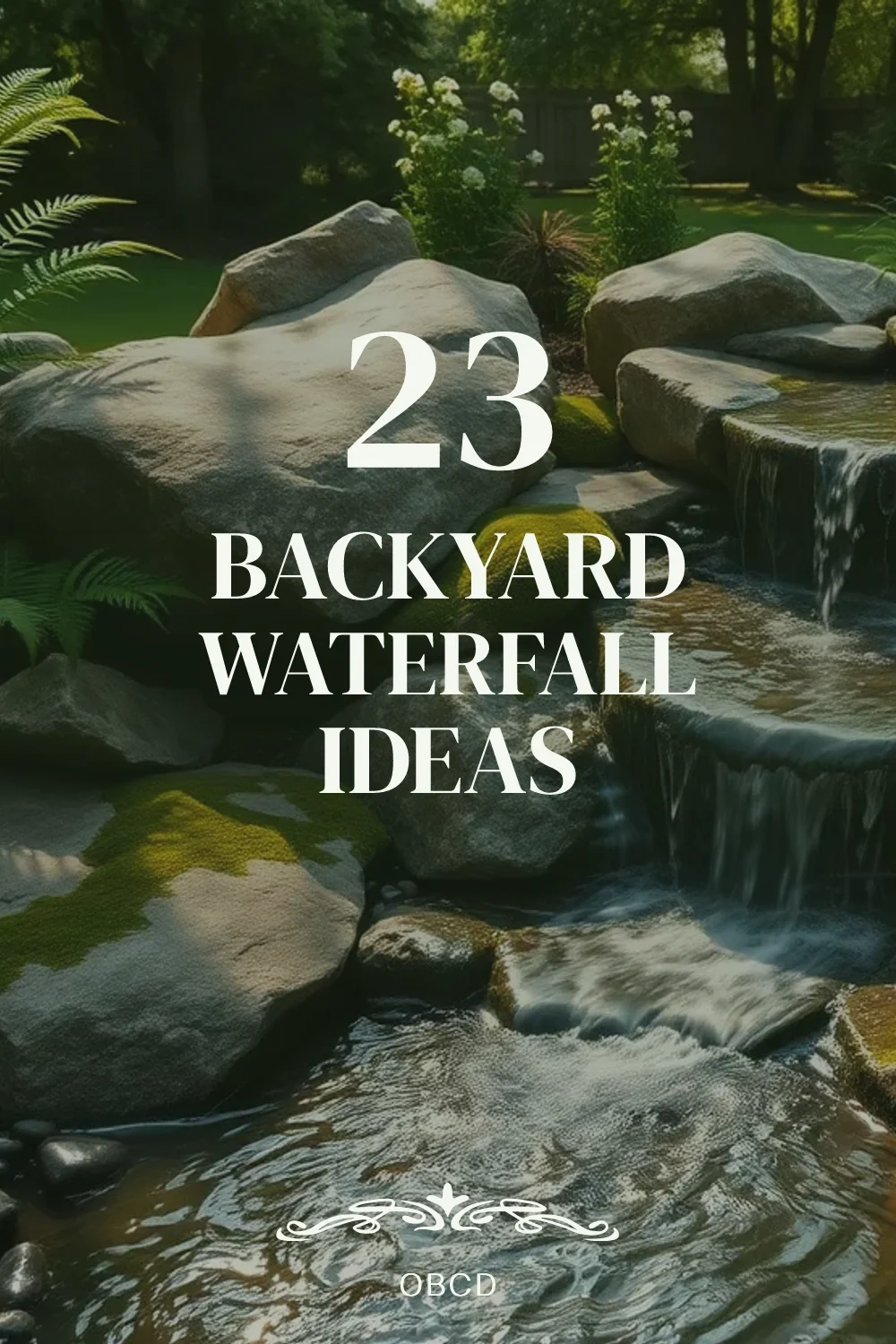
About the author
OBCD
CGI visualization and interior design content. We create detailed 3D renders and curate practical design ideas for every room in your home.